Category: Opinion & analysis
America can’t afford to lose Britain — again
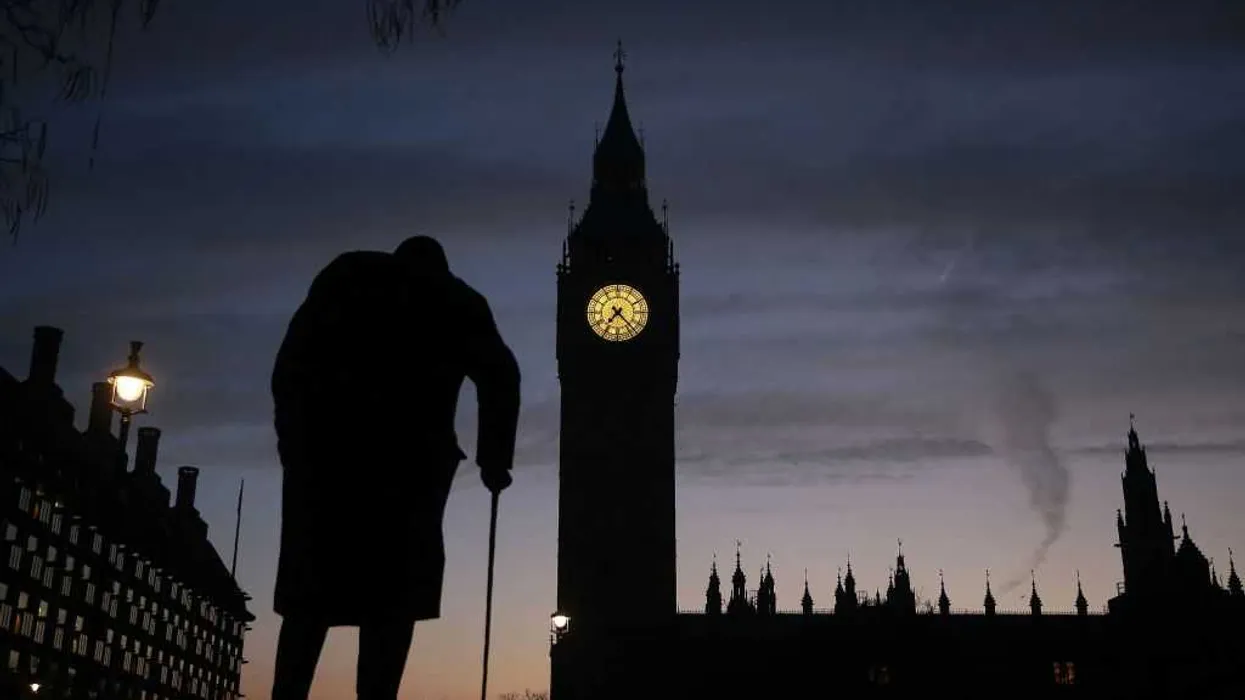
The Labour government that rules the United Kingdom is hardly a year old, but its time is already coming to an end. Its popular legitimacy has collapsed, and it is visibly losing control of both the British state and its territories.
Every conversation not about proximate policy is about the successor government: which party will take over, who will be leading it, and what’s needed to reverse what looks to be an unalterable course. What is known, however, is that the next government will assume the reins of a fading state after what will likely be the final election under the present, failed dispensation.
We should equip our friends on the other side of the Atlantic with the lessons of the new right’s ascendancy and of a nation-first government in America.
The Britain birthed by New Labour three decades ago, deracinated and unmoored from its historic roots, is unquestionably at its end. Its elements — most especially the importation of malign Americanisms like propositional nationhood — have led directly to a country that is, according to academics like David Betz of King’s College London, on the precipice of something like a civil war. That’s the worst-case scenario.
The best case is that a once-great nation made itself poor and has become wracked with civil strife, including the jihadi variety. It is a prospect that will make yesteryear’s worst of Ulster seem positively bucolic.
American policymaking is curiously inert in the face of the dissolution of its closest historic ally. This is not because Britain’s decline is anything new: the slow-motion implosion of that nation’s military power has been known to the American defense establishment for most of the past 20 years. Ben Barry’s excellent new book, “The Rise and Fall of the British Army 1975–2025,” offers many examples to this end, including the 2008 fighting in Basra in which American leadership had to rescue a failing British effort.
The knowledge that Britain is facing a regime-level crisis has remained mostly confined to the establishment. Outside of it, the American right has mostly dwelled on an admixture of Anglophilia and special-relationship nostalgia, obscuring the truth of Britain’s precipitous decline.
The American left, of course, entirely endorses what the British regime has done to its citizenry — from the repression of entrepreneurialism and the suppression of free speech to the ethnic replacement of the native population — and regards the outcomes as entirely positive.
It is past time for that inertia to end. The last election will redefine the United Kingdom — and therefore America’s relationship with it. Even before it comes, the rudderless and discredited Labour government has placed Britain into a de facto ungoverned state that may persist for years to come.
The United States has an obligation to protect its own citizenry from the consequences of this reality. It also has what might be called a filial duty to assert conditions for Britain to reclaim itself.
That duty means taking a series of actions, including denying entry to the United States to British officials who engage in the suppression of civil liberties. American security and intelligence should focus on the threats posed by Britain’s burgeoning Islamist population. The U.S. should give preferential immigration treatment to ethnic English, Scottish, Welsh, and Northern Irish who are seeking to escape misgovernance or persecution in the United Kingdom.
Furthermore, the United States should make it clear that the robust Chinese Communist Party penetration and influence operations in U.K. governance will result in a concurrent diminishment of American trust and cooperation.
Also necessary is the American government’s engagement with pro-liberty and pro-British elements within the U.K. This means working with Reform U.K., which presently looks to gain about 400 parliamentary seats in the next election. Its unique combination of a dynamic leader in Nigel Farage, intellectual heavyweights like James Orr and Danny Kruger, and operational energy in Zia Yusuf makes it a compelling and increasingly plausible scenario.
RELATED: Cry ‘God for England’
 Photo by Christopher Furlong/Getty Images
Although the Tories are polling poorly and have had their reputations battered by their substandard record in government over the past decade, they nonetheless merit American engagement.
America’s role here is not to endorse, and still less to select, new leadership for Britain, which would be both an impossibility and an impropriety. However, we should equip our friends on the other side of the Atlantic with the lessons of the new right’s ascendancy and of a nation-first government in America.
In the fraught summer of 1940, the American poet Alice Duer Miller wrote, “In a world where England is finished and dead, I do not wish to live.” The island nation has not feared its own end at foreign arms for a thousand years. But its crisis today is from within, carrying existential stakes.
The current British regime is nearing its end, and the last election is coming. So too is our decision on how to engage it in the years ahead.
Editor’s note: A version of this article appeared originally at the American Mind.
Gavin Newsom’s racial pandering knows no bounds

Leaders should seek to unify people. Instead, California governor and likely 2028 presidential candidate Gavin Newsom (D) embraces politics, dividing his constituents into those entitled to privileges and subventions by reason of their melanin, sex, or sexual orientation — and those who are required to fund the largesse.
He opposed race-neutral admissions to the California state university system (overruled by the people of California — twice), imposed gender and racial requirements on corporate boards (held unconstitutional — twice), required ethnic studies and ethnically dumbed-down math in K-12 curricula, and is carefully advancing a potentially multitrillion-dollar reparations plan for California’s black residents.
Whether born of intense self-loathing or kowtowing to the radical left, Newsom’s support for reparations is racist political pandering at its worst.
Newsom’s unconstitutional quest to curry favor with, undermine the confidence of, and potentially spend trillions of dollars on California’s 2.5 million black residents began in 2020 when he signed AB3121 into law, which required the state to study and develop reparation proposals for black Californians, with “special consideration” for descendants of slaves.
Then, in 2022, Newsom established a commission to develop policies that impact racial equity and disparities. The following year, it recommended payments exceeding $1 million for each descendant of slaves, as well as housing assistance, guaranteed wages, racially segregated education, and overturning California’s ban on affirmative action in college admissions, among hundreds of other racially abhorrent policies.
Now, Newsom has established a new bureau nominally to develop programs to implement the commission’s report, but with legislative authority to “expand” its mission to address remedies for the “lasting harms” of disenfranchisement, segregation, discrimination, exclusion, neglect, and violence impacting black Californians. The bureau is also authorized to collect nonpublic personal and genetic information to identify those who should obtain preferential treatment.
Newsom vetoed legislation to give admissions preferences to descendants of slaves, which he said colleges can already do; investigate racist property taxes, which is already within the new bureau’s mandate; and allocate 10% of state loans to slave descendants, which is clearly unconstitutional. An appearance of balance is important for a nascent presidential campaign.
Nonetheless, whether born of intense self-loathing or kowtowing to the radical left, Newsom’s support for reparations is racist political pandering at its worst.
Reparations are particularly inappropriate in California. The state was admitted to the Union in 1850 as a free state, in which slavery was prohibited. Its population today is about 37% non-Hispanic white, 39% Hispanic, 16% Asian, and 6% black. Over a quarter are foreign-born.
There is no doctrine in the United States that holds children liable for the crimes of their parents, much less their distant ancestors; nor do children inherit their ancestors’ debts. In 1860, there were 395,216 slave owners in the 15 states that permitted slavery and none in the other 18 states. In total, about 5%-6% of all U.S. households owned slaves.
Today, most blacks are at least middle class, live in diverse suburbs, and pursue the same careers as whites. They are doctors, lawyers, and chief executives. With about 12.5% of the population, blacks account for a somewhat larger share of U.S. House members and about one-third of the mayors in America’s 100 largest cities. Blacks have held the highest offices in government, from president and vice president to numerous Cabinet positions and 22% of current Supreme Court justices.
RELATED: Gavin Newsom lashes out at Joe Rogan for accusing him of ruining California: ‘He did horrible s**t!’
 Robert Gauthier/Los Angeles Times via Getty Images
In a 2002 Gallup poll, 14% of Americans favored the payment of cash reparations to descendants of black slaves. A 2019 Associated Press-NORC poll found 29% approval. In 2024, a Princeton University-Liberations poll found that 36% of Americans supported at least some form of reparations, with 15% strongly supporting cash payments. A 2022 Rasmussen poll and a 2025 YouGov poll had similar results. About a quarter of blacks oppose reparations.
At least 23 cities and states are considering paying reparations, including New York City, San Francisco, and Boston. Under most reparation proposals, the national cost would range from about $12 trillion to $20 trillion.
While polls usually ask about reparations for descendants of slaves, most commissions also consider payments to other black Americans. A Brookings Institution report justifies giving reparations to wealthy blacks and recent immigrants due to the wealth gap between black and white families.
Polls and partisan commissions aside, the 14th Amendment prohibits governments from allocating benefits based on race. The Supreme Court has been clear that our detour into justifying affirmative action and other race-based programs was a “pernicious aberration.” There have been trillions of dollars of transfer payments to black Americans through welfare, food stamps, loan payments, enterprise zones, minority contracting, and affirmative action. These giveaways deprive blacks of agency and create dependency, not a path toward self-actualization.
Chief Justice John Roberts said it well in the Supreme Court’s decision ending racial preferences in college admissions: “Eliminating racial discrimination means eliminating all of it. … [T]he guarantee of equal protection cannot mean one thing when applied to one individual and something else when applied to a person of another color.”
Gavin Newsom knows all this. He just doesn’t care.
Editor’s note: This article was originally published by RealClearPolitics and made available via RealClearWire.
The kids aren’t all right — they’re being seduced by socialism
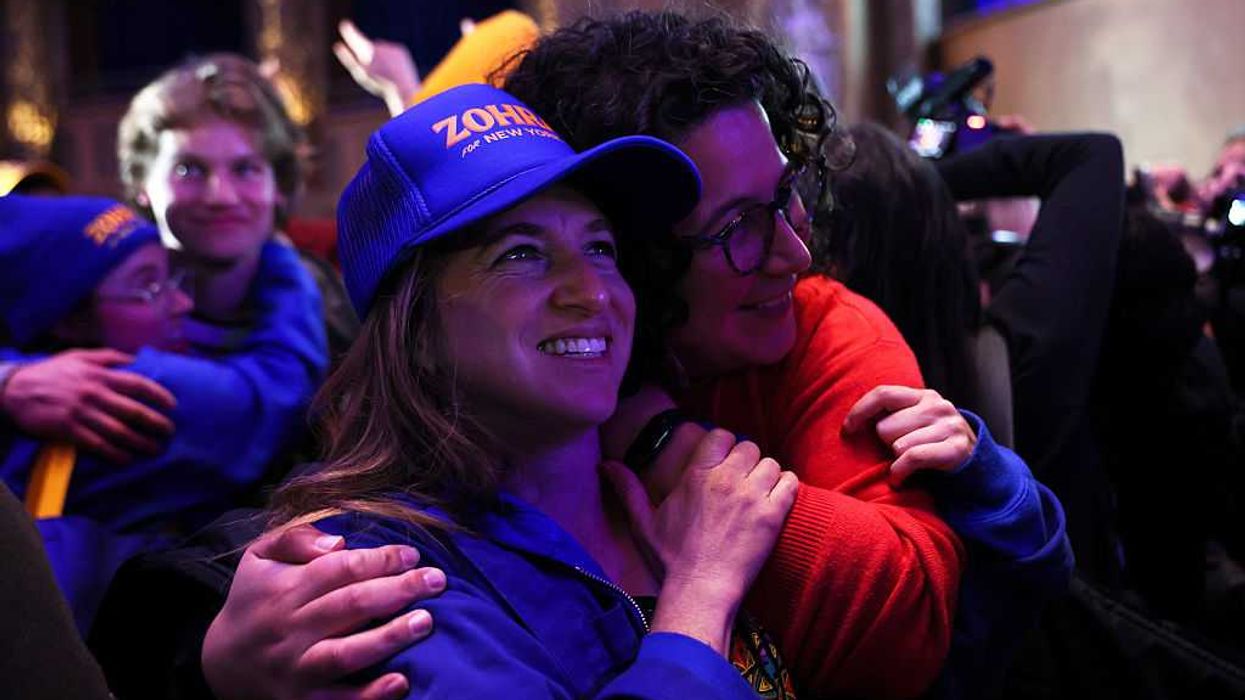
Something is breaking in America’s young people. You can feel it in every headline, every grocery bill, every young voice quietly asking if the American dream still means anything at all.
For many, the promise of America — work hard, build something that lasts, and give the next generation a better start — feels like it no longer exists. Home ownership and stability have become luxuries for a fortunate few.
Capitalism is not a perfect system. It is flawed because people are flawed, but it remains the only system that rewards creativity and effort rather than punishing them.
In that vacuum of hope, a new promise has begun to rise — one that sounds compassionate, equal, and fair. The promise of socialism.
The appeal of a broken dream
When the American dream becomes a checklist of things few can afford — a home, a car, two children, even a little peace — disappointment quickly turns to resentment. The average first-time homebuyer is now 40 years old. Debt lasts longer than marriages. The cost of living rises faster than opportunity.
For a generation that has never seen the system truly work, capitalism feels like a rigged game built to protect those already at the top.
That is where socialism finds its audience. It presents itself as fairness for the forgotten and justice for the disillusioned. It speaks softly at first, offering equality, compassion, and control disguised as care.
We are seeing that illusion play out now in New York City, where Zohran Mamdani — an open socialist — has won a major political victory. The same ideology that once hid behind euphemisms now campaigns openly throughout America’s once-great cities. And for many who feel left behind, it sounds like salvation.
But what socialism calls fairness is submission dressed as virtue. What it calls order is obedience. Once the system begins to replace personal responsibility with collective dependence, the erosion of liberty is only a matter of time.
The bridge that never ends
Socialism is not a destination; it is a bridge. Karl Marx described it as the necessary transition to communism — the scaffolding that builds the total state. Under socialism, people are taught to obey. Under communism, they forget that any other options exist.
History tells the story clearly. Russia, China, Cambodia, Cuba — each promised equality and delivered misery. One hundred million lives were lost, not because socialism failed, but because it succeeded at what it was designed to do: make the state supreme and the individual expendable.
Today’s advocates insist their version will be different — democratic, modern, and kind. They often cite Sweden as an example, but Sweden’s prosperity was never born of socialism. It grew out of capitalism, self-reliance, and a shared moral culture. Now that system is cracking under the weight of bureaucracy and division.
RELATED: The triumph — for now — of New York’s Muslim socialist mayor
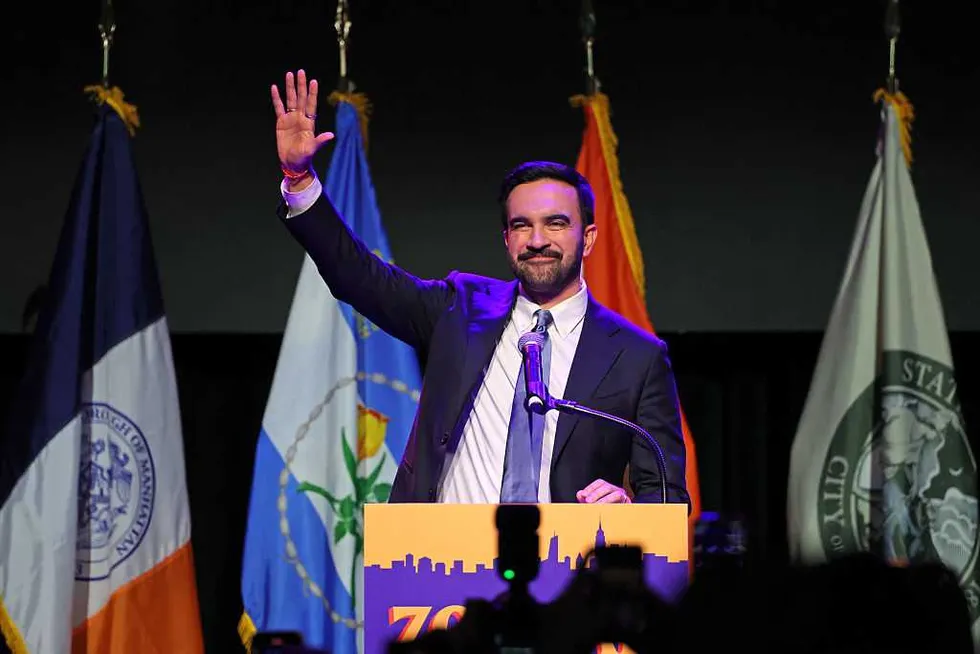 Photo by Angela Weiss / Contributor via Getty Images
The real issue is not economic but moral. Socialism begins with a lie about human nature — that people exist for the collective and that the collective knows better than the individual.
This lie is contrary to the truths on which America was founded — that rights come not from government’s authority, but from God’s. Once government replaces that authority, compassion becomes control, and freedom becomes permission.
What young America deserves
Young Americans have many reasons to be frustrated. They were told to study, work hard, and follow the rules — and many did, only to find the goalposts moved again and again. But tearing down the entire house does not make it fairer; it only leaves everyone standing in the rubble.
Capitalism is not a perfect system. It is flawed because people are flawed, but it remains the only system that rewards creativity and effort rather than punishing them. The answer is not revolution but renewal — moral, cultural, and spiritual.
It means restoring honesty to markets, integrity to government, and faith to the heart of our nation. A people who forsake God will always turn to government for salvation, and that road always ends in dependency and decay.
Freedom demands something of us. It requires faith, discipline, and courage. It expects citizens to govern themselves before others govern them. That is the truth this generation deserves to hear again — that liberty is not a gift from the state but a calling from God.
Socialism always begins with promises and ends with permission. It tells you what to drive, what to say, what to believe, all in the name of fairness. But real fairness is not everyone sharing the same chains — it is everyone having the same chance.
The American dream was never about guarantees. It was about the right to try, to fail, and try again. That freedom built the most prosperous nation in history, and it can do so again if we remember that liberty is not a handout but a duty.
Socialism does not offer salvation. It requires subservience.
Want more from Glenn Beck? Get Glenn’s FREE email newsletter with his latest insights, top stories, show prep, and more delivered to your inbox.
Jamie Dimon’s ‘cockroach’ economy is eating Main Street alive

Jamie Dimon has been running JPMorgan Chase for nearly two decades. The business press still hails him as the man who steered the bank through the 2008 financial crisis.
I’m less impressed. It’s easy to look steady at the helm when you’re floating on a $29 trillion sea of taxpayer bailouts.
This is what half a century of bipartisan corruption produces: a crony capitalist system that privatizes profit, socializes loss, and lets the rest of us drown.
Yes, Dimon saw the 2008 crash coming and made some smart adjustments ahead of the collapse. Credit where it’s due — barely. But once the dust settled, JPMorgan rewarded itself handsomely for surviving the storm.
JP Morgan said yesterday that its earnings “fell short” of their potential last year — but it still felt able to hand its investment bankers a 22 per cent increase in their bonuses.
Kicking off what could be a stormy reporting season, America’s second-largest bank paid them $9.3bn, compared with $7.7bn in 2008. Total pay for its 222,315 employees came in at $26.9bn — 18 per cent from $22.7bn the year before — largely because of a sharp increase in bonuses paid throughout the bank. The announced sparked outrage among critics who described the figures as “obscene.”
“Obscene” doesn’t begin to cover it.
So when Dimon made headlines a couple of weeks ago with his “cockroaches” comment, I didn’t rush to celebrate another round of supposed insight.
“When you see one cockroach, there are probably more, and so everyone should be forewarned of this one,” Dimon told analysts, referring to the bankruptcies of subprime auto lender Tricolor and auto-parts maker First Brands.
Dimon’s metaphor was awkward enough — he mentioned two cockroaches while warning about seeing just one. But worse, he got caught by the same kind of subprime rot that tanked the global economy in 2008.
“Dimon said that JPMorgan is reviewing its controls after the Tricolor bankruptcy and said the $170 million loss is ‘not our finest moment.’”
No kidding. His “cockroach detector” still doesn’t work.
Now Dimon is back in the headlines again for another round of supposed “foresight.”
“JPMorgan Chase CEO Jamie Dimon warned in an interview that the stock market could be in line for a significant correction within the next few years amid heightened uncertainty. Dimon told the BBC that there is an elevated risk of a stock market correction in the next six months to two years, saying, ‘I am far more worried about that than others.’”
Glad to meet you, Mr. Dimon. Some of us have been worried for decades.
RELATED: America’s debt denial has gone global
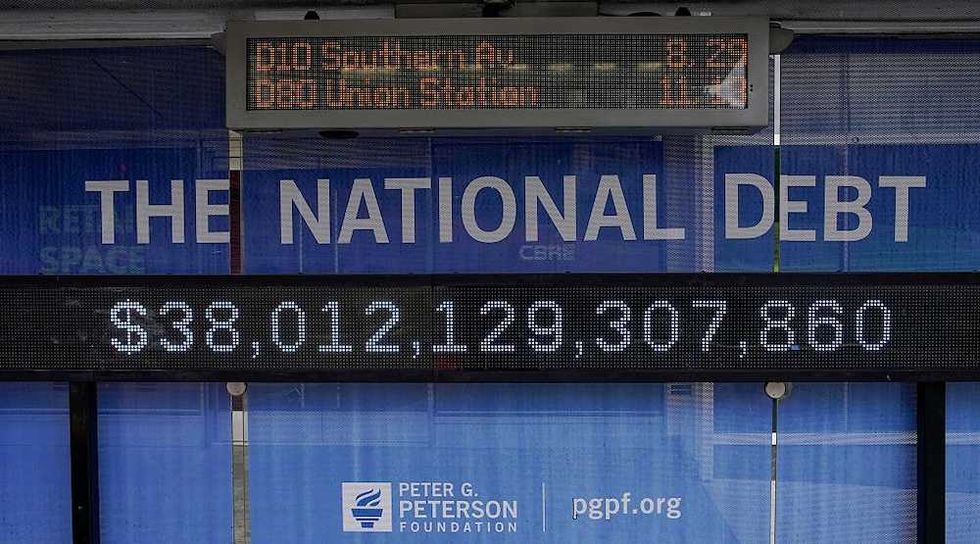 Photo by Jemal Countess/Getty Images
Back in 1989, when my high-school history teacher asked the class to name America’s biggest problem, I said “the federal debt.” Not just because debt is bad, but because Washington was pretending deficits didn’t matter — and voters let them.
Nearly 40 years later, nothing has changed. The numbers are bigger. The lies are the same. Ignore a problem long enough, and it grows until it devours you.
Our economy isn’t a Mr. Potato Head toy, where government spending sits neatly apart from everything else. It’s one big pile of money — and the federal government keeps shoveling from the productive side to the wasteful side.
Every dollar borrowed for political vanity projects is a dollar you can’t use to start a business or buy a home. As the federal machine consumes more and more of the pool, it’s not the elites who get crowded out. It’s everyone else.
Poor people’s home mortgages are down 46%. Rich people’s art-collection loans are up 30%.
This is what half a century of bipartisan corruption produces: a crony capitalist system that privatizes profit, socializes loss, and lets the rest of us drown.
Look at Walmart. The company pulls tens of billions of taxpayer dollars a year through the SNAP program — the same program many of its employees rely on to eat because Walmart won’t pay them enough to live.
Independent research confirms it: Thousands of Walmart workers depend on Medicaid and food stamps.
Big government lets big business pocket our tax money on both ends — profits in private, losses in public. Even their labor costs get offloaded to us.
So when politicians wail about a “government shutdown” disrupting SNAP payments, remember who they’re really worried about. It’s not the families at the grocery store. It’s the corporations cashing in.
RELATED: Trump admin blames Senate Democrats for SNAP debacle: ‘The well has run dry’
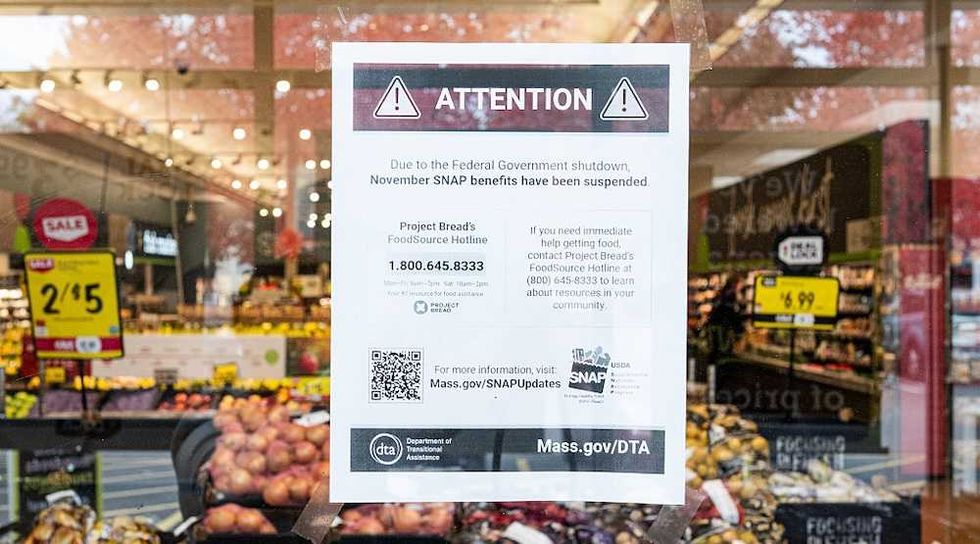 Photo by Mel Musto/Bloomberg via Getty Images
A system this warped can’t last. You can call America the greatest nation in history if you like, but greatness doesn’t square with more than $38 trillion in government debt and record levels of personal debt.
Household debt, credit-card debt, mortgage debt — all at historic highs. Nearly a quarter of Americans are buying food on layaway. And 42% have zero emergency savings.
Meanwhile, Washington keeps inflating Wall Street’s floaties.
Main Street drowns while Big Government keeps Big Business comfortably above the surface.
Jamie Dimon thinks he’s just spotted the first cockroach. But the infestation started long ago — right inside the marble halls of Washington, D.C.
And if no one finally fumigates the place, the rot will force-condemn the entire country.
Stop feeding Big Tech and start feeding Americans again

America needs more farmers, ranchers, and private landholders — not more data centers and chatbots. Yet the federal government is now prioritizing artificial intelligence over agriculture, offering vast tracts of public land to Big Tech while family farms and ranches vanish and grocery bills soar.
Conservatives have long warned that excessive federal land ownership, especially in the West, threatens liberty and prosperity. The Trump administration shares that concern but has taken a wrong turn by fast-tracking AI infrastructure on government property.
If the nation needs a new Manhattan Project, it should be for food security, not AI slop.
Instead of devolving control to the states or private citizens, it’s empowering an industry that already consumes massive resources and delivers little tangible value to ordinary Americans. And this is on top of Interior Secretary Doug Burgum’s execrable plan to build 15-minute cities and “affordable housing.”
In July, President Trump signed an executive order titled Accelerating Federal Permitting of Data Center Infrastructure as part of its AI Action Plan. The order streamlines permits, grants financial incentives, and opens federal properties — from Superfund sites to military bases — to AI-related development. The Department of Energy quickly identified four initial sites: Oak Ridge Reservation in Tennessee, Idaho National Laboratory, the Paducah Gaseous Diffusion Plant in Kentucky, and the Savannah River Site in South Carolina.
Last month, the list expanded to include five Air Force bases — Arnold (Tennessee), Davis-Monthan (Arizona), Edwards (California), Joint Base McGuire-Dix-Lakehurst (New Jersey), and Robins (Georgia) — totaling over 3,000 acres for lease to private developers at fair market value.
Locating AI facilities on military property is preferable to disrupting residential or agricultural communities, but the favoritism shown to Big Tech raises an obvious question: Is this the best use of public land? And will anchoring these bubble companies on federal property make them “too big to fail,” just like the banks and mortgage lenders before the 2008 crash?
President Trump has acknowledged the shortage of affordable meat as a national crisis. If any industry deserves federal support, it’s America’s independent farmers and ranchers. Yet while Washington clears land for billion-dollar data centers, small producers are disappearing. In the past five years, the U.S. has lost roughly 141,000 family farms and 150,000 cattle operations. The national cattle herd is at its lowest level since 1951. Since 1982, America has lost more than half a million farms — nearly a quarter of its total.
Multiple pressures — rising input costs, droughts, and inflation — have crippled family farms that can’t compete with corporate conglomerates. But federal land policy also plays a role. The government’s stranglehold on Western lands limits grazing rights, water access, and expansion opportunities. If Washington suddenly wants to sell or lease public land, why not prioritize ranchers who need it for feed and forage?
The Conservation Reserve Program compounds the problem. The 2018 Farm Bill extension locked up to 30 million acres of land — five million in Wyoming and Montana alone — under the guise of conservation. Wealthy absentee owners exploit the program by briefly “farming” land to qualify it as cropland, then retiring it into CRP to collect taxpayer payments. More than half of CRP acreage is owned by non-farmers, some earning over $200 per acre while the land sits idle.
RELATED: AI isn’t feeding you
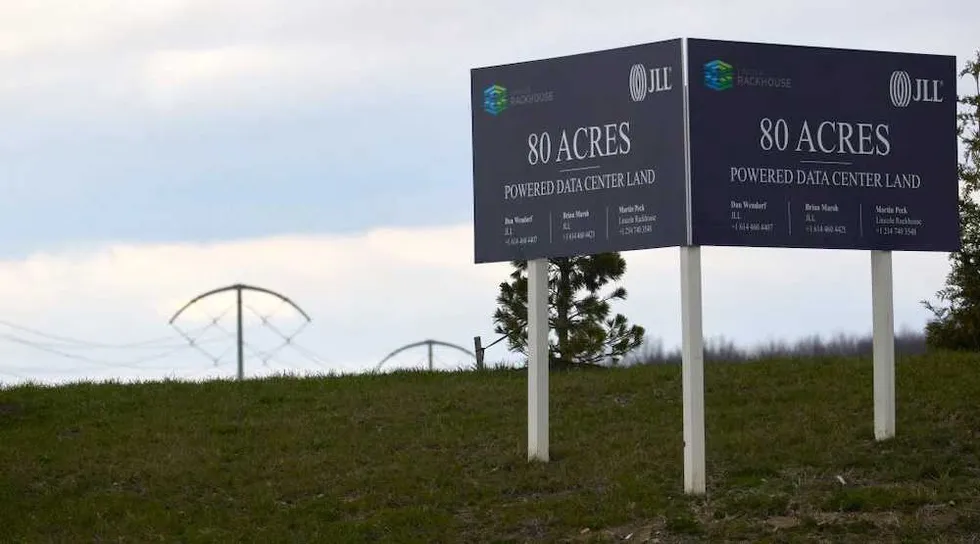 Photo by Brian Kaiser/Bloomberg via Getty Images
Those acres could support hundreds of cattle per section or produce millions of tons of hay. Instead, they create artificial shortages that drive up feed costs. During the post-COVID inflation spike, hay prices spiked 40%, hitting $250 per ton this year. Even now, inflated prices cost ranchers six figures a year in extra expenses in a business that operates on thin margins.
If the nation needs a new Manhattan Project, it should be for food security, not AI slop. Free up federal lands and idle CRP acreage for productive use. Help ranchers grow herds and lower food prices instead of subsidizing a speculative industry already bloated with venture capital and hype.
At present, every dollar of revenue at OpenAI costs roughly $7.77 to generate — a debt spiral that invites the next taxpayer bailout. By granting these firms privileged access to public land, the government risks creating another class of untouchable corporate wards, as it did with Fannie Mae and Freddie Mac two decades ago.
AI won’t feed Americans. It won’t fix supply chains. It won’t lower grocery bills. Until these companies can put real food on real tables, federal land should serve the purpose God intended — to sustain the people who live and work upon it.
The gatekeepers are fighting each other now

For most of human history, people could only dream of having ready access to all the world’s knowledge. Books were highly prized rarities, literacy was uncommon, and news could take weeks or months to arrive. The idea that the sum of human experience could fit into a little box in everyone’s pocket once sounded utopian — a paradise of informed, free citizens.
Instead, when handed access to everything, most people went looking for someone to tell them what to think.
The information age isn’t a utopia or a nightmare — it’s a permanent revolution. And it’s only getting wilder from here.
Humans are social creatures, political animals, as Aristotle observed. We crave belonging more than truth. We need a story about our place in the social order, status to pursue, and a circle to protect. Our minds aren’t wired to handle thousands of relationships. Dunbar’s number — about 150 — marks the natural limit of our social world. Online, we can connect with millions, but our capacity to process that much humanity collapses. We stop seeing people as people.
The same is true of information. In theory, access to all knowledge should make us wiser. In practice, it’s like drinking from a fire hose. Facts alone don’t illuminate anything without context, and the flood is too vast for anyone to master.
So people specialize. Like workers on an assembly line, each focuses on one task and trusts others to handle the rest. Expertise becomes a kind of currency, and every expert becomes a gatekeeper, a choke point through which understanding must pass.
Manufacturing consent
Control over that flow of information is control over perception itself. From the birth of mass media, political actors understood this. In “Public Opinion” (1922), journalist Walter Lippmann argued that elites must guide the public toward the “right” decisions because ordinary citizens couldn’t process the flood of modern information. Governments — including our own — and corporations eagerly agreed, building propaganda systems to shape consent.
Mass communication democratized information but kept control in a few hands. Printing presses, radio networks, television studios, and movie production required massive capital. The means of communication were concentrated in a small elite that decided what counted as “truth.” These media barons and their favored experts built a system in which opinion was managed from the top down. The gatekeepers defined what the public got to see, hear, and believe.
For decades, political and media elites relied on this system to shape public sentiment. Academics, think-tank analysts, and professional commentators framed policy for the masses. People felt informed while repeating narratives crafted by others. The monopoly on expert opinion kept both left- and right-wing elites secure.
RELATED: Conservatives turn their fire on each other after Charlie Kirk’s assassination
 Blaze Media Illustration
Then came the internet, which shattered the old paradigm and plunged our system into chaos. Anyone with a microphone and a laptop could broadcast to the world. Legacy media cut costs, and now its anchors sit in home offices on the same streaming platforms as the amateurs they used to mock. The line between credentialed gatekeeper and average guy with an opinion has all but disappeared.
The result? Panic.
Mutating information war
Liberal elites were horrified to see Donald Trump, JD Vance, and countless populists bypass their filters and speak directly to millions of people. Podcasts hosted by comedians or outsiders broke through censorship walls. Conservative leaders cheered — until their own control started slipping. As legacy conservative networks fractured and independent creators rose, the movement’s “approved experts” lost their monopoly too.
Now both sides are scrambling to rebuild the gates. The establishment insists that chaos proves we need “trustworthy experts.” But the expert class discredited itself, and the internet made gatekeeping technologically impossible. The average citizen may not always discern truth from falsehood, but the public no longer trust those who claim to decide it for them.
The information war isn’t ending. It’s mutating. Every collapse of authority spawns a new order, and every new order fights to become the next gatekeeper. Unless governments impose hard censorship, as Europe has begun to do, the chaos will continue. The information age isn’t a utopia or a nightmare — it’s a permanent revolution. And it’s only getting wilder from here.
The thoroughly unimpressive Mr. Fuentes

Tucker Carlson’s interview with Nick Fuentes was supposed to be explosive. It wasn’t.
Far from normalizing Fuentes or advancing his strange brand of “right-wing” politics, the two-hour conversation exposed him as a shallow, aggrieved figure without the intellect or maturity to lead anything. Carlson didn’t destroy Fuentes with debate. He did something worse: He made him boring.
Fuentes built his notoriety as a young “influencer” who mixes nationalism with online provocation. He’s outspokenly racist, anti-Semitic, and obsessed with pushing the limits of shock. And he’s managed to attract a following among disaffected young men — the “Groypers.”
Fuentes’ interview marks his peak — and his decline. Once the outrage fades, he’ll return to obscurity.
In recent years, Fuentes has tried to rebrand himself as something somewhat more serious. He talks about immigration breaking working families, foreign wars enriching elites, and a culture that mocks masculinity. Those themes resonate because they tap real frustrations that many Americans share.
But Fuentes offers no coherent moral or political vision. Others — better read, more disciplined, and far less toxic — make similar arguments with insight and integrity. The late Charlie Kirk, for example, famously wanted nothing to do with Fuentes and his followers for precisely that reason.
The grudge-filled path
Carlson’s interview focused less on ideas than on Fuentes’ grievances. He recounted his early days as a libertarian campaigning for Ted Cruz in 2015, his shift to Trumpism, and his viral rise after a debate with a leftist opponent. Soon he was clashing with prominent conservatives, especially the Daily Wire’s Ben Shapiro.
According to Fuentes, Shapiro and his allies sabotaged his career and drove him into exile on the “dark web.” At no point does Fuentes wonder whether Shapiro recognized instability and immaturity in him — or simply concluded that he wasn’t worth the investment.
Like many in his Gen Z cohort, Fuentes mistakes online engagement for substance. Without outrage, he has nothing. He’s poorly educated, reads little, and shrugs off legitimate criticism. The result is a young man trapped in perpetual adolescence, angry that the world won’t take him seriously.
Carlson’s indulgence
Carlson tries to humanize Fuentes, appealing to Christian charity and the value of learning from failure. But Fuentes clings to his score-settling. His list of enemies includes not just Shapiro but Charlie Kirk, Joe Kent, Rep. Marjorie Taylor Greene (R-Ga.) — and even Carlson himself, though he gets a temporary reprieve for offering the platform.
Carlson also attempts to rationalize Fuentes’ anti-Semitism, giving him space to “clarify.” Fuentes insists he doesn’t hate Jews personally — he just opposes Judaism as a “force against Western civilization.” He repeats conspiracy theories about Jewish control of institutions and denies the Holocaust.
Carlson pushes back, but only mildly. Both men protest that they “don’t hate Jews” and have Jewish friends, as if that were exculpatory. It isn’t. The exchange casts neither in a good light.
Empty provocateurs
The rest of the interview dissolves into incoherence. Fuentes casually praises Joseph Stalin, of all people, before the conversation fizzles. Carlson’s attempt to recast Fuentes as a misunderstood outsider backfires. The result is a portrait of a man whose only real claim to relevance is being disliked — and even that feels undeserved.
Carlson’s indulgence of fringe figures is becoming a pattern. Andrew Tate. Darryl Cooper. Now Fuentes. Each enjoys a sizeable online following built on provocation and grievance. And each, when pressed, collapses into self-pity and incoherence. These men are charlatans and grifters who don’t challenge the establishment; they merely rehearse falsehoods and conspiracy theories to raise their profiles among mostly lonely, disaffected young men.
RELATED: Tucker Carlson, Nick Fuentes, and the war for the conservative soul
 Photo by NurPhoto via Getty Images
The decline of two brands
Fuentes’ interview marks his peak — and his decline. Once the outrage fades, he’ll return to obscurity, remembered mostly as a cautionary tale about what happens when empty charisma meets unearned confidence.
Carlson, meanwhile, risks following him down that path. His willingness to platform attention-seekers may boost short-term clicks, but it erodes long-term credibility. Each indulgence costs him a little more trust.
The tragedy isn’t just Fuentes’ wasted potential. It’s the spectacle of one of the right’s most talented communicators lending his megaphone to a man who long ago proved himself unworthy of it.
Turn off the money; they’ll leave: Elon Musk nails the border truth
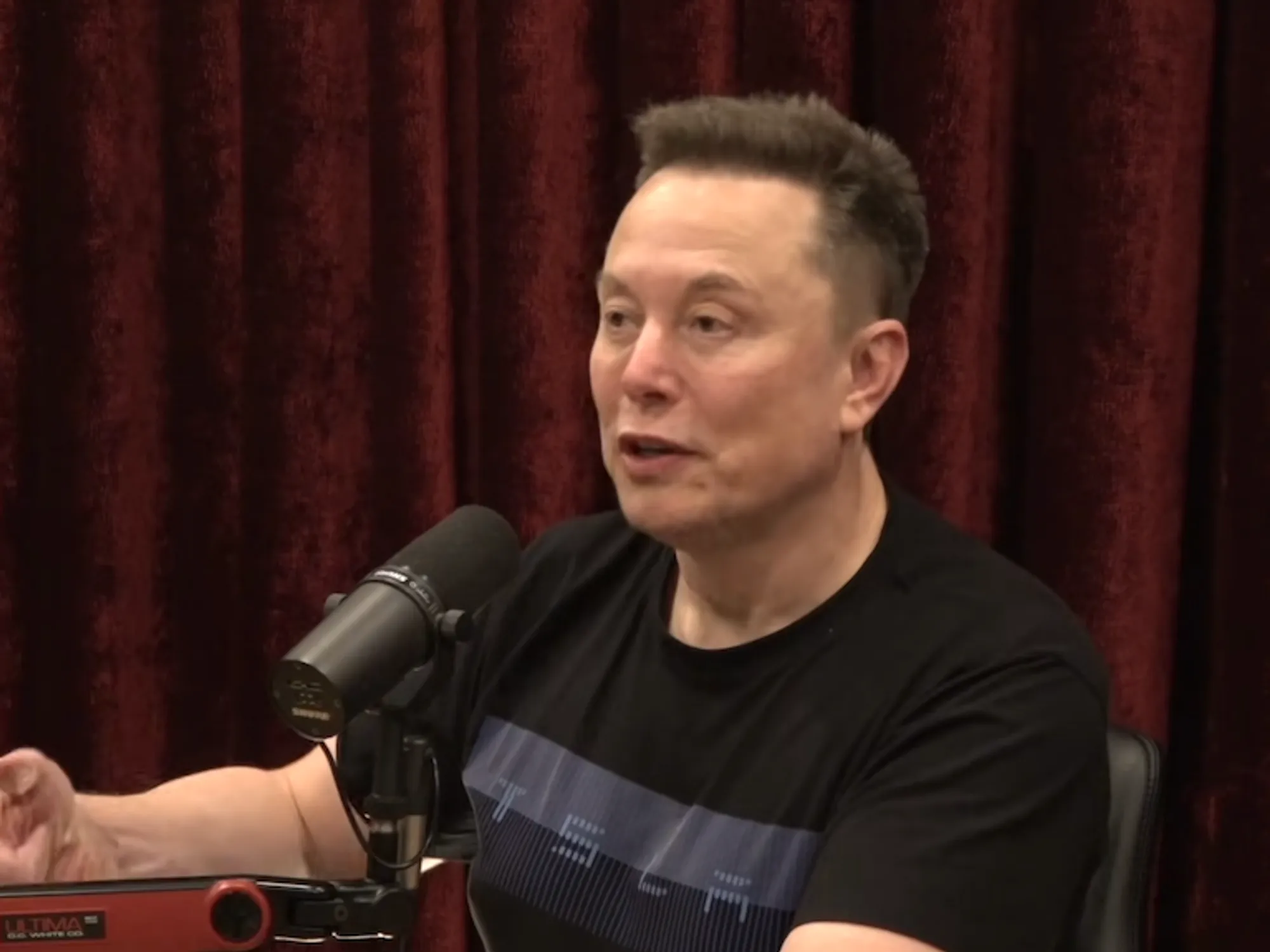
Elon Musk’s appearance on “The Joe Rogan Experience” last week should be required listening for anyone who still believes “one citizen, one vote” is the bedrock of our republic. For more than three hours, Musk — engineer, entrepreneur, and agent provocateur — peeled back the curtain on what he called Washington’s longest-running con: a taxpayer-funded pipeline that turns illegal immigrants into future Democrat voters.
Musk didn’t hedge. The ongoing government shutdown, he said, isn’t about continuing resolutions or fiscal cliffs. It’s about Democrats refusing to cut the hundreds of billions in welfare spending that draw migrants across the border. Turn off the cash, and the migrants leave. Cut the flow of migrants, and the left’s imported electorate vanishes.
When the rule of law returns to our borders, it returns to our ballot boxes. That’s a future worth shutting down the swamp to secure.
Joe Rogan was gobsmacked, for good reason. The former head of the Department of Government Efficiency described, in clear terms, what many Americans have long suspected but have been told was a conspiracy theory: The government’s own spending has become a political machine.
The welfare magnet
Musk’s argument is simple. Blue-state welfare programs — Medicaid expansions, housing vouchers, EBT cards, in-state tuition — advertise America as “free everything” for those who cross the border. When Rogan asked what would happen if those benefits stopped, Musk replied, “The Democratic Party will lose a lot of voters.”
Not some — a lot. California’s supermajority didn’t appear by chance, he noted; it was built city by city, sanctuary by sanctuary.
That blueprint is now spreading to Georgia, Arizona, Nevada, and other battlegrounds with generous welfare systems. The U.S. Census already rewards high-immigrant states with extra congressional seats and Electoral College votes. Add motor-voter laws, same-day registration, and ballot harvesting, and you don’t need a single illegal ballot to tip the scale. The counting itself does it.
This is arithmetic, not a conspiracy theory. Since 2021, the Department of Homeland Security’s parole programs have admitted more than a million people under “humanitarian” pretexts. Federally funded NGOs meet them at the border, fly or bus them to swing districts, and sign them up for every benefit imaginable.
Musk argued that ending the handouts would prompt a voluntary exodus within weeks — no ICE raids or roundups required. Yet Democrats treat any effort to cut those programs as existential sabotage. Why? Because their own numbers show what happens when the inflow stops: Red states stay red, blue states fade to purple, and the Electoral College map becomes competitive again.
The real shutdown fight
That, Musk said, is why Democrats would rather grind Washington to a halt than surrender their demographic advantage. The “shutdown” isn’t a budget fight — it’s a fight to preserve a political machine.
Enter Donald Trump’s enforcement agenda: the program many voters thought they were getting after the 1986 amnesty deal that never delivered. Mass deportations. Mandatory E-Verify. The end of catch-and-release. A full audit of every federal dollar funneled to “new arrivals.”
Critics reflexively cry “xenophobia,” the same way they called a border wall “immoral.” But this isn’t about left versus right — it’s citizens versus cartels. A union welder in Pennsylvania, a black business owner in Atlanta, and a Latino pastor in Miami all lose when the voting power of citizens is diluted by noncitizens who bypass the legal system their grandparents followed.
Representative government dies when representation is determined by who sneaks across the border first. Real elections require verifiable citizens, not harvestable bodies. Ethical leaders don’t traffic in future ballots; they protect the franchise like nuclear codes.
The fix
The appeal of Trump’s immigration plan is that it’s universal. America First means American tax dollars for American citizens, not for an imported electorate. Require proof of citizenship to register to vote. End chain migration and the visa lottery. Finish the wall. Empower ICE and Customs and Border Protection to do their jobs. The crisis collapses the moment the incentives do.
RELATED: ‘Operation MRE’: Meals, reform, enforcement in a SNAP!
 breakermaximus via iStock/Getty Images
No more midnight ballot drops in swing districts. No more census manipulation. Just the restoration of an old promise: play by the rules, and the rules will protect you.
A choice bigger than party
This fight transcends party and personality. It’s about whether your grandchild’s vote will still count in 2050. Support strong immigration enforcement. Demand audits of federal spending. Tune out media race-baiting and sentimental excuses. End the programs that siphon taxpayer money into the hands of those who broke the law to get here.
When the rule of law returns to our borders, it returns to our ballot boxes. That’s a future worth shutting down the swamp to secure.
What it really means to be a conservative in America today
Our movement is at a crossroads, and the question before us is simple: What does it mean to be a conservative in America today?
For years, we have been told what we are against — against the left, against wokeism, against decline. But opposition alone does not define a movement, and it certainly does not define a moral vision.
We are not here to cling to the past or wallow in grievance. We are not the movement of rage. We are the movement of reason and hope.
The media, as usual, are eager to supply their own answer. The New York Times recently suggested that Nick Fuentes represents the “future” of conservatism. That’s nonsense — a distortion of both truth and tradition. Fuentes and those like him do not represent American conservatism. They represent its counterfeit.
Real conservatism is not rage. It is reverence. It does not treat the past as a museum, but as a teacher. America’s founders asked us to preserve their principles and improve upon their practice. That means understanding what we are conserving — a living covenant, not a relic.
Conservatism as stewardship
In 2025, conservatism means stewardship — of a nation, a culture, and a moral inheritance too precious to abandon. To conserve is not to freeze history. It is to stand guard over what is essential. We are custodians of an experiment in liberty that rests on the belief that rights come not from kings or Congress, but from the Creator.
That belief built this country. It will be what saves it. The Constitution is a covenant between generations. Conservatism is the duty to keep that covenant alive — to preserve what works, correct what fails, and pass on both wisdom and freedom to those who come next.
Economics, culture, and morality are inseparable. Debt is not only fiscal; it is moral. Spending what belongs to the unborn is theft. Dependence is not compassion; it is weakness parading as virtue. A society that trades responsibility for comfort teaches citizens how to live as slaves.
Freedom without virtue is not freedom; it is chaos. A culture that mocks faith cannot defend liberty, and a nation that rejects truth cannot sustain justice. Conservatism must again become the moral compass of a disoriented people, reminding America that liberty survives only when anchored to virtue.
Rebuilding what is broken
We cannot define ourselves by what we oppose. We must build families, communities, and institutions that endure. Government is broken because education is broken, and education is broken because we abandoned the formation of the mind and the soul. The work ahead is competence, not cynicism.
Conservatives should embrace innovation and technology while rejecting the chaos of Silicon Valley. Progress must not come at the expense of principle. Technology must strengthen people, not replace them. Artificial intelligence should remain a servant, never a master. The true strength of a nation is not measured by data or bureaucracy, but by the quiet webs of family, faith, and service that hold communities together. When Washington falters — and it will — those neighborhoods must stand.
RELATED: Evil never announces itself — it seduces the hearts of the blind
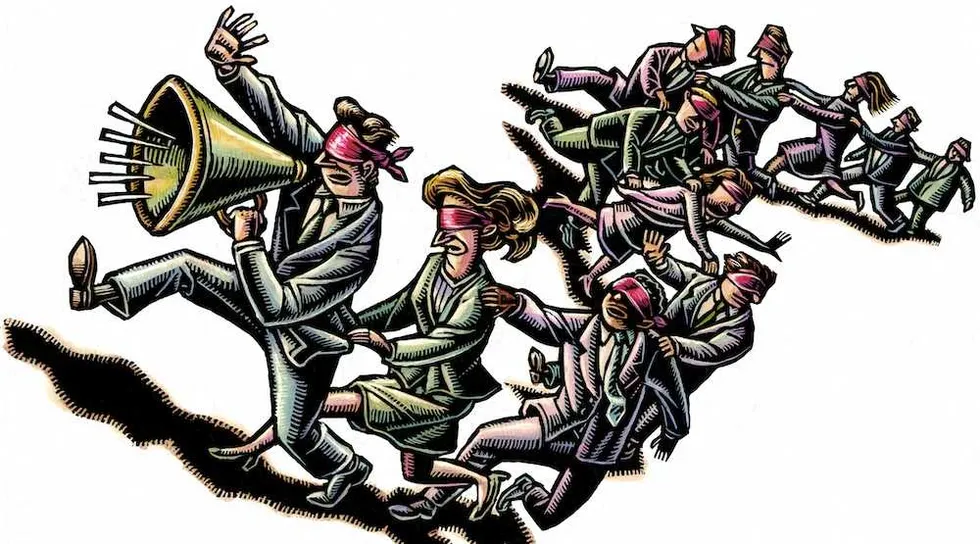 Lisa Haney via iStock/Getty Images
This is the real work of conservatism: to conserve what is good and true and to reform what has decayed. It is not about slogans; it is about stewardship — the patient labor of building a civilization that remembers what it stands for.
A creed for the rising generation
We are not here to cling to the past or wallow in grievance. We are not the movement of rage. We are the movement of reason and hope.
For the rising generation, conservatism cannot be nostalgia. It must be more than a memory of 9/11 or admiration for a Reagan era they never lived through. Many young Americans did not experience those moments — and they should not have to in order to grasp the lessons they taught and the truths they embodied. The next chapter is not about preserving relics but renewing purpose. It must speak to conviction, not cynicism; to moral clarity, not despair.
Young people are searching for meaning in a culture that mocks truth and empties life of purpose. Conservatism should be the moral compass that reminds them freedom is responsibility and that faith, family, and moral courage remain the surest rebellions against hopelessness.
To be a conservative in 2025 is to defend the enduring principles of American liberty while stewarding the culture, the economy, and the spirit of a free people. It is to stand for truth when truth is unfashionable and to guard moral order when the world celebrates chaos.
We are not merely holding the torch. We are relighting it.
Democrats are running as Bush-era Republicans — and winning
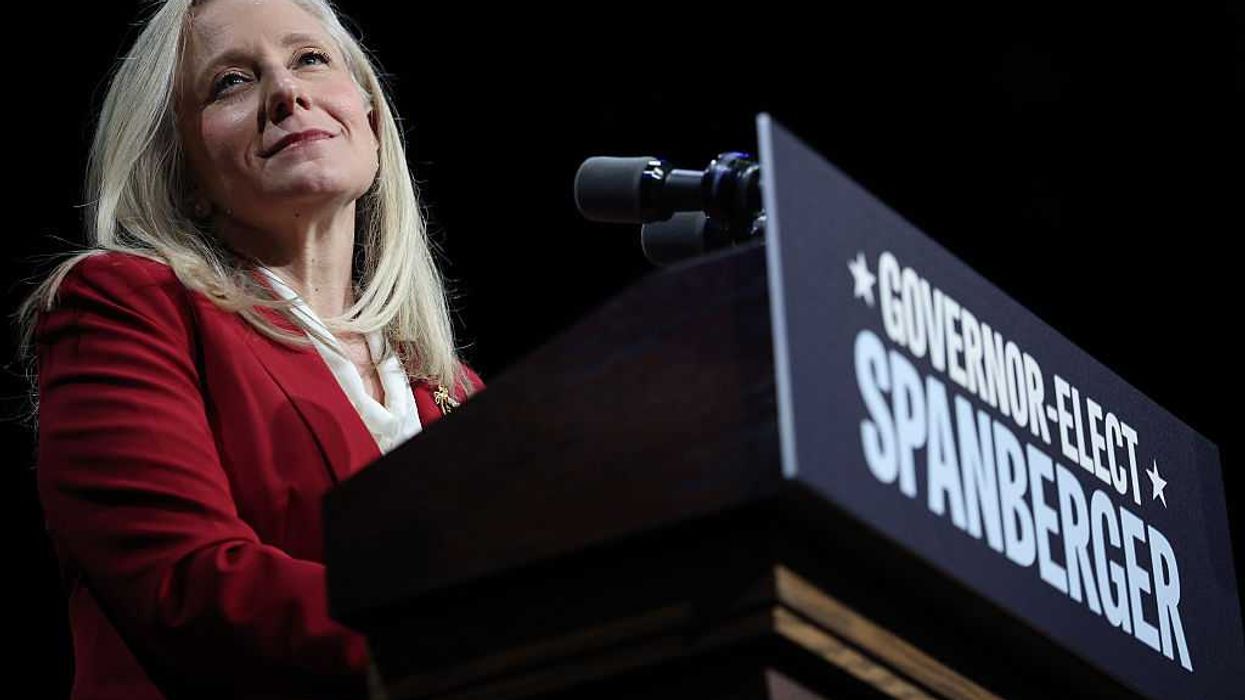
Republicans have given voters no reason to support them beyond the claim that Democrats are dangerously radical.
Well, sure. But when voters look around and see rising prices, rising crime, and no clear plan from the party in power, they turn to the other side. That’s what happened in Virginia, and it will keep happening as long as life stays unaffordable and Republicans offer nothing but excuses.
Republicans can still win — but not with hollow slogans or billionaire donors. They need to fight for affordable living, strong families, and safe communities.
Democrats’ victories in Virginia and New Jersey shouldn’t shock anyone — Trump didn’t need either state to win the presidency in 2024. What should alarm Republicans are the margins. Democrats crushed their opponents by 15 points in Virginia and 13 in New Jersey, performing better than Kamala Harris did against Trump in New York.
The blue wave swept deep into Republican territory. Democrats unseated Virginia’s attorney general — a respected conservative — with Jay “Two Bullets” Jones, a radical, scandal-prone candidate, and still won by nearly seven points. They gained at least 13 legislative seats, leaving Republicans with half the representation they held just eight years ago.
In Georgia, Democrats flipped two public service commission seats — their first statewide wins since 2006 — and won them by 24 points. They broke the GOP supermajority in the Mississippi Senate, flipped a state House seat, and took local races across Pennsylvania. In New Jersey, where Republicans didn’t even see the blowout coming, Democrats regained a supermajority in the General Assembly.
Taken together, these results point to a coming wipeout. Democrats have outperformed their 2024 presidential baseline by an average of 15 points in special elections this year, according to Ballotpedia — more than double the overperformance seen during Trump’s first term. In 45 of 46 key contests, Democrats either held or improved their position.
All liabilities, no benefits
Republicans now face the worst possible political scenario: They hold power, which unites and energizes Democrats, but they’ve done almost nothing with it to inspire anyone else.
The first year of Trump’s second term has been defined by trivial fights and tone-deaf priorities: tax favors for tech investors, special deals for crypto, and zoning disasters for rural and suburban voters. The data center explosion in Virginia, which has raised utility bills and wrecked communities, could have been an easy populist target. Instead, Gov. Glenn Youngkin (R) vetoed a bill to rein it in.
Despite cozying up to Big Tech, Republicans haven’t reaped any benefit. The Virginia Republican Party is broke, its candidates are outspent, and the grassroots are demoralized. The GOP keeps selling out to special interests that will never back the party. How have the ties to crypto, Big Tech, and Qatar paid off?
The reality is, Republicans don’t need those donors — they need a message to inspire a new generation of activists.
How Democrats outflanked the GOP
Democrats have learned to look like the party of normalcy while Republicans drift between populist posturing and corporate servitude. In Virginia, Abigail Spanberger ran on cutting costs, lowering taxes, and fighting crime — and she did it in the language of moderation. Republicans, who should own those issues, barely showed up for the debate.
Spanberger’s ads promised relief from inflation and touted her background in the CIA and law enforcement. She presented herself as steady and practical while Republicans floundered. Once again, Democrats outflanked the GOP on the right.
Republicans could have drawn blood by hammering Democrats on crime in Northern Virginia. Instead, they ran away from tough-on-crime policies. Winsome Earle-Sears even toyed with “criminal justice reform” while voters begged for accountability and order.
The result: Democrats ran as Bush-era Republicans, while Republicans looked like corporate consultants. Democrats talked about affordability and safety. Republicans talked about crypto and zoning boards.
The Trump paradox
The GOP’s reliance on one man has hollowed it out. Trump won the presidency in 2016 by talking about forgotten workers and American industry. But his divided message, personal vendettas, and fixation on media attention have since consumed the movement.
RELATED: Here’s what exit polls reveal about Tuesday’s electoral bloodbath
 Photo by Alexi J. Rosenfeld/Getty Images
Now the party gets the worst of both worlds — all of Trump’s baggage, none of his appeal. Democrats use him to rally turnout. Independents recoil. The GOP lacks infrastructure, vision, and discipline. The movement that once promised to fight the establishment has become addicted to social media applause.
A party in search of conviction
If Virginia had a commanding figure like Ron DeSantis at the top of the ticket, Republicans might have dampened the blue wave. But without an inspiring message, voters in an economic crisis will always drift to the other side.
The problem isn’t demographics; if it were, Democrats would campaign in Virginia the same way they do in California or New York City. Instead, they skate by on empty promises because Republicans, trapped by special interests and lacking a winning message, have become easy targets — and surrendered the very issues that could win back suburban voters.
Republicans can still win — but not with hollow slogans or billionaire donors. They need to fight for affordable living, strong families, and safe communities. They need a moral and economic vision that reaches beyond social media and into the lives of working Americans.
The question conservatives must ask is the one George Patton once put to his men in another context: When will we finally fight and die on our own hills instead of dying on someone else’s?
Twitter is not America. And unless Republicans start acting like they know the difference, they’ll keep losing — and keep deserving it.