

Category: Opinion & analysis
Artificial intelligence is not your friend

Half of Americans say they are lonely and isolated — and artificial intelligence is stepping into the void.
Sam Altman recently announced that OpenAI will soon provide erotica for lonely adults. Mark Zuckerberg envisions a future in which solitary people enjoy AI friends. According to the Harvard Business Review, the top uses for large language models are therapy and companionship.
Lonely people don’t need better algorithms. We need better friends — and the courage to be one.
It’s easy to see why this is happening. AI is always available, endlessly patient, and unfailingly agreeable. Millions now pour their secrets into silicon confidants, comforted by algorithms that respond with affirmation and tact.
But what masquerades as friendship is, in fact, a dangerous substitute. AI therapy and friendship burrow us deeper into ourselves when what we most need is to reach out to others.
As Jordan Peterson once observed, “Obsessive concern with the self is indistinguishable from misery.” That is the trap of AI companionship.
Hall of mirrors
AI echoes back your concerns, frames its answers around your cues, and never asks anything of you. At times, it may surprise you with information, but the conversation still runs along tracks you have laid. In that sense, every exchange with AI is solipsistic — a hall of mirrors that flatters the self but never challenges it.
It can’t grow with you to become more generous, honorable, just, or patient. Ultimately, every interaction with AI cultivates a narrow self-centeredness that only increases loneliness and unhappiness.
Even when self-reflection is necessary, AI falls short. It cannot read your emotions, adjust its tone, or provide physical comfort. It can’t inspire courage, sit beside you in silence, or offer forgiveness. A chatbot can only mimic what it has never known.
Most damaging of all, it can’t truly empathize. No matter what words it generates, it has never suffered loss, borne responsibility, or accepted love. Deep down, you know it doesn’t really understand you.
With AI, you can talk all you want. But you will never be heard.
Humans need love, not algorithms
Humans are social animals. We long for love and recognition from other humans. The desire for friendship is natural. But people are looking where no real friend can be found.
Aristotle taught that genuine friendship is ordered toward a common good and requires presence, sacrifice, and accountability. Unlike friendships of utility or pleasure — which dissolve when benefit or amusement fades — true friendship endures, because it calls each person to become better than they are.
Today, the word “friend” is often cheapened to a mere social-media connection, making Aristotelian friendship — rooted in virtue and sacrifice — feel almost foreign. Yet it comes alive in ancient texts, which show the heights that true friendship can inspire.
Real friendships are rooted in ideals older than machines and formed through shared struggles and selfless giving.
In Homer’s “Iliad,” Achilles and Patroclus shared an unbreakable bond forged in childhood and through battle. When Patroclus was killed, Achilles’ rage and grief changed the course of the Trojan War and of history. The Bible describes the friendship of Jonathan and David, whose devotion to one another, to their people, and to God transcended ambition and even family ties: “The soul of Jonathan was knit with the soul of David.”
These friendships were not one-sided projections. They were built upon shared experiences and selflessness that artificial intelligence can never offer.
Each time we choose the easy route of AI companionship over the hard reality of human relationships, we render ourselves less available and less able to achieve the true friendship our ancestors enjoyed.
Recovering genuine friendship requires forming people who are capable of being friends. People must be taught how to speak, listen, and seek truth together — something our current educational system has largely forgotten.
Classical education offers a remedy, reviving these habits of human connection by immersing students in the great moral and philosophical conversations of the past. Unlike modern classrooms, where students passively absorb information, classical seminars require them to wrestle together over what matters most: love in Plato’s “Symposium,” restlessness in Augustine’s “Confessions,” loss in Virgil’s “Aeneid,” or reconciliation in Shakespeare’s “King Lear.”
These dialogues force students to listen carefully, speak honestly, and allow truth — not ego — to guide the exchange. They remind us that friendship is not built on convenience but on mutual searching, where each participant must give as well as receive.
Reclaiming humanity
In a world tempted by the frictionless ease of talking to machines, classical education restores human encounters. Seminars cultivate the courage to confront discomfort, admit error, and grapple with ideas that challenge our assumptions — a rehearsal for the moral and social demands of real friendship.
RELATED: MIT professor’s 4 critical steps to stop AI from hijacking humanity
 Photo by Yuichiro Chino via Getty Images
Is classroom practice enough for friendship? No. But it plants the seeds. Habits of conversation, humility, and shared pursuit of truth prepare students to form real friendships through self-sacrifice outside the classroom: to cook for an exhausted co-worker, to answer the late-night call for help, to lovingly tell another he or she is wrong, to simply be present while someone grieves.
It’s difficult to form friendships in the modern world, where people are isolated in their homes, occupied by screens, and vexed by distractions and schedules. Technology tempts us with the illusion of effortless companionship — someone who is always where you are, whenever you want to talk. Like all fantasies, it can be pleasant for a time. But it’s not real.
Real friendships are rooted in ideals older than machines and formed through shared struggles and selfless giving.
Lonely people don’t need better algorithms. We need better friends — and the courage to be one.
Editor’s note: This article was published originally in the American Mind.
Why Mars is America’s next strategic imperative

Space is the defining strategic frontier of the 21st century. America’s space leadership depends on harnessing the private sector to create wealth and focusing the public sector on limited yet critical security and scientific objectives.
While achieving supremacy in cislunar space (the region between Earth and the moon, including the moon’s surface) must be our immediate aim, it lacks the strategic coherence to sustain American leadership over the long term.
America’s commercial space sector provides the capability and incentives to make Mars exploration both symbolically and economically rewarding.
We need long-term goals to define success and clarify tradeoffs. A manned mission to Mars can do both.
China and Russia, our near-peer competitors in space, pose serious challenges. Beijing openly pursues dominance in the Earth-moon system while accelerating toward Mars, with an ambitious sample return mission scheduled for 2028. Russia maintains formidable military capabilities in space, alongside proven Mars science achievements.
If our authoritarian rivals prevail, the world’s free nations may find their ability to access and use space significantly curtailed.
This is why the United States needs a unifying long-term vision that focuses and directs near-term commercial, military, and scientific objectives. We must also research and develop technologies for sustained living in space. A smart Mars strategy provides the needed framework, creating the technological roadmap and institutional durability to win the cislunar competition and position America for permanent space premiership.
Unleash the private sector
America’s commercial space revolution offers a compelling model for space exploration that our competitors cannot match. Most obviously, market forces have been essential for reducing launch costs. SpaceX has already demonstrated that private initiative can outpace government bureaucracies, slashing launch costs from $18,000 per kilogram during the Space Shuttle era to roughly $2,700 for today’s reusable Falcon 9.
A healthy ecosystem of suppliers, including Blue Origin, proves this success isn’t limited to one company. Cheaper launches mean increased launch cadence, which is necessary to keep space habitats provisioned. This is a prerequisite for conducting the research and tests for a journey to Mars.
China’s approach offers an instructive contrast. While Beijing tolerates private sector participation, it ultimately remains under state control. This creates strategic coherence but sacrifices the agility and inventiveness that drive transformative breakthroughs.
Chinese private space companies operate as tools of the state. Precisely because the Chinese Communist Party subordinates the information-generating and incentive-aligning features of markets, they will never enjoy the full benefits of space commerce.
Preparing for Mars missions will yield new technologies with dual-use applications. On-orbit refueling, advanced life support systems, radiation shielding, nuclear propulsion, and autonomous manufacturing capabilities developed for Mars will flow back into energy production, medical devices, artificial intelligence, and advanced manufacturing here on Earth. It will also bolster military preparedness through advancements in basic and applied sciences. All this redounds to national security by increasing the resilience of our space assets.
These developments promise substantial job creation across skill and education levels. While Mars missions certainly demand high-tech expertise and advanced degrees, they also require skilled technicians, machinists, and assembly specialists. Going to Mars will help revitalize America’s industrial base while broadly distributing economic prosperity.
Winning the long game
While a single Mars mission could take 30 months or longer, a Mars program will likely span decades, requiring support from multiple Congresses and presidential administrations.
Avoiding the start-stop cycles that have plagued space programs — from Apollo to Constellation — requires building institutional and political durability at the outset. The foundation must be bipartisan, framing Mars leadership as a matter of national security and economic competitiveness.
Bold endeavors define our national character. Amid social and political fragmentation, undertaking something even greater than a moonshot is an opportunity for national solidarity.
Private-sector anchoring creates a robust foundation. Expanding milestone-based public-private partnerships ties American industry to Mars logistics and operations. When companies and workers nationwide have a stake in space exploration, political support becomes geographically broad and resilient across electoral cycles. Ultimately, mission success offers the best defense against annual appropriations turbulence.
The federal government’s role must remain limited and focused. Agencies should help finance foundational research and development through mission-oriented programs. Public-private agreements should be structured to maximize flexibility. Renting services rather than purchasing equipment ought to be the government’s default approach.
We must also maintain a predictable regulatory environment that protects property rights and resists bureaucratic mission creep. The government’s comparative advantage is setting long-term national objectives and coordinating industry on best practices. While public values channeled through the political process set our destination, private initiative and the profit motive serve as our most powerful engine.
Leveraging alliances
Integration with existing programs maximizes efficiency. The groundwork for future Mars missions should complement, not duplicate, the Space Force’s cislunar operations and NASA’s Artemis lunar architecture. On the international stage, the U.S. should leverage its alliances while ensuring American leadership in setting exploration norms through frameworks such as the Artemis Accords.
Building on our success with the Artemis Accords, we should actively pursue partnerships with the European Union and Japan. We should also deepen space ties with India, which may induce it to align with the free world instead of Russia and China. History has shown our allies will help shoulder the burdens of freedom if America has the courage to lead.
Strategic signaling to allies and competitors augments the framework. A stable, legislated Mars roadmap reassures international partners while deterring rivals, ensuring program continuity.
To the Red Planet!
Mars represents the next great test of American resolve. Bold endeavors define our national character. Amid social and political fragmentation, undertaking something even greater than a moonshot is an opportunity for national solidarity.
The strategic necessity is clear, the economic logic is compelling, and the technological pathway is feasible. What Mars demands now is the political will to harness America’s asymmetric advantages for humanity’s greatest adventure.
RELATED: China is on the brink of beating us back to the moon
 Photo by Yang Guanyu/Xinhua via Getty Images
Getting to Mars requires the fortitude to sustain multiyear missions alongside the business discipline to achieve them cost-effectively. America’s commercial space sector provides the capability and incentives to make Mars exploration both symbolically and economically rewarding. Situating our cislunar activities within a Mars plan makes the payoffs even clearer. The moon and Mars are complements, not substitutes.
The choice before us is to either lead a free, rules-based expansion of human civilization beyond Earth or cede the final frontier to authoritarianism. If we fail, we relegate ourselves to the status of a nation in decline. We cannot accept red flags on the Red Planet.
Editor’s note: This article was published originally in the American Mind.
Rebuild the republic one classroom at a time

The shocking assassination of Charlie Kirk at Utah Valley University puts an exclamation point on the degraded state of reasoned debate in America.
Like many in the last month or so, I’ve found myself doing a deep dive into Kirk’s YouTube channel, watching debate after debate. You learn something from watching them in full: Kirk was willing to talk to anybody, and he always brought liberals to the front of the line.
We must teach our students to be virtuous, both individually and politically.
He was pugnacious at times, but always civil. His interlocutors sometimes resorted to ad hominem attacks, and their arguments often collapsed under a steady stream of his questions and retorts. Time after time, these students lost the debate with Kirk because they simply didn’t know enough.
‘Action civics’
What causes a person to stake out a position with such confidence before mastering the evidence to support it? For many of the students who challenged Kirk, the answer is “action civics.” This pedagogical theory holds that the highest form of civic participation is protest rather than discussion. Its result is thoughtless grandstanding or worse. The antidote to this state of affairs is classical education rightly understood.
When it comes to civics, knowledge is necessary but not sufficient. Civic life requires more than a grasp of American history and government, as important as those things are. It requires us to be people formed by practice in the habit of reasoned deliberation — people who know how to disagree and be disagreed with and who are willing to change their opinions when they learn something.
Political speech — reasoned discussion about the good within a regime — allows us to improve our opinions by sharing them with others and refining them through conversation and disagreement. Civic education divorced from these practical virtues produces either performative activism or feckless intellectualizing.
These virtues can be cultivated within the classroom through classical education. Reading and discussing works from Aristotle to the Federalist allows students to wrestle with enduring questions about justice, rights, and the good life. They learn not only to discern what is right but also to pursue it amid the complexities of a changing world.
Yet the real formation comes in seminars and Socratic discussions, which are laboratories of civic practice.
After years outside of the classroom, this semester I began teaching a course on moral and political philosophy to 11th graders. These students are young, but after years in a classical school, they have some real learning under their belts. The task this year is to develop within them the habits necessary for a real seminar conversation, with Socratic discussion three days a week and a full-blown seminar on the other two.
Running a seminar
In a well-run seminar, teachers merely provide a question about a great work of literature, history, or philosophy, intervening to guide the discussion only rarely. As in life, no authority swoops in to give the right answer and make decisions for everyone else. It’s the students who lead and who learn to find their way together.
A properly run seminar allows students to disagree and be disagreed with. They are forced to humble themselves before an author and a text, to scrutinize their own opinions, and to discard error in favor of knowledge.
But it isn’t a lawless environment. Students in a well-run seminar know that they are to speak about the text and only the text. Every comment must respond to the previous speaker. Non sequiturs are not allowed, and the students don’t interrupt each other (we are still working on that last one).
If we want a citizenry capable of sustaining liberty, we cannot settle for activist training without understanding, nor abstract lectures without practice.
When they do speak, they have to ground their statements in an argument drawn from the text. If they don’t have an interpretation of the text to offer, they can ask a thoughtful question, which is often just as beneficial to the conversation as a well-reasoned argument.
Disagreement in the seminar room is an opportunity to learn that disputing someone’s argument doesn’t mean impugning their character. Most teenagers are terrified to disagree with someone their own age and even more terrified to be disagreed with. But after a few weeks, they develop thicker skin. They learn to think more about the substance of their argument and less about their social standing.
RELATED: How Charlie Kirk’s life shows the power of self-education
 skynesher via iStock/Getty Images
When the arbiter of the debate is the text itself, everyone knows that success means advancing the clearest and most correct reading. And when the text is rich and deep, it takes time, conversation, and disagreement to interpret it well.
Disagreement is an opportunity for clarification. In a well-developed seminar, it’s welcomed. What matters is not superficial civility, but the willingness to examine and revise our opinions in light of reason and fact, to argue from truth rather than feeling, and to labor toward a common understanding.
Dare to disagree
In a way, these classroom discussions on Plato and Virgil, Swift and Shakespeare, are a crash course in practical civics. Not protest, not theory, but character formation through dialogue, study, and experience — all preparing students not only to understand their country but to participate in it responsibly. In a way, classical education creates more people like Charlie Kirk.
If we want a citizenry capable of sustaining liberty, we cannot settle for activist training without understanding, nor abstract lectures without practice. We must teach our students to be virtuous, both individually and politically. Only then will they be capable of self-government — not as activists or spectators, but as citizens.
Editor’s note: This article was published originally at the American Mind.
The game was fixed long before the bets were legal

The integrity of sports is in trouble again, or so the headlines say. The FBI last week arrested more than 30 people in a wide-ranging gambling probe that ensnared Portland Trail Blazers head coach Chauncey Billups and Miami Heat guard Terry Rozier.
A former Cleveland Cavaliers player, Damon Jones, was also charged in two separate cases — one involving sports betting improprieties, the other tied to Billups’ alleged participation in an illegal poker ring linked to the mafia.
Cheating is illegal. Addiction is tragic. But gambling itself isn’t a sin against the republic.
Given the timing — amid public debate over legalized sports wagering since 2018 — the FBI’s sweep might look like vindication for critics of betting. It isn’t.
Millionaires behaving badly
When federal agents arrest millionaire athletes and coaches for gambling crimes, it raises an obvious question: Is legalized sports betting really to blame?
Rozier’s salary cap for the 2025-26 season is $26.6 million. His career earnings total more than $160 million. Billups made $4.7 million during the 2024-25 NBA season. Disgraced Toronto Raptors player Jontay Porter, 25, had earned $2.7 million before his ban for sharing medical information to steer bets.
When people earn sums that most Americans can’t even imagine, they often invent new ways to ruin themselves. The average NBA salary in 1991 was $800,000; today it’s more than $8 million. As David Cone of Crain and Company observed, “Even if you’re just on a roster, you make more than doctors make. There’s no excuse.”
There really isn’t. This scandal is less about gambling and more about human nature — about greed, self-destruction, and the moral rot that wealth alone can’t fix. The Supreme Court’s decision to legalize small wagers didn’t make multimillionaires betray their sport for a few illegal dollars. They did that on their own.
The moral lesson that hasn’t changed
When infielder Fred McMullin went down in the 1919 “Black Sox” scandal, he earned $3,500 a year — roughly $67,000 in today’s money. Those players were underpaid and easily tempted. No one can say that about professional athletes or coaches today.
Legalized betting didn’t create this corruption, and FBI Director Kash Patel said as much during an interview with Laura Ingraham on Fox News.
Critics overplay their hand
A video clip from ESPN’s “Get Up” made the rounds this week after producers hastily removed an on-screen ad for ESPN Bet during coverage of the scandal. The network’s discomfort spurred an online feeding frenzy from the right’s new morality police, who pounced on the moment as proof of hypocrisy.
Saagar Enjeti circled the ad and captioned it, “Spot the problem.” But the real problem isn’t the ad; it’s addiction and bad character. Billups apparently got hooked on poker. Rozier and Jones broke the law and got caught in an era when every transaction and text leaves a trail.
Enjeti calls this “uncontrolled.” Tell that to the players facing federal indictments. Gambling today is more visible, traceable, and regulated than ever before. The temptation hasn’t changed — the surveillance has.
RELATED: The myth of the online gambling ‘epidemic’
 Hirurg via iStock/Getty Images
Americans were always betting
Critics say the explosion of legal sportsbooks has opened new avenues for corruption. Maybe. But it has also pulled a massive shadow economy into the light. Americans didn’t wait for the Supreme Court’s permission to wager; by 2015, they were already betting an estimated $150 billion a year on illegal offshore sites.
Yes, the sector’s growth has been explosive. And yes, it’s unsettling to see leagues, networks, and sportsbooks growing so intertwined. But that doesn’t make moral crusaders the saviors of integrity.
The real vice
Take Illinois Gov. JB Pritzker, who reportedly won $1.4 million playing blackjack in Las Vegas last year — less than 1% of his net worth. Critics didn’t call that a moral crisis.
The point is simple: People should be free to spend their discretionary income as they choose. Cheating is illegal. Addiction is tragic. But gambling itself isn’t a sin against the republic.
The latest pro sports scandal offers a moral lesson, but not the one the prohibitionists want to hear. Legalized betting didn’t corrupt sports — people did. And no law can outlaw greed.
Fearmongering over Medicare hides the real fix seniors need

Democrats are casting the shutdown showdown as a battle over health care costs, tapping into widespread anxiety over the cost of health care, especially among those enrolled in Medicare. For them, it’s politics. But for millions of American seniors, the worry is real — not just a convenient talking point.
Recent polling shows 58% of Medicare recipients 65 and over are concerned about future health care costs, and half are worried a major health situation could result in either debt or bankruptcy.
If left unchanged, Medicare will be unable to pay full benefits by 2036.
While medical debt is a growing concern among Medicare recipients, the staggering size of the federal debt — largely driven by Medicare spending — is a ticking time bomb Congress can no longer ignore. As one of the largest federal spending programs, Medicare consisted of a jarring $874 billion out of the $6.75 trillion federal budget (about 13 cents of every dollar spent in FY2024).
While Medicare receives some funding from premiums paid by enrollees, the single largest source of revenue comes from the federal government’s general fund. If left unchanged, Medicare will be unable to pay full benefits by 2036.
Medicare Advantage toes the line
Fortunately, policy solutions exist that can help both seniors and taxpayers.
Medicare Advantage merges public financing with private delivery under accountability. The government pays a fixed amount per enrollee to private plans, calibrated by benchmarks and quality measures. Plans that achieve higher star ratings — which were just released for 2026 by the Centers for Medicare and Medicaid Services earlier this month — receive bonus payments. Meanwhile, poor performers lose ground.
This structure introduces incentives for efficiency and quality that are lacking in traditional Medicare. Yet, successive years of cuts to how Medicare Advantage plans are reimbursed have forced several major insurers to announce they’re withdrawing from certain Medicare Advantage markets next year.
Companies like UnitedHealth, Humana, Aetna, as well as regional plans such as UCare (serving Minnesota and parts of Wisconsin) and Blue Cross Blue Shield of Vermont, are withdrawing from select Medicare Advantage counties across the country, citing rising costs. Seniors are using more medical services than expected, driving up claims, while federal reimbursement rates are being cut. Added regulatory and administrative burdens (such as expanded reporting requirements and prior authorization rules) further limit insurers. Together, these pressures make participation unsustainable in some markets.
If unchanged, more insurers will leave Medicare Advantage, and options for seniors will continue to shrink. Meanwhile, Medicare costs are growing much faster than private health care spending.
In 2023, traditional Medicare spent $15,689 per enrollee, more than double the private sector amount. This is a result of the traditional fee-for-service model, which pays providers per treatment instead of per patient, rewarding volume over outcomes, encouraging unnecessary care, and driving up costs.
Conversely, Medicare Advantage’s structure encourages prevention and coordination. To attract enrollees, Medicare Advantage offers supplemental benefits such as vision, dental, hearing, wellness programs, transportation, and over‑the‑counter benefits. Many Medicare Advantage plans now include these extras at little or no additional cost. That flexibility helps tailor benefits to beneficiary needs.
Better treatment, lower costs
When allowed to work, Medicare Advantage delivers higher satisfaction, lower costs, and greater access to coverage than traditional Medicare. One Harvard study found that seniors enrolled in Medicare Advantage had better health outcomes than seniors on traditional Medicare. A National Institutes of Health review of hundreds of studies found that Medicare Advantage provided significantly better quality of care and health outcomes than traditional Medicare by a factor of four to one. Another NIH study found that across 48 studies, Medicare Advantage enrollees received more preventative care and had fewer hospitalizations and emergency visits, shorter stays, and lower total spending.
The financial and quality advantages are clear. One study comparing expected out‑of‑pocket costs in Medicare Advantage versus traditional Medicare found that from 2014 to 2019, projected costs were 18% to 24% lower under Medicare Advantage. For seniors on fixed incomes — that is significant.
RELATED: Democrats deny shutdown is about health care for illegal aliens — then one admits the truth
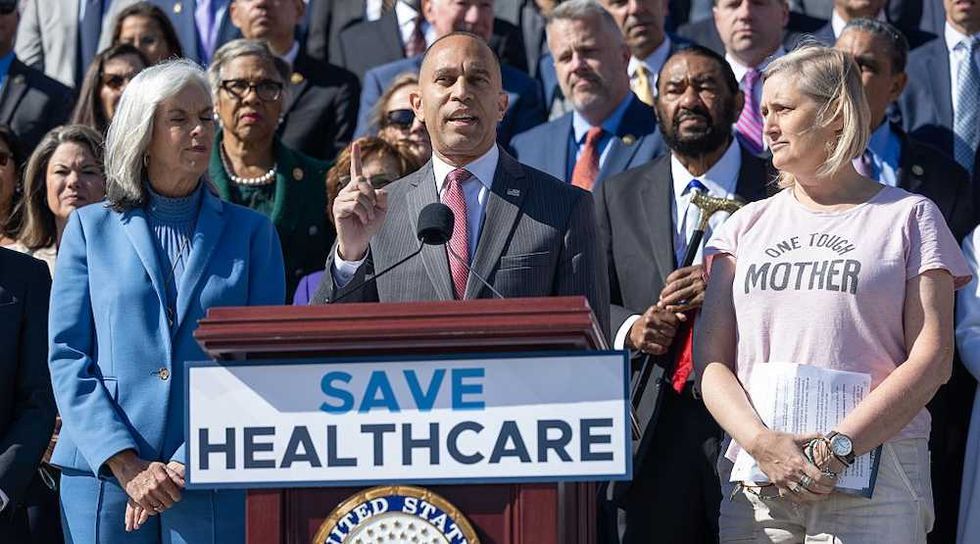 Photo by Nathan Posner/Anadolu via Getty Images
Seniors get it. This year, the majority of Medicare beneficiaries are enrolled in Medicare Advantage plans. Over the last two decades, enrollment in Medicare Advantage has skyrocketed. Unsurprisingly, polling shows 93% of Medicare Advantage enrollees were satisfied or very satisfied with their coverage, and 94% would recommend it to their family and friends. The Congressional Budget Office now projects that by 2034, Medicare Advantage could account for nearly two-thirds of all Medicare beneficiaries.
The model for the future
Medicare Advantage provides the model for quality, affordable health care for seniors that aligns with what they prefer. Reducing regulatory burdens and barriers within the insurance market will provide Medicare Advantage plans greater flexibility and even entice those insurers leaving the Medicare Advantage market to reconsider.
Medicare cannot continue as purely fee‑for‑service without reform — neither for the medical and financial health of Americans, nor for the sake of the federal budget. The current fiscal challenges plaguing the federal budget demand models that can bend the cost curve while improving quality. Medicare Advantage is not a cure-all, but it is among the most promising tools in the toolbox.
Mamdani’s false Tolerance Boulevard ends in darkness
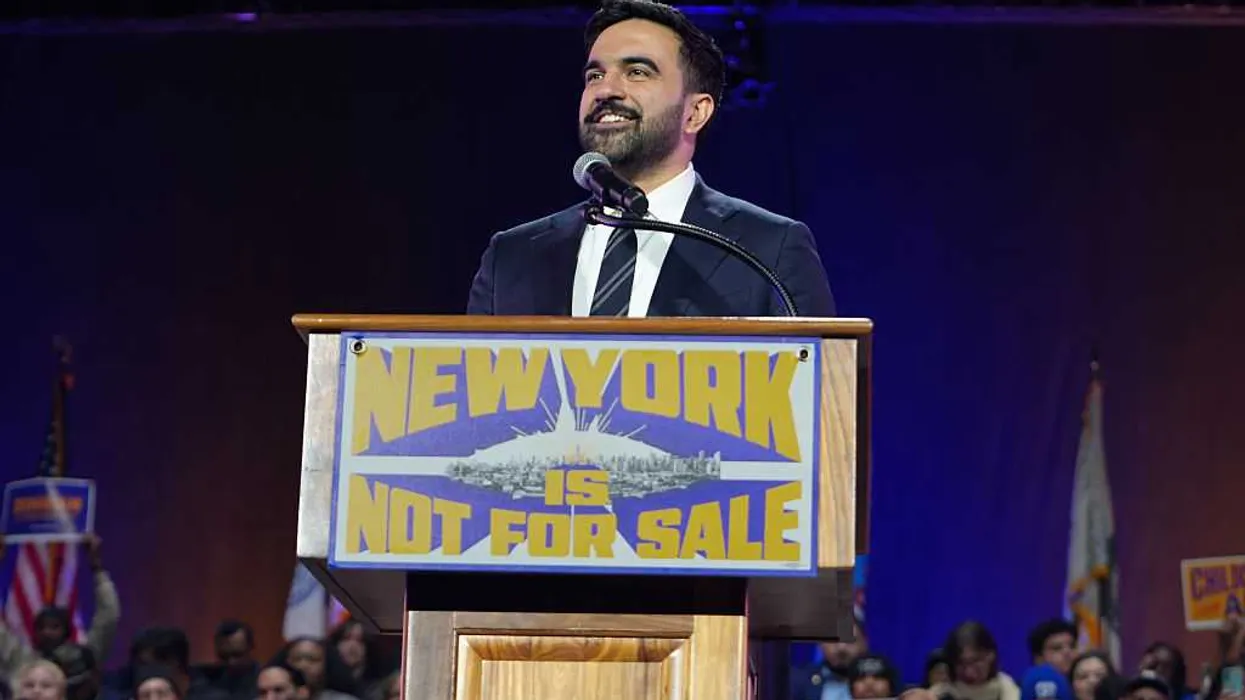
Everybody knows the real victims of 9/11 weren’t the 3,000 murdered Americans or their grieving families. No, according to the new progressive hierarchy, it’s Zohran Mamdani’s second cousin — thrice removed, four times hijabed — who claims she was once offended on the subway. Allegedly.
So if you’re keeping score at home in the “words are violence” sweepstakes, here’s the latest update: Something that probably never happened is righteous if it helps an Islamic socialist become mayor of America’s largest city. Meanwhile, Virginia’s Democratic candidate for attorney general gets a pass for fantasizing about the murder of a Republican lawmaker and his family.
Nothing new under the sun. Just another civilization sprinting toward its chosen darkness, proud all the way.
You’d think New Yorkers might have enough self-respect not to be played so easily — especially when it comes to one of the most fateful days in American history. But no. Apparently Loki was right. They were made to be ruled — and by the very people who treat the ashes of Ground Zero as a holiday display.
I’d wager real money that at least one family member of a 9/11 victim will vote for Mamdani next week. Loki, it seems, must have read John Calvin at some point in his multiverse journey: When God wants to punish a rebellious people, He gives them wicked rulers.
The worldview beneath the wreckage
We can’t outrun our worldview. Because worldview is destiny. When a people deny reality, they descend into madness. That’s what’s happening to those voting for Mamdani. They are largely godless, and once you reject the author of reality, you’re on a short, steep slide toward hell.
Hell, for its part, knows how to work with human nature. The devil discovered long ago that our fallen desire to shake a fist at God rivals even his own. That’s how you get from watching the Twin Towers fall to, just 25 years later, electing a man who shares the same ideology as one of the hijackers.
Not secretly. Not reluctantly. These voters are proud of it. They’ll call friends and family “racists” and “Nazis” for disagreeing. Such is the will to power when you reject God: The world must be turned upside down and morality twisted into a hall of mirrors.
When even Ayn Rand saw the abyss
Ayn Rand, no friend of Christianity, at least saw the problem. In an interview late in life, she told Phil Donahue that without some objective truth in the universe, nothing else made sense. Why do we reason instead of acting on instinct like animals? Rand recognized, however dimly, that a world without truth collapses into nihilism.
But that clarity is rare. Rand was a unicorn. Most people in her camp never do the math. They end up voting for their captors, praising their murderers, and calling it freedom.
The short version is simple: If you’re not in Christ’s camp, you belong to chaos. There are no neutral parties. Hell is happy to let you think otherwise — right up to the moment the darkness slams the door shut.
The believer’s tension — and the city’s choice
Every true believer wrestles with the tension between judgment and mercy. We are commanded to love God with our whole heart, mind, and strength — and to love our neighbor as ourselves. You can’t be “nicer than God,” but you must strive to let mercy triumph over judgment whenever you can.
RELATED: Zohran Mamdani’s Soviet dream for New York City
 Photo by: Lindsey Nicholson/UCG/Universal Images Group via Getty Images
New York doesn’t care. The city long ago chose the darkness, which knows no such tension. Evil allows the illusion of tolerance until the moment comes to plant its flag.
By all means, take one more stroll down Tolerance Boulevard, Big Apple, and see where it ends. You’ll find it’s a one-way street to annihilation.
The math checks out
New York has made its peace with godlessness. First it worshiped the idol of corporate power. Then it voted for Sandinista Bill de Blasio’s Marxism. Now it’s ready to give the false god of Islam a chance to shatter its soul completely. The math checks out every time.
Nothing new under the sun. Just another civilization sprinting toward its chosen darkness, proud all the way.
God help us all.
Conservatives turn their fire on each other after Charlie Kirk’s assassination

The horrific assassination of Charlie Kirk in September should have united Americans. Instead, it split them even further. Conservatives watched too many of their countrymen on the left openly cheer the murder, and even weak denunciations often suggested Kirk got what he deserved.
For a time, the right rallied — praising Kirk and demanding justice. That unity didn’t last. A furious fight over Kirk’s legacy followed, and that’s worse than politics: It’s destroying the movement he built.
Charlie Kirk’s death was a monstrous crime. Let it not become the occasion for tearing the movement he led to pieces.
George Washington spent much of his Farewell Address warning the young republic about foreign entanglements. He praised American separation from Europe’s great power intrigues and warned that making any foreign state a favored nation would corrupt domestic politics. Washington foresaw factions forming around foreign loyalties and predicted patriots who raised concerns about foreign influence would be branded traitors.
His warning applies now, and the fracture cuts through conservatism itself. The United States has long allied with Israel — sharing intelligence, aid, and military cooperation. Many conservatives, especially evangelicals, treat support for Israel as near-religious obligation. Others point to practical security benefits in the Middle East. That religious devotion makes criticism of the relationship politically perilous. You can denounce Britain or Germany without being vilified. Question our alliance with Israel, and you risk immediate slurs — racist, anti-Semite, bigot.
As Washington warned, centering policy on a foreign nation invites domestic discord and foreign meddling. Qatar and other Gulf states now pour money into U.S. institutions. Diasporas like India attempt to consolidate as a power bloc. None of this would surprise Washington. It was predictable. Still, both sides chatter past his counsel — and refuse the restraint he urged.
Anger misdirected
Charlie Kirk excelled at coalition building and peacemaking. He united disparate conservatives behind Trump and MAGA. That’s why the civil war over his death is so corrosive. Conspiracy theories swirl. Former allies denounce one another in his name. Private texts between Kirk and fellow influencers have been leaked and used as weapons. The spectacle is inhuman.
The impulse to treat Kirk’s private words as scripture echoes how people now treat the Constitution — stripping context until the document becomes a cudgel for whatever program you prefer. Left and right both reduce texts to proof texts; neither seeks the actual meaning.
Kirk’s position on Israel was complicated. He loved and supported the state and saw biblical significance in its existence, yet he also held America First concerns about military commitments and complained about pressure from Zionist donors who pushed TPUSA to cancel conservatives. He sought to defuse right-wing animosity toward Israel through messaging at home and tempering excesses abroad. His views were nuanced — like most people tend to be when the shouting stops.
Instead of using the outrage over his assassination to crush the left-wing terror network behind it, too many conservatives turned inward and drew long knives. One faction hates Israel so fiercely it would harm America; another treats any deviation from absolute support as treason.
At the moment, conservatives should unify for survival, they trade blows over purity tests.
Opponents or enemies?
The reality is simple: Israel will remain. The conservative movement needs a coherent strategy. Religious devotion among evangelicals will persist, but it’s waning among younger Christians. Pro-Israel advocates must make a practical case to younger conservatives if they want broad support. Those who question the tie to Israel will keep growing in number.
If pro-Israel conservatives want to avoid the radicalization they fear, they must tolerate dissent within the coalition without staging public witch hunts. Those who seek to re-evaluate the relationship should keep arguments factual and pragmatic. Washington’s cautions about favored nations and about letting hatred sabotage the country remain relevant.
RELATED: Christians are refusing to compromise — and it’s terrifying all the right people
 rudall30 via iStock/Getty Images
We saw, after Kirk’s killing, how large segments of the left revealed a murderous contempt for conservatives. That truth cannot be unseen. But within conservatism, the critical question is whether your rival on the right is an opponent to debate or an enemy to be excised. Zionist or skeptic, neither camp is calling for your child to be shot. That low bar — refusing to wish literal violence on fellow citizens — must hold if conservatives hope to form a durable coalition.
This is not an appeal to centrism. I have my views and have argued them plainly. But Kirk wanted a movement that could hold together. He worked to build a broad tent. The conservative civil war must end because the stakes are too high.
If conservatives continue sniping through Kirk’s memory, they will squander their political capital and invite worse divisions. Washington warned us what happens when foreign loyalties and religious fervor distort public life; he warned that factional hatred breaks nations. Conservatives ought to remember that now — not to moderate principle for its own sake, but to preserve the only structure that allows principle to matter: a functioning political majority.
Charlie Kirk’s death was a monstrous crime. Let it not become the occasion for tearing the movement he led to pieces. The left must be opposed forcefully and without mercy in politics, but infighting on the right hands them victory. Put down the knives. Honor Kirk by building the coalition he believed in — or watch the movement dissolve into impotence.
Bill Gates quietly retires climate terror as AI takes the throne

For decades, Americans have been told that climate change is an imminent apocalypse — the existential threat that justifies every intrusion into our lives, from banning gas stoves to rationing energy to tracking personal “carbon scores.”
Microsoft co-founder Bill Gates helped lead that charge. He warned repeatedly that the “climate disaster” would be the greatest crisis humanity would ever face. He invested billions in green technology and demanded the world reach net-zero emissions by 2050 “to avoid catastrophe.”
The global contest is no longer over barrels and pipelines — it is over who gets to flip the digital switch.
Now, suddenly, he wants everyone to relax: Climate change “will not lead to humanity’s demise” after all.
Gates was making less of a scientific statement and more of a strategic pivot. When elites retire a crisis, it’s never because the threat is gone — it’s because a better one has replaced it. And something else has indeed arrived — something the ruling class finds more useful than fear of the weather.
The same day Gates downshifted the doomsday rhetoric, Amazon announced it would pay warehouse workers $30 an hour — while laying off 30,000 people because artificial intelligence will soon do their jobs.
Climate panic was the warm-up. AI control is the main event.
The new currency of power
The world once revolved around oil and gas. Today, it revolves around the electricity demanded by server farms, the chips that power machine learning, and the data that can be used to manipulate or silence entire populations. The global contest is no longer over barrels and pipelines — it is over who gets to flip the digital switch. Whoever controls energy now controls information. And whoever controls information controls civilization.
Climate alarmism gave elites a pretext to centralize power over energy. Artificial intelligence gives them a mechanism to centralize power over people. The future battles will not be about carbon — they will be about control.
Two futures — both ending in tyranny
Americans are already being pushed into what look like two opposing movements, but both leave the individual powerless.
The first is the technocratic empire being constructed in the name of innovation. In its vision, human work will be replaced by machines, and digital permissions will subsume personal autonomy.
Government and corporations merge into a single authority. Your identity, finances, medical decisions, and speech rights become access points monitored by biometric scanners and enforced by automated gatekeepers. Every step, purchase, and opinion is tracked under the noble banner of “efficiency.”
The second is the green de-growth utopia being marketed as “compassion.” In this vision, prosperity itself becomes immoral. You will own less because “the planet” requires it. Elites will redesign cities so life cannot extend beyond a 15-minute walking radius, restrict movement to save the Earth, and ration resources to curb “excess.” It promises community and simplicity, but ultimately delivers enforced scarcity. Freedom withers when surviving becomes a collective permission rather than an individual right.
Both futures demand that citizens become manageable — either automated out of society or tightly regulated within it. The ruling class will embrace whichever version gives them the most leverage in any given moment.
Climate panic was losing its grip. AI dependency — and the obedience it creates — is far more potent.
The forgotten way
A third path exists, but it is the one today’s elites fear most: the path laid out in our Constitution. The founders built a system that assumes human beings are not subjects to be monitored or managed, but moral agents equipped by God with rights no government — and no algorithm — can override.
RELATED: How Bill Gates and friends turned global health into a profit machine — at your expense
 AvigatorPhotographer via iStock/Getty Images
That idea remains the most “disruptive technology” in history. It shattered the belief that people need kings or experts or global committees telling them how to live. No wonder elites want it erased.
Soon, you will be told you must choose: Live in a world run by machines or in a world stripped down for planetary salvation. Digital tyranny or rationed equality. Innovation without liberty or simplicity without dignity.
Both are traps.
The only way
The only future worth choosing is the one grounded in ordered liberty — where prosperity and progress exist alongside moral responsibility and personal freedom and human beings are treated as image-bearers of God — not climate liabilities, not data profiles, not replaceable hardware components.
Bill Gates can change his tune. The media can change the script. But the agenda remains the same.
They no longer want to save the planet. They want to run it, and they expect you to obey.
Zohran Mamdani’s Soviet dream for New York City
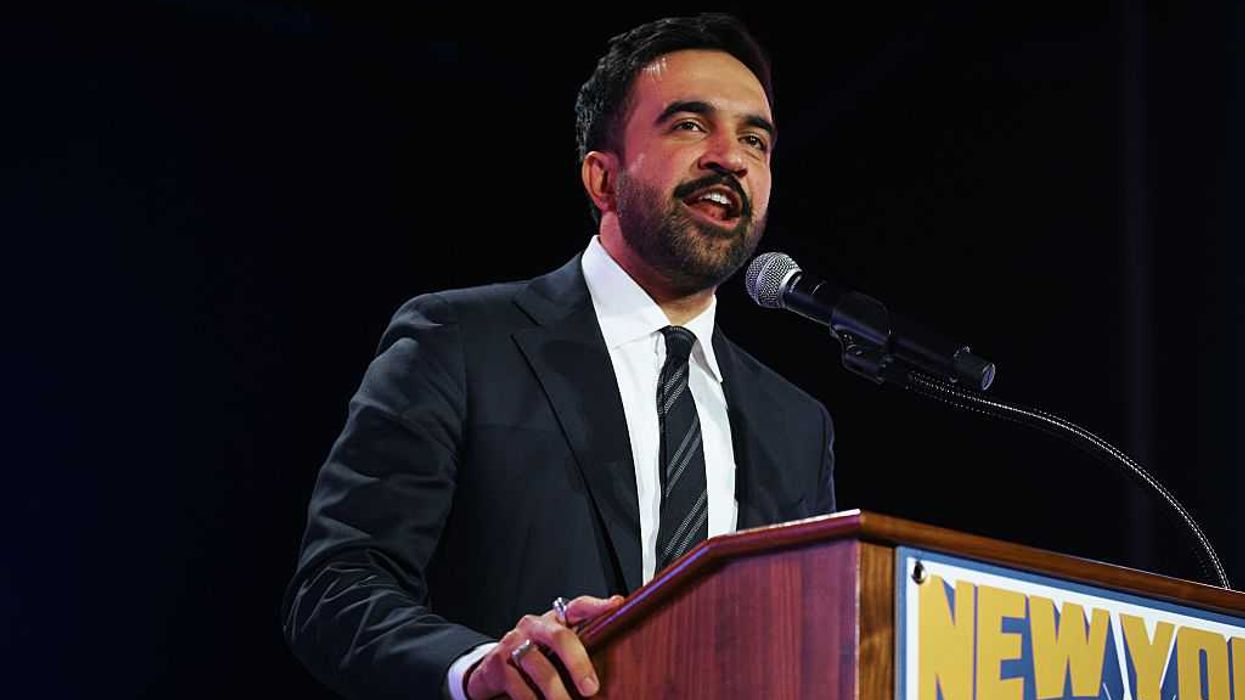
At a packed rally in Queens on Sunday, New York mayoral candidate Zohran Mamdani reinforced his far-left vision for remaking America’s largest city.
Among his proposals: government-run grocery stores, free public transportation, 200,000 government-built apartments, universal childcare, and a rent freeze for the city’s one million rent-stabilized apartments.
Only a socialist could argue that taking away people’s property rights and centralizing power enhances individual freedom.
The price tag for Mamdani’s most ambitious ideas comes to nearly $7 billion a year — more than the city’s entire police budget.
Mamdani, a self-described democratic socialist, shared the stage with Sen. Bernie Sanders (I-Vt.) and Rep. Alexandria Ocasio-Cortez (D-N.Y.), two of the country’s best-known socialist stars. Both praised Mamdani as the future of progressive politics.
Like Sanders and Ocasio-Cortez, Mamdani claims he can fund his agenda by taxing the rich and targeting corporations. He wants to raise the top corporate tax rate from 7.25% to 11.5% and increase the city’s income tax by two percentage points for anyone earning $1 million or more.
Those ideas have energized his base and helped him surge in the polls. Yet his lead is not secure. Critics from both parties warn that Mamdani’s high-tax, high-spending platform would drive wealthy residents and businesses out of New York, worsening the city’s economic and fiscal problems.
But Mamdani’s biggest obstacle isn’t fiscal — it’s philosophical.
Even in deep-blue New York, voters hesitate to hand power to a democratic socialist. Socialism’s record is clear: It limits freedom, crushes economies, and breeds instability.
To ease those fears, Mamdani’s campaign has begun to reframe socialism as a path to freedom rather than its enemy. At his rally over the weekend, he told the crowd: “No New Yorker should ever be priced out of anything they need to survive. … It is government’s job to deliver that dignity.” Then he added, “Dignity, my friends, is another way of saying freedom.”
In Mamdani’s view, freedom comes from the state guaranteeing life’s essentials — food, housing, transportation, childcare. To provide those things, government must seize and redistribute private wealth. Mamdani calls this process “delivering dignity,” which he equates with liberty itself.
That logic turns freedom on its head. Only a socialist could argue that taking away people’s property rights and centralizing power enhances individual freedom.
This rhetorical sleight of hand is not new. It’s straight from the socialist and communist propaganda of the 20th century.
Article 39 of the 1936 Soviet Constitution claimed that socialism “ensures enlargement of the rights and freedoms of citizens.” Fidel Castro’s 1976 Cuban Constitution promised “the freedom and full dignity of man” through a state guarantee of social services.
Even Joseph Stalin cloaked authoritarianism in the language of freedom. In a 1936 interview, he insisted that socialism was built “for the sake of real personal liberty,” arguing that “real liberty can exist only where there is no unemployment and poverty.”
Intentionally or not, Mamdani’s speeches echo those same lines. And he’s far from the first democratic socialist to do so. Julius Nyerere in Tanzania, Olof Palme in Sweden, and Aneurin Bevan in Britain all used similar arguments to justify state expansion in the name of “freedom.”
RELATED: Why Zohran Mamdani will be ‘one of the most catastrophic mayors ever’
 Photo by Victor J. Blue/Bloomberg via Getty Images via Getty Images
That’s no coincidence. Mamdani is a student of socialist history, and his rhetoric mirrors the Marxist premise that true liberty requires the abolition of private property. In his 1844 essay “Private Property and Communism,” Karl Marx wrote, “The abolition of private property is therefore the complete emancipation of all human senses and qualities.”
Every socialist movement since has repeated that creed, always promising “real freedom” while consolidating control over wealth, work, and speech.
History shows what those promises yield: less freedom, not more. The more government collectivizes decision-making, the less room individuals have to think, speak, or prosper.
New York City has enormous problems, but reviving the century’s old, failed ideas of socialism won’t solve them. If anything, they’ll accelerate decline.
The city’s revival depends on the principles that built it into a global capital in the first place — limited government, free markets, low taxes, and the liberty to rise through one’s own effort.
If Mamdani truly wants to bring dignity and freedom to New Yorkers, he should reject the hollow slogans of socialism and embrace the real promise of liberty that made America — and New York — great.
Ballots by Prime: Democracy’s dangerous next-day delivery

When 250 state ballots arrive in your Amazon order, faith in election security gets harder to defend. Yet that’s exactly what happened to a woman in Newburgh, Maine, who opened her package of household items to find five bundles of 50 official Maine referendum ballots.
Adding to the irony, the ballots were for Question 1 — a measure asking voters whether to tighten absentee ballot rules and require photo ID. The woman did the right thing and called authorities. But what if she hadn’t?
How can citizens trust the vote when ballots appear as shipping mistakes?
Now under investigation, the bizarre mix-up raises urgent questions. Who had access to the ballots? Were chain-of-custody rules violated? How many more ballots might be “out for delivery”?
For years, skeptics of election fraud have claimed concerns about ballot integrity are overblown. Yet events like this prove the opposite: The system is riddled with vulnerabilities. When official ballots wind up in an Amazon box, the process is beyond merely “flawed” — it’s broken.
Election officials and lawmakers must confront an uncomfortable truth: The safeguards meant to protect our democracy aren’t working. Anyone arguing against stronger voter ID laws should look to Newburgh. How can citizens trust the vote when ballots appear as shipping mistakes?
This isn’t a partisan issue. It’s a test of whether Americans still believe their votes matter. A democracy depends on a transparent, verifiable process — from printing to counting. When that chain breaks, confidence collapses.
Newburgh should be a wake-up call. Every ballot must be tracked, every voter verified, every election beyond reproach. Reassurances and press conferences won’t cut it. Citizens deserve a voting system that’s airtight, accountable, and secure. Anything less insults the republic.
Commonsense reforms aren’t complicated. Require a government-issued photo ID to vote — the same standard used to board a plane, buy a beer, or enter a federal building. For mail-in ballots, require proof of identity both when requesting and returning a ballot. Without that, the system leaks from every seam.
RELATED: Honor system? More like fraud system
 Photo by Moor Studio via Getty Images
When ballots get rerouted into cardboard boxes unnoticed, the integrity of democracy itself comes into question. It signals a culture that prizes convenience over vigilance, treating ballots like junk mail instead of sacred instruments of self-government.
Democracy doesn’t collapse in secret; it erodes in daylight while people look away. That’s why reform must be bold, not bureaucratic. States need top-to-bottom reviews of how ballots are printed, stored, distributed, and tracked — and consequences for failures.
If democracy is worth defending, ballots are worth protecting. Anything less, and we’ve already surrendered what makes the vote sacred.





