

Category: Opinion & analysis
Bitcoin and the return of honest money

Bitcoin. Cryptocurrency. Blockchain. A decade ago, most Americans hadn’t heard those words. Even now, many don’t fully grasp what they mean. Some still dismiss Bitcoin as an internet fad — yet with one coin worth roughly $119,000, the joke is wearing thin.
The real story isn’t the price. It’s what Bitcoin represents: freedom, trust, and control over your own money. Those are conservative principles — and conservatives should embrace them.
Honest money for a dishonest age
In Denton County, Texans understand independence. We work hard, save what we can, and expect our money to keep its value. But Washington keeps printing dollars to solve political problems, and every new round of “stimulus” steals a little more of what Americans earn. That’s a big reason groceries, gas, and housing cost so much more today.
At its heart, Bitcoin isn’t about tech or speculation. It’s about trust — and keeping financial power in the hands of citizens instead of bureaucrats and corporations.
Bitcoin doesn’t play that game. Its supply is capped at 21 million coins forever. No bureaucrat or central banker can “stimulate” the economy by diluting your savings. It’s steady, transparent, and immune to the inflationary habits of modern government.
That’s not radical — it’s a return to honest value. Early Texans traded cattle, crops, and tools, and a handshake sealed the deal. Bitcoin is a digital version of that same trust: value backed by proof of work, not political decree.
Freedom in your own hands
Bitcoin is, at its core, a conservative idea. It rewards effort, limits government control, and protects personal liberty. You can own every rifle and round of ammunition in the world, but if the government freezes your bank account, you’re stuck. With Bitcoin, you control your money. Nobody can seize it.
The network itself is decentralized — millions of computers around the globe share the ledger. No single government, company, or regulator can shut it down. If one node fails, the others keep the system alive. It’s built to endure.
Lessons for a digital age
That model should guide how we build other technologies. Take artificial intelligence. Meta just poured $14 billion into one massive data center — a single point of failure. One cyberattack or natural disaster could wipe it out. America should follow Bitcoin’s example: distribute computing power, build smaller centers across the country, and bring skilled jobs to local communities like ours.
RELATED: ‘Lipstick on a pig’: How printing cash is destroying America — and crypto could be next
 dem10 via iStock/Getty Images
Bitcoin also saves money. Send $1,000 through a credit card processor and you’ll lose $40 in fees. Send it through Bitcoin and it costs about four cents. That difference matters to small businesses, churches, and local campaigns. Political donations in Bitcoin should be legal nationwide — transparent, secure, and independent of the big banks that profit from the current system.
A return to honest value
At its heart, Bitcoin isn’t about tech or speculation. It’s about trust — and keeping financial power in the hands of citizens instead of bureaucrats and corporations.
Here in Denton County, we understand that kind of freedom. It’s the same spirit that settled Texas: work hard, hold what’s yours, and keep government out of your pockets.
Bitcoin isn’t the future of money. It’s the return of honest money — and conservatives should lead the charge to make it America’s next great success story.
Like it or not, Dick Cheney paved the way for Donald Trump

The great British statesman Enoch Powell observed nearly 50 years ago: “All political lives, unless they are cut off in midstream at a happy juncture, end in failure, because that is the nature of politics and of human affairs.” Dick Cheney is no exception to Powell’s hard rule.
Our newspapers and publications in the coming days will be rife with surreal and false remembrances of the former vice president, who died Tuesday, age 84.
Surreal, because Democrats who spent a lifetime vilifying the man will laud him in death as a great statesman who opposed President Donald Trump and the populist right, while members of his own party will hold his legacy in significantly lower esteem.
Fake, because political commentators are incapable of remembering a time before Trump and can only “remember” the past by projecting their present emotions onto it.
When reviewing the former vice president’s complete antipathy for President Trump, it’s difficult to see it as having been anything but deeply personal.
Before many of my colleagues seem able to remember, Cheney was the consummate political badass, an archetype of ruthlessness, a meme before the meme wars. His economics and foreign policy deserve their exile from today’s Republican Party, but in his day, he bucked hard against the Republican urge to compromise with the rising American left and showed little sympathy for the wails of his opponents.
Cheney refused a role as polite, controlled opposition. He wielded political power without apology and helped rebuild the executive authority and culture Trump and the populists now wield to great effect. In a final irony, Cheney’s arrogance abroad — using military power to secure American energy interests and spread democracy — achieved neither. Instead, his failures cleared the way for the populist revolt that remade his party beyond recognition.
First, Dick Cheney the badass. He left Wyoming for Yale on a scholarship — and quickly flunked out. Undeterred, he returned — and flunked out again. Yale decided he wasn’t cut out to be a Yalie after all.
Despite his considerable intelligence, young Cheney headed back west, took a job as a power-company lineman, and began dating Lynne Ann Vincent, the woman who would become his wife of 61 years.
But his time back in Wyoming didn’t start off so well. Five days before the 2000 election, when news broke that George W. Bush had been arrested for drunk driving a quarter-century earlier, Cheney trumped his boss (for the first of many times), revealing he had two DUIs. It was Lynne, the more disciplined scholar, who convinced him to get his act together and go back to school.
“Lynne, after spending a semester in Europe, had graduated summa cum laude from Colorado College,” Cheney later wrote about those early days. “And I was sleeping off a hangover in the Rock Springs jail.”
After earning his degree, Cheney went to Washington, where his lifelong friend Donald Rumsfeld recruited him into Richard Nixon’s White House. When President Gerald Ford made Rumsfeld defense secretary, Cheney succeeded him as White House chief of staff.
After Ford’s defeat in 1976, Cheney ran for Congress. At 37, he suffered the first of five heart attacks while campaigning — but still won, beginning a five-term House career that ended when President George H.W. Bush named him secretary of defense. In this role, he successfully prosecuted the Gulf War.
After Bush’s loss to Bill Clinton in 1992, Cheney left public life, only returning after Bush’s son tapped him to find the best possible vice president for his ticket. In typical Cheney fashion, he found himself — and accepted the oft-derided job only if it came with a broad and influential portfolio of responsibilities.
Haunted by what he saw as the post-Watergate diminishment of the presidency, Cheney spent eight years under George W. Bush pushing for a more muscular executive branch. He championed an aggressive, sometimes vicious foreign policy, restrained the administration’s more liberal impulses, and redefined the modern presidency for a generation.
But the years in Washington didn’t tame the old Wyoming lineman’s temper. During a Senate-floor photo op in 2004, he told Sen. Patrick Leahy (D-Vt.) to “go f**k yourself.” Charles Krauthammer wrote one of the better columns on the incident, calling it one of the great political moments of the era. When the comedian Dennis Miller brought it up in 2010, Cheney grinned and called it “sort of the best thing I ever did.”
His scowling visage became a fixture in the deeply Democratic press of the 2000s. When C-SPAN caught him lurking in the bushes while Bush delivered a Rose Garden address, the images instantly went viral. Far from shrinking from his villainous reputation — he embraced the nickname “Darth Vader” — the vice president reveled in the left-wing media’s scorn.
One of his lasting frustrations was his boss’ refusal to pardon Scooter Libby — the longtime aide wrongly accused of leaking a CIA agent’s identity. Bush and Cheney’s relationship never recovered.
By all appearances, Cheney seemed the sort of man who might have welcomed Donald Trump’s rise. He came from a blue-collar state, and the administration that followed his had toyed with prosecuting him for war crimes. Barack Obama’s attorney general, Eric Holder, even flirted publicly with the idea. Trump, in contrast, pardoned Cheney’s friend Libby during his first term.
Yet Cheney chose a different course — one that would define, and in many ways tarnish, his legacy.
His hostility toward Trump wasn’t ideological; it was personal. Trump had done much that Cheney once claimed to value: building close ties with Israel’s hawkish leadership, confronting Iran, reasserting U.S. dominance in the Western Hemisphere, and strengthening NATO by forcing European allies to pay more for their own defense. Their disagreements on trade hardly explain Cheney’s claim that “in our nation’s 246-year history, there has never been an individual who is a greater threat to our republic” than Trump.
The truth is that beyond simply challenging the foreign-policy blob consensus, Trump was the first Republican candidate for president since Rep. Ron Paul (R-Texas) to explicitly attack the Bush administration’s record on 9/11, Iraq, and Afghanistan. As president, Trump completely disavowed the reckless and destructive decades of war in the Middle East and Central Asia.
When Liz Cheney (R-Wyo.) joined Democrats in their campaign to destroy Donald Trump after the events of Jan. 6, 2021, the Republican base mocked her and unceremoniously ejected her from power. She lost her leadership post, her primary, and the loyalty of the movement her father helped build. That humiliation cut deep. For a man as proud — and prideful — as Dick Cheney, the rejection did not sit well.
His bitterness during Trump’s first term hardened into something darker. Cheney lent credibility to the Russia hoax and, in one of his final political acts, endorsed Kamala Harris. It was a sad, almost tragic coda to a long and consequential career.
In the end, Cheney fulfilled Enoch Powell’s old truth about politics — one he would have recognized but never admitted. “All political lives, unless they are cut off in midstream at a happy juncture, end in failure.” Powell’s words have echoed through this story from the start, but they fit Cheney too perfectly to ignore.
He left politics the way he lived it: defiant, scowling, and unwilling to bend. The man who once told a U.S. senator to “go f**k yourself” had one final message for the movement he ultimately could not control. Rest in peace.
Sign up for Bedford’s newsletter
Sign up to get Blaze Media senior politics editor Christopher Bedford’s newsletter.
How H-1B hires broke USAA’s bond with veterans
The United Services Automobile Association is one of the most venerable names in banking and insurance, a company that prides itself on its service to members of the military and their families. In recent years, however, USAA has run into serious financial trouble due to a combination of mismanagement, fashionable diversity, equity, and inclusion policies, and the firm’s increasing reliance on incompetent and untrustworthy H-1B workers, most of whom are from India.
A significant number of current and former USAA employees have come forward to discuss what they describe as a toxic workplace culture, which has led to an alarming number of employee suicides, and the company’s outsourcing of critical functions to H-1Bs and Indian consultancies, putting at risk the financial data of its customers, which include high-ranking members of the U.S. armed forces.
What began as a cost-cutting strategy in the early 2000s now threatens the stability of an institution long trusted by veterans.
Insiders granted anonymity to avoid retaliation say USAA’s decline began in the 2000s under then-CEO Robert G. Davis, who outsourced IT and other core functions to H-1B contracting firms such as Tata Consultancy Services. Those firms imposed contracts requiring USAA to maintain minimum staffing levels, creating chronic overstaffing. Idle contractors were reportedly assigned “busywork” to meet quotas, with conference rooms converted into laptop farms where workers sat “packed like sardines.”
One insider described the result as “incredibly incompetent” operations. Projects that U.S.-based employees could complete on time were instead handed to H-1B contractors who often lacked the necessary skills and required retraining.
From cost-cutting to collapse
At the same time, USAA repeatedly laid off American staff and replaced them with foreign workers, driving labor costs higher and eroding institutional knowledge. Davis retired abruptly in 2007, but his successors continued his policies, expanding USAA’s offshore footprint with new IT centers in Guadalajara, Mexico, and Chennai, India.
Insiders say H-1B contractors at USAA often lack basic programming skills, compounding inefficiency. In one case, a credit card processing problem baffled contractors for six months until the company brought back a retired American employee, who solved the problem in a matter of days. The constant visa turnover worsens the issue. Skilled H-1Bs leave after six years, draining institutional knowledge. Turnover is even higher at USAA’s Guadalajara facility, where Indian employees reportedly fear cartel violence.
Bureaucratic bloat magnifies these problems. Each team has dual directors, and many systems rely on outdated software. That dysfunction has drawn scrutiny from federal regulators, who fined USAA for failed audits and violations of anti-money-laundering laws. Those failures forced the company to sell off divisions, including real estate, and pushed USAA into persistent losses through much of the decade.
Customers have also felt the effects. Many complain that poorly trained H-1B staff struggle to handle basic service requests. One customer said resolving a fraud alert took hours — and that he now contacts USAA’s top executives directly to get results.
Security risks and cultural decay
USAA’s growing dependence on H-1B contractors and overseas labor has created potential security and compliance risks, according to multiple insiders. The company has outsourced anti-money laundering work to Tata Consultancy Services, which reportedly performs much of that work in India. As a result, the personal financial data of U.S. service members and veterans may be stored or processed abroad.
USAA also shares customer data — including names, addresses, and birth dates — with LexisNexis, with no option for customers to opt out. One customer said he only discovered this practice after receiving a notice in the mail.
RELATED: The visa that ate America’s tech jobs
 subodhsathe via iStock/Getty Images
Inside the company, these policies have coincided with a marked decline in morale. Mass layoffs of veteran employees have preceded at least three suicides, including one who shot himself in a company parking lot. A former director described intervening to stop another potential suicide. Tensions intensified during the COVID-19 pandemic, when USAA defied Texas Republican Gov. Greg Abbott’s executive order banning vaccine mandates.
Employees describe a sharp cultural shift away from USAA’s traditional military ethos toward a mishmash of corporate diversity programming. The company has hosted Diwali celebrations and mandatory DEI events while facing allegations of religious discrimination against Christian employees. One former employee has taken a case to arbitration. Internal surveys reportedly show employee satisfaction at just 33%.
An institution on the brink
Analysts say the company’s reliance on foreign labor and internal instability have eroded its reputation for customer service and financial stewardship. What began as a cost-cutting strategy in the early 2000s now threatens the stability of an institution long trusted by veterans.
Whether USAA can recover will depend on its ability to restore confidence — both among employees and the members it was established to serve.
Editor’s note: The headline and subheadline of this article have been edited after publication.
‘Operation MRE’: Meals, reform, enforcement
As the government shutdown drags on, media pundits warn about a looming “food insecurity crisis.” That’s liberal shorthand for hunger — and if government numbers are correct, some 42 million Americans are supposedly about to go hungry.
Wait a second. That means 1 in 7 Americans relies on food stamps — or, as Washington now calls it, the Supplemental Nutrition Assistance Program.
If a family of illegal aliens shows up, feed them an MRE, then put them on a bus to the nearest deportation flight.
Try this simple test: Look around and count the next seven people you see. Does anyone resemble a refugee from a third-world famine? If so, check his green card. If not, hand him one of Kristi Noem’s “get home free” cards and move along.
Among those 42 million, a fair question arises: How many are genuinely hungry — and how many haven’t missed a free government meal in years, maybe decades?
Here’s a modest proposal. The government shutdown could serve an unexpected purpose — sorting the truly needy from the habitual scammers.
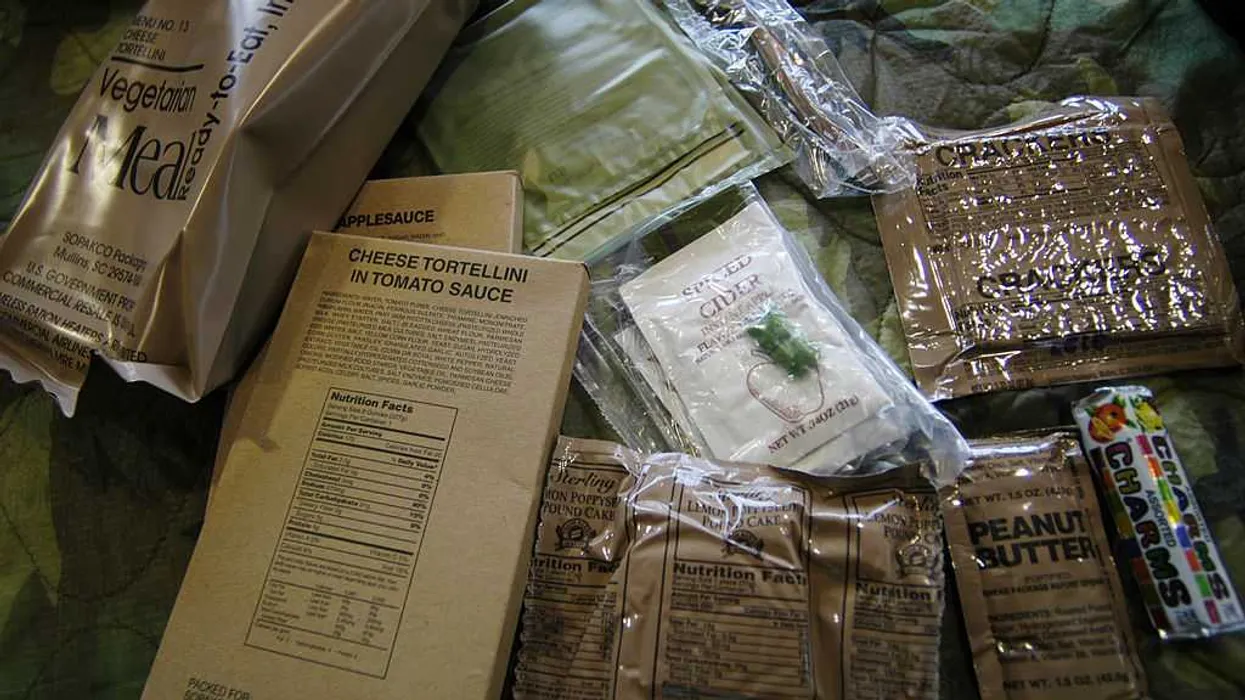
Once the electronic benefit transfer cards run dry, the president should declare a national emergency and order the military to help distribute food directly to Americans in need. Set up relief stations at National Guard armories and military bases in every state.
At each station, ask for a valid government-issued ID and the now-worthless EBT card. Record both, take a quick photo, and hand each applicant a copy of the U.S. dietary guidelines. Then provide meals ready to eat — MREs — from existing military stores. Ask recipients to return the next day for actual groceries, in quantities matching the recommended dietary plan.
RELATED: The food pyramid big lie: How flawed science fed America a toxic diet
 Photo by Joe Raedle / Contributor via Getty Images
That’s how you end food insecurity overnight — while also eliminating “waste, fraud, and abuse.” It’s a win-win!
While they’re there, run basic checks for outstanding warrants, duplicate or fake IDs, and phony EBT cards. In this way, every needy American gets fed, and every scammer gets flagged.
If a family of illegal aliens shows up, feed them an MRE, then put them on a bus to the nearest deportation flight.
If the system works, maybe it’s time to replace the SNAP credit-card model entirely. Instead of government-issued plastic that funds junk food and fraud, Americans in need would receive actual food — efficiently and fairly.
The result? Less waste, lower costs, and fewer excuses for corruption disguised as compassion.
And if this plan exposes just how dependent Democrats have become on managing poverty rather than solving it, so much the better. Once it’s clear that the Bad Orange Man can feed Americans and deport freeloaders in a single stroke, watch how fast Chuck Schumer and company rush to vote for that continuing resolution.
Pity equals power for the progressive class
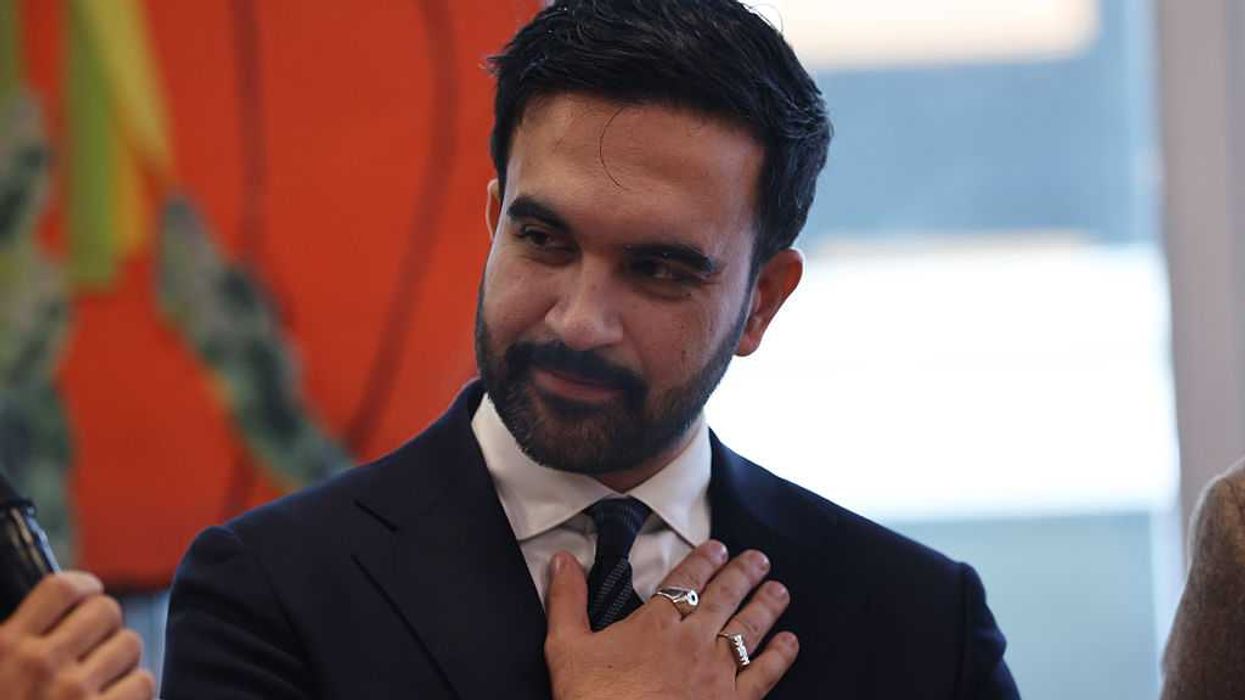
American politics once revolved around ideas — tax reform, national defense, energy independence, health care. But one side of the aisle has abandoned the work of persuasion for the theater of grievance. The modern left no longer campaigns on what it can build but on what has supposedly been done to it.
Victimhood has become the left’s organizing principle. The emotional currency of grievance has replaced the intellectual currency of ideas. That shift isn’t just cynical; it’s corrosive. It undermines the American spirit of self-reliance, accountability, and perseverance — the virtues that built this country in the first place.
Let others compete for who has suffered most. America’s story has never been written by its victims — only by its victors.
Consider New York mayoral candidate Zohran Mamdani. Last month, he delivered a tearful campaign speech recalling how his “aunt stopped taking the subway after 9/11 because she didn’t feel safe in her hijab.” The story went viral. Media outlets rushed to elevate it as another morality play about post-9/11 Islamophobia.
Within days, however, fact-checkers discovered that the “aunt” didn’t live in New York City — and wasn’t his aunt at all but his father’s cousin. The story collapsed, but the damage was done.
Even if the tale were true, Mamdani’s framing was an insult to truth. His version turned the “victim” of 9/11 into someone who merely felt uncomfortable. The real victims were the firefighters who ran into burning towers, the police who breathed toxic dust for months, the passengers of Flight 93 who fought back knowing they would die, the families who never saw their loved ones again. To recast that national tragedy as a story about personal unease is moral inversion.
Privilege posing as persecution
Mamdani is no symbol of oppression. He was born in Uganda to two global elites: filmmaker Mira Nair and Columbia University professor Mahmood Mamdani. Educated at elite institutions, including Bowdoin College in Maine, he embodies privilege — not persecution.
He’s not alone. Rep. Alexandria Ocasio-Cortez has built her career on the same inversion. A graduate of Boston University, raised in a comfortable Westchester suburb, AOC is a product of the meritocracy she derides. Her father was an architect; her family owned a home. Yet her political persona depends on playing the perpetual underdog — the marginalized woman of color silenced by “the patriarchy.”
When criticized, she doesn’t answer with arguments but with emotion. Dissent becomes “hate.” Opposition becomes “bigotry.” As Newsweek once put it, “AOC’s weaponized victimhood undermines women.”
Grievance as status
This inversion — privilege masquerading as oppression — reveals something deeper about the left’s political psychology. Victimhood now confers moral authority. The more wounded you appear, the more virtuous you become. Pain is power.
But grievance politics reshapes the citizen’s role in democracy. Instead of the proud American who builds and contributes, we get the dependent petitioner, perpetually wronged and perpetually in need of government rescue. The state becomes therapist and provider, not guardian of liberty.
That’s why so many progressive campaigns sound like group therapy sessions. The message isn’t, “Here’s how we’ll improve schools or secure the border.” It’s, “Here’s who hurt us, and here’s who must atone.” The goal isn’t reform — it’s retribution.
The vanishing of virtue
When politics becomes a contest of feelings, truth and accountability vanish. Success is no longer measured by safer streets, better jobs, or stronger families, but by how “seen” or “unsafe” someone feels. Emotional satisfaction replaces objective progress.
But the American promise was never about comfort. It was about courage — the willingness to build, to sacrifice, to endure. This nation doesn’t owe its strength to grievance but to grit.
Think back to 9/11. The real victims weren’t the politically convenient ones. They were the firefighters who ran toward the towers, the police who never came home, the husbands and wives who never got to say goodbye, the children who grew up without parents. To twist their sacrifice into a sermon on discomfort dishonors them.
RELATED: The left’s new religion has no logic — and AOC is its perfect preacher
 Photo by Bloomberg / Getty Images
From grievance to gratitude
The contrast couldn’t be clearer. One version of politics says, “I was wronged, therefore I deserve.” The other says, “I was blessed, therefore I will serve.” The left has built a moral economy where pain is currency. Conservatives must offer a different creed — one grounded in purpose, gratitude, and resilience.
Freedom, not fairness, defines America’s promise. Adversity refines character; it doesn’t define it. As the nation nears its 250th birthday, we should remember who we are — a people forged by hardship and lifted by hope.
Let others compete for who has suffered most. We’ll compete for who can spread the most good. America’s story has never been written by its victims — only by its victors.
Riot, repeat: How America’s unrest became a bad rerun

History doesn’t just move forward — it echoes. Karl Marx once said history repeats itself, “first as tragedy, second as farce.” He meant it as a jab at 19th-century France, where Napoleon’s nephew attempted to replicate his uncle’s revolutionary drama not on the battlefield but rather through bureaucratic spectacle. Nevertheless, Marx’s insight fits modern America. Our cycles of unrest and outrage have become predictable theater — each act beginning with moral panic and ending in absurdity.
The summer of 2020 was a national trauma. The killing of George Floyd was a tragedy that radicals turned into revolution. Riots swept through more than 2,000 cities, torching businesses, destroying neighborhoods, and leaving dozens dead. Egged on by the race-baiting activists at Black Lives Matter, mobs looted stores, assaulted police, and terrorized communities.
The line between tragedy and farce is thinner than ever — and this time, we can’t afford to play the fool.
Media outlets downplayed the carnage as “fiery but mostly peaceful.” Political leaders joined the chorus, afraid to confront the mob. Corporate America rushed to signal its virtue by taking the knee, pouring billions into “racial equity” schemes that enriched activists but divided the country.
The real tragedy wasn’t just the damage — it was the betrayal. Spineless mayors and governors surrendered their cities. Police were handcuffed, budgets gutted, and criminals emboldened. The riots hollowed out public trust, replacing civic order with cultural resentment. America’s guardians became scapegoats, and justice itself became negotiable.
From riot to parody
Five years on, the rebellion has devolved into a pathetic sideshow. Antifa’s latest “resistance” — a handful of masked agitators harassing Immigration and Customs Enforcement agents as they carry out long-overdue deportations — feels less like revolution and more like performance art.
Their vandalism is designed for TikTok, not for change: laser pointers at officers, graffiti on walls, choreographed scuffles for social media. It’s a boutique insurgency — staged in deep-blue enclaves, broadcast for dopamine hits, and forgotten the next day.
The chaos of 2020 burned cities. The tantrums of 2025 barely dent a precinct wall. The tragedy has become farce.
Still, both movements spring from the same poisoned root: a left-wing ideology that despises America’s foundations. BLM targeted police as enforcers of “white supremacy.” Antifa brands border agents as fascists for upholding immigration law.
Both rely on the same tactics — decentralized mobs, anonymous online organizing, and emotional manipulation amplified by social media. Both seek power through grievance, not through persuasion. And both reveal how progressive rage, unmoored from reality, becomes self-parody.
In 2020, rioters burned precincts and seized city blocks. They demanded “defund the police” and got it — along with record crime rates and broken neighborhoods. In 2025, their heirs spray-paint slogans and livestream tantrums. Their only victory is visibility.
The digital theater of rage
Social media turned riots into content. In 2020, doctored clips of “police brutality” fueled nationwide hysteria, empowered anti-cop lunatics, and enriched grifters. Today, the same algorithms push Antifa’s posturing, turning vandalism into viral spectacle.
These platforms profit from outrage. They amplify emotion, suppress context, and reward hysteria. The result is a feedback loop of performative politics — activism as cosplay.
After years of indulgence, government crackdowns have finally returned. ICE operates under firm executive backing. Local police departments no longer hesitate to enforce the law. The radicals, once protected, now find themselves exposed and outmatched.
But even as law enforcement regains its footing, the left’s playbook remains unchanged. The grievances are repackaged, the slogans recycled, the media coverage predictable. It’s cultural Marxism with a TikTok filter — ideology as entertainment.
Farce doesn’t mean harmless. Every protest turned stunt still corrodes civic life. Each viral act of defiance feeds distrust in law, borders, and the rule of order itself.
The radicals thrive on illusion: fake oppression, fake urgency, fake rebellion. Meanwhile, real Americans bear the cost — higher crime, divided communities, and institutions too timid to defend themselves.
RELATED: The left’s costume party: Virtue signaling as performance art
 Photo by serazetdinov via Getty Images
The lesson we refuse to learn
The tragedy of 2020 proved that surrendering to the mob invites ruin. The farce of 2025 shows that ridicule alone isn’t enough to defeat it. Both demand resolve — the courage to confront lies, restore order, and defend the institutions that safeguard freedom.
History doesn’t stop repeating itself; it stops being repeated. Whether America ends this cycle depends on whether its citizens choose firmness over fear, enforcement over appeasement, and truth over spectacle.
Enough with the doctored outrage porn. The burning question is whether we’ll tolerate this clown show recycling into catastrophe or crush it with resolve that honors real American values.
The line between tragedy and farce is thinner than ever — and this time, we can’t afford to play the fool.
AI can fake a face — but not a soul

The New York Times recently profiled Scott Jacqmein, an actor from Dallas who sold his likeness to TikTok for $750 and a free trip to the Bay Area. He hasn’t landed any TV shows, movies, or commercials, but his AI-generated likeness has — a virtual version of Jacqmein is now “acting” in countless ads on TikTok. As the Times put it, Jacqmein “fields one or two texts a week from acquaintances and friends who are pretty sure they have seen him pitching a peculiar range of businesses on TikTok.”
Now, Jacqmein “has regrets.” But why? He consented to sell his likeness. His image isn’t being used illegally. He wanted to act, and now — at least digitally — he’s acting. His regrets seem less about ethics and more about economics.
The more perfect the imitation, the greater the lie. What people crave isn’t flawless illusion — it’s authenticity.
Times reporter Sapna Maheshwari suggests as much. Her story centers on the lack of royalties and legal protections for people like Jacqmein.
She also raises moral concerns, citing examples where digital avatars were used to promote objectionable products or deliver offensive messages. In one case, Jacqmein’s AI double pitched a “male performance supplement.” In another, a TikTok employee allegedly unleashed AI avatars reciting passages from Hitler’s “Mein Kampf.” TikTok removed the tool that made the videos possible after CNN brought the story to light.
When faces become property
These incidents blur into a larger problem — the same one raised by deepfakes. In recent months, digital impostors have mimicked public figures from Bishop Robert Barron to the pope. The Vatican itself has had to denounce fake homilies generated in the likeness of Leo XIV. Such fabrications can mislead, defame, or humiliate.
But the deepest problem with digital avatars isn’t that they deceive. It’s that they aren’t real.
Even if Jacqmein were paid handsomely and religious figures embraced synthetic preaching as legitimate evangelism, something about the whole enterprise would remain wrong. Selling one’s likeness is a transaction of the soul. It’s unsettling because it treats what’s uniquely human — voice, gesture, and presence — as property to be cloned and sold.
When a person licenses his “digital twin,” he doesn’t just part with data. He commodifies identity itself. The actor’s expressions, tone, and mannerisms become a bundle of intellectual property. Someone else owns them now.
That’s why audiences instinctively recoil at watching AI puppets masquerade and mimic people. Even if the illusion is technically impressive, it feels hollow. A digital replica can’t evoke the same moral or emotional response as a real human being.
Selling the soul
This isn’t a new theme in art or philosophy. In a classic “Simpsons” episode, Bart sells his soul to his pal Milhouse for $5 and soon feels hollow, haunted by nightmares, convinced he’s lost something essential. The joke carries a metaphysical truth: When we surrender what defines us as human — even symbolically — we suffer a real loss.
For those who believe in an immortal soul, as Jesuit philosopher Robert Spitzer argues in “Science at the Doorstep to God,” this loss is more than psychological. To sell one’s likeness is to treat the image of the divine within as a market commodity. The transaction might seem trivial — a harmless digital contract — but the symbolism runs deep.
Oscar Wilde captured this inversion of morality in “The Picture of Dorian Gray.” His protagonist stays eternally young while his portrait, the mirror of his soul, decays. In our digital age, the roles are reversed: The AI avatar remains young and flawless while the human model ages, forgotten and spiritually diminished.
Jacqmein can’t destroy his portrait. It’s contractually owned by someone else. If he wants to stop his digital self from hawking supplements or energy drinks, he’ll need lawyers — and he’ll probably lose. He’s condemned to watch his AI double enjoy a flourishing career while he struggles to pay rent. The scenario reads like a lost episode of “Black Mirror” — a man trapped in a parody of his own success. (In fact, “The Waldo Moment” and “Hang the DJ” come close to this.)
RELATED: Cybernetics promised a merger of human and computer. Then why do we feel so out of the loop?
 Photo by imaginima via Getty Images
The moral exit
The conventional answer to this dilemma is regulation: copyright reforms, consent standards, watermarking requirements. But the real solution begins with refusal. Actors shouldn’t sell their avatars. Consumers shouldn’t support platforms that replace people with synthetic ghosts.
If TikTok and other media giants populate their feeds with digital clones, users should boycott them and demand “fair-trade human content.” Just as conscientious shoppers insist on buying ethically sourced goods, viewers should insist on art and advertising made by living, breathing humans.
Tech evangelists argue that AI avatars will soon become indistinguishable from the people they’re modeled on. But that misses the point. The more perfect the imitation, the greater the lie. What people crave isn’t flawless illusion — it’s authenticity. They want to see imperfection, effort, and presence. They want to see life.
If we surrender that, we’ll lose something far more valuable than any acting career or TikTok deal. We’ll lose the very thing that makes us human.
The poisoned stream of culture is flowing through our churches


On most days, the creek that runs behind our home in Montana looks like something out of a painting. The water tumbles over slick stones, swirls beneath the wooden bridge, and flashes like glass in the sunlight as it winds through the trees.
On hot afternoons, I take off my boots and stand in it awhile, letting the cold mountain water swirl around my feet. Even in August, it stays clear and shockingly cold — refreshing on hot, dusty feet. It looks so pure and inviting that you’d think you could cup your hands and drink from it.
The world’s water might soothe for a moment, but it can’t sustain. Only Christ, the living water, can cleanse, restore, and refresh a parched heart.
Yet I know better.
While helping a rancher move some cattle across the property, a few of them wandered down into that same creek. They lingered there, swishing tails and doing what cows do. The water still looked clear from a distance, but you certainly wouldn’t drink from it. Even a Supreme Court justice wouldn’t need a biologist to figure that out.
The water in that creek started high in the mountains, clean and cold. It was once pure, but animals do what animals do. People, though, take it further. We pollute on purpose. That’s not instinct; that’s sin.
We talk about free will, and we have it. But left to ourselves, we use it to wreck what was good. The culture isn’t just wandering into the water; it’s content to poison it, and sinners seem to care less about a polluted stream than cows do.
Downstream from belief
We’ve all heard that politics flows downstream from culture. But if you trace that current far enough, you’ll find that culture flows downstream from belief. Whatever people worship, they eventually legislate into law.
Today, we have ceased worshipping God. Instead, we bow before slogans, systems, and grievances that mollify us rather than giving worship to the one to whom it is due. From a distance, it all looks good — flowing with energy, language, and even a sense of virtue. But somewhere upstream, something has wandered into the water — or been poured into it.
Too often, the church is wading downstream, cup in hand, trying to stay “relevant” while drinking what has already been polluted. The poison is sin itself, the moral waste of self-worship that seeps in until it becomes part of the current.
When the church starts drinking downstream, the songs continue, the sermons sound familiar, and the branding shines. But the taste changes. Conviction weakens, holiness becomes optional, and relevance becomes everything. We echo the world’s vocabulary of identity and justice without the foundation of repentance and redemption. The message gets muddied, and we don’t even notice the shift.
And when that happens, the thirstiest suffer first. Those are the ones who come to church desperate for something real.
What really sticks
I’ve spent 40 years as a caregiver, and I’ve learned what real thirst feels like. When you’ve poured yourself out for years, almost any water looks good. You pray for strength, for truth, for something steady, and too often what comes back sounds like marketing. You sit in church and hear, “Claim your victory,” “Speak life,” or, “Step into your blessing,” and you wonder if anyone sees the wreckage you live with. Then, from another pulpit, you hear, “God understands,” “It’s not that bad,” or, “Everyone struggles.”
It sounds compassionate, but it isn’t. It’s corrosion.
The first slick of contamination began with the serpent questioning the Word of God, and all too many pulpits echo that same hiss today. They downplay sin, soften the edges, and serve up messages that keep people comfortable yet captive. They offer sympathy instead of repentance. That’s not grace; that’s decay.
Ornate and large pulpits don’t necessarily mean clean water. Visibility isn’t the same as vision. The purity of the message isn’t measured by the size of the platform of the one delivering it but by how faithfully it points upstream to Christ Himself.
Truth, the real kind, usually starts with one hard word: repent. It’s upstream, and it’s not easy to get there. But that’s where the water runs clean. Downstream, you’ll only find a little contamination, a little compromise, a little manure, and just enough to make you sick.
RELATED: Scripture or slogans — you have to choose
 freedom007 via iStock/Getty Images
I’ve tested the various platitudes and slogans in the emergency room, ICU, and dark watches of the night more times than I can count. None of them hold up.
Here’s what does.
Only one water stays pure no matter who steps in it. It’s the same water that met a Samaritan woman at a well. It’s the same water Isaiah promised when he wrote, “With joy you will draw water from the wells of salvation.” That’s the invitation — not just to the church, but to every soul that’s dry and staggering: Walk upstream.
Go upstream
When we drink deeply from that pure spring, holiness stops feeling like a burden and starts feeling like oxygen. It gives clarity instead of confusion, courage instead of compromise.
That’s the call to the church and to every weary heart. Don’t drink what the world has trampled. Don’t settle for water that only looks clean from a distance. Polluted streams can’t quench the thirst of thirsty people.
The world’s water might soothe for a moment, even cool our weary feet, but it can’t sustain us. Only Christ, the living water, can cleanse, restore, and refresh a parched heart.
So go upstream. The source is still pure, and it’s still flowing.
Artificial intelligence is not your friend

Half of Americans say they are lonely and isolated — and artificial intelligence is stepping into the void.
Sam Altman recently announced that OpenAI will soon provide erotica for lonely adults. Mark Zuckerberg envisions a future in which solitary people enjoy AI friends. According to the Harvard Business Review, the top uses for large language models are therapy and companionship.
Lonely people don’t need better algorithms. We need better friends — and the courage to be one.
It’s easy to see why this is happening. AI is always available, endlessly patient, and unfailingly agreeable. Millions now pour their secrets into silicon confidants, comforted by algorithms that respond with affirmation and tact.
But what masquerades as friendship is, in fact, a dangerous substitute. AI therapy and friendship burrow us deeper into ourselves when what we most need is to reach out to others.
As Jordan Peterson once observed, “Obsessive concern with the self is indistinguishable from misery.” That is the trap of AI companionship.
Hall of mirrors
AI echoes back your concerns, frames its answers around your cues, and never asks anything of you. At times, it may surprise you with information, but the conversation still runs along tracks you have laid. In that sense, every exchange with AI is solipsistic — a hall of mirrors that flatters the self but never challenges it.
It can’t grow with you to become more generous, honorable, just, or patient. Ultimately, every interaction with AI cultivates a narrow self-centeredness that only increases loneliness and unhappiness.
Even when self-reflection is necessary, AI falls short. It cannot read your emotions, adjust its tone, or provide physical comfort. It can’t inspire courage, sit beside you in silence, or offer forgiveness. A chatbot can only mimic what it has never known.
Most damaging of all, it can’t truly empathize. No matter what words it generates, it has never suffered loss, borne responsibility, or accepted love. Deep down, you know it doesn’t really understand you.
With AI, you can talk all you want. But you will never be heard.
Humans need love, not algorithms
Humans are social animals. We long for love and recognition from other humans. The desire for friendship is natural. But people are looking where no real friend can be found.
Aristotle taught that genuine friendship is ordered toward a common good and requires presence, sacrifice, and accountability. Unlike friendships of utility or pleasure — which dissolve when benefit or amusement fades — true friendship endures, because it calls each person to become better than they are.
Today, the word “friend” is often cheapened to a mere social-media connection, making Aristotelian friendship — rooted in virtue and sacrifice — feel almost foreign. Yet it comes alive in ancient texts, which show the heights that true friendship can inspire.
Real friendships are rooted in ideals older than machines and formed through shared struggles and selfless giving.
In Homer’s “Iliad,” Achilles and Patroclus shared an unbreakable bond forged in childhood and through battle. When Patroclus was killed, Achilles’ rage and grief changed the course of the Trojan War and of history. The Bible describes the friendship of Jonathan and David, whose devotion to one another, to their people, and to God transcended ambition and even family ties: “The soul of Jonathan was knit with the soul of David.”
These friendships were not one-sided projections. They were built upon shared experiences and selflessness that artificial intelligence can never offer.
Each time we choose the easy route of AI companionship over the hard reality of human relationships, we render ourselves less available and less able to achieve the true friendship our ancestors enjoyed.
Recovering genuine friendship requires forming people who are capable of being friends. People must be taught how to speak, listen, and seek truth together — something our current educational system has largely forgotten.
Classical education offers a remedy, reviving these habits of human connection by immersing students in the great moral and philosophical conversations of the past. Unlike modern classrooms, where students passively absorb information, classical seminars require them to wrestle together over what matters most: love in Plato’s “Symposium,” restlessness in Augustine’s “Confessions,” loss in Virgil’s “Aeneid,” or reconciliation in Shakespeare’s “King Lear.”
These dialogues force students to listen carefully, speak honestly, and allow truth — not ego — to guide the exchange. They remind us that friendship is not built on convenience but on mutual searching, where each participant must give as well as receive.
Reclaiming humanity
In a world tempted by the frictionless ease of talking to machines, classical education restores human encounters. Seminars cultivate the courage to confront discomfort, admit error, and grapple with ideas that challenge our assumptions — a rehearsal for the moral and social demands of real friendship.
RELATED: MIT professor’s 4 critical steps to stop AI from hijacking humanity
 Photo by Yuichiro Chino via Getty Images
Is classroom practice enough for friendship? No. But it plants the seeds. Habits of conversation, humility, and shared pursuit of truth prepare students to form real friendships through self-sacrifice outside the classroom: to cook for an exhausted co-worker, to answer the late-night call for help, to lovingly tell another he or she is wrong, to simply be present while someone grieves.
It’s difficult to form friendships in the modern world, where people are isolated in their homes, occupied by screens, and vexed by distractions and schedules. Technology tempts us with the illusion of effortless companionship — someone who is always where you are, whenever you want to talk. Like all fantasies, it can be pleasant for a time. But it’s not real.
Real friendships are rooted in ideals older than machines and formed through shared struggles and selfless giving.
Lonely people don’t need better algorithms. We need better friends — and the courage to be one.
Editor’s note: This article was published originally in the American Mind.
Why Mars is America’s next strategic imperative

Space is the defining strategic frontier of the 21st century. America’s space leadership depends on harnessing the private sector to create wealth and focusing the public sector on limited yet critical security and scientific objectives.
While achieving supremacy in cislunar space (the region between Earth and the moon, including the moon’s surface) must be our immediate aim, it lacks the strategic coherence to sustain American leadership over the long term.
America’s commercial space sector provides the capability and incentives to make Mars exploration both symbolically and economically rewarding.
We need long-term goals to define success and clarify tradeoffs. A manned mission to Mars can do both.
China and Russia, our near-peer competitors in space, pose serious challenges. Beijing openly pursues dominance in the Earth-moon system while accelerating toward Mars, with an ambitious sample return mission scheduled for 2028. Russia maintains formidable military capabilities in space, alongside proven Mars science achievements.
If our authoritarian rivals prevail, the world’s free nations may find their ability to access and use space significantly curtailed.
This is why the United States needs a unifying long-term vision that focuses and directs near-term commercial, military, and scientific objectives. We must also research and develop technologies for sustained living in space. A smart Mars strategy provides the needed framework, creating the technological roadmap and institutional durability to win the cislunar competition and position America for permanent space premiership.
Unleash the private sector
America’s commercial space revolution offers a compelling model for space exploration that our competitors cannot match. Most obviously, market forces have been essential for reducing launch costs. SpaceX has already demonstrated that private initiative can outpace government bureaucracies, slashing launch costs from $18,000 per kilogram during the Space Shuttle era to roughly $2,700 for today’s reusable Falcon 9.
A healthy ecosystem of suppliers, including Blue Origin, proves this success isn’t limited to one company. Cheaper launches mean increased launch cadence, which is necessary to keep space habitats provisioned. This is a prerequisite for conducting the research and tests for a journey to Mars.
China’s approach offers an instructive contrast. While Beijing tolerates private sector participation, it ultimately remains under state control. This creates strategic coherence but sacrifices the agility and inventiveness that drive transformative breakthroughs.
Chinese private space companies operate as tools of the state. Precisely because the Chinese Communist Party subordinates the information-generating and incentive-aligning features of markets, they will never enjoy the full benefits of space commerce.
Preparing for Mars missions will yield new technologies with dual-use applications. On-orbit refueling, advanced life support systems, radiation shielding, nuclear propulsion, and autonomous manufacturing capabilities developed for Mars will flow back into energy production, medical devices, artificial intelligence, and advanced manufacturing here on Earth. It will also bolster military preparedness through advancements in basic and applied sciences. All this redounds to national security by increasing the resilience of our space assets.
These developments promise substantial job creation across skill and education levels. While Mars missions certainly demand high-tech expertise and advanced degrees, they also require skilled technicians, machinists, and assembly specialists. Going to Mars will help revitalize America’s industrial base while broadly distributing economic prosperity.
Winning the long game
While a single Mars mission could take 30 months or longer, a Mars program will likely span decades, requiring support from multiple Congresses and presidential administrations.
Avoiding the start-stop cycles that have plagued space programs — from Apollo to Constellation — requires building institutional and political durability at the outset. The foundation must be bipartisan, framing Mars leadership as a matter of national security and economic competitiveness.
Bold endeavors define our national character. Amid social and political fragmentation, undertaking something even greater than a moonshot is an opportunity for national solidarity.
Private-sector anchoring creates a robust foundation. Expanding milestone-based public-private partnerships ties American industry to Mars logistics and operations. When companies and workers nationwide have a stake in space exploration, political support becomes geographically broad and resilient across electoral cycles. Ultimately, mission success offers the best defense against annual appropriations turbulence.
The federal government’s role must remain limited and focused. Agencies should help finance foundational research and development through mission-oriented programs. Public-private agreements should be structured to maximize flexibility. Renting services rather than purchasing equipment ought to be the government’s default approach.
We must also maintain a predictable regulatory environment that protects property rights and resists bureaucratic mission creep. The government’s comparative advantage is setting long-term national objectives and coordinating industry on best practices. While public values channeled through the political process set our destination, private initiative and the profit motive serve as our most powerful engine.
Leveraging alliances
Integration with existing programs maximizes efficiency. The groundwork for future Mars missions should complement, not duplicate, the Space Force’s cislunar operations and NASA’s Artemis lunar architecture. On the international stage, the U.S. should leverage its alliances while ensuring American leadership in setting exploration norms through frameworks such as the Artemis Accords.
Building on our success with the Artemis Accords, we should actively pursue partnerships with the European Union and Japan. We should also deepen space ties with India, which may induce it to align with the free world instead of Russia and China. History has shown our allies will help shoulder the burdens of freedom if America has the courage to lead.
Strategic signaling to allies and competitors augments the framework. A stable, legislated Mars roadmap reassures international partners while deterring rivals, ensuring program continuity.
To the Red Planet!
Mars represents the next great test of American resolve. Bold endeavors define our national character. Amid social and political fragmentation, undertaking something even greater than a moonshot is an opportunity for national solidarity.
The strategic necessity is clear, the economic logic is compelling, and the technological pathway is feasible. What Mars demands now is the political will to harness America’s asymmetric advantages for humanity’s greatest adventure.
RELATED: China is on the brink of beating us back to the moon
 Photo by Yang Guanyu/Xinhua via Getty Images
Getting to Mars requires the fortitude to sustain multiyear missions alongside the business discipline to achieve them cost-effectively. America’s commercial space sector provides the capability and incentives to make Mars exploration both symbolically and economically rewarding. Situating our cislunar activities within a Mars plan makes the payoffs even clearer. The moon and Mars are complements, not substitutes.
The choice before us is to either lead a free, rules-based expansion of human civilization beyond Earth or cede the final frontier to authoritarianism. If we fail, we relegate ourselves to the status of a nation in decline. We cannot accept red flags on the Red Planet.
Editor’s note: This article was published originally in the American Mind.





