Category: Congress
Congress Congressional review act Conservative Review DC Exclusives - Blurb democrats Newsletter: Politics and Elections
Congress Breaks Record For Doing The Least
The House and Senate posted the lowest legislative output
‘Stone cold LOSER’ George Conway mounts New York congressional run — as a Democrat

Virulent Trump critic George Conway III has filed to run as a Democrat for Rep. Jerry Nadler’s seat in New York, Federal Election Commission records show.
The supposedly conservative lawyer’s decision to turn his coat fully inside-out has been years in the making.
Conway, the ex-husband of former Trump counselor Kellyanne Conway, turned sour after failing to seize an opportunity to serve in the first Trump administration’s Justice Department.
‘It’s time to lay it all on the line.’
While Conway said that he changed his mind and withdrew his name from consideration to run the civil division of the DOJ in 2017 after Trump canned then-FBI Director James Comey, Trump claimed that Conway was “VERY jealous of his wife’s success & angry that I, with her help, didn’t give him the job he so desperately wanted.”
Trump added that Conway was a “stone cold LOSER.”
Over the years, Conway grew increasingly antagonistic toward the president, ranting about Trump on cable news and attacking him in the pages of liberal publications.
Two years after weeping with joy in his MAGA hat over Trump’s 2016 win, Conway said in an interview, “I don’t feel comfortable being a Republican any more.”
The following year, he co-founded the anti-Trump group the Lincoln Project with a handful of former Republican operatives, including Rick Wilson, Steve Schmidt, Reed Galen, and John Weaver, who allegedly had a habit of sexually harassing young men online.
RELATED: Why Democrats fear this midterm more than Republicans do
George Conway bloviating on CNN. Photo by Robert Alexander/Getty Images
According to a Dec. 17, 2019, op-ed that Conway co-authored with Weaver and the other Lincoln Project co-founders, the aim of the group was to “stem the damage [Trump] and his followers are doing to the rule of law, the Constitution, and the American character.”
With this aim in mind, the Lincoln Project proceeded to stage a white supremacy rally, bankrolled efforts to torpedo Trump-aligned Republicans, and churned out pro-Kamala Harris content such as the recent “Be a Man, Vote for a Woman” ad.
Although Conway stepped away from the Lincoln Project in 2020, he did not give up his fixation with Trump.
Last year, he supported Kamala Harris’ failed presidential campaign and launched a six-figure ad campaign hoping to dissuade Americans from voting for Trump.
After spending years throwing his money and hopes after losers and lost causes, Conway has decided to throw his hat in the ring.
In the first post on his new Substack page, Conway noted, “I’m going into the arena. I’ve already put my money where my mouth is, but now it’s time to lay it all on the line. It’s time to defeat Trumpism once and for all.”
“We need Democrats to take over Congress — and not just any Democrats, but the most fearless and relentless ones,” wrote Conway.
While New York’s 12th Congressional District is a safe blue seat, Conway is hardly the only Democrat hoping to make it his own. Jack Schlossberg, the grandson of President John F. Kennedy; New York Assemblyman Micah Lasher (D); Democratic Socialist gun critic Cameron Kasky; and former Clinton White House fellow Jami Floyd are among the Democrat candidates presently in the running.
Like Blaze News? Bypass the censors, sign up for our newsletters, and get stories like this direct to your inbox. Sign up here!
Why Democrats fear this midterm more than Republicans do

Midterm elections usually punish the party in power. Political gravity pulls incumbents downward as voters look for balance. But Donald Trump has never operated according to political gravity. This midterm, following the 2024 realignment that delivered the White House and both chambers of Congress to Republicans, looks less like a second-year slump and more like a referendum on a political transformation without modern precedent.
Rather than a routine evaluation of performance, this election is shaping up as a test of will, an economic reckoning, and a public judgment on the unraveling of the administrative state. The failures of the left — not Republican incumbency — are likely to define the terrain.
Trump remains an engine rather than a liability. Party unity has not looked this solid since the Reagan years. Democrats remain trapped in spectacle and grievance.
At the center of it all sits Trump’s methodical effort to dismantle what many Americans now recognize as an unaccountable fourth branch of government.
What was once dismissed as a conspiracy theory is unfolding openly. Trump and congressional Republicans have made no attempt to conceal the project. They are explaining it step by step: how federal agencies accumulated unchecked authority, how oversight collapsed, and why constitutional balance must be restored. These are not marginal reforms. It’s a structural correction.
The result is an electorate unusually aware of how Washington’s permanent class operates. Americans who lived through Russiagate, the 2020 election controversies, years of politicized investigations, and coordinated censorship no longer view federal reform passively. They see themselves as stakeholders in the rollback of bureaucratic power.
A major shift enabling this moment is the collapse of the Russia narrative. Tulsi Gabbard, once embraced by Democrats before being cast out, has played a central role in dismantling the mythology that sustained years of hysteria. Her critique carries weight precisely because it comes from someone who saw the rot from inside her former party.
With that narrative gone, Democrats have lost their most reliable alibi. They can no longer lean on leaks, innuendo, or intelligence-adjacent smears to explain electoral defeats. In its absence, their messaging has devolved into warnings, moral panic, and emotional appeals. That posture signals weakness, not confidence — a poor place to begin a midterm campaign.
The same dynamic surfaces around election integrity. Voters remember 2020 — not the sanitized version offered by media institutions, but the confusion surrounding rule changes, ballot handling, and emergency measures weaponized for political advantage. Those concerns did not fade. If anything, they hardened.
Republicans tapped into that sentiment in 2022 and expanded it in 2024. Now, as attention turns to foreign interference — particularly China’s digital reach and geopolitical incentives — even skeptics acknowledge that election vulnerabilities are real and unresolved. Republicans benefit because they are the only party willing to confront the problem directly.
RELATED: Buckle up: We are headed for an AI collision with China
wildpixel via iStock/Getty Images
That advantage was built incrementally. While 2022 fell short of a wave, it provided discipline, data, and hard lessons. By 2024, Republicans had unified around priorities that crossed demographic lines: economic recovery, border enforcement, and ending the weaponization of government. The result was not only a presidential victory but unified control of Congress — and margins sturdy enough to govern.
Democrats, by contrast, have lost their taste for prosecutorial theatrics. Years of timed indictments, investigations, and legal spectacle exhausted the public. What once energized the base now appears to be manipulation.
Their federal shutdown was another miscalculation. Instead of appearing principled, Democrats disrupted or financially strained nearly 10 million Americans — federal workers, contractors, and regional industries — in a maneuver widely seen as cynical and purposeless. Voters did not see conviction. They saw political theater staged at their expense.
At the same time, left-wing political violence has become harder to dismiss. From major cities to college campuses, radical unrest is increasingly tolerated by progressive officials. With Republicans governing, the contrast is stark: One party emphasizes order, while the other struggles to contain its most extreme factions. Midterms reward stability. Right now, Republicans own that advantage.
Yes, midterms are usually brutal for incumbents. But this cycle is different. Republicans enter with momentum, cohesion, and a governing agenda aligned with voter concerns. Trump remains an engine rather than a liability. Party unity has not looked this solid since the Reagan years. Democrats remain trapped in spectacle and grievance.
MAGA is no longer an insurgency. It is the governing coalition. This midterm is more likely to ratify that reality than reverse it.
Congress takes aim at online harms — and misses the center mass

On December 11, 18 child online safety bills took a significant step toward becoming law. The package — each bill addressing, in some way, the harms children face online — passed out of a House subcommittee on a mostly party-line vote. The legislative bundle is, overall, a somewhat milquetoast mix of meaningful wins and frustrating defeats for child safety advocates. Still, it represents real progress. For those who have long pushed for action, the ball has finally moved down the field.
The bills vary dramatically in scope. Some, like the Assessing Safety Tools for Parents and Minors Act, would simply mandate an analytical report on the efforts technology companies are making to protect children. Others, such as the App Store Accountability Act — which would require app stores to determine whether a user is a minor and, if so, prohibit downloads without parental consent — are far more consequential, fundamentally changing how app stores operate.
Advancing 18 bills signals that one of the longest-standing objections to action — whether social media actually harms children — has effectively collapsed.
There are also bittersweet elements. The most well-known and controversial bill, the Kids Online Safety Act, is included in the package — but in a significantly watered-down form. The original version, introduced by Sen. Marsha Blackburn (R-Tenn.), passed the Senate with more than 90 votes. But House GOP leadership raised constitutional concerns, arguing that the bill placed undue pressure on social media companies to regulate speech.
House Majority Leader Steve Scalise (R-La.), one of the bill’s most prominent opponents, warned that it would “empower dangerous people.” Other critics likened KOSA to the British Online Safety Act — a far more draconian law than its American counterpart. (The most recent Senate version of KOSA focuses on disabling addictive features and restricting minors’ access to dangerous content.)
These concerns forced substantial revisions. Most notably, the bill now includes a sweeping pre-emption clause barring states from regulating anything that “relates” to KOSA — effectively nullifying existing and future state-level efforts to protect children online.
Equally disappointing is what failed to make the cut.
Some excluded proposals were undeniably radical, such as the RESET Act, which would have barred minors from creating or maintaining social media accounts altogether. But another bill left behind — the App Store Freedom Act — was critical to restoring competition and accountability in the app ecosystem.
That legislation would have challenged the Apple-Google duopoly, which controls more than 90% of app store purchases in the United States. As long as those two companies dominate the marketplace, meaningful reform will remain elusive. Unsurprisingly, both firms opposed the bill, arguing that it would “endanger” children by allowing downloads from unvetted third-party stores.
Rep. Kat Cammack (R-Fla.), the bill’s sponsor, blasted that claim, noting that Apple has long permitted minors to download TikTok — a platform run by a Chinese company with well-documented national security concerns.
RELATED: Schools made boys the villain. The internet gave them a hero.
Image by Alexandr Muşuc via iStock / Getty Images
Despite its importance, the App Store Freedom Act was removed from the package. Even so, the remaining legislation still marks a major victory for those focused on protecting children online.
Here’s why.
First, advancing 18 bills signals that one of the longest-standing objections to action — whether social media actually harms children — has effectively collapsed.
For years, lawmakers debated whether digital platforms were the problem or whether other factors deserved the blame. A steady stream of studies, headlines, and internal leaks showing that social media companies knew their products damaged adolescent mental health helped put that question to rest.
Second, the breadth of the package ensures that something will happen. Even the weakest provisions — those requiring studies or reports — will energize advocates and help bring order to what remains a digital Wild West for children and families.
The legislative fight is far from over. The bills must still clear committee, pass the House, and survive the Senate. But momentum is clearly shifting toward reform.
It’s time to finish the fight.
It Is Not Time to PAUSE Immigration, Again
Doing the right thing in the wrong way can be a costly initiative, indeed — especially when Congress gets involved….
Republican senator announces retirement, citing exhaustion: ‘I feel like a sprinter in a marathon’

Republican Sen. Cynthia Lummis of Wyoming becomes the latest GOP lawmaker to take a step away from politics.
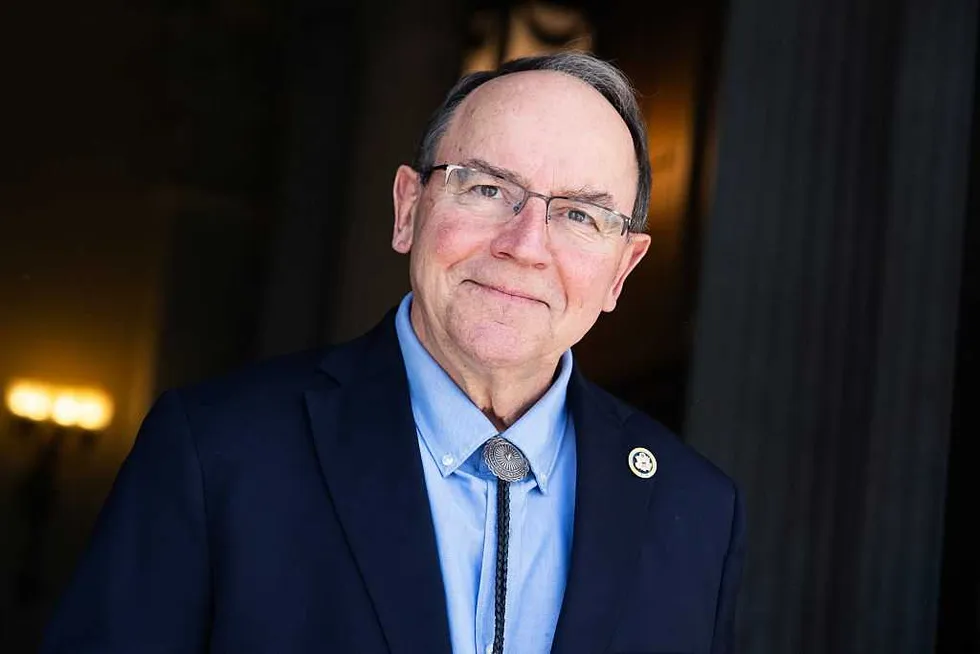
The freshman senator announced her retirement Friday after several “exhausting session weeks” this Congress. Lummis was first elected to the Senate in 2020 but previously represented Wyoming in the House from 2009 to 2017 as well as in state government prior to her career in Washington, D.C.
‘I feel like a sprinter in a marathon.’
“What a blessing to serve with Senators John Barrasso and Mike Enzi when I was in the U.S. House, and with John and Rep. Harriet Hageman while I’ve been in the Senate,” Lummis said in a statement Friday.
“We all put Wyoming first, which has cemented our cohesive working relationship.”
RELATED: ‘Unnecessary and protracted’: Elise Stefanik drops out of New York governor’s race
Bill Clark/CQ-Roll Call, Inc via Getty Images
Lummis reiterated her commitment to the state and her constituents but noted that she no longer has the “energy required” for the job.
“Deciding not to run for reelection does represent a change of heart for me, but in the difficult, exhausting session weeks this fall I’ve come to accept that I do not have six more years in me,” Lummis said. “I am a devout legislator, but I feel like a sprinter in a marathon. The energy required doesn’t match up.”
Tom Williams/CQ-Roll Call, Inc via Getty Images
“I am honored to have earned the support of President Trump and to have the opportunity to work side by side with him to fight for the people of Wyoming. I look forward to continuing this partnership and throwing all my energy into bringing important legislation to his desk in 2026 and into retaining commonsense Republican control of the U.S. Senate. Thank you, Wyoming!”
Like Blaze News? Bypass the censors, sign up for our newsletters, and get stories like this direct to your inbox. Sign up here!
‘Unnecessary and protracted’: Elise Stefanik drops out of New York governor’s race

Republican Rep. Elise Stefanik of New York suspended her gubernatorial campaign on Friday just weeks after joining the race in November.
Stefanik becomes one of many prospective Republican retirees, clarifying that she will not seek to return to Congress either. Stefanik maintained that she would have won the Republican gubernatorial primary but that her candidacy would draw away crucial resources in an electorally “challenging” state like New York.
This is not the first time Stefanik’s career has taken an abrupt turn.
“I am truly humbled and grateful for the historic and overwhelming support from Republicans, Conservatives, Independents, and Democrats all across the state for our campaign to Save New York,” Stefanik said in a Friday post on X.
“However, as we have seen in past elections, while we would have overwhelmingly won this primary, it is not an effective use of our time or your generous resources to spend the first half of next year in an unnecessary and protracted Republican primary, especially in a challenging state like New York,” Stefanik added.
Photo by Alex Wong/Getty Images
Stefanik said her family was a big part of her political calculus, saying she would regret taking more time away from being with her young son.
“And while many know me as Congresswoman, my most important title is Mom,” Stefanik said. “I believe that being a parent is life’s greatest gift and greatest responsibility. I have thought deeply about this and I know that as a mother, I will feel profound regret if I don’t further focus on my young son’s safety, growth, and happiness — particularly at his tender age.”
This is not the first time Stefanik’s career has taken an abrupt turn.
RELATED: GOP feud breaks out after Elise Stefanik accuses Speaker Johnson of protecting the deep state
Photo by Anna Moneymaker/Getty Images
Stefanik was President Donald Trump’s first pick to serve as ambassador to the United Nations, even forfeiting her leadership position in the House and going through the early stages of Senate confirmation at the beginning of the year. Her nomination was later pulled, with Republican leadership citing the historically narrow House margins. Mike Waltz was instead confirmed to the position.
Stefanik returned to the House and later announced her gubernatorial run in November, before announcing on Friday she would step back from public service altogether.
Like Blaze News? Bypass the censors, sign up for our newsletters, and get stories like this direct to your inbox. Sign up here!
The Senate: Where Term Limits Go to Retire
When did it become acceptable for the United States Senate to be overwhelmingly dominated by individuals qualifying for Medicare and…
Gymnasts’ Lawsuits Show That Safeguarding Protocols Are No Substitute for Justice
Two gymnasts are suing USA Gymnastics, the U.S. Center for SafeSport, their former training facility, and the facility’s owners after…
search
categories
Archives
navigation
Recent posts
- When Stupid Reigns January 9, 2026
- Fani Willis’ failed lawfare against Trump might cost her a fortune January 9, 2026
- Conan O’Brien calls out lazy Trump-hating comedians January 9, 2026
- Cancer care is becoming another Wall Street extraction industry January 9, 2026
- BURN NOTICE: ‘Hills’ heel Spencer Pratt to run for Los Angeles mayor January 9, 2026
- Trump has the chance to end the welfare free-for-all Minnesota exposed January 9, 2026
- State of the Nation Livestream: January 9, 2026 January 9, 2026