

Category: Culture
The Music Never Stopped for Bob Weir
Bob Weir’s death was surprising but not a shock. Grateful Dead fans have had plenty of practice saying fare thee well to other band members, most prominently Phil Lesh, Jerry Garcia, and Ron McKernan (aka Pigpen). Weir, who died Jan. 10 at 78, kept the Dead spirit alive after Garcia’s death in 1995 (just after turning 53), and with his passing the band’s music moves into a new realm. Never again will it be performed by the people who created it (holograms need not apply). A veil of sorts has fallen over the Skull and Roses.
The post The Music Never Stopped for Bob Weir appeared first on .
Membership Has Its Privileges
London Clubland: A Companion for the Curious, by historian Seth Alexander Thévoz, is the rare book that manages to be both reverent and sly: an impeccably researched directory of London’s private members’ clubs that understands, at a cellular level, which of these places want to be mythologized and which would rather die than be written about at all. The former are treated gently, the latter mercilessly. My favorite section, “What They Probably Don’t Want You to Know,” skewers this distinction perfectly, offering quiet mockery for the clubs desperate to be talked about—Soho House, for instance, which has built an entire business model on insisting it is still misunderstood—while maintaining gentlemanly discretion around those that still prize silence over clout.
The post Membership Has Its Privileges appeared first on .
Kicking and Screaming Against America and Israel
In the 1970s, after the Six-Day War had time to sink in, an impressive number of Western academics, journalists, politicians, diplomats, spooks, and especially oil executives gave Israel a centripetal eminence in the Middle East that neither its population, geography, faith, wealth, nor even military accomplishments merited. Thirteen hundred years of Islamic history over 3.8 million square miles started getting boiled down to onerous and acrimonious conversations about the contemporary bloody wrestling matches between Jews and Arabs on less than 11,000 square miles of the eastern Mediterranean littoral. Modern Middle Eastern studies, where certainly the most passionate if not the most accomplished students gravitated, became battlefields where anti-Zionist sentiments usually proved triumphant.
The post Kicking and Screaming Against America and Israel appeared first on .
Mr. Softee’s America
On the eve of 2026’s snowmageddon last weekend, reaction crossed every segment of society. By Saturday, churches were closing. You…
How Hollywood tries to masculinize femininity — and makes everyone miserable

We are told, repeatedly, that woke is dead. Piers Morgan even wrote a book about it, so it must be true. Right?
Wrong.
Strength, by Hollywood’s current definition, must weigh a little over 100 pounds and look perpetually annoyed.
If in doubt, please watch the trailer for “Apex,” due for release in April. With it comes Hollywood’s most exhausted fantasy yet: the indestructible badass woman who outruns youth, outpunches men twice her size, and shrugs off biology like it’s a clerical error.
Mission: Implausible
This time, it’s a 50-year-old Charlize Theron sprinting through the Australian wilderness and scaling cliffs as if she’s Tom Cruise circa “Mission: Impossible 2.” Gravity is optional. Muscle mass is negotiable. Aging, it seems, is strictly forbidden.
We’ve seen this act so many times that it barely registers any more. Swap the title card, rotate the backdrop, keep the same choreography. A lone woman wronged by men. A past trauma. An axe to grind, sometimes literally. Six-foot brutes wait their turn to be neutralized. The music swells. The credits roll. And with them go the eyeballs of nearly every viewer still capable of respecting basic reality.
The point is not that women can’t be strong. Of course they can. Strength is not the issue. Hollywood’s definition of it is. Somewhere along the way, empowerment became synonymous with women cosplaying male action heroes, only with fight scenes that insult Newton and scripts that insult the audience. A petite actress body-checking men built like refrigerators — then calling disbelief misogyny — is not progress.
What makes “Apex” more revealing than irritating is how nakedly it exposes the broader frame. This isn’t about one film or one actress. It’s the result of a steady drip: years of female-driven nonsense poured into every genre until it became the genre. The same beats. The same postures. The same lectures delivered at gunpoint.
Form fatale
Hollywood has always run on formula. Nothing new there. It followed money, copied hits, and abandoned failures without sentimentality. But the formula answered to the audience. If people didn’t buy tickets, the trend was over.
Now the industry treats audience resistance not as feedback, but as something to be corrected — like a behavioral problem that needs retraining. Failure is no longer evidence that the formula is broken. It is treated as proof that the audience is.
Studios like to pretend this is audience demand. It isn’t. It’s institutional inertia. Executives terrified of being accused of regression keep recycling the same safe lie: If the movie fails, the audience is at fault. If it succeeds modestly, it’s a cultural victory.
It’s a system that makes the arrival of the new “Supergirl” later this year entirely predictable. Not because audiences asked for it. Not because there was pent-up demand. Not because anyone ever thought, yes, this is what’s missing. It is arriving because this is what the industry now produces by reflex.
The irony is hard to miss. The original “Supergirl” debuted in 1984, the same year Orwell warned us about systems that repeat lies until they feel inevitable. That film was a commercial and critical dud, quickly forgotten for good reason.
Four decades later, Hollywood appears determined to rerun the experiment, convinced that time, tone, and audience memory can all be overwritten. Don’t expect to be entertained. Expect scowls and sermons in spandex. Strength, by Hollywood’s current definition, must weigh a little over 100 pounds and look perpetually annoyed.
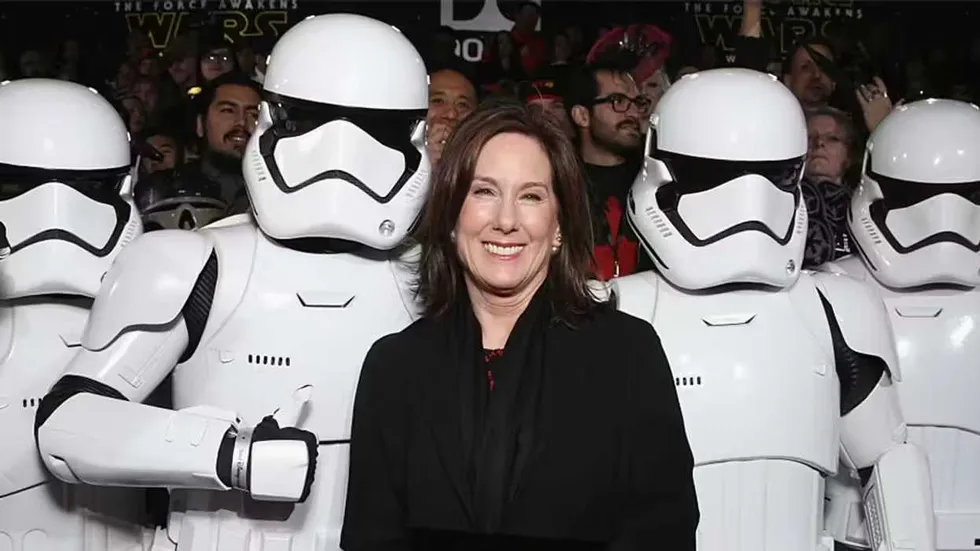
RELATED: FEMPIRE STRIKES BACK: Kathleen Kennedy leaves ‘Star Wars’; is it too soon for fans to celebrate?
Down for the count
We saw the results late last year. The box-office face-plant of “Christy,” the biopic of boxer Christy Martin, made the point brutally clear. Despite opening in more than 2,000 theaters, it scraped together just $1.3 million — one of the worst wide releases on record.
The film stars Sydney Sweeney, an American beauty inexplicably styled like a discount Rocky Balboa. Producers assumed her star power would draw crowds, then forgot why anyone — especially male viewers — watches her in the first place. It isn’t to see her absorb jabs, hooks, and uppercuts like a human heavy bag. It’s when she leans into what she actually is: feminine, magnetic, sexy. No one is buying a ticket to watch a gorgeous woman get beaten senseless.
This is the quiet truth studios refuse to say out loud: Men and women are not the same, and they do not want the same things on screen. Audiences happily watched Liam Neeson bulldoze Europe in “Taken.” They turned up in droves to see Keanu Reeves turn the death of a dog into a four-film genocide in “John Wick.” Nothing motivates a man like canine-related trauma and unlimited ammunition. Those films worked because they leaned into male fantasy without apology.
Equalizer rights?
What audiences don’t want is that same template awkwardly stapled onto a completely different body and sold as innovation. Denzel Washington was excellent in “The Equalizer” — cold, credible, and infinitely cool.
The TV reboot took that precision and desecrated it by turning the role into unintentional slapstick. A morbidly obese Queen Latifah as a silent, unstoppable angel of death is pure absurdity. This is a woman who struggles to climb a single flight of stairs, yet viewers are expected to believe she’s capable of stalking, subduing, and dispatching trained men without breaking a sweat.
Which brings us back to “Apex.” What makes the film accidentally hilarious isn’t Charlize Theron running through the bush. It’s the industry sprinting right behind her, desperately chasing a fantasy that stopped selling years ago. The humor comes from the sincerity. From the absolute faith that this time — finally — it will land.
And it will land. Just not gracefully. More like a Boeing falling out of the sky. Twisted metal, scorched wreckage, and stunned executives wandering around asking what went wrong.
And from that wreckage, there will be no reckoning. No pause. No course correction. Just a quick trip back to the studio lot to greenlight the next movie nobody requested and that everyone will forget.
Medicine’s Descent Into Madness

The Minnesota chapter of White Coats for Black Lives, a medical student group, greeted the October 7, 2023, Hamas-led terrorist attack on Israel by saying that Palestinians should “free themselves from their oppressors by any means necessary.”
The post Medicine’s Descent Into Madness appeared first on .
To Accept the Things I Cannot Change

Menstrual cycles are not an illness, and medicating them as if they are—suppressing the body’s natural hormonal rhythms—clashes with what was once left-wing skepticism of corporate influence in medicine, while conveniently profiting Big Pharma. This should not be a controversial or political claim. And yet, as the New York Times recently noted, it has become one—and a conservative one at that.
The post To Accept the Things I Cannot Change appeared first on .
The Soviet Defector Who Did the Most Damage

During the past 30 years, extraordinary material released from American and Russian archives has enormously expanded our understanding about Soviet espionage directed at the United States and its allies during the 20th century. The Venona decryptions were the product of American decoding of KGB messages. The Vassiliev Notebooks were based on documents the KGB provided to a researcher as part of a negotiated book deal. The only material provided by a genuine spy was the Mitrokhin material, several thousand pages of notes made surreptitiously by a KGB archivist. While British historian Christopher Andrew collaborated with Vasili Mitrokhin to write two books based on his notes, Mitrokhin himself has not received the attention he merits. Venona and Vassiliev exposed a great deal about Soviet espionage from the 1930s and ’40s. Mitrokhin’s information covered more recent operations and did far more damage to Soviet intelligence than any other defector.
The post The Soviet Defector Who Did the Most Damage appeared first on .
Carney puts America last at Davos; Trump hits back
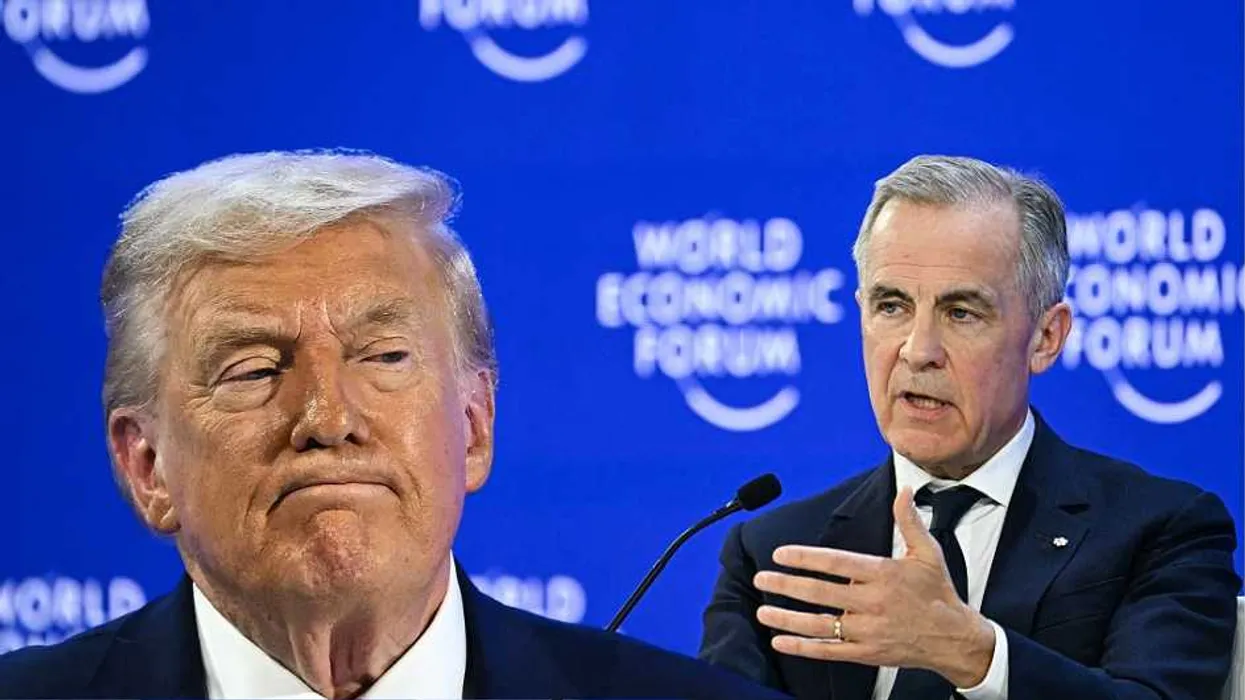
The World Economic Forum’s annual meeting in Davos offered a picture-perfect illustration of the clash between globalism and America First.
Canadian Prime Minister Mark Carney — a longtime advocate of globalist policies, whether as governor of the Bank of England or as a United Nations goodwill ambassador for climate change — delivered a speech that electrified woke forces around the world.
‘Canada lives because of the United States. Remember that, Mark, the next time you make your statements.’
Yet while Carney proclaimed a kind of independence from U.S. economic and military hegemony, many seemed to forget that he had just signed a trade deal with China — against the backdrop of his declaration that Canada was joining Beijing’s “new world order.”
Past tense
Carney’s address waved a red flag at the United States and President Donald Trump, though he lacked the courage to name either directly. Instead, he spoke of America in the past tense, obliquely warning that the “rules-based international order,” under which “countries like Canada prospered,” was finished.
“We joined its institutions. We praised its principles. We benefited from its predictability,” Carney said.
And because of that, we could pursue values-based foreign policies under its protection.
We knew the story of the international rules-based order was partially false — that the strongest would exempt themselves when convenient, that trade rules were enforced asymmetrically. And we knew that international law applied with varying rigor depending on the identity of the accused or the victim. This fiction was useful, and American hegemony in particular helped provide public goods: open sea lanes, a stable financial system, collective security, and support for frameworks for resolving disputes.
Then came the line that sent globalist acolytes into rapture.
“This bargain no longer works. Let me be direct. We are in the midst of a rupture, not a transition.”
But isn’t Carney himself the author — and perhaps the finisher — of that rupture? For years, he has worked against the natural alliance between Canada and its largest trading partner and closest military ally. As we have pointed out before, Carney has labored to replace the United States with China as the world’s economic engine.
RELATED: Trump not worried about Canada’s China-centric ‘new world order’
 Brad Smith/ISI Photos/Xinhua News Agency/Getty Images
A little gratitude
Trump was listening — or at least was promptly briefed. During his own address to Davos, the president castigated both Carney and Canada for taking America for granted. Referring to the development of the Golden Dome defense system, Trump noted that it would, “by its very nature,” defend Canada as well.
“Canada gets a lot of freebies from us, by the way,” Trump said. “They should be grateful also, but they’re not. I watched your prime minister yesterday. He wasn’t so grateful.
“Canada lives because of the United States. Remember that, Mark, before you make your statements.”
By Friday morning, Trump had gone farther, withdrawing Carney’s invitation to join his proposed “Board of Peace.”
Trump spent much of his Davos remarks ridiculing the globalist “Green New Scam” and questioning why the United States continues to belong to NATO when it derives so little benefit from the arrangement.
Windbag
But his most biting remarks were reserved for the fantasy that green energy can power a modern economy.
China, Trump noted, makes “a fortune selling the windmills.”
“They’re shocked that people continue to buy those damn things,” he continued. “They kill the birds. They ruin your landscapes. Other than that, I think they’re fabulous, by the way. Stupid people buy them.”
Trump’s rejection of globalist orthodoxy was reinforced by Commerce Secretary Howard Lutnick.
“Globalization has failed the West and the United States of America,” Lutnick said. “It’s a failed policy. It is what the WEF has stood for, which is export, offshore, far-shore, find the cheapest labor in the world. … In reality, it has left America behind. It has left the American workers behind.”
“America First,” he continued, “is a different model — one that we encourage other countries to consider, which is that our workers come first. … Sovereignty is your borders. You’re entitled to have borders.”
All of this carries enormous implications for any renegotiation of the U.S.-Mexico-Canada agreement.
And Carney appears to have been left with no cards to play. China has already seen his hand.
Toxic femininity crushed his gaming dream. Then the internet found out.

While video game player demographics are split almost down the middle — 53% male and 47% female — the gap is vastly wider when it comes to esports. Men dominate the category, taking up 95% of the available spots in game tournaments, while women only account for 5%. So what happens when a skilled male player gets paired with a less experienced group of girl gamers with a $12,000 grand prize on the line? Naturally, they kick him off the team in the name of misogyny.
What happened?
On January 18, 2026, streamer Kingsman265 went live on his channel as he met up with several other players in preparation for a Marvel Rivals tournament with a prize pool of $40,000, with $12,000 going to the winning team to be split among four players. As a rank 1 player himself, Kingsman265 had his eyes set on the prize money, which he planned to use to pay his college tuition, and he actually had a solid shot at winning it. However, during a practice match before the tournament, he quickly realized that his teammates were more interested in feminist politics than in winning.
Proof that he knew what he was doing, his warnings were positioned as insults.
The rest of the team was composed of three female players named Cece, Zazzastack, and Luciyasa. Kingsman265 quickly suggested a change to the team’s character lineup, recommending that they run a triple support setup to give their team the best shot at victory. The pushback was immediate, as the female players rejected his warnings, opting to play with characters they were familiar with instead of using a loadout that was more effective, especially in a tournament setting.
Things went downhill from there. Tensions rose at several points throughout the video, with Cece telling him to shut up after he pleaded his case for a triple support setup, even after he explained that they would lose without it. Another teammate told him to “shut the f**k up” after they lost a practice match, a moment that vindicated Kingsman265, as it displayed the team’s vulnerabilities in real time. Then Cece ended with “this is f**king getting annoying” as Kingsman265 continued to urge the team to change their strategy, to no avail.
The team went their separate ways to play ranked games apart for the night. Shortly after, Kingsman265 learned that he was kicked out of the tournament entirely by the organizer, BasimZB, for his allegedly “toxic” behavior. Basim later admitted that he made the wrong decision based on “misinformation” from Cece and her team.
Kingsman265 was ultimately relegated to the sidelines for the Marvel Rivals tournament, leaving him behind to watch his team get knocked out in the first round, proving that his instincts around their character lineup were correct.
The fallout
As the male gamer in this situation, Kingsman265 was made to look like the bad guy. He was unceremoniously kicked out of the tournament due to his “toxicity” in ganging up on three girl gamers as he tried to spur them to victory. Instead of recognition that his skills, knowledge, and ranking were proof that he knew what he was doing, his warnings were positioned as insults.
RELATED: 25 years later, the gaming console that caused so much chaos is still No. 1
 Photo By Eduardo Parra/Europa Press via Getty Images
It wasn’t until Kingsman265 posted his video of the practice match, along with a conversation between Cece and himself dubbed the Cece Files, that the truth came to light. Not only did Cece and her team want Kingsman265 to be banned from the tournament, but they conspired to remove him, claiming that “there are plenty of people in line who are just as good. Kingsman, like everybody else, is replaceable.”
The aftermath was swift, with the internet quickly turning on the female team in favor of Kingsman265. Despite telling anyone who saw the video not to harass Cece and company, the message exchange between them shows that the internet has no tolerance for liars. She begged Kingsman265 to take down the video — or, at the very least, cut out the incriminating parts that made her and the team look guilty — but he refused, noting that it was a legitimate video. Cece lost several sponsorship deals and partnerships for her behavior.
All’s well that ends well
The whole debacle cost Kingsman265 his shot at a $3,000 grand prize to help pay off his college debt, but what came next was even sweeter. Once he was exonerated of any wrongdoing, Kingsman265 saw a huge boost to his channel, netting 139,000 followers on Twitch (and counting), 10,000 paying subscribers, and instant acceptance into the Twitch Partner Program, which will allow him to earn money for streaming online. As an added bonus, he received more than $3,000 in donations from supporters, surpassing the amount he would have earned from winning the Marvel Rivals tournament, and Marvel Rivals developer NetEase even sent him credits to buy skins for his character.
The good guy won in the end, leaving the all-girls team with a major loss in the tournament, loss in internet clout, and loss in their streaming careers. All of it could have been avoided if they had not made Kingsman265 out to be the toxic misogynist that he wasn’t, but if that had happened, his own gaming career wouldn’t be rocketing through the stratosphere at this very moment.
What happens online lives forever — the lies that are told and the truth that comes through in 4K — and the consequences are unavoidable. This is why it is always important to keep your receipts when tension erupts on the internet. You never know when you’ll have to defend yourself against cheats and liars who think they control the narrative.





