Category: Culture
How Hollywood tries to masculinize femininity — and makes everyone miserable

We are told, repeatedly, that woke is dead. Piers Morgan even wrote a book about it, so it must be true. Right?
Wrong.
Strength, by Hollywood’s current definition, must weigh a little over 100 pounds and look perpetually annoyed.
If in doubt, please watch the trailer for “Apex,” due for release in April. With it comes Hollywood’s most exhausted fantasy yet: the indestructible badass woman who outruns youth, outpunches men twice her size, and shrugs off biology like it’s a clerical error.
Mission: Implausible
This time, it’s a 50-year-old Charlize Theron sprinting through the Australian wilderness and scaling cliffs as if she’s Tom Cruise circa “Mission: Impossible 2.” Gravity is optional. Muscle mass is negotiable. Aging, it seems, is strictly forbidden.
We’ve seen this act so many times that it barely registers any more. Swap the title card, rotate the backdrop, keep the same choreography. A lone woman wronged by men. A past trauma. An axe to grind, sometimes literally. Six-foot brutes wait their turn to be neutralized. The music swells. The credits roll. And with them go the eyeballs of nearly every viewer still capable of respecting basic reality.
The point is not that women can’t be strong. Of course they can. Strength is not the issue. Hollywood’s definition of it is. Somewhere along the way, empowerment became synonymous with women cosplaying male action heroes, only with fight scenes that insult Newton and scripts that insult the audience. A petite actress body-checking men built like refrigerators — then calling disbelief misogyny — is not progress.
What makes “Apex” more revealing than irritating is how nakedly it exposes the broader frame. This isn’t about one film or one actress. It’s the result of a steady drip: years of female-driven nonsense poured into every genre until it became the genre. The same beats. The same postures. The same lectures delivered at gunpoint.
Form fatale
Hollywood has always run on formula. Nothing new there. It followed money, copied hits, and abandoned failures without sentimentality. But the formula answered to the audience. If people didn’t buy tickets, the trend was over.
Now the industry treats audience resistance not as feedback, but as something to be corrected — like a behavioral problem that needs retraining. Failure is no longer evidence that the formula is broken. It is treated as proof that the audience is.
Studios like to pretend this is audience demand. It isn’t. It’s institutional inertia. Executives terrified of being accused of regression keep recycling the same safe lie: If the movie fails, the audience is at fault. If it succeeds modestly, it’s a cultural victory.
It’s a system that makes the arrival of the new “Supergirl” later this year entirely predictable. Not because audiences asked for it. Not because there was pent-up demand. Not because anyone ever thought, yes, this is what’s missing. It is arriving because this is what the industry now produces by reflex.
The irony is hard to miss. The original “Supergirl” debuted in 1984, the same year Orwell warned us about systems that repeat lies until they feel inevitable. That film was a commercial and critical dud, quickly forgotten for good reason.
Four decades later, Hollywood appears determined to rerun the experiment, convinced that time, tone, and audience memory can all be overwritten. Don’t expect to be entertained. Expect scowls and sermons in spandex. Strength, by Hollywood’s current definition, must weigh a little over 100 pounds and look perpetually annoyed.
RELATED: FEMPIRE STRIKES BACK: Kathleen Kennedy leaves ‘Star Wars’; is it too soon for fans to celebrate?
Down for the count
We saw the results late last year. The box-office face-plant of “Christy,” the biopic of boxer Christy Martin, made the point brutally clear. Despite opening in more than 2,000 theaters, it scraped together just $1.3 million — one of the worst wide releases on record.
The film stars Sydney Sweeney, an American beauty inexplicably styled like a discount Rocky Balboa. Producers assumed her star power would draw crowds, then forgot why anyone — especially male viewers — watches her in the first place. It isn’t to see her absorb jabs, hooks, and uppercuts like a human heavy bag. It’s when she leans into what she actually is: feminine, magnetic, sexy. No one is buying a ticket to watch a gorgeous woman get beaten senseless.
This is the quiet truth studios refuse to say out loud: Men and women are not the same, and they do not want the same things on screen. Audiences happily watched Liam Neeson bulldoze Europe in “Taken.” They turned up in droves to see Keanu Reeves turn the death of a dog into a four-film genocide in “John Wick.” Nothing motivates a man like canine-related trauma and unlimited ammunition. Those films worked because they leaned into male fantasy without apology.
Equalizer rights?
What audiences don’t want is that same template awkwardly stapled onto a completely different body and sold as innovation. Denzel Washington was excellent in “The Equalizer” — cold, credible, and infinitely cool.
The TV reboot took that precision and desecrated it by turning the role into unintentional slapstick. A morbidly obese Queen Latifah as a silent, unstoppable angel of death is pure absurdity. This is a woman who struggles to climb a single flight of stairs, yet viewers are expected to believe she’s capable of stalking, subduing, and dispatching trained men without breaking a sweat.
Which brings us back to “Apex.” What makes the film accidentally hilarious isn’t Charlize Theron running through the bush. It’s the industry sprinting right behind her, desperately chasing a fantasy that stopped selling years ago. The humor comes from the sincerity. From the absolute faith that this time — finally — it will land.
And it will land. Just not gracefully. More like a Boeing falling out of the sky. Twisted metal, scorched wreckage, and stunned executives wandering around asking what went wrong.
And from that wreckage, there will be no reckoning. No pause. No course correction. Just a quick trip back to the studio lot to greenlight the next movie nobody requested and that everyone will forget.
To Accept the Things I Cannot Change

Menstrual cycles are not an illness, and medicating them as if they are—suppressing the body’s natural hormonal rhythms—clashes with what was once left-wing skepticism of corporate influence in medicine, while conveniently profiting Big Pharma. This should not be a controversial or political claim. And yet, as the New York Times recently noted, it has become one—and a conservative one at that.
The post To Accept the Things I Cannot Change appeared first on .
The Soviet Defector Who Did the Most Damage

During the past 30 years, extraordinary material released from American and Russian archives has enormously expanded our understanding about Soviet espionage directed at the United States and its allies during the 20th century. The Venona decryptions were the product of American decoding of KGB messages. The Vassiliev Notebooks were based on documents the KGB provided to a researcher as part of a negotiated book deal. The only material provided by a genuine spy was the Mitrokhin material, several thousand pages of notes made surreptitiously by a KGB archivist. While British historian Christopher Andrew collaborated with Vasili Mitrokhin to write two books based on his notes, Mitrokhin himself has not received the attention he merits. Venona and Vassiliev exposed a great deal about Soviet espionage from the 1930s and ’40s. Mitrokhin’s information covered more recent operations and did far more damage to Soviet intelligence than any other defector.
The post The Soviet Defector Who Did the Most Damage appeared first on .
Medicine’s Descent Into Madness
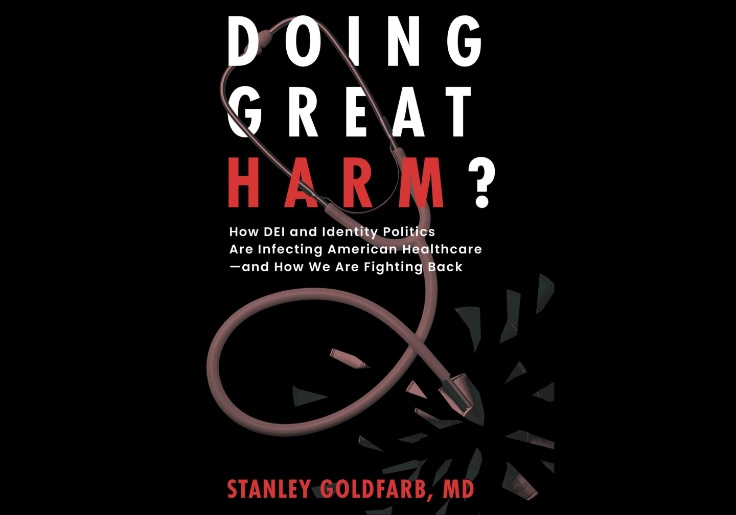
The Minnesota chapter of White Coats for Black Lives, a medical student group, greeted the October 7, 2023, Hamas-led terrorist attack on Israel by saying that Palestinians should “free themselves from their oppressors by any means necessary.”
The post Medicine’s Descent Into Madness appeared first on .
Carney puts America last at Davos; Trump hits back
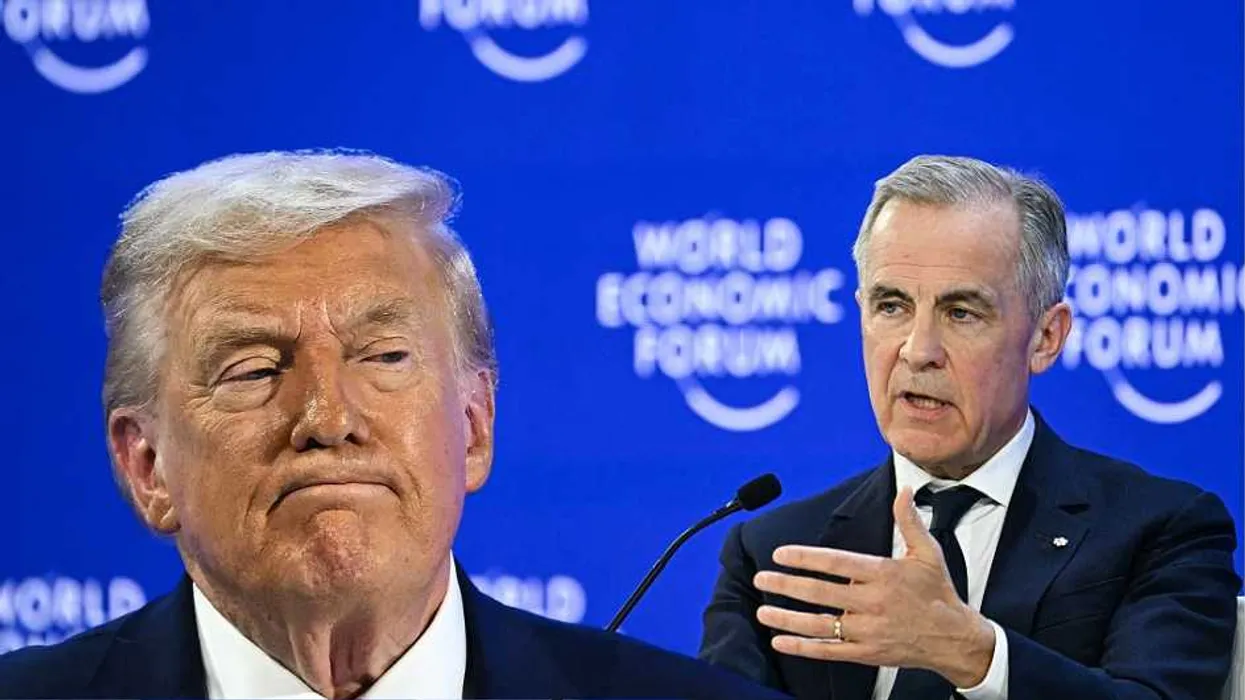
The World Economic Forum’s annual meeting in Davos offered a picture-perfect illustration of the clash between globalism and America First.
Canadian Prime Minister Mark Carney — a longtime advocate of globalist policies, whether as governor of the Bank of England or as a United Nations goodwill ambassador for climate change — delivered a speech that electrified woke forces around the world.
‘Canada lives because of the United States. Remember that, Mark, the next time you make your statements.’
Yet while Carney proclaimed a kind of independence from U.S. economic and military hegemony, many seemed to forget that he had just signed a trade deal with China — against the backdrop of his declaration that Canada was joining Beijing’s “new world order.”
Past tense
Carney’s address waved a red flag at the United States and President Donald Trump, though he lacked the courage to name either directly. Instead, he spoke of America in the past tense, obliquely warning that the “rules-based international order,” under which “countries like Canada prospered,” was finished.
“We joined its institutions. We praised its principles. We benefited from its predictability,” Carney said.
And because of that, we could pursue values-based foreign policies under its protection.
We knew the story of the international rules-based order was partially false — that the strongest would exempt themselves when convenient, that trade rules were enforced asymmetrically. And we knew that international law applied with varying rigor depending on the identity of the accused or the victim. This fiction was useful, and American hegemony in particular helped provide public goods: open sea lanes, a stable financial system, collective security, and support for frameworks for resolving disputes.
Then came the line that sent globalist acolytes into rapture.
“This bargain no longer works. Let me be direct. We are in the midst of a rupture, not a transition.”
But isn’t Carney himself the author — and perhaps the finisher — of that rupture? For years, he has worked against the natural alliance between Canada and its largest trading partner and closest military ally. As we have pointed out before, Carney has labored to replace the United States with China as the world’s economic engine.
RELATED: Trump not worried about Canada’s China-centric ‘new world order’
 Brad Smith/ISI Photos/Xinhua News Agency/Getty Images
A little gratitude
Trump was listening — or at least was promptly briefed. During his own address to Davos, the president castigated both Carney and Canada for taking America for granted. Referring to the development of the Golden Dome defense system, Trump noted that it would, “by its very nature,” defend Canada as well.
“Canada gets a lot of freebies from us, by the way,” Trump said. “They should be grateful also, but they’re not. I watched your prime minister yesterday. He wasn’t so grateful.
“Canada lives because of the United States. Remember that, Mark, before you make your statements.”
By Friday morning, Trump had gone farther, withdrawing Carney’s invitation to join his proposed “Board of Peace.”
Trump spent much of his Davos remarks ridiculing the globalist “Green New Scam” and questioning why the United States continues to belong to NATO when it derives so little benefit from the arrangement.
Windbag
But his most biting remarks were reserved for the fantasy that green energy can power a modern economy.
China, Trump noted, makes “a fortune selling the windmills.”
“They’re shocked that people continue to buy those damn things,” he continued. “They kill the birds. They ruin your landscapes. Other than that, I think they’re fabulous, by the way. Stupid people buy them.”
Trump’s rejection of globalist orthodoxy was reinforced by Commerce Secretary Howard Lutnick.
“Globalization has failed the West and the United States of America,” Lutnick said. “It’s a failed policy. It is what the WEF has stood for, which is export, offshore, far-shore, find the cheapest labor in the world. … In reality, it has left America behind. It has left the American workers behind.”
“America First,” he continued, “is a different model — one that we encourage other countries to consider, which is that our workers come first. … Sovereignty is your borders. You’re entitled to have borders.”
All of this carries enormous implications for any renegotiation of the U.S.-Mexico-Canada agreement.
And Carney appears to have been left with no cards to play. China has already seen his hand.
Toxic femininity crushed his gaming dream. Then the internet found out.

While video game player demographics are split almost down the middle — 53% male and 47% female — the gap is vastly wider when it comes to esports. Men dominate the category, taking up 95% of the available spots in game tournaments, while women only account for 5%. So what happens when a skilled male player gets paired with a less experienced group of girl gamers with a $12,000 grand prize on the line? Naturally, they kick him off the team in the name of misogyny.
What happened?
On January 18, 2026, streamer Kingsman265 went live on his channel as he met up with several other players in preparation for a Marvel Rivals tournament with a prize pool of $40,000, with $12,000 going to the winning team to be split among four players. As a rank 1 player himself, Kingsman265 had his eyes set on the prize money, which he planned to use to pay his college tuition, and he actually had a solid shot at winning it. However, during a practice match before the tournament, he quickly realized that his teammates were more interested in feminist politics than in winning.
Proof that he knew what he was doing, his warnings were positioned as insults.
The rest of the team was composed of three female players named Cece, Zazzastack, and Luciyasa. Kingsman265 quickly suggested a change to the team’s character lineup, recommending that they run a triple support setup to give their team the best shot at victory. The pushback was immediate, as the female players rejected his warnings, opting to play with characters they were familiar with instead of using a loadout that was more effective, especially in a tournament setting.
Things went downhill from there. Tensions rose at several points throughout the video, with Cece telling him to shut up after he pleaded his case for a triple support setup, even after he explained that they would lose without it. Another teammate told him to “shut the f**k up” after they lost a practice match, a moment that vindicated Kingsman265, as it displayed the team’s vulnerabilities in real time. Then Cece ended with “this is f**king getting annoying” as Kingsman265 continued to urge the team to change their strategy, to no avail.
The team went their separate ways to play ranked games apart for the night. Shortly after, Kingsman265 learned that he was kicked out of the tournament entirely by the organizer, BasimZB, for his allegedly “toxic” behavior. Basim later admitted that he made the wrong decision based on “misinformation” from Cece and her team.
Kingsman265 was ultimately relegated to the sidelines for the Marvel Rivals tournament, leaving him behind to watch his team get knocked out in the first round, proving that his instincts around their character lineup were correct.
The fallout
As the male gamer in this situation, Kingsman265 was made to look like the bad guy. He was unceremoniously kicked out of the tournament due to his “toxicity” in ganging up on three girl gamers as he tried to spur them to victory. Instead of recognition that his skills, knowledge, and ranking were proof that he knew what he was doing, his warnings were positioned as insults.
RELATED: 25 years later, the gaming console that caused so much chaos is still No. 1
 Photo By Eduardo Parra/Europa Press via Getty Images
It wasn’t until Kingsman265 posted his video of the practice match, along with a conversation between Cece and himself dubbed the Cece Files, that the truth came to light. Not only did Cece and her team want Kingsman265 to be banned from the tournament, but they conspired to remove him, claiming that “there are plenty of people in line who are just as good. Kingsman, like everybody else, is replaceable.”
The aftermath was swift, with the internet quickly turning on the female team in favor of Kingsman265. Despite telling anyone who saw the video not to harass Cece and company, the message exchange between them shows that the internet has no tolerance for liars. She begged Kingsman265 to take down the video — or, at the very least, cut out the incriminating parts that made her and the team look guilty — but he refused, noting that it was a legitimate video. Cece lost several sponsorship deals and partnerships for her behavior.
All’s well that ends well
The whole debacle cost Kingsman265 his shot at a $3,000 grand prize to help pay off his college debt, but what came next was even sweeter. Once he was exonerated of any wrongdoing, Kingsman265 saw a huge boost to his channel, netting 139,000 followers on Twitch (and counting), 10,000 paying subscribers, and instant acceptance into the Twitch Partner Program, which will allow him to earn money for streaming online. As an added bonus, he received more than $3,000 in donations from supporters, surpassing the amount he would have earned from winning the Marvel Rivals tournament, and Marvel Rivals developer NetEase even sent him credits to buy skins for his character.
The good guy won in the end, leaving the all-girls team with a major loss in the tournament, loss in internet clout, and loss in their streaming careers. All of it could have been avoided if they had not made Kingsman265 out to be the toxic misogynist that he wasn’t, but if that had happened, his own gaming career wouldn’t be rocketing through the stratosphere at this very moment.
What happens online lives forever — the lies that are told and the truth that comes through in 4K — and the consequences are unavoidable. This is why it is always important to keep your receipts when tension erupts on the internet. You never know when you’ll have to defend yourself against cheats and liars who think they control the narrative.
You can’t be 50 in Hollywood

I had been living in New York for several years, writing young adult novels. But I wanted to move to Los Angeles. I needed a change of scenery, and I wanted to try screenwriting.
A friend connected me to a guy who had spent several years in L.A. pursuing film and TV writing. I called the guy and told him my plan.
The hair dye felt like it was burning my scalp. After I rinsed it out, my whole head glowed. Did it make me look younger? I guess it did. But it also made me look like a clown.
He said: “How old are you?”
I said 49.
He said, “That’s too old. You can’t be 50 in Hollywood. You’ll need to lie about your age.”
Then he asked me if I had gray hair. I said I did. He said I would need to dye it.
I said, “But George Clooney has gray hair. Doesn’t it look distinguished?”
He said I would definitely want to dye it. “Everyone dyes their hair in L.A. Get a good hairdresser.”
*******
He continued relating his experiences. He listed the dangers of Hollywood. They steal your ideas. They lie. They pretend to be your friend. I would need a good lawyer, and a manager, and an agent.
Most of this I already knew. But the “you can’t be 50 in Hollywood” part: I hadn’t heard that before.
Reelin’ In the Years
After we hung up, I thought about the age problem. I had already “adjusted” my age once while I was writing young adult novels.
I did this after attending a book festival, where I saw that all the other young adult authors were generally in their 20s and 30s. I was at least a decade older than most of them.
So I shaved five years off my Facebook age. Just in case anybody looked. And then I did the same thing when I filled out the publicity questionnaires for my publisher.
But the age problem got worse when I arrived in L.A. The first screenwriter I met with was 24 and looked like he was in high school. When I got home from that meeting, I went on Facebook and shaved three more years off my birthday.
When I did this, a little notice popped up, informing me that this would be the last time I would be allowed to change my birthday on Facebook.
So now, I was 41 according to Facebook, 44 according to my New York publisher, and 49 according to my driver’s license and the IRS.
This was a lot to keep track of. It made for some awkward moments on first dates.
Gray matters
It didn’t take long to realize that in Hollywood — where lying is considered “self-care” — what people really judged you on was your looks.
So then I considered my appearance. My hair was pretty gray. Should I try dyeing it?
I went to Ralphs and bought a box of Clairol Nice’n Easy hair dye. I went for espresso brown, which seemed closest to my original hair color.
I set up shop in my bathroom. I put on the gloves and followed the instructions on the box, mixing the chemicals and smearing them onto my head. It was a messy business.
The hair dye felt like it was burning my scalp. After I rinsed it out, my whole head glowed. Did it make me look younger? I guess it did. But it also made me look like a clown.
*******
I flew back to New York soon after, and a female friend immediately noticed the change. She said: “It’s true what they say; you look 10 years younger!”
That was nice to hear. But I was alarmed that she noticed it instantly. From 50 feet away.
Another friend didn’t believe me when I told her it was dyed. She had to look closer and touch it until she saw that I was telling the truth.
I was still trying to get used to it myself. Every time I saw my reflection, I startled myself. Who’s that guy with the dye job?
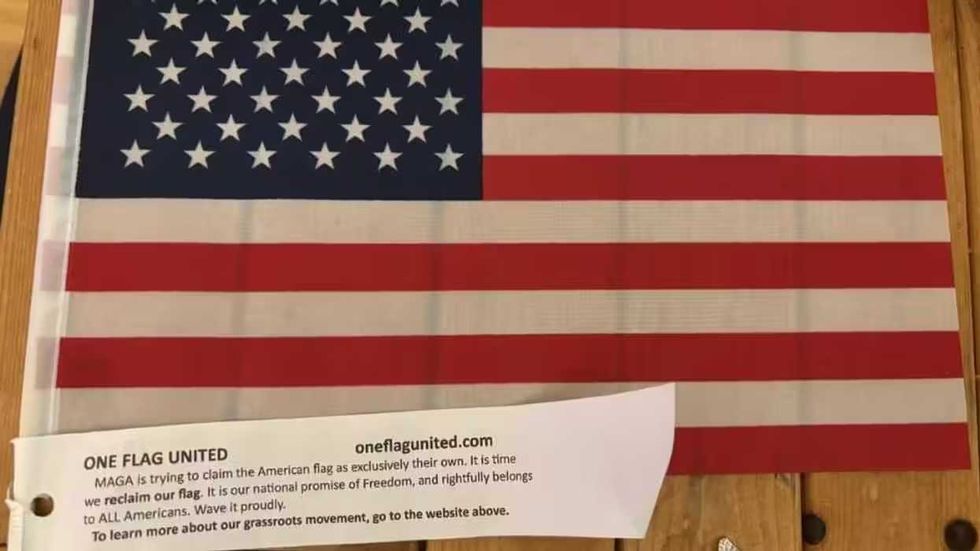
RELATED: The left wants to ‘reclaim’ the American flag; did they run out of lighter fluid?
 Blake Nelson
Pro tips
Back in L.A., I spotted a sign in a hair salon near my apartment: “Dye and Haircut $80.” Maybe this was the solution: getting your hair dyed by a professional.
I would like to say this was a luxurious, pampering experience. It was not. The hairdresser roughed me up pretty good. And then I had to sit there for 40 minutes, in sight of people walking by the window, with a giant plastic covering over me and my thinning hair wrapped in tin foil.
And then, after all that, it looked no different from the Clairol dye job I had given myself for $9.99!
*******
Still, I stuck with it, re-dyeing it every six weeks — like it said on the box — for most of a year.
During this time, I kept a watchful eye out for other men with dyed hair. I was definitely not alone. At the beach, you would see aging “surfer dads” with dyed blonde hair and a skateboard under their arms. It wasn’t a terrible look. As long as you wore Vans and board shorts.
And of course, men who were on TV or acted in movies always dyed their hair. I’d see these men everywhere. Or I’d see guests on late-night talk shows who looked like they had just had it done an hour before. Their hair had that blurry, fresh-dye glow.
I became skilled at spotting dye jobs on either sex. I hadn’t realized how many women dyed their hair: basically all of them, after about 30.
The good news was that nobody thought less of a man for dyeing his hair. This was Los Angeles. Dyeing your hair meant you had a job.
All is vanity
This wasn’t the case on the East Coast. New York City was the land of the silver fox. Being a well-dressed, gray-haired, 50-year-old male was highly desirable. It meant you were rich!
In fact, it was in New York that a couple of female friends intervened and informed me that the hair-dye thing wasn’t working. I looked better being gray.
After that, my vanity took over, and when I returned to L.A., I shaved my head and released myself back into middle age.
Once I let myself go gray again, another Los Angeles acquaintance told me she thought I looked much better. She said the dye job made me look untrustworthy, like a used-car salesman.
*******
So that was a relief. But the real relief didn’t come until many years later, when I retired from writing and went back home to Portland and returned to total normalcy.
In retirement, I didn’t have to be young; I didn’t have to be cool. I could just be an old, gray-haired person like everybody else.
Though on Facebook — thanks to its birthday-changing restrictions — I remain a slightly younger and livelier version of myself.
’28 Years Later: The Bone Temple’ brings new life to horror franchise

Like the post-apocalyptic Britain of the “28 Days Later” franchise, Hollywood has become a wasteland, teeming with the stripped-down, lethally efficient shells of once-vital creations. Nostalgia-driven reboots swarm the multiplex, satisfying audience cravings for familiarity and studio appetites for certainty — even as they leave the surrounding creative landscape increasingly barren.
This year’s “28 Years Later” could just as easily have been another of these living-dead productions. While previous installment “28 Weeks Later” (2007) — made with nominal participation from the original creative team — delivered competent scares, it hardly cried out for a follow-up.
The movie is littered with British cultural references — decontextualized and repurposed by survivors struggling to find meaning in a world they no longer understand.
But the return of director Danny Boyle and writer Alex Garland proved worth the wait. “28 Years Later” demonstrated that this universe could still surprise, ending with a tantalizingly bizarre coda in which our hero Spike is rescued by Sir Lord Jimmy Crystal (Jack O’Connell) and his blonde-wigged, track-suited minions. Clearly the infected are not the only menace stalking the British countryside.
Charity cases
“28 Years Later: The Bone Temple” picks up right after this moment, confirming our suspicions that Spike’s troubles have just begun. After a gruesome kind of initiation, Spike is forcibly enlisted as one the “Jimmys,” who turn out to be a gang of satanic killers. Led by Jimmy Crystal, who believes himself to be the son of “Old Nick,” they prowl the land inflicting gruesome ritualized violence — which they call “charity” — on those unfortunate enough to meet them.
While Garland returns as screenwriter, Boyle (who stays on as producer) cedes the director’s chair to Nia DaCosta, whose striking use of lingering close-ups and tightly framed compositions inject the film with a raw, anarchic energy. The result is a legacy sequel that both pays homage to its origins and reimagines them — one that weaves graphic violence together with incisive observations on culture, faith, and survival in a world irreversibly altered by catastrophe.
Doctor Sleep
Many of those observations come straight from the kindly and philosophical Dr. Ian Kelson (Ralph Fiennes), an eccentric recluse who provided shelter for runaway Spike and his dying mother in “28 Years Later.” In this grisly sequel, the iodine-covered, blowdart-wielding former physician is searching for a cure to the rage virus, using an infected “alpha” zombie — whom he names Samson — as his pet project.
He also continues work on the titular bone temple, a memorial to the outbreak’s victims, until his optimism and ingenuity is tested by the new and horrifying human adversary we met in the beginning.
While Boyle’s 2002 film focused on urban chaos, this installment widens its lens, exploring the virus’ impact across the countryside while delving into deeper philosophical terrain. Beneath the skin-flaying, stabbings, “Mortal Kombat”-style spine removals, and Iron Maiden needle drops lies a poignant meditation on a once-beautiful country sliding into social and spiritual decay.
This is England
DaCosta, an American director, deftly preserves the distinctly English identity of the original films. The movie is littered with British cultural references — decontextualized and repurposed by survivors struggling to find meaning in a world they no longer understand.
The Jimmys, with their blonde wigs, tracksuits, and gold jewelry, are intentionally modeled after Jimmy Savile, one of Britain’s most notorious sex offenders. In this universe — where society collapsed in 2002, years before Savile’s real-world crimes were exposed — the cult reveres him as a benevolent, almost mythical figure. Their so-called acts of “charity” grotesquely invert Savile’s public image of philanthropy, turning it into a rationale for cruelty and sadism.
The dynamic between Sir Jimmy and Kelson is magnetic. O’Connell and Fiennes deliver outstanding performances, moving seamlessly between surrealism and melancholy. Some of the film’s most compelling moments occur when these two simply share the screen in conversation.
Sir Jimmy and Kelson represent competing philosophies of survival. In desperate times, humanity creates belief systems — sometimes as tools of power, sometimes as mechanisms of self-preservation. Through these two figures, Garland weaves a thoughtful exploration of evil, faith, and meaning.
RELATED: ‘28 Years Later’: Brutal, bewildering, and unabashedly British
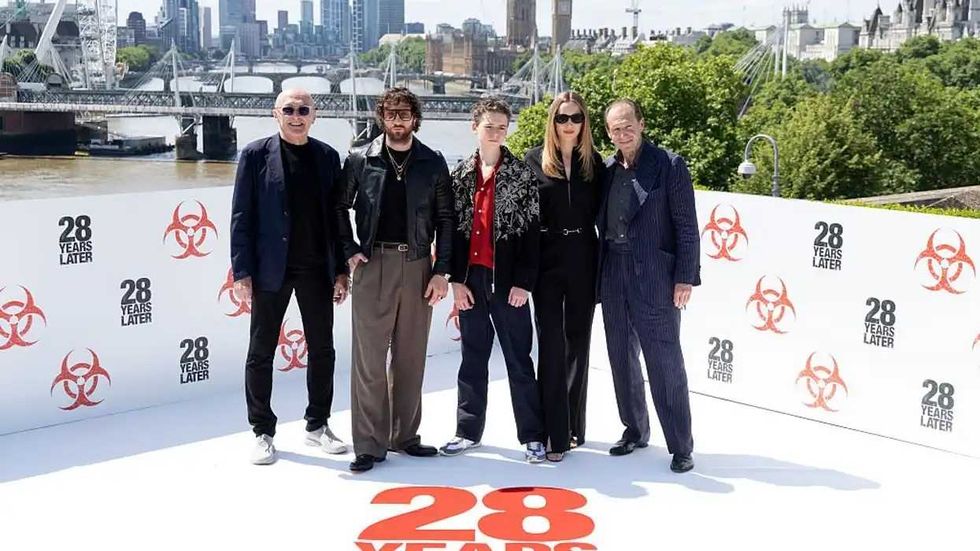 Tim P. Whitby/Getty Images
Feral faith
Religious symbolism runs throughout the film. The Jimmys repurpose Savile’s catchphrase “Howzat!” as a ritual chant — stripped of its original meaning and reconstituted as a signifier of violence. Kelson, meanwhile, assumes the role of a secular creator. His humanist liturgy centers on music and literature, which function as sacred texts connecting him to the past and preserving his sanity.
Samson’s transformation becomes an allegory for rebirth: emerging from the hell of infection into renewal. Where the biblical Adam becomes aware of his nakedness after eating from the tree of knowledge, Samson’s recovery inspires modesty as he clothes himself with memories of his return. It is the Fall in reverse — self-awareness as ascension, rebirth without grace.
“The Bone Temple” manages to inject genuine life into a franchise nearly 25 years old. I may regret saying this, but I am genuinely curious to see where the story goes next — especially with Boyle returning to direct the third and final installment. The film’s closing scene teases the return of a familiar face, and John Murphy’s fuzzed-out guitar theme suggests that hope remains, for both the survivors and the fans.
How Americans can prepare for the worst — before it’s too late

Imagine standing in a war-torn city overseas, as I have on numerous deployments, walking through communities shattered not just by bombs and sectarian conflict, but by the follow-on failure of basic systems — water, power, food, even the educational system.
It’s a stark reminder that resilience isn’t abstract; it’s the difference between chaos and recovery. Back home, over 20 million Americans reported in 2023 that they could last at home for a month or more without publicly provided water, power, or transportation, a rate more than double that reported in 2017.
This trend is not occurring because of government guidance, but rather because of a perceived fear of government failure. Across the world, civil defense and national preparedness are surging in discussions, extending beyond disasters or war to encompass health, economics, energy, and the social, spiritual, and built environments of our communities.
Civilians have an active role to play and should not passively wait for government salvation.
The core question remains: Are we truly resilient?
Identifying gaps
In 2019, Quinton Lucie, a former attorney for the Federal Emergency Management Agency, wrote a blistering academic piece in Homeland Security Affairs. He argued that America no longer has the institutional experience or framework required for civil defense, a large pillar in overall national resiliency. In his words, the U.S. “lacks a comprehensive strategy and supporting programs to support and defend the population of the United States during times of war.” Retired Air Force General Glen D. VanHerck, the former commander of the North American Aerospace Defense Command and U.S. Northern Command, recently commented that America needs to be able to “take a punch in the nose … and get back up and come out swinging” regardless of whether the attack came in the cyber realm or something conventional.
An all-inclusive plan is not optional. Presidential Executive Order 12656 mandates whole-of-government responsibilities for various national security emergencies. Article Three of the 1949 North Atlantic Treaty, which created NATO, stipulates resilience, focusing on continuity of government, essential services for citizens, and military support. Implicitly, it calls on individuals to step up too — not just for war, but for natural disasters, economic slumps, or grid failures.
While non-binding, the 2020 NATO NSHQ Comprehensive Defence Handbook states that “resilience is the foundation atop the whole-of-society bedrock” and “is built through civil preparedness and is achieved by continually preparing for, mitigating, and adapting to potential risks well before a crisis.” The challenge is that civil preparedness requires this whole-of-society approach, not just a whole-of-government one. That is, we can’t have a strong nation without strong individuals and communities.
Facing perils head-on
What other perils might we confront? Food security is a prime example. During the U.S. government shutdown, food banks near bases experienced a 30%-75% surge from military families. This comes at a time when 42 million Americans are on food stamps and Secretary of War Pete Hegseth and Secretary of Health and Human Services Robert F. Kennedy Jr. push for a healthier fighting force and populace. Globally, a February 2025 report by the U.K.’s National Preparedness Commission indicated that civil food resilience is highly vulnerable to myriad shocks to the status quo and that the populace was underprepared.
RELATED: Minneapolis ICE protesters are BEGGING for civil war — and we need to take them seriously
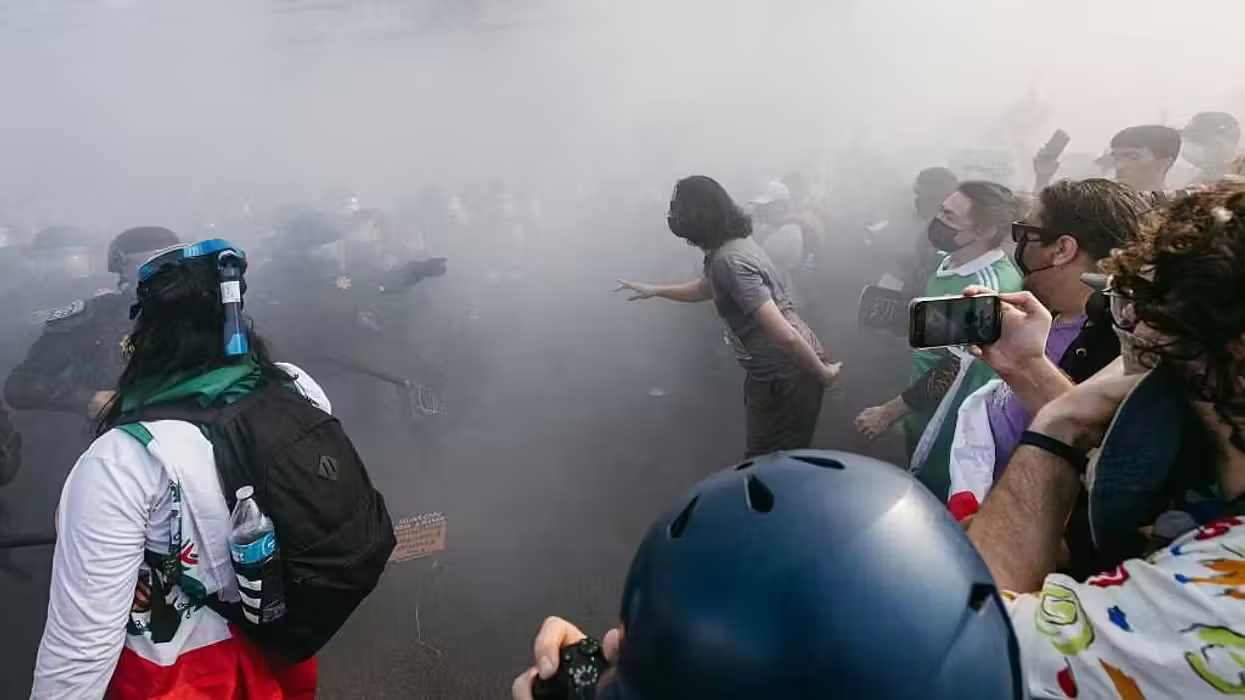 Photo by DAVID PASHAEE/Middle East Images/AFP via Getty Images
Utilities failures like water and electricity are another concern. In October 2025, the former top general of the National Security Agency warned of China’s aggressive targeting of U.S. critical infrastructure. This aligns with China’s “Three Warfares” strategy, which seeks to manipulate or weaken adversaries via public opinion warfare, psychological warfare, and legal warfare. China’s gray-zone activities against the U.S. also include synthetic narcotics like fentanyl and online actions to deepen political fissures.
Leaders are not sitting still. President Trump supports reshoring manufacturing capacity in the U.S. Onshoring and friend-shoring are hot topics among various industries, given rare-earth metal availability, tariffs, and general uncertainty. The U.S. Army is bolstering energy resilience, planning nuclear small modular reactors on nine bases by late 2028 and reclaiming a “right to repair” in contracts.
Big business is also in on the action. Jamie Dimon, CEO of JPMorganChase recently announced a $1.5 trillion plan for a more resilient domestic economy, seeing it as an issue of national security. With two Federal Reserve rate cuts in 2025 potentially fueling inflation, hedge fund billionaire Ray Dalio advises 15% portfolio allocation to gold. Even Jan Sramek of California Forever is investing hundreds of millions to build a resilient city near San Francisco. Resilience, clearly, permeates every facet of life.
Resilience is global
This is not unique to the English-speaking world. Latvia, a small Baltic state bordering Russia and Russia’s ally Belarus, exemplifies a whole-of-society approach. The nation’s 2020 State Defense Concept — currently in execution — is comprehensive in its approach, both to potential perils and responsibilities. Accidents, pandemics, war, severe weather, and cyberthreats all require a citizenry-to-parliament strategy. The church plays a major role, as does physical fitness, patriotism, and education, which is why state defense is now compulsory in Latvian schools.
Germany is getting back into the bunker business and has earmarked €10 billion through 2029 for civil protection. Many Polish citizens do not see their governments doing enough and are taking matters into their own hands by building bunkers and attempting — unfortunately without much success — to establish neighborhood civil defense groups.
What resilient citizens can do
What should we take from this? First, preparedness is neither fringe nor irrational. It is a global movement involving politicians, billionaires, and everyday people. Second, there is no one-size-fits-all solution. Resilience spans the full human spectrum: social, physical, intellectual, emotional, and spiritual components, as I outline in my book “Resilient Citizens” through frameworks like the five archetypes (from Homesteaders to the Faithful) that show diverse, adaptable paths. Third, civilians have an active role to play and should not passively wait for government salvation. Tiered responsibility requires each echelon — from state to citizen — to play their parts, own up to their agency and responsibility, and act. Will you?
Trump not worried about Canada’s China-centric ‘new world order’
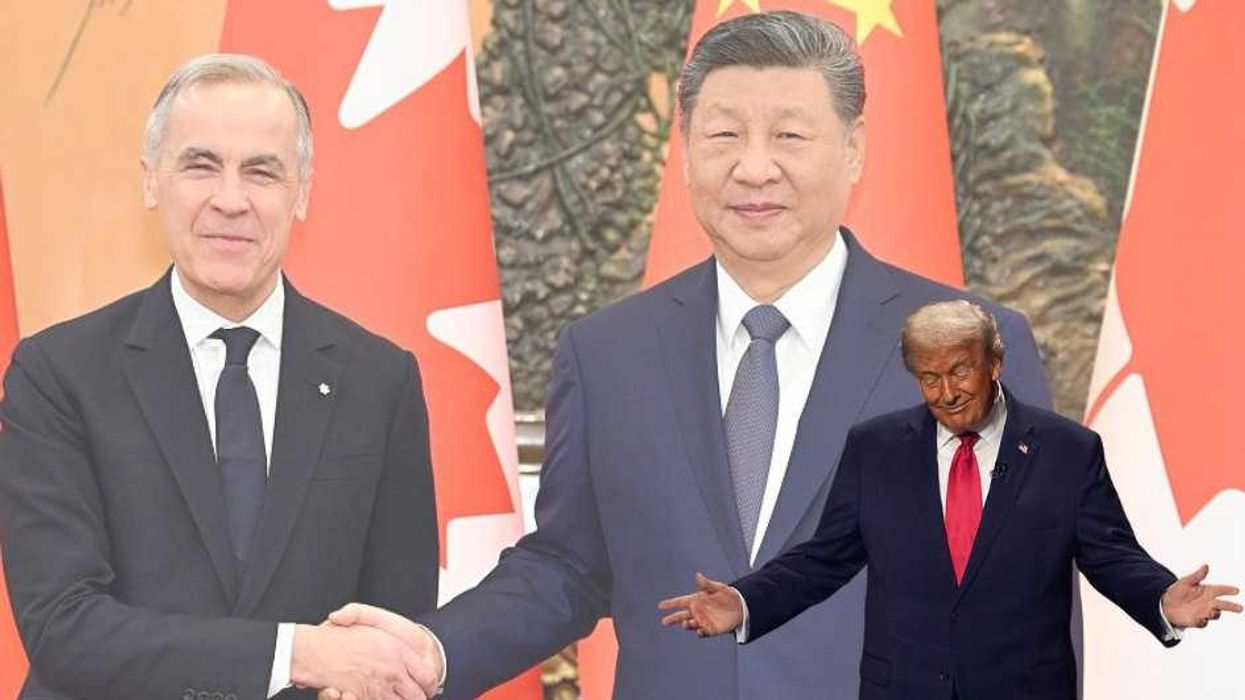
Try explaining this one: President Donald Trump’s relaxed — almost insouciant — response to news that Canadian Prime Minister Mark Carney pledged allegiance to a China-centered “new world order.”
Why did Trump appear to shrug off Carney’s insistence that Canada’s future lies more with China than with the United States?
Carney’s favorable assessment of China’s role in climate and green finance is not an isolated remark.
Perhaps it has something to do with Greenland and Canada being viewed as components of Trump’s broader Western Hemisphere security plan.
Cue the black helicopters
Not long ago, “new world order” belonged firmly in the vocabulary of conspiracy theorists. But in Beijing last week, Carney elevated the phrase into an official Liberal talking point.
So what did Carney say? Plenty.
Mine is the first visit of a Canadian prime minister to China in nearly a decade. The world has changed much since that last visit, and I believe the progress that we have made in the partnership sets us up well for the new world order.
Trump did not respond immediately. Instead, he waited until the end of the news day last Friday before offering his reaction.
“That’s what he should be doing, and it’s a good thing for him to sign a trade deal. If you can get a deal with China, you should do that,” Trump said.
Not the response many expected from a president who has urged countries in the Western Hemisphere to distance themselves from Beijing.
World order word salad
Pressed on what he meant by a “new world order,” Carney responded with his characteristic blend of abstraction and deflection.
So the question is, what gets built in that place? How much of a patchwork is it? How much is it just on a bilateral basis? Or where do like-minded countries in certain areas? So like-minded countries, just to be clear, doesn’t mean you agree on everything. So aspects, for example, on digital trade or agricultural trade, climate finance as another area to move into areas of geo-strategy, geo-security, you will have different coalitions that are formed. So what this partnership does is in areas, for example, of clean energy, conventional energy, agriculture, as we were just talking about, and financial services, which we have talked less about, but the evolution of the global financial system.
Trump’s nonchalance was not shared by conservative commentators, who sharply criticized Carney’s remarks.
Alex Jones, for one, described Carney as “a Klaus Schwab acolyte” and warned: “You are about to see the globalist prime minister of Canada pledge allegiance to the communist dictator in China, Xi Jinping.”
RELATED: What does Trump see in Canada’s pro-China prime minister?
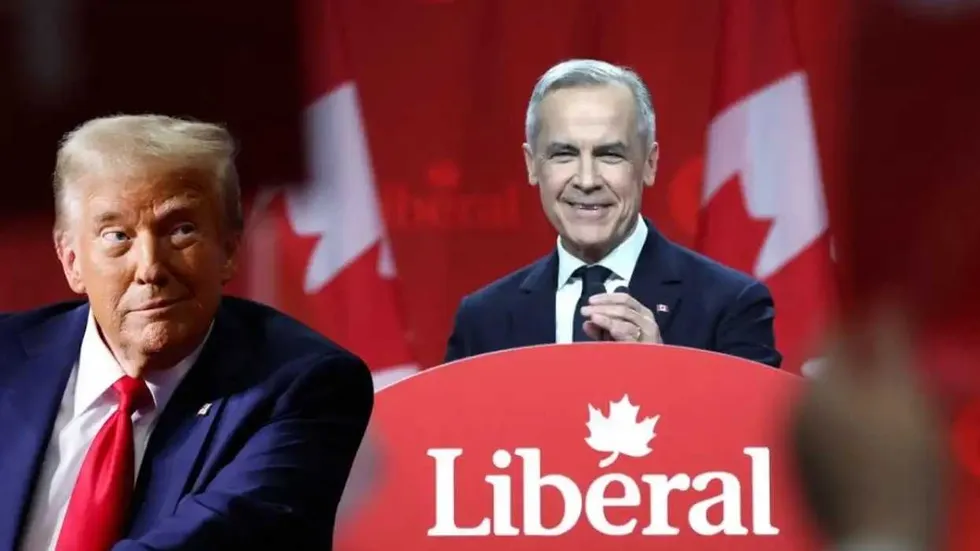 Chip Somodevilla/Dave Chan/Getty Images
China guy
So far, Carney’s new world order with China has produced a trade agreement allowing up to 49,000 electric vehicles to be imported into Canada annually at a reduced tariff of 6.1%. In return, China is expected to lower tariffs on Canadian agricultural exports — most notably canola oil, a key cash crop for Canadian farmers — to roughly 15%.
But there is nothing new about Carney’s deference to China.
After leaving the Bank of England in 2020, Carney became vice chairman of the board of Bloomberg L.P., the privately held financial data and media company founded by Michael Bloomberg. During the same period, he also served as co-chair of the U.N.-backed Glasgow Financial Alliance for Net Zero, working alongside Bloomberg in his separate capacity as the United Nations’ Special Envoy on Climate Ambition and Solutions.
In that capacity, Carney consistently praised the alleged environmental stewardship of China, somehow locating a deep commitment to fighting climate change in a country that continues to power its economy with coal-fired plants.
Take Carney’s March 2024 visit to China, during which he told a reporter for the Chinese business outlet 21st Century Business Herald (English translation via Google Translate):
China has made a huge contribution to the fight against climate change, not only in terms of its massive investment in clean technologies and exporting them to other countries, but also in actively developing the financial system needed for the green transition.
Yuan to grow on
Carney’s favorable assessment of China’s role in climate and green finance is not an isolated remark. It aligns with a broader argument he has advanced in recent years: that global economic leadership should become more multipolar, with China playing a larger role alongside — rather than beneath — U.S. dominance.
That worldview extends to currency and finance. At the 2019 Jackson Hole Economic Symposium, Carney argued that the world should reduce its dependence on the U.S. dollar by exploring a new “synthetic hegemonic currency,” a framework designed to dilute the dominance of any single national currency.
Carney did not explicitly call for the Chinese yuan to replace the U.S. dollar outright. But his proposal would, by design, weaken the centrality of the dollar and expand the influence of non-U.S. currencies and financial systems.
Trump, for his part, has twice endorsed Carney during Canadian federal elections. Their relationship — particularly during Oval Office meetings — has been described as friendly, though it may be better understood as Trump indulging a leader he views as temporary.
Why does Trump consistently give Carney a pass?
Perhaps because Trump sees Carney less as a lasting architect of global order than as a passing phenomenon — unlikely to impede the president’s broader aim of reinforcing American economic primacy, regardless of how warmly Carney speaks of China’s place in the world.