

Category: Culture
Sovereignty First
President Trump’s first year in office has seen an almost unprecedented whirlwind of presidential executive actions. Not since the administration…
Ted’s Excellent Adventures
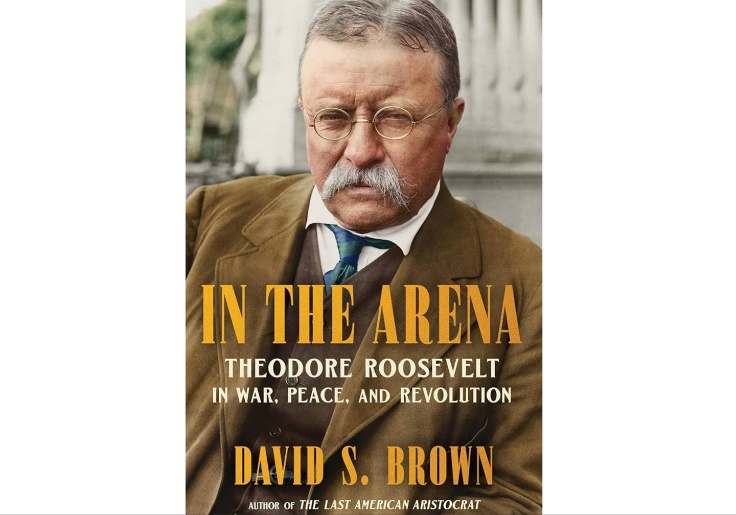
It cannot be said that Theodore Roosevelt has suffered from historical neglect. Harvard’s collection of Rooseveltiana boasts 14,000 works by or about the man. A casual perusal of Amazon’s Top 100 Audiobooks on Presidents and Heads of State turns up no fewer than 10 dealing with TR, more than any of the executive fraternity with whom he shares Mount Rushmore. A celebratory Roosevelt biography by Fox News anchor Bret Baier is currently ensconced on the New York Times bestseller list.
The post Ted’s Excellent Adventures appeared first on .
Rushdie on Death and Dying (While Remaining Alive and Well)
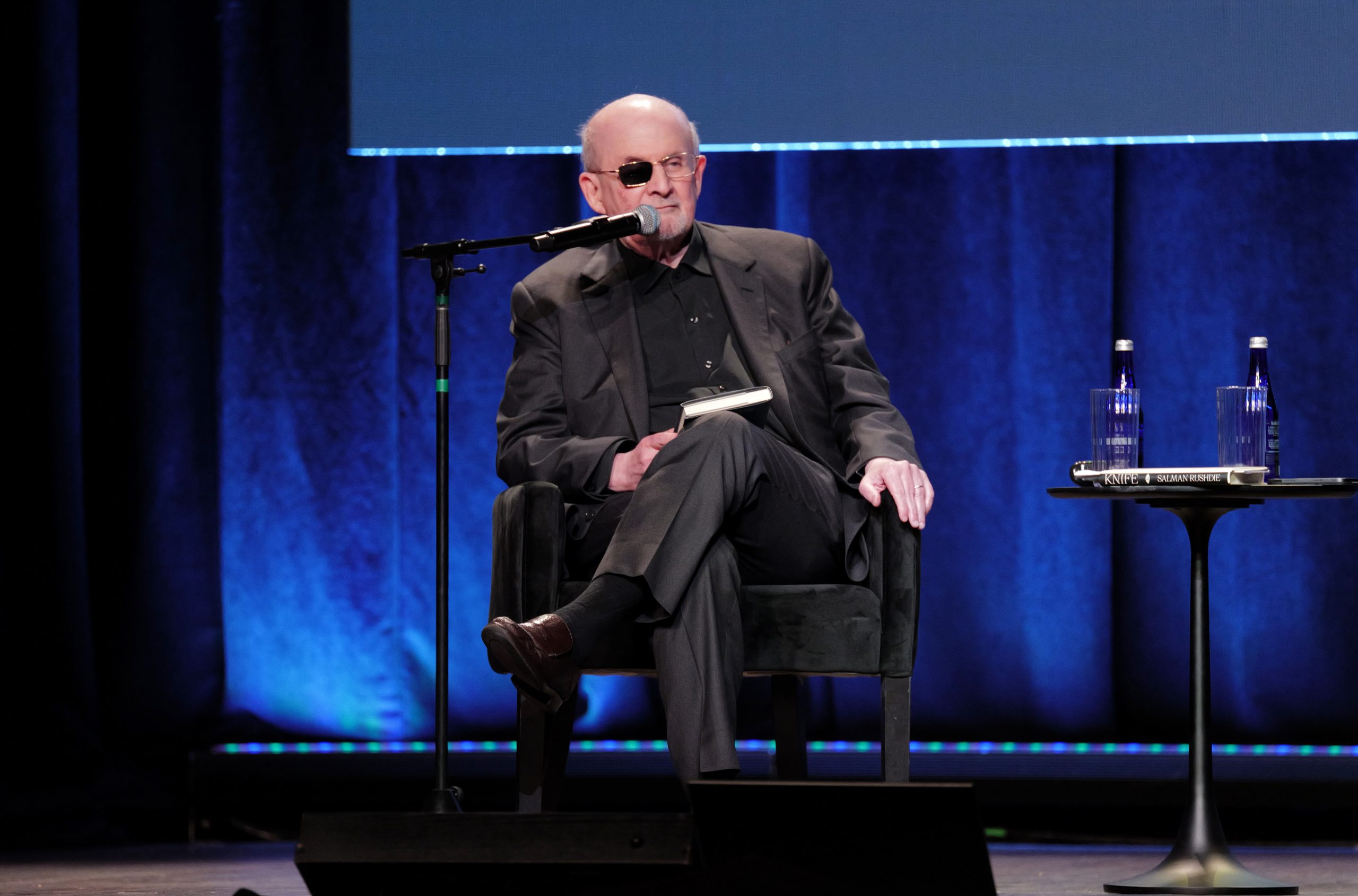
Through no fault of his own, the author Sir Salman Rushdie has become the English-speaking world’s premier purveyor of writing about death. The brutal reason for this is that, on August 12, 2022, Rushdie was stabbed several times in Chautauqua, New York, while preparing to give a talk—about, ironically enough, the United States as a place of safety for writers fleeing their home countries. Rushdie survived, miraculously, but lost an eye and the use of one hand in the process. His attacker, Hadi Matar, was sentenced to 25 years in prison for attempted murder, and now faces federal charges of terrorism under the auspices of Hezbollah.
The post Rushdie on Death and Dying (While Remaining Alive and Well) appeared first on .
A Righteous Man in Japan
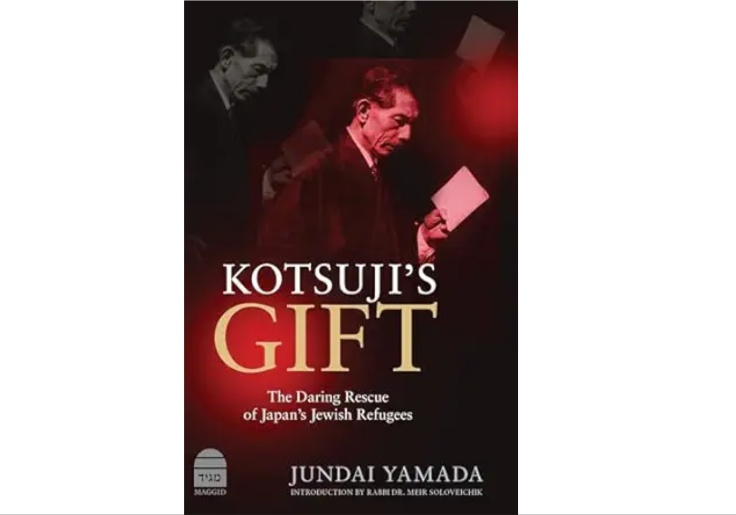
In the early 1940s, in the middle of World War II, a young Jewish student was arrested for wearing tefillin, phylacteries traditionally placed on the arm and head during prayer, on the rooftop of a store. This was somewhat of a surprise, for he was neither in Berlin nor Warsaw, but rather Kobe, Japan. Thousands of European Jews had obtained visas through the heroic kindness of Chiune Sugihara, vice-consul for the Japanese Empire in Kaunas, Lithuania, who risked his life to provide safe passage out of the reach of the Nazis and into Japanese territory. Included among these survivors were many students and teachers of the renowned Mirrer Yeshiva.
The post A Righteous Man in Japan appeared first on .
Aldrich Ames and the Enemy Within
I had a friend, a Soviet-East Europe Division case officer in the Central Intelligence Agency who served in Moscow in the 1980s. He was extremely well-suited to operations behind the Iron Curtain: He had a preternatural capacity to know where he was even in areas of Moscow he’d never been to. Maps and photographs once seen were never forgotten, giving him a continuous visual feed as he ran endurance contests against the omnipresent possibility of KGB surveillance. After a few runs, something dawned on him: His agent never made mistakes in his clandestine communications and routines. Everything was perfect.
The post Aldrich Ames and the Enemy Within appeared first on .
LAUGH FACTORY: Carbon-copy comics cry ‘Epstein’ on cue

Late-night hacks didn’t get the memo.
Sure, Democrats have been using the Epstein card for the better part of the year. Whenever President Donald Trump does anything they don’t like, which is anything, period, they claim it’s a distraction from the Epstein files.
Pratt wouldn’t be the first reality-show star to make waves in politics. Turns out that guy was a natural, in between McDonald’s shifts …
Because — all together now — the walls are closing in.
Except the Biden administration had access to said files for four years and never released them. Because, as we know, if there were incriminating details about Trump within them, Team Biden would have kept them safely tucked away from sight.
Sure, Jan.
Except now the “distraction from the Epstein files” defense is even sillier than ever. Why? We’ve already seen some of those files, and so far the only politician whose reputation suffered a hit was President Bill Clinton.
So what happened when Team Trump expertly corralled the criminal Venezuelan strongman Nicholas Maduro in a lightning strike they’ll make a movie about some day?
Team Late Night said the stunning raid was … no, really … a distraction from the Epstein files.
Kimmel. Fallon. Colbert.
Same talking points. Same complete lack of shame …
The timing couldn’t be better.
Move over, Tim
Our political culture is teeming with jackasses, from code-switch princess Jasmine Crockett (D-Texas) to Minnesota’s soon-to-be-unemployed Gov. Tim Walz (D). That title might be too mild for former MSNBC anchor Keith Olbermann.
Now, the professionals are coming back to stake their claim to the moniker.
A fifth “Jackass” movie is heading our way this June. The surprise project finds 50-something Johnny Knoxville and friends returning to their painful shtick that started on MTV too many years ago to count. OK, the show debuted in October 2000.
The boys have done everything from covering their bathing-suit areas with bees to literally sticking together courtesy of superglue.
What’s left? Maybe they can watch CNN for 24 hours straight without losing what’s left of their concussed minds …
Smear factor
One of the best running jokes in “This Is Spinal Tap” involves the group’s drummer. Or drummers, to be more precise. Sadly, playing the skins for the heavy metal band meant putting your life on the line. Literally. Think spontaneous combustion and choking on someone else’s vomit.
And, even more strange, a bizarre gardening accident.
On that scale, it’s a miracle that Foo Fighters guitarist Pat Smear is still with us. The 66-year-old rocker “smashed the s**t out of his foot” while gardening, at least according to the band’s Instagram account.
The Foo Fighters did star in the horror comedy “Studio 666,” so they have a healthy sense of humor. Did they turn a generic accident into a Tap-like riff?
Either way, he’ll be replaced on the current tour until his bones heal up. Let’s hope the band cranks it up to 11 upon his return …
From ‘The Hills’ to his honor?
Reagan. Ventura. Schwarzenegger. Franken. Trump. Pratt?
Reality-show veteran Spencer Pratt has been a thorn in the side of California Democrats following last year’s devastating Palisades fires. Pratt saw both the devastation left by poor land management and the feeble rebuilding efforts in his state.
Now, he’s doing something about it.
Pratty announced he’ll be running against Los Angeles Mayor Karen Bass in the city’s next election.
“Let’s make LA camera ready again!” he posted.
Pratt doesn’t have any real political experience, but could he be any worse than the current clown car running roughshod over the state? And, to be fair, he wouldn’t be the first reality-show star to make waves in politics. Turns out that guy was a natural, in between McDonald’s shifts …
RELATED: BURN NOTICE: ‘Hills’ heel Spencer Pratt to run for Los Angeles mayor
 Photo by MEGA/GC Images
McCarthy’s ‘View’ rue
Jenny McCarthy has singled out “The View,” and it ain’t pretty.
The model turned actress recalled her time on the feminist talk show on “The Katie Miller Podcast,” noting how its tone morphed during her one-year stint with the ABC chatfest.
She joined the gaggle to talk pop culture and other frothy subjects. Instead, the show took a political turn. No thanks, she said at the time.
“They’ve asked me to come back for, like, reunion shows,” McCarthy said. “I was like, over my dead body would I ever step foot in that place.”
Here’s betting Meghan McCain has a similar take on any reunion talk.
How the right got Dave Chappelle wrong
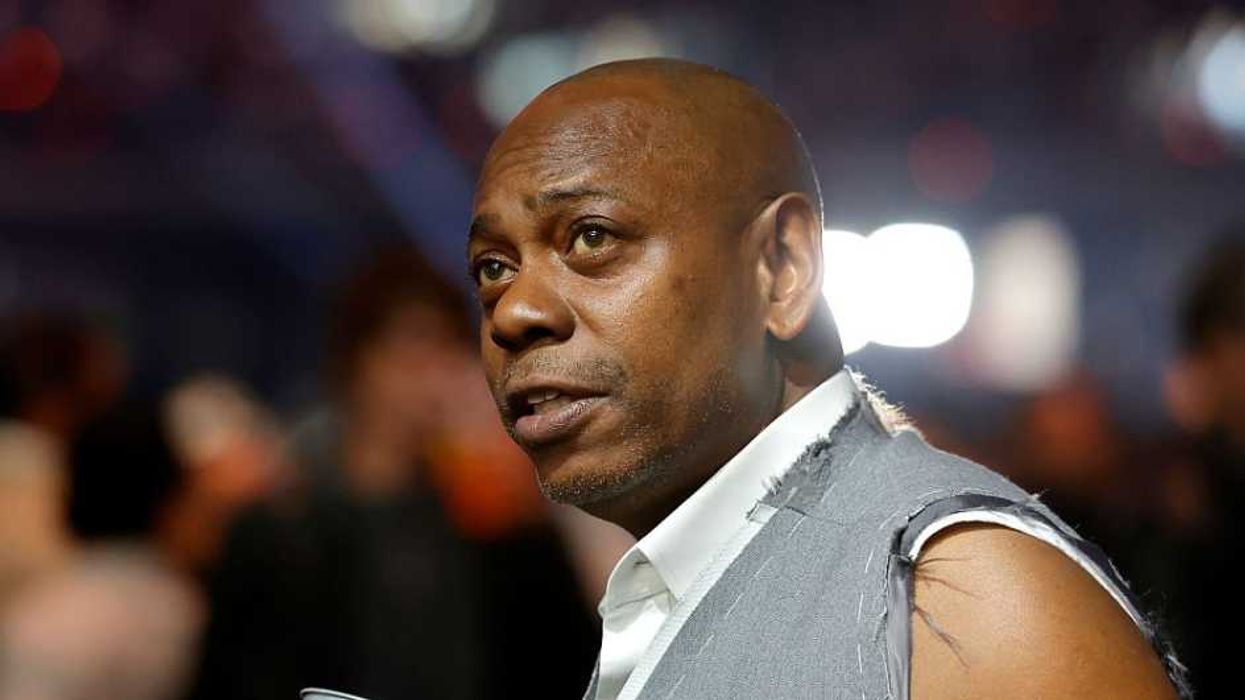
For years, Dave Chappelle has been treated as a kind of honorary dissident on the right. Not because he ever pledged allegiance, but because he irritated the correct people. He mocked pronouns, needled sanctimony, and refused to bow. That was enough. In a culture addicted to easy binaries, irritation became endorsement. Chappelle was recast as the anti-woke jester, the last free man in a room full of rules.
“The Unstoppable…” puts an end to that fantasy.
The right’s long flirtation with Chappelle rested on a misunderstanding. He was never an ally. He was a contrarian whose targets briefly overlapped with conservative concerns.
As the Netflix special begins, Chappelle emerges on stage wearing a jacket emblazoned with Colin Kaepernick’s name across the back, a symbol doing more work than most monologues. It is declarative. Kaepernick, a distinctly mediocre quarterback who parlayed a declining football career into a lucrative role as a full-time political brand, has long functioned more as an abstraction than as an athlete. His protest became performative, his grievance a commodity, his kneel a credential. Before a word is spoken, the audience is told where power, sympathy, and grievance will be placed. Identity is not the backdrop. Quite the opposite. It’s the billboard.
Black and white
From there, the special settles into a familiar groove. Race becomes the organizing principle, the master key, the lens through which every topic is filtered and fixed. America is again framed as a racist hellscape, a uniquely cruel experiment, a place where whiteness looms as a near-mythical menace.
This is not observation so much as obsession. The fixation risks alienating white viewers almost immediately. Some in the audience likely sense it. Others — liberal self-flagellators by instinct — laugh along anyway, even as they become the punch line of nearly every joke.
Chappelle takes aim at Elon Musk, at Trump, at the culture of DOGE-era absurdity, but the jokes rarely travel. They circle. Musk becomes less a human eccentric and more a symbol of tech-bro whiteness run amok. Trump is reduced to a prop, wheeled on whenever the set needs a familiar villain. That might be forgivable — useful, even — if the material pushed somewhere unexpected. It doesn’t. For a comedian of Chappelle’s ability, too much of the set feels curiously unambitious.
Left hook
The most telling moment comes in Chappelle’s account of Jack Johnson. Johnson, the first black heavyweight champion, endured explicit racism. That history is real. That is not in dispute. What is striking is how Chappelle treats that history. Johnson becomes less a man of his time and more a stand-in for black people in the present, besieged by the same “demonic white man.”
And so Chappelle conflates Johnson’s struggles with with the lives of rappers T.I. and the late Nipsey Hussle — and celebrates all three heroes for opposing white America.
As BlazeTV host Jason Whitlock recently posted on X:
This comedy special exposes [Chappelle] as highly controlled opposition, the ultimate plant, a fraud. He pretends to be a fearless speaker of truth to power. It’s laughable. No one with a brain can witness the Charlie Kirk assassination and then argue/suggest that Nipsey Hussle, T.I., and Jack Johnson were/are the real rebels, the real threats to American hegemony. Dave quoted Jack Johnson as saying his life was dedicated to the pursuit of pleasure. He was a boxer with the worldview of a modern gangsta rapper.
Some kings?
And then comes Chappelle’s praise of Saudi Arabia.
Not cautiously. Not ironically. He recounts performing at a comedy festival in Riyadh, openly boasting about the size of the paycheck. He describes feeling freer speaking there than in the United States. Freer. In a society where speech is monitored, dissent is criminalized, and punishment still includes public canings and amputations.
The audience laughs on schedule, applauding with the enthusiasm of trained sea lions. I found myself wondering why.
There is something almost surreal about hearing a man who has spent years describing America as uniquely oppressive extol the virtues of a monarchy where speech is tolerated only when it is toothless. The contradiction is never addressed. It simply floats past, buoyed by bravado and bank balance.
This isn’t hypocrisy in the cheap sense. It is something more revealing — and easier to miss because Chappelle is such a gifted orator. His moral compass isn’t anchored to freedom, but to grievance. America is condemned because it fails to live up to an ideal. Saudi Arabia is praised because it pays well and demands little beyond discretion.
It would be easier if “The Unstoppable…” were simply bad. It is not. Chappelle remains a master of timing. His cadence still carries. The problem is less talent than trajectory.
RELATED: Dave Chappelle faces fierce backlash over criticism of US while performing in Saudi Arabia
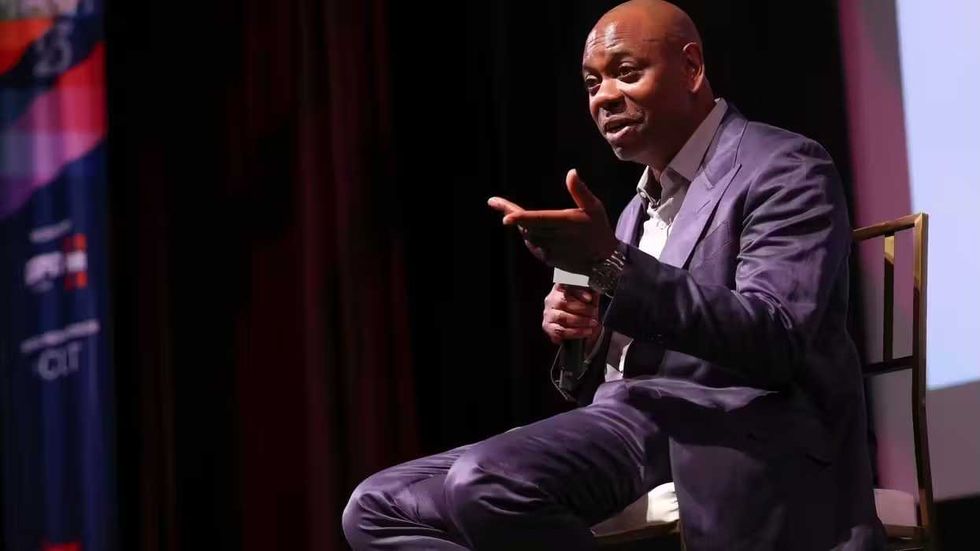 Photo by Arturo Holmes/Getty Images
Punching inward
What once felt dangerous now feels dutiful. What once cut across power now reinforces a different orthodoxy. Chappelle no longer punches up or down so much as inward, tightening his world until everything is interpreted through race alone.
The right’s long flirtation with Chappelle rested on a misunderstanding. He was never an ally. He was a contrarian whose targets briefly overlapped with conservative concerns. When he mocked trans men in women’s sports, it landed during a moment of peak absurdity, when the subject was everywhere and ripe for satire. It was easy. It was funny. But it was never a statement of allegiance.
“The Unstoppable…” makes that clear. The jacket, the Johnson parable, the Saudi sermon, the relentless racial framing — all of it points in the same direction.
Comedy, at its best, unsettles everyone. It exposes what our certainties conceal. In this special, Chappelle appears more interested in confirming his own.
Unstoppable, perhaps. But no longer subversive.
Forget ‘Die Hard’ — ‘Brazil’ is the ultimate Christmas movie
The cultural powers that be determined long ago that a film needn’t deal directly with the Nativity of our Lord and Savior to qualify as a “Christmas movie.”
Many films apparently qualify simply by virtue of their plot events’ proximity to December 25, their festive backdrops, and their occasional visual reference to Coca-Cola Claus, starred pines, and/or the birth of God.
In a way, the Christmas imagery does visually what the movie’s eponymous theme song does sonically: tease at something lovely and wonderful beyond the nightmare.
Rest assured as the bare-footed cop wastes German terrorists at his estranged wife’s office party; as the two burglars repeatedly fall prey to an abandoned adolescent’s mutilatory traps; and as the inventor’s son unwittingly turns his Chinatown-sourced present into a demon infestation — these are indeed Christmas movies.
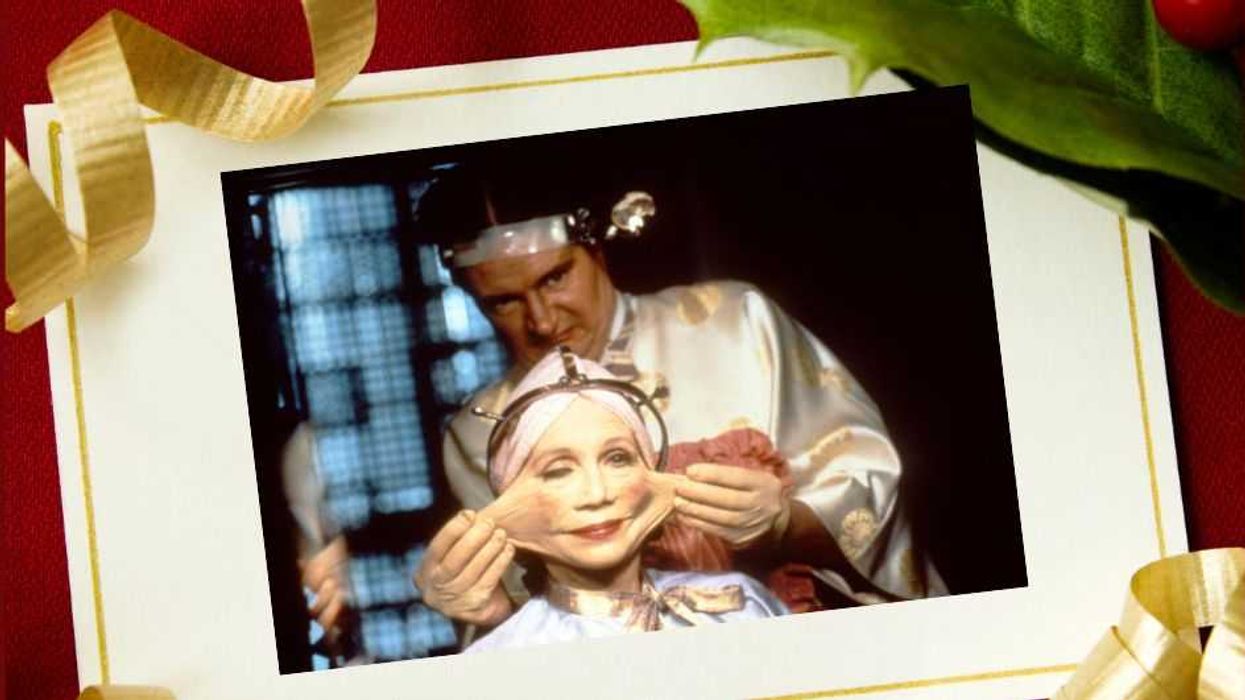
Given the genre’s flexible criteria, Terry Gilliam’s 1985 masterpiece “Brazil” also qualifies.
State Santa
In truth, the Python alumnus’ film about a bureaucrat’s maddening investigation of his totalitarian government’s execution of the wrong man is a far stronger entry than “Die Hard,” “Home Alone,” “Gremlins,” and other such flicks.
Not only is there Christmastime imagery throughout, but such visuals are also of great importance, providing insights both into the treachery of the film’s principal antagonist — the state — as well as into what appears missing in Gilliam’s dystopian world.
In the opening scene, a man pushes a cart full of wrapped presents past a storefront window framed by tinsel and crowded with “Merry Christmas” signage, television sets, and baubles.
Next we enter an apartment where a mother reads “A Christmas Carol” to her daughter, a father wraps a present, and a boy plays at the foot of a well-dressed evergreen.
After numerous scenes featuring gift exchanges, mutterings of “Happy Christmas,” and Christmas trees, we meet a kindly faced man dressed as Santa.
Jingle hells
This is, however, no feel-good Christmas movie.
The storefront window is firebombed.
Armored police storm into the family’s apartment, jab a rifle in the father’s gut, and take him away in a bag while his wife screams in horror.
The gifts exchanged and piling up throughout the film — besides the offers of job promotions and plastic surgery — appear to all be versions of the same novelty device, a meaningless “executive decision-maker.”
The kindly faced man dressed as Santa is a propaganda-spewing government official who rolls into the protagonist Sam Lowry’s padded cell on a wheelchair to inform Lowry — played by Jonathan Pryce — that his fugitive lover is dead.
With exception to the heart-warming domestic scene interrupted by the totalitarian bureaucracy’s jackboots at the beginning of the film, the Christmas imagery rings hollow and for good reason.
Extra to dehumanizing workplaces, purposefully meaningless work, bureaucratic red tape, and paperwork that’s so bad it ends up killing Robert DeNiro’s character — at least by the tortured protagonist’s account — the regime’s population-control scheme relies on consumerism.
The regime has, accordingly, done its apparent best to empty Christmas of the holy day’s real significance and meaning, donning it as a costume to sell and control.
RELATED: Santa Claus: Innocent Christmas fun or counterfeit Jesus?

Beyond the nightmare
“Brazil” is not, however, an anti-Christmas film.
The emptiness of the costume prompts reflection about its proper filling — a reflection that should invariably lead one to Christ.
In a way, the Christmas imagery does visually what the movie’s eponymous theme song does sonically: tease at something lovely and wonderful beyond the nightmare Gilliam once dubbed “Nineteen Eighty-Four-and-a-Half.”
“I had this vision of a radio playing exotic music on a beach covered in coal dust, inspired by a visit to the steel town of Port Talbot. Originally the song I had in mind was Ry Cooder’s ‘Maria Elena,’ but later I changed it to ‘Aquarela do Brasil’ by Ary Barroso,” Gilliam told the Guardian.
“The idea of someone in an ugly, despairing place dreaming of something hopeful led to Sam Lowry, trapped in his bureaucratic world, escaping into fantasy.”
Whereas the recurrent theme from the samba references a fantasy the regime can crush, the various indirect reminders that Christmas is about more than presents and half-hearted niceties reference a hidden truth and source of eternal hope: that God was born in Bethlehem.
Celebrate Christ’s birth with the world’s best Christmas carol — and it’s not the version you think

As the years pass by, it can feel like Christmas has become less about the birth of Christ and his salvific mission and more about secularism and winter.
Look no farther than some of the most popular “Christmas” carols of the past 100 years: “White Christmas,” “Rudolph the Red-Nosed Reindeer,” “Deck the Halls,” “Grandma Got Run Over by a Reindeer,” and on and on.
This Christmas, as you gather with your family, return to the meaning of the holiday — the birth of Christ — by reflecting on the original French version of “O Holy Night.”
The closing lyrics proclaim, without equivocation, that it is Christ who has saved us and we celebrate his coming. In other words, Christ is King!
For those in the French-speaking world, and especially the Acadian and Quebecois diaspora in New England, “Minuit Chretien” was a staple entrance hymn of midnight Mass.
While the English version “O Holy Night” is a beautiful song, the lyrics were adapted by Unitarian minister John Sullivan Dwight, reducing the theological weight of the original French.
Here are those English lyrics.
O holy night, the stars are brightly shining;
it is the night of the dear Savior’s birth.
Long lay the world in sin and error pining,
till He appeared and the soul felt its worth.
A thrill of hope, the weary world rejoices,
for yonder breaks a new and glorious morn!
Fall on your knees! O hear the angel voices!
O night divine! O night when Christ was born!
O night divine! O night, O night divine!
According to Chicago Catholic, the newspaper of the Archdiocese of Chicago, the song quickly became popular in Northern U.S. abolitionist circles due mainly to its third verse, which deals with breaking the chains of slavery.
Truly He taught us to love one another.
His law is love and His gospel is peace.
Chains shall He break, for the slave is our brother,
and in His name all oppression shall cease.
Sweet hymns of joy in grateful chorus raise we.
Let all within us praise His holy name.
Christ is the Lord! O praise His name forever!
His power and glory evermore proclaim!
His power and glory evermore proclaim!
Again, this is beautiful, but it downplays the truly salvific mission of Jesus Christ, God incarnate.
Before examining the French lyrics and their literal English translation, listen to the definitive version of the song, sung by Luciano Pavarotti at Notre Dame Basilica in Montreal, Quebec, in 1978. The concert in which he sang this rendition was a long-standing PBS Christmas special.
French lyrics
Here are the French lyrics, as compiled by the Oxford International Song Festival.
Minuit, Chrétiens, c’est l’heure solennelle,
Où l’homme Dieu descendit jusqu’à nous
Pour effacer la tache originelle
Et de son Père arrêter le courroux.
Le monde entier tressaille d’espérance
À cette nuit qui lui donne un sauveur.
Peuple, à genoux, attends ta délivrance.
Noël, Noël, voici le Rédempteur.
The tone is set right at the start. The verse boldly announces that this song is for believers. “Midnight, Christians, it is the holy hour.”
There is no mistaking this for secularism or a postmodern, easy Christianity. It calls the listener to remember that he is Christian and that Christmas is about the coming of the Savior, as the second line says, “When God as man descended unto us.”
The next part boldly proclaims the reason Christ became man: to save mankind from the stain of original sin. “To erase the original stain, and to end the wrath of His Father.”
The next two lines are very close to the English translation: “The whole world thrills with hope on this night that gives it a Savior.”
The end of the first verse brings it home: “Kneel, people, await your deliverance: Christmas, Christmas, the Redeemer is here!”
A bold declaration of what the night is about: the coming of deliverance that Christ the Redeemer brings!
The second and third verses are as reverent and hopeful as the first. The closing lyrics proclaim, without equivocation, that it is Christ who has saved us and we celebrate his coming. In other words: Christ is King!
Is ‘Die Hard’ a Christmas movie? And other questions about the true meaning of Christmas films.

“What is a Christmas movie?”
This is probably a question you’ve heard before in passing. Most of us instinctively have a good idea of what one is, but more than likely, that understanding is rather inexplicable, abstract, or trapped in the minutiae.
Only by leaning into my Christian faith did I begin to see these films and the unique glow that turns a regular film into a Christmas film.
We all know the tropes of Christmas movies — Santa Claus, joy to the world, peace and goodwill toward men, white snow on a warm Christmas morning, jingle bells, presents under the tree, hot chocolate and eggnog, sugar plums, figgy pudding, Nativity scenes, et cetera.
For most people, Christmas is a feeling and an idea as much as it is a day on the calendar. However, trying to put the abstract into words is challenging. In my capacity as a film reviewer, amateur filmmaker, and member of the Music City Film Critics Association, I have spent more than three years talking with friends and puzzling over the question for fun. For the most part, this debate was a lively intellectual exercise between my philosopher and cinephile friends and me; I can recall one particularly fun session of debate with my girlfriend as we discussed the Aristotelian implications of the definition of Christmas movies.
As it will become clear in this text, though, the answer to the question, “What is a Christmas movie?” is surprisingly hard to narrow down and answer definitively.
This was a problem I set out to try to formally solve in late 2024, during a rare moment of adult life when I had the time to sit down for three months and binge-watch out-of-season Christmas movies, while attending to a lengthy family hospice situation. As strange as it felt spending the month of October bingeing on Christmas movies, it was enlightening. Surveying films between the years 1935 and 2024, one sees a number of patterns and tropes fly by, evolving with the culture year by year.
Subsequently I partnered with my good friends at the evangelical ministry Geeks Under Grace to put my ideas to paper, publishing 10 weekly articles on the subject between November and December 2024. But even as I was penning those first essays, I struggled to find the right words; I didn’t have an answer in mind from the outset, merely a series of arguments and anecdotes. I would need to find my thesis in the act of writing this book.
There aren’t enough books written about Christmas films as a genre. If there are many, they are buried under an ocean of histories for specific films, best-of collections, or works written by obscure academics.
It’s easy enough to find resources on the production history of “It’s a Wonderful Life” but less so about the subgenre that flows out of it. Much has been said about the great entries in the subgenre: how “Miracle on 34th Street” became the first financially successful Christmas movie in 1947; how “It’s a Wonderful Life” and “A Christmas Story” were popularized via television broadcasts; how “Mister Magoo’s Christmas Carol” became the first animated Christmas special specifically released for television in 1962; how 2003’s “Elf” is the last Christmas film to be considered a blockbuster.
There is less said about what connects these data points.
One of the few experts on the subject I found was Scottish scholar Tom Christie, who has published multiple books on the history of Christmas films in the past decade through Extremis Publishing, including “The Golden Age of Christmas Movies: Festive Cinema of the 1940s and ’50s” and “A Totally Bodacious Nineties Christmas: Festive Cinema of the 1990s.” The rest of the insight I found was buried in individual articles and YouTube essays, to which I owe a tremendous debt for helping me shape the greater picture. They helped me break through my writer’s block and made the connections I needed to complete the project.
However, the seeds of insight I found in my reading turned me away from the films themselves.
From first principles, there can be no understanding of Christmas movies without first understanding Christmas. And there is no understanding of Christmas without understanding religion, society, secularism, consumerism, and the nature of what American society considers “normal.” It was only through this that the seed blossomed into what I think is the best achievable conception of a Christmas film, and only by leaning into my Christian faith did I begin to see these films and the unique glow that turns a regular film into a Christmas film.
I apologize to any secular readers who may have picked up this book imagining it would be relatively areligious, but I must beg their pardon in the necessity to discuss these issues through the lens of theology. I’m a practicing Christian, and I cannot help but think of life through the lens of a high-church Protestant. However, Christmas is a Christian holiday (at least tacitly), and I don’t think it’s possible to completely excise Jesus from the day bearing his name — at least not without turning the holiday into a parody of itself.
Christianity teaches us that Jesus Christ, the second person of the Trinity, became flesh and walked among us. He was both fully God and fully man and became the hinge of history. He was a paradox, described in His Nativity by the apologist C.S. Lewis, “Once in our world, a stable had something in it that was bigger than our whole world.”
The idea that a God so seemingly wrathful, distant, and lawful would be so humble as to allow Himself to be born as a fleshy human baby to a peasant woman in the backwater of the Roman Empire is strange. But this is the event Christmas celebrates — a contradiction and a miracle; the fullness of history fulfilled in humility; the logos breaching into the world; a quiet resistance manifesting against the evils of this rebelling silent planet.
Reflecting on this and the modern reality of Christmas, an idea began to unfold slowly in my mind. The realization came to me that Christmas movies are not defined so easily but are defined by a connection to the supernatural. They are downstream of something greater, containing within them a small drop of the divine-like spring water filtering into a mighty river.
That water may no longer be clear and crisp, or even drinkable, but its flowing is evidence of a source.
Christmas movies are utterly unique in modern film due to the way we interact with them. They are a subgenre unto themselves, intertextually linked with other Christmas movies and the holiday itself, but it is that very intangible glow that makes them unique. They contain an essence of what Lewis once described, in his book “The Problem of Pain,” as “the numinous”:
Those who have not met this term may be introduced to it by the following device. Suppose you were told there was a tiger in the next room: you would know that you were in danger and would probably feel fear. But if you were told, “There is a ghost in the next room,” and believed it, you would feel, indeed, what is often called fear, but of a different kind. It is not based on the knowledge of danger, for no one is primarily afraid of what a ghost may do to him, but of the mere fact that it is a ghost. It is “uncanny” rather than dangerous, and the special kind of fear it excites may be called dread. With the uncanny one has reached the fringes of the numinous.
This is not to call Christmas movies dreadful but that they contain within them a sense of the supernatural, what we might call “awe.” Connecting with that awe is downstream of the supernatural source that created it. Christmas movies grab that stream like a third rail and feel electrified by it.
It may seem like a bit of a leap to say that mean-spirited and cynical movies like “Christmas Vacation” or “Bad Santa” are in some way a reflection of God’s divinity, but as we will come to see, the thing that sets Christmas films apart from other films is an embrace of the supernatural essence of Christmas.
A Christmas movie always contains an element of hope that warps cynicism and pain of its story toward an ideal.
A Christmas movie glows with Christmas spirit.
A phrase like “the true meaning of Christmas” does this too, alluding to some unspoken notion that culture agrees upon, that Christmas is meaningful because it changes people. It scratches upon something divine while remaining achingly human and unspecific.
That thing is not entirely limited to the faithful, as secular people enjoy Christmas too. Muslims, Jews, Buddhists, and atheists all celebrate Christmas in equal measure. And while I wouldn’t say they celebrate in the same manner as I do at the communion rail on Christmas morning, they are communing with something beyond the superficial layers of cheap plastic junk that Christmas would be if it were merely another day in December.
This book is the result of many months of thought and reflection, brought into the world by the good graces of my friends and colleagues who helped me write it, host it, critique it, and bring the original articles to fruition, here expanded to a thematically rounded 12 chapters. Each chapter has been revised to reflect the conclusions I discovered in the very act of writing the book. One often finds his destination only by setting out on an unknown journey!
So let us start by asking the most immediate and controversial question and then let our understanding unfold: Is “Die Hard” a Christmas movie?
From there, we will discuss Christmas as a secular phenomenon; explore Christmas movies as a subgenre; the role religion, consumerism, normality, and nostalgia play in Christmas cinema; and close on the incarnational implications of Christmas films.
What is a Christmas movie?
Let’s find out!
The above essay was adapted from the book “Is ‘Die Hard’ a Christmas movie? And Other Questions About the True Meaning of Christmas Films,” which is available here.





