

Category: Culture
Tolstoy’s Last Novel
Leo Tolstoy is the greatest writer in the Western world—greater, yes, than Shakespeare, Dante, Dickens, Dostoyevsky, and Proust. In evidence I would submit his two masterpiece novels War and Peace (1867) and Anna Karenina (1878), and 20 or so magnificent novellas and short stories, among them “The Death of Ivan Ilych,” “The Kreutzer Sonata,” “Father Sergius,” “Hadji Murad,” and “Master and Man.”
The post Tolstoy’s Last Novel appeared first on .
Make Mass Great Again
This Thursday is sure to see packed pews where they may otherwise sit empty. Catholics who regularly attend Mass might find themselves seated next to a CEO—not a “Chief Executive Officer,” but a “Christmas and Easter Only” Catholic. Protestant and Catholic churches alike advertise their times of worship for Christmas, expecting crowds too large to accommodate in one service. But this is not how it should be, according to Robert Cardinal Sarah. Instead, these churches should be full every weekend with reverential, traditional worshippers.
The post Make Mass Great Again appeared first on .
I’ll Have What He’s Having
If you’ve never heard of Drew Nieporent, it’s okay, even if you’re something of a foodie. Stick with me to the end of this review, and there’s an excellent chance you’ll want to read this delicious memoir from a pioneering figure of the New York restaurant scene. Once you’ve read the book, it’s all but certain you’ll wish you could have dinner with him.
The post I’ll Have What He’s Having appeared first on .
Down the tubes: Flailing Oscars leaving ABC, moving online
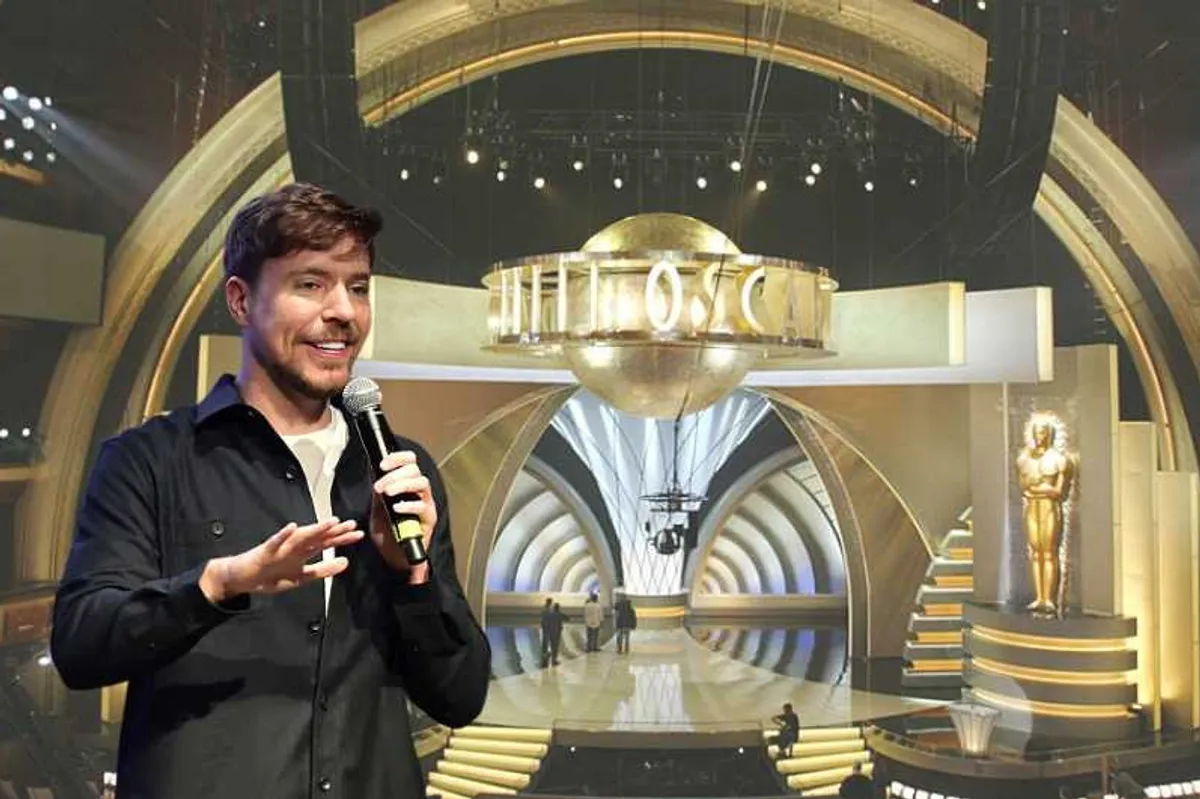
And now … your Oscars host … Mr. Beast!
The Academy Awards, facing diminished ratings and cultural clout, is moving to YouTube starting in 2029. Yes, ABC didn’t fight hard enough to keep the once-mighty telecast on its airwaves, paving the door for the Google giant to take over.
If Marvel really wants to bring back disenchanted fans, just say Brie Larson’s Captain Marvel got lost in a black hole and can’t make the sequel.
And as one internet wag cheekily put it, calls to “smash that ‘like’ button” may blend with the boilerplate political speeches sooner than later.
It’s a sign of the times, of course, on two fronts. YouTube is a major part of the digital landscape, and ABC understands the Oscars’ cache isn’t what it used to be.
The funniest part? A Variety scribe cheered the news, hoping for an even longer Oscars telecast.
“The Oscars on YouTube could bring an unlimited runtime, unfiltered hosts, and the show we’ve always wanted” reads the hysterical headline.
Imagine enduring a three-and-a-half-hour celebrity lovefest and thinking, “More, please!”
Boulevard of memes
Hollywood could really use some good news at this point. Enter a spanking new study that shares a surprising take on Gen Z. Turns out the youthful demographic’s movie theater attendance climbed by 25% over the past year.
Video game-inspired films like “Five Nights at Freddy’s 2” and “A Minecraft Movie” certainly helped, but the image of phone-obsessed teens eschewing theaters for their comfy couches may come with a caveat.
Speak to us directly, and we’ll line up to see what you have to offer. Imagine the lines around the block to see “6-7: The Movie” …
‘Peanuts’ allergy
Coming soon: a reimagined take on the Red Baron where he’s the hero and that dastardly Snoopy is the heel.
Sound crazy? Well we just saw a movie greenlit based on the villainous Gaston character from “Beauty and the Beast.”
“Wicked: For Good,” which makes the Wicked Witch of the West our unfairly maligned heroine, is crushing the box office.
And another reimagined classic spun from “Cinderella” will make those nasty stepsisters the heroes. It’s called “Steps.” Really.
So why wouldn’t Snoopy’s archnemesis ever get a cinematic closeup? It feels inevitable, especially after Sony purchased the rights to the “Peanuts” franchise for a cool $457 million.
Rats.
Who will stop team Sony from following this corrosive trend? And should it draw a crowd, expect more re-imaginings, like Brad Pitt playing a spiffed-up Pig Pen and Lucy joining the NFL …
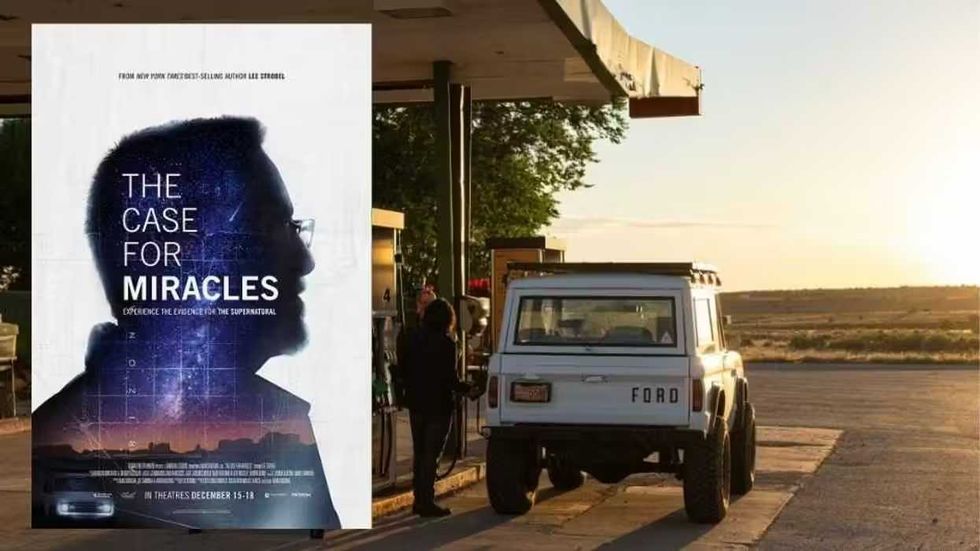
RELATED: ‘The Case for Miracles’: A stirring road trip into the heart of faith
 Fathom Entertainment
Avengers: Payday
The MCU is in full course-correction mode. But is it too late?
The mega franchise has stumbled in recent years following the two-part “Avengers” saga against Thanos. That coaxed Disney suits to call in reinforcements — AKA Robert Downey Jr.
But wait? The charismatic star’s alter ego, Iron Man, died in “Avengers: Endgame.” Disney craved his sweet, sweet name recognition so badly it brought him back for next year’s “Avengers: Doomsday.”
Except this time, he’ll play the villainous Victor von Doom.
If that decision didn’t reek of flop sweat, the latest MCU news sure does. Chris Evans, who memorably played Captain America in nine MCU films, was given a poetic send-off in “Endgame.” The actor hung up his shield, eager to tackle roles where he doesn’t squeeze into unforgiving leotards.
Except he didn’t really go away. He’s back, according to the just-released “Avengers: Doomsday” teaser trailer. (Imagine the zeroes on the paycheck written to Mr. Evans.)
If Marvel really wants to bring back disenchanted fans, just say Brie Larson’s Captain Marvel got lost in a black hole and can’t make the sequel …
Kamala klarity
Kamala Harris may have been the most qualified person ever to run for the White House. Just ask her.
Yet the former vice president is still struggling to answer softball questions. During the campaign, she famously bungled a layup from Sunny Hostin of “The View.”
“How will you be different than President Biden?” Swiiiiiing and a miss.
This week, far-left “comedian” Jimmy Kimmel teed up another question for the ex-veep to swat out of the studio. Why didn’t the Biden-Harris administration release the Epstein files?
“To give you an answer that will not satisfy your curiosity, I will tell you, we, perhaps to our damage, but we strongly and rightly believed that there should be an absolute separation between what we wanted as an administration and what the Department of Justice did. We absolutely adhered to that, and it was right to do that,” Harris told Kimmel.
“The Justice Department would make its decisions independent of any political or personal vendetta or concern that we may have, and that’s the way it worked.”
Harris is rested and ready for the 2028 presidential campaign, no doubt.
Taking the fentanyl challenge: Whacked-out American junkies now big in Japan
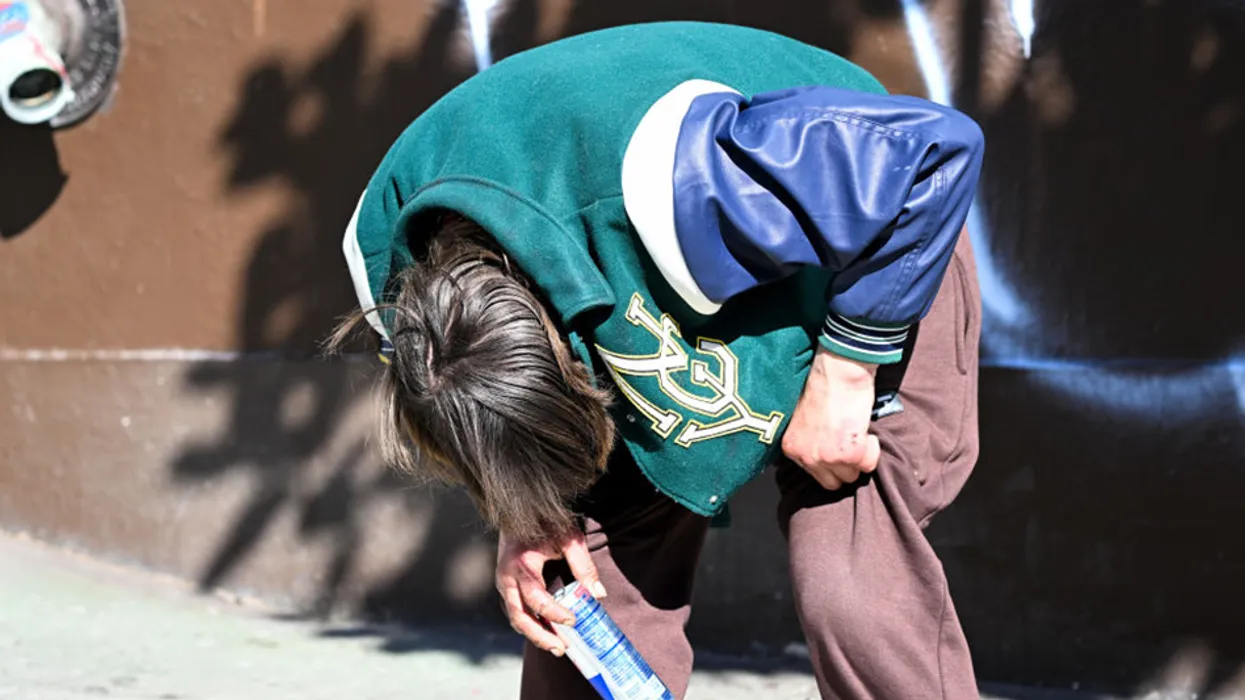
The United States’ fentanyl crisis is being mocked on the other side of the planet.
Videos with millions of views show Japanese content creators mimicking a bizarre and all-too-common sight in cities like San Francisco and New York: half-conscious drug addicts bent over sharply at the waist but somehow still standing.
‘Japanese social media influencers are going viral for mocking America’s fentanyl addicts.’
Typically from the effects of heroin or fentanyl, this telltale folded posture has become known as the “fenty fold.”
“Japanese social media influencers are going viral for mocking America’s fentanyl addicts who are often seen hunched over and flailing on the streets,” one user wrote on X. An attached video that showed a young woman in Okinawa, Japan, hunched over has received more than 2.5 million views.
RELATED: How to win the opioid fight
Know when to fold ’em
On TikTok, similar videos have captions like “Bringing American culture to Japan” and show participants folding over in locations typical of American drug addicts, like a subway station. One such video has garnered over 1.2 million views.
Other videos take place in parking garages, city centers, and public parking lots. Most of the viral content uses a Japanese song labeled “Anime Girl,” although the song is actually a combination of the songs titled “Don’t Forget Me” by Schinya and “Sparkle” by Radwimps.
Cleaning up
Drug seizures have increased under the Trump administration, resulting in a slight increase from FY2024 versus FY2025.
However, if FY2026 continues on trend, there will be a significant jump in the amount of annual drugs seized (measured in pounds), according to CBP statistics.
RELATED: Mexico has cartel armies. Blue America has cartel politics.
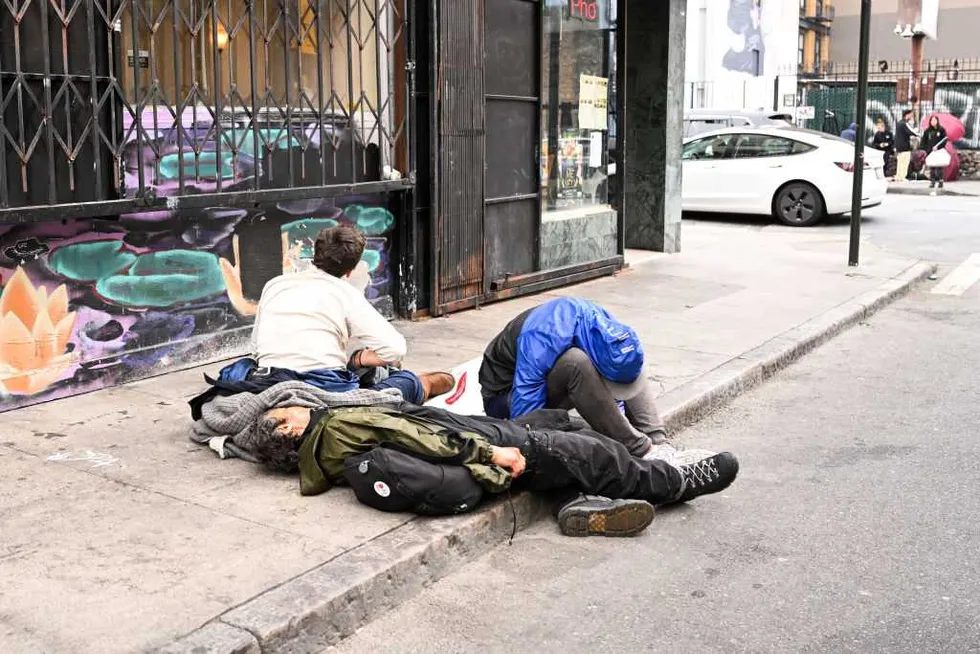 Photo by Tayfun Coskun/Anadolu via Getty Images
For example, in October 2025, approximately 51,500 pounds of drugs were seized by the federal government. In October 2024, that number was 40,700 and just 37,400 in October 2023 under President Biden.
Overdoses down
Fentanyl, however, represents one of the least confiscated drug types in terms of weight, likely due to its potency. Marijuana, methamphetamines, and cocaine are the most seized by weight, in that order.
At the same time, overdose deaths have significantly dropped in the United States between April 2024 and April 2025. There was a 24.5% decrease during that time period, the CDC reported. The number of overdoses peaked around August 2023 but have since been declining.
Some of the biggest decreases in overdoses have come in states like Louisiana, New Hampshire, New York, West Virginia, and Wyoming.
Like Blaze News? Bypass the censors, sign up for our newsletters, and get stories like this direct to your inbox. Sign up here!
Pizza Hut Classic: Retro fun ruined by non-English-speaking staff, indifferent customer service
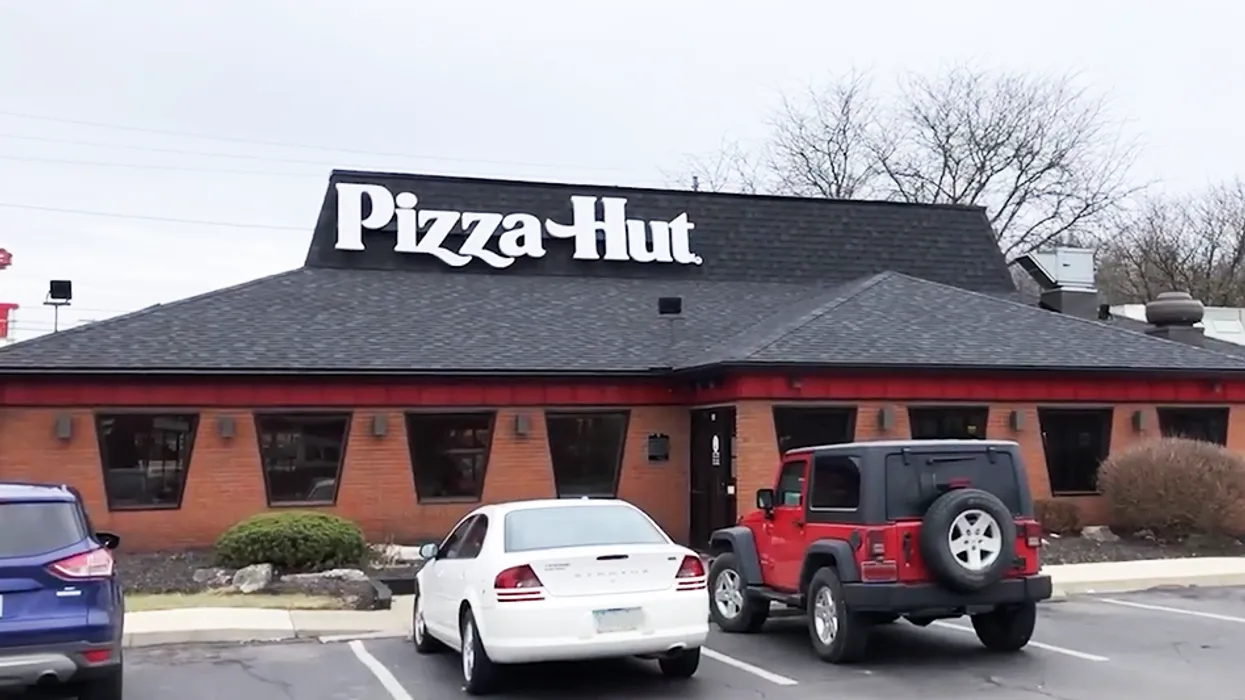
Pizza Hut Classic is evidence that even if a company gets its branding right, customer service is the oil that keeps the machine running.
Since 2019, Pizza Hut has been spreading its retro vibes across the continent by reintroducing its 1990s decor, design, and dining experience.
‘The interior features cozy red booths and old-school Pizza Hut lamps.’
From Warren, Ohio to Hempstead, Texas, the iconic Pizza Hut chandeliers are being rehung, and the fantastic buffet is being put out once again. According to Chefs Resource, some locations have even brought back the beloved dessert bar.
Slice of life
With the return of the 1974 logo and nostalgic appeal, Pizza Hut did the inverse of Cracker Barrel. Instead of trying to modernize and simplify their decor, the pie-slingers retrofitted and cluttered theirs.
A page called the Retrologist dissected the formula and determined exactly what the word “Classic” in Pizza Hut Classic really means. To meet the new (old) standard, the writer pinpointed that each location must include the following:
1. The old logo is used in pole signage as well as at the top of the (usually but not always) red-roofed restaurant. The pole sign features the addition of the word “Classic.”
2. The interior features cozy red booths and old-school Pizza Hut lamps.
3. Stickers featuring the long-discarded character Pizza Hut Pete are found on the door.
4. Posters feature classic photos from Pizza Huts of yore.
5. A plaque displays a quote from Pizza Hut co-founder Dan Carney, explaining the concept as a celebration of the brand’s heritage.
While many of the revamped locations have received rave reviews, there still exists a way to make such a fine dining experience awful, even if surrounded by everything that made customers flock to the buffet 30 years ago.
RELATED: The ‘rebranding’ brigade’s war on beauty
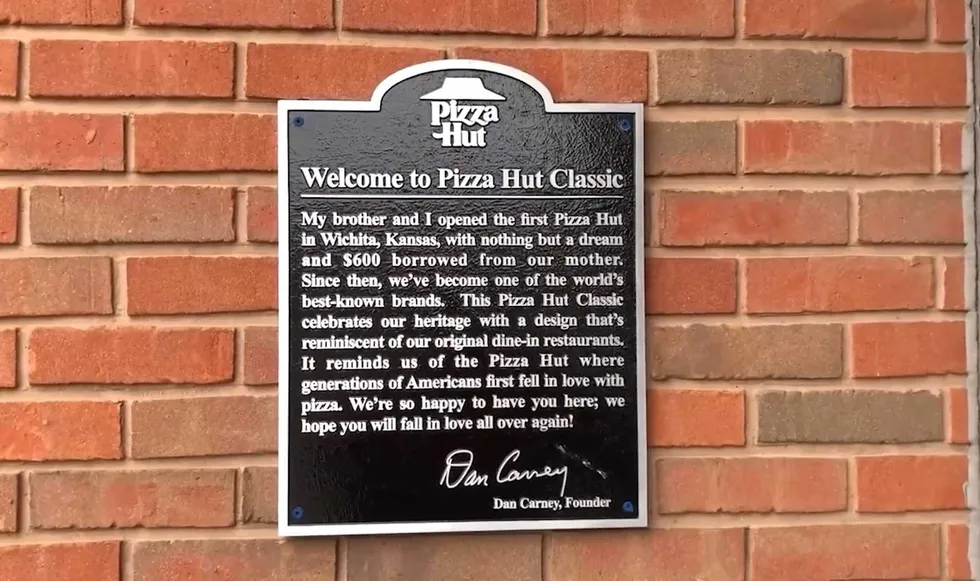 Photo by Andrew Chapados/Blaze News
Word salad
For a Pizza Hut Classic ruined by modern belief systems, look no farther than north of the border, in the Toronto suburb of Scarborough.
While the restaurant did include the iconic chandeliers and some of the retro furnishings, it did not have old soda fountains or the memorable menus spotted at other locations. Instead, this unique eatery represented a new (low) standard of lackluster customer service, coupled with sprinklings of unfettered immigration policy.
These accommodations, or lack there of, will surely split customers down political lines. Yes, there are retro red Pepsi cups, but the waitress who literally speaks no English may fill that cup with Diet Pepsi with ice instead of “water with no ice.”
Is there a salad bar? Yes. Is the salad bar limited to plain lettuce and croutons? Also yes. Were there pieces of lettuce dropped in the ranch dressing (the only available dressing) for the duration of the visit? Definitely.
RELATED: Cracker Barrel’s logo lives — but like every digital-age public space, it now looks dead inside
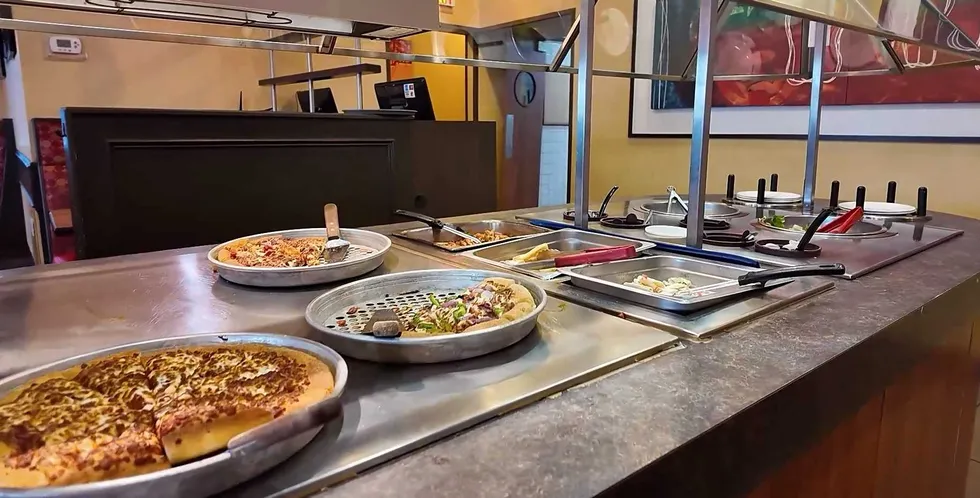 Photo by Andrew Chapados/Blaze News
Meat and greet
A steady rotation of cheese, deluxe, and Hawaiian pizza was only broken up by one couple’s complaints about the lack of variety. A manager — also largely unintelligible in her speech — replied first with a refusal to change the rotation. Strangely, about 10 minutes later, she eventually brought out two meat lovers’ pizzas, in an apparent act of defiance.
The damaged seating in the restaurant combined with a chip out of the “Hut” portion of the building’s exterior revealed years-old paint and, along with it, a yearning for more care to be given. A restaurant that could be so nostalgic, but ruined by the apparent comforts of a district that has voted Liberal in its last three federal elections for a woman from the U.K. who holds citizenship in three countries, including Pakistan.
“I wanted to go to a dine-in, because in most places, including the U.K., you can’t do that now,” said reporter Lewis Brackpool, who visited the location. He added, “I come to one, and what do you know — it sucks.”
In at a massive discount due to the exchange rate, Brackpool could not help but feel like many who are from the area: that what had been promised was robbed.
The experience can be summed up in the words of an anonymous would-be customer who, upon seeing a commercial of what a Pizza Hut buffet looked like in the 1990s in comparison to the location in question, said, “They took this from us.”
Like Blaze News? Bypass the censors, sign up for our newsletters, and get stories like this direct to your inbox. Sign up here!
American muscle-car culture is alive and well … in Dubai
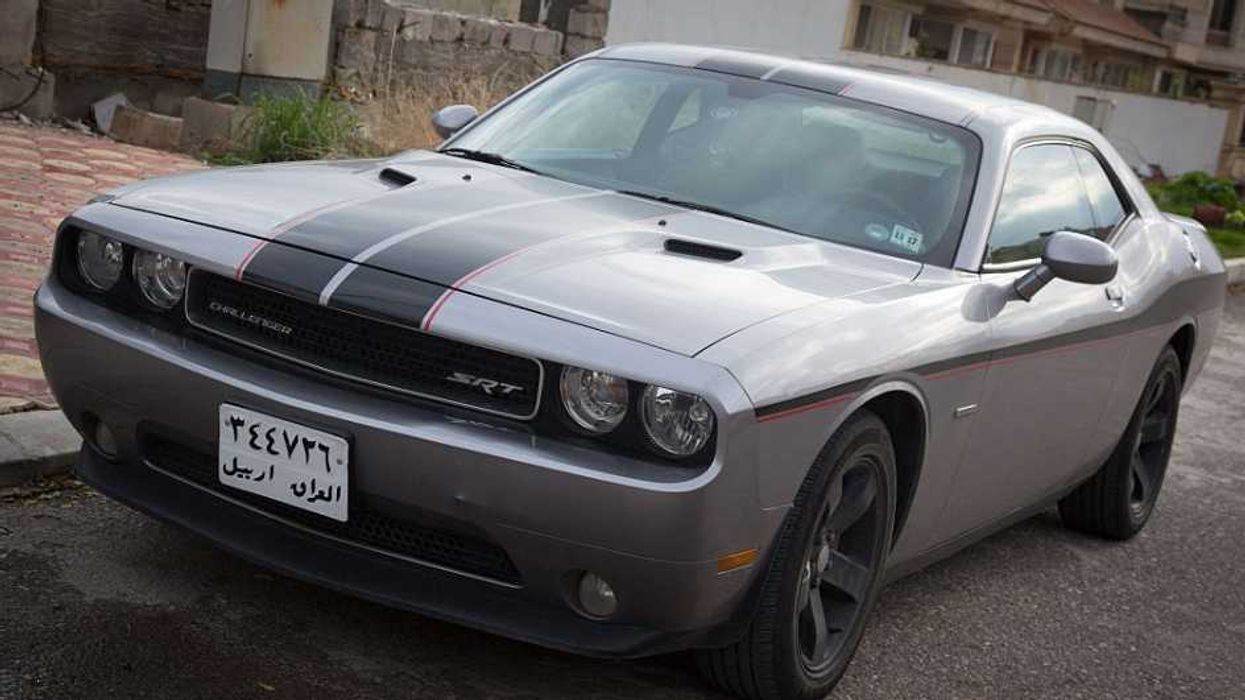
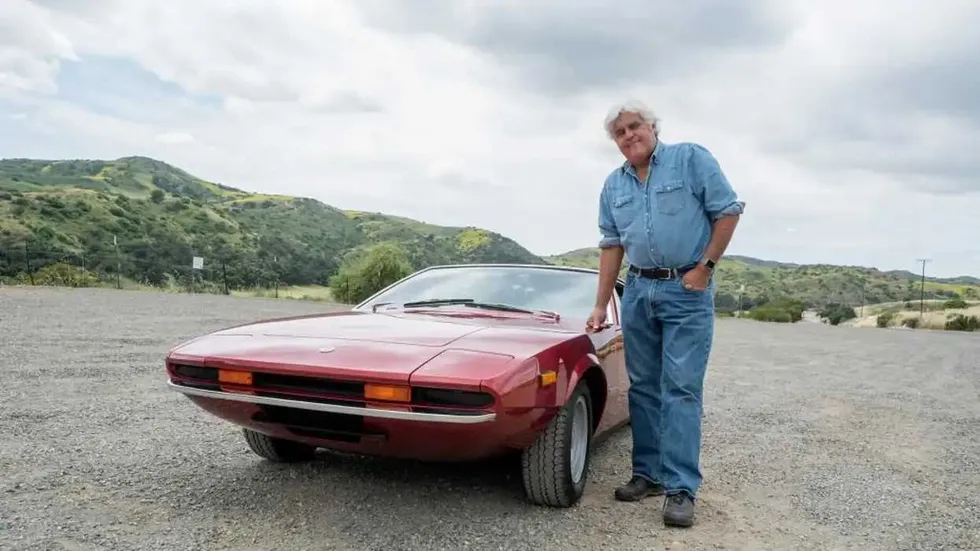
One of the first things I did when I moved to Dubai was buy a Dodge Challenger. Not the volcanic Hellcat or the feral Scat Pack — the SXT, the V6 base model.
Nevertheless, for those nine months in 2023, the car carried itself like it had seen things it couldn’t legally discuss. I miss it the way a grounded teenager misses his phone — painfully and often. The car was, in many ways, gloriously pointless. But to me, it was absolutely perfect. Nobody buys a Dodge for practicality. You buy one because fun is a dying art and driving is supposed to feel alive.
America insists this is why we can’t have nice things. The UAE shrugs, inhales some shisha, and says, ‘Great, we’ll have them instead.’
What fascinated me then, and still does now, is how the Middle East has quietly become the last stronghold for real American muscle.
Dubai drift
While America agonizes over emissions charts and frets about carbon neutrality, Dubai is out there treating a supercharged V8 like a household appliance. You hear them everywhere — echoing off glass towers, screaming down Sheikh Zayed Road, prowling through parking lots like metal predators looking for prey. It’s the sound of a culture still in love with combustion, unashamed of horsepower, and utterly allergic to guilt.
The region adores these cars. Worships them, even. In the West, muscle cars are increasingly treated like contraband with headlights, monitored by regulators the way principals monitor school corridors. But in the UAE, they’re symbols of power, freedom, excess, and the simple joy of pressing a pedal and feeling physics panic.
The numbers back it up. The UAE’s classic-car market is projected to grow from roughly $1.23 billion in 2023 to nearly $1.83 billion by 2032, with collectors routinely paying well above American estimates. This is particularly true for rare models, such as the 1971 Plymouth Hemi ’Cuda convertible that sold for about $4.2 million in Dubai, roughly 35% above its American estimate.
Men in flowing robes and sandals race around industrial estates with the confidence of emperors and the cornering ability of a wardrobe on wheels. Somehow, by the grace of God (not Allah), it all works. There’s something delightfully surreal about watching a man dressed like he stepped out of the book of Exodus drift a Challenger with monk-like serenity.
Combustion cosplay
Back home, Dodge now calls its new EVs “muscle.” But that’s like a woman getting very expensive surgery in a very private place and calling herself a man. Without the roar, the vibration, the combustion, it’s cosplay — an impersonation that fools no one except the marketing department. You can’t call something a muscle car if it sounds like a dentist’s drill.
Real muscle needs rumble. It needs that primal, throat-deep growl that shakes your sternum and announces your arrival three zip codes away. Take that away, and you’re just a sad sack who should have bought a Tesla and called it a day.
When muscle cars disappear, the loss isn’t just mechanical but cultural. For decades, when the world pictured America, it didn’t picture Washington or Wall Street. It pictured steel, cylinders, and a V8 rumble rolling across a desert highway.
Hollywood hardwired that association into the global imagination. “Bullitt,” “Vanishing Point,” “Smokey and the Bandit,” even the “Fast & Furious” franchise, for all its awful acting and cheese thick enough to insulate a house. I still remember being 8 years old, watching “Gone in 60 Seconds,” and thinking, Yes, this is what adulthood should look like.
You could grow up thousands of miles away, never having set foot on American soil, and still recognize the sound of a Mustang firing up. It was the unofficial anthem of the greatest nation on Earth, a national ringtone encoded in exhaust fumes. It symbolized everything the country loved about itself: rebellion, possibility, the belief that any man with a heavy foot and enough premium gasoline could outrun his problems. It was an identity as much as a mode of transport.
RELATED: ‘Leno’s Law’ could be big win for California’s classic car culture
 CNBC/Getty Images
Revvers’ refuge
And that’s the tragedy. A silent America isn’t an America anyone recognizes. The muscle car was more than a vehicle. It was a character, a co-star, an accomplice. Kill it off, and the whole story changes — and not for the better.
And oddly, it’s the Middle East that seems most intent on preserving that myth. It’s as if the region has been appointed the accidental curator of America’s automotive soul. The UAE, in particular, feels like the final refuge where these cars can run wild. Environmental regulations exist there, but only in the same way that scarecrows exist — present, decorative, and cheerfully ignored. The country is spotless, the air somehow clearer than cities that run entire marketing campaigns screaming “sustainability!” And yet it’s bursting with Challengers and Chargers. America insists this is why we can’t have nice things. The UAE shrugs, inhales some shisha, and says, “Great, we’ll have them instead.”
It makes you re-think the demonization of muscle cars. We were told they were barbaric, dirty, irresponsible — rolling catastrophes portrayed as personal hand grenades lobbed at the atmosphere. Meanwhile, Dubai keeps its streets cleaner than half of California while simultaneously hosting enough horsepower to make a U.N. peacekeeper reach for the radio. The contradiction is almost poetic. The place accused of excess manages to be pristine, while the places preaching virtue can’t manage basic cleanliness without a committee and a grant.
Selling sand to a camel
A quick disclaimer for anyone feeling inspired to follow my lead. Dubai might be paradise for muscle cars, but it’s also the Wild West of used-car dealing. A shocking number of “mint condition” imports arrive after being wrapped around a tree somewhere in North America, are given a light cosmetic baptism, and are relaunched onto the market as if they had spent their lives humming gently down suburban streets.
Half the salesmen — greasy, fast-talking veterans from Lebanon, Palestine, and everywhere in between — could sell sand to a camel. You need your eyes open. Fortunately, I knew the sites where you can run a chassis number and see the car’s real history, dents, disasters, and all. It saved me from driving home in a beautifully repainted coffin.
Even with this dark underbelly, Dubai’s affection for American muscle is entirely authentic. You see it on weekend nights at the gas stations, which double as unofficial car shows. Dozens gather, engines idling like caged animals, while men compare exhaust notes with the seriousness of diplomats negotiating borders. Teenagers film everything, because why wouldn’t you document a species this endangered? The entire scene feels like a sanctuary, a place where mechanical masculinity hasn’t been entirely euthanized.
Muscle migration
Some of the funniest moments came from watching Emirati drivers — men dressed in immaculate white garments — exit their cars with Hollywood swagger, as if the Challenger were simply an extension of their personality. And in many ways, it was. It was part “Need for Speed,” part Moses at the Marina. And somehow, without irony, they pulled it off.
Living there made me realize that muscle cars aren’t dying everywhere. Rather, they’re migrating. Fleeing the jurisdictions that shame them and settling in regions that still celebrate joy. The Middle East has become the last refuge for these beasts. Not because it rejects the future, but because it refuses to surrender the past for a machine that feels clinically dead on delivery.
And that’s the real tragedy. America built the muscle car, mythologized it, exported it, then surrendered it to paper-pushers in Priuses, armed with clipboards and calculators. The UAE bought the export and kept the myth alive. My Challenger is gone now, sold to a man who claimed he needed it for “family errands.” But the fond memories of tearing around the city have never faded. America may have abandoned its automotive adolescence, but Dubai, thankfully, hasn’t.
Someone has to keep the engines roaring. And right now, it’s the men in sandals.
Why Jayden can’t use capital letters
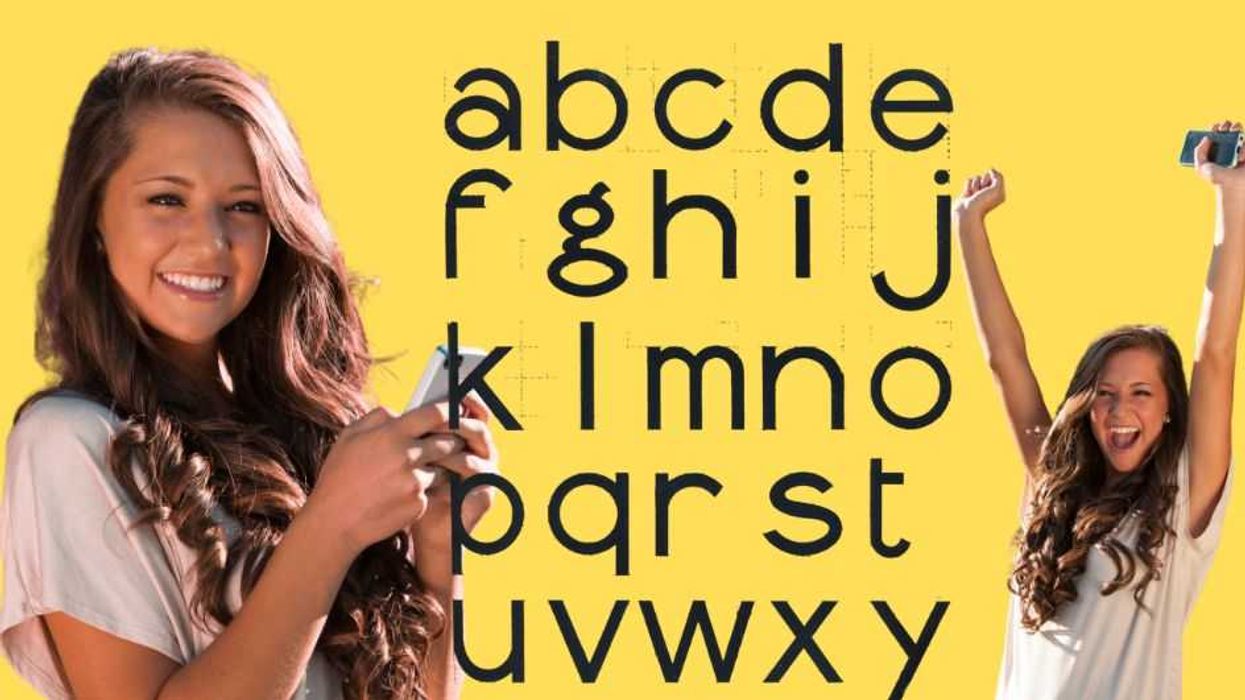
What’s the deal with people typing in all lowercase? You’ve seen that, right?
everything they type looks like this. it doesn’t matter if it’s a text. it doesn’t matter if it’s a post on x. it doesn’t matter if it’s a comment on someone’s photo. everything they type is lowercase.
‘If I see “LOL,” that’s a Boomer/Gen X. If I see “Lol,” that’s a Millennial. If I see “lol,” I know that’s one of my own.’
This style of typing is largely a Zoomer phenomenon, though some older people trying to act young do it too.
I am not a Zoomer, though I am interested in the Zoomers. I have written about them before, am writing about them now, and will write about them again. They are, whether we like it or not, the future, or at least the near future, so they should be of interest to us.
So why exactly do the Zoomers type in lowercase?
No cap
I asked a trusted Zoomer resource of mine, Caleb Wallace Holm, to provide his usual insight. He told me, “Zoomers have been doing it since we got our phones. It’s a way to demonstrate nonchalance and also a means of distinction from previous generations.”
All this makes sense. Younger generations almost always try to demonstrate nonchalance or uncaring. To be formal is to be old and stodgy, and you don’t want to be old. To be overly concerned is to be your dad, and you don’t want to be your dad.
So the young seek out ways to show they are relaxed and ways they can possibly differentiate themselves from the old. When you are young, you want to be new and different, so there is nothing particularly new about the logic of Zoomer lowercase typing.
Laugh lines
What is new is the acting out of this mini-rebellion of distinction in the digital domain, as the digital world didn’t exist for prior generations in the same way it does for the Zoomers.
And it is this new element — life in the digital space — that differentiates Zoomers most profoundly from the rest of us in a multitude of ways. As I have written before, Zoomers are the first disembodied generation, and this has profound impacts on how they exist in the world.
Holm told me he can discern how old someone is just by the way they “laugh” online. He remarked, “If I see ‘LOL,’ that’s a Boomer/Gen X. If I see ‘Lol,’ that’s a Millennial. If I see ‘lol,’ I know that’s one of my own.”
While I never would have thought of this on my own, it made complete sense once I heard it. Of course an astute member of the generation that was raised on the internet would be adept at discerning someone’s age simply by the way they “laugh” online.
The lowered life
Though the attempt to differentiate oneself from prior generations by way of typing in all lowercase makes sense and follows a fairly expected trajectory, there is something off about it. You might call the Zoomers many things, but earnest, excitable, mentally well, and aspirational are probably not among the descriptors you would choose to use.
They barely drink alcohol out, but they smoke tons of weed in. SSRI use is rampant, and a general malaise or an overly-ironic stance is fairly standard operating procedure among their cohort. The Zoomers are the most medicated generation in history and don’t appear to respond to any traditional incentive structure. Not great.
Nonchalance is one thing. Not caring about anything at all is another thing. I do wonder if the lowercase typing of the Zoomers is less about studied nonchalance than it is a lack of any vital spirit. I wonder if this lowercase typing represents something even more toxic than laziness. If the Zoomers were, in general, very well-adjusted, very social, and very mentally well and characterized by earnest effort, I may not wonder if the lowercase typing signaled something negative. But they are not those things, so I have to wonder what it represents, whether done intentionally or not.
RELATED: ‘6-7’ gets 86’d! JD Vance jokes about banning meme — and one company actually does it
 Photo by Brett Carlsen/Getty Images
Type casting
And yet, not all Zoomers are listless or on SSRIs, and not all Zoomers type in lowercase. Holm, my Zoomer resource, doesn’t. He types like I do — with capitalization — though he is also fluent in the language of his people (the Zoomers). And he is also full of life and spirit. And though I often joke with him that he is the most powerful Zoomer living, he is not at all alone. There are other vital Zoomers out there who type with proper capitalization.
It sounds strange, but maybe proper capitalization and vitality, or just normal emotional responses, go hand in hand. And maybe typing in lowercase and perpetual irony go hand in hand.
Maybe performative nonchalance in text form becomes giving up or some other kind of deadness IRL quicker than people realize.
Maybe the way we type to one another matters more than we think. Maybe exclamation marks, capitalization, and real non-ironic enthusiasm reflects a healthy attitude toward the world and one’s place in it.
Maybe there is more to lowercase typing than meets the eye.
The medium is the message, after all.
Cuckin’ in the Free World
The sun rises also. God’s taunt: the relentlessness of repetition; the unyielding promise of possibility. So gentle, yet so violent. A brown box lingers on the front steps, aching for evisceration’s gift. Begging to unburden itself. A soul ensconced within—laid bare in literary flesh, fixed in ink, and marketed for mass consumption. A cry for help. The sound of an American flag being raped.
The post Cuckin’ in the Free World appeared first on .





