

Category: Lifestyle
American muscle-car culture is alive and well … in Dubai
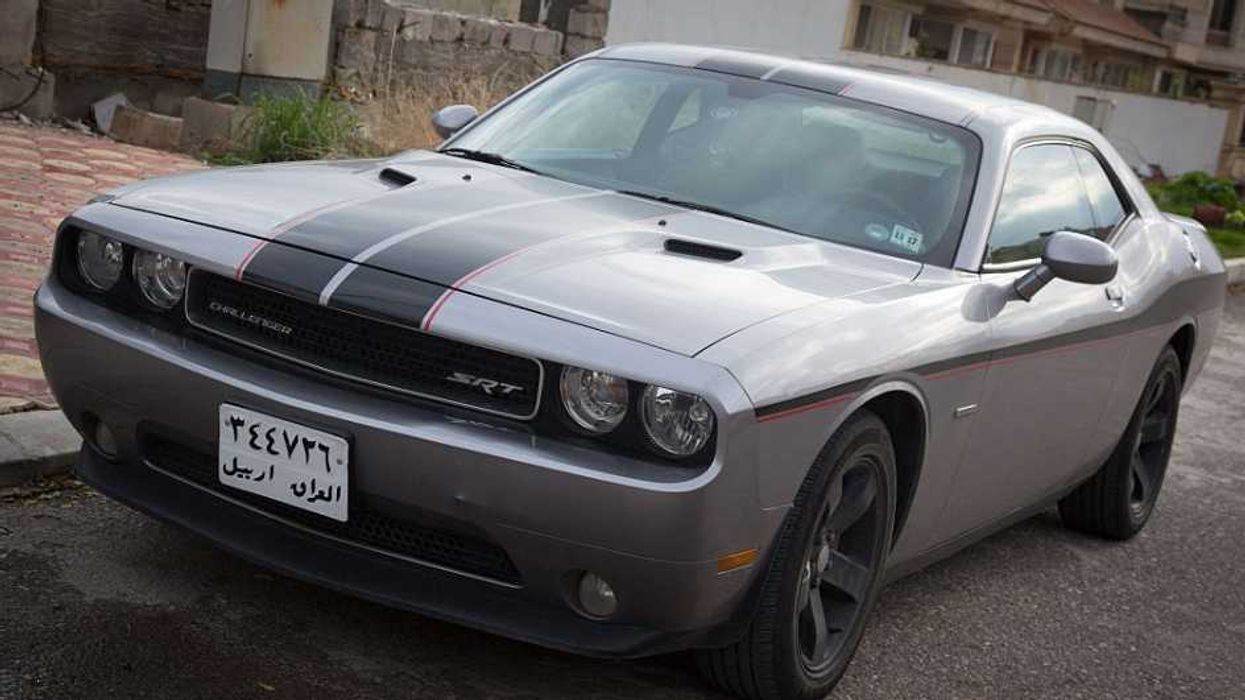
One of the first things I did when I moved to Dubai was buy a Dodge Challenger. Not the volcanic Hellcat or the feral Scat Pack — the SXT, the V6 base model.
Nevertheless, for those nine months in 2023, the car carried itself like it had seen things it couldn’t legally discuss. I miss it the way a grounded teenager misses his phone — painfully and often. The car was, in many ways, gloriously pointless. But to me, it was absolutely perfect. Nobody buys a Dodge for practicality. You buy one because fun is a dying art and driving is supposed to feel alive.
America insists this is why we can’t have nice things. The UAE shrugs, inhales some shisha, and says, ‘Great, we’ll have them instead.’
What fascinated me then, and still does now, is how the Middle East has quietly become the last stronghold for real American muscle.
Dubai drift
While America agonizes over emissions charts and frets about carbon neutrality, Dubai is out there treating a supercharged V8 like a household appliance. You hear them everywhere — echoing off glass towers, screaming down Sheikh Zayed Road, prowling through parking lots like metal predators looking for prey. It’s the sound of a culture still in love with combustion, unashamed of horsepower, and utterly allergic to guilt.
The region adores these cars. Worships them, even. In the West, muscle cars are increasingly treated like contraband with headlights, monitored by regulators the way principals monitor school corridors. But in the UAE, they’re symbols of power, freedom, excess, and the simple joy of pressing a pedal and feeling physics panic.
The numbers back it up. The UAE’s classic-car market is projected to grow from roughly $1.23 billion in 2023 to nearly $1.83 billion by 2032, with collectors routinely paying well above American estimates. This is particularly true for rare models, such as the 1971 Plymouth Hemi ’Cuda convertible that sold for about $4.2 million in Dubai, roughly 35% above its American estimate.
Men in flowing robes and sandals race around industrial estates with the confidence of emperors and the cornering ability of a wardrobe on wheels. Somehow, by the grace of God (not Allah), it all works. There’s something delightfully surreal about watching a man dressed like he stepped out of the book of Exodus drift a Challenger with monk-like serenity.
Combustion cosplay
Back home, Dodge now calls its new EVs “muscle.” But that’s like a woman getting very expensive surgery in a very private place and calling herself a man. Without the roar, the vibration, the combustion, it’s cosplay — an impersonation that fools no one except the marketing department. You can’t call something a muscle car if it sounds like a dentist’s drill.
Real muscle needs rumble. It needs that primal, throat-deep growl that shakes your sternum and announces your arrival three zip codes away. Take that away, and you’re just a sad sack who should have bought a Tesla and called it a day.
When muscle cars disappear, the loss isn’t just mechanical but cultural. For decades, when the world pictured America, it didn’t picture Washington or Wall Street. It pictured steel, cylinders, and a V8 rumble rolling across a desert highway.
Hollywood hardwired that association into the global imagination. “Bullitt,” “Vanishing Point,” “Smokey and the Bandit,” even the “Fast & Furious” franchise, for all its awful acting and cheese thick enough to insulate a house. I still remember being 8 years old, watching “Gone in 60 Seconds,” and thinking, Yes, this is what adulthood should look like.
You could grow up thousands of miles away, never having set foot on American soil, and still recognize the sound of a Mustang firing up. It was the unofficial anthem of the greatest nation on Earth, a national ringtone encoded in exhaust fumes. It symbolized everything the country loved about itself: rebellion, possibility, the belief that any man with a heavy foot and enough premium gasoline could outrun his problems. It was an identity as much as a mode of transport.
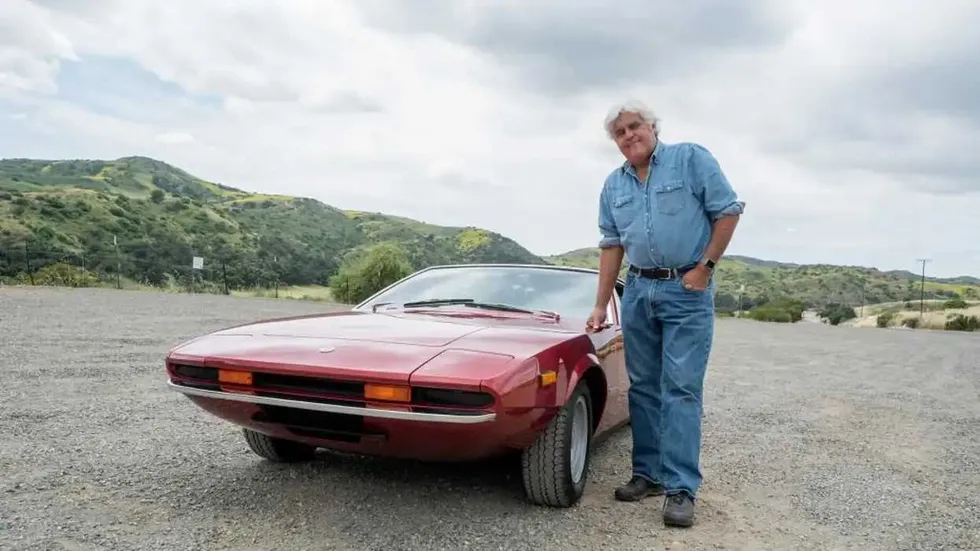
RELATED: ‘Leno’s Law’ could be big win for California’s classic car culture
 CNBC/Getty Images
Revvers’ refuge
And that’s the tragedy. A silent America isn’t an America anyone recognizes. The muscle car was more than a vehicle. It was a character, a co-star, an accomplice. Kill it off, and the whole story changes — and not for the better.
And oddly, it’s the Middle East that seems most intent on preserving that myth. It’s as if the region has been appointed the accidental curator of America’s automotive soul. The UAE, in particular, feels like the final refuge where these cars can run wild. Environmental regulations exist there, but only in the same way that scarecrows exist — present, decorative, and cheerfully ignored. The country is spotless, the air somehow clearer than cities that run entire marketing campaigns screaming “sustainability!” And yet it’s bursting with Challengers and Chargers. America insists this is why we can’t have nice things. The UAE shrugs, inhales some shisha, and says, “Great, we’ll have them instead.”
It makes you re-think the demonization of muscle cars. We were told they were barbaric, dirty, irresponsible — rolling catastrophes portrayed as personal hand grenades lobbed at the atmosphere. Meanwhile, Dubai keeps its streets cleaner than half of California while simultaneously hosting enough horsepower to make a U.N. peacekeeper reach for the radio. The contradiction is almost poetic. The place accused of excess manages to be pristine, while the places preaching virtue can’t manage basic cleanliness without a committee and a grant.
Selling sand to a camel
A quick disclaimer for anyone feeling inspired to follow my lead. Dubai might be paradise for muscle cars, but it’s also the Wild West of used-car dealing. A shocking number of “mint condition” imports arrive after being wrapped around a tree somewhere in North America, are given a light cosmetic baptism, and are relaunched onto the market as if they had spent their lives humming gently down suburban streets.
Half the salesmen — greasy, fast-talking veterans from Lebanon, Palestine, and everywhere in between — could sell sand to a camel. You need your eyes open. Fortunately, I knew the sites where you can run a chassis number and see the car’s real history, dents, disasters, and all. It saved me from driving home in a beautifully repainted coffin.
Even with this dark underbelly, Dubai’s affection for American muscle is entirely authentic. You see it on weekend nights at the gas stations, which double as unofficial car shows. Dozens gather, engines idling like caged animals, while men compare exhaust notes with the seriousness of diplomats negotiating borders. Teenagers film everything, because why wouldn’t you document a species this endangered? The entire scene feels like a sanctuary, a place where mechanical masculinity hasn’t been entirely euthanized.
Muscle migration
Some of the funniest moments came from watching Emirati drivers — men dressed in immaculate white garments — exit their cars with Hollywood swagger, as if the Challenger were simply an extension of their personality. And in many ways, it was. It was part “Need for Speed,” part Moses at the Marina. And somehow, without irony, they pulled it off.
Living there made me realize that muscle cars aren’t dying everywhere. Rather, they’re migrating. Fleeing the jurisdictions that shame them and settling in regions that still celebrate joy. The Middle East has become the last refuge for these beasts. Not because it rejects the future, but because it refuses to surrender the past for a machine that feels clinically dead on delivery.
And that’s the real tragedy. America built the muscle car, mythologized it, exported it, then surrendered it to paper-pushers in Priuses, armed with clipboards and calculators. The UAE bought the export and kept the myth alive. My Challenger is gone now, sold to a man who claimed he needed it for “family errands.” But the fond memories of tearing around the city have never faded. America may have abandoned its automotive adolescence, but Dubai, thankfully, hasn’t.
Someone has to keep the engines roaring. And right now, it’s the men in sandals.
Why Jayden can’t use capital letters

What’s the deal with people typing in all lowercase? You’ve seen that, right?
everything they type looks like this. it doesn’t matter if it’s a text. it doesn’t matter if it’s a post on x. it doesn’t matter if it’s a comment on someone’s photo. everything they type is lowercase.
‘If I see “LOL,” that’s a Boomer/Gen X. If I see “Lol,” that’s a Millennial. If I see “lol,” I know that’s one of my own.’
This style of typing is largely a Zoomer phenomenon, though some older people trying to act young do it too.
I am not a Zoomer, though I am interested in the Zoomers. I have written about them before, am writing about them now, and will write about them again. They are, whether we like it or not, the future, or at least the near future, so they should be of interest to us.
So why exactly do the Zoomers type in lowercase?
No cap
I asked a trusted Zoomer resource of mine, Caleb Wallace Holm, to provide his usual insight. He told me, “Zoomers have been doing it since we got our phones. It’s a way to demonstrate nonchalance and also a means of distinction from previous generations.”
All this makes sense. Younger generations almost always try to demonstrate nonchalance or uncaring. To be formal is to be old and stodgy, and you don’t want to be old. To be overly concerned is to be your dad, and you don’t want to be your dad.
So the young seek out ways to show they are relaxed and ways they can possibly differentiate themselves from the old. When you are young, you want to be new and different, so there is nothing particularly new about the logic of Zoomer lowercase typing.
Laugh lines
What is new is the acting out of this mini-rebellion of distinction in the digital domain, as the digital world didn’t exist for prior generations in the same way it does for the Zoomers.
And it is this new element — life in the digital space — that differentiates Zoomers most profoundly from the rest of us in a multitude of ways. As I have written before, Zoomers are the first disembodied generation, and this has profound impacts on how they exist in the world.
Holm told me he can discern how old someone is just by the way they “laugh” online. He remarked, “If I see ‘LOL,’ that’s a Boomer/Gen X. If I see ‘Lol,’ that’s a Millennial. If I see ‘lol,’ I know that’s one of my own.”
While I never would have thought of this on my own, it made complete sense once I heard it. Of course an astute member of the generation that was raised on the internet would be adept at discerning someone’s age simply by the way they “laugh” online.
The lowered life
Though the attempt to differentiate oneself from prior generations by way of typing in all lowercase makes sense and follows a fairly expected trajectory, there is something off about it. You might call the Zoomers many things, but earnest, excitable, mentally well, and aspirational are probably not among the descriptors you would choose to use.
They barely drink alcohol out, but they smoke tons of weed in. SSRI use is rampant, and a general malaise or an overly-ironic stance is fairly standard operating procedure among their cohort. The Zoomers are the most medicated generation in history and don’t appear to respond to any traditional incentive structure. Not great.
Nonchalance is one thing. Not caring about anything at all is another thing. I do wonder if the lowercase typing of the Zoomers is less about studied nonchalance than it is a lack of any vital spirit. I wonder if this lowercase typing represents something even more toxic than laziness. If the Zoomers were, in general, very well-adjusted, very social, and very mentally well and characterized by earnest effort, I may not wonder if the lowercase typing signaled something negative. But they are not those things, so I have to wonder what it represents, whether done intentionally or not.
RELATED: ‘6-7’ gets 86’d! JD Vance jokes about banning meme — and one company actually does it
 Photo by Brett Carlsen/Getty Images
Type casting
And yet, not all Zoomers are listless or on SSRIs, and not all Zoomers type in lowercase. Holm, my Zoomer resource, doesn’t. He types like I do — with capitalization — though he is also fluent in the language of his people (the Zoomers). And he is also full of life and spirit. And though I often joke with him that he is the most powerful Zoomer living, he is not at all alone. There are other vital Zoomers out there who type with proper capitalization.
It sounds strange, but maybe proper capitalization and vitality, or just normal emotional responses, go hand in hand. And maybe typing in lowercase and perpetual irony go hand in hand.
Maybe performative nonchalance in text form becomes giving up or some other kind of deadness IRL quicker than people realize.
Maybe the way we type to one another matters more than we think. Maybe exclamation marks, capitalization, and real non-ironic enthusiasm reflects a healthy attitude toward the world and one’s place in it.
Maybe there is more to lowercase typing than meets the eye.
The medium is the message, after all.
An ‘ankle bracelet’ for your car? AZ pushes new tech for serial speeders
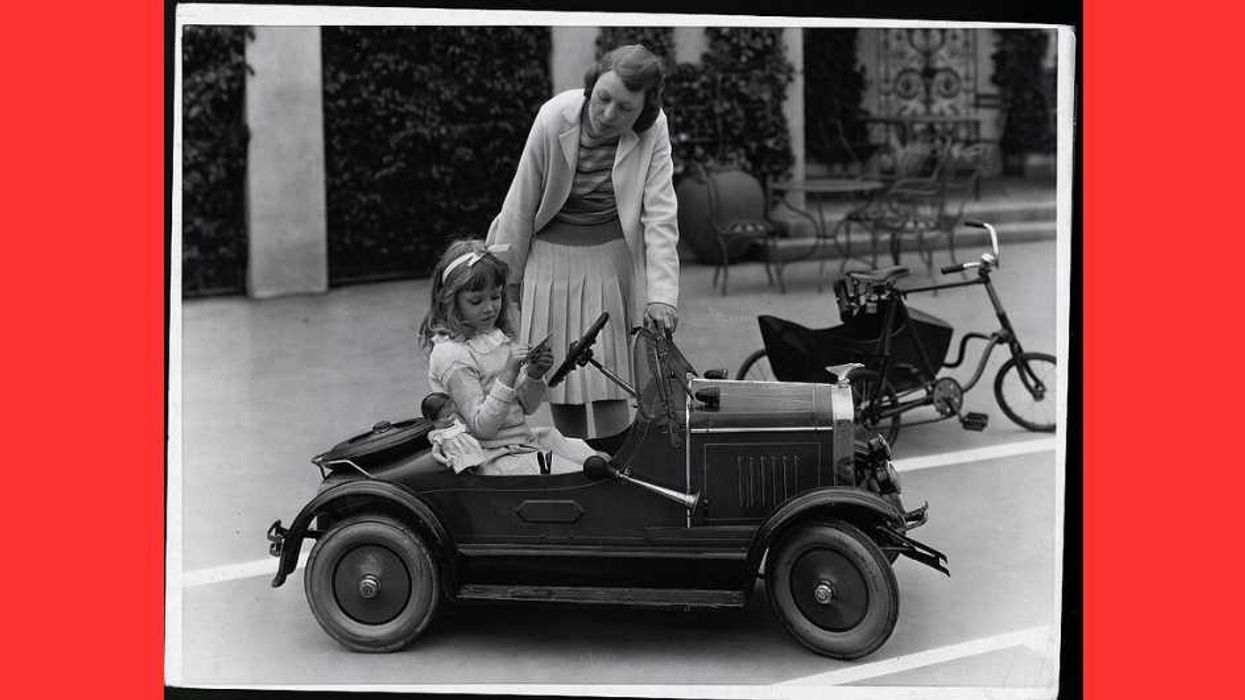
Watch out, speed demons — the open road might be getting a little less free.
Arizona, known for its sun-soaked, sprawling highways, may soon become the first state to offer a high-tech alternative for habitual speeders: a “digital ankle bracelet” for your car.
With this new technology, Arizona may be taking the first step toward a future where cars themselves enforce the law.
Lawmakers are considering a bill that would allow drivers at risk of losing their licenses to keep their privileges by installing devices that actively prevent their vehicles from exceeding posted speed limits.
The proposal, spearheaded by Republican state Representative Quang Nguyen, would let drivers voluntarily equip their cars with speed-limiting technology. The system relies on a combination of GPS and cellular signals to determine the legal speed on any given road. Electronics connected to the car’s engine control unit then prevent the vehicle from exceeding that limit, no matter how hard the driver presses the accelerator.
Speed bump
For practical reasons, the technology does include an override mode that permits a temporary 10 mph boost up to three times per month, giving drivers a limited margin to react in emergencies or avoid accidents.
Nguyen estimates the devices would cost around $250 to install, with a daily operating fee of roughly $4. He has been working closely with companies that manufacture the technology, including Smart Start and LifeSafer, to ensure the system is effective and reliable. This makes me wonder if he owns a piece of the company or has stock in the company.
Under the bill, which Nguyen plans to formally introduce when the state legislature reconvenes in January, participation is optional — probably Nguyen’s earlier attempt to make it mandatory was a nonstarter.
Slow lane
Arizona is not alone in exploring this approach. Virginia, Washington State, and Washington, D.C., have already enacted similar laws. In Virginia, courts can require drivers with multiple speeding violations or reckless driving convictions to install electronic speed-limiting devices as an alternative to license suspension. Washington State has adopted a comparable program, giving judges discretion to mandate the technology for repeat offenders while monitoring compliance.
In Washington D.C., the program is more limited but aims to reduce repeat speeding among drivers with multiple moving violations. Meanwhile, Wisconsin is currently considering similar legislation.
These programs highlight a growing trend: Rather than grounding drivers entirely, some states are experimenting with technology as a way to enforce safe driving without taking away mobility. Proponents argue that these devices could prevent serious accidents while still allowing drivers to maintain employment, care for families, and perform other essential daily tasks. The technology also provides courts with a tangible tool to ensure compliance, rather than relying solely on citations and license suspensions.
RELATED: Spinning out at Discount Tire’s Treadwell test track
 Discount Tire
Machine learning
However, critics remain cautious. Some transportation and safety experts question whether the technology is advanced enough to accurately detect all posted speed limits. GPS mapping errors, temporary speed changes in construction zones, or malfunctioning sensors could cause a car to slow unexpectedly or fail to limit speed when needed, creating new safety risks. Privacy advocates also worry about how these devices track and store location data, raising concerns about government overreach or potential misuse.
From a practical standpoint, the legislation raises fundamental questions about the balance between personal responsibility and technological enforcement. Supporters argue it offers a lifeline to drivers who repeatedly violate speed laws but are otherwise safe, while critics maintain that it may encourage riskier behavior by transferring accountability from the individual to the machine.
There’s also the question of fairness. Not all drivers have access to new technology or the financial resources to participate in a program that charges daily operating fees. While $4 per day may seem modest, over a month or a year, it could be prohibitive for some families, effectively limiting the program to more affluent drivers. Additionally, the optional nature of the program could create inconsistencies across jurisdictions, leaving some habitual offenders unmonitored while others are under constant technological supervision.
Whether the measure passes will depend not only on lawmakers’ assessment of safety and effectiveness but also on public perception. Speeding remains the most common moving violation in the United States, and habitual offenders are a persistent concern for states nationwide. With this new technology, Arizona may be taking the first step toward a future where cars themselves enforce the law — but whether that future is practical, safe, or desirable remains up for debate.
At the very least, it’s a bold experiment in road safety and personal responsibility, one that could reshape the way states think about controlling speed without grounding drivers entirely. As the legislature prepares to weigh the bill, motorists, safety experts, and privacy advocates alike will be watching closely, asking the same question: Can a car truly keep its driver out of trouble, or is this just another way to shift accountability from human judgment to technology?
Trading cubicles for crops: One couple’s ‘Exit’ from the corporate grind
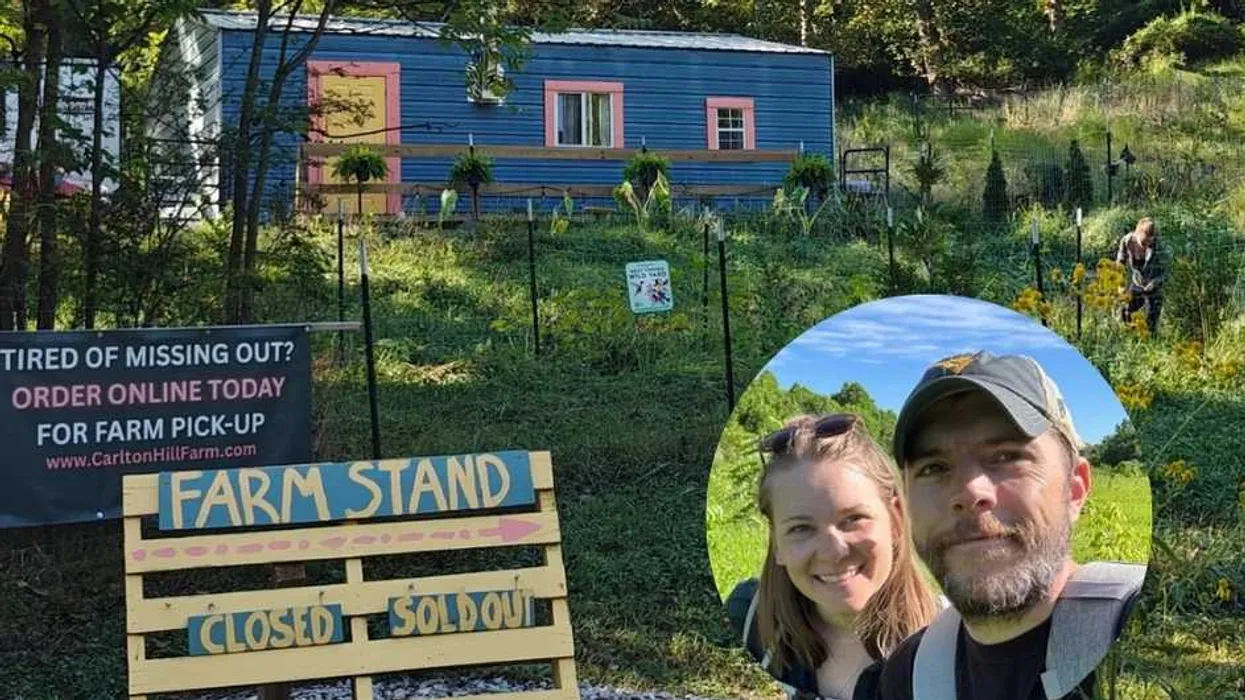
An estimated 80% of people hate their jobs. They fantasize about quitting in a blaze of glory, hurling their lanyards across the office like a frisbee, and riding off into the sunset to raise goats, bake sourdough, or at least remember what eight hours of sleep feels like.
Sean Carlton was one of them.
‘Nobody wakes up one morning ready to raise animals and turn them into food.’ Change begins with one thing you can actually change. Lower one bill. Learn one skill.
The difference is that he didn’t stay. Two years ago, he and his wife, Alexys, walked away from their corporate careers and bought an acre of land in West Virginia. The experience also prompted Carlton to write “Exit Farming: Starving the Systems That Farm You” — a book that reads like both a confession and a call to arms.
The Carltons didn’t step into a new job, but into a new way of being. They rolled the dice with no promise of a soft landing, and in doing so they exposed something uncomfortable: Many of us aren’t trapped by circumstance so much as by the stories we tell ourselves about what we are allowed to want.
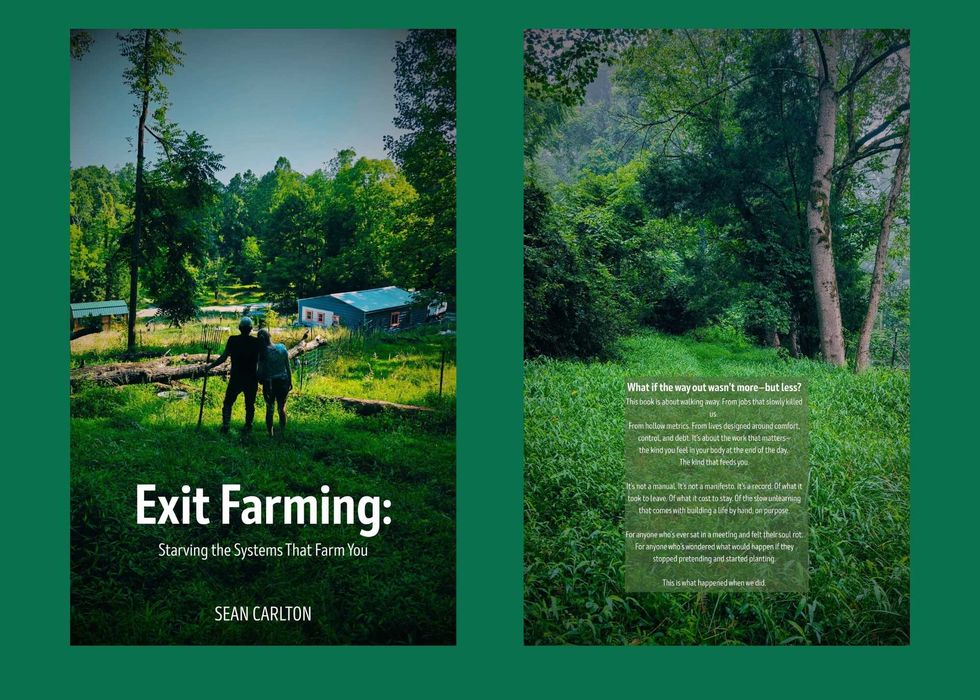 Sean Carlton
Questioning ‘normal’
Carlton is no professional commentator or pundit. “Exit Farming” is a cri de coeur from the American cubicle.
So when asked what exactly he means by “systems that farm you,” he doesn’t reach for theory. He answers with the simplicity of a man who finally recognized the shape of his own confinement.
“Systems farm people by taking more from you than they give back while convincing you this arrangement is normal,” he says.
Work dictates your hours. Debt dictates your decisions. Health care dictates your fears. Even your phone becomes, in his words, “the delivery system for apps that track you, profile you, and sell what they learn.”
It might sound melodramatic. It isn’t. It’s simply Monday morning in America, with millions waking up already weary of the hours ahead.
Slow and steady
But Carlton insists the way out is rarely a dramatic jailbreak. It’s the slow, steady act of starving the system’s influence. You “bring one thing at a time back under your control.” Lower an expense. Learn a skill. Build a sliver of income that doesn’t depend on a single institution. These small shifts break the spell. Every small act of independence starves a machine that has grown used to feeding on your time, your attention, your identity, even your sanity.
Of course, independence comes with a price, and Carlton tallies it honestly and without self-pity. One of the most striking sections in the book addresses the loss of family once he stepped off the expected path. Not through screaming matches or slammed doors, but through slow erosion: “Phone calls got shorter. Conversations turned tense.”
Disapproval had less to do with the specifics of his life than the simple fact that he no longer fit the template.
When asked how Americans can balance honoring their families with refusing to, as he puts it, “participate in systems that drain your energy and compromise your values,” his answer is as clean as it is compelling: “If a relationship survives you making choices that improve your health, your time, or your stability, then it survives. If it falls apart the moment you stop living the way they prefer, then it was already conditional.”
It’s a hard truth, but Carlton refuses to dress it up. Long before any institution closes a door on us, we’ve already built the cell ourselves. The ancients understood this well: People cling to the comfort of captivity, obeying expectations set by those who would rather see them worn down than transformed.
RELATED: An artist and farmer cultivates creativity
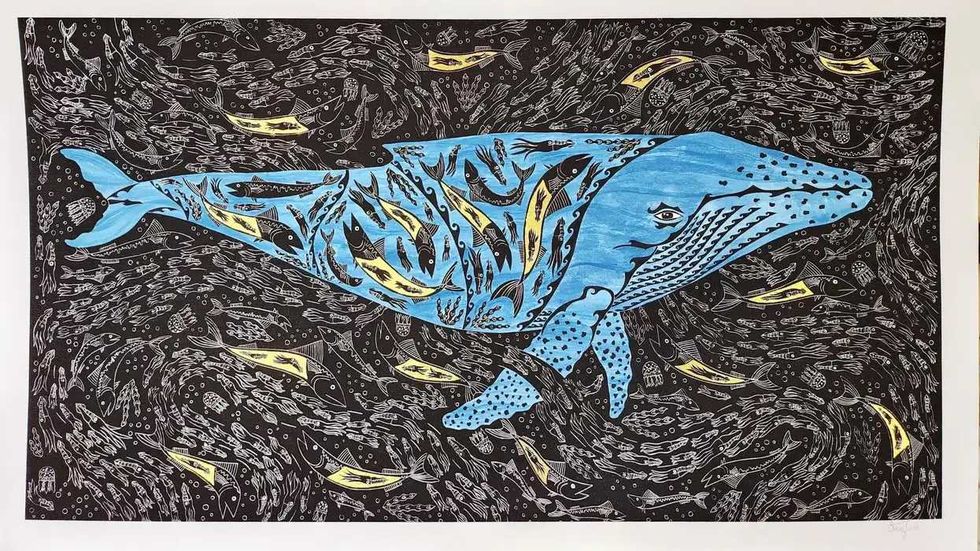 Stacy Tabb
Work with consequences
There’s also a spiritual undercurrent to his critique of modern work culture. Carlton never lapses into sermonizing, but his diagnosis reads like a measured moral warning. Modern work “follows you home,” he notes. It takes evenings, weekends, and whatever fragments of peace remain. It erodes sleep, attention, and the mental steadiness that previous generations recognized as the bedrock of a healthy life.
Americans worship productivity with almost religious devotion, even though the devotion always seems to cost them more than they can spare. Two-thirds of the workforce is burned out, but the cult of busyness marches on. Another day, another dollar … but also another headache, another email chain, and another reminder that coffee can only do so much.
When asked whether “exit farming” is a return to older ideas of work and stewardship, he rejects romantic myth-making. “Exit farming isn’t about finding something spiritual,” he says. “It’s about doing work where the consequences are real.” If you don’t feed the animals, “they suffer and then they die.” If you don’t tend the crops exactly as needed, the season is lost before it begins. Nothing waits for permission. Nothing reschedules itself for your convenience. This realism is its own kind of grounding. And you don’t need a farm to reclaim it, but only work that doesn’t demand the erosion of dignity as its hidden price of admission.
Grow one thing
The final question in the book’s conversation is the one most Americans are actively wrestling with: What about those who feel trapped? Trapped between institutions they no longer trust and a life of greater self-reliance that feels too big, too frightening, too foreign?
Carlton’s reply is the opposite of theatrical bravado. “Nobody wakes up one morning ready to raise animals and turn them into food.” Change begins with one thing you can actually change. Lower one bill. Learn one skill. Grow one thing you eat often. Build one dependable relationship. Reduce one vulnerability. These are small, almost humble acts. But they mark the beginning of a life that no longer runs on someone else’s terms.
Over time, he says, these small adjustments stop being adjustments. They become a different kind of life, one that is sturdy enough to withstand the failures of the systems around it.
That’s the heart of “Exit Farming.” It isn’t about rejecting society or romanticizing hardship, but about reclaiming stability in a country where stability has become a cruel joke. It’s not about storming out in some “Office Space” fantasia with a baseball bat.
It’s about one couple choosing a different path and showing that others could do it too. Not through dramatic destruction, but through the refusal to be drained of the very things that make a life worth living — time, purpose, and peace.
Holiday stress? Here’s one way to handle it.

Holidays are tough. It’s not fun to say it, and it feels like failing to admit it, but they are.
But why? Why are they tough? Why are the days that are supposed to be full of joy instead oddly stressful — and too often fraught with bickering, arguing, and disappointment?
We want things to go perfectly on the day that is supposed to go perfectly — and when they don’t, our disappointment lands harder than it would on a random Tuesday in March.
It seems inevitable, almost as if it’s another tradition. Someone snaps about something small, then someone takes offense to something else, and then there’s an argument or a fight or just a weird feeling in the air that wasn’t there before.
Too many cooks
It could be in the kitchen, especially when dinner is nearing. Mom, Grandma, and maybe a daughter or two are in there helping. A bystander pokes his or her head in and offers a “helpful” comment. One of the chefs responds with an eye-roll. A certain stifling quiet — not a good quiet — descends.
Or it could be at the dinner table: Someone lobs a political point knowing that it will rub another guest the wrong way, but he “needs to say something.” Then someone else feels compelled to answer, and another after that, until the whole thing cascades and suddenly the arguments are spilling over into dessert.
Moms are disappointed in their sons and daughters because they just want everybody to get along for one day when everyone is home. “Can you just not talk about that?” Dads are tired of having the same argument, so they zone out. Sons and daughters are mad because no one takes them seriously. They are in college and know more than they used to, but think they know more than they really do.
Family feud
These things happen in families. Not all, of course. Some excel at sweeping every irritation under the rug and maintaining a serene, passive surface at all times. A few are even perfect — or as close as anyone gets — and enjoy holidays filled with nothing but gladness. But most families, in one way or another, run into moments like the ones above or something close to them.
These points of conflict and stress are only a few of the familiar moments that surface when families gather for the holidays. There are countless other paths to confrontation, disappointment, or quiet unease. Sometimes the friction is subtle — simmering unnoticed for months — and it’s only during the holidays that anything finally bubbles up and over.
At bottom, our stress and disappointment come down to expectations, especially the impossible kind.
A holiday is supposed to matter more than an ordinary day. It’s supposed to be more enjoyable, more memorable, more special. That’s a crude way of putting it, but it’s the truth we all feel somewhere deep down, even if we would never say it out loud.
Moms want the meal to be flawless and everyone to get along. Dads want to relax. Kids home from wherever they have been want to share what they have learned and maybe earn a little more respect.
Perfect storm
We want things to go perfectly on the day that is supposed to go perfectly — and when they don’t, our disappointment lands harder than it would on a random Tuesday in March. Greater disappointment feels like a greater failure, and that casts a shadow over the day or at least over our memory of it.
Our expectations rise so high that disappointment becomes almost guaranteed.
That’s why the holidays are tough. It’s not that being around the people you love is hard or that it’s impossible to stay on your best behavior and avoid a spat with your sister or cousin. The holidays are tough because we want things to be the way they ought to be — the way we imagine they could be, the way we wish we could be. Admitting that the holidays are tough stings a little, because to acknowledge it feels like confessing a kind of failure.
I don’t know how to eliminate holiday disappointment entirely, but I do know the first step toward easing it: accepting that our holidays will never be perfect. Hopes run high, tensions run high, and something will inevitably go awry. We’re human. And that’s okay. Maybe our bar shouldn’t be so high. Maybe we ought to grade the day on a curve. Maybe a B- really is an A. Maybe we can forgive ourselves for not living inside a Hallmark movie.
Holidays aren’t perfect. Neither are we. And that’s okay.
Do we love the ‘Wicked’ movies because we hate innocence?
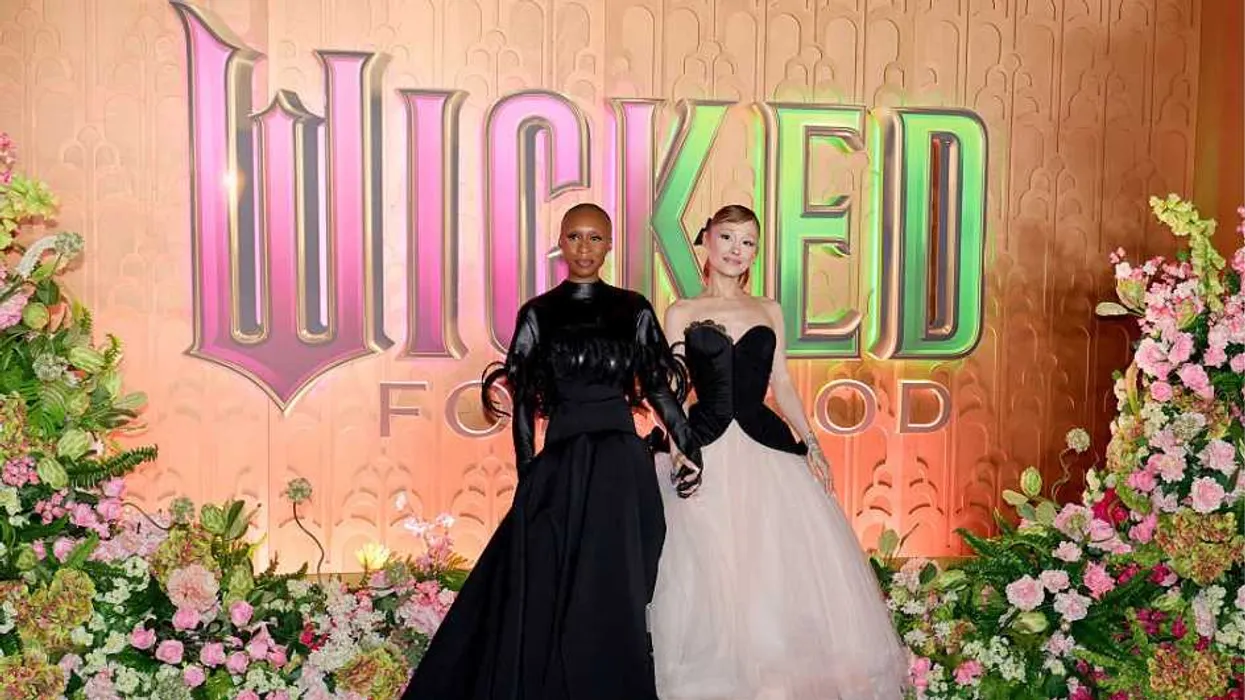
As I watched Jon M. Chu’s “Wicked: For Good” last week, I kept thinking about another, very different filmmaker: David Lynch.
Specifically, the Lynch that emerges from Alexandre Philippe’s excellent 2022 documentary “Lynch/Oz,” wherein we discover just how deeply the infamously surreal filmmaker was influenced by one of cinema’s sweetest fantasy films: the original “Wizard of Oz.”
In the era of #WitchTok … a story like ‘Wicked’ has built-in appeal.
Philippe’s film includes footage from a 2001 Q and A in which Lynch confirms the extent of his devotion: “There is not a day that goes by that I don’t think about ‘The Wizard of Oz.'”
The logic of fairyland
And that shouldn’t be surprising given how much it shows up in his work. From Glinda the Good Witch making an appearance in “Wild at Heart,” to the hazy, dreamlike depiction of suburbia in “Blue Velvet,” his films exist in a dual state between the realm of fairyland and the underworld.
Indeed, Lynch doesn’t reject either. In proper Buddhist fashion, these two forces exist in balance, equally potent and true. There is both good and evil in his world. Neither negates the other’s existence. And when darkness spills over into the light, it may be tragic, but it is also just another part of the world. Like Dorothy, his protagonists find themselves walking deeper into unknown territory. The protagonists of his films truly “aren’t in Kansas anymore.”
“The Wizard of Oz” is potent because it captures the logic of fairyland better than almost any film ever made. Channeling the fairy stories of J.R.R. Tolkien, Lewis Carroll, and George MacDonald, it transports the mind to a realm that is more real than real, where even the most dire intrusion of evil can be set right according to simple moral rules.
As G.K. Chesterton famously puts it:
Fairy tales do not give the child his first idea of bogey. What fairy tales give the child is his first clear idea of the possible defeat of bogey. The baby has known the dragon intimately ever since he had an imagination. What the fairy tale provides for him is a St. George to kill the dragon.
Wicked good
“Wicked” and its new sequel reject this comforting clarity for something altogether more “adult” and ambiguous. Instead of presenting good and evil as objective realities that can be discerned and defeated, the films show how political authorities manipulate those labels to scapegoat some and exalt others.
They do so by swapping the original’s heroes and villains. The Wonderful Wizard is a cruel tyrant. Glinda is foppish and self-obsessed. Dorothy is the unwitting tool of a corrupt regime. And Elphaba — the so-called Wicked Witch — is reimagined as a sympathetic underdog with a tragic backstory, a manufactured villain invented to keep Oz unified in ire and hatred.
Elphaba exudes a whiff of Milton’s Lucifer — an eternal rebel in a tragic quest to upend the moral order. But unlike “Paradise Lost,” “Wicked” presents rebellion against its all-powerful father figure not as a tragic self-deception, but as a justified response to systemic cruelty.
Witch way?
“Wicked: For Good” takes the ideas of its predecessor even further than mere rebellion. If “Wicked: Part One” is about awakening to the world’s realities and becoming radicalized by them, “Wicked: For Good” is about the cost of selling out — the temptation to compromise with a corrupt system and the soul-crushing despair that follows.
This is where the irony of the film’s title, “Wicked: For Good” comes in. Once a person sees the world for what it truly is, they can’t go back without compromising themselves. They’ve “changed for good.” They’ve awakened and can’t return to sleep.
It’s worth considering why the “Wicked” franchise is so wildly popular. Gregory Maguire’s original 1995 novel has sold 5 million copies. The 2003 stage show it inspired won three Tony Awards and recently became the fourth longest-running Broadway musical ever. And the first film grossed $759 million last winter, with the sequel poised to make even more money.
Perhaps it is no coincidence that this outsize success comes at a time when Wicca and paganism have grown into mainstream cultural forces. In the era of #WitchTok, in which self-proclaimed witches hex politicians and garner billions of views on social media, a story like “Wicked” has built-in appeal. It offers glamorous spell-casting and a romantic tale of resistance to authority.
RELATED: ‘Etsy witches’ reportedly placed curses on Charlie Kirk days before assassination
 Photo by The Salt Lake Tribune / Contributor via Getty Images
A bittersweet moral
The temptation of witchcraft is one that always hovers over our enlightened and rationalistic society. Particularly for young women, witchcraft offers a specific form of autonomy and power — over body, spirit, and fate — that patriarchal societies often deny. Many view witchcraft as progressive and empowering; “witchy vibes” have become a badge of identity.
Thus the unsettling imagery of Robert Eggers’ 2015 film “The Witch” comes into focus: A satanic coven kidnaps and kills a Puritan baby, seduces a teenage girl, and gains the power to unsubtly “defy gravity” through a deal with the devil.
“Wicked” is all about this power to transcend. Even as its protagonist grows despairing in the second film and abandons her political quest for the freedom of the wastelands, the film presupposes that it is better to resist or escape a corrupt system than submit to it.
Ultimately, the two films leave their audience with a bittersweet moral: Society is dependent on scapegoats. The Platonic noble lie upon which all societies rest cannot be escaped — but it can be redirected. A new civic myth can be founded that avoids sacrificing the vulnerable and overthrows the demagogues atop Mount Olympus. And the witches play the central role in overturning the world of Oz. Their rebellion sets it free.
But because the films blur the clear, objective distinction between good and evil — even while acknowledging that real evil exists — the characters in “Wicked” often drift in moral grayness, defining themselves mainly in relation to power. The world becomes overbearing, radicalizing, and morally unstable.
Sad truth
This is far afield from the vision of Oz presented in the 1939 film, the one David Lynch venerated as vital to his understanding of the world. But it reflects how modern storytellers often grapple with Oz. Almost every sequel or spin-off struggles to recapture the sincerity of the original. The 1985 sequel “Return to Oz” reimagined the land with a dark-fantasy twist. 2013’s “Oz the Great and Powerful” comes closest to the original tone but centers on fraudulence and trickery.
“Wicked,” too, falls in line with the modern tendency to subvert and complicate traditional stories of good versus evil. “Frozen,” “The Shape of Water,” “Game of Thrones,” and “Star Wars: The Last Jedi” all explore morally conflicted worlds where bravery is futile or where Miltonian rebellion is celebrated.
Of course, seeing the stories of our childhood with a jaundiced adult eye can be quite entertaining; it’s perfectly understandable why even those not in covens love these films. They are well-made, well-performed, and especially irresistible to former theater kids (I am one).
Their popularity isn’t inherently bad either. They are perfectly fine in isolation. It is only when we contrast them with the clarity and beauty of the original — and place them within the context of our society — that a sad truth emerges: Finding fairyland is hard. Most of us prefer to live in the Lynchian underworld.
Flock Safety: Is any driver safe from its AI-powered surveillance?

Buckle up, America — because if you’re driving anywhere in this country, you’re already under surveillance.
I’m not talking about speed traps or red-light cameras. I’m talking about Flock Safety cameras, those sleek, solar-powered, AI-driven spies perched on poles in your neighborhood, outside your kid’s school, at the grocery store, and along every major road.
The Institute for Justice has filed a federal lawsuit arguing that Flock effectively builds detailed, warrantless movement profiles of ordinary people.
These cameras are not just reading your license plate. They’re building a digital DNA profile of your vehicle — make, model, color, dents, bumper stickers, roof racks, even temporary tags — and logging where you’ve been, when, and with whom you’ve traveled.
And guess who has 24/7 access? Your local police, HOAs, apartment complexes, and private businesses — all without a warrant, without your consent, and often without you even knowing they exist.
Worse than you think
I’ve been warning drivers for decades about government overreach, from cashless tolls to black-box data recorders. But Flock Safety? This is next-level.
Founded in 2017 in Atlanta, Flock has exploded into a $3.5 billion surveillance empire with over 900 employees and a single goal: blanket every city in America with cameras. As of 2024, it has already deployed 40,000 to 60,000 units across 42 states in more than 5,000 communities. That’s not a pilot program. That’s a national tracking grid.
Here’s how it works — and why it should terrify every freedom-loving American.
Pure surveillance tools
Flock’s Falcon and Sparrow cameras don’t enforce speed or traffic laws. They’re pure surveillance tools.
Mounted on utility poles, traffic signals, or private property, they use automated license plate recognition (ALPR) and Vehicle Fingerprint™ technology to capture high-resolution images of your vehicle’s rear, including the license plate with state, number, and expiration, plus the make, model, year, color, and unique identifiers like dents, decals, roof racks, spare tires, even paper plates. They record the time, date, and GPS location, using infrared imaging for 24/7 operation, even at 100 mph from 75 feet away.
The data is uploaded instantly via cellular networks to Flock’s cloud servers, stored for 30 days, and accessible through a web portal by any approved user. That includes police departments across state lines through Flock’s TALON investigative platform. Drive from Georgia to New York, and every Flock camera you pass logs your journey. No warrant needed in most states.
RELATED: Why states are quietly moving to restrict how much you drive
 F8 Imaging/Getty Images
Staggering scale
The scale is staggering. Milwaukee has 219 cameras with 100 more planned. Riverside County, California, uses 309 cameras to scan 27.5 million vehicles monthly. Norfolk, Virginia, has over 170 units. Raleigh, North Carolina, has 25 and counting.
Nationwide, Flock claims it logs over one billion vehicle scans per month. These cameras cost $2,500 per year per unit, are solar-powered with no wiring required, and can be installed in hours. HOAs love them, schools want them, police can’t get enough, and new units go up daily, often without public notice or approval.
Flock CEO Garrett Langley loves to brag about Flock’s crime-stopping potential. But what he doesn’t mention is that you’re tracked whether you’re a criminal or not.
No opting out
There’s no true opt-out for the public — every passing car is still scanned and logged — but some neighborhoods and agencies use Flock’s SafeList feature to avoid nuisance alerts. SafeList doesn’t exempt anyone from being recorded. It simply tells the system not to flag certain familiar plates (residents, staff, permitted vehicles) as suspicious. The camera still captures the vehicle, stores the image, and makes it searchable; it just won’t trigger an alert for those approved plates.
Flock cameras can photograph more than a license plate — sometimes the interior of a car, passengers, or bumper stickers — but this varies by angle and lighting, and the system is not designed to gather facial images.
Privacy nightmare
This is a privacy nightmare. The ACLU and Electronic Frontier Foundation call it mass surveillance. A small-town cop in Ohio can search your plate and see everywhere you’ve driven in Florida. Rogue officers have abused ALPR before, stalking exes, journalists, activists. Data breaches? Flock says its cloud is secure, but we’ve heard that before.
A 2024 Norfolk, Virginia, ruling initially held that Flock’s system amounted to a Fourth Amendment search requiring a warrant. But that decision was later reversed on appeal. Meanwhile, the Institute for Justice has filed a federal lawsuit arguing that Flock effectively builds detailed, warrantless movement profiles of ordinary people. If that case succeeds, it would be a true game-changer.
Yes, finding a kidnapped child or stolen car is good. But at what cost? This creates a chilling effect: Will you avoid a protest, a church, a gun shop, a clinic, knowing you’re being logged? This isn’t safety. This is control.
Fighting back
So what can you do right now? Start by finding the cameras — contact your police, city council, or HOA and ask where the Flock cameras are and who has access.
Demand transparency: Push for public hearings, warrant requirements, data deletion after 24 hours, and no sharing outside your jurisdiction. Support the fighters like the ACLU, EFF, and Institute for Justice. Spot the cameras yourself — look for black poles with tilted solar panels and a small camera box.
It’s time to post your opinions on X, call your reps, show up at meetings — let’s stop the surveillance.
Flock’s CEO dreams of a camera in every U.S. city. But liberty isn’t free, and it shouldn’t come with a tracking device.
Drop your thoughts below — I read every comment. Share this information with every driver you know. Because if we don’t fight now, soon there’ll be nowhere left to hide.
Giving Tuesday: 6 charities where your money makes a big difference

Today is Giving Tuesday — a day to think of those less fortunate, but also a reminder that charities want your money just as much as any for-profit brand, and many use the same polished tactics to get it.
The day itself is a sales pitch: created in 2012 as a feel-good counterweight to Black Friday and Cyber Monday, but quickly dominated by big nonprofits with big marketing budgets. As philanthropy-sector insider Dave Moss writes, it was launched not by beneficiaries but by “representatives of corporate America, the public relations sphere, and/or enormous, already well-funded nonprofits.”
Just a reminder that sometimes it’s the scrappiest, more ‘unfashionable’ charities where your money will go the farthest.
The Wounded Warrior Project has mastered the Giving Tuesday playbook with emotional storytelling. But a 2016 CBS News investigation revealed millions spent on lavish staff conferences and travel, with a Senate review later finding that the charity had inflated its program-spending numbers by counting fundraising and PR as “veteran programs.”
The ASPCA is another case where glossy branding masks inefficiency. Despite its huge Giving Tuesday paw print, watchdogs say only a small share of its massive fundraising reaches animals in need, despite what its infamously maudlin ads suggest. Very little is granted to local SPCAs — which many donors assume they’re supporting — while the national group spends tens of millions on advertising and pays its CEO close to a million dollars a year.
RELATED: ‘Gimme’ shelter: ASPCA, Humane Society live large on your donations, warns watchdog
 Michael Stewart/WireImage/Getty Images
Which is not to say you shouldn’t participate in Giving Tuesday. Just a reminder that sometimes it’s the scrappiest, more “unfashionable” charities where your money will go the farthest.
Here are six organizations doing the slow, unglamorous work of helping real American families, veterans, and workers.
1. The Ruth Institute
Mission: Promote and defend the traditional family; educate the public on marriage, sexual integrity, and the fallout of the sexual revolution.
The Ruth Institute isn’t shy about its worldview — or its conviction that a healthy society starts at home. If you want your donation to go toward shaping the cultural weather upstream of politics, this is the place.
Donate: https://ruthinstitute.org/donate/
2. Gary Sinise Foundation
Mission: Support America’s wounded veterans, Gold Star families, and first responders.
More than 30 years after playing wounded Vietnam vet Lieutenant Dan in “Forrest Gump,” Gary Sinise has quietly built one of the most trusted veterans’ charities in the country. Its work is extremely practical: specially adapted smart homes for wounded vets, emergency financial assistance, mental health support, community-building, and mobility programs. Few organizations deliver more hands-on, life-changing help.
Donate: https://www.garysinisefoundation.org/donate/
3. Farmer Veteran Coalition
Mission: Help veterans transition into careers in agriculture.
A perfect marriage of two underserved groups: rural America and former service members. FVC provides grants, training, equipment, and mentorship to vets who want to build careers in farming. It strengthens both individual livelihoods and America’s food supply.
Donate: https://farmvetco.org/donate/
4. Foundation for Rural Service
Mission: Strengthen the economic and social fabric of rural communities.
Millions of rural Americans get left out of every national conversation — and often out of basic services. FRS funds scholarships, rural broadband expansion, small-town revitalization, and educational programs.
Donate: https://www.frs.org/donate
5. Volunteers of America
Mission: Provide housing, addiction recovery, senior care, job training, and emergency services to vulnerable Americans.
One of the oldest faith-driven aid groups in America, VOA does the thankless work: shelters, recovery programs, support for disabled vets, senior care, and services for people re-entering society after incarceration. If you want your donation to translate quickly into beds, meals, care, and services, VOA is reliable.
Donate: https://www.voa.org/donate
6. mikeroweWORKS Foundation
Mission: Close the skills gap by supporting vocational training and America’s trades.
Mike Rowe has spent years reminding America that welders, electricians, plumbers, mechanics, and carpenters don’t just keep civilization running — they are civilization. His foundation’s Work Ethic Scholarship Program helps people pay for trade school, buy tools, and get certified. A great way to invest directly in rebuilding the country’s working-class backbone.
Turkey-hater’s delight: 6 historic Thanksgiving substitutes
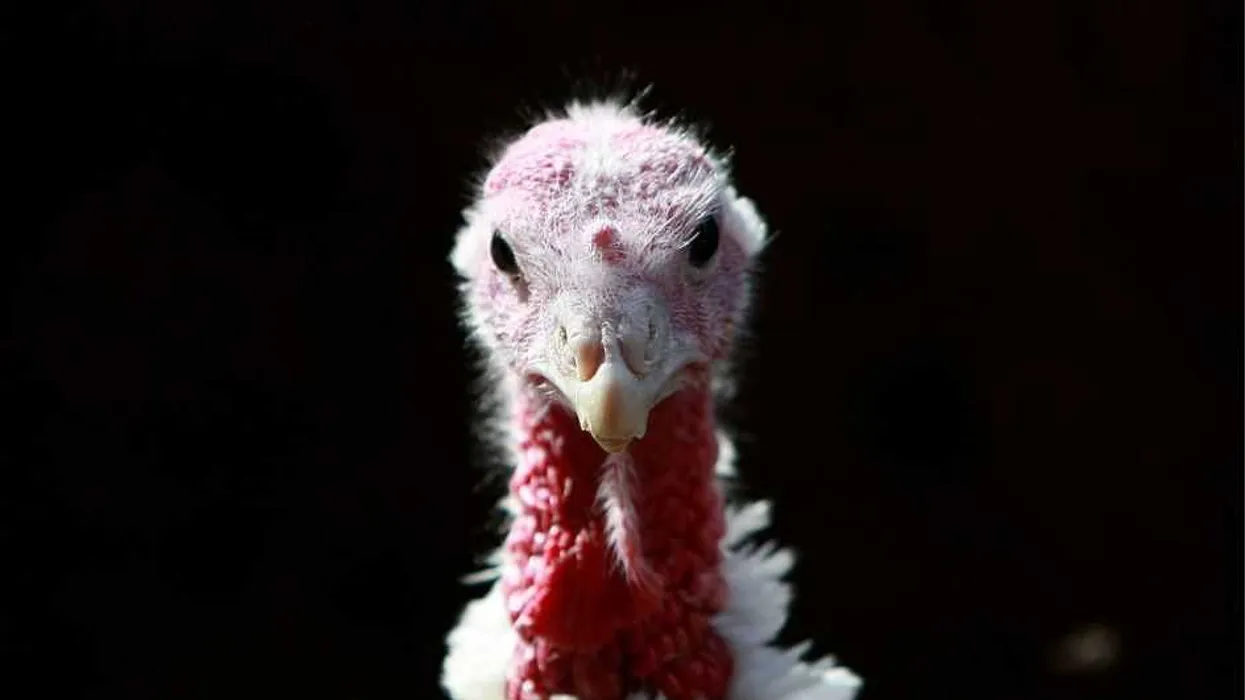
This Thanksgiving, consider the poor turkey. Is there any animal we consume with less gusto?
It has become something of annual tradition to denigrate the day’s traditional fare. Nearly 35% of Americans claim turkey is their least favorite part of the feast, according to one recent survey.
This vintage Better Homes and Gardens recipe is a bit of a cheat, as it does use turkey — although not in any form you’re likely to recognize
The internet just stokes the hatred. Every year the same tiresome “contrarian” opinions: “Stop pretending you like turkey. It’s no good on Thanksgiving, or any other day.”
Even celebrity chefs can’t resist punching down. “Turkey is wildly overrated,” says restaurateur David Chang.
“The only reason to cook the turkey is to get the gravy, and then you can just give the turkey away.”
We must admit that turkey-haters have a point. Yes, turkey meat can be dry and flavorless (although brining is a dependable way to avoid that). And yes, the tradition of eating turkey — and most Thanksgiving foods — was essentially created by advertising in the early 20th century. (College freshman home for fall break voice: “It’s all a scam by Big Cranberry!”)
While we’re content to stick with the standard flightless fowl, there were plenty of other contenders in the great battle for the Thanksgiving table. As a service, we provide the following recipes for anyone wanting to change it up.
1. Roast eel (1621)
Among the meats served at the first Thanksgiving in Plymouth would surely have been this vital freshwater food source. The 1622 promotional pamphlet for the Plymouth colony “Mourt’s Relation” describes how the Wampanoag native Tisquantum (better known as Squanto) taught the Pilgrims to catch the slippery, succulent treats.
Tisquantum went at noon to fish for Eels, at night he came home with as many as he could well lift in one hand, which our people were glad of, they were fat & sweet, he trod them out with his feet, and so caught them with his hands, without any other Instrument.
Here’s how they might have prepared it:
Ingredients
- 2 lbs cleaned freshwater eel
- Salt, splash of vinegar
- Sage or bay, butter
Instructions
- Soak eel 30 minutes in salt water and vinegar.
- Dry; rub with salt and herbs.
- Split a roasting stick down the middle, coil eel around stick.
- Roast over open fire 20-25 min.
- Baste with butter.
2. Roast swan (17th-18th centuries)
Long a favorite of European royals (peasants were forbidden to hunt them), swan was plentiful in the New World and was most likely one of the waterfowl consumed at the first Thanksgiving.
Here’s a recipe from Hannah Woolley’s “The Queen-like Closet,” (1670) a cookbook that later colonists would have had in their kitchens:
To bake a Swan.
Scald it and take out the bones, and parboil it, then season it very well with Pepper, Salt and Ginger, then lard it, and put it in a deep Coffin of Rye Paste with store of Butter, close it and bake it very well, and when it is baked, fill up the Vent-hole with melted Butter, and so keep it; serve it in as you do the Beef-Pie.
For something more elaborate, here’s a preparation from the late 14th century cookbook “Le Menagier de Paris”:
Pluck like a chicken or goose, scald, or boil; spit, skewer in four places, and roast with all its feet and beak, and leave the head unplucked; and eat with yellow pepper.
Item, if you wish, it may be gilded.
Item, when you kill it, you should split its head down to the shoulders.
Item, sometimes they are skinned and reclothed.
RECLOTHED SWAN in its skin with all the feathers. Take it and split it between the shoulders, and cut it along the stomach: then take off the skin from the neck cut at the shoulders, holding the body by the feet; then put it on the spit, and skewer it and gild it. And when it is cooked, it must be reclothed in its skin, and let the neck be nice and straight or flat; and let it be eaten with yellow pepper.
3. Passenger pigeon pie (1700s)
Though extinct for more than a century, passenger pigeons were once as abundant as the kind you see fouling statues in urban parks. While we wouldn’t recommend eating those birds, Cornish game hen or squab make a decent substitute.
Ingredients
- 2 Cornish game hens (substitute for extinct passenger pigeons)
- 1 onion, quartered
- 2 tbsp butter
- 2 tbsp flour
- 1-1½ cups chicken or turkey stock
- Salt and pepper, to taste
- 1 tsp dried thyme
- Double pie crust (bottom + top crust)
Instructions
1. Prepare the meat
- Simmer game hens with the onion until fully cooked and tender.
- Remove hens; pick the meat from the bones.
- Place shredded meat in a bowl.
2. Make the gravy
- Melt butter in a pan.
- Add flour and cook until lightly browned.
- Stir in stock to form a smooth gravy.
- Season with salt, pepper, and thyme.
- Simmer until slightly thickened.
3. Assemble the pie
- Line a pie dish with bottom crust.
- Add shredded meat.
- Pour warm gravy over the meat.
- Cover with top crust and seal edges.
- Cut a small vent in the center.
4. Bake
Outdoor Dutch oven method (historical):
- Preheat Dutch oven with coals above and below.
- Elevate pie pan inside the Dutch oven on metal hooks or a trivet.
- Bake ~10-20 minutes, checking frequently to avoid burning.
Modern oven method:
- Bake at 375°F for 35-45 minutes, until crust is golden.
5. Serve. Let cool slightly before slicing.
4. Sautéed calf’s brains with mushrooms, sour cream, and dill
In 1904, railroad heir George Vanderbilt and his wife, Edith, hosted a lavish Thanksgiving at their Asheville estate, Biltmore. Turkey was on the menu — but so were calf’s brains. Here’s one preparation that guarantees a delicate, custardy mouthfeel:
Ingredients
- 1 lb brains (veal, pork, or lamb)
- Water for soaking
- Salt (for poaching water)
- 2 tbsp butter
- 1 cup sliced white mushrooms
- 2-3 tbsp sour cream
- 1-2 tbsp fresh dill, minced
- Toasted bread, for serving
Instructions
1. Prep the brains
- Soak brains overnight in cold water to remove blood pockets.
- Drain.
- Poach gently in salted water (bare simmer) for 10-15 minutes until firm.
- Cool slightly, then peel off the thin outer membrane.
- Cut brains into bite-size pieces.
2. Cook the mushrooms
- In a skillet, melt butter over medium heat.
- Add mushrooms and sauté until they release their juices and the butter turns lightly browned and nutty.
3. Add the brains
- Add chopped brains to the skillet.
- Toss gently with the mushrooms and browned butter for 1-2 minutes.
4. Finish the sauce
- Remove skillet from heat.
- Stir in sour cream to form a loose sauce.
- Add minced dill.
- Adjust salt if needed.
5. Serve. Spoon the mixture over warm toast. Serve immediately.
5. Celery au naturel (late 1800s-early 1900s)
Now the most unwanted vegetable on the crudite platter, this Bloody Mary garnish was a highly coveted status symbol of the Gilded Age (it was hard to grow). Everyone will want the recipe.
Ingredients
- 1 bunch crisp celery
- Cold water
- Ice cubes (optional)
- Salt (for serving, optional)
Instructions
1. Trim the celery
- Cut off the root end.
- Remove tough outer stalks if desired.
- Trim leafy tops to a neat fan.
2. Refresh the stalks
- Place celery in a bowl of cold water (add ice for extra crispness).
- Chill 15-30 minutes.
3. Present with appropriate ceremony
- Stand stalks upright in a tall glass, vase, or celery jar.
- Arrange so the tops flare elegantly.
4. Serve. Place the celery in the center of the table. Offer a pinch dish of salt on the side.
Note: In the late 19th century, this was considered a showpiece delicacy. Your guests are encouraged to admire its beauty before eating it exactly as it is.
6. Turkey lime molded salad (1969)
This vintage Better Homes and Gardens recipe is a bit of a cheat, as it does use turkey — although not in any form you’re likely to recognize.
Ingredients
- 2 packages (3 oz each) lime-flavored gelatin
- ¼ tsp salt
- 2 cups boiling water
- ½ cup cold water
- 1 (7 oz) bottle ginger ale
- 2 cups diced cooked turkey
- 1 cup sour cream
- ¼ tsp ground ginger
- 1 (16 oz) can pears, drained and diced
- 6½-cup gelatin mold
Instructions
1. Make the gelatin base
- Dissolve lime gelatin and salt in 2 cups boiling water.
- Add ginger ale and ½ cup cold water.
- Chill until partially set.
2. Prepare the turkey layer
- Fold diced turkey into the partially set gelatin.
- Pour into a 6½-cup mold.
- Chill until almost firm.
3. Prepare the sour cream-pear layer
- Beat sour cream, ground ginger, and ½–1 cup of the remaining unset gelatin until smooth.
- Chill until partially set.
- Fold in diced pears.
4. Add second layer
- Spoon the pear-sour cream mixture over the firm turkey layer.
- Chill until completely set.
5. Unmold and serve
- Dip mold briefly in warm water.
- Invert onto a serving platter.
- Lift mold carefully to reveal two layers.
My mother was evil; here’s how I help others face their own abusive childhoods

Almost every coaching client I serve says something like this:
“What am I supposed to think about my mother? I don’t want to think of her as a bad person, but would a good person treat her children the way our mother treated me and my brothers and sisters?”
These good shards of her personality could never coalesce into a normal-range person. But I have an idea of who that woman could have been.
Who are these clients, and what am I doing with them that we’d be talking about this?
If I were a licensed mental health “professional,” you’d call what I do counseling. Since I’m not a licensed professional, I call it personal coaching and consulting. As a man who was raised by a mother deranged with borderline and narcissistic personality disorders and who became a self-destructive alcoholic for much of his life, I offer peer support and advice from someone who lived it.
Accepting reality
Let’s return to the question we opened with. No, a good person would not abuse her children the way the parents of my clients treated them. That’s the answer that many people don’t want to hear. But accepting the ugly reality of an abusive parent is a minimum requirement for getting past the psychological damage this inflicts on children who later become damaged adults.
For many people who grew up this way, accepting reality is necessary but not sufficient. They don’t know what to do with the memories of the good times, the apparent kindnesses they remember from otherwise frightening parents. I’m going to come back to this below with some stories about how I’ve turned this over in my mind as I’ve tried to grapple with who my abusive mother really was.
How did the parents of my clients treat them? Many of my clients had parents who threatened or attempted suicide in order to extract care and pity from their children. Some of my clients were nearly killed by their fathers. (Yes, I mean that the fathers consciously, knowingly tried to kill them; strangulation is the usual method.) Some were pimped out as prostitutes by their mothers.
Not everyone had such a florid experience, but nearly everyone I serve was raised by a parent who could not be trusted. My clients were abused as children. Actually abused, not “TikTok” abused. They don’t ruminate on how being denied an ice cream cone at age 8 ruined their lives. Instead they’re people who suffered under cold, capricious, and sometimes sadistic parents. And decades later, these adults who never did anything to deserve what they got still feel it is their fault their mother didn’t love them.
A moral problem
As I’ve written about before, we are living in an age characterized by what are known as Cluster B personality disorders. These are better thought of as character disorders, in the vein of psychologist George K. Simon. He’s one of the few practicing and writing psychologists who recognize that people who are intensely narcissistic, exploitative, manipulative, dishonest, and cruel are not suffering from a medical problem. They are suffering from a moral and spiritual problem. A personality disorder is not an organic brain problem. It is not a “disability.” It is not diabetes. It is the state of having an immoral and warped personal character.
My goal with clients is to give them a kind of conversation that will allow them to see, and to accept, the reality of their parents’ derangement. If you grew up in a normal, loving family, you may have a hard time accepting that I’m telling you the truth about what kinds of people these parents were to their kids. There is a taboo against acknowledging that some mothers (it’s not symmetrical; people have no problem believing this of fathers) do not love their children and try to annihilate them.
To hell with the taboo. Reality doesn’t conform to what we prefer to feel.
RELATED: We need to start trusting our primal survival instincts again
 Stefano Bianchetti/Getty Images
Emotional balance sheet
Grown children from abusive homes usually don’t know, or can’t accept, that their parents were bad people. Many of my clients hesitate to use the word “abuse,” even a moment after a client tells me a story about how her mother hit on her teenaged boyfriend and then slapped the daughter, accusing her of being a slut. Genuinely abused children spend decades denying the truth and working overtime to rehabilitate the image of a grossly destructive father or mother. It is only when alcoholism, depression, or a string of failed relationships drive them to despair that they’re ready to take steps toward telling the truth.
When a person crosses the threshold and accepts that her mother or father was not a good person, did not “do their best,” and did not really love their children, she’s made enormous progress. This is the first and most important goal in recovering equanimity. But it’s not enough for many of us. What are we to do with the good memories? How are we to see our mother when we remember the times she imparted skills and wisdom to us? How do those affect the emotional balance sheet’s bottom line?
I’m going to concede something but with an important proviso: Yes, it’s generally true that no person is all good or all bad. But here’s the proviso: The kind of parents we’re talking about are not “a normal mix of good and bad.” We’re talking about parents who are, to a close approximation, 95% “bad” and only 5% “good.”
The arithmetic on that is straightforward. Five percent achievement will not get you a passing grade on a test, and it does not give these adults a passing moral grade for parenthood.
Glimpses of good
Still what about the good times? I’ve thought about this for years. I’ve talked about it with my (non-woke, conservative, old-school) therapist for years, and it’s been on my mind lately.
Back in the late ’80s, my mother and I were watching TV, and something came up about women’s place in society, how to have a career and a family at the same time. We’ve all heard these topics discussed for decades; it was one of those times when something “truthful-ish” leaked out in my mother’s conversation.
My mother was a deranged woman with borderline and narcissistic personality disorders. She was abusive and horrible. I use the past tense even though she’s still alive because I permanently removed her from my life 10 years ago.
But there were times when a real person glimmered through. Sometimes you could see and hear the intelligent, insightful woman she could have been if her good qualities hadn’t been subsumed by her moral and psychiatric derangement.
The mother she wanted to be
This conversation in the ’80s was one of those times. I remember it so well because it’s one of my memory’s best examples of the woman I hoped she truly was — the woman who could have been the good mother that deep down I think she wanted to be but could not.
We were listening to the TV discussion. I don’t remember the specifics, just that it was filled with the usual pat feminist answers that contradicted each other and demanded a world of circumstances for women that was never realistic. Having cake and eating it too, that sort of thing.
My mother reflected on all that, and she had this to say:
“It’s impossible for you to understand how strong the biological drive to have children is for women. We like to pretend it isn’t real and say it’s not real, but it is. A woman can feel the pull, and it’s overwhelming. I wanted to be a mother and have children since I was a little girl. It’s all I wanted to be.”
Living with the contradiction
This was true but only sometimes. My mother had borderline personality disorder, and such people have extreme and often opposing desires that conflict with each other. Their problem is that they don’t know how to integrate these conflicts, or how to live with the conflict and ambiguity. So instead of acknowledging the conflict, they pretend it’s not there. The next day, for example, my mother could rail at the top of her lungs about how women were enslaved, how they had a right to be “more than just mothers.”
A contradiction, yes, but an understandable one. My mother would have been better off if she’d found some way to live with the conflicts that most women feel, especially in a society that treats the status of women and mothers in such a, well, borderline way. My mother may have been crazy globally, but she was not “crazy” to react badly to these contradictory messages.
She also said this:
“Young women are making a mistake waiting so long to have children. You just don’t have the energy at 30 or 35 that you have when you’re 20. It’s not the same. Women were built to have children, and we were built to have them as young women. Today’s mothers are going to have problems they’re not counting on because they waited so long.”
She was right. Even my mother, a florid Cluster B personality case, could see the truth in traditional wisdom. Even she, a screeching feminist liberal, could admit that men and women were built differently and that women had biological drives to bear children.
Unanswered questions
My mother and I had many conversations like that over the years. Long talks where honesty crept in, even if it was gone the next day. I remember them so well because they showed the woman she could have been, they showed the best of her intellect and perception.
I miss them. I do know, of course, that there wasn’t a stable version of my mother just waiting to blossom. These good shards of her personality could never coalesce into a normal-range person. But I have an idea of who that woman could have been.
So it goes with many of my clients. A son remembers his intensely selfish and punitive father who sometimes imparted helpful wisdom. A daughter remembers a mother who once took real joy watching her daughter graduate from college, even though the week before, mom overdosed on pills in a sick bid for attention.
Who are these people? We may never know. This is not how I want to end this essay. I don’t like unanswered questions and puzzles that can’t be solved. Nevertheless here they are.





