

Category: Lifestyle
Red, white, and boo: Almost two-thirds of Americans now believe in ghosts
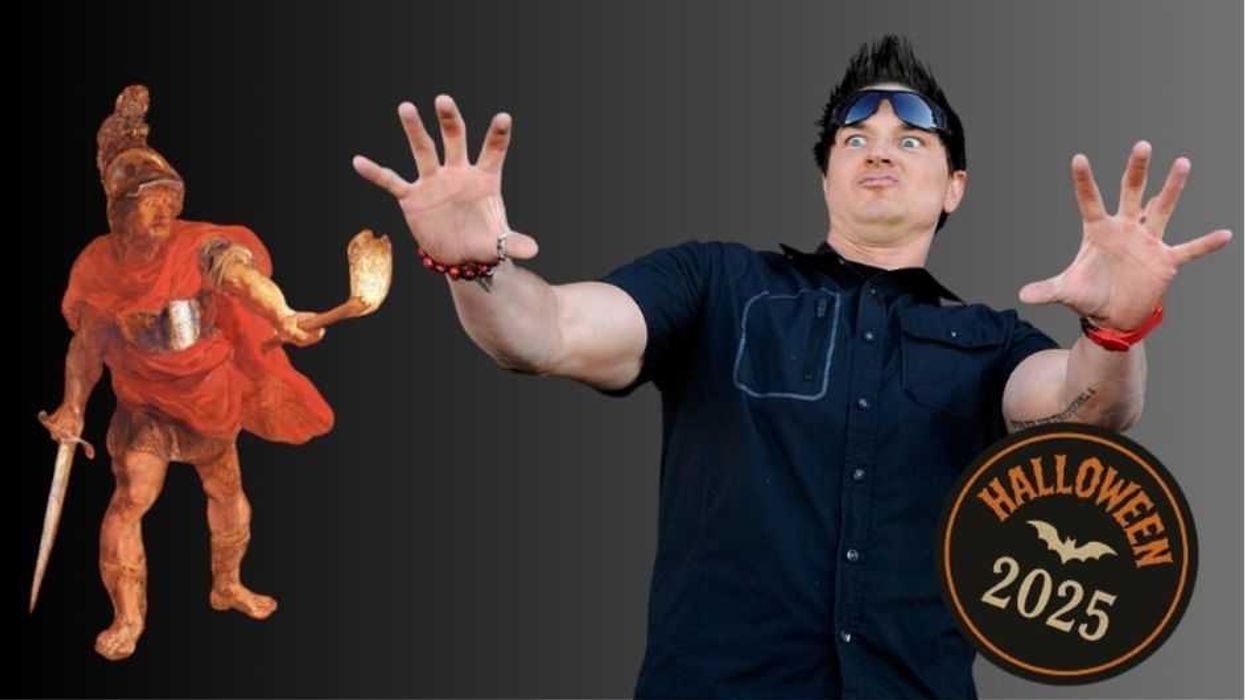
“I ain’t afraid of no ghost.”
Easy enough to say 40 years ago, when audiences delighted to the spectral pest control antics of Bill Murray, Harold Ramis, and Dan Aykroyd. You can’t fear what isn’t real, after all.
The show pioneered a tactic known as ‘provocation.’ This is when an investigator attempts to goad a spirit into manifesting by insulting it.
Things have changed. Since then, the proportion of Americans who believe in ghosts has surged 400%. Surveys indicate that nearly two-thirds of the population now hold supernatural beliefs, and 20% have reported seeing a ghost.
Entrepreneurial spirits
With roughly 50 million Americans purportedly having encountered a haunting, the business of ghost hunting has evolved into a profitable enterprise. It would appear that the invisible hand of the market really does exist.
As proof that even the ethereal cannot escape the iron law of supply and demand, paranormal tourism is booming. Millions of Americans now spend over $300 million on haunted attractions each year. You can satiate your gruesome desires by visiting Iowa’s Villisca Axe Murder House, where eight people, including six children, were murdered in 1912. For $430, anyone brave enough to take a whack at it can try to spend the night.
Ghost-hunting shows are scaring up unprecedented interest as well. YouTube, for example, has hundreds of paranormal-themed channels. One of the biggest is “Sam and Colby.” With an average of 10 million views per video, the kids are among the most popular ghost hunters online. The two film themselves while visiting haunted locales across the United States. Freed from the limitations of conventional television, the videos are lengthy and typically unedited, offering a more immersive experience for their audience of 15 million subscribers.
There are compilation channels for those who don’t want to endure the deferred gratification of 90 minutes of shaky handheld videos and constant cries of, “What was that?”
Then there are channels like “Mind Junkie” and “Nuke’s Top 5,” which brazenly monetize our endless appetite for not-so-carefully-vetted supernatural slop. One wonders if these shrewd content creators are also behind the “debunking videos” they attract. Nice business model, if so.
Tales from the clip
“Paranormal Caught on Camera,” now in its ninth season on Discovery+ and the Travel Channel, can best be described as a reality show. From poltergeist activity to mysterious shadows roaming the woods, a panel of experts weighs in on supposed paranormal footage from around the world. Imagine “Ghostbusters” meets “America’s Funniest Home Videos” — with the approximate scientific rigor of both.
Psychologists say a prior belief in ghosts makes a person more inclined to perceive unexplained sounds and events as paranormal. The show’s presenters are clearly familiar with the research. They frequently use the term “energy” (which appears to function as a noun, verb, and adjective) and attribute every sound or camera jiggle to the spirit realm.
Ghost roast
“Ghost Adventures” is one of the longest-running and best-known of these types of shows. While the experts on “Paranormal Caught on Camera” are content to remain armchair investigators, aging goth heartthrob Zak Bagans and his crew actually go out into the field. Since 2008, they have traveled around the United States looking for paranormal phenomena. The format is simple: They arrive at an alleged haunted location, turn off the lights, hit record, and explore the building. What we get is a well-curated, finely edited spectacle.
The show pioneered a tactic known as “provocation.” This is when an investigator attempts to goad a spirit into manifesting by insulting it. While this demonstrates a fortitude worthy of Ray Parker Jr. himself, it has never once worked over 300 episodes. The only scary thing that appears to be happening is a group of middle-aged men screaming in the dark about nothing in particular.
The truckload of pseudoscientific equipment these guys bring to the task separates them from your average amateur. A truckload of pseudoscientific instruments is used to add an element of objectivity. Particularly prized is the EMF meter, used to detect the electromagnetic fields ghosts apparently emit. This essential prop emits clicks and pings reminiscent of the motion trackers used to detect xenomorphs in the movie “Aliens.” Unsurprisingly, there is no James Cameron-level tension here. Ninety-nine times out of 100, they’ve probably just found the fuse box.
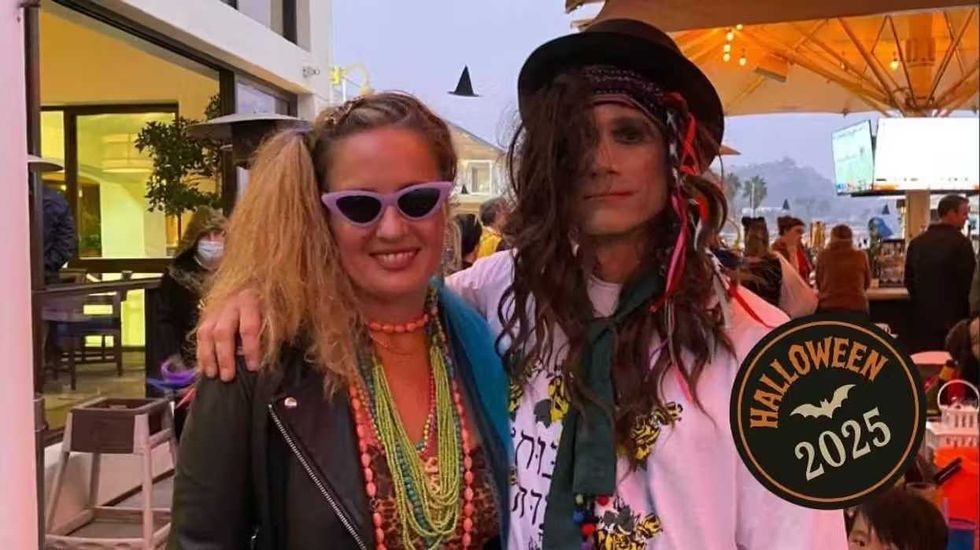
RELATED: Halloween costumes for old people: 6 surefire rules for dressing up
 Matt Himes
Phantom itch
Slick, polished, and carefully choreographed. It’s all very Hollywood. It comes as no surprise that the massive increase in belief in ghosts over the last 50 years coincides with the golden era of horror. Art imitates life. Many of these shows use the same strategies as your typical Hollywood special effects department.
So why are we watching these shows? “Ghost Adventures,” now in its 28th season, has perfected the art of selling us fear. These shows give us what we want. We love to be afraid. A horror movie grants us the chance to live vicariously through the characters on the screen. A way to experience and navigate terror from the comfort of our couch.
Then there’s another, more poignant, explanation. We believe in ghosts for the same reason that we believe in God. In the end, both ghost hunters and Christians are motivated by the same persistent yearning that has dogged us since the dawn of humanity: There’s got to be something more than this.
Joe Rogan, Christian? The podcaster opens up about his ongoing exploration of faith
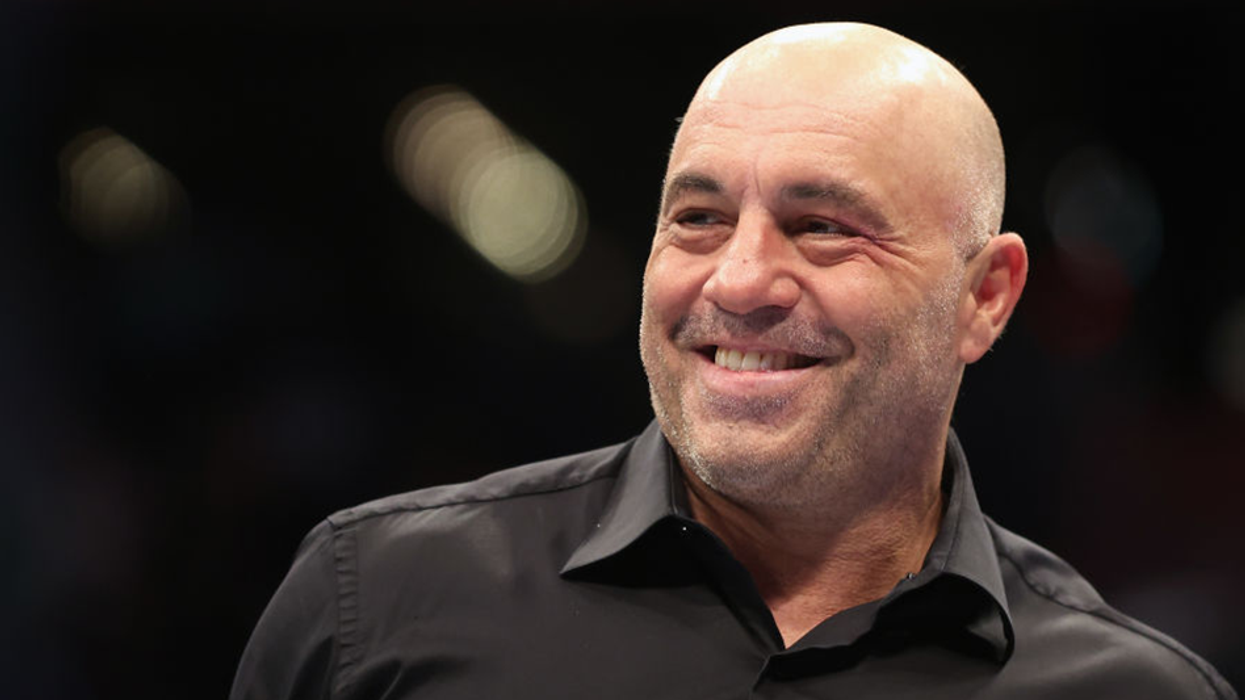
Joe Rogan may not be ready to call himself a Christian, but the former atheist does find himself rubbing shoulders with believers on many a Sunday.
The podcaster once again revealed details about his ongoing exploration of the faith, including his habit of regularly attending church.
‘It’s almost like everybody is under a spell.’
He also demonstrated a newfound appreciation of why someone would need God in his or her life. When recent podcast guest Francis Foster expressed amazement at how much a friend of his could rely on religion as a foundation for getting through tough times, Rogan didn’t seem nearly as surprised.
“If you really do believe that, it definitely will help you,” the comedian concurred.
Church going
At that point, fellow guest — and Foster’s “Triggernometry” podcast co-host — Konstantin Kisin chimed in that he himself had been becoming more religious.
“I haven’t got there, but I have started going to church every now and again,” Kisin explained.
“Do you enjoy it?” Rogan asked.
“I love it,” responded Kisin.
“I do too,” confessed Rogan, adding, “It’s a bunch of people that are going to try to make their lives better. They’re trying to be a better person.”
Rogan then described his church experience as getting together with a group of people who read and analyze Bible passages.
“I’m really interested in what these people were trying to say because I don’t think it’s nothing,” Rogan said.
No ‘fairy tale’
From there, the New Jersey native addressed claims he has heard from atheists and secularists who dismiss Christianity as being “foolish.”
The 58-year-old pushed back against the characterization that Christianity as a collection of “fairy tales” by “self-professed intelligent people,” noting that a proper understanding of the faith requires considering historical context, translation difficulties, and oral vs. written tradition.
“I think there’s something to what they’re saying,” Rogan offered.
Trust the science
While noting that modern science has found physical evidence for the biblical flood story told in Genesis, Rogan said he also appreciated the Bible as a compelling depiction of society 6,000 years ago.
Further segments in the podcast revealed that, perhaps due to a renewed interest in faith, Rogan’s algorithm may have even changed.
– YouTube
This became evident when the group discussed some of Kisin’s protest journalism, where he asks befuddled liberals the reason they are attending the current protest of the day.
In response, Rogan pointed to a video of a man doing interviews at a left-wing No Kings protest. The man asks attendees if they believe in human rights, to which they affirm, until they are asked about human rights “in the womb,” which is when they dismiss the idea.
“It’s almost like everybody is under a spell,” Rogan laughed.
Rogan first confirmed he was going to church in June, after hinting at the idea that he was becoming more religious. He described his attendance similarly at that time:
“It’s actually very nice; they’re all just trying to be better people.”
Like Blaze News? Bypass the censors, sign up for our newsletters, and get stories like this direct to your inbox. Sign up here!
‘Carrie’ and the monster who raised me
The devil and his minions have haunted me all my life.
As far back as I can remember, I’ve been visited by the unquiet dead, the hungry ghosts, and even Old Scratch himself in my dreams. Perhaps these nighttime visitations were spiritual attacks, perhaps they were the predictable manifestation of the violence and instability of my upbringing.
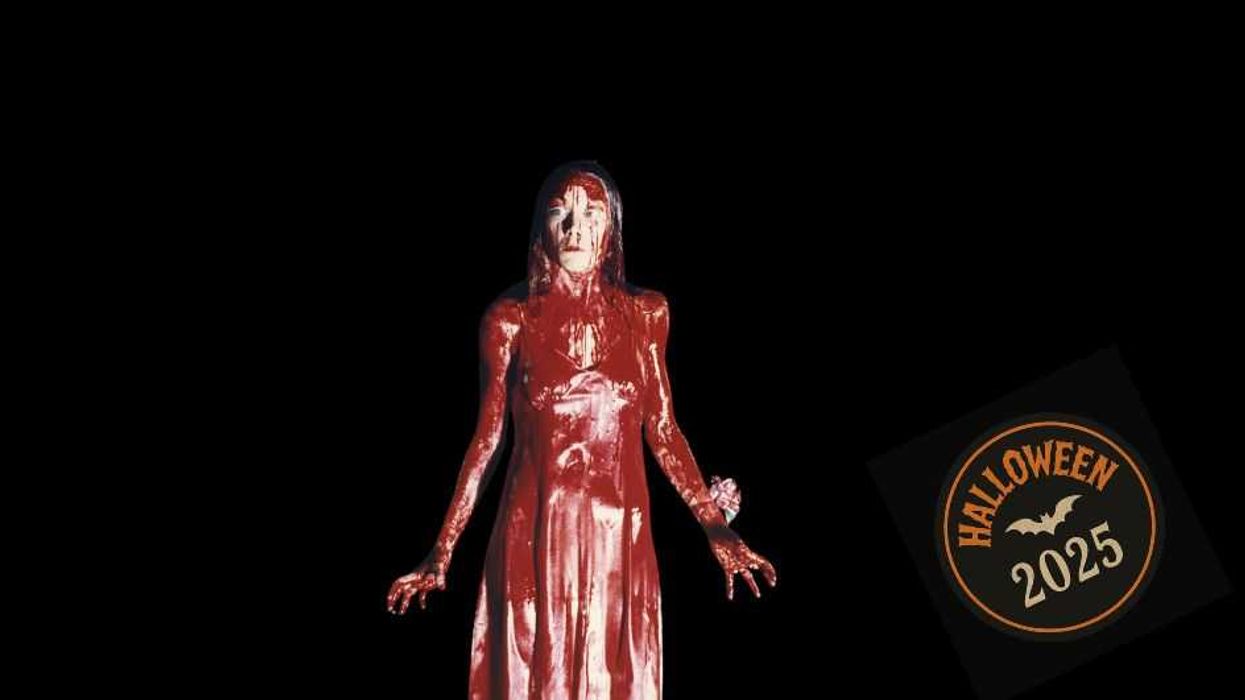
Like Piper Laurie in ‘Carrie,’ my mother forced me to kneel while she stood above me bellowing. ‘Humble yourself before me!’ she shrieked. ‘GodDAMN you, humble yourself!’
Maybe they were both; maybe the kind of moral derangement that afflicted my parents was a kind of demonic possession.
The devil I know
I’m not sure I believe in God, but I’m getting closer to believing in the devil. That’s a confused position, admittedly, but that’s what you get from a guy who believed as a child until it was punished out of him and then spent too many years as an obnoxious “new atheist” adult.
Whatever the answer may be, I’ve been terrified and fascinated by the supernatural, the uncanny, and the grotesque all my life. The kinds of spooky stories that gripped me were the type you find in Victorian English ghost story anthologies. Authors like E.F. Benson, M.R. James, and Elizabeth Gaskell.
If you like these too, no one reads them better than English podcaster Tony Walker. His “Classic Ghost Stories Podcast” is one of the few I find so good that I voluntarily pay for it. This is no amateur sideshow; Walker’s narration is professional grade. Why he’s not rich reading books for Audible, I’ll never know.
Weeping and wailing women in veils who glide down hallways. Rain-bedraggled brides hitchhiking on the side of the road who disappear from their ride’s passenger seat as he drives past Resurrection Cemetery. Fingerprints that appear on the windows of automobiles that cross the railroad tracks where a locomotive hit a school bus long ago killing the children on board. Their spirit fingers gently push your car along to make sure you don’t meet their sad and untimely fate.
In search of … belief
Like many kids of the 1970s and 1980s, I grew up watching shows like the cryptid/aliens/spook-filled “In Search Of,” narrated by Leonard Nimoy. My library card was full many times over with every book on Bigfoot, extra-sensory perception, telekinesis, poltergeists, and the Bermuda Triangle.
Have you heard about the moving coffins of Barbados? That’s top-quality spine tingles. As the story goes, a wealthy family living on the Caribbean island built a family vault in the cemetery. Every time a member died, the crypt was opened to accept a new coffin. And every time the crypt was opened, the coffins that were already there were tossed about helter-skelter.
Maybe it was flood waters. Except that there was no evidence of water incursion. Maybe pranksters did it. But the family sealed the stone door and sprinkled sand on the floor, and there was never a footprint betraying a (living) human presence.
For a proper classic haunting, you can’t beat the Brown Lady of Raynham Hall. Nearly everyone with a passing familiarity with the spirit world of 20th-century popular culture has seen the photograph of this long dead woman, a translucent, begowned figure descending the grand staircase of the palatial home in Norfolk, England, built during the reign of James I in 1620.
According to two photographers who were documenting the inside of the estate in 1936, as they were setting up a shot, they looked up at the stairs in astonishment. A veiled specter was float-walking silently down the stair treads, and they had just enough time to open the shutter on their plate camera and capture the most famous ghost photograph of all time.
Was she the shade of Lady Dorothy Walpole? Lady Walpole was said to have been immured in a room in Raynham Hall for the rest of her life at the hands of her husband, Charles Townshend, 2nd Viscount Townshend, who was angered by her unfaithful dalliances.
Or was this just the first and best example of trick-ghost photography, a double-exposed photographic plate? In the early days of photography, the public was not wise to the trickery available to a skilled image-maker. Long before Photoshop and AI, the public believed the camera never lies.
I want to believe. There’s something magnetic, romantic, and almost erotic about the possibility that a curtain separates us from the realm of the dead and that it thins at certain times, like now. As a child, I delighted in being scared so badly I didn’t dare turn off the flashlight under the covers I used for my clandestine and very-much-not-allowed post-bedtime reading.
Joy interrupted
Yet the possibility of an ethereal realm where the dead who refuse to acknowledge their condition “live,” a plane where real devil cavorts are not merely fun and games. If that plane exists, and if it’s populated by any of the henchmen attributed to Satan, then the other side is very serious business indeed. I’m not so sure I want to believe, in that case, but I’m also not so sure that I don’t.
When I was 8 years old, my family took a rare trip to a sit-down restaurant on Christmas Eve. We were poor, and a night out at Demicelli’s Italian Restaurant was so special that Christmas would have been joyful even if we didn’t get a single present. As we walked toward Placentia Boulevard in Fullerton, California, I looked at the night sky and saw the brightest star I’d ever seen.
“Mommy, look!” I said, tugging at my mother’s sleeve. I pulled on her cigarette hand, which annoyed her. “It’s the star of Jesus, Mommy. It’s the star that guided the Wise Men to the baby Jesus!”
It was wondrous. It made me feel light-headed with a joy I’d never felt.
My mother made a derisive sniggering noise as she blew out smoke. “Oh, no it isn’t, Josh,” she mocked. “It’s just a star. Probably Venus.”
My face went red with embarrassment, and I stayed quiet the rest of the night. I felt stupid. Unsophisticated. Dumb. Childlike. Naive. And substandard. This was a problem that repeated itself over the years. My mother was the resentful “victim” type, and she was at war with God.
I convinced her to take us to the Presbyterian church where I’d been (to her reluctance, as she recalled it) baptized as an infant for Christmas Eve services in 1986. Mother spent the walk home railing about those “Goddamned hypocritical Christians! Where were they for this single mother when I needed a little help to put food on the table?”
I can’t repeat the rest of what she said in a respectable publication.
Maternal monster
It wasn’t until my 40s that I realized why I had been captivated to the point of obsession with certain dark characters in disturbing films like 1976’s “Carrie.” This was an adaptation of Stephen King’s debut novel of the same name, a book that still ranks among his finest work. It’s only nominally about a teen girl with telekinesis, the psychic ability to move objects with her mind. The story is really about a frightened girl who grew up with a maternal monster.
If you’ve seen the movie, you remember Piper Laurie’s almost kabuki performance as Margaret White, a religious fanatic tormented by her own sense of failure and sin. Seeing herself as a fallen woman who fornicated with a man, she uses extreme interpretations of scripture to berate and subjugate the result of that union, her daughter, Carrie. Just as Margaret believes she can never be forgiven, she can never forgive her daughter for being born, for embodying her mother’s sin in too-real flesh.
So she screams at Carrie, beats her, forces her to confess sins the girl has never committed (they were Margaret’s sins), and worst of all, locks her in a “prayer closet.” The scene that terrified me the most was the vignette in the dining room when Margaret forces Carrie to her knees as she intones about how God had loosed the raven on the world, and the raven was called sin.
“Say it, woman! Say it!” Margaret screams. “Eve was weak. Eve was weak!”
She drags Carrie to the prayer closet, a black cloak whirling about her like the wings of the raven, and babbles insanely while her daughter screams for mercy. Lighting a candle in the dark, Carrie looks up to a figure of St. Sebastian on the wall, a grotesque effigy with agonized eyes reflecting the pain of his arrow wounds.
Fascinated by fear
Margaret White obviously had a severe condition called Borderline Personality Disorder, which also afflicted my mother. While my mother was not a religious fanatic, she treated me the way Margaret White treats Carrie. Just as in the movie’s dining room scene, my mother forced me to kneel while she stood above me bellowing. “Humble yourself before me!” she shrieked. “GodDAMN you, humble yourself!”
My mother did not want what she claimed she wanted: respect and filial piety. She wanted to be worshiped. My mother created herself God in her own image.
So I prayed to God to be delivered from my mother’s prison, but I never got an answer, or one I recognized. I was more certain that the world was full of angry entities, though, and to say I felt haunted wouldn’t go far enough.
That which terrorizes also fascinates. Over my life, I’ve tasted and re-tasted the fear through movies like “Carrie” and “Mommie Dearest.” Fictional versions of my real-life horror were a poison candy; they hurt so good, like the compulsion to thrust the tongue repeatedly into a canker sore that won’t heal.
I still don’t know what I believe about God, the soul, heaven, or hell.
I knew what I saw
No Halloween story would be complete without a personal anecdote of an encounter with the unexplained. This is the first time I’ve told this story to anyone, let alone in print. Like I do myself, you may doubt me. I admit that I was halfway to drunk when it happened. But in the moment, I knew what I saw and heard, I knew I was only buzzed on three beers, not falling-down drunk. I wasn’t hallucinating pink elephants or anything else.
It was 1992. I was 18 years old and sharing an apartment with my best friend, Lisa. It was movie night in the living room, and it was my turn to fetch fresh Molson Goldens from the refrigerator. I put the sweating bottles on a round cocktail tray with a rubber no-slip bottom I’d brought home from the restaurant I worked at.
I was a skilled waiter who could hold a tray with four entrees and several cocktails without spilling. And though I’d had a few beers, I was not drunk. In the hallway as I was about to enter the living room, one of the standing beer bottles on the tray violently flipped over to the horizontal with a thud. It wasn’t the kind of soft thud that happens when something tips over. It was a THUD, as if someone had thrown the bottle into the tray.
Remember, it was a rubberized tray. It was actually difficult for a glass on such a tray to slide, let alone tip over. I had not tilted the tray; I was not weaving drunkenly as I walked. The other beer bottle didn’t tip over. The two mugs on the same tray didn’t move. More, the same thing happened a few minutes later in the living room. My (replaced) beer bottle on the side table, three feet from reach, loudly tipped over on a perfectly level table and made a loud rap.
I remember so clearly stopping still as the blood drained from my head. Did I really just see what I thought I saw? I did. And I felt it, too.
In that moment in the hall, I said this in my head: “What you just saw and heard really happened. You’re not drunk, and you’re not hallucinating. But no one will believe you, and over time, you will not believe you either. Your memory will soften, and you will convince yourself that you were drunk and that you somehow caused these bottles to tip over in apparent defiance of the laws of physics and friction.”
That’s exactly what happened. As I tell you this story, I doubt myself. At the same time, I remember the warning I spoke to myself in my head about doubt there, in the moment, and I know I wasn’t crazy.
Happy Halloween.





