

Category: Lifestyle
Locked out: How Big Auto could destroy the used-car market
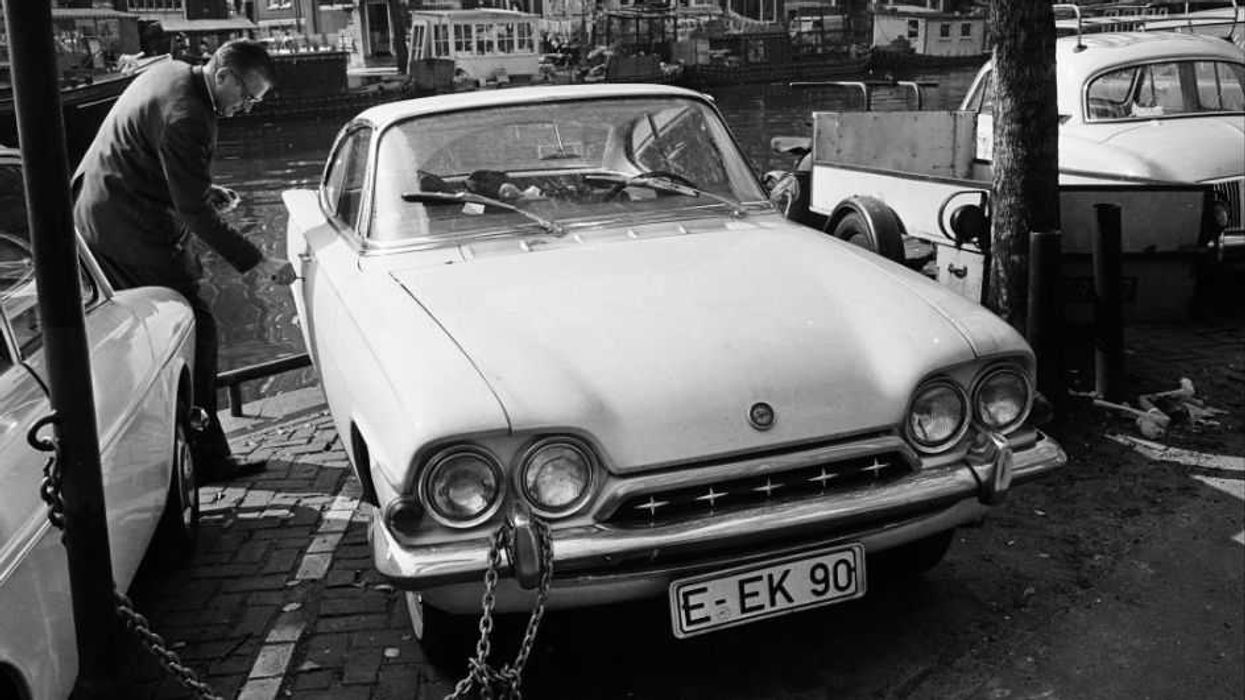
When it comes to replacing your daily driver, “used” is often the smartest buy. A low-mileage model from a few years back can save you real money while offering nearly all the same features. And as long as you do your homework, a well-maintained used car is every bit as serviceable as something brand new.
But that might not be true for much longer.
In states without strong right-to-repair protections, shops are already reporting cases where newer vehicles simply can’t be serviced without dealership intervention.
Automakers are steadily locking down the data that modern cars generate. If they succeed, independent repair shops, do-it-yourself mechanics — and your wallet — will feel the squeeze. The stakes are enormous: 273,000 repair shops, 900,000 technicians, and 293 million vehicles could be affected.
Stick with me. By the end of this, you’ll know exactly why the national right-to-repair movement is pushing the REPAIR Act — and why it’s worth calling your legislator today.
Gatekeeping data
For decades, car repair was straightforward. The OBD-II port — standardized in 1996 — gave shops and owners direct access to diagnostic data. That openness fueled competition, kept repairs affordable, and protected your right to choose who services your car.
Today’s vehicles are computers on wheels, containing hundreds of microprocessors and dozens of electronic control units. And instead of sending data through that familiar port, cars now stream diagnostics wirelessly through telematics systems. In 2021, half of all vehicles already had this capability. By 2030, McKinsey projects 95% of new cars will be fully connected.
Here’s the problem: That wireless data goes straight to the manufacturer. They become the gatekeeper — deciding who gets access, at what time, and for what price.
Independent shops get shut out or forced to pay steep fees for limited information. Consumers get funneled back to dealerships. And while telematics can offer real benefits — remote diagnostics, predictive maintenance — those perks mostly stay inside the dealership network when automakers control the data.
Drivers pay the price
When manufacturers monopolize data, drivers pay the price.
- Higher repair costs: Independent shops must buy expensive, manufacturer-approved tools or subscriptions — or they can’t complete repairs at all.
- Fewer options: Your trusted neighborhood shop may be unable to work on newer models, leaving you with dealership-only service.
- Privacy erosion: Every drive generates information on your habits, location, and behavior. Automakers routinely share or sell that data to insurers, advertisers, and third parties — often without clear consent.
In states without strong right-to-repair protections, shops are already reporting cases where newer vehicles simply can’t be serviced without dealership intervention.
The aftermarket fallout
Independent repair is a massive economic engine. Cut off their access to data, and the ripple effects are huge:
- Aftermarket parts makers struggle to design compatible components.
- Innovation slows.
- Dealers gain monopolies on everything from diagnostics to repairs.
- Wait times increase while prices rise.
Voters have noticed. Massachusetts passed a telematics right-to-repair initiative in 2020 with 75% approval. Maine followed in 2023 with 84%. Those wins matter — but a patchwork of state laws won’t protect drivers nationwide.
Enter the REPAIR Act
Industry groups — including the Auto Care Association, MEMA Aftermarket Suppliers, and the CAR Coalition — are backing the REPAIR Act (H.R. 906). It’s not radical. It simply updates consumer rights for the connected-car era.
Four core principles drive the bill:
- No artificial barriers to repair or maintenance.
- Owners and their chosen shops get direct access to vehicle-generated data.
- No manufacturer can mandate proprietary tools or dealer-only equipment.
- A stakeholder advisory committee keeps the rules current as technology evolves.
The act restores choice. You can repair your own vehicle — or choose any shop you trust. It bans anticompetitive behavior like withholding service information or requiring dealer-exclusive parts. And crucially, wireless data must be shared through secure, standardized, owner-approved channels.
NHTSA and the FTC would set cybersecurity rules. Consumers would receive clear data-sharing notifications. And if manufacturers abuse the system, the FTC can act fast.
RELATED: Right-to-repair sweetens McFlurry but sours when lives are at stake
 400tmax via iStock/Getty Images
Skimp my ride
Without the REPAIR Act, the used-car market collapses into uncertainty. Vehicles that require dealer-only repairs will lose value quickly. Planned obsolescence accelerates. And as cars become fully connected, the familiar OBD-II era winds down.
A car you buy in 2025 could be effectively “dealer-locked” by 2030.
Manufacturers argue they need total control for cybersecurity. But secure, standardized data access — the model used globally — proves you can protect vehicle integrity without destroying competition.
The aftermarket already has a workable framework: encrypted data, authenticated access, owner permissions, and interoperable platforms. It’s practical, safe, and ready today.
The price of inaction
Without federal action:
- Repair costs rise 20%-50%.
- Independent shops close.
- Innovation dries up.
- Consumer privacy evaporates.
- The used-car market contracts.
The REPAIR Act reverses all of that. It creates a fair system where manufacturers build the cars — but the aftermarket keeps them running.
Don’t wait. Act.
This affects every driver. Contact your representative and urge support for the REPAIR Act.
It protects choice, savings, and your right to repair in a digital automotive world.
Your car, your data, your repairs. That’s what’s on the line.
New head of US Catholic Bishops said he would deny communion to pro-abortion politicians

Archbishop Paul S. Coakley is not in favor of giving politicians preferential treatment.
Coakley, archbishop of Oklahoma City, was elected as the next president of the United States Conference of Catholic Bishops in a secret ballot on Tuesday and will serve a three-year term as president.
‘I think in many cases it becomes the right decision and the only choice.’
Coakley has set a strong precedent for supporting the denial of communion to certain politicians that dates back more than a decade.
Most recently, in 2022, Coakley spoke in support of Archbishop Salvatore Joseph Cordileone of San Francisco. As reported by Life News, Cordileone decided to withhold communion from Rep. Nancy Pelosi (D-Calif.) at the time after she backed the Democrats as they blocked a vote on a bill to stop infanticide at least 80 times.
As Pelosi’s district encompasses San Francisco, Cordileone informed Pelosi she would be denied communion following her repeated dismissal of the archbishop, who attempted to speak with her about supporting “grave evil.”
Coakley supported the decision, saying, “I applaud the courage of Archbishop Cordileone and his leadership in taking this difficult step. Let us continue to pray for Abp. Cordileone, priests of the Archdiocese of San Francisco, Speaker Pelosi, for the protection of the unborn, and for the conversion of hearts and minds.”
The new USCCB president has remained consistent, and the proof is showcased in an interview he gave in 2014.
RELATED: They think ‘Christian AI’ will hasten Christ’s second coming — and now they’re building it
After Coakley said that many Catholic politicians have been at the forefront of “fostering so-called abortion rights,” he was asked about denying them communion due to the “severity” of their support for abortion.
Coakley replied, “I think one has to determine yet at what point it can be determined that they have come to that state of obstinate refusal to desist from that condition of manifest, grave sin.”
He told Life Site News, “I think we have an obligation as bishops, as pastors, to try to work with them to bring them to a change of heart and refusing them communion would be, not the first, but more than likely, the last stage in a serious [sic] of steps.”
The outlet then clarified, asking if it was something he would rule out or not.
“Oh, absolutely not,” Coakley reiterated. “I think it is something that Canon Law sanctions and that I think many bishops find themselves with no other choice but to make that decision. I think in many cases it becomes the right decision and the only choice.”
RELATED: Protestant pastor says polygamy is biblical: ‘He divinely ordained it’
 VATICAN – 2022/06/29: US House of Representatives Speaker Nancy Pelosi (R), with her husband, Paul Pelosi (C), attend a Holy Mass for the Solemnity of Saints Peter and Paul lead by Pope Francis in St. Peter’s Basilica. (Photo by Stefano Costantino/SOPA Images/LightRocket via Getty Images)
Upon accepting his new role, Coakley wrote a statement on X about being “put out into deep waters” in his new position.
“Once again, the Lord is inviting me,” he wrote. “Please pray that I may be a faithful steward and a wise servant of unity and communion with our Holy Father, Pope Leo, and with my brother bishops.”
Like Blaze News? Bypass the censors, sign up for our newsletters, and get stories like this direct to your inbox. Sign up here!
Protestant pastor says polygamy is biblical: ‘He divinely ordained it’

A protestant pastor is not backing down from his claim that he can have multiple wives.
Rich Tidwell, a pastor in Canton, Missouri, has sparked an online debate about the acceptance of polygamy in Christianity and whether or not it is biblically justifiable.
‘I have two beautiful wives.’
To the expected amount of backlash, Tidwell recently made an announcement on his Instagram page that his second wife is expecting his eighth child.
“I have two beautiful wives,” Tidwell wrote in a long entry. “We’re thrilled for what the Lord has done for our family,” he added, citing Bible passage Luke 18:29.
The pastor wrote about his justifications in an article called “Plural marriage,” labeling the practice as polygyny, which refers to one man being married to multiple women.
“In 2019, I discovered the surprising fact that God not only never prohibited polygyny throughout the entire biblical narrative (as He did with polyandry or homosexuality), He divinely ordained it in several cases,” Tidwell claimed.
He then cited more passages.
RELATED: Church-hopping: Confessions of an itinerant worshipper
Exodus 21:10 regulates but does not prohibit the practice, Tidwell claimed, when it says, “If he takes another wife to himself, he shall not diminish her food, her clothing, or her marital rights.”
Tidwell also noted 2 Chronicles 24:2-3, which mentions that “Jehoiada took two wives for him, and he became the father of sons and daughters,” as well as 2 Samuel 12:7-8:
This is what the Lord, the God of Israel, says: “I anointed you king over Israel, and I delivered you from the hand of Saul. I gave your master’s house to you, and your master’s wives into your arms. I gave you all Israel and Judah. And if all this had been too little, I would have given you even more.”
The pastor continued with more citations and said that if God explicitly gave men more than one wife at any time in history, “Then it was not and is not sin.”
For those who argued that polygyny is not the original design for mankind, Tidwell countered, “Neither is death, nor clothing, nor eating meat.”
RELATED: This crisis in churches is real. Will Christians fight back?
In an article titled “Should polygamist families be welcome at church?” Tidwell shared a letter he wrote to an Anglican church in Missouri requesting to attend its worship services; he was soundly denied.
A priest replied, saying the bishop, clergy, and parish council “unanimously decided against” the family’s participation.
“On multiple levels, polygamy is forbidden in our convictions, interpretation of Scripture, and the Canons and Constitution of the [Anglican Church of North America],” the unknown representative wrote, citing the following: “Canon II.7: Of Christian Marriage, which defines marriage as a lifelong union of one man and one woman.”
“These convictions are non-negotiable,” the letter said. “If you ever repent and become functionally and theologically monogamous, you are welcome to participate.”
Tidwell is a pastor at the nondenominational Ormond Church in Canton, Missouri, according to Protestia.
Like Blaze News? Bypass the censors, sign up for our newsletters, and get stories like this direct to your inbox. Sign up here!
Avoid these 9 car-rental rip-offs

Renting a car should be simple: You reserve a vehicle, drive it, and return it at the end of your trip.
But for millions of travelers each year, what seems like a straightforward process can quickly become a source of frustration and unexpected costs.
In 2024, US car-rental companies collected more than $2 billion in optional insurance and add-on fees.
Hidden fees, deceptive insurance upsells, false damage claims, and overpriced extras have become all too common, turning a simple rental into a costly experience. Understanding how rental companies operate and knowing what to watch for can save you time, money, and stress.
1. Hidden fees
One of the most pervasive problems in car rentals is the hidden fee. Travelers are often lured in with low advertised rates, only to be shocked when extra charges appear on their final bill.
These can include cleaning fees, administrative charges, or taxes that were not clearly disclosed. A rate that appears to be $25 a day can quickly balloon when additional costs are tacked on. The key to avoiding these surprises is vigilance: reading the contract carefully, asking for a full breakdown of potential charges, and choosing reputable rental companies that provide transparency from the start.
2. Fuel charges
Fuel charges are another frequent source of frustration. Many agencies offer prepaid fuel options, promising convenience at a flat rate. In reality, these plans often overcharge travelers. A prepaid tank might cost $70, while filling up locally could cost half that. The best strategy is to select a policy requiring you to return the car full and refuel it yourself, giving you control over price and avoiding overpayment.
3. Insurance upselling
Insurance upselling is a classic tactic at rental counters. Agents may encourage you to purchase extra coverage, claiming your personal insurance or credit card benefits are insufficient. Many credit cards already include rental car insurance, and personal auto policies often extend coverage to rentals. Knowing what protections you already have, and bringing proof, allows you to confidently decline unnecessary insurance and avoid paying for coverage you don’t need.
RELATED: 10 tactics to beat even the pushiest car salesman
 Mark Sullivan/Getty Images
4. Damage claims
Damage claims can create even bigger headaches. Renters are frequently billed for scratches, dents, or other damage that existed before their rental. Without proper documentation, disputing these charges can be difficult. To protect yourself, inspect the car thoroughly before and after driving, take comprehensive photos or videos, and ensure any pre-existing damage is recorded by the rental agent. A few minutes of documentation can prevent thousands of dollars in unjust repair charges.
5. ‘Free’ upgrades
Even seemingly generous “free” upgrades can carry hidden costs. A larger or fancier car may require premium gasoline, have lower fuel efficiency, or carry higher insurance rates. What seems like a perk can quickly become an unexpected expense. Always confirm the details of any upgrade before accepting it and assess whether it truly makes sense for your trip.
6. Early return penalties
Timing is another area where fees can accumulate. Early returns may trigger additional charges, as some companies consider schedule changes disruptive to their fleet planning. Returning a vehicle late, even by an hour, can also result in steep penalties, sometimes amounting to a full extra day’s rental. Understanding the agency’s policies, communicating any changes in advance, and planning your return carefully are essential to avoid unnecessary fees.
7. Unauthorized driver penalties
Unauthorized drivers are another hidden cost. If someone not listed on the rental agreement drives the vehicle, you may face significant penalties. This can be particularly costly during family trips when multiple people share driving duties. The solution is straightforward: Ensure every driver is added to the contract up front. Some companies even offer one free additional driver, which can reduce the financial burden and prevent insurance complications.
8. Location surcharges
Location surcharges are a more subtle form of deception. Renting at airports or central city locations is convenient, but convenience comes at a premium. Airport locations can be 20% to 30% more expensive than nearby off-site branches. Taking the time to compare rates at alternative locations and factoring in transportation costs can yield substantial savings.
9. Add-on accessories and services
Additional accessories and services: GPS devices, car seats, and toll passes are often priced exorbitantly. Renting a car seat can cost $15 to $20 per day, adding up to over $100 for a week-long trip. Smartphones equipped with navigation apps can replace GPS units at no extra cost, and parents can often check car seats on flights for free, avoiding rental fees altogether.
Protect yourself
The reality is that the rental industry profits heavily from these practices. In 2024, U.S. car-rental companies collected more than $2 billion in optional insurance and add-on fees, a significant portion of which came from products renters didn’t truly need. Legal challenges have occasionally forced companies to settle claims over hidden fees and false damage charges, but systemic issues remain.
Navigating this environment requires preparation and awareness. Researching rental companies in advance, documenting the condition of the vehicle, confirming coverage with your insurance and credit card, and reading the fine print of agreements are essential steps. Avoiding high-pressure sales tactics, understanding the cost implications of upgrades, and planning for return times can save significant money and prevent unpleasant surprises.
While consumer advocacy and regulation are slowly increasing transparency, renters remain the first line of defense against these tactics. Until industry-wide standards are strictly enforced, vigilance is essential. Understanding how companies maximize profits and where they might bend the rules puts you back in control of your rental experience.
Renting a car doesn’t have to be stressful. With careful planning, attention to detail, and knowledge of potential pitfalls, travelers can avoid unnecessary costs and enjoy a smoother, more predictable journey. In the world of car rentals, the most important tool is not a GPS or a car seat, it’s knowledge.
Farewell to fake fuel efficiency stats, hello to tough future for EVs
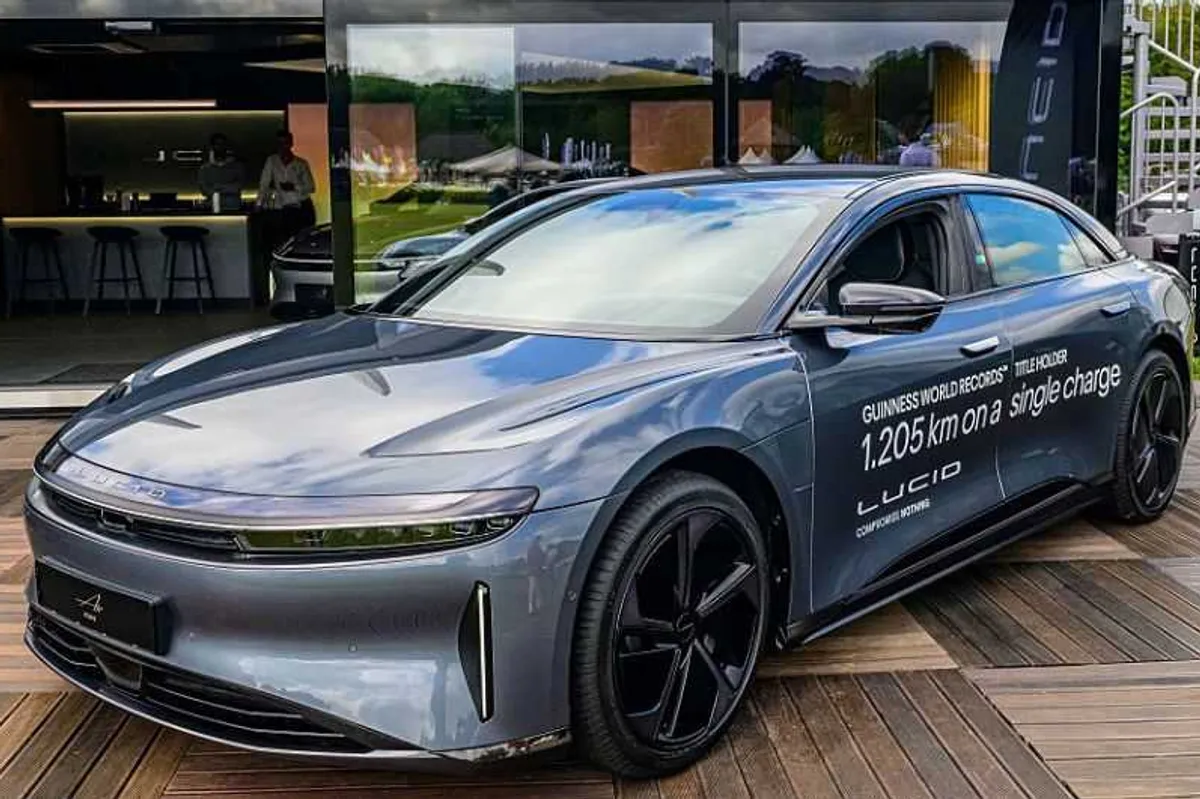
Fake fuel economy has got to go.
That’s the message of a recent decision by the Eighth U.S. Circuit Court of Appeals. Sent to the scrap heap: a Biden-era Department of Energy rule that critics say wildly inflated the fuel economy ratings of EVs — giving them an unfair regulatory advantage over gasoline and hybrid vehicles.
The court’s ruling was clear and direct: Federal agencies cannot manipulate timelines or definitions to advance a policy agenda without proper authorization from Congress.
This is a major correction to how the U.S. government measures vehicle efficiency, with consequences for automakers, consumers, and the future of the EV market.
Efficiency inflation
The case was brought by 13 Republican attorneys general, who argued that the DOE’s formula for calculating EV efficiency was misleading and legally indefensible. The court agreed, ruling that the Biden administration overstepped its authority by continuing to use an outdated, artificial formula that inflated electric vehicle performance under federal fuel economy standards.
At stake is the credibility of how America measures vehicle efficiency — a key driver in regulatory decisions that shape everything from automaker product lines to what cars consumers can buy.
For years, the DOE’s so-called petroleum equivalency factor has been used to translate electric power into miles-per-gallon equivalents. But the formula wasn’t based on realistic energy comparisons. Instead, it massively overstated how far an EV could travel on the energy equivalent of one gallon of gasoline — often rating electric cars above 100 MPGE, regardless of actual energy costs or grid efficiency.
Credits as currency
Rather than immediately fixing this issue, the Biden administration’s DOE planned a slow phase-out of the inflated metric between model years 2027 and 2030. That delay allowed automakers to continue claiming exaggerated efficiency numbers — and collecting fuel economy credits that made it easier to comply with the federal Corporate Average Fuel Economy standards.
Why does that matter? Because those credits act as a form of regulatory currency. A company that racks up credits through high-efficiency vehicles can use them to offset the sale of less efficient models or even sell them to other automakers.
In other words, the inflated EV math didn’t just look better on paper — it saved automakers millions of dollars in potential penalties while giving policymakers a talking point about “historic progress” in fuel efficiency that wasn’t based on real-world performance.
A direct rebuke
In its 3-0 decision, the Eighth Circuit ruled that the DOE had gone beyond its legal bounds. Agencies can’t rewrite laws through policy tweaks, the judges said, even under the guise of “phasing out” old rules. The DOE was required by statute to eliminate the flawed formula entirely — not stretch it over several more years of inflated numbers.
The court’s ruling was clear and direct: Federal agencies cannot manipulate timelines or definitions to advance a policy agenda without proper authorization from Congress.
That’s a significant rebuke not just to the DOE, but to a broader pattern of regulatory overreach that has characterized much of Washington’s EV push.
For the states that brought the lawsuit, the decision represents a major win for transparency, accountability, and consumer protection.
Pivoting on EVs
The implications for automakers are enormous. For years, inflated EV efficiency numbers helped carmakers meet federal fuel economy targets and avoid costly fines. Without that regulatory buffer, the industry will need to adapt quickly.
Automakers may now lose the valuable fuel economy credits they’ve relied on to remain compliant with CAFE standards, forcing them to find new ways to meet efficiency goals. That shift will require genuine engineering improvements — advances in aerodynamics, weight reduction, and hybrid technology — rather than relying on inflated paper-based advantages.
This change could also prompt a broader reassessment of electric vehicle strategy. If the regulatory math no longer tilts in favor of EVs, many manufacturers may slow their rollout plans or diversify their portfolios to include more hybrids and high-efficiency gasoline models.
The timing is significant: EV demand has cooled, dealer inventories are building up, and consumer interest has leveled off. Automakers such as Ford, General Motors, and Volkswagen have already scaled back or delayed certain EV programs in response to slower-than-expected sales and ongoing infrastructure limitations.
RELATED: Sticker shock: Cali EV drivers lose carpool exemption
 Justin Sullivan/Getty Images
Consumer transparency
For everyday drivers, this ruling doesn’t ban EVs — but it brings more honesty to the system.
Consumers deserve accurate information about vehicle efficiency, cost of ownership, and environmental impact. Inflated fuel economy ratings distort that picture, making EVs appear more efficient than they are when accounting for charging losses, battery manufacturing, and electric grid emissions.
Now, car buyers can make more informed choices — whether that’s a hybrid, plug-in hybrid, or traditional gasoline vehicle.
In the long term, this ruling could encourage a broader mix of technology rather than a forced, one-size-fits-all transition to battery electrics.
The fight to come
This case isn’t just about EVs. It’s about how much power federal agencies should have to rewrite laws without Congressional oversight.
For decades, Washington has leaned on regulatory agencies to shape environmental and energy policy — often through complex formulas that most Americans never see. But as the Eighth Circuit emphasized, the ends don’t justify the means.
Even if the goal is cleaner transportation, the process has to respect legal boundaries. When agencies overreach, courts must intervene to restore balance.
This decision reinforces an important principle: Policy must be grounded in law, not ideology. And in a country that values free markets and consumer choice, regulations should enhance transparency, not distort it.
The ruling leaves several key questions unanswered, but it is likely just the beginning of a much larger policy fight. Congress could attempt to step in by rewriting the laws that govern fuel economy standards, giving the DOE clearer authority to define how electric vehicle efficiency is calculated. However, such legislative efforts would almost certainly face significant political gridlock in an already divided Congress.
Much-needed realism
Automakers, meanwhile, are expected to take a hard look at how they allocate their research and development budgets and how they plan future vehicle lineups.
Companies heavily invested in electric vehicles have shifted strategies, focusing more on hybrids, plug-in hybrids, and improved gasoline technologies — especially in markets where EV sales have already shown signs of slowing or flattening.
Finally, the court’s reasoning may open the door to further challenges that could include renewed scrutiny of EPA emissions standards and federal tax credits, both of which critics argue have tilted the market in favor of electric vehicles rather than allowing consumer demand and market forces to guide the transition naturally.
The Eighth Circuit’s decision is a defining moment for the future of American automotive policy. It doesn’t kill the EV market — but it forces it to stand on its own merits.
Electric vehicles have their place in the market, but consumers deserve truthful efficiency data and honest cost comparisons. Inflated numbers and creative accounting don’t serve innovation — they undermine it.
This ruling restores some much-needed realism to the national conversation about the future of mobility. It’s a win for transparency, for accountability, and most importantly, for consumers who want to make decisions based on facts rather than politics.
Can leucovorin cure autism? Meet the moms determined to find out

A humble, decades-old folate compound — used not to fight cancer but to ease the side effects of chemotherapy — has become the latest flashpoint in America’s health wars.
On September 10, the Trump administration announced that the FDA would move toward approving leucovorin for children with cerebral folate deficiency, a rare metabolic disorder linked to autism in some cases. Supporters hailed it as long-overdue recognition of promising small studies; critics called it another example of the MAHA agenda politicizing science.
While bureaucrats and scientists bicker, families with real skin in the game tirelessly run their own experiments and share their results, hoping the science will eventually catch up.
The debate since has been fierce, with professional groups such as the American Academy of Pediatrics advising against the off-label use of leucovorin for autism, warning that the evidence remains preliminary — while prominent physicians call for larger, biomarker-guided trials to confirm what early studies suggest.
A parent’s love
All parties insist their motives are pure, but this latest skirmish is a reminder of how tangled those motives can be. What drives the people and institutions pushing medical science forward is often a sincere desire to help people, yes — mixed in with ambition, rivalry, financial interest, and the unspoken urge to be the one who’s right.
But there’s another force at work here, deeper and simpler, and it tends to override all the rest: a parent’s love for a child.
This is the same love that kept the parents of children with cystic fibrosis pushing to understand a condition doctors considered hopeless, or that led a Hollywood father to resurrect a forgotten epilepsy therapy to help his son. And now it’s the force animating hundreds of parents who believe a decades-old folate compound has literally given their autistic children a voice.
While bureaucrats and scientists bicker, families with real skin in the game tirelessly run their own experiments and share their results, hoping the science will eventually catch up.
Even before the FDA signaled approval of leucovorin for cerebral folate deficiency — a rare metabolic disorder with links to autism — parents have been sharing reports of progress with the drug on Reddit forums and in Facebook groups to share anecdotal reports of progress. A few families have also told their stories in clinic-produced or news-segment videos.
A treatment’s hope
Leucovorin, also called folinic acid, is a bioactive form of folate. It’s been used for decades to “rescue” patients from high-dose chemotherapy. In autism, it’s being repurposed to bypass what some researchers call a “folate transport blockade.”
Up to 70% of autistic children in certain studies test positive for folate receptor alpha autoantibodies — immune proteins that prevent folate from reaching the brain. The result: cerebral folate deficiency. High-dose folinic acid appears to restore that supply, sometimes with striking behavioral effects.
Dr. Richard Frye, a pediatric neurologist at Phoenix Children’s Hospital, led one of the first controlled trials in 2016. His team found improved verbal communication in FRAA-positive children treated with leucovorin. Later case studies described language bursts, better eye contact, and calmer affect.
RELATED: Tylenol fights autism claims, slams proposed FDA warning label as ‘unsupported’ by science
 Photo by ISSAM AHMED/AFP via Getty Images
From ‘no words’ to the Pledge of Allegiance
The parents themselves provide more affecting testimony. Carolyn Connor’s son Mason was 1 when she realized something was amiss: “He wasn’t talking. No language. No words.”
When their pediatrician downplayed this lag in development as typical in boys, she and her husband began doing their own research, which led them to Frye. Three days after starting leucovorin, Mason spoke his first words.
Now 6, he continues to take the medication, and continues to thrive.
Beth Ann Kersse’s daughter was diagnosed with autism at age 3. “In her vocabulary she had about three or four words,” Kersse said in a video uploaded by Washington, D.C.-based Potomac Psychiatry.
“But she didn’t call me ‘Mom.’ She kind of would point at me,” she added.
That’s when Kersse and her husband began exploring leucovorin. Two years later, Kersse describes her almost 5-year-old daughter’s transformation as “incredible.”
“The other day she stood up and put her hand over her heart, and she recited the Pledge of Allegiance, and we were just like, OK … I didn’t know we knew that. … She’s able to have a full conversation; she can tell us how she’s feeling.”
Late last month, Nebraska pediatrician Dr. Phil Boucher posted a case study detailing how a 3.5-year-old autistic girl responded to leucovin treatment, citing texts from her mother reporting that she was “blown away” by the changes she observed:
She is starting to consistently look at people when they call her name. … She’s becoming more interested in her little sister. … She also has started taking some of the baby dolls that we have and has been covering them up with a blanket, giving them a kiss, and saying, “Night night.”
As Boucher is careful to point out, anecdotal success stories like these don’t prove the drug works. But to those experiencing the improvement firsthand, they’re a promising sign that a simple, inexpensive vitamin derivative can do what years of therapy can’t.
And if this promise does indeed bear fruit, leucovorin treatment will be the latest of many homegrown revolutions in medical care spearheaded by determined mothers and fathers unwilling to wait for consensus.
Clothing should be fun

I do a lot of things for work. I take photos, I take videos, I write stories, I write columns, I write about style, and I write about life.
I also help guys dress better. Officially it’s called style advising, but down to brass tacks, it means me helping guys get clothes they are happy with. Helping them get rid of the junk that sits in their closet that they never wear and get into clothes that make them look, and feel, their best.
Exercising creative control in the physical space feels good in a way that’s deeper than exercising the same kind of creativity in the digital space.
It’s one of the most rewarding things I do. I know lots of guys dismiss the importance of clothes, but they do so at their peril. Our clothes really do have a huge impact on our psychological state. They can make us pretty unhappy or pretty happy.
Ready to wear
Does that make us “superficial”? No. It’s an acknowledgment of the fact that what we wear represents who we are to others —and to ourselves. If you aren’t happy with how you present yourself, you aren’t going to be happy with yourself. It’s that simple.
So I take personal satisfaction from watching a guy transform his wardrobe over the course of a year or two. What’s particularly satisfying is observing how his attitude toward clothing changes as he overhauls his closet.
The process usually starts with a pragmatic interest in not looking like a slob. Achieving a baseline presentability eliminates any negative attention slovenly dress attracts. From that point he may start to notice that looking a little more “put together” actually attracts positive attention. And once he starts to experience the fruits of dressing decently in public, he’s ready to start enjoying his clothes.
This means he’s comfortable and confident enough that he no longer sees dressing himself as a test to get “right,” but as an opportunity for personal expression and creativity. Clothes finally become what they’re meant to be: fun.
Or as a client deep into his own wardrobe revamp recently told me, “I’m just blown away by how fun this stuff can get.”
What a difference in attitude and mindset. A realization like that is generally a sign that a certain kind of psychological transformation has been completed.
RELATED: Corduroys: The perfect winter trousers

Making the man
I’m aware that the word “fun” may connote something shallow or frivolous — and in some respects clothing can be both. But the pleasure we derive from clothing also derives from its deeper meaning: the way it reinforces the eternal forms of man and woman, emphasizes our dignity as human beings made in the image of God, and reflects our culture, values, and even religious beliefs.
Remember the pastel cars of the 1950s? It’s hard to believe it, but there was a time when when cars weren’t only black, gray, or white. There was a time when cars were fun. Well, it’s the same thing with clothes. If you really look at the stuff the guys were wearing back in those old movies, they were actually having much more fun than the guy who wears dark jeans, a black T-shirt, and a gray hoodie in 2025. Coming to the final realization that clothes should be fun is actually a kind of returning to tradition.
Creative control
The thoughtfully designed, personal interior of your home feels more welcoming than an airport terminal. A carefully cultivated garden is more beautiful than an expanse of artificial turf. And a well-fitting and harmonious combination of shirt, jacket, and trousers is more flattering than a prison-like monochrome sweatsuit.
There’s also a peculiar psychological benefit to embracing clothes as a domain of fun. Exercising creative control in the physical space feels good in a way that’s deeper than exercising the same kind of creativity it in the digital space.
In our screen-dominant era, the experience of joyfully controlling your personal environment is humanizing and refreshing. It’s good to like how you look and know that you are the one responsible for it. It feels like we are actually doing something rather than just moving pixels around.
Of course, it goes without saying that not all fun is good fun. We know that’s true about all sorts of stuff in life. Many a bad decision sure was fun at the time. So it goes with the temporary thrill of donning stupid neon graphic T-shirts, grotesque Crocs, alien-green sweatpants printed with pizza motifs.
Many men today begin their style journey as overgrown children who have enjoyed this “bad” kind of fun for most of their lives: the dumb T-shirts and the stupid shoes. But then they decide to grow up, and after working through their wardrobe, they come to understand that these classic clothes are not just good for the soul or society. They are fun, and they are the right kind of fun, the kind of fun that edifies and enriches us.
Why spanking a child is not cruel but Christian

I recently read a new book so steeped in self-righteousness that I contemplated watching a few Barack Obama speeches as a palate cleanser.
“The Myth of Good Christian Parenting,” by Marissa Franks Burt and Kelsey Kramer McGinnis, is less a work of theology than a sermon for soft parents — a long sigh bound in paperback. Every page drips with condescension, assuring readers that discipline is outdated, obedience is oppressive, and spanking is somewhere between a sin and a war crime.
Children don’t need friends with car keys. They need moral architects. The parents who fear offending their children will soon be ruled by them.
Their thesis is that corporal punishment has no biblical or moral grounding. Modern parenting should replace the rod with reasoning, the command with conversation. It’s the kind of argument that sounds enlightened until you remember what actual children are like.
RELATED: Blue state punishes Christian parents — but progressive lie crumbles in the process
 D-Keine/iStock/Getty Images
Swat analysis
Children, bless them, are beautiful little anarchists. Left to their own devices, they’d eat cookies for breakfast, lunch, and dinner, go to bed once a month, and discover that the toilet doubles nicely as a Jacuzzi for Legos. They’re not wicked, but they are wild. Civilization begins at the moment a parent says no — and means it. A gentle talk about “boundaries” might work on a golden retriever, but toddlers are not guided missiles of rational thought. They’re tiny tyrants with juice boxes.
That’s why spanking, properly understood, isn’t cruelty but calibration. It reminds a child that choices have consequences, that freedom comes with form. Scripture puts it bluntly: He who spares the rod hates his son. That’s not an endorsement of violence but a defense of reality. Actions have outcomes. Cause meets effect. Love, in its purest form, isn’t permissive; it’s corrective.
Of course, the definition of “violence” has never been more expansive than it is today. Everything is violence now — words, glances, even silence. The modern parent can wound a child simply by saying “no.”
When language is warped like that, meaning vanishes. A light swat becomes indistinguishable from abuse, and firmness becomes indistinguishable from fascism. The result is a generation of parents too frightened of headlines to raise human beings.
What we’ve bred instead are families where authority is on paternity leave and discipline forgot to clock in. Many parents seem desperate to be liked by their children, as if approval were the same as affection. But children don’t need friends with car keys. They need moral architects. The parents who fear offending their children will soon be ruled by them.
The discipline of faith
I was spanked as a boy — not beaten, but spanked. There’s a world of difference. I hated it at the time, naturally. But I can see now that it taught something far bigger than compliance. It taught that love sometimes hurts, that boundaries aren’t barriers but guardrails. My father didn’t enjoy it, but he did it because he believed my soul mattered more than my sulking. And years later, I thank him for it.
Contrast that with the new model — the “gentle parenting” gospel that treats structure as sadism and guidance as grievance. It produces parents negotiating with toddlers like diplomats in Geneva. “Would you like to stop screaming now, sweetheart, or in five minutes?” Meanwhile, the child is scaling the curtains, painting the dog, and testing Newton’s patience.
Spanking, done calmly and rarely, is not about pain but proportion. It communicates that wrong choices carry a cost and that the world won’t rearrange itself to spare your feelings. A child who learns that lesson young grows into an adult who doesn’t need therapy to survive a stern email.
Built on boundaries
The irony is that those now crusading against corporal discipline owe their manners to generations who believed in it. The men and women who built the schools, churches, and laws of the modern West were, without exception, raised in homes where clear boundaries existed. They understood that mercy means nothing without justice and love means little without limits.
None of this means children should live in fear. The Christian view of discipline is inseparable from affection. The same hand that corrects should comfort. The difference between abuse and authority lies in motive. The abuser strikes to dominate; the parent disciplines to direct. The point isn’t punishment but perspective, to shape the will without breaking the spirit.
But today, even perspective is suspect. To say a child is wrong is to commit ideological heresy. Every tantrum is “performance art,” every shriek “a statement.” The modern household has become a democracy of one, and its ruler is 4 years old.
When people hear “spanking,” they imagine red faces and raised voices. But in most Christian homes, it’s quieter — a moment of consequence followed by conversation and reconciliation. It’s the living metaphor of moral cause and effect. Pain passes; lessons remain.
Theology of the tap
A society that forgets that truth doesn’t raise children. If anything, it raises dependents. Kids who mistake correction for cruelty will grow into adults allergic to accountability. They won’t admire their parents’ wisdom; they’ll diagnose it.
There’s nothing barbaric about a well-timed swat on the backside. What’s barbaric is a generation raised without consequences, now stunned to learn that the world still has them.
So no, spanking isn’t the enemy of Christian parenting — it’s one of its oldest allies. It has absolutely nothing to do with humiliation and everything to do with humility.
I read “The Myth of Good Christian Parenting” and discovered the real myth: that you can raise grown-ups without ever acting like one. I hated being spanked when I was six. But watching parents haggle over chores like diplomats and negotiate bedtime like hostage situations, I now consider it an early rescue mission — and, in many ways, an act of mercy.
The left wants to ‘reclaim’ the American flag; did they run out of lighter fluid?

In 2018, I was canvassing for a Republican candidate in a local race here in Portland, Oregon. A bunch of us were knocking on doors in the suburbs, seeking out Republicans by using data printouts that indicated which households were aligned with which party.
But those printouts were not always correct. People had moved. Or there were split households. Sometimes the homeowners had changed parties.
In the early 1900s, the color red was the color of communists, subversives, and anarchists.
As the election grew near and we shifted into maximum efficiency mode, our field boss sent out the word: Only go to houses flying the American flag.
That was the easiest way to focus on the most loyal Republicans. In 2018, the two most common flags you saw at people’s houses were the Pride flag (Democrats) and the Stars and Stripes (Republicans).
(The “We Believe in Science” signs had not yet proliferated.)
The funny thing was, we door-knockers were already doing that. I certainly was. I loved canvassing mostly because I liked meeting people. And the best people were always the ones with a big American flag hanging majestically beside their front door.
That was then, this is now
Fast-forward, and I’m at a recent No Kings protest. These protests had drawn huge crowds of leftists and progressives. I wanted to see for myself what these demonstrations looked like.
Imagine my surprise when the first person I encountered was a small elderly woman with a kind face and a big bundle of American flags.
These were 8″ by 12″ flags. The kind little kids might wave at a parade. She approached me and offered me one.
Naturally, I was confused. Was she a Republican? No, she wasn’t. She explained that these were Democrat flags now. The left was taking the flag back. Progressives were patriotic too!
They were? I thought to myself. Since when?
But I was in enemy territory, so I just smiled and took a flag. She showed me the little note that was attached. (Of course, the left can’t give you an American flag without adding their own anti-Trump commentary.)
The note said: “MAGA is trying to claim the American flag as exclusively their own. It is time we reclaim our flag. It is our national promise of freedom, and rightfully belongs to ALL Americans. Wave it proudly.”
I carried it with me as I watched the Trump derangement parade later that day. Multiple American flags were flown. By leftists.
RELATED: Yes, Trump’s flag-burning executive order is constitutional
 Photo by Chip Somodevilla/Getty Images
The red and the blue
This isn’t the first time the left has tried to steal symbols or images (or flags) from the right. They also stole the color blue.
Throughout Europe, in the 1800s, revolutionaries and malcontents were associated with the color red. Monarchs and aristocrats were represented by the color blue.
In the early 1900s, the color red was the color of communists, subversives, and anarchists. During the Russian Revolution of 1917, “The Reds” overthrew the czar and started a civil war.
In China, when Chairman Mao Zedong instigated his own revolution in 1949, the flag, books, and symbols were always colored bright red.
This made sense. The color red suggests anger, revolt, defiance.
While blue — the color of the sky — is the color that indicates calmness, stability, order.
So what did the American left do as they consolidated their power in the late 1900s?
They switched the colors! With the help of their allies in the media, the left managed to STEAL the color blue from conservatives.
So now we call Republican states “red” and Democratic states “blue,” which is the reverse of what the colors should be.
Never mind that the Democrats are still the party of chaos and upheaval. They wanted the prestige of the color blue. They want people to think of them as rational, calm, regal. So they changed the colors to favor themselves.
Capture the flag!
Regarding this theft of our flag: Does the left think we don’t remember five years ago? During the BLM riots, they were burning the flag all over the country.
In Portland, during the “Summer of 100 Riots,” they burned the flag as a nightly ritual.
Think back even further: The left has been burning the flag since the Vietnam War. It’s one of their most predictable political reactions. If anything happens that they don’t like, the American flag goes up in flames!
And aren’t these the same people who tore down the statues of our founders, who created that flag? Founders like George Washington?
In Portland, leftists toppled a large statue of George Washington. They left the statue right where it fell, with George Washington face down in the mud!
And these people think the American flag belongs to them? That they are now the patriots? That they should be anywhere near our beloved Stars and Stripes?
I don’t think so.
The good news is, it probably won’t work. Even if their strategists decide to embrace the flag, your average Joe anarchist won’t be able to help himself. They see an American flag, and they reach for their lighter.
But either way, we must reject this movement. Don’t let them have the flag. They don’t deserve it. They haven’t earned it. And they don’t love it. Not like we do.
Trump’s SHOCKING 25% truck tariff: A matter of national security?

President Donald Trump’s dropping another tariff on the auto industry.
Starting November 1, the U.S. will impose a 25% tariff on all imported medium- and heavy-duty trucks, a dramatic escalation in the administration’s ongoing effort to strengthen domestic manufacturing and reduce reliance on foreign-built vehicles.
The short-term effects could include delays in vehicle availability, higher fleet costs, and potential retaliation from trading partners.
This announcement sent shockwaves through global trade circles and Wall Street. According to Trump, the decision is rooted in national security and economic strength, not politics. But as with any sweeping trade action, there’s more under the hood than meets the eye.
Priced to move
While celebrating the immediate bump in automaker stock prices following the tariff announcement, Trump’s message was direct. “Mary Barra of General Motors and Bill Ford of Ford Motor Company just called to thank me. … Without tariffs, it would be a hard, long slog for truck and car manufacturers in the United States.”
The president framed the move as a matter of economic sovereignty, arguing that domestic production capacity in critical industries, like heavy vehicles used in logistics, defense, and infrastructure, is essential to national security.
That message resonates with many Americans frustrated by decades of outsourcing and the hollowing out of domestic manufacturing. But it’s also raising concerns among global partners and major U.S. companies with deep supply chain ties abroad.
Winners and losers
The new tariffs target a wide range of vehicles: delivery trucks, garbage trucks, utility vehicles, buses, semis, and vocational heavy trucks.
Manufacturers expected to benefit include Paccar, the parent company of Peterbilt and Kenworth, and Daimler Truck North America, which produces Freightliner vehicles in the U.S. These companies have much to gain from reduced import competition and potentially stronger domestic demand.
However, for companies like Stellantis, which manufactures Ram heavy-duty pickups and commercial vans in Mexico, the impact could be costly.
Under the United States-Mexico-Canada Agreement, trucks assembled in North America can move tariff-free if at least 64% of their content originates within the region. But many manufacturers rely on imported parts and materials, putting them at risk of higher costs and tighter margins.
Mexico, the largest exporter of medium- and heavy-duty trucks to the U.S., will be hit hardest. Imports from Mexico have tripled since 2019, climbing from about 110,000 to 340,000 units annually. Canada, Japan, Germany, and Finland also face new barriers under the 25% tariff.
Industry pushback
Not everyone is excited about the tariffs — especially considering that the import sources for these trucks (Mexico, Canada, and Japan) are long-standing American allies and trading partners.
Industry analysts warn of supply-chain disruptions, potential price increases, and reduced model availability for both commercial fleets and consumers. Tariffs could also pressure U.S. companies to adjust production strategies, increase domestic sourcing, or even pass higher costs on to customers.
RELATED: Hemi tough: Stellantis chooses power over tired EV mandate
 Chicago Tribune/Getty Images
The politics of protectionism
This is not the first time a Trump administration has leaned on tariffs as an economic lever. During his previous term, tariffs on imported steel, aluminum, and Chinese goods aimed to bring manufacturing back to U.S. soil. Supporters argue those policies helped revitalize key industries and encourage job growth. Critics countered that they raised costs for American companies and consumers alike.
Still, there’s no denying that tariffs remain one of Trump’s most powerful economic tools and one of his most politically effective messages. By positioning tariffs as a way to protect American jobs, the policy appeals to workers and manufacturers across the Rust Belt, a region that will play a pivotal role in the upcoming election.
Short-term pain
For the U.S. trucking and logistics sectors, the short-term effects could include delays in vehicle availability, higher fleet costs, and potential retaliation from trading partners.
Truck leasing and rental companies that rely on imported chassis and components may see their operating costs rise. Meanwhile, domestic truck makers could ramp up production, potentially benefiting U.S. suppliers and job growth in states like Ohio, Michigan, and Texas.
The challenge will be whether domestic manufacturers can meet demand quickly enough without triggering inflationary pressures in the commercial transportation market.
Long-term gain?
Trump’s framing of the tariffs as a “national security matter” echoes earlier policies aimed at reducing foreign dependence in critical sectors, from semiconductors to electric vehicles. Advocates say this approach ensures that America can produce what it needs in times of crisis.
But opponents warn that labeling economic measures as “security” issues can backfire, alienating allies and inviting retaliation. European officials and trade negotiators in Canada and Japan are already signaling possible countermeasures if talks with Washington fail to yield exemptions.
Mind the gap
The real question now is how manufacturers will adapt. Companies may accelerate plans to localize assembly and parts production inside the U.S., while foreign brands could seek joint ventures or partnerships with American firms to skirt tariffs.
Consumers and fleets will likely see higher sticker prices for imported trucks and commercial vehicles as tariffs ripple through supply chains. That may also shift more buyers toward U.S.-built models, at least in the short term.
Ultimately, Trump’s move puts America’s industrial policy back in the driver’s seat. Whether it strengthens the economy or creates new trade turbulence will depend on how quickly domestic production can fill the gap left by imports.
President Trump’s 25% truck tariff is a high-stakes bet on American manufacturing dominance. It could fuel a resurgence in U.S. production or ignite new rounds of trade retaliation.
Either way, one thing is certain: The decision has already reshaped the conversation about what it means to build, and buy, American.





