

Category: Opinion & analysis
Illegal drivers, dead Americans — this is what ‘open borders’ really mean

Wherever you’re reading this, your day almost certainly began on an American road. You might have driven your kids to day care, headed to work, or grabbed a coffee. Even cyclists rely on the same system. Those routines rest on one basic assumption: The people operating massive commercial vehicles are trained, vetted, and accountable.
The assumption is disintegrating because the country is still digging out from the chaos of the Biden administration’s border collapse. President Trump is trying to put the pieces back together, but the wreckage didn’t disappear overnight — and we see the consequences on our highways.
America’s highways shouldn’t become another casualty of Washington’s failures. Neither should American workers.
A recent tragedy in Florida makes the point. A 28-year-old man from India made an illegal U-turn on the turnpike and allegedly killed three people. He reportedly entered the United States illegally and still obtained a commercial driver’s license. In California, a 21-year-old — also allegedly in the country illegally — slammed his semi into stopped traffic on Interstate 10, killing three more. Authorities say he crossed the border in 2022 during the peak of the Biden administration’s open-border surge.
These cases aren’t flukes. They reflect a system that stopped taking seriously who gets behind the wheel of an 80,000-pound vehicle.
The incentives run in one direction. The trucking industry faces a driver shortage. Instead of raising wages and restoring what used to be a proud, middle-class profession, too many companies cut corners by hiring illegal labor willing to work for less. That choice endangers families on the highway and robs American truckers of the wages they earned by playing by the rules.
Every illegal driver creates two problems. First, a safety threat to everyone sharing the road. Second, downward pressure on American workers’ earnings. Flood the labor market with illegal labor, and you weaken the people who keep the country moving.
Trucking remains a central pillar of the American economy. Nearly everything in your home arrived on a truck. These jobs once supported families. They now absorb the fallout from policies that ignore the consequences of illegal hiring.
Fixing this requires basic seriousness. That means, at the very least, strict verification, no loopholes, and no more rubber-stamped licenses issued without proof of legal status. And no more pretending that illegal immigration leaves public safety and wages untouched.
 Myung J. Chun/Los Angeles Times via Getty Images
The country depends on trucking. The system works only when drivers are properly trained, thoroughly vetted, and in the country legally. It fails when policymakers encourage shortcuts and lower standards to satisfy an open-border ideology.
This debate isn’t abstract. It’s about safety. It’s about economic fairness. It’s about recognizing that border policy shapes everyday life — including the safety of your morning commute.
America’s highways shouldn’t become another casualty of Washington’s failures. Neither should American workers. Both deserve leaders willing to enforce the rules that keep this country safe and prosperous.
The media just told you their 2026 strategy: ‘Lies, but better!’

Let me explain what the New York Times just did to the Washington Post over Thanksgiving weekend. The Post tried to turn Secretary of War Pete Hegseth into a war criminal for blowing up maritime drug runners. But the attack didn’t gain traction — partly because Republicans are getting better at starving these narratives of oxygen.
So the New York Times read the room, climbed to the top rope, and elbow-dropped its own ideological ally to prevent serious blowback against the propaganda press. The Times wasn’t defending truth. It was defending future lies. The ability to run effective psyops in 2026 was on the line. And when the Times pretends to be an ombudsman, the calculus is always political.
You think sweating out one red-state special election against a hellish candidate who despises her own constituents is bad? Wait until November 2026.
Don’t kid yourself: No ethical journalism happened here. The Times simply concluded, “We will sell no psyop before its time.” They weren’t going to let DataRepublican or Steve Baker rack up millions of views muckraking the Post’s latest collapsing narrative. So the Gray Lady hit the panic button and aborted the mission.
What should we learn from this? The temptation on the right will be to ask why the corporate left-wing press broke ranks on the eve of maybe flipping a Tennessee district Donald Trump won by 22 points to a Democrat who is on tape saying she hates her own city and its constituents.
But that question misses a foundational truth I repeat constantly on my show: Worldview is destiny. And outside the biblical worldview, every worldview boils down to a will to power.
With that hermeneutic, you can see exactly what the Times leaders are doing. They’re thinking far past Tennessee. They’re signaling that they have an entire arsenal of new lies ready to deploy to steal the midterms. It’s that Don Draper meme — hands outstretched, smirking: “Lies … but better!”
Remember: The godless do not have limiting principles. Why wouldn’t they lie if lying helps them capture power? It doesn’t matter whether it’s godless atheism, godless occultism, or godless Islam. Where the one true God is absent, the father of lies dances to a raucous tune. Hell has denominations, too.
But in the biblical worldview, the hallmark of everything is repentance, redemption, and restoration. You know a tree by its fruit. So if you want to discern whether something reflects the kingdom of God or the spirit of the age, the first question isn’t “do I like this person?” or “is this how I would do it?” The first question is: Does it produce repentance, redemption, and restoration?
Look at the Charlie Kirk memorial. Several people spoke whom no one expected to have deep, serious thoughts about Christianity. Yet the event unmistakably pointed people toward repentance, redemption, and restoration. That’s the kingdom of God. Don’t focus on the proxy on the outside. Focus on what God is doing on the inside. That’s the through-line from Genesis to Revelation.
The spirit of the age rejects all of it. It is will to power, front to back. Which means you cannot analyze the opposition the same way you analyze our side.
RELATED: How GOP leadership can turn a midterm gift into a total disaster
 rudall30 via iStock/Getty Images
Sure, Republicans won that Tennessee special election by nine points. But they lost the Nashville precinct — the same place the Democrat said she hated. That’s how cults behave. And that’s why political messaging on the right must account for the environment normie voters live in — the tension between two very different kingdoms vying for their attention.
The normie voter either doesn’t know about those kingdoms or doesn’t care. He just wants what he wants: an economy that boosts his bottom line and border and anti-crime policies that keep him safe. Voters want elections to be about them.
That’s why Hegseth taking out foreign drug traffickers instinctively sounds like a pretty good deal — something even the New York Times could grasp, if only for tactical reasons.
So here’s the math going forward: Leftists can lie all they want — and sometimes lie badly, as we just saw — but the GOP will still lose if it fails to fix the economy and security.
You think sweating out one red-state special election against a hellish candidate who despises her own constituents is bad? Wait until November 2026. With better lies behind her and normie voters feeling betrayed by lukewarm people in power, she — and people like her — will absolutely win.
Turns out that Hegseth’s ‘kill them all’ line was another media invention
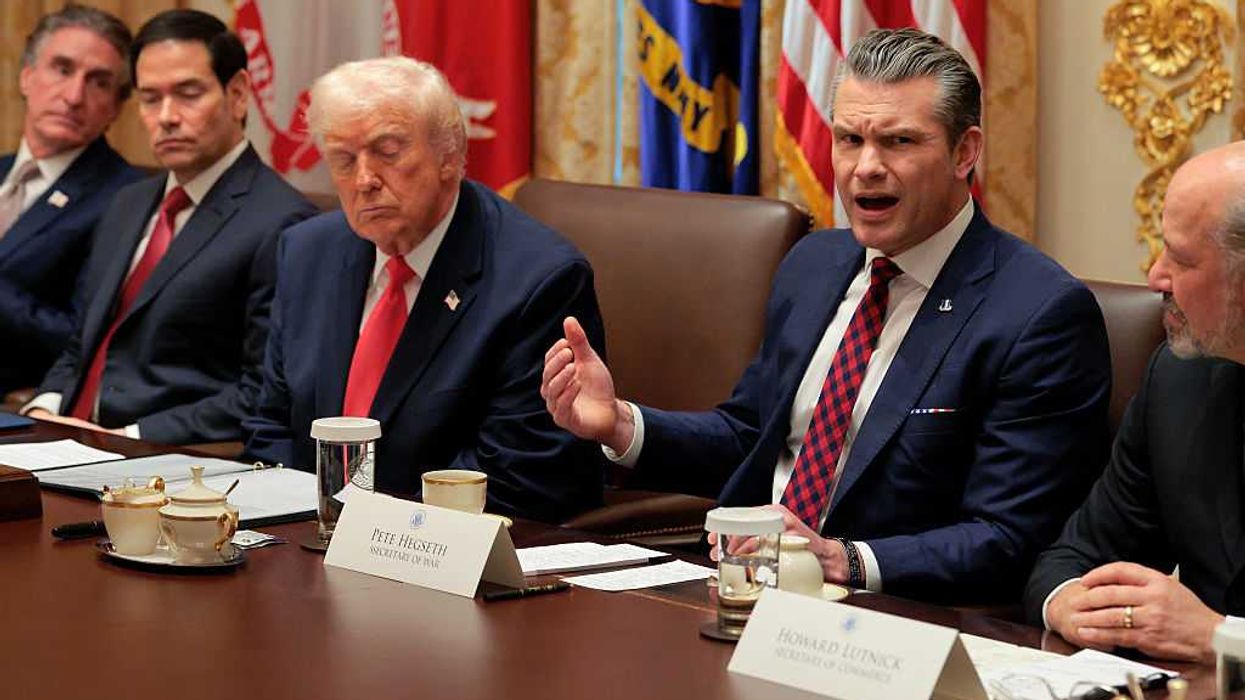
Under his authority as commander in chief, the president can blow up pretty much anybody on Earth whom he deems a national security threat. He does not need permission from Congress, the media, or a panel of self-appointed commentators. The missile strikes on drug-running vessels operated by a designated terrorist group are lawful, routine, and predictable. What made the episode explosive was that it enraged exactly the faction that always reacts this way: the political left.
Impeachment is the only real consequence available to the administration’s critics, and after two failed efforts, that prospect does not keep President Trump awake at night. Republican control of the House makes even a symbolic attempt unlikely.
It is time to put a moratorium on the online laws-of-armed-conflict ‘experts’ who materialize whenever a strike hits a target they sympathize with.
So the disloyal opposition defaults to its remaining weapon: information warfare. Media outlets, activist networks, and hostile bureaucrats have been carpet-bombing the information space with false claims designed to sow dissension among the ranks and mislead the public.
The country needs a president who can act decisively in defense of national security, without media gatekeepers, rogue judges, or partisan lawmakers running armchair military campaigns from the sidelines. The “Seditious Six” tried to undermine the president’s authority and cast doubt on lawful orders. The Washington Post attempted to turn that fiction into fact by quoting anonymous sources with unverifiable claims.
The central allegation is that Secretary of War Pete Hegseth issued an order to “kill everybody” on the vessel. The Post framed it this way: “Defense Secretary Pete Hegseth gave a spoken directive, according to two people with direct knowledge of the operation. ‘The order was to kill everybody.’”
The headline amplified the accusation: “Hegseth order on first Caribbean boat strike, officials say: Kill them all.”
A “spoken directive” means no record. The quote is a paraphrase. Nothing indicates that the source actually heard the Hegseth say those words. This is an anonymous, secondhand characterization of an alleged statement — precisely the sort of raw material the Post loves to inflate into scandal.
Even if the words had been spoken, the context would determine legality. If a commander asks, “How big a bomb do we drop on the enemy location?” and the answer is, “Use one big enough to kill everybody,” that exchange would not be criminal. It is a description of the force required to neutralize a hostile asset.
If these anonymous sources truly believed the secretary issued an illegal order, they were obligated to report it through the chain of command. Their silence speaks louder than any paraphrase. The most plausible explanation is that someone misunderstood — or deliberately distorted — an aggressive statement by Hegseth and nothing more.
The United States targets terrorists. The implication behind the Post’s story is that survivors remained after the first strike and that either the secretary or JSOC ordered a second engagement to kill them. No evidence supports that claim. No one outside the direct participants knows what the surveillance picture showed or what tactical conditions existed immediately after the first blast.
RELATED: White House names names in new ‘media bias tracker’ in wake of ‘seditious’ Democrat video
 Photo by Chip Somodevilla/Getty Images
President Trump stated publicly that Hegseth told him no order was given to kill survivors. The fact that U.S. forces recovered two survivors from the submersible drug vessel undercuts the Post’s narrative even more. Pete Hegseth is far more credible than Alex Horton and the newsroom that elevated this rumor.
It is time to put a moratorium on the online laws-of-armed-conflict “experts” who materialize whenever a strike hits a target they sympathize with. They insist that the presence of wounded combatants instantly transforms a hostile platform into a protected site and that destroying the vessel itself becomes a war crime. Even the New York Times — no friend of the administration — punctured that claim:
According to five U.S. officials … Mr. Hegseth’s directive did not specifically address what should happen if a first missile failed to accomplish all of those things … and his order was not a response to surveillance footage showing that at least two people on the boat survived the first blast.
The mobs demanding Hegseth’s scalp will be disappointed. The voters who supported this administration expected firm action against terrorist cartels and open-ocean drug networks. Another hostile vessel was reduced to an oil slick, and most Americans see that as a success.
Costco attacks the tariff plan that puts America — and Americans — first

Costco is suing the Trump administration.
Yes, Costco. The warehouse temple of middle-class stability where Americans stock their freezers, fill their carts, and feel briefly insulated from the chaos of the broader economy. Costco thrives when the American consumer thrives.
Remember, when faced with a choice between standing with the American worker or protecting the globalist status quo, Costco sided with the status quo.
So why file suit against the administration? The company’s board donated heavily to Democrats in the 2023-2024 cycle, and now its leadership wants its tariff money back. The lawsuit doubles as a political favor and a financial windfall.
In short, Costco refuses to accept the new populist moment.
Fighting the populist tax revolt
Trump’s tariff program funds his most audacious promise: eliminating income taxes for working Americans and issuing a $2,000 tariff “dividend” as early as next year. This would mark the largest direct transfer of economic power to workers in modern history.
Costco wants to stop it.
The company that markets itself as the moral alternative to Walmart now positions itself as the moral critic of tariff-driven tax abolition. For decades, Americans have trusted Costco as the “good” warehouse store — high quality, honest pricing, reliable value. But the rotisserie chicken glow fades fast when the company sues to block a working-class tax cut.
Costco insists its lawsuit is about fairness. Please. It’s all about politics.
Stuck in a pre-Trump mentality
Trump upended the left’s narrative by putting workers — not donors, not multinationals — at the center of national policy. The tariff-funded tax revolution threatens decades of Democratic posturing about “helping the little guy.”
So Costco’s leadership had to intervene.
The company claims it fears a pending Supreme Court ruling that overturns tariffs without refunding the money companies paid. In reality, Costco wants a heads-I-win, tails-I-win scenario.
If tariffs stay, Costco raises prices to recoup costs. If tariffs fall, Costco demands a refund. What it will not do is refund customers who paid higher prices.
Costco argues that tariffs fall under Congress’ taxing authority. A federal circuit court agreed, ruling that tariffs are a core congressional power. That argument never troubled Democrats when they rebranded an Obamacare tax as “not a tax” to shove it through the courts.
When Democrats extract revenue for their political projects, the courts call it progress. When tariffs return money to American workers, Costco calls it unconstitutional.
The truth about taxes
Income tax is the burden of wage earners, not the wealthy. Costco knows it. Democrats know it. Everyone knows it.
The wealthy use capital gains, trusts, foundations, and investment shelters. Eliminating income taxes barely touches them. It liberates the working class — precisely the group Democrats once claimed to defend while quietly shifting their coalition toward illegal aliens and the ever-expanding alphabet of sexual identities.
Trump exposed the contradiction: Democrats talk about workers. Trump delivers for them.
RELATED: Is a tariff a tax?
 Photo by Kevin Carter/Getty Images
Costco chose poorly
Costco’s lawsuit will not collapse its business model. Americans will still buy their bulk salsa, tires, kayaks, paper towels, and of course, the hot-dog combo that has famously resisted inflation for decades.
But they will remember this moment.
When faced with a choice between standing with the American worker or protecting the globalist status quo, Costco sided with the status quo. A company famous for its generous return policy may soon see a return movement of its own as consumers decide they want their tariff-inflated dollars back.
The company’s lawsuit reveals something not so flattering about the “good” big-box store: Liberal elites love talking about helping workers — as long as it never requires losing money for workers.
The Trump tax-and-tariff revolution threatens that arrangement. And Costco’s leadership made its position clear. I’ll still eat their hot dogs after making a few returns and taking a few extra free samples.
Homeowners’ associations weren’t supposed to replace civilization

Homeowners’ associations exploded across America beginning in the 1960s. No one describes HOAs as “popular,” and the horror stories of petty rules and bureaucratic neighbors are legion. Yet more Americans fight for the privilege of buying into them every year. The reason is simple: The HOA is the last legal mechanism Americans have to artificially recreate something the country once produced organically — a high-trust society.
People want neighborhoods where streets feel safe, houses stay maintained, and neighbors behave predictably. We call these places “high trust” because people do not expect those around them to violate basic standards. Doors remain unlocked, kids play outside, and property values rise. Americans once assumed this was the natural condition of ordinary life. It never was.
Everyone complains about HOAs, but they remain the only defense against the chaos modern culture produces.
High-trust societies are not accidental. They emerge only under specific cultural conditions. Trust forms when people can understand and predict the behavior of those around them. That requires a shared standard — how to act, how to maintain property, how to handle conflict. When those standards come from a common way of life, enforcement becomes minimal. People feel free not because they reject limits, but because the limits match their instincts and expectations.
Every social order requires maintenance, but the amount varies. When most residents share the same assumptions, small gestures keep the peace. A disapproving look from Mrs. Smith over an unkempt lawn prompts action. A loud party until 1 a.m. results in lost invitations until the offender corrects the behavior. Police rarely if ever enter the picture. The community polices itself through mutual judgment.
Several preconditions make this coordination possible. Residents must share standards so violations appear obvious. They must feel comfortable addressing those violations without fear of disproportionate or hostile reactions. And they must value the esteem of their neighbors enough to respond to correction. When those conditions collapse, norms collapse with them. As New York learned during the era of broken windows, one act of disorder invites the next.
American culture and government spent the last 60 years destroying those preconditions.
Academics and media stigmatized culturally cohesive neighborhoods, and government policies made them nearly impossible to maintain. Accusations of racism, sexism, or homophobia discourage the subtle social pressure that once corrected behavior. The informal network of mothers supervising neighborhood kids vanished as more women entered the corporate workforce. And as Robert Putnam documented, social trust deteriorates as diversity increases. Residents retreat into isolation, not engagement.
The HOA attempts to reconstruct a high-trust environment under conditions that no longer support it. Ownership, maintenance, and conduct move from cultural consensus to legal contract. Residents with widely different expectations sign binding agreements dictating noise levels, lawn care, parking, paint colors, and countless other micro-regulations. A formal board replaces Mrs. Smith’s frown. Fines replace gentle rebukes. Gates and walls replace the watchful eye of neighborhood moms.
What once came from community now comes from bureaucracy.
With home prices surging, families dedicate larger portions of their wealth to their houses. Few want to gamble on declining property values because their neighborhood slips into disorder. Everyone complains about HOAs, but they remain the only defense against the chaos modern culture produces. People enter hostile, artificial arrangements where neighbors behave like informants rather than partners — because the alternative threatens their largest investment.
RELATED: Do you want Caesar? Because this is how you get Caesar
 Blaze Media Illustration
This analysis is not about suburban frustration. The HOA reveals a far broader truth: Modern America replaced a high-trust society with a trustless system enforced by administrative power.
As cultural diversity rises, the ability of a population to form democratic consensus declines. Without shared standards, people cannot coordinate behavior through social pressure. To replicate the order once produced organically by culture, society must formalize more and more interactions under the judgment of third parties — courts, bureaucracies, and regulatory bodies. The state becomes the referee for disputes communities once handled themselves.
Litigiousness rises, contracts proliferate, and coercion replaces custom. The virtue of the people declines as they lose the skills required to maintain trust with their neighbors. Instead of resolving conflict directly, they appeal to ever-expanding authorities. No one learns how to build trust; they only learn how to report violations.
The HOA problem is not really about homeowners or housing costs. It is a window into how America reorganized itself. A nation once shaped by shared norms and informal enforcement now relies on legalistic frameworks to manage daily life. Americans sense the artificiality, but they see no alternative. They know something fundamental has changed. They know the culture that sustained high-trust communities no longer exists.
The HOA simply makes the loss unavoidable.
How Texas slammed the gate on Big Tech’s censorship stampede

Texas just sent a blunt message to Silicon Valley: You don’t get to censor Texans and then run home to California.
In a world where Big Tech routinely decides who may speak and who must be silenced, Defense Distributed v. YouTube, Google, and Alphabet has become a defining moment in the national fight over digital free expression. The shock isn’t the censorship at issue; it’s the fact that Big Tech — for once — lost.
In a time when Americans are desperate for leaders willing to stand up to media and tech conglomerates, Texas showed what real resolve looks like.
Defense Distributed, a Texas company, committed the unpardonable offense of promoting the constitutional right to keep and bear arms.
Our videos and ads — some of them simply announcing court victories — were throttled, suppressed, or removed by YouTube and Google. None of this surprised us. These platforms built vast empires on controlling information and burying viewpoints that fall outside their ideology.
Texas prepared for this fight
The surprise is that Texas saw this coming and armed itself for the conflict. HB 20 — now Chapter 143A of the Texas Civil Practice and Remedies Code — directly prohibits viewpoint-based censorship by major platforms. The law doesn’t hint, suggest, or politely advise. It states outright: Social media companies may not censor Texans for their viewpoints, and lawsuits brought under this chapter stay in Texas courts no matter what boilerplate corporate contracts say.
So when Defense Distributed filed suit, YouTube and Google reached for their favorite escape route: forum-selection clauses that force nearly every challenger into California courts, where Big Tech enjoys home-field advantage. It’s a delay tactic, a cost-inflation tactic, a shield against accountability — and it almost always works.
But Texas slammed that door shut before they reached it.
No escape
HB 20 doesn’t merely frown on these clauses; it voids them. The statute declares that any attempt to waive its protections violates Texas public policy — public policy the law describes as “of the highest importance.” The legislature anticipated Big Tech’s usual playbook and locked the gates years in advance.
The federal court recognized this. Judge Alan Albright ruled that transferring the case to California would directly undermine Texas’ strong public policy. Under federal law, courts cannot enforce a forum-selection clause that contradicts a state’s deeply rooted interests — especially when the legislature spells those interests out with the clarity found in HB 20.
Silicon Valley does not hear the word “no” very often. Big Tech’s money, influence, and political allies usually clear the path. But in a federal courtroom in the Lone Star State, Texas’ commitment to protecting its citizens from ideological censorship outweighed Silicon Valley’s customary dominance. The court refused to let YouTube and Google drag the case back to California.
The fight stayed in Texas — exactly where the legislature intended.
A national shift and a model for states
The timing matters. Americans now understand that Big Tech can shape elections, suppress dissent, and curate truth itself. HB 20 was mocked by the press, attacked by activists, and targeted by corporate lobbyists from the moment it passed. Yet today, it stands as one of the most potent legal tools in the country’s fight against digital censorship.
HB 20 is no longer just a statute; it is proof that a state with conviction can push back and win.
RELATED: Big Tech CEOs should leave policy to the politicians
 Photo by Win McNamee/Getty Images
This victory is more than a procedural ruling. It affirms that Big Tech’s era of unchallenged authority is not inevitable. Defense Distributed didn’t merely keep our lawsuit in Texas; we preserved the principle that powerful corporations cannot hide their censorship behind “terms of service” fine print.
Texas drew a line in the sand, and — for once — Silicon Valley stopped.
In a time when Americans are desperate for leaders willing to stand up to media and tech conglomerates, Texas showed what real resolve looks like. This ruling promises that citizens still have a fighting chance, that speech still matters, and that even the world’s largest corporations remain subject to the laws of a state determined to defend its people.
We built abundance and lost the thing that matters

We have built a world overflowing with noise, convenience, and endless choice, yet something essential has slipped out of reach. You can sense it in the restless mood of the country, the anxiety among young people who cannot explain why they feel empty, in the angry confusion that dominates our politics.
We have more wealth than any nation in history, but the heart of the culture feels strangely malnourished. Before we can debate debt, or elections, we must confront the reality that we created a world of things, but not a world of purpose.
You cannot survive a crisis you refuse to name, and you cannot rebuild a world whose foundations you no longer understand.
What we are living through is not just economic or political dysfunction. It is the vacuum that appears when a civilization mistakes abundance for meaning.
Modern life is stuffed with everything except what the human soul actually needs. We built systems to make life faster, easier, more efficient — and then wondered why those systems cannot teach our children who they are, why they matter, or what is worth living for.
We tell the next generation to chase success, influence, and wealth, turning childhood into branding. We ask kids what they want to do, not who they want to be. We build a world wired for dopamine rather than dignity, and then we wonder why so many people feel unmoored.
When everything is curated, optimized, and delivered at the push of a button, the question “what is my life for?” gets lost in the static.
The crisis beneath the headlines
It is not just the young who feel this crisis. Every part of our society is straining under the weight of meaninglessness.
Look at the debt cycle — the mathematical fate no civilization has ever escaped once it crosses a threshold that we seem to have already blown by. While ordinary families feel the pressure, our leaders respond with distraction, with denial, or by rewriting the very history that could have warned us.
You cannot survive a crisis you refuse to name, and you cannot rebuild a world whose foundations you no longer understand.
We have entered a cultural moment where the noise is so loud that it drowns out the simplest truths. We are living in a country that no longer knows how to hear itself think.
So people go searching. Some drift toward the false promise of socialism, some toward the empty thrill of rebellion. Some simply check out. When a culture forgets what gives life meaning, it becomes vulnerable to every ideology that offers a quick answer.
The quiet return of meaning
And yet, quietly, something else is happening. Beneath the frustration and cynicism, many Americans are recognizing that meaning does not come from what we own, but from what we honor. It does not rise from success, but from virtue. It does not emerge from noise, but from the small, sacred things that modern life has pushed to the margins — the home, the table, the duty you fulfill, the person you help when no one is watching.
The danger is assuming that this rediscovery happens on its own. It does not.
Reorientation requires intention. It requires rebuilding the habits and virtues that once held us together. It requires telling the truth about our history instead of rewriting it to fit today’s narratives. And it requires acknowledging what has been erased: that meaning is inseparable from God’s presence in a nation’s life.
RELATED: A nation without trust is a nation on borrowed time
 Denis Novikov via iStock/Getty Images
Where renewal begins
We have built a world without stillness, and then we wondered why no one can hear the questions that matter. Those questions remain, whether we acknowledge them or not. They do not disappear just because we drown them in entertainment or noise. They wait for us, and the longer we ignore them, the more disoriented we become.
Meaning is still available. It is found in rebuilding the smallest, most human spaces — the places that cannot be digitized, globalized, or automated. The home. The family. The community.
These are the daily virtues that do not trend on social media but that hold a civilization upright. If we want to repair this country, we begin there, exactly where every durable civilization has always begun: one virtue at a time, one tradition at a time, one generation at a time.
Want more from Glenn Beck? Get Glenn’s FREE email newsletter with his latest insights, top stories, show prep, and more delivered to your inbox.
‘Chatbot Jesus’ is a digital fake — and churches are falling for it
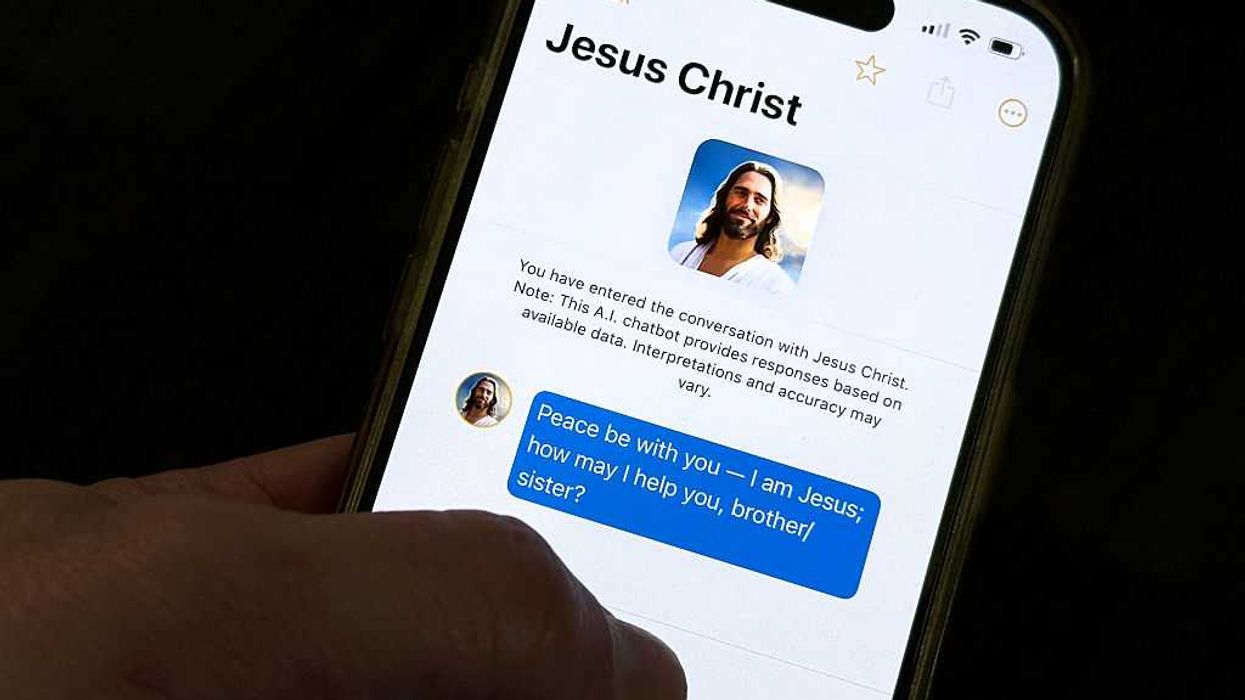
Artificial intelligence now offers “Chatbot Jesus,” personalized prayers, AI-generated sermons, and even virtual pastors charging monthly fees. Some see these tools as a lifeline for shrinking congregations. Others claim they offer new ways to evangelize.
The church must speak plainly: We are not called to relevance. We are called to righteousness. Scripture commands believers to “test all things; hold fast what is good.”
People are not abandoning faith because the church lacks modern technology. They are leaving because they are starving for truth in an age of deception.
Technology itself is neither holy nor wicked. The printing press, radio, livestreaming, and Bible apps have all served ministry. AI that organizes calendars, translates languages, or answers simple questions is just another tool.
Crossing a biblical line
Trouble begins when technology imitates divinity. An app that invites people to “talk with Jesus” steps into territory Scripture reserves for the living God alone. Jesus said, “My sheep hear My voice” (John 10:27). Only the Lord speaks with the authority of Matthew 24:35: “Heaven and earth will pass away, but My words will by no means pass away.”
No chatbot can make that claim.
The danger becomes obvious when apps offer simulated “conversations” with Judas or Satan. God forbids consulting spirits, mediums, or conjured voices (Leviticus 19:31; Deuteronomy 18:10-12). Why would the church encourage digital re-creations of what Scripture calls an abomination?
Convenience or relevance cannot override explicit biblical commands.
You can’t outsource the Holy Spirit
Some pastors now admit they use AI to help write sermons. Others market “avatar” versions of themselves. But ministry has never centered on polished prose. It has always centered on God’s power — His breath, His Spirit, His Word.
Paul wrote, “My message and my preaching were not with wise and persuasive words, but with a demonstration of the Spirit’s power” (1 Corinthians 2:4).
You cannot automate the power of God. You cannot outsource the voice of the Holy Spirit. You cannot download anointing.
A sermon is not literary content to be refined by software. It must be birthed in prayer, wrestled through in Scripture, and delivered in obedience. As Jesus said, “Apart from Me you can do nothing” (John 15:5). That includes preaching.
Tech won’t save us
Axios reported that up to 15,000 churches may close this year and that 29% of Americans now claim no religion. That trend calls for actual spiritual renewal, not AI simulations of Jesus.
People are not abandoning faith because the church lacks modern technology. They are leaving because they are starving for truth in an age of deception. The early church grew because believers “continued steadfastly in the apostles’ doctrine and fellowship … and fear came upon every soul” (Acts 2:42-43). They witnessed repentance, signs, wonders, and transformation — none of which machines can produce.
True revival begins where the early church began: holiness, unity, prayer, obedience, and the power of the Holy Spirit.
A distortion of Christ
False voices proclaiming truth are not new. The only novelty is that they are now automated. The central danger of “AI spirituality” is doctrinal corruption. What sources shape these chatbots? What ideology trains them? If systems learn from shallow teaching or progressive theology divorced from Scripture, they will preach a distorted Christ.
When AI “hallucinates” — and all current systems do — it can hand users outright lies.
Jesus warned, “Beware of false prophets … you will know them by their fruits” (Matthew 7:15-16). Paul warned that if anyone preaches “any other gospel … let him be accursed” (Galatians 1:8). From Genesis onward, the devil has counterfeited God’s voice. AI can and will preach an “other gospel” if it draws from anything other than Scripture.
RELATED: God-tier AI? Why there’s no easy exit from the human condition
 gremlin via iStock/Getty Images
Believers must remain discerning. “Do not be deceived” (1 Corinthians 15:33). “Beware lest anyone cheat you through philosophy and empty deceit” (Colossians 2:8). Those who build their faith on machine-generated counsel risk building a house on sand rather than the Rock (Matthew 7:24-27).
A servant, not a shepherd
Tools can organize schedules and streamline communication. They can assist brainstorming. But preaching, prayer, prophecy, discipleship, deliverance, and counsel belong to the life of the Spirit — not the cold logic of machines.
Technology must remain a servant. It must never become a shepherd. Only the good shepherd, Jesus Christ, leads His people.
Jesus said, “I am the door of the sheep,” “I am the good shepherd,” and “I lay down My life for the sheep” (John 10). No AI pastor and no “Chatbot Jesus” can claim any of that.
Revival will not come from faster processors or stronger large language models. It will come when God’s people “humble themselves,” pray, seek His face, and turn from their wicked ways (2 Chronicles 7:14).
The world does not need a digital imitation of Jesus. It needs the real Jesus — the one who, as Hebrews 13:8 tells us, “is the same yesterday, today, and forever.”
It’s not ‘racist’ to notice Somali fraud

Last week, my colleague Ryan Thorpe and I broke a story about widespread fraud committed by Somalis in Minnesota. Members of the state’s Somali community allegedly participated in complex schemes related to autism services, food programs, and housing, which prosecutors estimate have stolen billions of taxpayer dollars. Even worse, some of the cash has ended up in the hands of Al-Shabaab, a terrorist organization in Somalia.
The story quickly reached the White House. Within days, President Trump announced that he was revoking Temporary Protected Status for all Somali migrants in Minnesota.
Progressives have suggested that our reporting and the subsequent policy change were “racist.” While many of those indicted in these schemes are Somali, these critics argue, the federal government should not hold Minnesota’s Somali community corporately responsible for the actions of individuals.
Little Mogadishu in Minneapolis has a real problem, and it is about time that our government began facing it.
This criticism is superficially appealing, but it isn’t persuasive on closer inspection.
First, a description of the facts should not be measured as “racist or not racist,” but rather as “true or not true.” And in this case, the truth is that numerous members of a relatively small community participated in a scheme that stole billions in taxpayer funds. This is a legitimate consideration for American immigration policy, which is organized around nation of origin and, for more than 30 years, has favorably treated Somalis relative to other groups. It is more than fair to ask whether that policy has served the national interest. The fraud story suggests that the answer is “no.”
Second, the fact that Somalis are black is incidental. If Norwegian immigrants were perpetrating fraud at the same alleged scale and had the same employment and income statistics as Somalis, it would be perfectly reasonable to make the same criticism and enact the same policy response. It would not be “racist” against Norwegians to do so.
Further, Somalis have enormously high unemployment rates, and federal law enforcement has long considered Minneapolis’ Little Mogadishu neighborhood a hot spot for terrorism recruitment. We should condemn that behavior without regard to skin color.
The underlying question — which, until now, Americans have been loath to address directly — is that of different behaviors and outcomes between different groups. Americans tend to avoid this question, rely on euphemisms, and let these distinctions remain implied rather than spoken aloud. Yet it seems increasingly untenable to maintain this Anglo-American courtesy when the left has spent decades insisting that we conceptualize our national life in terms of group identity.
The reality is that different groups have different cultural characteristics. The national culture of Somalia is different from the national culture of Norway. Somalis and Norwegians therefore tend to think differently, behave differently, and organize themselves differently, which leads to different group outcomes. Norwegians in Minnesota behave similarly to Norwegians in Norway; Somalis in Minnesota behave similarly to Somalis in Somalia. Many cultural patterns from Somalia — particularly clan networks, informal economies, and distrust of state institutions — travel with the diaspora and have shown up in Minnesota as well. In the absence of strong assimilation pressures, the fraud networks aren’t so surprising; they reflect the extension of Somali institutional norms into a new environment with weak enforcement and poorly designed incentives.
The beauty of America is that we had a system that thoughtfully balanced individual and group considerations. We recognized that all men, whatever their background, have a natural right to life, liberty, property, and equal treatment under the law. We also recognized that group averages can be a basis for judgment — especially in immigration, where they can help determine which potential immigrant groups are most suitable and advantageous for America.
RELATED: Chip Roy’s immigration blitz hits the lawless left and the squish right
 Photo by Andrew Harnik/Getty Images
These principles are in tension but not in contradiction. As a sociological matter, a policy of equal rights for all individuals will result in unequal outcomes among groups. This is not a sign of injustice per se. It is an inevitability. No two groups are the same, and therefore, no two groups will have the same outcomes in a system of individual liberty and equality.
The firestorm around the Somali fraud story was so intense precisely because it forced this question into the spotlight. For decades, America has given Somali immigrants special privileges through TPS. We have expected Somalis to play by the rules, contribute to the country, and assimilate into the culture. Some individuals have certainly done so, but as the fraud story suggests, many others have not. A rational government would amend its policies accordingly.
We can see the same process playing out in other parts of the world. In the United Kingdom, mass immigration from incompatible cultures is creating a civilizational crisis. Rather than replicate the policies of our sister country, we should accept reality and adopt a more thoughtful policy, which recognizes cultural norms as a reasonable measure of capacity to assimilate and to contribute.
The president should stand firm. Little Mogadishu in Minneapolis has a real problem, and it is about time that our government began facing it.
Editor’s note: This article appeared originally on Substack.
Joe Rogan gets the aliens wrong — and the danger right

Joe Rogan wants the truth — the truth that’s “out there,” the one Mulder and Scully chased for 11 seasons and two movies. According to filmmaker Dan Farah, who visited Rogan’s podcast last week to promote his documentary “The Age of Disclosure,” that moment has arrived. Farah claims to have firsthand testimony from government officials, with “years of receipts,” showing the federal government spent more than $1 trillion trying to reverse-engineer alien technology.
A trillion dollars! That’s enough to fund several more DEI directors at Harvard.
Demonic influence is not a science-fiction plot. It’s a timely warning: Reconcile with God through Christ, the true and only source of wisdom — not ‘from out there,’ but from above.
Farah insists this program involved “thousands of ordinary people,” the kind who sit next to you at your kid’s baseball game. Apparently half of Little League moonlights in Area 51 while parents compare batting averages. You’re just not in the inner circle.
The surprising part? Rogan and Farah talk as if the existence of nonhuman intelligences would be a revelation. They’re eager for someone — anyone — to tell them we’re not alone.
Christians knew
But Christians have never needed the Pentagon’s confirmation. We have always known nonhuman intelligences exist.
Start with God: infinite, eternal, unchangeable mind. All intelligence comes from Him, because unintelligent matter cannot, after any number of billions of years, spontaneously generate intelligent minds. Zero intelligence multiplied forever remains zero.
Then consider the finite nonhuman intelligences scripture describes: angels and demons. No need for wormholes, gray abductions, or Jack Parsons and L. Ron Hubbard attempting to open a Crowleyan portal in Pasadena during the 1940s.
“Close encounters” sound exactly like old accounts of demonic encounters: gray, genderless beings with dark, soulless eyes examining humans in sterile rooms. And for creatures supposedly traveling across eons, their décor could use work. Not a single family photo from last summer’s reunion on Alpha Centauri.
Science breaks the UFO narrative
Yet Rogan and Farah ask us to imagine intelligent beings evolving hundreds of light-years away, building starships, crossing the void, and arriving here to perform intergalactic medical internships while mutilating cattle on the weekends. The story collapses under basic science.
First, the materialist timeline breaks the theory. On the materialist view, the universe hasn’t existed long enough for an advanced civilization to evolve millions of years ahead of us. Life, according to that timeline, barely had enough time to form at all. The standard narrative demands amino acids to mix into proteins struck by lightning, producing a single cell that survives and evolves — a process requiring vast time and even more credulity.
After mocking intelligent design, Richard Dawkins famously speculated that life on earth might have been seeded by aliens from a more advanced civilization. That explanation is still intelligent design, just with extra steps. Where did those aliens come from? An even older alien civilization, of course.
Second, interstellar travel requires absurd time spans. From the nearest star system, the trip would take tens of thousands of years. Wormholes won’t help. They can move particles, not starships. Even if the grays enjoy long lives, this demands millennia of travel with no sign of civilizational collapse, boredom, or mutiny.
Third, space debris makes large spacecraft nearly impossible. Only needle-thin craft could survive without being obliterated by debris. At near-light speeds, even tiny collisions would be catastrophic. Current dreams of laser-sail propulsion can only accelerate gram-scale probes to a fraction of light speed. They cannot carry bodies — especially not the grays of rural Oregon fame.
Once you eliminate the impossible under materialism, what remains?
Start by clearing out hoaxes, attention-seeking stunts, lies, and simple misidentifications. During an ordinary Southwest flight, I once thought I saw the classic cigar-shaped alien vessel Erich von Däniken loves to describe. A slight bank changed the angle of light. It was an American Airlines jet.
What remains looks far more like demonic activity than extraterrestrial biology.
Beware the occult instinct
The strangest feature of UFO mythology is the insistence that these beings are benevolent and wiser than we are. Hence Farah’s claim that the U.S. government spent trillions trying to reverse-engineer their technology. Yet if these creatures were truly advanced and benevolent, why make us run a trillion-dollar scavenger hunt? Why not offer the owner’s manual? Strange manners for enlightened space travelers.
This is where the old religious instinct surfaces. The script about “inter-dimensional watchers” helping humanity tracks perfectly with occult traditions. Talk about portals for nonhuman intelligences is simply updated language for communicating with demons.
RELATED: Pentagon psyop exposed: Military reportedly cooked up tales of alien technology in weapons cover-up
 Jacob Wackerhausen via iStock/Getty Images
Humans have chased that temptation since the beginning. Scripture alone forbids contacting spirits. Every other religion, philosophy, and esoteric school has sought “nonhuman intelligences” for hidden wisdom. The Bible warns this practice is idolatrous and dangerous because these spirits are malevolent, rebellious, and deceptive.
Eden sets the pattern: The serpent cast doubt on God’s word and promised greater wisdom. Humanity has listened to similar offers ever since.
Modern UFO mythology blends effortlessly with New Age fantasies about “ascended masters” and “star beings.” They promise secret knowledge, cosmic clubs, and spiritual advancement — with a credit card bonus of 50,000 light-year miles after your first payment.
Should we be surprised that governments attempt to communicate with “nonhuman intelligences”? Ancient Babylon, Egypt, and Canaan tried the same. The New Testament describes demoniacs opposing the gospel. And modern reports often note that alien encounters stop when the name of Christ is invoked. Demons flee; extraterrestrials supposedly mastering physics do not.
Angels obey God’s commands. They don’t stage UFO conferences or probe farmers after midnight.
The real disclosure we need
Joe Rogan has shown increased interest in Christianity in recent months. Yet he also loves to describe DMT trips in which he meets “nonhuman intelligences” promising hidden wisdom. He wonders if government officials meet the same beings. His soul sits at the center of a very old conflict.
Demonic influence is not a science-fiction plot. It’s a timely warning: Reconcile with God through Christ, the true and only source of wisdom — not “from out there,” but from above. God reveals His way plainly. No secrets required.





