

Category: Opinion & analysis
China is arming itself with minerals America refuses to mine

The global energy system is buckling under the weight of its own contradictions. Electricity demand keeps rising, yet policymakers insist that renewables alone can carry the load. Artificial intelligence, electric vehicles, and a wave of reindustrialization are driving consumption far faster than today’s grid can support. Nowhere is that tension more visible than in the United States, where soaring demand collides with aging infrastructure and unrealistic clean-energy mandates.
America stands at a crossroads. One path deepens dependence on foreign supply chains dominated by China. The other rebuilds domestic energy strength, restores industrial capacity, and creates high-wage jobs. The question isn’t whether a green transition will happen — it is who will own the minerals, the infrastructure, and the economic power behind it.
Energy dominance is not a slogan. It is the practical foundation of American greatness.
Electricity demand jumped nearly 4% in 2024, almost double the decade’s average. Data centers, electrified transport, and manufacturing growth are reshaping the energy landscape. The International Energy Agency projects global data-center power use will more than double by 2030, approaching 1,000 terawatt-hours. In the U.S., these facilities alone could soon account for 10% of national consumption.
Without major investment in reliable, affordable energy, this surge will strain the grid and weaken American competitiveness.
We have already seen the danger of relying on foreign suppliers. While Western governments debated climate rhetoric, China quietly secured control over the minerals the modern economy runs on — lithium, nickel, cobalt, graphite, and rare-earths. Beijing now refines more than 70% of the global supply.
These materials aren’t optional. They are the foundation of EV batteries, grid storage, wind turbines, solar panels, and the defense systems that protect U.S. interests. Allowing China to dominate them puts both the economy and national security in a vulnerable position.
President Trump recognized that threat early. His energy-dominance agenda expanded domestic production, cut regulatory barriers, and revived investment in mining and industrial infrastructure. That legacy now forms the basis for a renewed push to bring extraction, processing, and refining back to U.S. soil.
The economic impact is substantial. Every new lithium mine, copper refinery, or processing plant means high-wage jobs, stronger rural communities, and a revived manufacturing base.
Private enterprise is already moving faster than any government program. BGN International — one of the world’s most dynamic energy and commodities firms — has expanded its American operations in liquefied natural gas and liquefied petroleum gas, the fuels that underpin grid reliability. BGN is also moving aggressively into critical minerals, supplying copper, aluminum, and rare-earth elements essential for the grid, clean-energy systems, and the emerging AI economy.
By linking American producers to global demand, BGN strengthens domestic supply chains and ensures that the value stays in the United States.
Meanwhile, Energy Transfer continues to expand its network of pipelines and terminals that move oil, natural gas, and the feedstocks needed for mineral processing and clean-tech manufacturing. Together, companies like Energy Transfer and BGN form the quiet engine of America’s comeback — building the infrastructure that powers the future, from LNG terminals to mineral-supply hubs in the Midwest.
This is what a real energy transition looks like: not offshoring, not dependence, but American innovation paired with American resources and American workers. The shift to cleaner energy can either hollow out the country or rebuild it. The difference lies in where we source, refine, and transport the materials that make it possible.
RELATED: ‘Reminiscent of the Manhattan Project’: Trump administration launches massive next-gen AI program
 Nelson Ching/Bloomberg via Getty Images
Every ton of copper or rare-earth minerals refined at home is another step toward energy security — and another paycheck for an American worker.
America’s shale reserves, its underdeveloped mineral deposits, and its unmatched private-sector capacity give it every advantage in this new industrial age. What the country needs is leadership that understands the link between energy independence, manufacturing strength, and national power.
By investing in the fuels, minerals, and infrastructure that keep the lights on and the factories running, the United States can secure both its prosperity and its freedom.
Energy dominance is not a slogan. It is the practical foundation of American greatness. The world is entering an era in which whoever controls energy and critical-mineral supply chains controls the global economy. By unleashing its entrepreneurs and trusting its workers, America can lead that era on its own terms.
The next American century will not be powered by dependence or bureaucratic mandates but by free enterprise, industrial competence, and the spirit of self-reliance. Critical minerals and energy independence are not merely economic issues. They are matters of national pride, national security, and American leadership.
The campus left’s diversity scam exposed in 30 seconds flat

Anyone who attends a university event, browses a college website, or strolls through a city park has likely heard a Native American land acknowledgment. These statements now function as the incense of the modern academy — burned at the start of a ceremony, meant to signal moral clarity, and producing the intellectual equivalent of secondhand smoke.
Arizona State University, where I teach philosophy, posts these statements on the webpages of the Sandra Day O’Connor College of Law and the Hayden Library. The library even affirms that “we are on Akimel O’odham land, and that always needs to be at the forefront of our thinking.”
Pluralism, the real kind, permits disagreement and debate. What we have now resembles stage-managed pluralism: You read the script you are handed, or you stay quiet.
The implication is clear: U.S. sovereignty becomes an open question. That is the point. These acknowledgments aim to “problematize” the legitimacy of the United States, a central goal of the academic decolonization movement.
For six years, ASU’s New College has required faculty to listen to one at the start of every meeting.
A harmless ritual? A gesture of respect? A symbolic nod?
I wondered the same — until I conducted a small experiment.
A revealing reaction
At last week’s New College faculty meeting — a meeting of state employees conducting public business — I asked a straightforward question.
“Given our commitment to diversity, may I also read a land acknowledgment of my own before each meeting?”
My acknowledgment was not provocative. It thanked the generations of settlers, farmers, builders, capitalists, and families who transformed the Salt River Valley into a place capable of supporting a world-class university. It affirmed that we serve all students and help them prosper.
I made a motion.
Discussion required only a second. Not approval. Not endorsement. Only a willingness to debate the proposal.
Not one person seconded it.
I did not ask colleagues to agree with my acknowledgment. I asked only to read it. In fact, I would gladly see everyone read their own. Let every faculty member present a statement, a grievance, or a cause they feel compelled to highlight. Why limit the practice to one perspective?
Yet the official record now shows that not one faculty member at ASU’s New College would second a motion to expand diversity.
Appearance vs. reality
The episode highlights a distinction philosophy once taught clearly — the distinction between appearance and reality. Faculty preach diversity in language that collapses into ideological uniformity. Many cannot describe a competing view without reducing it to a script: oppressed versus oppressor. Anyone who falls outside their categories becomes a threat.
My request challenged the boundaries of that framework. To the decolonization mindset, my acknowledgment represents the wrong category — heritage tied to “settler guilt” or “oppressor identity.” The ideology cannot imagine anything beyond that narrow frame.
Pluralism, the real kind, permits disagreement and debate. What we have now resembles stage-managed pluralism: You read the script you are handed, or you stay quiet.
The academic left rose to influence by praising inclusivity and toleration. Once in power, it exempts itself from those principles because tolerance, in its view, cannot extend to anyone labeled “bigot” and inclusion cannot extend to anyone lumped into the category “fascist.” Only the Marxist dialectic survives the screening.
The ideology behind the script
Some readers may think these acknowledgments amount to harmless gestures. They are not. They originate in decolonization theory, rooted in works like Eve Tuck and K. Wayne Yang’s “Decolonization Is Not a Metaphor,” which defines decolonization as the overturning of settler society. Practitioners describe their own project as Marxist; that is the label they choose.
Land acknowledgments do not describe history; they advance ideology. They treat land as permanently tied to racial or ethnic groups, a “blood and soil” logic the same theorists claim to reject. They question private property, Western legal concepts, and American national legitimacy.
Seen through that lens, the reaction to my request becomes predictable. The ideological system divides the world into oppressed and oppressor. My acknowledgment, in their view, inserts the “oppressor” and threatens the narrative.
Hypocrisy becomes impossible to miss. Faculty who go along to avoid conflict now face an uncomfortable truth: The ideology they tolerate openly rejects the pluralism a university claims to defend.
RELATED: Antifa burns, the media spin, and truth takes the hits
 Photo by: Spencer Jones/GHI/UCG/Universal Images Group via Getty Images
Academic reasoning is out
One hopes university professors — presumably trained to evaluate arguments — could step outside ideological commitments long enough to examine their assumptions. The job once required that. But critical theory, as taught in many departments, closes off that possibility. It demands that every fact, dispute, or policy fit into a predetermined narrative of oppression.
Herbert Marcuse, in “One-Dimensional Man,” argued that intellectuals must not describe reality as it is but reshape society toward liberation from capitalism and Christian tradition. That approach leaves little room for honest debate.
The real remedy
Critical theory teaches that man is a victim of systems and structures. Scripture teaches that man is a sinner in need of redemption. Marxist theorists believe society must be remade. Christians believe the heart must be reborn.
Jesus told Nicodemus, “You must be born again” — a direct claim about the human condition. Our deepest problem is not a defective system but a corrupted heart. No bureaucratic revolution can fix that. Ideologies that promise liberation from greed or power often create something worse when handed authority.
The human dilemma runs deeper than political structures, and the solution rises higher than any academic program. Here is the acknowledgment I would like to hear at our university: “For God so loved the world, that he gave his only Son, that whoever believes in him should not perish but have eternal life.”
Blue cities reject law, reject order — and reject America

Allow me to shock some of my readers by declaring my opposition to President Trump’s plan to send the National Guard into crime-ridden cities. My objection has nothing to do with constitutional authority. Having studied the matter, I believe the president does, in fact, have the power to deploy federal forces to address rising urban crime.
History also shows such interventions can work. The drop in violence in Washington, D.C., after federal forces arrived to restore order is evidence enough.
If residents wanted leaders who took crime seriously, they would vote for them. Their refusal to do so exposes their political priorities.
I also concede that a case can be made for this step in the District of Columbia. Washington is under congressional jurisdiction, and the president, operating within that framework, has made the city safer for residents, political leaders, and foreign visitors. The mayor has even expressed appreciation for the assistance, although the District’s electorate — heavily black, heavily Democratic, and deeply hostile to the administration — continues to seethe at the very idea of federal involvement.
And for the record, the president is entirely justified in directing Immigration and Customs Enforcement to pursue illegal aliens with criminal records. These offenders have no right to remain in the United States, and the Democratic effort to preserve them as foot soldiers for the party is as cynical as it is transparent. The administration deserves credit for removing these “high-value” assets from the Democratic client network.
Ungrateful, unwanted
My problem arises with Trump’s call for federal intervention in cities where the local government — and most of the population — passionately opposes it. Even if the president can deploy the National Guard without a governor’s approval, prudence suggests he shouldn’t.
I can think of few officials more odious than Illinois Gov. JB Pritzker (D) or Chicago Mayor Brandon Johnson (D). Yet both remain far more popular in their city than Trump or the GOP. Johnson’s approval is collapsing, but it is almost certain that whoever succeeds him will be another black or Hispanic Democrat who wins votes by railing against our supposedly “fascist” president.
Residents of Chicago’s most violent neighborhoods express emphatic disapproval of Trump’s plan. These are people who live amid constant danger yet habitually vote for leftist mayoral candidates. The same pattern holds in Portland, Charlotte, St. Louis, and Baltimore — cities Trump proposes to “liberate” with federal intervention.
Voters chose this
I cannot imagine why Trump should insert himself where voters clearly do not want him.
If residents wanted leaders who took crime seriously, they would vote for them. Their refusal to do so exposes their political priorities. I consider those priorities misguided and even self-destructive, but it is absurd to claim “the people are demanding” help when most are vocally rejecting it.
Voters should be allowed to live under the governments they choose. If they wanted different policies, they would stop electing Democrats who call for defunding the police, eliminating bail, and condemning crime prevention as racist. Despite the Fox News narrative, minorities who vote this way are not “victims” of Democratic manipulation. That idea is as fanciful as the GOP refrain that today’s Democratic Party is simply the slaveholding party of the 1830s. Voters who elect leftist Democrats are not trapped. They are expressing, clearly, the type of society they want.
RELATED: ‘He’s not that smart’: Homan lampoons Chicago mayor for pleading with UN to intervene against ICE
 Photo by Scott Olson/Getty Images
The vote that counts most
Ben Shapiro recently said something that rattled some listeners but which I find eminently defensible: If you abhor the politics of the place where you live, move. He followed his own advice, leaving deep-blue California for increasingly red Florida. Some interpret this as a call to uproot families and abandon long-standing communities.
But what exactly is the alternative? Should the federal government override election results because a city or state radicalized itself? Should Trump nullify votes? That will not happen. Nor can we easily disenfranchise those who lawfully exercise the franchise and continue electing the mayors, prosecutors, and governors responsible for our collapsing urban order.
Those who reject the leftist agenda retain one real option: vote with their feet. This path frees citizens from majorities who have democratically chosen anarcho-tyranny — not only for themselves but for everyone else who lives under their jurisdiction.
If a community insists on preserving violent disorder, permissive prosecutors, and ideological governance, the federal government cannot save them from themselves. Only the voters can. And until they do, they deserve the government they support.
Chip Roy’s immigration blitz hits the lawless left and the squish right
Let’s face it: Republicans are staring at a wipeout in the midterm elections. The economy is battered, GOP leadership looks unfocused, and swing voters show signs of fatigue with the endless drama surrounding Trump. The trend lines point in one direction.
But another truth sits alongside it: Republican voters still want a reason to show up. The base will not match the left’s turnout intensity unless the party gives them a fight worth having. And no issue energizes the conservative electorate more than immigration. If Republicans intend to use their remaining political capital, this is where to use it.
At a minimum, Trump should return to his original 2015 promise: Pause immigration and restore sanity to a system voters believe is broken beyond recognition.
Last week, Rep. Chip Roy (R-Texas) introduced exactly that fight.
What the PAUSE Act does
Roy’s PAUSE Act freezes all legal immigration — except temporary tourist admissions — until the federal government establishes permanent enforcement against illegal entry and against categories of immigration voters have opposed for years. The bill sets clear conditions for lifting the moratorium.
- Reversing Plyler v. Doe, allowing states and localities to deny illegal aliens access to public schools.
- Reforming birthright citizenship so that minors receive citizenship only when at least one parent is a U.S. citizen or green card holder.
- Ending chain migration and the diversity visa program; limiting entries to spouses and unmarried minor children; ending extended-family preference categories.
- Prohibiting the entry of Sharia-law adherents, Chinese Communist Party members, known or suspected terrorists, and members of foreign terrorist organizations.
- Barring noncitizens from accessing means-tested federal benefits such as SNAP, SSI, TANF, Medicaid, Medicare, WIC, federal student loans, and public housing.
- Ending adjustment of status for H-1B visa holders and abolishing the unconstitutional optional practical training program that displaces American tech workers.
The bill accomplishes all of this in fewer than 10 pages. Original co-sponsors include Reps. Keith Self (R-Texas), Brandon Gill (R-Texas), Andy Biggs (R-Ariz.), Lauren Boebert (R-Colo.), Eli Crane (R-Ariz.), and Andy Ogles (R-Tenn.).
A long-delayed agenda
Conservatives have pushed these reforms for nearly two decades. Some ideas surfaced in the Trump years through executive actions, but courts blocked several and entrenched others — especially anchor-baby citizenship and taxpayer-funded K-12 education for illegal aliens.
Other essential reforms, such as ending optional practical training, halting visas from China, or barring Sharia-law adherents, were never attempted.
RELATED: Trump can’t call it ‘mission accomplished’ yet
 Photo by Anna Moneymaker/Getty Images
The genius of Roy’s bill is simple: It creates a standing incentive for courts, presidents, and future Congresses. If judges want legal immigration to continue, they must revisit the policies that created the crisis in the first place.
Staring at political reality
If Trump focused his attention on this bill — and forced congressional Republicans to choose — he could unite conservatives heading into primary season. A transformational immigration fight would energize GOP voters at a moment when the party shows weakness across the map.
Democrats have over-performed by an average of 15 points in recent special elections. That surge alarmed Republicans enough that they pulled Rep. Elise Stefanik (R-N.Y.) from consideration for U.N. ambassador for fear of losing her district, which Trump carried by 15 points. Democrats are now pouring money into Tennessee’s 7th Congressional District, which Trump carried by 20. A party that cannot defend safe seats is a party in trouble.
If Republicans can’t win in red America during a bad economy, it’s not because voters demand new talking points. It’s because the party has failed to deliver on the core issues that animate its base.
RELATED: The right must choose: Fight the real war, or cosplay revolution online
 wildpixel via iStock/Getty Images
The choice ahead
Trump could offer a fresh economic vision or finally follow through on repealing Obamacare. But at a minimum, he should return to his original 2015 promise: Pause immigration and restore sanity to a system voters believe is broken beyond recognition.
The window is closing. If Republicans refuse to use the power they still possess, they will lose it — not gradually, but suddenly.
The PAUSE Act gives them a chance to reverse that trajectory. The question is whether they will take it.
Trump faces drugmakers that treat sick Americans like ATMs
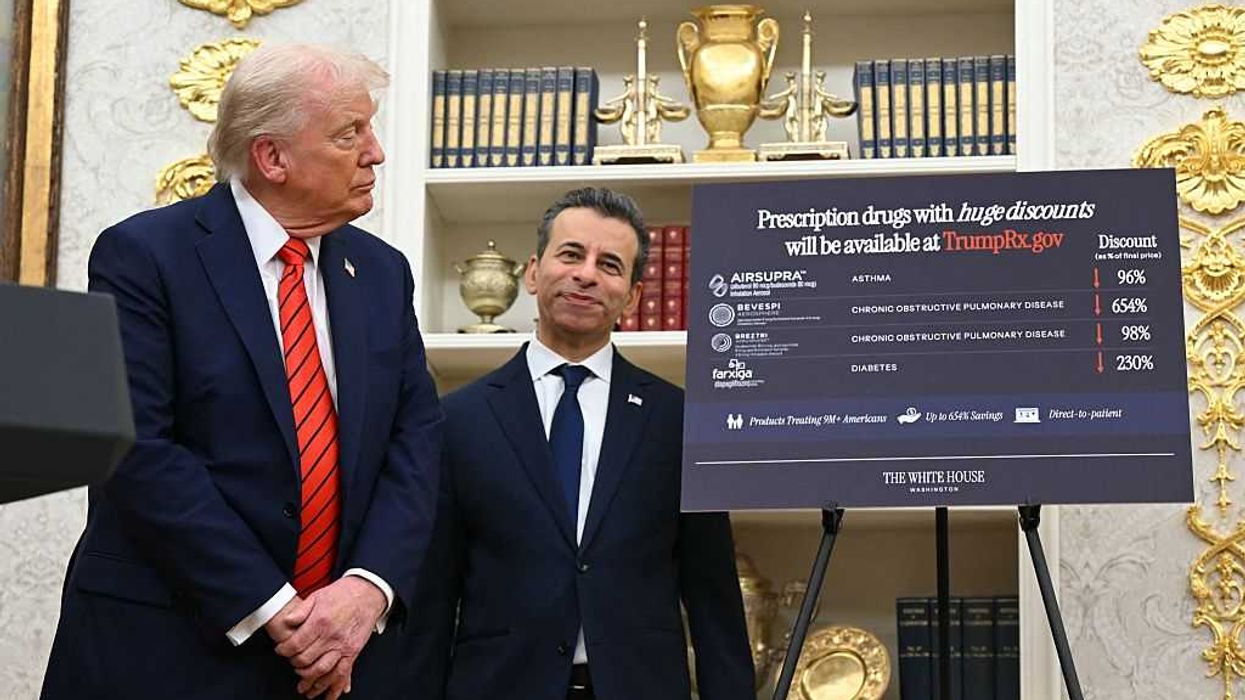
President Donald Trump struck a second deal last month with the world’s largest drugmakers, promising lower costs for American patients. The industry claims cooperation, offering help for consumers and expanded domestic production. Yet those same companies have raised prices on nearly 700 prescription drugs since January.
Big Pharma hopes the most unconventional president will fall back on the most conventional policy: granting the largest firms regulatory advantages, taxpayer-funded promotion, and freedom to keep ratcheting prices upward.
Trump should expose the game Big Pharma has played for years and force the industry to compete in a real marketplace.
Trump’s instincts are right. Americans pay inflated prices, and he has confronted the industry’s excesses. But Big Pharma spent decades building cartel-level dominance. Few industries mastered regulatory capture more effectively. The pharma industry wins higher prices while concealing the system that keeps costs rising.
The industry’s tactics follow a predictable pattern. With its right hand, Big Pharma announces a partnership with the White House. With its left, it secures guaranteed government contracts, political protection, and federally promoted products. Independent analysts warn that rebate schemes encourage price hikes. The dynamic mirrors a retailer inflating list prices before Black Friday to create the illusion of deep discounts.
The federal government helps tip the scales. Regulatory frameworks favor the largest drugmakers and block smaller competitors, keeping profits high and patients in the dark.
Patients pay the price
What the industry calls reform resembles a shell game that protects profits and punishes patients. The Food and Drug Administration created an “accelerated approval” pathway to speed lifesaving treatments. In practice, the system advantages the largest corporations. A 2020 study found that increases in FDA regulations boosted sales for major firms while cutting sales for smaller companies by 2.2%. Smaller manufacturers cannot absorb substantial compliance costs, which means cheaper or more effective drugs never reach the market or arrive years late.
Patients pay the price. Follow-up studies for expedited approvals lag for years, and many drugs never show clear benefits. Harvard researchers found that nearly half of cancer drugs granted accelerated approval fail to improve survival or quality of life. The FDA withdrew one in four such drugs and confirmed substantial benefit for only 12% of the rest. The drugs generated revenue, but they offered little hope to patients who paid dearly for treatments that did not deliver.
RELATED: The hidden hospital scam driving up drug prices, coming to a state near you
 Deagreez via iStock/Getty Images
Meanwhile, prices keep climbing. Since Trump left office after his first term, cancer drug prices rose faster than Biden-era inflation. Median list prices for new medicines more than doubled between 2021 and 2024, surpassing $300,000 a year. In 2023 alone, drug companies raised prices by 35%. The Rand Corporation found that Americans spent more than $600 billion on prescriptions in 2022 — almost triple what patients in other developed nations pay.
Competition, not cronyism
Families facing cancer now shoulder thousands more out of pocket while Big Pharma posts record profits. Trump deserves credit for recognizing how unfair practices and Democrat policies pushed drug costs beyond the reach of average households.
A better path is within reach. Real reform depends on competition rather than political connections. Trump can break the illusion by opening the market, lowering barriers to entry, and cutting regulatory burdens that keep smaller firms out. He should expose the game Big Pharma has played for years and force the industry to compete in a real marketplace.
How the Senate’s phony ‘deliberation’ crushes working Americans
The United States Senate is broken, and most Americans know it — including President Donald Trump. A chamber that once passed laws with a simple 51-vote majority, a practice that held for more than a century, now demands 60 votes for nearly anything of consequence.
Defenders call this the “world’s greatest deliberative body,” guarding minority rights. In reality, the 60-vote threshold is a rule the Senate invented in the last century — and one it can discard tomorrow.
The filibuster transformed from a test of stamina into a tool for avoiding hard votes — and, today, a convenient excuse to delay or kill the America First agenda.
Article I lists exactly seven situations that require a supermajority: overriding vetoes, ratifying treaties, convicting in impeachment, expelling members, proposing constitutional amendments, and two obscure quorum rules. Passing ordinary legislation is not on the list.
The Senate’s tradition of unlimited debate — the seed of modern filibusters — wasn’t designed to create a supermajority requirement. It was an accident.
In 1806, on Aaron Burr’s suggestion that the Senate rulebook was cluttered, the chamber deleted the “previous question” motion, the mechanism the House still uses to end debate and vote. No one understood the implications at the time. Filibusters didn’t appear until the 1830s, and even then they were rare because they required real endurance. Senators had to speak nonstop, often for days, until they collapsed or yielded.
How the filibuster became a weapon
Everything changed in 1917. After 11 anti-war senators filibustered Woodrow Wilson’s bill to arm merchant ships on the eve of World War I, the public revolted. Wilson demanded action. The Senate responded by creating Rule XXII — the first cloture rule — allowing two-thirds of senators to end debate.
Instead of restraining obstruction, the rule supercharged it. For the first time, a minority didn’t need to speak until exhaustion. They only needed to threaten it. The majority now had to assemble a supermajority to progress.
The filibuster transformed from a test of stamina into a tool for avoiding hard votes — and, today, a convenient excuse to delay or kill the America First agenda.
The Senate has rewritten its filibuster rule many times since. In 1975, it lowered the cloture threshold from two-thirds to three-fifths (60 votes). In 2013, Democrats eliminated the filibuster for most presidential nominees; in 2017, Republicans applied that same exception to Supreme Court justices.
These changes all point to the same reality: The filibuster is not a sacred tradition. It is a standing rule, created and amended by simple-majority votes. The Senate can change it again any time.
The myth of ‘unprecedented change’
Filibuster defenders insist that ending the 60-vote rule would be radical.
It wouldn’t. In reality, it would restore the practice that governed the Senate for its first 128 years — unlimited debate, yes, but no supermajority threshold for passing laws.
RELATED: Democrats reject ‘current policy’ — unless it pays their base
 DOUGBERRY via iStock/Getty Images
Defenders also claim the filibuster forces compromise. History says otherwise. The biggest legislative achievements of the last century — Social Security, the Civil Rights Act, the Tax Cuts and Jobs Act — all passed when the filibuster was weakened, bypassed, or irrelevant.
What we have now is not deliberation. It is paralysis: a rule that allows 41 senators, representing as little as 11% of the country, to veto the will of the rest. The Senate already protects small states through equal representation and long tenures. Adding a 60-vote requirement for routine governance is not what the framers intended.
The fix
The solution is straightforward. The Senate can return to simple-majority voting for legislation. It can keep unlimited debate if it wishes — but require a real talking filibuster that ends when the minority runs out of arguments or public patience. Or it can leave the system as it is now and watch President Trump’s America First agenda stall for another generation.
The filibuster is not a 230-year constitutional safeguard. It is a 108-year experiment born in 1917 — and it has failed. The Senate invented it. The Senate can un-invent it.
Hamas floods the feeds to sway clueless Westerners

As President Donald Trump toured Israel and the region celebrating his newly brokered Gaza ceasefire agreement last month, several Israeli families received unexpected video calls from their loved ones still held captive in Gaza.
After more than two years without information, many suddenly found themselves staring at the faces they feared they might never see again. “I love you! I can’t wait to see you already!” cried one shocked mother.
In a post-truth environment, Hamas has learned how to set the terms of debate, frame Israeli actions, and pressure global institutions.
Behind each hostage stood a Hamas militant in a green headband and full face covering. Before release, the militant gave a command in broken Hebrew: “Post this on social media. Put this in the news.”
It was a scene both surreal and deliberate. For Hamas, the call was not simply a gesture ahead of a ceasefire. It was the final stroke in a propaganda campaign the group has refined into a core battlefield strategy.
Across the war, Hamas moved far beyond the low-tech, grainy videos of earlier terror groups, like al-Qaeda 25 years ago. Borrowing lessons from Russia, China, Iran, and ISIS, it adopted a multi-platform media operation built on drone footage, high-definition body cameras, Telegram networks, curated databases, and a constellation of Instagram influencers.
The goal was simple: Demoralize Israelis, energize supporters, and sway public opinion abroad — especially in the United States and Europe, where diplomatic pressure could yield concessions no battlefield victory could deliver.
Instagram combatants
Influencers became frontline assets. Saleh Aljafarawi, a 27-year-old Instagram personality, chronicled rubble tours and took selfie videos with children and activists, overlaying them with music to evoke sympathy. His content racked up millions of views.
Motaz Azaiza, another influencer, surged to more than 16 million Instagram followers while documenting scenes on the ground and conducting street interviews. A graphic video credited to him — viewed more than 100 million times and widely disputed — showed what appeared to be bleeding toddlers pulled from wreckage.
Hamas-aligned Telegram channels such as Gaza Now and Al Aqsa TV amplified their posts around the clock. Western media outlets often ran these images uncritically, including allegedly starving children later shown to have congenital conditions unrelated to the conflict.
But the visual blitz was only one part of the strategy. Hamas understood that controlling the premises of the debate mattered as much as controlling the images. That is why organizations such as the United Nations Office for the Coordination of Humanitarian Affairs relied heavily on casualty numbers supplied by the Hamas-run Gaza Ministry of Health. Those tallies — widely framed as disproportionately civilian — drove international diplomatic pressure on Israel and fueled student protests across American campuses.
‘Broadcast the images’
A recently declassified memo from Hamas leader Yahya Sinwar revealed the strategic logic behind the group’s media doctrine. Mixed among military instructions were orders to create “heart-breaking scenes of shocking devastation,” including directives for “stepping on soldiers’ heads” and “slaughtering people by knife.” Body-camera footage from the Oct. 7 massacre reflected that intent.
To execute the strategy, Sinwar empowered a spokesman known as Abu Obaidah, who was killed in an Israel Defense Forces strike last year. Under his direction, Hamas expanded its propaganda arm from roughly 400 operatives during the 2014 conflict to more than 1,500. Every battalion and brigade gained its own deputy commander for propaganda, each trained in field filming, livestreaming, and rapid editing inside decentralized “war rooms.”
One category of production featured Israeli hostages forced to deliver scripted messages from tunnel captivity, urging Israelis to protest their government. These videos were released with trilingual subtitles and high-end visual effects. They accelerated domestic pressure inside Israel to accept a deal on terms favorable to Hamas.
During the January 2025 exchange, Hamas choreographed the release events with precision. Operatives filmed every moment with high-definition lenses as hostages were paraded before Red Cross representatives and instructed to wave to crowds. Slogans appeared in Arabic, Hebrew, and English — some tailored to Israeli politics (“we are the day after”), others crafted for Western activists (“Palestine — the victory of the oppressed”).
Iran funds roughly $480 million annually in state propaganda efforts through its IRIB broadcaster. It is reasonable to assume Hamas directs a significant share of its estimated $2 billion budget into communications.
RELATED: The genocide that isn’t: How Hamas turned lies into global outrage
 Photo by ZAIN JAAFAR/AFP via Getty Images
Perception shapes policy
The investment has paid off. A Quinnipiac poll found that half of Americans — and 77% of Democratic voters — believe Israel committed a “genocide” in Gaza. A Cygnal survey shows Israel at -21 net favorability among voters younger than 55. Younger Americans, who consume more social media, are almost three times more likely than older voters to view Hamas favorably.
Substance remains another story. A majority of Americans — 56% — oppose or remain ambivalent toward the two-state plan frequently cited by foreign governments and activist groups.
But perception is shaping policy. Hamas has become a dominant force in the narrative battle, feeding imagery, statistics, and talking points directly into Western media ecosystems. In a post-truth environment, the group has learned how to set the terms of debate, frame Israeli actions, and pressure global institutions.
Israel and its allies cannot afford to treat communications as an afterthought. Effective messaging is a force multiplier — not a cosmetic accessory. It frames the battlefield, shapes public opinion, and constrains diplomatic options.
The war showed that Hamas understands this. It is time its opponents understood it too.
The right must choose: Fight the real war, or cosplay revolution online

Is principled conservatism dead? And would that even be good?
Robert P. George’s resignation from the board of the Heritage Foundation last week suggests a deeper shift inside the conservative world. George is one of the most respected conservative intellectuals alive — a Princeton professor who built the James Madison Program and shaped a generation of natural-law scholarship. His departure, prompted by how Heritage President Kevin Roberts handled Tucker Carlson’s interview with Nick Fuentes, exposes a widening fracture on the right about what conservatism is and what it should defend.
The first lesson conservatives should recover: Reason and faith are not optional in the public square.
I have watched this tension escalate since what some have called Charlie Kirk’s “martyrdom.” Voices from what garden-variety conservatives call “the far right,” what liberals lump together as “the right,” and what Antifa brands “fascist” are pushing for influence inside the movement. Some insist these agitators are leftist plants sent to fracture the right. Others believe God allows the intentions of every heart to be revealed.
Whatever the explanation, the attacks now directed at George follow a predictable pattern: an “OK, Boomer” dismissal of a man who has spent his life defending the unborn, natural marriage, and the created order.
Full disclosure: When I was a graduate student studying natural law at Arizona State University, George took time to meet with me and guide my work. Later as a tenured professor, I became a fellow in the very program he founded. One of my own undergraduate professors — the great ethicist Jeffrie Murphy — said George’s work compelled him to rethink everything.
So-called far-right critics now claim George will debate and even co-author books with Cornel West, with his ties to Louis Farrakhan, but refuses to work with people “to his right.” The charge — absurd on its face — is that he is some kind of “controlled dissenter,” a token conservative tolerated by the Ivy League so long as he stays within its boundaries. From there, the speculation drifts into unfounded theories about motives and self-preservation.
George does not need me to defend him. His life’s work refutes these claims. He has never backed away from his convictions. He has never trimmed the truth to curry favor with elite institutions. He debates West because he believes reason still matters, because he believes truth can be argued in public, and because he believes even fierce disagreement does not require abandoning basic human dignity. He refuses to compromise an inch while treating his interlocutors as human beings.
That shouldn’t be so difficult to understand.
In fact, that’s the first lesson conservatives should recover: Reason and faith are not optional in the public square. They are the foundation for honest argument, and honest argument is the only way a free people can persuade and be persuaded. If we descend into conspiracy theorizing, rage, or tribal loyalty as our primary modes of engagement, we abandon the very tools that made conservatism coherent.
Here is George’s warning: Don’t become postmodernists. Don’t imitate the left’s racial essentialism or identity politics. Don’t throw out reason because some Enlightenment thinkers misused it. If you want to rethink every narrative you’ve heard, fine — do it with reason, not with the power-dialectic that dominates progressive thought.
But principles alone are not enough. Being principled does not mean being naïve. Conservatives once understood strategy and tactics — long-term goals paired with immediate steps that move us toward them. I believe the United States should acknowledge the kingship of Jesus Christ. Presidents from both parties once referred to America as a Christian nation. If that is true, then we must engage publicly, argue publicly, and fight publicly for that idea of ordered liberty.
That means getting into the trenches. It means refuting Marxism and atheism clearly and without apology. It means being innocent as doves and wise as serpents, fighting to win without surrendering either virtue.
RELATED: Tucker Carlson, Nick Fuentes, and the war for the conservative soul
 Photo by Zach D Roberts/NurPhoto via Getty Images
What we cannot become is principled losers. The enemy welcomes our gentlemanly retreats. The progressive movement wants more than policy wins; it wants to redefine the human person, the family, and the moral order itself. A party that endorses abortion at any point, supports the mutilation of healthy children, and treats scripture as hate speech leaves no moral ambiguity about which side a Christian or natural-law conservative should support.
Read George’s arguments against liberalism. Read his defense of natural law. If you disagree with him, he will debate you — he always has. But you can learn from him that a revival of natural law and natural theology is essential right now. That requires teaching the truths in Romans 1 and learning from Acts how to speak across cultures and ideologies.
We are in a spiritual war. The weapons are spiritual, but the fight is real. The stakes are real. The consequences are real.
It is far better to be fighting through the mud of Mordor than fat, complacent, and conquered in the Shire.
When fathers fall, grace asks more of us

Families gather for all sorts of reasons — Thanksgiving, Christmas, weddings, funerals. And sometimes that’s when the fireworks start. There’s an old joke that any family gathering where the cops aren’t called is a successful one. Beneath the laughter sits a truth most families know. When people with long memories sit at the same table, old hurts rise right alongside the cranberry sauce.
Sin fractured families long before politics did. It divides hearts, poisons conversations, and leaves scars that last for generations. Every family bears some of that damage, and nowhere does the fracture cut deeper than between fathers and children.
Every father fails in some way, and those failures bring deep sadness. Grief isn’t a sin. Derision and resentment are.
A caller once told me about his alcoholic father, who had been abusive for years. The caller was 52, yet when he talked about being around his father, his voice broke. “Every time I’m around him,” he said, “I feel like I’m 9 years old.” The man’s father had fallen and now needed care, but the wounds had not healed. His wife and children were watching, waiting to see what he would do. His father was still drinking, still choosing the same path.
I told him, “You’ve made sure your father has food and care, but you’re not required to be subservient. Your family counts on you. Your father continues to make destructive choices, and you can’t change that. Your family’s well-being cannot come at the expense of his demands. He may not make it — but you have to.”
That conversation stayed with me. It reminded me how hard it is to see a parent’s weakness and not respond in anger or disgust or fear. We want to fix it, mock it, punish it, or walk away. Yet scripture gives us a different picture of what honor can look like when a father’s failings are laid bare.
After the flood, Noah planted a vineyard, drank too much, and passed out naked in his tent. His son Ham saw him exposed and mocked his shame. His brothers, Shem and Japheth, took a blanket, walked backward, and covered him.
It wasn’t easy. I imagine Shem and Japheth groaning at the sight of their father — maybe with tears in their eyes. Some fathers decline; some abandon; but every father fails in some way, and those failures bring deep sadness. Grief isn’t a sin. Derision and resentment are.
What do we do when we see our fathers in their weakness? When bitterness stirs, when old wounds reopen, when the urge to expose feels justified? The man who once loomed large now looks small. He wielded power over a child but appears diminished, not just by age but by the perspective that comes with time. That truth can stir anger or sorrow — or offer release.
In the garden, when Adam and Eve sinned, they saw their own nakedness for the first time and tried to cover it with leaves. The first act of grace in scripture was God covering their shame with garments He made Himself. Blood was shed to make those coverings — a quiet foreshadowing of what grace would one day cost.
That moment wasn’t about modesty. It was mercy. God did for them what they could not do for themselves. He covered their shame. From that moment on, grace has always moved toward covering — not humiliating.
At the cross, the story reached its fulfillment. The Son of God allowed Himself to be stripped bare. He bore the nakedness that belonged to us. What began in Eden with God covering human shame ended on Calvary with Christ carrying it. We were clothed in mercy because the innocent one was exposed.
Jesus told another story about a father and his sons. One rebelled and returned in disgrace. The other stayed but grew proud and resentful. Both disrespected their father — one through sin, the other through scorn. Yet the father ran to meet the prodigal and later went out to plead with the older son. He carried the same heart as Shem and Japheth. He covered shame, and even resentment, with grace.
RELATED: What we lose when we rush past pain
 O2O Creative via iStock/Getty Images
Caregiving brings old wounds to the surface fast, and the holidays push them even closer to the edge. Many caregivers know this. They spend their days covering weakness — with blankets, patience, or prayer. They honor parents who can’t return the favor, who may not even recognize them anymore. Sometimes they protect in spite of, not because of. Some fathers, like that caller’s, won’t change. But we can.
At some holiday tables, people say, “Please pass the turkey,” when what they really want to say is, “Why can’t you?” or “Why didn’t you?” Those moments expose the gap between what we feel and what we’re called to.
Some fathers failed in ways that make reconciliation impossible. Honoring them does not mean returning to harm, pretending nothing happened, or carrying the weight of their failures. Their shame is not ours to bear. But we’re also not given permission to parade it.
So we honor the office, tell the truth, and set safe boundaries. We refuse to be shaped by their sin and trust God to deal with what belongs to Him. And because grace covers us, we can choose dignity over bitterness — even when fathers fall.
The radical nonprofit that is destroying state education

For decades, U.S. education has been dominated by the American left. Its stranglehold was highly visible during the Biden administration, with countless stories about wildly inappropriate books in school libraries, critical race theory being taught in classrooms, and national associations calling for parents to be designated domestic terrorists.
How did our public school systems — including those in red states, from Iowa to Alaska — become infected with radical leftist ideology? The answer is education consulting groups.
As long as Republicans continue to outsource their governance and expertise to thinly veiled activist groups, nothing will change.
Most Americans don’t realize that every aspect of governance, from parks and wildlife departments to the curriculum in kids’ schools, has been outsourced to a coalition of nameless, faceless NGO consulting groups that are funded by millions of taxpayer dollars funneled through the government. One of the worst offenders is the American Institutes for Research.
AIR is currently under contract with at least 25 states, with the majority involving contracts to develop state standards. For those unfamiliar with education policy, standards determine what students need to learn and when they need to learn it. Lesson plans, curriculum, and textbooks are required by law to be aligned with standards.
AIR’s tentacles stretch from D.C. into health care and counseling policy — and education. It has long been entrenched in most red-state education departments to “facilitate” standards revisions. Take its influence in Alaska as a recent example.
Alaska has had multiple contracts with the nonprofit, including the School Climate and Connectedness Survey, which focuses on social-emotional learning and adult education content standards. AIR is also cited as a teaching resource for curriculum implementation.
On the Alaska Department of Education’s social studies website, AIR is listed as a source multiple times, including in the HQIM Rubric and in a PowerPoint presentation that was given to the state board, which was co-presented with an AIR employee. The presenters insisted that standards must have an equity focus and touted a shift from learning about social studies to student activism, or “action civics.”
These standards were implemented in Alaska’s new social studies curriculum, and the results are predictably a mess. Developed by a panel selected by race rather than merit, the standards are chock-full of land acknowledgments and other progressive claptrap. Alaska is now training its kids to be activists rather than teaching them about the American founding.
Worse yet, Alaska is also a partner with AIR for its Indigenous Student Identification Project, headed by Nara Nayar. On her LinkedIn account, she proudly lists her work “on comprehensive sexuality education for elementary and middle school students.”
This is where Alaskan taxpayer dollars are going: equity education, activism training, and filling the pockets of far-left education consultants who teach sex ed to elementary students.
Turning to the Midwest, Iowa’s social studies overhaul is in consultation with Stefanie Wager, a former AIR employee who is a glorified activist. She lists “racial justice, equity, and inclusion” as top priorities. Wager has an extensive list of extremist views that influence her work as an education consultant.
Wager was once president of the National Association for the Social Studies, a left-wing outfit that has shaped red-state history instruction. She has also worked as the education partner manager for Bill Gates’ personal office. Wager began as an AIR employee embedded within the Iowa Department of Education. When news broke about her involvement, she left AIR and joined the Iowa Department of Education full-time.
These aren’t just one-off examples — they are emblematic of the reach and influence of shadow consultant organizations that control public education. Peruse nearly any state department of education, and you will find rubrics with equity focuses, social studies curriculum full of progressive ideology, and AIR-linked content on state websites. Nebraska, for example, contracted AIR for a social studies report that is spotlighted on AIR’s website.
RELATED: Trump admin takes major step toward dismantling the Department of Education
 Aaron Schwartz/Bloomberg via Getty Images
The worst part is that state taxpayers are unknowingly funding all of this. South Dakota signed a nearly quarter-million-dollar contract with AIR to facilitate work-group meetings to revise the state’s social studies standards, which produced standards laced with wokeness. The blowback was so swift that then-Gov. Kristi Noem (R) had to intervene and force South Dakota’s Education Department to restart its standards revision work from scratch.
The result was some of the best standards in the country.
Alaska has likely paid millions for its various studies and surveys, but the cost of only one project, at $350,000, is publicly available. Iowa awarded AIR a $31 million contract for testing assessments. This is a patronage scheme using taxpayer dollars to fund pet leftist programs. To make matters worse, most red states keep all of this hidden. In Alaska, you have to pay the state for a contract to be disclosed.
As long as Republicans continue to outsource their governance and expertise to thinly veiled activist groups, nothing will change. Schools will continue to be breeding grounds for left-wing extremism, school libraries will be filled with radical propaganda — and taxpayers will keep funding all of it.
Red-state legislatures and governors need to look to trusted alternative providers that reflect their states’ values. They should create and fund parallel structures that put outcomes above partisan dogma and properly vet each person to whom they give their constituents’ money. This is the only way to begin countering the efforts of the shadow government in our states.
Editor’s note: A version of this article appeared originally at the American Mind.





