

Category: Opinion & analysis
Fleetwood Mac’s real breakup story: Death before motherhood

Stevie Nicks has decided to “weigh in” on abortion. In a recent interview with the Center for Reproductive Rights, she described how an unwanted pregnancy — conceived during her years of promiscuity — led to an abortion she now defends as necessary for her career.
You might remember Stevie Nicks. She’s the former Fleetwood Mac singer who chose to end her child’s life to preserve fame and fortune. A few years later, the dysfunctional group fell apart anyway, torn by jealousy and resentment. Nicks sacrificed her child for an illusion of success — and lost it all.
The idols of the 1960s — unrestrained desire, sexual libertinism, and the worship of self — have produced nothing but loneliness, guilt, and moral ruin.
“I got pregnant, how could this be? I have an IUD,” Nicks recalled. “Fleetwood Mac is big, and it would have destroyed the band.” She remembered thinking, “Everybody kept asking, ‘Why won’t someone do something?’ I thought, I have a platform, I tell a good story, maybe I should do something.”
She told a story, all right — a horror story. In her own words, she chose abortion not because her life was in danger but because she feared an awkward confrontation with her ex-lover and bandmate Lindsey Buckingham. “Having a child with Don Henley,” she said, “would not have gone over well in Fleetwood Mac, with Lindsey and me. … It would have been a nightmare for me to go through.”
So a child died to spare a rock star an emotionally uncomfortable conversation.
The moral wreckage of ‘free love’
Nicks’ confession is more than a personal tragedy; it’s a parable of an era. The generation that preached “free love” is now paying the bill. The idols of the 1960s — unrestrained desire, sexual libertinism, and the worship of self — have produced nothing but loneliness, guilt, and moral ruin.
The abortion Nicks defends didn’t liberate her. It enslaved her to a lie — that personal freedom justifies killing the innocent. The band she protected disintegrated. Her fame faded. And the moral emptiness she embraced has followed her into old age.
The irony is that this rebellion against “patriarchal control” delivered precisely what the so-called patriarchy wanted: women stripped of prudence and virtue, persuaded to destroy what men once had to protect. The revolutionaries of “free love” preached empowerment while handing men a permission slip for irresponsibility. Men couldn’t believe their luck.

A real-life trolley problem
Philosophers use the “trolley problem” hypothetical to explore moral choices — sacrificing one life to save others from a runaway trolley. Nicks faced her own real-life version. One track held her child’s life; the other, her fame and comfort. She threw the switch. An innocent child died. Her fame soon followed.
The members of Fleetwood Mac later turned on one another, proof that the god she served — success — wasn’t worth the price.
RELATED: Christians are refusing to compromise — and it’s terrifying all the right people
 Photo by Bildagentur-online/Universal Images Group via Getty Images
A reckoning awaits
Jordan Peterson recently refused to entertain a student’s hypothetical about lying to save Jews in World War II, saying he’d never live in a way that forced such a choice. Virtue prevents moral traps before they arise. Stevie Nicks created her own trap through promiscuity and “solved” it by ending a human life.
But Nicks’ reckoning doesn’t end with the interview. Her child’s soul, like all souls, lives on. One day she will face that child — and the creator who gave that child life. When asked why she ended it, her only honest answer will be: for fame, for money, and to avoid a hard conversation.
That conversation will be harder still when she faces God Himself. For her sake — and for those tempted to follow her path — one hopes she repents and seeks the forgiveness found only in Christ, while there is still time.
When the AI bubble bursts, guess who pays?
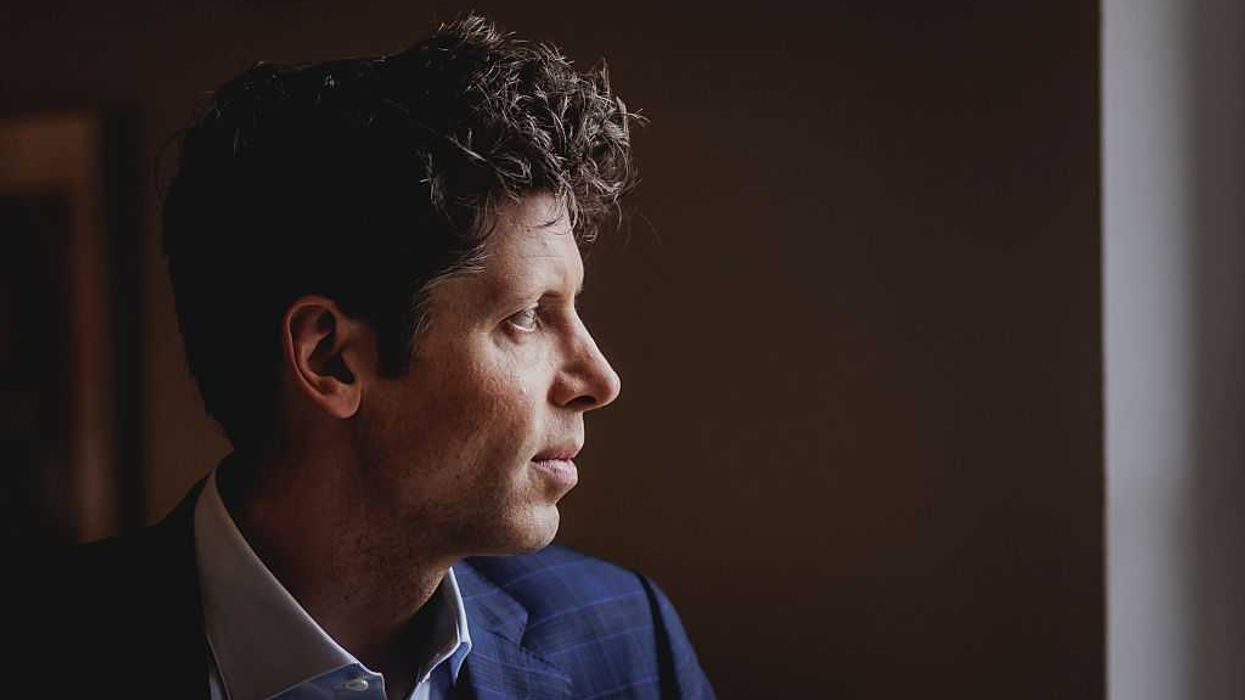
For months, Silicon Valley insisted the artificial-intelligence boom wasn’t another government-fueled bubble. Now the same companies are begging Washington for “help” while pretending it isn’t a bailout.
Any technology that truly meets consumer demand doesn’t need taxpayer favors to survive and thrive — least of all trillion-dollar corporations. Yet the entire AI buildout depends on subsidies, tax breaks, and cheap credit. The push to cover America’s landscape with power-hungry data centers has never been viable in a free market. And the industry knows it.
The AI bubble isn’t about innovation — it’s about insulation. The same elites who inflated the market with easy money are now preparing to dump the risk on taxpayers.
Last week, OpenAI chief financial officer Sarah Friar let the truth slip. In a CNBC interview, she admitted the company needs a “backstop” — a government-supported guarantee — to secure the massive loans propping up its data-center empire.
“We’re looking for an ecosystem of banks, private equity, maybe even governmental … the ways governments can come to bear,” Friar said. When asked whether that meant a federal subsidy, she added, “The guarantee that allows the financing to happen … that can drop the cost of financing, increase the loan-to-value … an equity portion for some federal backstop. Exactly, and I think we’re seeing that. I think the U.S. government in particular has been incredibly forward-leaning.”
Translation: OpenAI’s debt-to-revenue ratio looks like a Ponzi scheme, and the government is already “forward-leaning” in keeping it afloat. Oracle — one of OpenAI’s key partners — carries a debt-to-equity ratio of 453%. Both companies want to privatize profits and socialize losses.
After public backlash, Friar tried to walk it back, claiming “backstop” was the wrong word. Then on LinkedIn, she used different words to describe the same thing: “American strength in technology will come from building real industrial capacity, which requires the private sector and government playing their part.”
When government “plays its part,” taxpayers pay the bill. Yet no one remembers the federal government “doing its part” for Apple or Motorola when the smartphone revolution took off — because those products sold just fine without subsidies.
The denials keep coming
OpenAI CEO Sam Altman quickly followed with a 1,500-word denial: “We do not have or want government guarantees for OpenAI datacenters.” Then he conceded they’re seeking loan guarantees for infrastructure — just not for software.
That distinction exposes the scam. Software revolutions scale cheaply. Data-center revolutions depend on state-sponsored power, water, and land. If this industry were self-sustaining, Trump wouldn’t need to tout Stargate — his administration’s marquee AI-infrastructure initiative — as a national project. Federal involvement is baked in, from subsidized energy to public land giveaways.
Altman’s own words confirm it. In an October interview with podcaster Tyler Cowen, released a day before his denial, Altman said, “When something gets sufficiently huge … the federal government is kind of the insurer of last resort.” He wasn’t talking about nuclear policy — he meant the financial side.
The coming crash
Anyone paying attention can see the rot. Nvidia, OpenAI, Oracle, and Meta are all entangled in a debt-driven accounting loop that would make Enron blush. This speculative bubble is inflating not because AI is transforming productivity, but because Wall Street and Washington are colluding to prop up stock prices and GDP growth.
When the crash comes — and it will — Washington will step in, exactly as it did with the banks in 2008 and the automakers in 2009. The “insurer of last resort” is already on standby.
The smoking gun
A leaked 11-page letter from OpenAI to the White House makes the scheme explicit. In the October 27 document addressed to the Office of Science and Technology Policy, Christopher Lehane, OpenAI’s chief global affairs officer, urged the government to provide “grants, cost-sharing agreements, loans, or loan guarantees” to help build America’s AI industrial base — all “to compete with China.”
Altman can tweet denials all he wants — his own company’s correspondence tells a different story. The pitch mirrors China’s state-capitalist model, except Beijing at least owns its industrial output. In America’s version, taxpayers absorb the risk while private firms pocket the reward.
RELATED: Stop feeding Big Tech and start feeding Americans again
 Credit: Photo by Mario Tama/Getty Images
Meanwhile, the data-center race is driving up electricity and water costs nationwide. The United States is building roughly 10 times as many hyper-scale data centers as China — and footing the bill through inflated utility rates and public subsidies.
Privatized profits, socialized losses
When investor Brad Gerstner recently asked Altman how a company with $13 billion in revenue could possibly afford $1.4 trillion in commitments, Altman sneered, “Happy to find a buyer for your shares.” He can afford that arrogance because he knows who the buyer of last resort will be: the federal government.
The AI bubble isn’t about innovation — it’s about insulation. The same elites who inflated the market with easy money are now preparing to dump the risk on taxpayers.
And when the collapse comes, they’ll call it “national security.”
Lowering the bar doesn’t lift women up

For years, Americans have been told a comforting lie: Anyone can do anything, be anything, and succeed at anything, regardless of limits or differences. But ideological fantasies collapse on the battlefield, where physics, endurance, and human limits matter more than slogans.
After years of social experimentation, the military is rediscovering a basic truth: Equality of opportunity makes the force stronger, while equality of outcome weakens it. The return to gender-neutral standards announced last month by Secretary of War Pete Hegseth marks a long-overdue step toward restoring merit, discipline, and respect across the ranks.
Pretending that men and women have identical physical capabilities doesn’t empower women; it endangers them.
For most of our history, the armed forces held one clear principle: Anyone, male or female, could serve in any position if they met the same standard. The promise was simple and fair — the uniform didn’t care about sex or gender, only performance.
That began to change in 2015, when the Army opened all-male combat units to women. At the time, the Pentagon promised no dilution of standards. But in 2018, when the new gender-neutral Army Combat Fitness Test was introduced, 84% of female soldiers failed. Instead of maintaining expectations, the Army rewrote them.
By 2022, the ACFT 4.0 came with gender-based scoring — a quiet admission that standards had become negotiable. The result: Combat units staffed with soldiers unable to meet the physical requirements of their jobs. That puts missions, morale, and lives at risk.
Worse, it undermines respect for women who do meet the standard. When the bar moves, doubt replaces trust. Hardworking female soldiers — the ones who earned their places — are forced to prove themselves twice: once in training and again in the eyes of their peers.
Diversity by design, weakness by consequence
In 2021, U.S. Special Operations Command declared that “diversity is an operational imperative.” But this new “imperative” wasn’t about the real diversity already found across the military — people from every background, race, and income level serving side by side. It was about engineering statistical parity, even in elite combat units where performance alone must decide who stays and who goes.
That mindset has consequences. Combat units can’t afford ideological experiments. The job is to close with and destroy the enemy — not to serve as laboratories for social theory. Lowering standards in the name of inclusion doesn’t just weaken readiness; it puts soldiers in unnecessary danger.
And no woman who trains to fight wants pity disguised as progress. The women who seek out elite units don’t ask for special treatment — they ask for the same chance to prove themselves by the same rules. When standards drop, those women lose too.
Strength in truth
Gender-neutral standards don’t discriminate. They recognize that men and women are different and that most people — men included — simply can’t meet the demands of combat. That’s not “oppression.” It’s just reality.
Women who pass those standards have demonstrated extraordinary strength, skill, and resolve. They deserve admiration, not suspicion. And those who don’t — along with the vast majority of men who don’t — can still serve honorably in the hundreds of vital roles that keep America’s military functioning.
RELATED: How America lost its warrior spirit when it feminized its academies
 Photo by Kevin Carter
A sex-neutral standard is an act of fairness, not exclusion. It’s a recognition that excellence demands truth, not ideology — that merit, not identity, keeps soldiers alive and wins wars.
Restoring purpose
The military’s duty is national defense, not social engineering. Pretending that men and women have identical physical capabilities doesn’t empower women; it endangers them.
Reaffirming one standard for all isn’t an attack on women — it’s a defense of every soldier’s dignity. It calls each person to rise to the challenge, to serve according to one’s God-given abilities, and to be judged by results.
If we want a stronger force — and a stronger nation — we must stop confusing fairness with fantasy. Let’s demand standards worthy of the uniform, and let every soldier, male or female, earn respect the same way: by meeting them.
Washington’s priorities are backward — and veterans know it

When Washington shuts down, it doesn’t just stall politics — it shakes the lives of America’s veterans. At the outset of the government shutdown last month, a veteran named James called VetComm in tears. His question was simple but heartbreaking: “Will I still get paid next week? Because I can’t afford groceries if I don’t.”
James served his country with honor. Yet he worried about feeding his family because Democrats in Washington insist on prioritizing illegal immigrants over the very men and women who defended this nation.
Enough is enough. Stop putting illegal immigrants ahead of the heroes who built and defended this country.
I’ve dedicated my life to fighting for veterans like James — those who bled for this country, only to watch so-called representatives in Washington bend over backward for people who entered it illegally. With this latest government shutdown, Democrats have again slammed the door on veterans while rolling out the red carpet for illegal aliens.
A manufactured crisis
For over a month, Democrats held the entire nation hostage, demanding a $1.5 trillion, poison-pill-stuffed funding bill that includes “free health care” for illegal aliens while programs for veterans teeter on the brink. It’s not just reckless — it’s cruel. These are the same priorities that helped drive a 19% spike in veteran homelessness while illegal migrants got luxury hotel rooms on the taxpayer’s dime.
As the shutdown ends, the facts are clear. The House passed a clean continuing resolution to keep the lights on, maintain VA funding, and avoid chaos. But Senate Democrats — led by Sen. Chuck Schumer and Rep. Hakeem Jeffries of New York — rejected it, choosing to plunge the country into an unnecessary shutdown to appease their left-wing base.
The Democrats’ alternative was loaded with giveaways: subsidies for illegal immigrants’ doctor visits, hospital stays, and “health care rights,” while hundreds of thousands of veterans remain stuck on VA wait lists — some dying before they’re seen.
Staggering hypocrisy
Schumer once said avoiding a shutdown “is very good news for the country, for our veterans … all of whom would have felt the sting.” More recently, he warned that “a shutdown would mean chaos and pain and needless heartache for the American people.”
Alexandria Ocasio-Cortez declared, “It is not normal to shut down the government when we don’t get what we want.” Jeffries said shutdowns are “about the harm.”
Those very same politicians ended up leading one — weaponizing activist wish lists and pet projects against the GOP and the nation.
RELATED: Disabled vets denied dignity as VA claim backlog becomes unbearable
 Johnrob via iStock/Getty Images
This pattern of betrayal isn’t new. Under Joe Biden and Kamala Harris, the VA was caught reimbursing health care for illegal immigrants and their families, draining resources from veterans. I’ve seen it firsthand in San Diego — hotels packed with migrants while homeless veterans sleep on sidewalks, dodging needles and despair.
Over 10 million illegal crossings have occurred under the Biden administration’s watch. The result: big money for migrants, broken promises for veterans. The audacity to continue putting invaders ahead of patriots is shocking — and unforgivable.
The real human cost
Everyone knows a shutdown hurts troops, veterans, and families. Yet Democrats embraced it anyway, in service to radical ideology over national duty. Americans overwhelmingly oppose this madness.
Enough is enough. Stop putting illegal immigrants ahead of the heroes who built and defended this country. It’s time to restore sanity and start prioritizing America again.
At VetComm, we see the toll every day. The sleepless nights. The panic over missed paychecks. The spiraling PTSD and anxiety triggered by uncertainty. Veterans have already given everything; they shouldn’t have to fight their own government for stability and dignity.
Our mission is simple: Stand in the gap for those who stood for us. We help veterans understand their rights, claim the benefits they earned, and remember that their service still matters. A shutdown tests that mission — but it also steels our resolve.
Because while Washington bickers, we will keep fighting for every veteran, every day, not just Veterans Day.
The H-1B system is broken. Here’s how to fix it.

Imagine spending four years studying to become an engineer or computer scientist, believing a STEM degree would guarantee success, only to graduate jobless.
That isn’t a hypothetical. It’s the reality facing thousands of young Americans. According to the Federal Reserve Bank of New York, graduates in physics, computer engineering, and computer science now face some of the highest unemployment rates of any field.
American workers have lost out on jobs given to visa holders and have been forced to work for lower wages, creating a race to the bottom for companies to treat workers as widgets.
America’s flawed H-1B visa system is a major reason why. Established under the Immigration Act of 1990, the H-1B program was intended to let companies hire exceptional foreign specialists only when no qualified Americans were available.
It no longer serves that purpose. Today the H-1B has become the nation’s largest temporary work visa program, with nearly 600,000 foreign workers and 50,000 participating companies. In 2022, the 30 biggest H-1B employers hired more than 34,000 new visa workers while cutting roughly 85,000 existing jobs.
Companies claim they can’t find American STEM talent, yet the numbers tell a different story. In 2023, roughly 134,000 Americans and green card holders earned computer science degrees. That same year, the federal government issued work permits to 110,000 foreign guest workers in computer-related jobs.
In some STEM fields, up to half of new American graduates can’t find work. Tens of thousands of qualified workers remain unemployed while their government floods the market with cheaper, compliant labor.
How companies game the system
The law requires H-1B workers to be paid the same as Americans, but reality tells another story. In 2019, 60% of H-1B positions paid below the median wage for comparable U.S. workers. The visa lottery treats low-paying jobs and high-paying jobs the same, incentivizing companies to pursue cheap labor.
Even the statutory cap on H-1B visas doesn’t stop abuse. A loophole known as Optional Practical Training lets foreign students work in the United States for up to a year after graduation, or three years if they hold a STEM degree.
OPT isn’t authorized by law. It has no cap, no wage floor, and no accountability. Worse, it acts as a corporate subsidy because employers don’t pay payroll taxes on any of the half million foreign workers now in the country under this program.
Time for a real fix
Even the architects of the H-1B system admit it’s broken. Former Connecticut Rep. Bruce Morrison, a Democrat who helped design the visa in 1990, told “60 Minutes” in 2017 that “the H-1B has been hijacked as the main highway to bring people from abroad and displace Americans.”
To build on that effort, I’ve reintroduced the American Tech Workforce Act, which attacks the problem on three fronts.
RELATED: Trump admin announces major H-1B visa abuse investigation, but critics want more
 Photo by Andrew Harnik / Contributor via Getty Images
First, it raises the wage floor. Companies that truly need foreign specialists should pay them the same as top American workers, ending the incentive to undercut domestic wages.
Second, it closes the OPT loophole. Foreign students shouldn’t have a back door to replace American graduates. The jobs belong to the people who earned them here.
Finally, my bill would shut down staffing scams. Third-party agencies flood the H-1B lottery with low-quality applications to drive down wages. My bill blocks those schemes and creates a true marketplace where visas go to the highest bidders — boosting both fairness and economic value.
According to the Institute for Progress, these reforms would strengthen the economy by $1.1 trillion over the next decade.
Putting Americans first
The current system rewards corporate exploitation and punishes American ambition. Workers lose jobs, wages stagnate, and graduates who followed every rule are told to wait in line behind foreign contractors. Discrimination based on national origin is already illegal, yet Washington’s visa policies effectively endorse it.
President Trump’s executive order, combined with the American Tech Workforce Act, offers a rare opportunity to restore sanity to the system. We can defend innovation while defending American workers — the people who built this country and still drive its future.
The next generation deserves more than broken promises and outsourced dreams. They deserve a fair shot to work, build, and thrive in the nation they call home.
You can’t follow Jesus and despise the people who brought us Jesus

America suffers from more than political unrest. We are in a spiritual drought — a values famine so deep that even the conservative movement, once grounded in virtue, now splinters under the weight of ego and bitterness. Too many voices compete for authority on the right, but too few echo the one voice that matters: God’s.
This isn’t about pundits or personalities. It’s about the soul of our movement and the substance of our faith. Somewhere along the way, many conservatives forgot a truth written plainly in Scripture: It is Christian to love and support the Jewish people.
If we can’t love our spiritual cousins — the people through whom our faith was born — what are we even defending? What good is a ‘Christian’ movement that forgets the Christian part?
When Jesus was asked which commandment was greatest, He didn’t hedge: “‘Love the Lord your God with all your heart and with all your soul and with all your mind.’ This is the first and greatest commandment. And the second is like it: ‘Love your neighbor as yourself.’ All the Law and the Prophets hang on these two commandments” (Matthew 22:37–40).
Two commandments. No asterisks, no exemptions for those who worship differently or descend from another people. Jesus didn’t love selectively. He loved sacrificially.
The roots of the faith — and the movement
Conservatism, at its best, has always drawn strength from virtue — faith, family, freedom, and responsibility. Yet we’re watching parts of the movement trade virtue for venom. Courage has been confused with cruelty, boldness with bitterness, and orthodoxy with outrage.
That confusion has allowed an old poison to re-emerge: open hostility toward Jews and Israel. It comes disguised in respectable terms like “nationalism,” “authentic Christianity,” or “anti-globalism.” But strip away the labels and you find something that bears no resemblance to Christ.
Scripture leaves no doubt: “I will bless those who bless you, and whoever curses you I will curse” (Genesis 12:3). That was God’s covenant with Abraham — the father of Israel and of faith itself. You cannot claim to follow the God of Abraham while despising Abraham’s descendants.
Christian Zionism isn’t a modern political fad. It’s the natural outflow of biblical belief. The early church didn’t view itself apart from Israel; it saw itself grafted into the same vine. “Do not consider yourself to be superior to those other branches,” Paul wrote. “If you do, consider this: You do not support the root, but the root supports you” (Romans 11:18).
Jesus was born a Jew, lived as a Jew, and died under a sign that read “King of the Jews.” The apostles were Jewish. The first believers were Jewish. The Old Testament — the foundation of Christian morality — was written by Jews. To despise the Jewish people is to despise the very tree that bore the Savior.
Love commands courage
Christ’s command in John 13:34 is unmistakable: “Love one another. As I have loved you, so you must love one another.” If we can’t love our spiritual cousins — the people through whom our faith was born — what are we even defending? What good is a “Christian” movement that forgets the Christian part?
The world starves for grace. Our culture feasts on outrage, cynicism, and suspicion. The church’s mission — and the conservative movement’s moral responsibility — is not to mirror that chaos but to model something better.
We talk about “saving America,” but no nation can be saved if it forgets how to love its neighbor. America’s founders drew moral strength from Scripture because they understood that the deepest revolutions begin not in politics but in the human heart.
Jesus didn’t build walls between people — He built bridges to their hearts. He dined with tax collectors, healed Roman soldiers, and forgave His executioners. He chose compassion over contempt.
When He met the Samaritan woman at the well, He didn’t belittle her faith — He offered her living water. When Christ told the parable of the Good Samaritan, He made the hero an outsider despised by His own people. Love, He showed us, knows no boundary.
If Jesus could forgive the people who nailed Him to a cross, surely we can love the people through whom God gave us His Son.
Truth without love is just noise
Love does not mean silence. The same Jesus who preached mercy also overturned the tables of corruption. Scripture commands believers to “have nothing to do with the fruitless deeds of darkness, but rather expose them” (Ephesians 5:11).
Today a dangerous strain cloaks hatred in holiness. It mistakes cruelty for conviction and turns “truth-telling” into a license to dehumanize. But righteousness without love is rebellion, not faith.
Standing against that spirit isn’t weakness. It’s obedience. Jesus rebuked the Pharisees for pride and hypocrisy, warning that “many will say to Me on that day, ‘Lord, Lord,’ … Then I will tell them plainly, ‘I never knew you’” (Matthew 7:22–23). Faith without love is empty. Theology without mercy is just noise.
A call back to first principles
We are not only in a culture war; we are in a crisis of the soul. Civility has been replaced by performance. Grace by grudges. Authenticity by algorithms. Too many of our debates aim to win arguments rather than save souls.
Differences are inevitable. Divisions are a choice. We can disagree passionately and still love deeply. That is the mark of maturity — and the essence of Christianity. “If you love those who love you, what reward will you get?” Jesus asked in Matthew 5:46. Real love begins where comfort ends.
RELATED: This crisis in churches is real. Will Christians fight back?
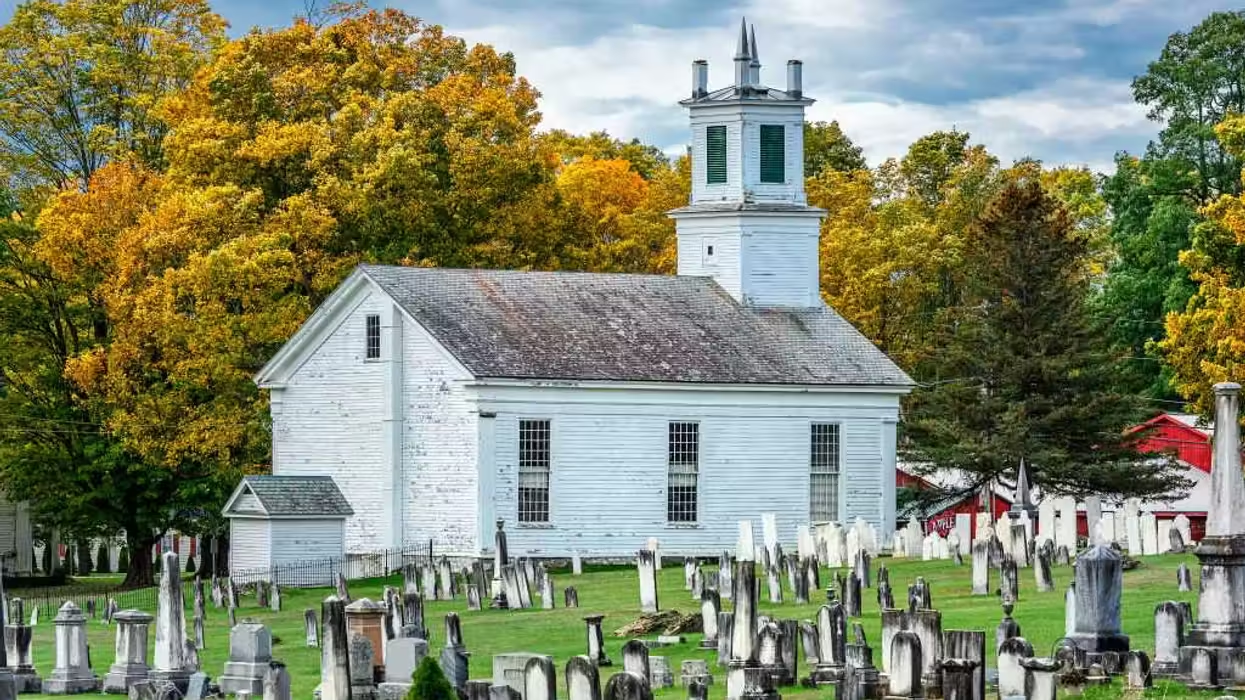 Photo by John Greim/Contributor via Getty Images
The conservative movement must decide: Will we reflect Christ or merely invoke His name when it’s convenient? Will we unite around truth or fracture around pride? Anti-Jewish rhetoric isn’t just politically foolish — it’s spiritually corrosive.
It isn’t “based.” It’s blasphemous.
Winston Churchill once said, “We make a living by what we get. We make a life by what we give.” What we need now are not louder voices but larger hearts. Not more outrage, but more grace. Not more warriors in the comments section, but more witnesses in the world.
It’s time to return to first principles: Love God. Love your neighbor. Those two commandments are enough to heal a movement — and maybe even a nation.
The next time someone claims to speak for Christianity while spewing hate, open your Bible. The truth is written in red.
Jesus didn’t call us to divide. He called us to love. And love, real love, always points back to the cross — and to the people through whom God brought the Savior of the world.
Welcome to Harvard, where studying is now a hate crime
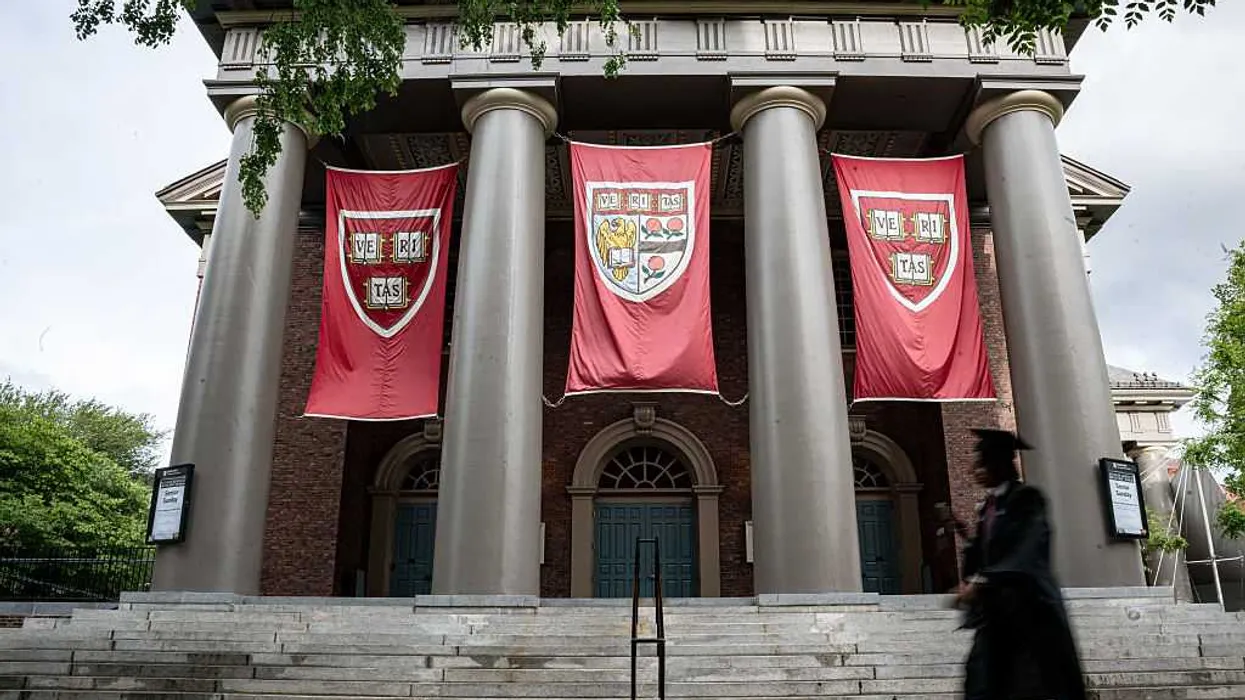
News broke last week that Harvard University — that ancient temple of American prestige and intersectional pride — may finally attempt to curb its notorious grade inflation. For decades, Harvard has handed out A’s like party favors at a preschool graduation. But now, administrators seem to fear the public has noticed that every graduate’s transcript reads: Congratulations! You’re brilliant.
Naturally, the students have responded with calm reflection and humility.
The American university had one job — to cultivate wisdom and virtue. If Harvard students now treat studying as oppression, maybe it’s time to grade the universities themselves.
Just kidding. They’re in full moral meltdown — which is remarkable, since most of them deny morality exists unless it’s part of an identity rubric. Touch their grades, though, and suddenly they rediscover absolute truth, glowing with divine fire.
What provoked this crisis of the soul? The rumor — merely the rumor — that they might have to study.
One distraught undergraduate complained that stricter grading would force students to spend time on academics instead of extracurriculars. And as every Harvard student knows, college is all about extracurriculars. Academics are a high-school hazing ritual — a price of entry to the elite club where you never have to study again.
Other students reportedly spent the day crying. It’s a hard life.
When they lamented losing time for extracurriculars, some surely meant yachting. Others meant activism. Who will dismantle “colonizing heteronormativity” if the revolution has to pause for midterms? Who will liberate the oppressed from the tyranny of citations?
Their outrage, ridiculous as it sounds, reveals at least three uncomfortable truths about the American university system — and the students it produces.
1. They worked hard once so they never have to again.
Some students said they nearly killed themselves to get into Harvard. Not to study there — don’t be ridiculous! — but to ensure that they’d never need to study again.
If you’re an employer expecting a Harvard graduate to be a disciplined thinker, brace yourself. You may be hiring someone who hasn’t cracked a book in years. Many of them majored in activism and minored in demanding that you pay them to keep doing it.
These students treat the workplace as an extension of campus — a new platform for “advocacy,” complete with your office space, Slack channels, and HR department. You wanted an employee. You may get an organizer.
2. Entitlement isn’t an accident — it’s the admissions policy.
Harvard attracts a particular type: students convinced that excellence is their birthright and that hard work is a microaggression.
Some even claim that “work ethic” must be decolonized as a relic of whiteness — a fragile idea until you remember they say it while demanding an A for not working. One almost admires the nerve.
We should stop treating “Harvard graduate” as a compliment. It’s becoming a warning label. These students expect to skip effort, skip merit, skip discipline — and demand that you “check your privilege” if you object.
Why wouldn’t they? Harvard built an entire institutional culture around their sensitivities. The modern university no longer shapes students; it rearranges itself around their demands.
3. The university system has failed.
The Harvard meltdown exposes a national rot. For decades, Americans have been told that college is essential for success. Universities responded by expanding enrollment, inventing dozens of useless “studies” degrees, building administrative empires, and raising tuition to swallow every loan dollar available.
The result?
Now we’re mass-producing indebted graduates with inflated expectations of high-paying careers and no knowledge or skills to justify either. Education has become a luxury accessory — a handbag whose value lies in the logo.
To test the system’s bankruptcy, try asking a recent Ivy League graduate:
- What is wisdom?
- What is the highest good?
- How did your education make you a more virtuous person?
You’ll likely get a breathless word salad about “advocating for marginalized identities and dismantling structures of oppression.” Ask how that helps anyone achieve the good, and you’ll get a vacant stare fit for a zoning map.
Of course, technical fields like engineering still demand real work. But those are small islands in a vast sea of bureaucratic waste. Most universities now operate as billion-dollar community centers with a few classes on the side — entertainment disguised as education.
RELATED: The real fraud in higher ed: Universities need that Chinese money
 Photo by VCG / Contributor via Getty Images
Can the system be saved?
Maybe, but don’t bet on it.
You can’t “hire your way out” of a faculty that’s 97% left or far left. That’s not an imbalance; it’s a monoculture. And monocultures don’t reform themselves.
But the reckoning is coming. Enrollment is falling, budgets are exploding, and public trust is collapsing. The only thing keeping many universities alive is their ability to convince students that identity activism and LGBTQ+ advocacy are transcendent educational callings.
The solution is simple: Stop paying for the nonsense. No one is obliged to spend $80,000 a year to hear a gender-theory lecturer attack the biblical definition of marriage. No law, moral or otherwise, requires funding your own indoctrination.
Let them lecture to empty rooms.
The American university had one job — to cultivate wisdom and virtue. If Harvard students now treat studying as oppression, maybe it’s time to grade the universities themselves.
And the report card is long overdue.
What we lose when we rush past pain
“No one ever told me that grief felt so like fear,” wrote C.S. Lewis in “A Grief Observed” after the death of his wife. Grief often strips away our certainties, leaving us to fear if God is who we thought He was, or if our suffering has any meaning at all. In allowing grief to become his teacher, Lewis left a road map for others, showing how to sit with sorrow, process it, and respect both loss and trauma.
That understanding doesn’t come casually; it takes time. In that willingness to observe pain rather than manage it lies a quiet reverence, a recognition that some experiences are not meant to be conquered but understood.
Suffering doesn’t exist to make us louder or more righteous. It exists to make us wiser — to teach maturity, not mobilize outrage.
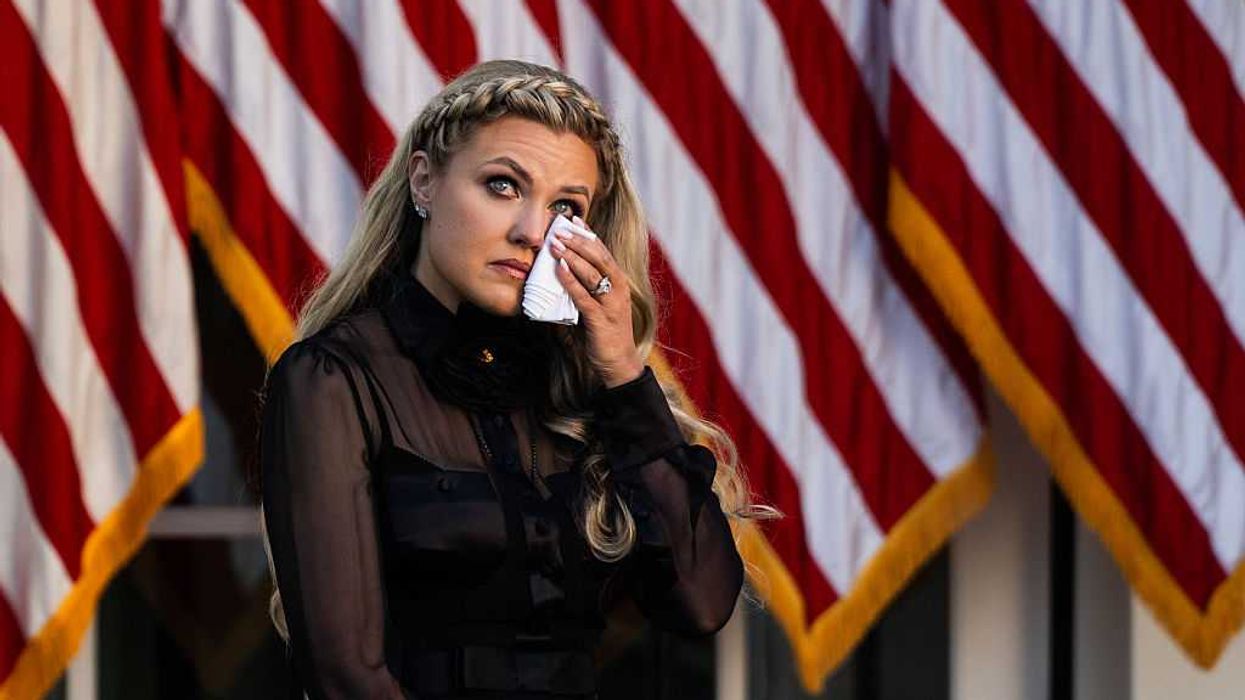
I watched a young widow step into public life just weeks after her husband’s death. The world called her strong — and maybe she is — but what I saw most was sorrow: raw, recent, and surrounded by noise.
We rush to praise courage yet hesitate to sit with grief. Pain now unfolds before an audience eager to watch and quicker still to turn sorrow into argument. The question isn’t whether we’ll look, but how. Will we meet grief with reverence or rhetoric?
Suffering doesn’t exist to make us louder or more righteous. It exists to make us wiser — to teach maturity, not mobilize outrage.
When nations grieve
What’s true for one heart is true for a nation. After 9/11, America was ready to fight — and we did. But what did we learn? How did we grow? What did we lose along the way? Pain can rally a nation, yet fail to mature its people. Did we take enough time to observe our national trauma?
The lives lost, the wounded carried home, and the enormous resources spent all suggest we did not. And what is true of nations is true of hearts: When we rush past pain, we forfeit the wisdom it offers.
The thought that God rules our pain can make us flinch. If God doesn’t rule it, suffering has no purpose — something to endure but not to transform. His sovereignty may not always appear kind, yet as William Cowper reminded us, “Behind a frowning providence, He hides a smiling face.”
In four decades as a caregiver, I’ve learned that trauma has its own language, one that will not be hurried or managed. It needs presence, patience, and space. Dr. Diane Langberg, who has spent her life among the wounded, often reminds us, “We dare not rush what God Himself is willing to sit with.” That is ministry: sitting beside, not speaking over.
The wisdom of mourning
The Jewish people understand this. When someone dies, the bereaved sit shiva — seven days of stillness and shared silence. Friends come not to fix but to accompany. Then comes sheloshim — 30 days to move slowly back toward life. For a parent, mourning extends a full year. Their wisdom tells us what our culture forgets: Mourning isn’t an interruption of life; it’s part of it.
We can learn from that rhythm. When tragedy strikes, our nation lowers its flags to half-staff. For a day or two, we pause, reflect, and pray. Then the flags rise again and life resumes. That is understandable for a country, but not for a soul. For the bereaved, the flag stays lowered long after the headlines fade.
Even the church can hurry the hurting. We mistake composure for recovery and public strength for peace. But grief that is forced to perform eventually breaks in private and sometimes spills into public.
When my wife, Gracie, lost her legs and entered decades of agony, healing did not come through attention or activity. It came through grace, tears, and time, mostly in obscurity. People see her sing or laugh and assume she has gotten over it, that she’s moved past it. What they do not see is that she had to redefine her life; this is her life. Someone once told me, “Process the pain privately, share the process publicly.” That wisdom has steadied us for years.
The quiet saints of suffering
Our culture is too quick to parade its wounded on stages when they would be better served by sitting in stillness, in pajamas or sweats, without having to put on makeup or smile for the cameras.
I’ve seen that truth in lives like Joni Eareckson Tada’s, who has lived with quadriplegia (paralysis affecting all four limbs and the torso) for nearly 60 years after a diving accident. In her, suffering has distilled faith into something deep and steady, strong enough to hold her and extend grace to others who suffer.
Forgiveness, like healing, takes time. To forgive is not to excuse or forget; it is to trust God with justice and mercy, believing He knows what we cannot. Forgiveness is faith expressed with open hands — the slow loosening of the grip around another’s throat.
Philip Yancey once observed that grace, like water, flows to the lowest places. That is where I have found it: in hospital corridors, in the lonely watches of the night, and in the long quiet of waiting rooms. Not in applause or attention, but in the hush where pain meets patience.
RELATED: The poisoned stream of culture is flowing through our churches
 Photo by Anadolu / Contributor via Getty Images
The best model for us
Our culture distracts us from sorrow, rushing past pain as if speed can save us. “Don’t look in the rearview mirror,” people say. “Keep moving forward. Get past it.” But some wounds do not recede with distance. They remain, reshaping who we are and how we see the world. Grief, but only if we resist the urge to flee from it.
Scripture tells us that Jesus Himself was “a man of sorrows, acquainted with grief” (Isaiah 53:3). If He carried sorrow, then sorrow itself is not unclean. His setting apart for redemption doesn’t happen on cue, not in our timeframe. It unfolds in God’s time, often unseen and unhurried. Our pain, when entrusted to Him, becomes something consecrated, set apart not for ruin but for restoration. In His hands, our sorrow becomes sacred ground.
When trauma shatters a life, our calling is not to elevate but to shelter. We are called to stand nearby like those who sit shiva, unhurried and unafraid of silence. We can only observe another’s trauma, but God enters it. The wounds in His hands and side show us that He understands the anguish of loss, rejection, even death. His way is not avoidance but presence, and His model is a good one for us.
Solitude with God is not empty silence, but the stillness where His healing takes root. The psalmist wrote, “Be still, and know that I am God” (Psalm 46:10). In that quiet, we see what countless believers across the ages have discovered: Even what was meant for evil, God weaves for good. He does not waste our sorrow. When we trust His timing, the trauma observed gives way to the grace observed.
From 911 to broadband, criminals are unplugging America

Imagine calling 911 and no one answers. A hospital loses internet access mid-surgery and your child is the patient. You can’t work, access your bank, or contact your doctor — all because a few thieves ripped copper wiring from the ground to sell for scrap.
These aren’t distant hypotheticals. They’re happening across the country right now. In recent weeks alone, copper wire thefts darkened 5,500 streetlights in Tucson, shut down Denver’s A-Line train, and caused $1.25 million in losses in Bakersfield, California, where thieves stripped wiring from electric-vehicle charging stations.
Broadband is critical infrastructure — the digital lifeline of daily American life. Protecting it is not a corporate issue but a consumer one.
The problem isn’t slowing down. Two new reports reveal a stunning rise in theft and vandalism against America’s broadband and wireless networks. Between June 2024 and June 2025, more than 15,000 incidents disrupted service for over 9.5 million customers nationwide. In just the first half of 2025, incidents nearly doubled from the previous six months.
Hospitals, schools, 911 dispatch centers, even military bases have been hit — exposing a growing national vulnerability.
Not just a local nuisance
The cost of stolen wire is trivial compared with the damage it causes. Between June and December 2024, theft-related outages cost society between $38 million and $188 million in losses. California and Texas took the biggest hits — $29.3 million and $18.1 million — while smaller states like Kentucky suffered millions too. Every cut cable ripples outward, silencing entire communities.
These aren’t weekend thieves looking for beer money. They’re organized, brazen, and increasingly strategic. Some know exactly which copper or fiber-optic lines to hit. Others destroy fiber cables by mistake, assuming they contain metal. Either way, the result is the same: chaos, cost, and danger.
Consumers pay the price. Each attack disrupts 911 access, paralyzes small businesses, and stalls health care, banking, and remote work. Broadband expansion — especially in rural and underserved areas — slows to a crawl.
When vandalism becomes sabotage
Some of these attacks are so severe that investigators now treat them as potential acts of domestic terrorism. Charter Communications reports a 200% increase in felony attacks on its Missouri fiber network this year. In Van Nuys, California, vandals cut 13 fiber lines in one night, knocking out 911 dispatch, a military base, and hospitals for 30 hours. These were no petty crimes. They were coordinated strikes that endangered lives.
Businesses, taxpayers, and consumers have invested billions to build these networks. Letting criminals dismantle them for pocket change is unacceptable.
Yet under current federal law, destroying broadband infrastructure isn’t punished like attacks on pipelines, railways, or power grids. In many states, penalties are outdated or nonexistent — effectively giving vandals a free pass to cripple critical systems.
A bipartisan fix
Congress has begun to respond. Reps. Laurel Lee (R-Fla.) and Marc Veasey (D-Texas) have introduced H.R. 2784, the bipartisan Stopping the Theft and Destruction of Broadband Act. The bill would amend federal law to explicitly criminalize the destruction of broadband infrastructure, giving law enforcement the tools needed to act.
Adding broadband systems to the list of protected critical assets under Title 18 of the U.S. Code would send a clear message: This isn’t scrap-metal scavenging — it’s sabotage, and it will be prosecuted as such.
RELATED: China rules the resources we need to build the future. Now what?
 Liudmila Chernetska via iStock/Getty Images
To defend consumers and our connected economy, lawmakers must:
- strengthen penalties for theft or destruction of communications infrastructure, matching protections for other critical sectors;
- crack down on black-market copper sales by holding scrap dealers accountable;
- increase funding and coordination for law enforcement to investigate and prosecute network attacks; and
- support industry-led security upgrades without adding regulatory burdens that slow innovation.
States like Florida, South Carolina, and North Carolina have already moved to deter these crimes. Congress should follow their lead.
Defend what we built
Broadband is critical infrastructure — the digital lifeline of daily American life. Protecting it is not a corporate issue but a consumer one. Americans shouldn’t have to wonder whether their connection will work when they need it most.
We built the connected economy. Now we must defend it — before the vandals win.
Explaining Mamdani’s appeal to the young, with polling
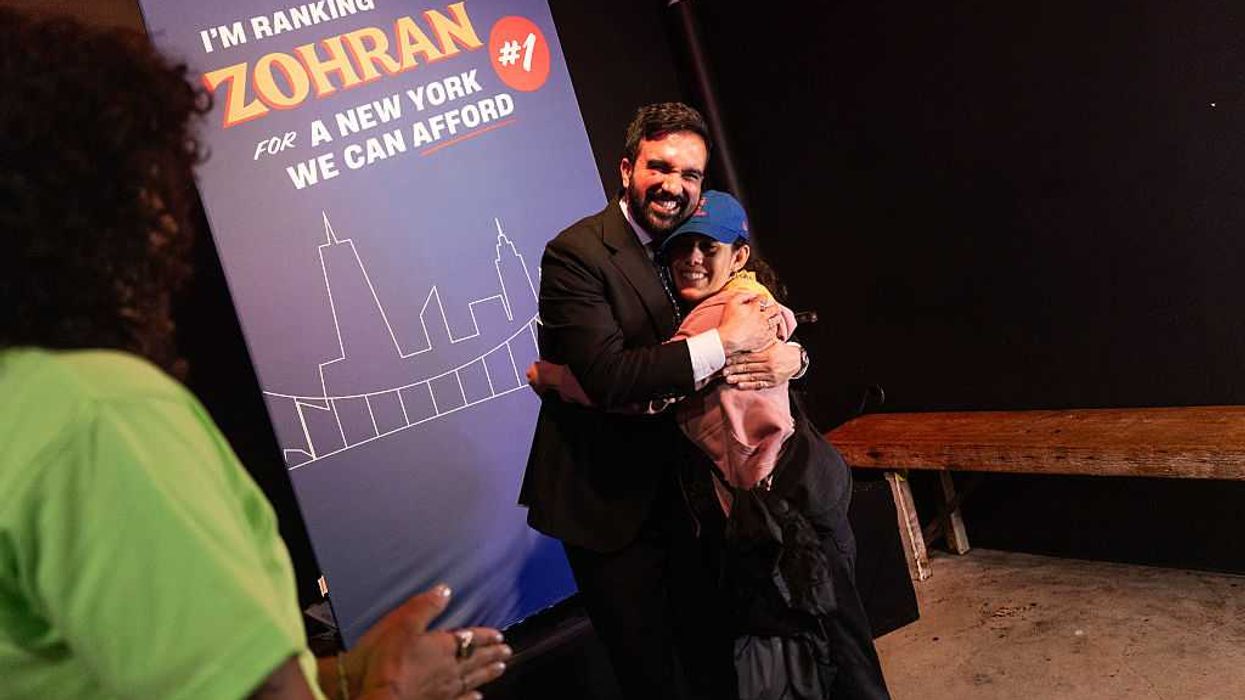
It’s a sad week for the de facto capital of the world, New York City. The epicenter of American finance, media, and dynamism now enters a self-imposed trajectory of decline.
But those of us on the populist right should not merely shake our heads and bemoan the extremism of Zohran Mamdani, frightening though it is. Instead, we must understand his appeal, so that we might effectively counter his un-American ideas and continue to build on our 2024 triumph by earning further big gains nationally among young voters.
We have much to learn from Mamdani, even though he is a dangerous Marxist. Establishment Republicans have no effective answer to this kind of populism.
Polling shows the pathway to that success.
First, the great news. Young voters have swung massively to the right over the last three presidential election cycles. President Trump won young men in 2024, and overall, voters 35 and under shifted materially from a +37% preference for the Democrats in 2016 to only a +13% preference in 2024, cutting the young adult margin by two-thirds in just over eight years. It represents a massive macro shift.
In addition, a new national poll of 2,100 voters ages 18-25 shows a substantial rejection of Democrats’ radicalism on key social issues, especially transgenderism and free speech. Simultaneously, young voters express extreme frustration with the current economy, creating a clear opening that Mamdani drove a campaign truck right through.
So, backed by data, here are the three lanes of success that Mamdani exploited.
‘Affordability’ is key
Even though all of his Marxist answers are wrong and immoral, Zohran is laser-focused on the issue that matters most to voters, especially younger ones. Most young citizens have not benefited from the massive run-up in asset prices in recent years. Without substantial holdings of equities or real estate, they struggle to afford the staples of life amid sky-high costs. Even worse, the job market got substantially tougher for young adults, adding even more angst.
These voters correctly blamed the Democrats for the pain of Bidenomics, but that anger has now shifted over to Republicans, fair or not.
Right now, per TIPP Insights polling, only 24% of young adults rate Trump’s performance on the economy as “good” or “excellent,” while 54% rate it as “poor” or “unacceptable.” On inflation, using letter grades, only 6% of young independents give the president an A, while 44% deliver an F.
Mamdani smartly dove into this issue. All his proposed solutions will only make inflation worse, of course, from “free” public transit to lavish benefits for illegal aliens. But regardless, he fixated on what matters to voters, especially young ones.
Media skills
After watching Mamdani throughout the campaign, it’s clear he hates the founding principles and history of the United States. He exemplifies how America’s immigration system — even its lawful pathways — too often imports people who reject the nation’s heritage rather than embrace it.
That said, as a media professional, I can only respect his acumen in front of the cameras.
In this new digital age, which President Trump helped create, successful politicians must be able to perform effectively. Mamdani exudes charisma and likeability. His youth and enthusiasm captivated voters, especially those in the streaming/TikTok spaces.
Media savvy combined with lots of ludicrous promises of freebies is a pretty powerful approach in this populist age. Young people are especially receptive to the heavy use of new/alternative media. TIPP Insights shows that only 31% of independent young adults have positive sentiment for legacy media, and only 34% of young women.
Focus on home
Perhaps the most compelling moment of the campaign for Mamdani was during the July debate, when all candidates were asked where their first foreign visit would be as mayor of New York. All of them said Israel, with Ukraine thrown in as well. But Mamdani gave a truly “New York First” answer instead, one that might well have been uttered by a MAGA partisan. He said, “I would stay in New York City.”
That answer clearly appeals to young voters, who are decidedly non-interventionist abroad. For example, a whopping 69% of young men think we “intervene too much in foreign conflicts.” Only 26% of young adults think the United States should remain involved in Ukraine if Putin and Zelenskyy cannot reach a settlement soon.
RELATED: The kids aren’t all right — they’re being seduced by socialism
 Photo by Michael M. Santiago/Getty Images
That non-interventionism seeps over into a very negative view of Israel among young voters. Survey results found that only 25% of them have a positive view of Israel, versus 52% negative. Among young independents, only 18% have a positive view of Israel.
Therefore, Mamdani probably did not generate the blowback he deserved for extremist postures, such as embracing a pro-terror jihadi who was implicated, but unindicted, in the 1993 World Trade Center bombings.
We have much to learn from Mamdani, even though he is a dangerous Marxist. Establishment Republicans have no effective answer to this kind of populism, because their default is always “cut taxes for the wealthy and go to war.”
The MAGA movement has a very different vision — one that can appeal to reasonable young people in increasing numbers — to continue this patriotic, populist surge for decades to come.
Editor’s note: This article was originally published by RealClearPolitics and made available via RealClearWire.





