

Category: Opinion & analysis
The US-Japan alliance keeps China from bullying the world into higher prices

China’s aggression in the Indo-Pacific no longer comes in bursts. It has become dangerous and systematic for America.
A recent long-range patrol by Chinese forces, conducted alongside Russia, prompted Japan to scramble fighter jets. It marked the latest in a string of incidents after months of heightened Chinese military activity around the Senkaku Islands.
If Washington and Tokyo keep strengthening this partnership, they can make the Indo-Pacific more difficult for Beijing to bully and far more stable for everyone who depends on it.
These shows of force don’t happen by accident. China uses them to normalize military pressure, probe red lines, and test the unity of U.S.-led alliances.
This latest episode also made one thing clear, at least: The Trump administration is watching closely.
In a visible show of solidarity with Tokyo, U.S. strategic bombers joined Japanese fighter aircraft for high-profile drills. Days earlier, Chinese military aircraft conducted takeoffs and landings inside Japan’s air defense identification zone and shadowed Japanese aircraft with their radar off near Okinawa. Secretary of State Marco Rubio’s State Department expressed concern and reaffirmed its commitment to a “strong and more united” U.S.-Japan alliance.
Washington increasingly recognizes what Tokyo has understood for years: China’s behavior doesn’t just destabilize the region. It challenges the security order that has kept the Indo-Pacific from tipping into open conflict.
That reality puts a premium on reliable partnerships. No partnership matters more than the U.S.-Japan alliance.
Nowhere does that matter more than Taiwan. China’s large-scale military exercises, dubbed Justice Mission 2025, have pushed tensions in the Taiwan Strait to the highest levels in decades. Beijing aims to intimidate Taipei, warn off “external interference,” and alter the status quo through pressure rather than persuasion.
The Trump administration’s National Security Strategy arrived in that environment. While headlines still focus on Europe and the Middle East, the document makes the administration’s priorities clear: The Indo-Pacific remains central to U.S. strategy.
The NSS describes the Indo-Pacific as a critical economic hub that accounts for nearly half of global GDP. It commits the United States to a “free and open” Indo-Pacific by securing sea lanes and upholding international law.
RELATED: Inside China’s plan to beat the US at big tech forever
 MF3d via iStock/Getty Images
That framework didn’t start in Washington. Japan first advanced the concept of a free and open Indo-Pacific, and the region later adopted it through partnerships such as the Quad — the informal grouping of the United States, Japan, India, and Australia.
Rather than announcing a new direction, the NSS reinforces a familiar one: Alliances form the core of deterring China. Unlike the Trump playbook in Ukraine, the administration treats alliances as the bedrock of Indo-Pacific security against Beijing’s expanding military reach.
Japan sits at the heart of that network.
China pressures Japan across its waters and airspace, making Tokyo a frontline state. Japan also serves as the United States’ indispensable partner in the region, with basing, interoperability, and shared strategy that no other ally can match at the same scale. Under new conservative leadership, Japan has begun acting with urgency.
Japan’s defense minister, Shinjiro Koizumi, has emphasized that urgency, warning that the country now faces its most severe security environment since World War II. Japan has deepened coordination with the U.S. and other like-minded partners while strengthening its military capabilities by accelerating security reforms and easing restrictions on defense equipment transfers.
Japan has also moved up its plan to raise defense spending to 2% of GDP — from 2027 to now. That headline matters less than where the money goes.
Tokyo has prioritized capabilities suited for a long-term, high-risk environment: unmanned aerial vehicles, expanded surveillance platforms, and submarines equipped with vertical-launch missile systems.
RELATED: Hypersonic missiles are the new arms race. Can America catch up?
 Photo by GREG BAKER/AFP via Getty Images
Japan’s objective looks straightforward. It aims to become a more capable military partner that complements U.S. forces rather than relying on them by default. That shift aligns with President Trump’s demand that allies reduce dependence on American power by strengthening their own defense industries and readiness.
The U.S.-Japan alliance has also moved beyond drills and declarations toward defense-industrial cooperation. Expanded maintenance and repair coordination, along with eased export controls, have begun laying the groundwork for a durable security partnership.
This collaboration marks a shift from rhetoric to endurance. Aligning strategy with industrial capacity won’t eliminate risk. It will raise the cost of Chinese coercion and reduce the chances that Beijing miscalculates.
Koizumi has stressed that 80 years after World War II, the U.S.-Japan alliance still embodies reconciliation and remains the best instrument to deter China’s rising aggression.
If Washington and Tokyo keep strengthening this partnership — in capability, production, and resolve — they can make the Indo-Pacific more difficult for Beijing to bully and far more stable for everyone who depends on it.
How pro-life groups are misleading you on abortion numbers
Since Roe v. Wade was overturned nearly four years ago, countless pro-life organizations have pushed new regulations on abortion. Many of those same groups have rushed to declare victory, claiming that conservative states are now “abortion-free.”
But when pro-life organizations declare any state “abortion-free,” they celebrate a victory that does not exist — and drastically overstate the impact of pro-life laws.
The preborn babies murdered under the cover of our laws deserve more than semantic victories. They deserve equal protection.
These claims don’t just mislead. They undermine the cause these organizations claim to champion.
Exaggerating victories
The claim that some states are “abortion-free” isn’t rare. It has become standard messaging.
Students for Life published a map three years ago declaring that 14 states are now “abortion-free.” Frank Pavone, who leads Priests for Life, has made the same claim about Mississippi. National Right to Life called Kentucky “abortion-free” as recently as last summer. LifeNews has become notorious for amplifying inflated or misleading abortion claims from pro-life groups at the state level.
These declarations suggest abortion has been eliminated in these states. The reality says otherwise.
Pro-life leaders do not make clear that in every state labeled “abortion-free,” abortions remain legal for women who want to kill their preborn babies.
Many conservative states shut down abortion clinics and imposed penalties on providers. At the same time, those states wrote explicit exemptions into law protecting women from prosecution for willfully obtaining abortions.
That wasn’t a mistake. Pro-life organizations crafted and promoted that policy.
Self-induced abortions
Legal immunity for women who murder their preborn babies created a massive loophole. It also opened the door to a surge in self-induced abortions.
Women in “abortion-free” states can order abortion pills online from telehealth providers operating under shield laws in blue states or from overseas providers.
In many cases, it remains perfectly legal to order these pills, possess them, and use them at home. The scale of this practice — even in conservative states — is staggering.
Consider Kentucky, which National Right to Life called “abortion-free.”
In Kentucky, more than 2,800 women in 2024 received mail-order abortion pills through telehealth providers alone, according to data from the Society of Family Planning.
That does not include the more than 4,300 Kentucky women who traveled to other states for abortions in 2024, according to the Guttmacher Institute. It also does not capture self-induced abortions outside the formal medical system.
Kentucky is not an outlier.
RELATED: How a pro-life law in Kentucky lets mothers get away with murder
 Carl Lokko via iStock/Getty Images
When all available data is considered, the 14 conservative states that have banned or mostly banned abortion — the same states pro-life groups often call “abortion-free” — saw at least 250,000 preborn babies murdered in 2024.
That number represents a sharp increase from the 181,000 abortions recorded in those states in 2019.
In other words, pro-life laws have not created states with fewer abortions. They have created states where abortion has shifted away from clinics and toward self-induced abortions at home — abortions that remain legal for the mother who commits them.
How can abortion increase while pro-life organizations claim success? Because many have misrepresented what they mean by “abortion-free.”
When these groups say “abortion-free,” they mean abortion clinics have closed. They do not mean abortions have stopped. It’s like calling a city “crime-free” because the district attorney refuses to prosecute criminals. The semantics conceal the reality.
Opposing abolition
Even more troubling, major pro-life organizations often oppose the bills that would actually abolish abortion.
When lawmakers introduce equal protection bills — proposals that would make abortion illegal for everyone, including pregnant mothers — pro-life organizations often mobilize against them.
This has happened dozens of times across the country. The reasoning stays consistent: Pro-life groups insist women are victims of abortion and should not face legal consequences, even when they deliberately order abortion pills and self-induce abortions at home.
When pro-life groups oppose equal protection bills and then claim their states are “abortion-free,” they don’t merely exaggerate. They sabotage.
Everyday anti-abortion Americans hear “abortion-free” and assume the fight is over. Activism slows. Political pressure fades. Donations and support shift elsewhere. Meanwhile organizations that should be pressing for equal protection instead suppress the only laws that would actually end abortion.
In the meantime, abortion continues unabated — simply moved from clinics to living rooms.
The pro-life establishment has redefined victory to fit what it has achieved, not what it claims to seek. It has declared victory over a substitute target — abortion clinics — while the killing of preborn children continues through abortion pills and interstate travel.
RELATED: Why the pro-life movement fails without a Christian worldview
 wildpixel via iStock/Getty Images
Demanding honesty
Americans who oppose abortion deserve honesty from the organizations claiming to represent them.
If abortion can still be performed legally in a state through mail-order pills, that state is not “abortion-free.” If abortion numbers rise rather than fall, victory has not arrived. If pro-life groups oppose laws that would make abortion illegal for everyone, they owe the public an explanation.
Abolishing abortion requires equal protection under the law: making the killing of any human being illegal for everyone, without exception or compromise.
Until major pro-life organizations support that principle, their claims of creating “abortion-free” states remain not just premature but dishonest.
The preborn babies murdered under the cover of our laws deserve more than semantic victories. They deserve equal protection — and Americans who oppose abortion deserve leaders honest enough to admit when that goal remains unmet.
Nash Keen’s life proves the unborn deserve the law’s protection

Nash Keen holds the Guinness World Record for the most premature infant to survive outside the womb. Born at just 21 weeks’ gestation, Nash’s story forces us to grapple with an unsettling reality: In 29 states and Washington, D.C., the law would have permitted his abortion for at least another week.
At 21 weeks, abortionists commonly use dilation and extraction. Many call it a dismemberment abortion, and the term fits. The procedure requires pulling the child apart.
We’ve made real progress since the Dobbs decision. Thirteen states, including my home state of West Virginia, protect life from the moment of conception.
A Sopher clamp — a metal tool with sharp, serrated jaws — grasps a limb, the torso, or the head. The abortionist twists and tears the body piece by piece. The child has a beating heart and can feel pain. Arms and legs are ripped from the torso. The spine snaps. The skull is crushed so it can pass through the cervix. Blood and tissue are suctioned out. Then the abortionist reassembles the remains on a tray to confirm nothing is left behind.
This barbarity happens tens of thousands of times each year in the United States.
Consider the contrast. At 21 weeks, doctors and nurses fought to keep Nash alive. At the same stage of development, in other hospitals and clinics across the country, medical professionals ended the lives of other babies.
What separates those children? No coherent answer exists because no meaningful difference exists. Every child — born and unborn — bears God-given dignity and deserves the protection of our laws.
This year, Nash will turn 2. His survival, as rare as it is, reveals why so many Americans fight for life — and why we will win.
I plan to do everything I can to protect the most vulnerable among us. That’s why I’m proud to co-sponsor the Life at Conception Act, which aligns federal policy with scientific reality: Life begins at conception, and the law should protect it.
Policymakers must also do more to support mothers and fathers raising children. If we aim — as we should — to end abortion, our laws must protect the unborn and make it easier to raise a family in America.
RELATED: New York caves on forcing nuns and churches to fund abortion after knockout SCOTUS ruling
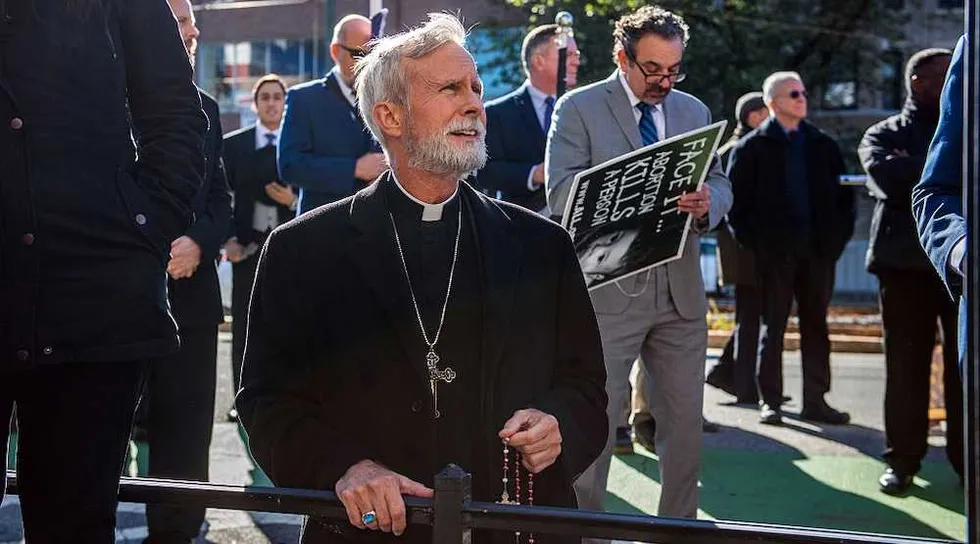 Photo by JOSEPH PREZIOSO/AFP via Getty Images
That’s why I have introduced legislation to give low-income families more flexibility to choose the child-care option that fits their situation.
I have also introduced legislation to eliminate marriage penalties that discourage single parents from marrying.
And I have also introduced a bill to close a loophole so women who choose not to return to work after giving birth cannot be forced to reimburse an employer for health insurance premiums from the year they delivered.
Similarly I support legislation that would hold fathers accountable for pregnancy costs as part of child support. I supported expanding the Child Tax Credit in the One Big Beautiful Bill Act, and I advocate extending the credit to cover the months of pregnancy.
We’ve made real progress since the Dobbs decision. Thirteen states, including my home state of West Virginia, protect life from the moment of conception. In Congress, the One Big Beautiful Bill Act finally defunds big-abortion providers.
The fight has only begun. As long as I’m in public service, I will work to protect every life from the moment of conception — and to ensure federal policy puts the American family first.
The GOP can’t ‘wield’ the administrative state without being corrupted by it
Many Americans have watched Peter Jackson’s movie trilogy “The Lord of the Rings.” And many have read J.R.R. Tolkien’s books. Some can quote whole passages and trace Tolkien’s deliberate references to the life of Christ and the horror of modern war.
Maybe House Speaker Mike Johnson (R-La.) and Senate Majority Leader John Thune (R-S.D.) live in that camp. If not, they should.
The Republicans’ plan cannot be ‘use federal power while we have it, then trust the next guys.’
A crucial scene comes early in the saga. The council debates what to do with the One Ring, the ultimate source of power. Boromir makes an understandable, dangerous suggestion — a perfect expression of fallen man’s temptation: “Give Gondor the weapon of the enemy. Let us use it against him.”
Aragorn stops him with two sentences rooted in humility and truth: “You cannot wield it. None of us can.”
That is the lesson Republicans must learn now, while they still hold majorities.
Dismantle the machine, don’t borrow it
Many supporters of President Trump want Congress to act boldly. They also want something more important: They want Republicans to roll back the reach and scope of the federal government while they can. If the GOP refuses, Democrats will inherit the same machinery and use it without restraint. Not someday. Soon.
If you think I exaggerate by calling Democrats the enemy or warning that we are doomed, consider a recent message from the second-highest-ranking elected congressional Democrat in the country, House Minority Leader Hakeem Jeffries of New York. Jeffries posted a video of White House adviser Stephen Miller on X.com and wrote: “Donald Trump will leave office long before the five-year statute of limitations expires. You are hereby put on notice.”
Jeffries did not allege a crime. He did not explain what Miller did wrong. He did not argue facts or law. He issued a threat: We will punish you later because we can.
That is what Republicans keep forgetting. The federal government’s power does not idle in neutral. It exists to be used. If it remains in place, someone will use it — and progressives have already shown what they want to do with it.
Which raises the central point: Nobody can safely wield that power. Not congressional Republicans. Not any administration. The correct move is not to grab the weapon and promise better behavior. The correct move is to destroy the weapon.
Fraud stories shine a bright light
Start with something as basic as fraud.
Look at the unraveling of the Somali day-care scandal in Minnesota and the billions of stolen tax dollars. That story grew so large that it helped end Minnesota Democrat Gov. Tim Walz’s re-election ambitions. Yet the government did not uncover it.
Not the Government Accountability Office. Not the Congressional Budget Office. Not the Office of Management and Budget. Not House or Senate oversight committees. Not the IRS. Not the Small Business Administration. Not the armies of full-time staffers inside federal agencies reporting up to inspectors general whose job description exists for this very purpose.
All that government power — and it did nothing.
RELATED: America now looks like a marriage headed for divorce — with no exit
 mathisworks via iStock/Getty Images
The scandal came to light because of the tenacity of a 23-year-old guy with a camera. If the federal machine can miss fraud on that scale, imagine what else it misses.
Fraud saturates the system. Estimates run as high as $500 billion — roughly 7% of the $6.8 trillion federal budget. That budget still reflects COVID-era spending levels. In 2019, Washington spent $4.45 trillion. Why did we never return to pre-COVID levels?
Because money is power. And like Boromir, too many people convince themselves they can wield it.
Ethics are not enough
Energy policy shows the same temptation in real time.
My nonprofit organization, Power the Future, sent another letter to House and Senate oversight committees and to Attorney General Pam Bondi urging investigations into Biden’s energy secretary, Jennifer Granholm. In the final days of the Biden administration, Granholm awarded $100 billion in green-energy grants — more than the previous 15 years combined. Many recipients had previously supported her political campaigns.
Green money poured out of Washington through the misnamed Inflation Reduction Act, which allocated $60 billion for “environmental justice” — a phrase so deliberately amorphous that it has no fixed meaning. Team Biden spent $1 trillion “going green,” a statistic Vice President Kamala Harris bragged about during her lone 2024 debate with Donald Trump.
That entire structure still stands.
Nothing prevents the current energy secretary, Chris Wright, from spending billions on his favorite projects except his ethics. I believe Wright has ethics in abundance. We should feel grateful. But one man’s ethics do not qualify as a system of government.
The next secretary could be worse than Granholm. If the power remains, someone will use it.
RELATED: Nuke the filibuster or brace for the next impeachment campaign
 Viktoriia Melnyk via iStock/Getty Images
Empty the arsenal
Just as in Tolkien’s masterpiece, our enemies do not wait quietly. They scheme. They train. They amass armies of lawyers, activists, operatives, and bureaucrats. They build institutional pipelines that outlast elections. They do not go home after losing once. They plan the return.
Republicans need to plan as well — and their plan cannot be “use federal power while we have it, then trust the next guys.”
One party will not hold Washington forever. When conservatives lose power, they should make sure the left inherits a reduced federal government: weaker, narrower, stripped of the patronage systems and enforcement tools that now function as political weapons.
That is why it is incumbent upon congressional Republicans to do everything in their power — everything — to destroy the Ring.
America’s founders envisioned a weak federal government for this reason. In America’s 250th year, Congress should act like it understands the danger of concentrated power. If Republicans keep the machinery intact, they will regret it. If the Ring finds its next master, it will not spare the people who once held it.
Google’s new motto: Don’t be Christian
Google once had an informal motto: “Don’t be evil.” How about be ideologically driven? Opaque? Arbitrary?
Google sells itself as online Switzerland — a neutral search engine that doesn’t tilt one way or the other. That neutrality vanishes fast when you search for something its algorithm doesn’t like. Suddenly the thing you want becomes strangely hard to find unless you already know exactly where it lives. If you don’t, good luck.
You can’t fix what you’re not allowed to understand.
And good luck advertising it, too — if Google disapproves.
Most people still think of Google as a search engine. That’s outdated. Google is the 900-pound gorilla of online advertising through Google Ads. It has vacuumed up so much of the market that anyone who wants to advertise online usually has to go through Google’s pipeline, under Google’s terms, with Google acting as judge and jury.
This isn’t the print era, when advertisers bought space from newspapers and magazines directly, publication by publication. Today, a huge share of the ad economy runs through a single gatekeeper.
Some might call that a monopoly. Monopolies become even more dangerous when they turn ideological.
Google — and it is far from alone — leans hard left. It dislikes conservative and Christian content, and it has learned how to suppress it without leaving fingerprints. It buries the content in search rankings so that almost no one sees it unless they already know where to look. It throttles monetization. It blocks ads with vague warnings and “policy” language designed to end the conversation.
Google and TikTok now appear to be doing the same thing to faith-based content.
Have you heard of TruPlay? Probably not. That’s the point.
TruPlay is an entertainment app that offers faith-based games and videos for kids. It’s explicitly family-friendly — no sexual themes, no violence, no garbage disguised as “content.” Parents want that. Millions of them. There’s a market for wholesome screen time, and there’s money to be made providing it.
But according to the American Center for Law and Justice, Google has refused to do business with TruPlay for ideological reasons. The ACLJ says Google rejected TruPlay’s efforts to launch advertising campaigns, citing “religious belief in personalized advertising.”
Read that again. Google flagged religious belief as the problem.
The ACLJ says TruPlay tried to comply, filing appeals and revising its ad content repeatedly, only to receive the same rejection notices no matter what changes it made. The ads weren’t inflammatory. They were straightforward: “Turn Game Time into God Time,” “Christian Games for Kids,” “Safe Bible Games for Kids.”
Google’s policy supposedly prohibits “selecting an audience based on sensitive information, such as health information or religious beliefs.” But TruPlay wasn’t targeting a religious audience or harvesting private data. It was advertising Christian kids’ content to the general public.
Google’s response wasn’t “you’re targeting.” It was “your content is too sensitive to advertise.”
That’s the move. “Sensitive” once meant porn, violence, or content not suitable for children. Now it means “Christian games for kids.”
TikTok, the ACLJ says, applied the same logic with even less transparency. The platform allegedly suspended TruPlay’s advertising account over unspecified “repeated violations,” without explaining what those violations were. The ACLJ says one rejected ad contained the word “church.” Another issue allegedly involved an App Store preview image showing Jesus on the cross — not in the ad itself, but in the app’s images. The ACLJ claims TikTok barred advertising anyway.
RELATED: Google’s new plan: To learn everything about you from your online shopping
 Photo by Idrees MOHAMMED/AFP via Getty Images
You can’t fix what you’re not allowed to understand. That’s the point of opacity. You don’t get a rule you can follow. You get a verdict.
What makes this even more revealing is the economic angle. This isn’t Google or TikTok avoiding ads that risk scaring off customers. TruPlay offers the kind of content parents actively want. Platforms should want that money. Instead, they appear willing to lose revenue just to suppress anything overtly Christian and family-friendly.
The ACLJ has sent a letter to Rep. Jim Jordan (R-Ohio), chairman of the House Judiciary Committee, urging an investigation into what it calls “systemic discrimination” against Christian content creators and advertisers — part of a broader pattern of viewpoint-based censorship.
Google and TikTok will respond with the standard defense: We’re private companies. We can do what we want.
Fine. But stop pretending you’re Switzerland. If you present yourself as a neutral platform open to all, while quietly functioning as a political gatekeeper, you don’t get to hide behind the language of neutrality when people notice the double standard.
You can’t have it both ways. Either you’re Switzerland — or you’re not.
Google and TikTok are not. It’s time to treat them accordingly.
Conservatives can’t barbecue their way through national collapse

Conservatives want to be left alone. They have families, jobs, churches, hobbies. They love their country, but they stay busy and comfortable. Politics feels like something for other people — activists, ideologues, the perpetually aggrieved. The left may dream of tearing the system down in a fiery Marxist revolution, but one solid vote every couple of years or so should keep the crazies in check. Then it’s back to work, back to Little League, back to the barbecue.
That belief sustained many on the right for decades. It has become a liability.
A vote followed by retreat no longer suffices. Saving the country requires engagement, sacrifice, and the willingness to place political reality over personal comfort.
The sunshine conservative lives under the assumption that the American system more or less runs itself, that excesses can be corrected with minimal effort, and that power remains constrained by shared norms. Those assumptions no longer hold. The times that try men’s souls have returned, and the sunshine conservative is about to discover that comfort carries a cost.
For years, a bipartisan consensus reshaped the country through mass immigration. Call it conspiracy if you like, but incentives explain it better.
Democrats saw a reliable path to permanent power. Immigrants arrive without wealth, social capital, or political leverage. They gravitate toward the party that promises redistribution and protection. Every program — health care, housing, loans, benefits — tilts toward newcomers. Open borders grow government, entrench dependency, and expand the progressive patronage machine.
Republican incentives looked different but proved just as corrosive. Conservative voters opposed mass immigration, legal and illegal alike, but party leadership feared one thing above all else: being called racist.
Progressive programming successfully framed the idea of America as a homeland — run for the benefit of its people — as morally suspect. Any attempt to articulate national interest became “nativism.” Chamber of Commerce Republicans exploited that fear, importing millions of workers willing to accept suppressed wages while silencing critics through ritual denunciation.
While the country changed, conservatives largely stood aside. The transformation unsettled them, but lawn care got cheaper and food delivery faster. The sunshine conservative preferred comfort to confrontation. Political activism felt vulgar. Winners, after all, make money and buy boats.
Now the bill has come due.
Human trafficking. Drug flows. Violent crime. Overcrowded hospitals. Stagnant wages. Exploding housing costs. The social fabric frays under the weight of policies designed to benefit elites while disciplining everyone else.
RELATED: Aristotle’s ancient guide to tyranny reads like a modern manual
 Blaze Media Illustration
The Trump administration’s effort to remove the worst offenders collides with a system addicted to inflow. Obvious solutions exist — employer enforcement, E-Verify, ending the H-1B visa scam, taxing remittances heavily — but those measures threaten donor interests. Instead, enforcement proceeds piecemeal, state by state, criminal by criminal.
Each attempt to exercise authority triggers panic among mainstream conservatives. They fret about optics. They warn about norms. They clutch abstractions while the left shoots at or runs over federal agents, storms churches, and treats public order as optional. Establishment voices agonize over power even as their opponents wield it without hesitation.
A friend of mine returned from the Global War on Terror with what doctors labeled post-traumatic stress disorder. The diagnosis missed the point. His trauma didn’t come from violence alone. It came from clarity. He had lived in a world where stakes mattered, where power operated openly, where failure carried consequences. Returning to a culture submerged in therapeutic language, pronouns, and safe spaces proved disorienting. Everyone else lived inside a fantasy and demanded that he play along.
Eventually, he learned to stay quiet. He still regards much of what surrounds him as childish and unmoored from reality.
That reaction mirrors what many feel toward sunshine conservatives. They cling to a story about politics that bears no resemblance to how power functions. When confronted with evidence, they demand that reality conform to their narrative. It never does. That narrative existed to pacify them, to make them manageable. They defend it with the same fervor with which the left defends its own delusions.
Each crisis cracks the façade. An assassination. A church invasion. A city surrendered to disorder. Every time, a few more conservatives wake up — only to be swarmed by those demanding a return to small talk about tax rates and process. The problem never lay with those who saw the danger. It lay with those insisting everyone else look away.
RELATED: The left’s ‘fascism’ routine is a permission slip for violence
 Blaze Media Illustration
The question no longer concerns policy tweaks. It concerns survival. One side believes the country deserves preservation and repair. The other treats it as illegitimate and disposable. That divide cannot be bridged by nostalgia or proceduralism.
The sunshine conservative era has ended. Saving the country requires engagement, sacrifice, and the willingness to place political reality over personal comfort. It requires choosing the future of one’s children over quarterly returns. It requires the disciplined use of power to defend the nation’s institutions, borders, and communities — even when that makes polite society uncomfortable.
A vote followed by retreat no longer suffices. The fantasy that it does belongs with other comforting lies. The right can either shed it or be ruled by those who never believed it in the first place.
How the 30-year mortgage helped create a permanent housing bubble
You won’t hear many people object to President Trump’s executive order to ban corporate purchases of residential homes. The idea sounds like common sense. But it targets a minor symptom while leaving the real disease untouched — and in some respects, it risks making that disease worse.
Institutional home-buying already peaked during the COVID-era bubble and has receded since then. In most markets, corporate ownership represents a small share of total inventory. Even at its height, it never explained why housing costs exploded for everyone else. High prices created the opportunity for institutional buyers, not the other way around.
The goal should not be cheaper debt. It should be cheaper homes.
Government policy inflated the housing market. Institutional buyers simply responded.
During COVID, the Federal Reserve pushed interest rates toward zero. Mortgage rates fell below 3%. At the same time, the Fed bought roughly $2.7 trillion in mortgage-backed securities, and HUD expanded “affordable homeownership” programs that widened the pool of subsidized buyers. Those policies produced predictable results.
When the government offers 2.5% interest for 30 years — often paired with minimal down payments backed by the FHA — buyers flood the market. Sellers respond by raising prices. The bubble becomes a feature, not a bug.
Institutional buyers entered that environment because it looked like easy money. Higher home prices also pushed rents up, so developers built more homes for long-term rental. Both trends flowed from the same source: a government-shaped market that made housing unaffordable, then subsidized the unaffordability.
Trump now seems focused on the symptom — corporate buyers — while ignoring the machinery that inflated the market in the first place.
He has spent months fighting Federal Reserve Chairman Jerome Powell to bring rates back down toward zero. Meanwhile, the Federal Reserve still holds about $2.1 trillion in mortgage-backed securities. Trump has also announced a plan for Fannie Mae and Freddie Mac to purchase another $200 billion in MBS. The stated goal is to lower mortgage rates.
But the goal should not be cheaper debt. It should be cheaper homes.
 mphillips007 via iStock/Getty Images
Artificially lowering rates props up prices and slows correction. Prices in many markets have begun to soften. That correction should continue. Policies designed to suppress rates will keep prices elevated and risk inflating the next bubble.
That brings us back to corporate home-buying. Even at the COVID peak, institutional buyers — defined as entities owning at least 100 single-family homes — owned about 3.1% of the housing stock. That number has since fallen to around 1%. Investors see the market turning, and they have started backing away.
So Trump’s corporate-purchase ban arrives late, targets a relatively small share of the market, and risks becoming cosmetic cover for policies that keep the bubble inflated.
If Trump wants to drive prices down and permanently realign housing with median incomes, he has to reverse the policies that inflated the bubble. That means attacking the structure, not the headline.
Get government out of the mortgage market. Trump’s next Federal Reserve chair must commit to unwinding the Fed’s mortgage-backed securities portfolio. That $2.1 trillion cushion keeps mortgage rates lower than the market would otherwise set. Those artificially low rates inflate home prices.
End universal “homeownership for everyone” policy. The federal government keeps subsidizing buyers who are not ready to buy. Those programs inject cash into housing demand that would not exist in a real market. The goal should align prices with income, not chase a utopian dream of universal ownership. After decades of subsidies, deductions, and federal credit support, the home ownership rate still sits around the mid-60% range.
Stop chasing near-zero interest rates. A 30-year loan at 2% sounds appealing until you realize what it does to prices. Cheap money bids up homes across the board. Buyers pay the price forever even as politicians brag about the “deal.” Trump should let the market set rates. Recent rate cuts have not restored normal home buying either. Sales remain weak because prices remain too high.
End the 30-year fixed mortgage. Instead of floating longer loans — 50 years? Madness! — the country should move in the opposite direction. Before the New Deal era, short-term mortgages, often three to seven years, dominated the market. Federal policy transformed that structure.
Franklin D. Roosevelt signed the National Housing Act of 1934, establishing the Federal Housing Authority. The FHA insured long-term, fully amortizing mortgages with fixed rates, low down payments, and standardized payment schedules. That system moved the market away from short-term balloon loans and laid the foundation for longer terms.
RELATED: America tried to save the planet and forgot to save itself
 jhorrocks via iStock/Getty Images
Congress eventually authorized the 30-year mortgage in 1954. VA loans under the GI Bill and the expansion of Fannie Mae and Freddie Mac later built a secondary market that made long-term fixed-rate loans attractive to lenders.
Government insurance, guarantees, and liquidity support made 30-year fixed mortgages feasible, which is why they represent 80%-90% of U.S. mortgages today. Without those interventions, lenders would not carry that risk.
The larger point remains simple: Sellers can’t charge prices buyers can’t pay. Prices explode only when government subsidies and government-backed long-term debt expand what buyers can “afford” on paper.
Unwind the subsidies. Unwind the guarantees. Unwind the cheap-money machinery. Let incomes, not federal policy, set the ceiling.
Housing should function like other consumer markets, not be engineered by Washington. Prices should reflect what people earn.
That’s the fix. Everything else treats symptoms and pretends to solve the problem.
Voters won’t buy ‘freedom in Iran’ while Minneapolis goes lawless
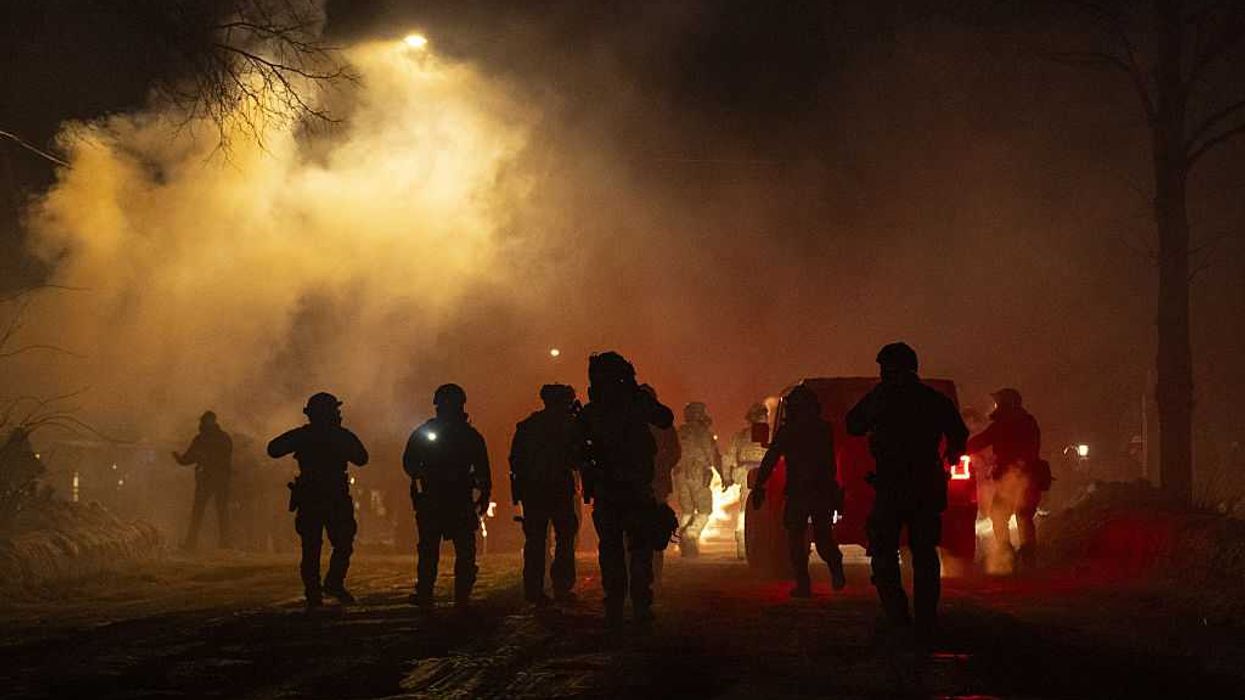
My buddy Ryan Rhodes, who’s running for Congress in Iowa’s 4th District, drove north to Minnesota to see the chaos in Minneapolis up close. What he found looked worse than the headlines.
“You have a really Islamo-communist set of people who we have imported” to this country, Rhodes told me. “I think you’ve got a lot of Muslim Brotherhood agents in there, people whose message is, ‘We have taken over this city.’ Forget just elections. We lose our country if we keep allowing these people to come in.”
Americans can handle hard truths. They can handle sacrifice. They can handle a fight. What they won’t handle is watching the bad guys win again.
Rhodes wasn’t talking like a guy chasing clicks. He sounded like a guy staring at the map and realizing tyranny doesn’t need a passport. It can sit three hours from your front door.
So forgive me if I don’t have much patience for the foreign-policy sermonizing right now. How am I supposed to sell voters on “freedom in Iran” while Minneapolis slides toward lawlessness and Washington keeps acting powerless to stop it?
That pitch collapses fast with working-class Americans, especially while the economy limps along and trust remains thin on the ground. Republican voters want competence, results, and consequences for people who harm the country. They want accountability at home first.
We’ve lived what happens without it.
COVID cracked Trump’s first term because bureaucrats and “experts” ran wild, issued edicts, trashed livelihoods, and faced zero consequences. Then the George Floyd riots poured gasoline on the fire. Cities burned while federal authorities watched the destruction unfold.
Trump’s comeback last year required more than winning an election. It required overcoming a full-scale assault on the country’s spirit — and on the right to live as free citizens. The machine didn’t just beat Republicans at the ballot box. It hunted them. Roughly 1,400 Americans were rounded up by the Biden regime over the January 6 “insurrection.” They went after Trump too. They went after anyone in their way.
Those four years didn’t just wreck careers in Washington. They reached down to the local level — school boards acting like petty dictators, public health officials issuing mask and jab mandates, and doctors’ offices turning into political compliance centers. Families paid the price.
Now the country watches the same disease spread again.
People see domestic radicals attack federal officers in the streets. They watch Minnesota Gov. Tim Walz (D) posture like a man protecting the mob, not the public. They hear Minneapolis leaders talk like ICE has no right to exist inside city limits. The footage looks like a warning, not an isolated event.
Remember CHAZ/CHOP in Seattle in 2020? That’s the template: Declare a zone off-limits to law, romanticize the lawlessness, and dare the state to reassert control. Every time the government blinks, the radicals learn the lesson: Push harder.
Demoralization has started to set in. I see it on Facebook and on the ground. In Iowa, I’m seeing campaign photos that would’ve been unthinkable in past cycles: small crowds, low energy, people staying home. Iowa has its first open Republican gubernatorial primary in 15 years, and the mood should feel electric. Instead, it feels like exhaustion.
As things stand, fewer Republicans will vote in the June primary than voted in the 2016 Iowa caucuses. That’s unheard of. Iowa has more than 700,000 registered Republicans. I wouldn’t bet on even 200,000 showing up.
That should terrify the White House.
RELATED: America now looks like a marriage headed for divorce — with no exit
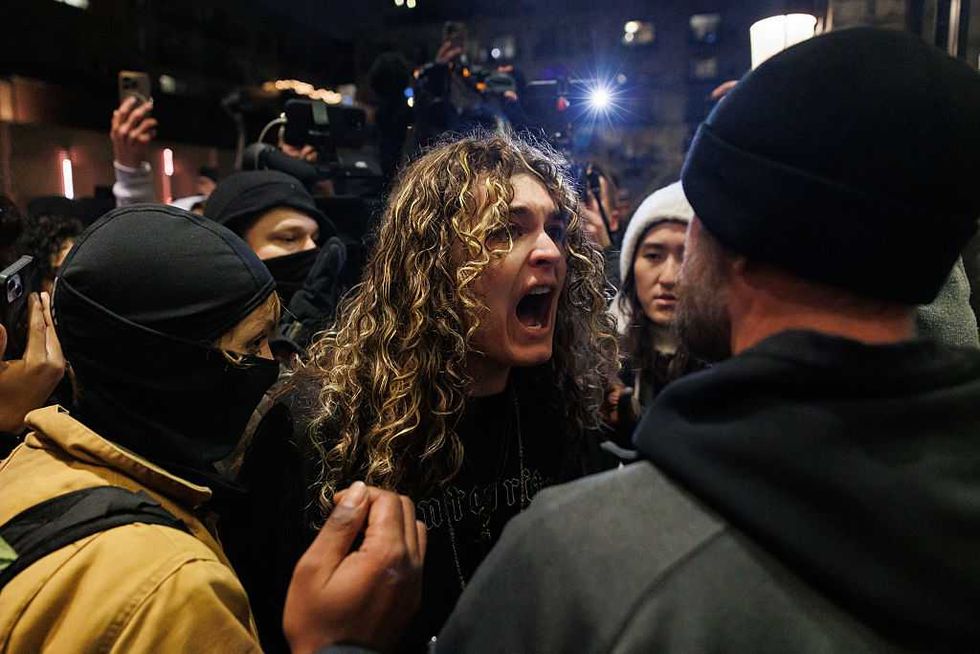 Photo by Madison Thorn/Anadolu via Getty Images
Trump isn’t on the ballot in Iowa anymore. He doesn’t need to win another primary. But the movement still needs to win elections. It needs to win them in places like Iowa — and it needs to win them while the country watches cities like Minneapolis drift toward foreign-flag politics and open contempt for American sovereignty.
Rhodes put it bluntly: If we don’t stop this, we’re watching an Islamic conquest play out in real time, one “sanctuary” city at a time. Great Britain didn’t fall in a day. It surrendered by degrees.
So what do voters need to see now?
Not another speech. Not another promise. Not another commission. Not another “investigation” that ends in a shrug.
They need to see what they were promised when Trump ran for a second term: accountability.
If the country watches Minnesota slide into open defiance of federal law and nobody pays a price for it, voters will conclude the system can’t defend them. And if the system can’t defend them at home, it has no credibility abroad.
Start with Minnesota. Make it plain that “no-go zones” don’t exist in the United States. Enforce the law. Protect federal agents. Prosecute the people who assault them. Strip federal money from jurisdictions that obstruct enforcement. Treat organized lawlessness like organized lawlessness, not a political disagreement.
Americans can handle hard truths. They can handle sacrifice. They can handle a fight.
What they won’t handle is watching the bad guys win again — without consequences.
America now looks like a marriage headed for divorce — with no exit
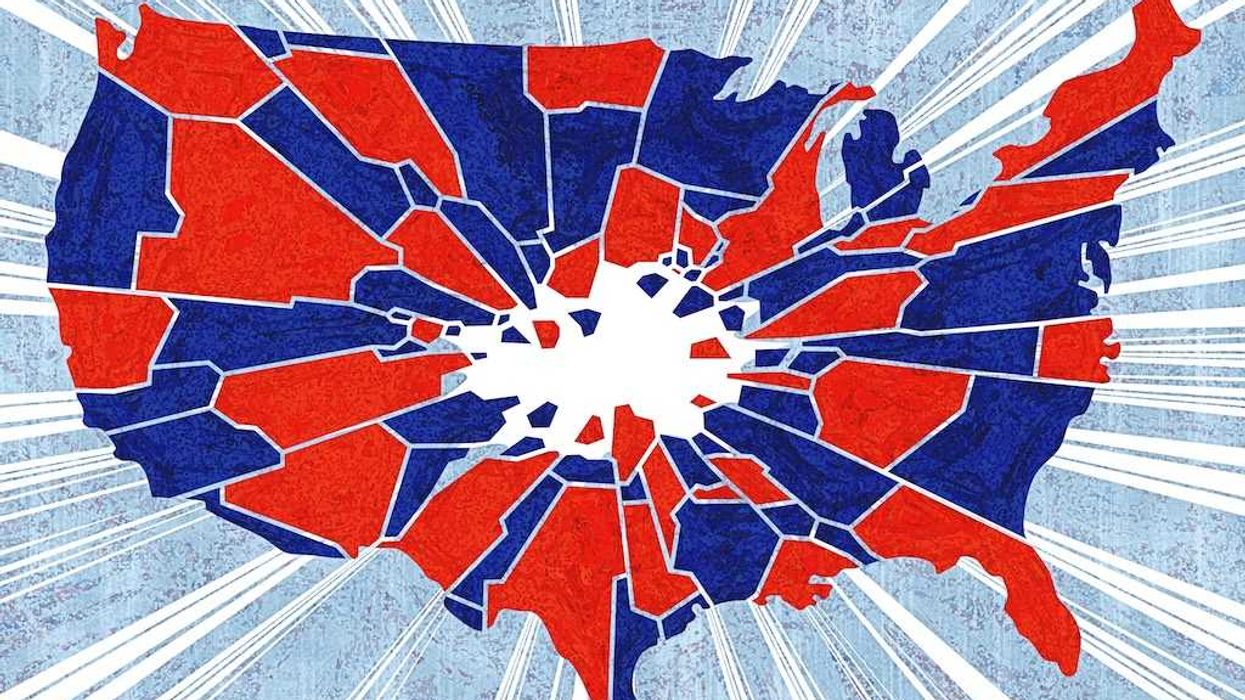
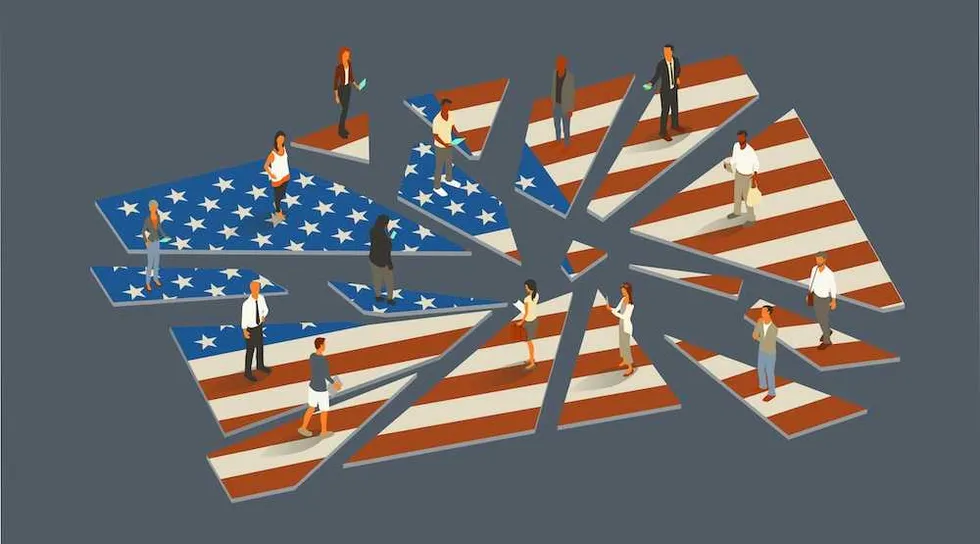
Marriages rarely end over one argument. They fall apart through a long breakdown in communication, a growing inability to resolve disagreements, and the slow realization that two people no longer walk toward the same future.
Healthy marriages don’t require full agreement on every subject. They require compromise on the decisions that shape daily life: money, children, priorities, responsibilities. They also require shared goals.
No tidy divorce court exists for a nation-state. We share one flag, one legal framework, and one public square.
When those goals diverge — and neither side will realign — the relationship becomes unsustainable. The law calls the condition “irreconcilable differences.”
America now lives in that condition.
We remain bound under one nation, one Constitution, and one civic home. But we no longer share a common purpose. We no longer share a common story about what the country is, why it exists, or whether it deserves to endure.
This conflict no longer turns on tax rates or regulatory policy. It turns on the legitimacy and direction of the American experiment itself.
The modern left no longer argues about how to preserve the American system. It treats the system as the problem. Democratic leaders and activists call for “fundamental transformation,” flirt with socialism, and talk about the founding less as a flawed but noble legacy than as a moral failure that demands replacement. In that worldview, America doesn’t need reform. America needs erasure.
The right still believes the country can be repaired and preserved. The left increasingly treats the country as something to dismantle.
This rupture shows up in concrete ways. In 2021, the National Archives placed a “harmful language” warning on the Constitution and the Declaration of Independence — the documents that define the nation. That doesn’t signal ordinary partisan dispute. It signals contempt for the country’s moral foundation.
Socialism sits at the center of this divide. It contradicts the American system at its roots. America rests on the premise that rights come from God, not government. Socialism elevates the state over the individual and makes rights conditional on political approval. It centralizes power in the name of enforced equality — “equity.”
RELATED: Americans aren’t arguing any more — we’re speaking different languages
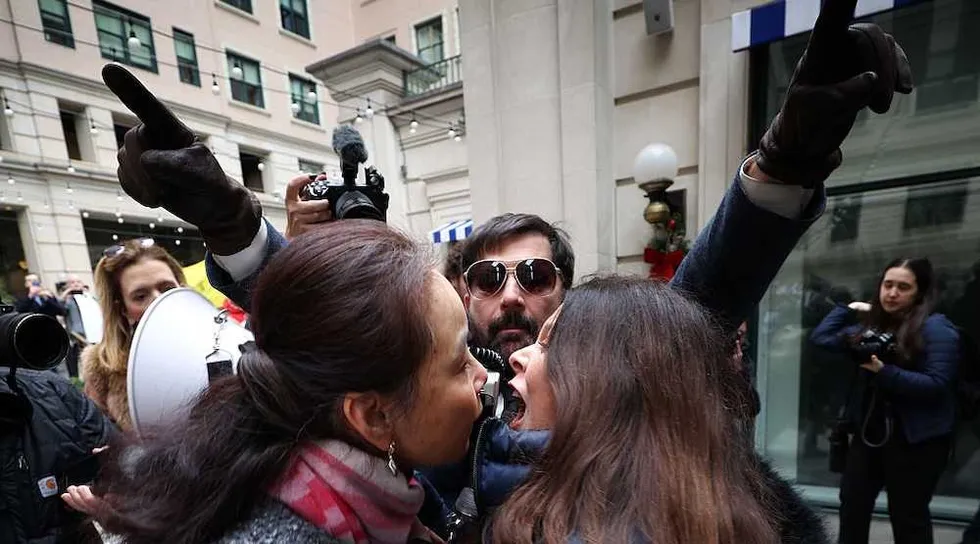 Photo by Win McNamee/Getty Images
America protects private property as an extension of liberty. It channels ambition into innovation and prosperity. Socialism treats success as a social offense and demands equality of outcome. When people refuse to surrender the fruits of their labor, socialism turns to coercion. Coercion requires centralized authority. Centralized authority punishes dissent.
The pattern repeats: less freedom, greater dependency, and a governing model incompatible with constitutional self-rule.
The irony remains hard to miss. The left calls Donald Trump “Hitler” while cheering figures like New York City Mayor Zohran Mamdani, an avowed socialist. Yet the Nazi Party sold itself as the National Socialist German Workers’ Party — a collectivist project built on centralized power and state control.
The same left often excuses Antifa, a movement built on intimidation, street violence, and political enforcement designed to silence opposition. Those tactics don’t belong to liberal democracy. They belong to regimes that fear debate.
Even basic reality has become contested. The left and right can’t agree on something as elemental as what a man or a woman is. The Supreme Court recently showcased the collapse when ACLU attorneys arguing sex-based discrimination refused to define “woman.” When a society refuses to name biological facts that every civilization once treated as obvious, compromise collapses with it.
This crisis goes deeper than polarization. It reaches the level of knowledge itself. The left increasingly treats biology, history, and moral limits as malleable social constructs. The right still believes objective reality binds us all.
These aren’t normal disagreements. They describe incompatible worldviews. And incompatibility carries consequences.
During the COVID era, polls found majorities of Democrats willing to endorse coercive measures against the unvaccinated, including house arrest. Nearly half supported imprisoning people who questioned vaccine efficacy. Those numbers didn’t represent a fringe. They revealed a growing comfort with state force in service of ideological conformity.
After Trump’s 2016 election, many friendships survived political conflict. By 2020, after years of dehumanization — after constant accusations of “Nazism” aimed at ordinary voters — many of those relationships broke. The political battle stopped sounding like disagreement and started sounding like moral extermination.
RELATED: Washington, DC, has become a hostile city-state
 Photo by Astrid Riecken For The Washington Post via Getty Images
In September 2025, someone assassinated Charlie Kirk. Large segments of the left didn’t just rationalize the killing. Many celebrated it.
After Scott Adams died following a long fight with cancer, prominent voices responded with mockery instead of decency. People magazine ran a headline labeling him “disgraced.” Even death became a political verdict.
This is what irreconcilable differences look like at a national scale.
A country cannot endure when one side believes the nation stands as fundamentally good — worthy of preservation and reform — while the other believes it stands as irredeemably evil and must be dismantled. Marriages end when partners stop seeing each other as allies and start treating each other as enemies.
Nations fracture for the same reason.
America cannot solve this the way a couple dissolves a marriage. The Constitution binds us to one civic order. No clean separation awaits. No tidy divorce court exists for a nation-state. We share one flag, one legal framework, and one public square.
When irreconcilable differences exist but separation remains impossible, the danger grows.
Only three paths remain: recommitment to constitutional principles, enforced coexistence through expanding coercion, or escalation into open conflict as dehumanization becomes normal.
Pretending this amounts to another election cycle, another policy dispute, or another cable-news food fight invites catastrophe. A nation cannot survive when its people no longer agree on what it is, why it exists, or whether it deserves to continue.
Unlike a failed marriage, America can’t walk away.
A protest doesn’t become lawful because Don Lemon livestreams it

What should have been a peaceful Sunday service at Cities Church in St. Paul, Minnesota, turned into a political ambush. Roughly 30 anti-ICE protesters pushed into the sanctuary mid-worship, chanting slogans and confronting church leaders as families tried to pray.
Disgraced former CNN anchor Don Lemon was there, too, livestreaming the chaos.
If activists can storm a church mid-service, scream at families, and then hide behind the First Amendment, the standard becomes simple: The loudest mob sets the rules.
The Department of Justice has opened a formal investigation and signaled that federal protections for houses of worship may apply. Assistant Attorney General Harmeet Dhillon noted on the “Glenn Beck Program” that the activists’ conduct could implicate the Freedom of Access to Clinic Entrances Act, which bars intimidation, obstruction, and interference with the free exercise of religion in places of worship. The protesters may have also violated the Ku Klux Klan Act, a post-Civil War law that makes it illegal to terrorize and violate the civil rights of citizens.
According to multiple reports, the demonstrators were tied to the Racial Justice Network and aimed their protest at a church leader they accused of working with Immigration and Customs Enforcement. The protest followed rising tensions in Minnesota after the fatal shooting of anti-ICE activist Renee Nicole Good during a confrontation with federal agents.
Lemon framed the entire spectacle as civic virtue. He insisted he was “not an activist, but a journalist” and argued that protest inside a church remains constitutionally protected speech.
The footage tells a messier story.
Video released after the incident shows Lemon interacting with the group beforehand, appearing familiar with organizers and the plan. One outlet described the operation as “Operation Pull-Up.” That undercuts the narrative Lemon later pushed — that he simply arrived to document an event that unexpectedly “spilled” into a worship service.
Intent matters. So does outcome. The outcome looked like this: a sanctuary overrun, a service derailed, congregants shaken, and children crying while activists shouted and gestured at the pews.
That is far from “peaceful assembly.” It is targeted disruption.
The First Amendment protects speech. It does not grant a roaming license to invade private spaces and commandeer them for political theater. Rights have edges because other people have rights too. Worshippers do not lose their liberty because activists feel righteous.
That basic distinction keeps a free society from collapsing into a contest of intimidation.
RELATED: Americans aren’t arguing any more — we’re speaking different languages
 Photo by Heather Diehl/Getty Images
This case matters because it tests whether the country still draws that line. If activists can storm a church mid-service, scream at families, and then hide behind the First Amendment, the standard becomes simple: The loudest mob sets the rules. Next week it will be another church. Then a synagogue. Then any gathering that activists decide deserves punishment.
The Justice Department is right to examine the FACE Act here. Congress passed it to stop coercion dressed up as protest — the use of obstruction and intimidation to prevent Americans from exercising basic freedoms. That principle doesn’t change because the target shifts from an abortion clinic to a church sanctuary.
The press corps’ selective outrage makes the problem worse. Cultural elites demand “safety” and “inclusion” in every other arena, but many of them treat Christian worship as an acceptable target. They police speech in classrooms and boardrooms, then shrug when activists shout down prayer.
That double standard signals something deeper than hypocrisy. It signals permission.
Lemon’s defense captured the rot in one sentence: Making people uncomfortable, he said, is “what protests are about.” Fine. Protest often makes people uncomfortable. But discomfort does not justify trespass. It does not excuse intimidation. It does not cancel someone else’s right to worship in peace.
A society that cannot protect sacred spaces will not protect much else for long. If the law refuses to punish conduct like this, the lesson will spread fast: Invade, disrupt, harass — then claim virtue and dare anyone to stop you.
America does not need a new normal where mobs treat churches like political stages. It needs consequences.





