

Category: Opinion & analysis
Why weight-loss drug prices finally fell — and who deserves credit

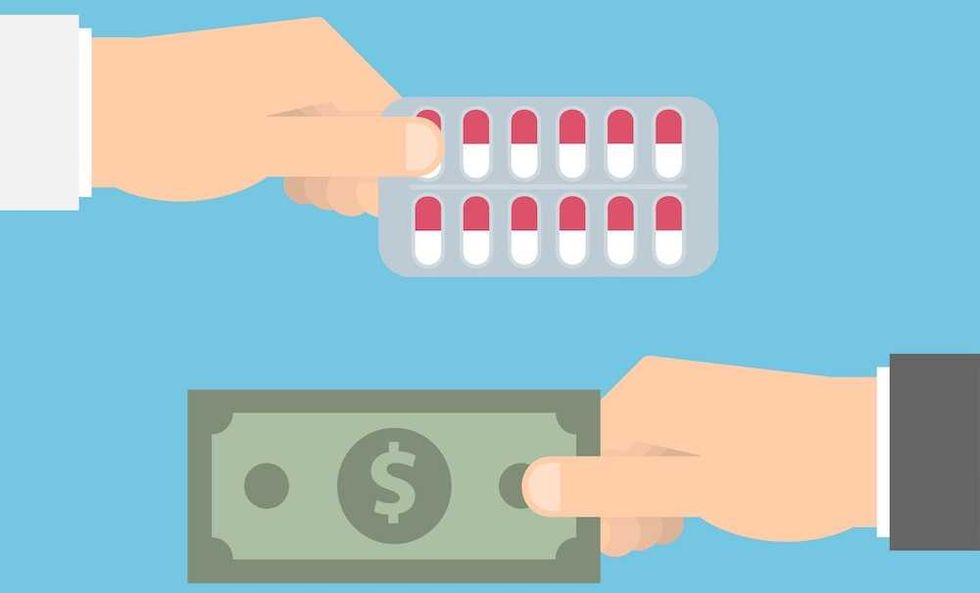
For decades, Americans heard the same justification for high drug prices. Pharmaceutical executives insisted those prices were unavoidable. Research costs required them. Innovation depended on them. The United States, as the world’s most open market, had to pay more than everyone else.
Then Eli Lilly cut the monthly price of one of its flagship weight-loss drugs, Zepbound.
If lower prices matter, then incentives matter more than bureaucracy. Competition and consumer access drive real change.
Nothing about the drug changed. No new scientific breakthrough appeared. The only thing that changed was competition. Once real pressure entered the market, Lilly found room in its pricing model that executives had long claimed did not exist.
The market responded quickly. Novo Nordisk, Lilly’s primary rival, lowered its prices soon after. This did not reflect a sudden gain in efficiency. It reflected fear of losing ground to a competitor.
That is how functioning markets work. When one major player moves, others adjust. The correction happens faster than any federal agency could hope to manage.
The irony is hard to miss. For years, the industry claimed margins were fixed and untouchable. Executives warned that any shift would damage shareholders and undermine global health. Yet the moment one company blinked, others followed. Consumers saw relief not because regulators intervened, but because competition exposed the old narrative as hollow.
Another force reinforced that shift. On Nov. 6, the White House announced a pricing agreement with major drug manufacturers scheduled to take effect in 2026. The agreement aims to narrow the gap between U.S. prices and those in other advanced economies and establishes a purchasing framework that makes reductions easier to implement.
That move marked a break from Washington’s habit of passively accepting industry talking points. The administration did not override the market. It amplified momentum competition had already created. Companies that once refused to consider cuts began to bend once the political cost of rigidity became clear. The announcement accelerated the trend, but competition started it.
A larger reality deserves attention. Major pharmaceutical companies have posted enormous profits for years. They have spent billions on stock buybacks and shareholder payouts while executive compensation soared. Market valuations across the sector reached historic highs. Lilly even became the first pharmaceutical company to surpass a trillion-dollar valuation.
Profit itself is not the problem. But competition forcing these firms to behave more like the quasi-utilities they resemble marks a welcome change from a system long treated as untouchable.
RELATED: The party that made life more expensive wants credit for noticing
 byemo via iStock/Getty Images
That system rests on a global arrangement in which Americans shoulder a disproportionate share of drug development costs. Wealthy nations negotiate prices or impose caps. The United States does not. The gap between what Americans pay and what others pay funds buybacks, dividends, and executive packages. Shareholders collect the upside.
The disparity speaks for itself. Drugs that cost hundreds of dollars overseas cost thousands here. The industry defended that gap by warning that research would collapse if prices fell. The current price cuts prove otherwise. Pipelines remain intact. Investment continues. Profitability holds. The model did not break when prices moved downward. It adjusted.
These developments expose a simple truth. Prices never reflected necessity. Incentives shaped them, reinforced by limited competition and political deference. Competition cracked open an inflexible model. The White House helped widen the opening.
Policymakers should learn from that sequence. If lower prices matter, then incentives matter more than bureaucracy. Competition and consumer access drive real change. The bloated regulatory machinery Washington favors often delays it. The market moved before Congress could even respond.
For Americans struggling to afford essential medication, that lesson matters most. Competition remains the strongest and most reliable force for bringing prices down.
It worked here. It can work again — if policymakers allow markets to function and pharmaceutical companies choose access over insulation.
Why weight-loss drug prices finally fell — and who deserves credit
For decades, Americans heard the same justification for high drug prices. Pharmaceutical executives insisted those prices were unavoidable. Research costs required them. Innovation depended on them. The United States, as the world’s most open market, had to pay more than everyone else.
Then Eli Lilly cut the monthly price of one of its flagship weight-loss drugs, Zepbound.
If lower prices matter, then incentives matter more than bureaucracy. Competition and consumer access drive real change.
Nothing about the drug changed. No new scientific breakthrough appeared. The only thing that changed was competition. Once real pressure entered the market, Lilly found room in its pricing model that executives had long claimed did not exist.
The market responded quickly. Novo Nordisk, Lilly’s primary rival, lowered its prices soon after. This did not reflect a sudden gain in efficiency. It reflected fear of losing ground to a competitor.
That is how functioning markets work. When one major player moves, others adjust. The correction happens faster than any federal agency could hope to manage.
The irony is hard to miss. For years, the industry claimed margins were fixed and untouchable. Executives warned that any shift would damage shareholders and undermine global health. Yet the moment one company blinked, others followed. Consumers saw relief not because regulators intervened, but because competition exposed the old narrative as hollow.
Another force reinforced that shift. On Nov. 6, the White House announced a pricing agreement with major drug manufacturers scheduled to take effect in 2026. The agreement aims to narrow the gap between U.S. prices and those in other advanced economies and establishes a purchasing framework that makes reductions easier to implement.
That move marked a break from Washington’s habit of passively accepting industry talking points. The administration did not override the market. It amplified momentum competition had already created. Companies that once refused to consider cuts began to bend once the political cost of rigidity became clear. The announcement accelerated the trend, but competition started it.
A larger reality deserves attention. Major pharmaceutical companies have posted enormous profits for years. They have spent billions on stock buybacks and shareholder payouts while executive compensation soared. Market valuations across the sector reached historic highs. Lilly even became the first pharmaceutical company to surpass a trillion-dollar valuation.
Profit itself is not the problem. But competition forcing these firms to behave more like the quasi-utilities they resemble marks a welcome change from a system long treated as untouchable.
RELATED: The party that made life more expensive wants credit for noticing
byemo via iStock/Getty Images
That system rests on a global arrangement in which Americans shoulder a disproportionate share of drug development costs. Wealthy nations negotiate prices or impose caps. The United States does not. The gap between what Americans pay and what others pay funds buybacks, dividends, and executive packages. Shareholders collect the upside.
The disparity speaks for itself. Drugs that cost hundreds of dollars overseas cost thousands here. The industry defended that gap by warning that research would collapse if prices fell. The current price cuts prove otherwise. Pipelines remain intact. Investment continues. Profitability holds. The model did not break when prices moved downward. It adjusted.
These developments expose a simple truth. Prices never reflected necessity. Incentives shaped them, reinforced by limited competition and political deference. Competition cracked open an inflexible model. The White House helped widen the opening.
Policymakers should learn from that sequence. If lower prices matter, then incentives matter more than bureaucracy. Competition and consumer access drive real change. The bloated regulatory machinery Washington favors often delays it. The market moved before Congress could even respond.
For Americans struggling to afford essential medication, that lesson matters most. Competition remains the strongest and most reliable force for bringing prices down.
It worked here. It can work again — if policymakers allow markets to function and pharmaceutical companies choose access over insulation.
Christian, what do you believe when faith stops being theoretical?
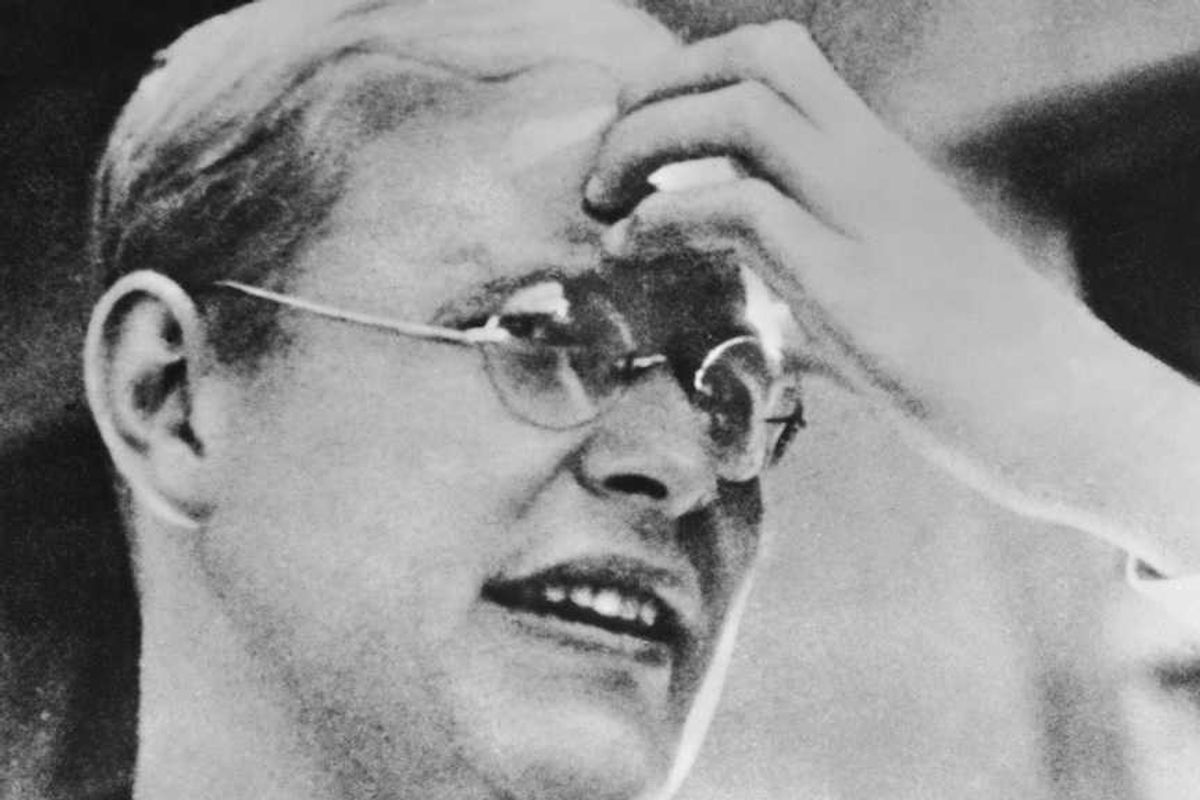
Dietrich Bonhoeffer once wrote from a prison cell, “It is only by living completely in this world that one learns to have faith.” He wrote those words after the world had closed in, when faith could no longer remain theoretical.
I live with someone who understands exactly what he meant.
In those moments, belief stops being a feeling and becomes a claim. Not something you summon, but something you test.
My wife, Gracie, has lived with disabilities for virtually her entire life. Hospital rooms and operating schedules do not interrupt our life — they form its familiar terrain. Over time, suffering has stopped being a concept and become a place we recognize.
I also have a friend who understands what Bonhoeffer was describing.
Her name is Joni Eareckson Tada. A diving accident in her teens left her a quadriplegic. Her life has unfolded under paralysis, chronic pain, and illness. She does not approach suffering from a distance.
Last year, during one of Gracie’s long hospital stays, Joni called.
Most people asked about Gracie. Joni did too. But then she asked about me.
That question deserved more than a stock reply.
I paused.
Moments like that strip away emotional self-examination and force you to examine your claims instead.
As I spoke with Joni, I shared something that has steadied me for decades.
In our church, there came a moment when the pastor would stop, look out over the congregation, and ask a single question: “Christian, what do you believe?”
We did not improvise. We did not search for language that felt expressive or current. We stood and recited the Apostles’ Creed or the Nicene Creed. No personal spin. No tailoring belief to the moment. Just a clear declaration of what had been received.
That question stayed with me.
It returned again and again over the years, especially in places where explanations had lost their usefulness. I learned the limits of “why.” Even good answers rarely hold steady there.
In those moments, belief stops being a feeling and becomes a claim. Not something you summon, but something you test.
If Christ is who I say He is, then what does that require of me here?
I was not trying to manufacture courage or resolve. I was asking whether the faith I professed in calm settings could bear weight when standing itself cost something.
“Christian, what do you believe?”
Over time, many of the questions I once carried narrowed to that one. Not because the pain diminished or the losses stopped coming, but because belief, when real, clarifies responsibility.
The apostle Peter tells believers to be ready to give an answer for the hope within them. That readiness has nothing to do with eloquence. It comes from knowing where you stand.
As a new year begins, many caregivers feel little sense of reset, except for the deductible and the co-pay.
Some stand outside an ICU, looking through glass at someone they love. Others stand in different hallways, facing different kinds of loss. Different rooms. The same ache.
RELATED: Do not pass the plow: The danger of declaring a golden age without repentance
 John J. Kim/Chicago Tribune/Tribune News Service via Getty Images
Bonhoeffer did not write from a place of safety or control. He wrote from confinement, where faith could no longer remain theoretical. Many recognize that narrowing, the sense that life has closed in and the ground beneath you has given way.
Faith is learned there, not discussed.
Exhaustion thins memory. Words scatter. Not everyone can recall creeds when sleep runs short and decisions carry real weight. But belief does not measure itself by recall. It reveals itself by posture.
When the floor gives way, you still need to know where to stand.
If He is Lord at all, then He is Lord of all.
Not only of sanctuaries, but of hospital corridors.
Not only of strength, but of weakness.
Not only of moments we would choose, but of moments we would never script.
That confession does not remove pain. It does not explain every loss. But it does tell us where to stand when the world presses in.
And when glass separates you from the one you love, whatever room that glass happens to be in, the question does not stay abstract.
It turns personal.
Christian, what do you believe?
Trump’s agenda faces a midterm kill switch in 2026
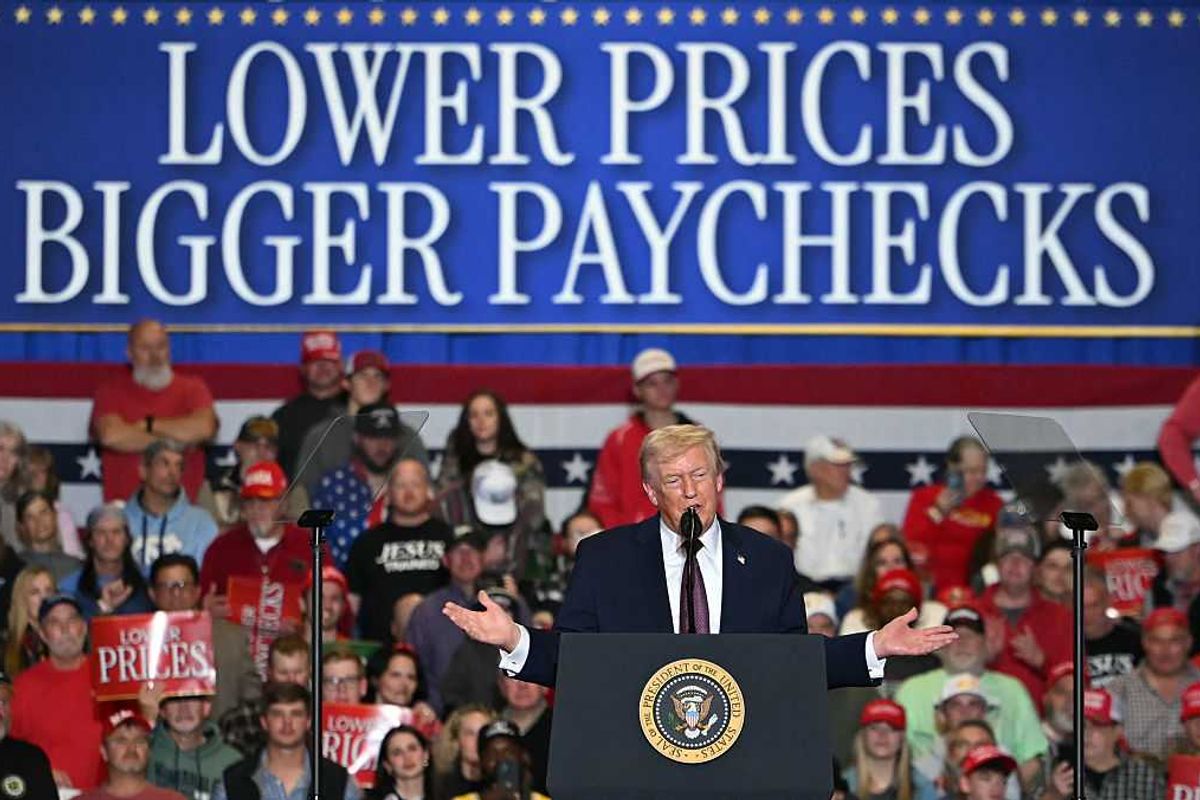
Ten months ahead of November’s midterms, political and economic crosscurrents are colliding. Which of these conflicting trends prevail will greatly shape the next two years. And possibly even longer.
Midterm elections are always important. Besides gauging the country’s political mood, they have proven integral to maintaining America’s political equilibrium.
For good or ill, incumbent presidents and their party own the economy. The question is: Which economy will Republicans own?
They are the “ebb” to the “flow” of America’s political tide. Historically, every four years a large tide of voters go to the polls and elect a president. Then every two years, the large voter flow ebbs back, and the president’s party suffers accordingly.
This midterm is particularly important to Trump because he has proven susceptible to being baited by his opponents. After 2018, Rep. Nancy Pelosi (D-Calif.) returned to the House speakership and unrelentingly harassed Trump over the last two years of his first term. These distractions and obstructions — especially during COVID — were undoubtedly a factor in Trump’s narrow 2020 Electoral College defeat.
Today’s political crosscurrents are pronounced. We know the president’s party historically loses seats. The last two two-term presidents, George W. Bush and Barack Obama, suffered congressional losses averaging 22 House seats and 7.5 Senate seats.
Such losses would hand Democrats control of Congress, giving them a House majority larger than Republicans’ narrow edge and a Senate majority bigger than the GOP’s current six-seat margin. Such outcomes would end Trump’s legislative agenda, and Democrats could set their own. To understand the potential impact, play back the recent funding impasse when Democrats shut the government down for the longest period ever — despite lacking control of either chamber.
While Trump would be able to veto Democratic legislation and Republican numbers would be ample to uphold his vetoes, Democrats would have a formal hand in shaping the political agenda. This could greatly help their 2028 presidential prospects.
RELATED: Republicans are letting Democrats lie about affordability
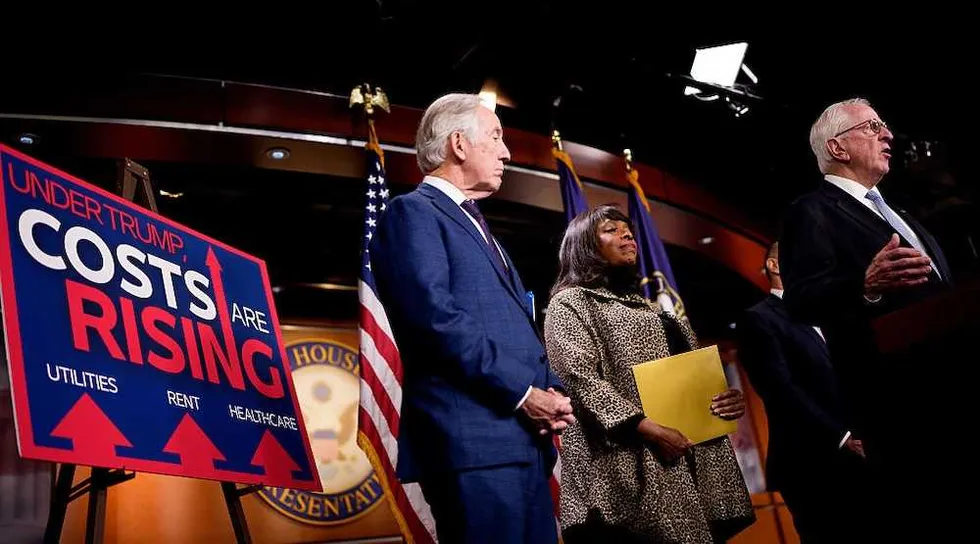 Photo by Andrew Harnik/Getty Images
Current politics are blunting the historical midterm flow, however. Trump is divisive, with just a 43.4% favorable rating; however, his job approval rating of 43.1% is higher than Obama’s (42.4%) at the same point in his second term. Further, Democrats are in abysmal shape with just a 32.5% favorability rating.
The current 2026 political map is also favorable to Republicans. While they have more seats (22 to 13) to protect in the Senate, the toss-up seats are evenly split: Republicans with Maine and North Carolina; Democrats with Georgia and Michigan. Mid-decade House redistricting efforts are also likely to favor Republicans somewhat; if the Supreme Court should allow race to be disregarded in drawing House districts when it rules on the Louisiana case currently before it, then even more redistricting could occur and amount to an even greater Republican advantage.
Today’s economic crosscurrents are equally pronounced. For good or ill, incumbent presidents and their party own the economy. The question is: Which economy will Republicans own?
At the micro level, the growing issue is “affordability.” Nationally, this is an overhang of inflation that surged during Biden’s administration and peaked at 9.1% in June 2022 — a 40-year high.
Locally, affordability played well in New York City (which has been plagued by Democratic policies of rent control and excessive taxation, regulation, and litigation) in 2025’s mayoral race. It also played well in Virginia, where it linked powerfully into the record-long government shutdown. Democrats are therefore seizing on the issue with some success — particularly in the establishment media — and are trying to nationalize it.
At the macro level, the economy is a different story. Despite “expert” predictions that Trump’s tariffs, green agenda rollback, attack on illegal immigration, and reduction in government would combine to wreck the economy, the reverse has occurred. In Trump’s first two full quarters in office, GDP is averaging over 4% growth: up 3.8% in the second quarter and 4.3% in the third. Inflation has also been moderate — 2.7% in November — certainly not the spike experts predicted and a far cry from the previous four years.
RELATED: Conservatives face a choice in ’26: realignment or extinction
 MediaProduction via iStock/Getty Images
So politically, depending on your perspective, Republicans look to outperform historically. Their Senate majority looks safe for now, with the chance that Republicans could even gain a seat or two. By contrast, Republicans’ House majority looks vulnerable; this could be offset slightly by current mid-decade redistricting efforts. Yet even just half the average loss of the last two administrations in their second midterms would mean an 11-seat swing and a 226-209 Democratic majority.
Economically, the question is whether the micro or the macro prevails. Can the micro become a national mood outside Democratic areas, or will the macro of strong GDP growth and moderate inflation have time to prevail? Expect political midterm fortunes to respond accordingly.
What is certain is that the midterms will shape the last two years of Trump’s second term. And possibly determine who will run and who will win the presidency in 2028.
Editor’s note: This article was originally published by RealClearPolitics and made available via RealClearWire.
Universities treated free speech as expendable in 2025
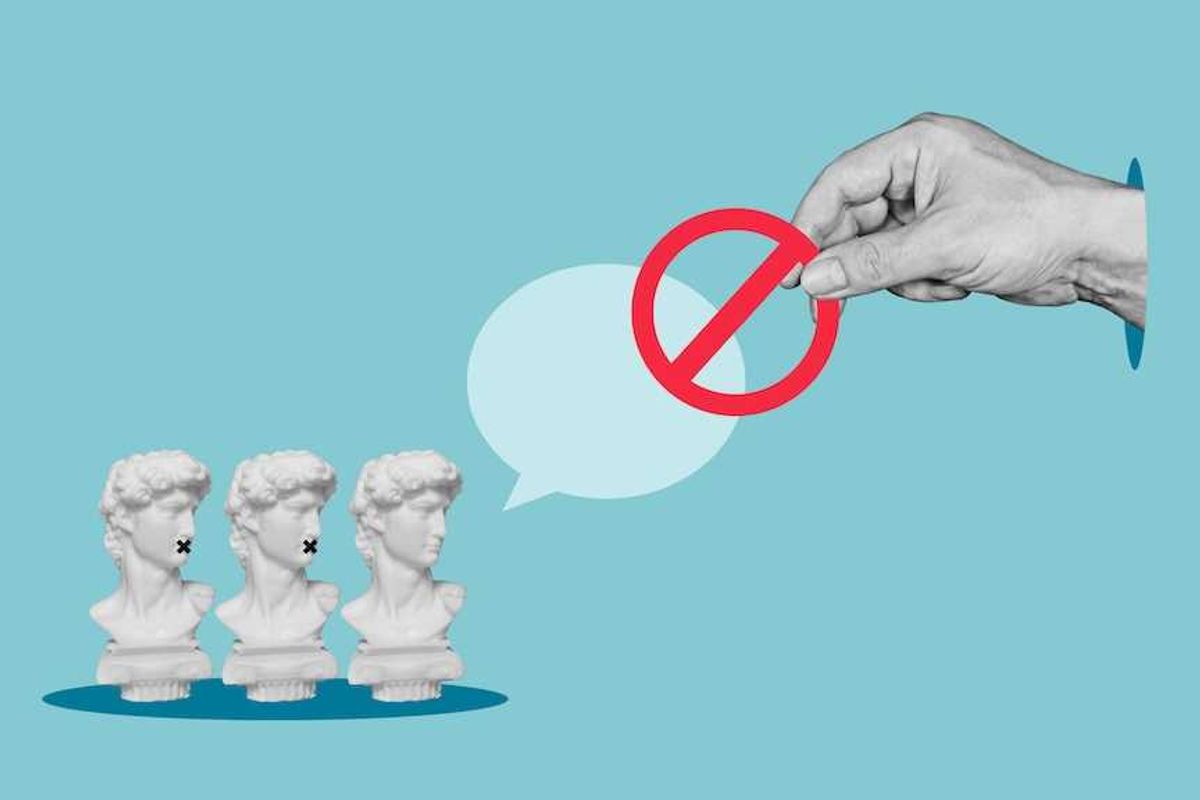
The fight over free expression in American higher education reached a troubling milestone in 2025. According to data from the Foundation for Individual Rights and Expression, efforts to censor speech on college campuses hit record highs across multiple fronts — and most succeeded.
Let’s start with the raw numbers. In 2025, FIRE’s Scholars Under Fire, Students Under Fire, and Campus Deplatforming databases collectively tracked:
- 525 attempts to sanction scholars for their speech, more than one a day, with 460 of them resulting in punishment.
- 273 attempts to punish students for expression, more than five a week, with 176 of these attempts succeeding.
- 160 attempts to deplatform speakers, about three each week, with 99 of them succeeding.
That’s 958 censorship attempts in total, nearly three per day on campuses across the country. For comparison, FIRE’s next-highest total was 477 two years ago.
The 525 scholar sanction attempts are the highest ever recorded in FIRE’s database, which spans 2000 to the present. Even when a large-scale incident at the U.S. Naval Academy is treated as just a single entry, the 2025 total still breaks records.
The common denominator across these censorship campaigns is not ideology — it’s intolerance.
Twenty-nine scholars were fired, including 18 who were terminated since September for social media comments about Charlie Kirk’s assassination.
Student sanction attempts also hit a new high, and deplatforming efforts — our records date back to 1998 — rank third all-time, behind 2023 and 2024.
The problem is actually worse because FIRE’s data undercounts the true scale of campus censorship. Why? The data relies on publicly available information, and an unknown number of incidents, especially those that may involve quiet administrative pressure, never make the public record.
Then there’s the chilling effect.
Scholars are self-censoring. Students are staying silent. Speakers are being disinvited or shouted down. And administrators, eager to appease the loudest voices, are launching investigations and handing out suspensions and dismissals with questionable regard for academic freedom, due process, or free speech.
RELATED: Liberals’ twisted views on Charlie Kirk assassination, censorship captured by a damning poll
 Deagreez via iStock/Getty Images
Some critics argue that the total number of incidents is small compared to the roughly 4,000 colleges in the country. But this argument collapses under scrutiny.
While there are technically thousands of institutions labeled as “colleges” or “universities,” roughly 600 of them educate about 80% of undergraduates enrolled at not-for-profit four-year schools. Many of the rest of these “colleges” and “universities” are highly specialized or vocational programs. This includes a number of beauty academies, truck-driving schools, and similar institutions — in other words, campuses that aren’t at the heart of the free-speech debate.
These censorship campaigns aren’t coming from only one side of the political spectrum. FIRE’s data shows, for instance, that liberal students are punished for pro-Palestinian activism, conservative faculty are targeted for controversial opinions on gender or race, and speaking events featuring all points of view are targeted for cancellation.
The two most targeted student groups on campus? Students for Justice in Palestine and Turning Point USA. If that doesn’t make this point clear, nothing will.
The common denominator across these censorship campaigns is not ideology — it’s intolerance.
RELATED: Teenager sues high school after tribute to Charlie Kirk was called vandalism
 rudall30 via iStock/Getty Images
So where do we go from here?
We need courage: from faculty, from students, and especially from administrators. It’s easy to defend speech when it’s popular. It’s harder when the ideas are offensive or inconvenient. But that’s when it matters most.
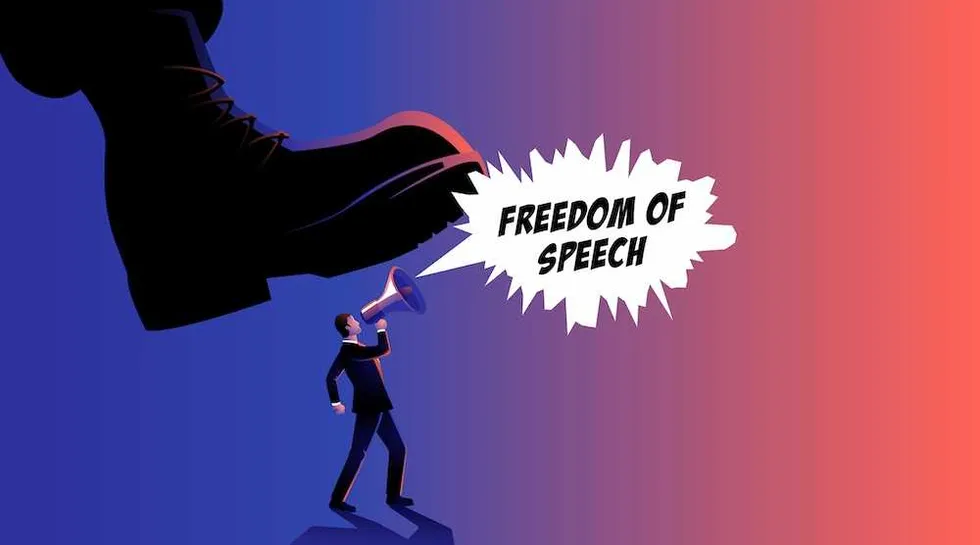
Even more urgently, higher education needs a cultural reset. Universities must recommit to the idea that exposure to ideas and speech that one dislikes or finds offensive is not “violence.” That principle is essential for democracy, not just for universities.
This year’s record number of campus censorship attempts should be a wake-up call for campus administrators. For decades, many allowed a culture of censorship to fester, dismissing concerns as overblown, isolated, or a politically motivated myth. Now, with governors, state legislatures, members of Congress, and even the White House moving aggressively to police campus expression, some administrators are finally pushing back. But this pushback from administrators doesn’t seem principled. Instead, it seems more like an attempt to shield their institutions from outside political interference.
That’s not leadership. It’s damage control. And it’s what got higher education into this mess in the first place.
If university leaders want to reclaim their role as stewards of free inquiry, they cannot act just when governmental pressure threatens their autonomy. They also need to be steadfast when internal intolerance threatens their mission. A true commitment to academic freedom means defending expression even when it is unpopular or offensive. That is the price of intellectual integrity in a free society.
Editor’s note: This article was originally published by RealClearPolitics and made available via RealClearWire.
The courts are running the country — and Trump is letting it happen

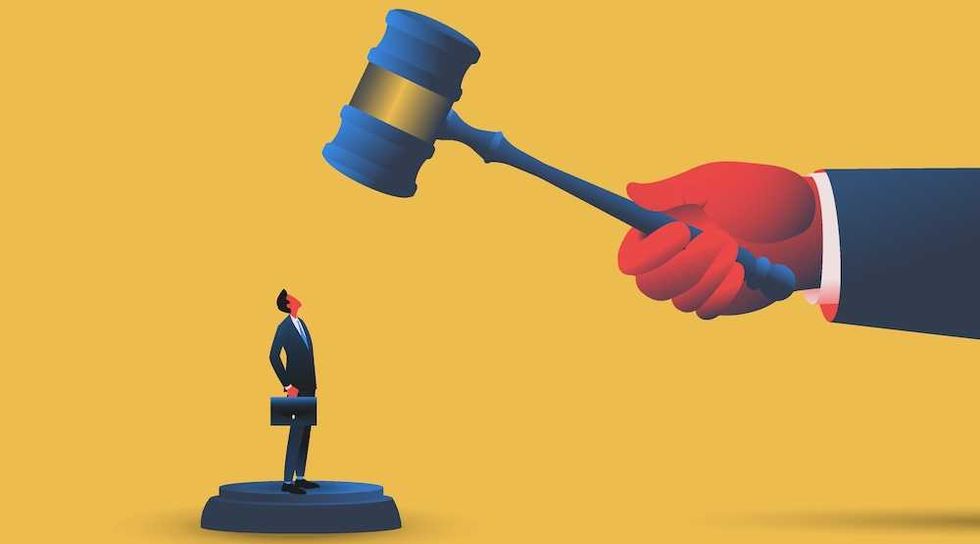
One of the most consequential developments of 2025 has received far less scrutiny than it deserves: the steady surrender of executive authority to an unelected judiciary.
President Trump was elected to faithfully execute the laws of the United States, yet his administration increasingly behaves as if federal judges hold final authority over every major policy decision — including those squarely within the president’s constitutional and statutory powers.
Judicial supremacy thrives on abdication. It advances because presidents comply, lawmakers defer, and voters are told this arrangement is normal.
By backing down whenever district courts issue sweeping injunctions, the administration is reinforcing a dangerous precedent: that no executive action is legitimate until the judiciary permits it. That assumption has no basis in the Constitution, but it is rapidly becoming the governing norm.
The problem became unmistakable when federal judges began granting standing to abstract plaintiffs challenging Trump’s deployment of the National Guard to protect ICE agents under attack. Many assumed such cases would collapse on appeal. Instead, the Supreme Court last week declined to lift an injunction blocking the Guard’s deployment in Illinois, signaling that the judiciary now claims authority to second-guess core commander-in-chief decisions.
Over the dissent of Justices Samuel Alito, Clarence Thomas, and Neil Gorsuch, the court allowed the Seventh Circuit’s decision to stand. That ruling held that violent attacks on ICE agents in Chicago did not amount to a “danger of rebellion” sufficient to justify Guard deployment and did not “significantly impede” the execution of federal immigration law.
That conclusion alone should alarm anyone who still believes in separation of powers.
No individual plaintiff alleged personal injury by a Guardsman. No constitutional rights were violated. The plaintiff was the state of Illinois itself, objecting to a political determination made by the president under statutory authority granted by Congress. Courts are not empowered to adjudicate such abstract disputes over executive judgment.
Even if judges disagree with the president’s assessment of the threat environment, their opinion carries no greater constitutional weight than his. The commander in chief is charged with executing the laws and protecting federal personnel. Courts are not.
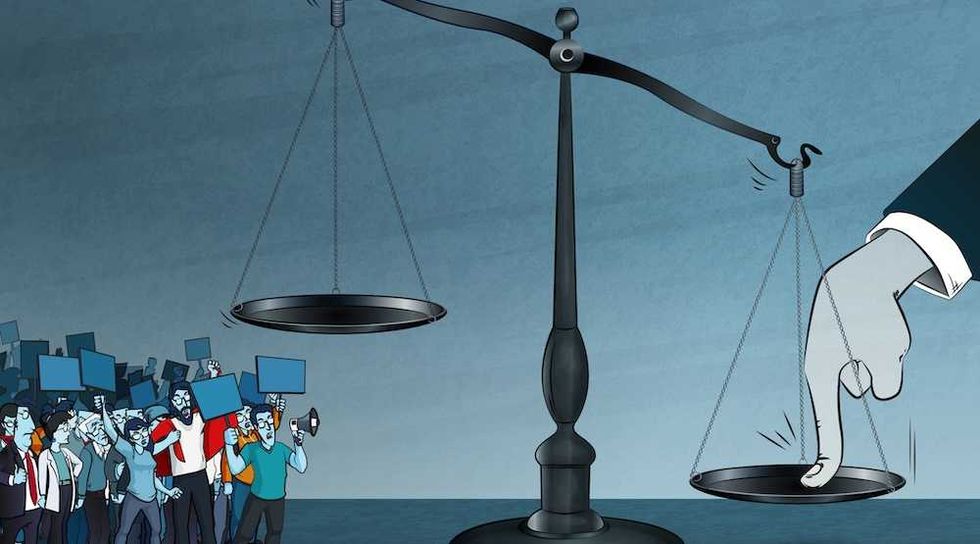
If judges can decide who has standing, define the scope of their own authority, and then determine the limits of executive power, constitutional separation of powers collapses entirely. What remains is not judicial review but judicial supremacy.
And that is precisely what we are witnessing.
Courts now routinely insert themselves into immigration enforcement, national security decisions, tariff policy, federal grants, personnel disputes, and even the content of government websites. The unelected, life-tenured branch increasingly functions as a super-legislature and shadow executive, vetoing or mandating policy at will.
RELATED: Judges break the law to stop Trump from enforcing it
 Cemile Bingol via iStock/Getty Images
What, then, remains for the people acting through elections?
If judges control immigration, spending, enforcement priorities, and foreign policy, why bother holding congressional or presidential elections at all? The Constitution’s framers never intended courts to serve as the ultimate policymakers. They were designed to be the weakest branch, confined to resolving concrete cases involving actual injuries.
Trump’s defenders often argue that patience and compliance will eventually produce favorable rulings. That belief is not only naïve — it is destructive.
For every narrow win Trump secures on appeal, the so-called institutionalist bloc on the court — Chief Justice John Roberts, Brett Kavanaugh, and Amy Coney Barrett — uses it to justify adverse outcomes elsewhere. Worse, because lower courts enjoin nearly every significant action, the administration rarely reaches the Supreme Court on clean constitutional grounds. The damage is done long before review occurs.
Consider the clearest example of all: the power of the purse.
Congress passed a budget reconciliation bill explicitly defunding Planned Parenthood. The bill cleared both chambers and was signed into law. Under the Constitution, appropriations decisions belong exclusively to Congress.
Yet multiple federal judges have enjoined that provision, effectively ordering the executive branch to continue sending taxpayer dollars to abortion providers in defiance of enacted law. Courts have not merely interpreted the statute; they have overridden it.
That raises an unavoidable question: Does the president have a duty to enforce the laws of Congress — or to obey judicial demands that contradict them?
Continuing to fund Planned Parenthood after Congress prohibited it is not neutrality. It is executive acquiescence to judicial nullification of legislative power.
The same pattern appears elsewhere.
Security clearances fall squarely within executive authority, yet the first Muslim federal judge recently attempted to block the president from denying clearance to a politically connected lawyer. Immigration, long recognized as a sovereign prerogative, has been transformed by courts into a maze of invented rights for noncitizens — including a supposed First Amendment right to remain in the country while promoting Hamas.
States fare no better. When West Virginia sought to ban artificial dyes from its food supply, an Obama-appointed federal judge intervened. When states enact laws complementing federal immigration enforcement, courts strike them down. But sanctuary laws that obstruct federal authority often receive judicial protection.
Heads, illegal aliens win. Tails, the people lose.
RELATED: The imperial judiciary strikes back
 Moor Studio via iStock/Getty Images
What we are witnessing is adverse possession — squatter’s rights — of constitutional power. As Congress passes fewer laws and the executive hesitates to assert its authority, courts eagerly fill the vacuum. In 2025, Congress enacted fewer laws than in any year since at least 1989. Meanwhile, judges effectively “passed” nationwide policies affecting millions of Americans.
This did not happen overnight. Judicial supremacy thrives on abdication. It advances because presidents comply, lawmakers defer, and voters are told this arrangement is normal.
It is not.
Trump cannot comply his way out of this crisis. No president can. A system in which courts claim final authority over every function of government is incompatible with republican self-rule.
The Constitution does not enforce itself. Separation of powers exists only if each branch is willing to defend its role.
Right now, the presidency is failing that test.
Trump broke decorum. The media broke the truth — again.
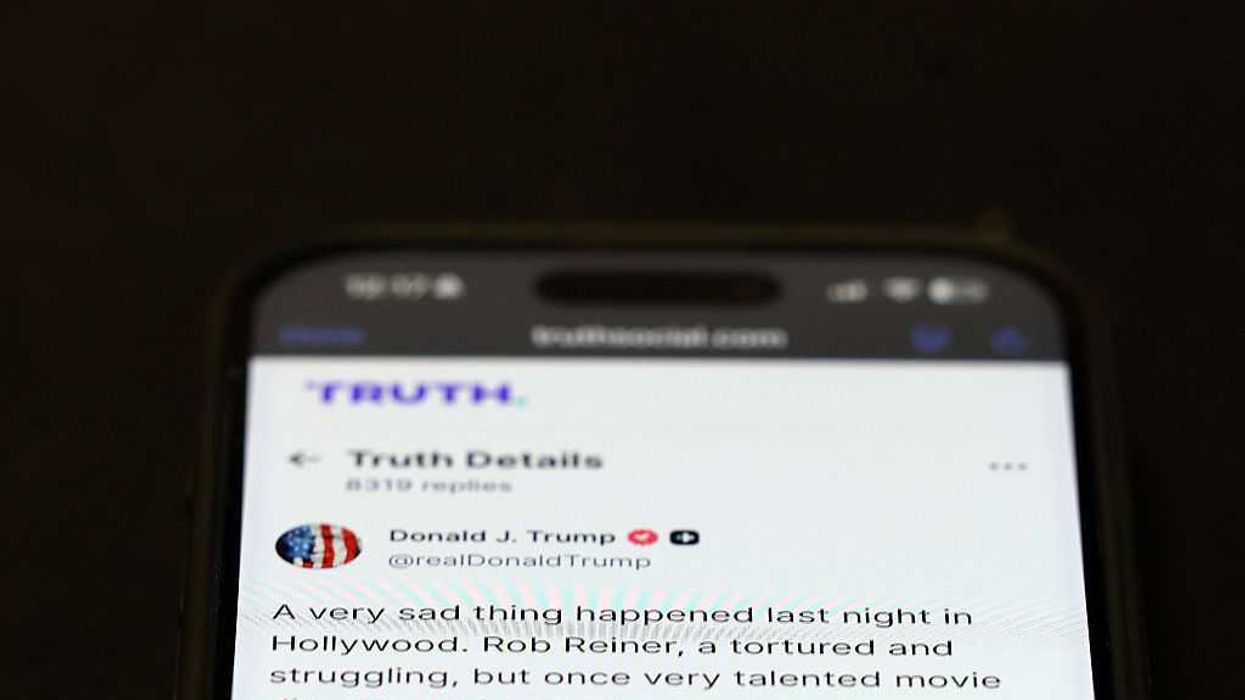
Recently, Paul du Quenoy published a necessary piece at Chronicles putting President Trump’s remark after the murder of Rob and Michele Reiner in proper context. In a Truth Social post that went viral, Trump quipped that Rob Reiner had died of “Trump derangement syndrome,” while also offering condolences and praying that the deceased would “rest in peace.”
The media response was instant and hysterical. As du Quenoy notes, legacy outlets erupted in moral outrage, eager to condemn Trump as uniquely depraved. He highlights one of the ugliest examples: a sermon from David Remnick in the thoroughly politicized New Yorker, denouncing Trump as a “degraded” human being.
Trump’s remark was ill judged. The media’s response was dishonest. Only one of those failures is being treated as a permanent moral indictment.
Du Quenoy asks: Where was this moral sensitivity when figures on the left trafficked in venom — or worse — after the assassination of Charlie Kirk?
The answer, of course, is nowhere.
This double standard defines our media culture. When rhetorical excess comes from the left, it is ignored, excused, or rationalized. When it comes from the right — especially from Trump — it is proof of moral disqualification. Etiquette is enforced selectively, always against the same targets. From the BBC to the Los Angeles Times, outlets had no difficulty canonizing Reiner while casting Trump as a cartoon villain.
A fair point must be made: Trump should not have said what he did. A president should observe certain proprieties, and Trump violates them all too often. I supported his policies and voted for him repeatedly, but that does not require defending every avoidable verbal misfire. This one was a mistake.
What deserves closer scrutiny, however, is the media’s attempt to weaponize that mistake. In outlets like People magazine, Trump’s comment was contrasted with Reiner’s allegedly noble reaction to the murder of Charlie Kirk. Reiner, we are told, expressed “horror.” Trump, by contrast, showed cruelty.
This framing collapses under minimal honesty.
After seeing this contrast repeated again and again, I searched for Reiner’s public statements — not about Kirk, but about Trump. What emerges is not a portrait of an angelic figure suddenly besmirched. For years, Reiner unleashed a steady stream of invective against Trump: “mentally unfit,” “con man,” “fascist,” “lying buffoon,” along with a great many four-letter flourishes unprintable here. He pushed the Trump-Russia hoax long after it had been exposed as fantasy. His political obsession was not subtle, incidental, or private.
RELATED: Glenn Beck addresses Trump’s controversial Rob Reiner message
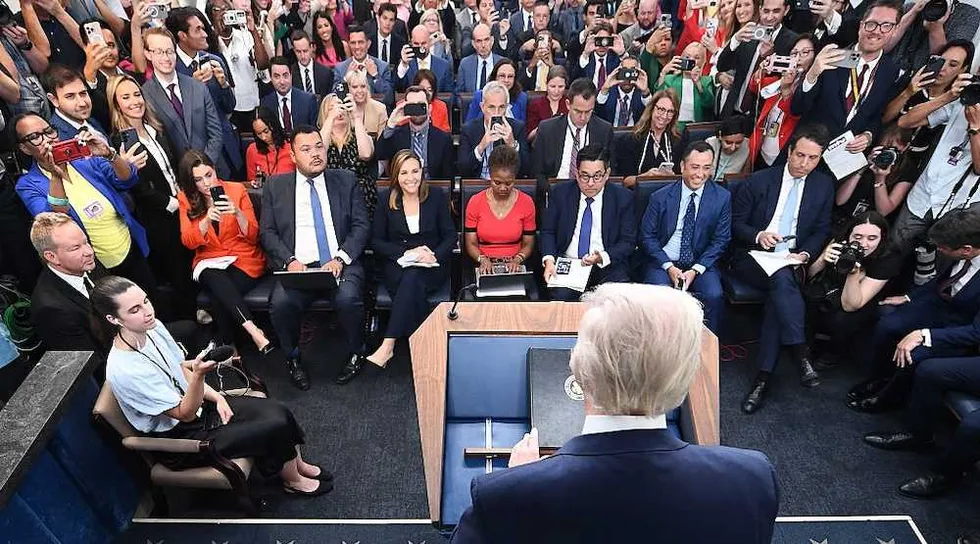 Photo by ANDREW CABALLERO-REYNOLDS/AFP via Getty Images
Yet this entire record has been scrubbed from the story. Media profiles dwell on Reiner’s filmmaking career and his role as a loving father while erasing his lifelong activism and venom toward Trump. The reason is simple: The people telling the story agree with Reiner’s politics and share his hatred of Trump. Presenting Trump’s animus as unprovoked is not journalism. It is narrative laundering.
The comparison with Charlie Kirk’s murder is equally dishonest. Kirk, to my knowledge, never publicly attacked Reiner. There was no shared history, no prolonged feud. Sen. John Kennedy (R-La.) put it plainly: Trump should have said nothing after Reiner’s death, even if Reiner was obsessed with him. Still, pretending that Trump’s reaction should mirror Reiner’s response to Kirk ignores reality. The relationships were not the same.
Nor should Reiner be recast as a purely apolitical figure whose ideology can be set aside for the sake of a tidy morality play. He embraced his identity as a committed leftist as openly as he embraced his Hollywood career. The media’s erasure of that fact mirrors older myths, such as the claim that the “Hollywood Ten” were merely innocent artists with no communist affiliations. You can oppose blacklisting without lying about politics. The left never resists the temptation to lie.
So once again, we are presented with a familiar fable: a gentle, virtuous man smeared by a deranged tyrant for no reason at all. It is nonsense — but useful nonsense. It allows the media to posture as arbiters of decency while ignoring their own complicity in coarsening public life.
Trump’s remark was ill judged. The media’s response was dishonest. Only one of those failures is being treated as a permanent moral indictment — and that tells you everything you need to know.
All truckers want in 2026 is safe roads

As Americans ring in the new year with family and friends, it’s worth remembering a simple fact: A truck driver delivered nearly everything carrying us into 2026.
From champagne and party hats to the presents under our Christmas trees — and the everyday goods that keep businesses running — truck drivers power the economy year in and year out. They work long hours, spend weeks away from loved ones, and keep freight moving through nights, weekends, and holidays. As the calendar turns, truckers ask for just one thing in 2026: safe roads.
A safe trucking industry depends on qualified drivers, safe equipment, and a system that rewards compliance while swiftly removing bad actors.
For too long, America’s highways have grown more dangerous — not because of professional truck drivers, who rank among the most highly trained and regulated workers in the country, but because of systemic failures that allow illegal, unqualified, and unsafe operators to put lives at risk.
The trucking industry has sounded the alarm, and this White House has listened. By cracking down on fraudulent commercial driver’s license mills, addressing the risks posed by illegal drivers, and taking meaningful steps to combat the surge in cargo theft, the Trump administration has restored accountability to the transportation system and made clear that safety — not shortcuts — is the priority.
Consider CDL mills. These sham operations churn out licenses without proper training, undermining professionalism and putting unqualified drivers behind the wheel of 80,000-pound vehicles. Shutting them down isn’t about limiting opportunity. It’s about ensuring that every driver on the road has earned the right to be there. Transportation Secretary Sean Duffy’s decision to remove thousands of suspect training providers from the federal registry sent a clear message: If you cut corners on safety, you won’t be tolerated.
The same principle applies to basic qualifications. Truck drivers must be able to speak English, read road signs, understand safety rules, and follow the law. Weak state verification standards and lax oversight have allowed illegal operators onto American highways. That is unacceptable.
A commercial driver’s license is not just a credential — it is a promise to the public. When that promise is broken, the consequences can be deadly. Fatal crashes this year in Florida and California show exactly what’s at stake when illegal and unqualified drivers remain behind the wheel.
We are encouraged that the administration has acted quickly to prevent future tragedies by holding states accountable and removing unqualified drivers from the road.
RELATED: Illegal drivers, dead Americans — this is what ‘open borders’ really mean
 Photo by Caroline Brehman/CQ-Roll Call Inc. via Getty Images
At the same time, law-abiding motor carriers and drivers face another growing threat: cargo theft. What was once an occasional crime has become a nationwide epidemic driven by organized criminal networks. Thieves exploit technology, impersonate legitimate carriers, and target supply chains with increasing sophistication. The result is billions in losses — roughly $18 million per day — and heightened risk for drivers, along with disruptions that raise costs for consumers, especially during the holidays.
Truck drivers should not have to worry about being targeted simply for doing their jobs. That’s why the industry welcomes legislation to elevate cargo theft as a federal priority and improve coordination among law enforcement agencies. Protecting freight isn’t just about economics. It’s about protecting the men and women behind the wheel.
These challenges share a common thread: Safety needs to be enforced consistently, comprehensively, and without exception. A safe trucking industry depends on qualified drivers, safe equipment, and a system that rewards compliance while swiftly removing bad actors.
Professional truck drivers take pride in their work. They train hard, follow the rules, and understand that every mile carries responsibility. They don’t want special treatment — just a level playing field and a government that takes safety as seriously as they do. Today, they have a White House that does.
Let’s ensure that America’s highways remain worthy of the 3.5 million professionals who keep them moving — this year and every year.
If parental rights can be bypassed in Alabama, no state is safe

Millions of Americans fled deep-blue states like California and New York because they believed the rules were different elsewhere. They moved to places like Alabama to escape lockdowns, mandates, and ideological capture of public institutions. They believed red states meant red lines.
That belief is proving dangerously naïve.
If red states cannot enforce their own parental rights laws, then the red-state refuge is a myth.
Alabama is one of the most conservative states in the country. It has a Republican supermajority and some of the strongest parental rights laws on the books: bans on gender-transition procedures for minors, curriculum transparency requirements, legal definitions of male and female, protections for girls’ sports, and a rare requirement that parents must opt in before schools provide any mental health services, including discussions of suicide or bullying.
And yet those protections are now being quietly hollowed out — not by legislators, but by bureaucratic subversion.
The footnote loophole
The Alabama State Department of Education is undermining parental consent by inserting exceptions into the fine print of a required opt-in form distributed after a new parental consent law took effect Oct. 1.
The law itself is unambiguous. Parents must provide prior written consent before schools offer mental health services, including discussions related to suicide or bullying. But the department claims in the footnotes that mental health-related conversations may still occur “as appropriate” in other school settings — and that these interactions do not require parental permission.
The ALSDE has stated that “instruction, advisement, and occasional interventions are not subject to opt-in requirements, as these are regular duties of school counselors and other educators.”
That language does more than stretch the statute. It appears designed to bypass it entirely. When schools engage minors in discussions with clear psychological or therapeutic implications — trauma, gender identity, suicidal ideation — without parental consent, they move into legally and constitutionally questionable territory.
Same playbook, new label
Parents have seen this before. During COVID, mandates were imposed first and justified later. Dissent was sidelined. Authority flowed downward, not outward.
Now the same model is being applied to school-based mental health. Whether embedded in social-emotional learning, “student wellness,” or character education, the result is the same: psychological interventions delivered by school employees, not licensed physicians, without parental oversight.
This is not a gray area. The Supreme Court has repeatedly affirmed parents’ fundamental right to direct the upbringing of their children. When school systems create end runs around opt-in requirements — especially on matters involving suicide or gender ideology — they invite serious legal and civil rights challenges.
No state is immune
This is not an Alabama anomaly.
Illinois now mandates mental health screenings for public school students, with no opt-in. Mississippi is rolling out a statewide “youth wellness platform.” Tennessee is placing mental health clinicians in every public school through a $250 million trust fund. Ohio is expanding school-based health centers that embed mental health treatment directly on campus.
These programs erase the line between education and health care. They normalize a system in which children’s emotions are monitored, recorded, and interpreted by the state without parental consent. That is state-sponsored emotional profiling.
Who decides what helps?
This debate is not about whether children need support. It is about who decides what support looks like — and who has the authority to provide it.
Parents possess a fundamental right to make decisions about their children’s mental and physical health. The Supreme Court’s decision in Mahmoud v. Taylor reaffirmed that when schools impose ideologically loaded services or content without notice or opt-out, they burden parental rights and religious liberty.
RELATED: ‘Incredible victory’: Federal judge prohibits trans-related grooming efforts in California schools
 Photo by Luis Soto/SOPA Images/LightRocket via Getty Images
Alabama’s counseling framework includes DEI-driven language encouraging students to “identify individual differences” and “describe and respect differences among individuals.” In practice, that language provides a vehicle for embedding gender ideology and values-based content into guidance lessons.
When that content is paired with school-based interventions, the issue is no longer education. It is ideological formation funded by taxpayers and imposed without consent.
Alabama’s warning
If this can happen in Alabama — arguably the most pro-parental-rights state in the country — then no state is safe.
Agencies should not be allowed to bury statutes in footnotes, reinterpret laws by memo, or use therapeutic language to bypass parental authority. These are not technical disagreements. They are unconstitutional and demand legal pushback.
If red states cannot enforce their own parental rights laws, then the red-state refuge is a myth.
Strong laws matter, but enforcement matters more. Parents must demand both.
Preparedness isn’t paranoia. It’s pattern recognition.

A certain smug comfort belongs to people who have never stood between a riot line and a camera, never smelled accelerant on the wind, never watched their phones lose signal while fire chewed through an entire neighborhood. They talk about “heated rhetoric” and “charged atmospheres” as if danger were theoretical. For women reporters on the ground, it isn’t.
The front line is not a metaphor. It is a place. And it is getting more dangerous by the year.
This is not a gadget story. It is a survival story.
I have covered Antifa riots where the mob knew my name before I reached the sidewalk. I have been screamed at, followed, and threatened by people who publicly denounce violence while privately practicing it. I have watched law enforcement stand down under progressive policies that place the comfort of agitators above the safety of citizens. And I have learned, the hard way, that when cities become unlivable, women pay first.
The left loves to talk about “lived experience.” Here is mine: Democrat governance has made America’s major cities objectively less safe, and being a female independent journalist in them now requires the mindset of a survivalist.
That became brutally clear during the Los Angeles wildfires of 2025.
I was there when the sky turned orange and evacuation orders contradicted one another. Cell towers failed. Emergency lines were overwhelmed. Friends and family lost homes — not hypothetically, not statistically, but completely. In that chaos, the only reason I was able to coordinate help, locate people, and call for assistance was a satellite phone. While 911 systems collapsed, that device worked. No signal dependency. No excuses.
That is not a gadget story. It is a survival story.
The same lesson repeats itself elsewhere. In Washington, D.C., shootings now occur in places that once felt immune — near offices, events, and corridors of power. I was at Butler. I have been steps away from moments that could have gone very differently. Anyone insisting that “these things don’t happen here” is either lying or sheltered by privilege.
When whistleblowers reach out to me, they do not do it over casual cell calls. They use secure satellite communications, because they understand something our leaders prefer not to acknowledge: privacy is safety. Satellite phones are resistant to interception, independent of fragile infrastructure, and immune to spam and shutdowns. When people have something dangerous to say, they choose tools that help keep them alive.
This is not paranoia. It is pattern recognition.
People have died hiking because there was no signal. Boaters have vanished because help could not be reached. Hurricanes do not care about ideology. Fires do not check voter registration. Yet one party consistently opposes disaster preparedness, energy independence, and resilient infrastructure — while demanding blind trust in systems that fail precisely when they are needed most.
Preparedness is not extremism. It is common sense.
Redundancy in communication is not political. Neither are solar-powered backups or hardened devices. Nor is concern about electromagnetic vulnerabilities when our lives run through centralized, fragile networks. Thinking ahead does not make you radical. It makes you female in a country that keeps telling women to be brave while stripping away the tools that make bravery survivable.
And yes, it matters who builds those tools.
If I am calling for help, I want American customer service — American voices, American-owned companies. Safety should not come with a foreign accent and a hold button. Trust is part of security.
This is why satellite phones, solar chargers, emergency kits, and hardened cases are no longer niche products. They are rational responses to an increasingly unstable political and physical environment. They are also meaningful gifts — because nothing says you care like giving someone a way to come home alive.
RELATED: A nation without trust is a nation on borrowed time
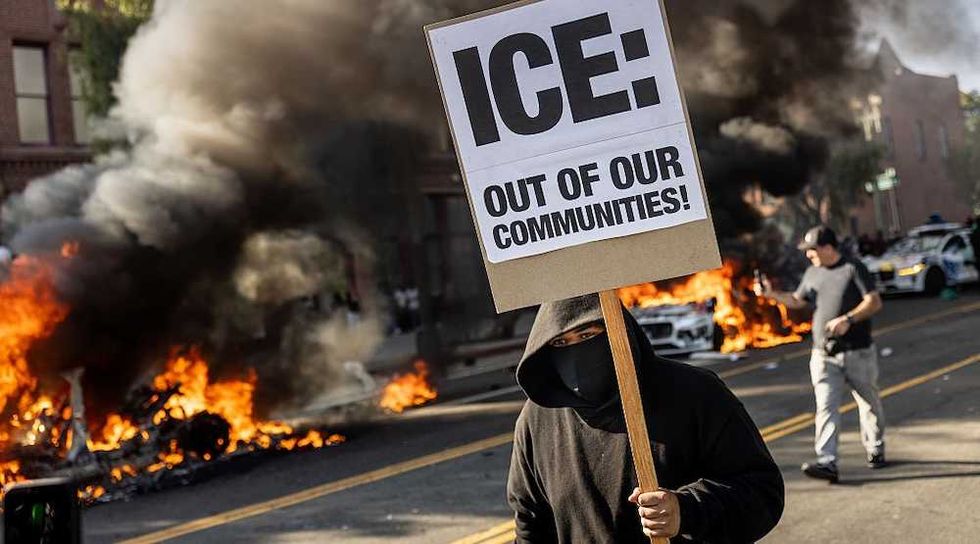 Photo by Jay L Clendenin/Getty Images
Which brings us to 2026.
Around President Trump, TPUSA events, or Republican members of Congress, the threat environment is asymmetric. The left has normalized political violence while denying it exists. Media figures excuse it. Politicians minimize it. Prosecutors decline to prosecute it. And women journalists who refuse to conform are expected to absorb the consequences quietly.
I won’t.
The question voters should ask heading into the midterms is not which party sounds kinder on cable news. It is which party acknowledges reality — and equips Americans, especially women, to survive it.
One side treats chaos as a political tool. The other treats safety as the foundation of freedom.
I know which one kept me connected when the fires closed in. I know which one refuses to pretend riots are “mostly peaceful.” And I know which one understands that strong borders, strong policing, resilient infrastructure, and personal preparedness are not luxuries in dangerous times.
The front line is expanding. It runs through our cities, our forests, our streets, and our inboxes. Women are already on it — whether policymakers realize it or not.
The only question left is whether America will choose leaders who take our safety seriously or continue sacrificing us to ideology.
Because the danger is real. And pretending otherwise is the most reckless policy of all.





