Category: Opinion & analysis
All truckers want in 2026 is safe roads
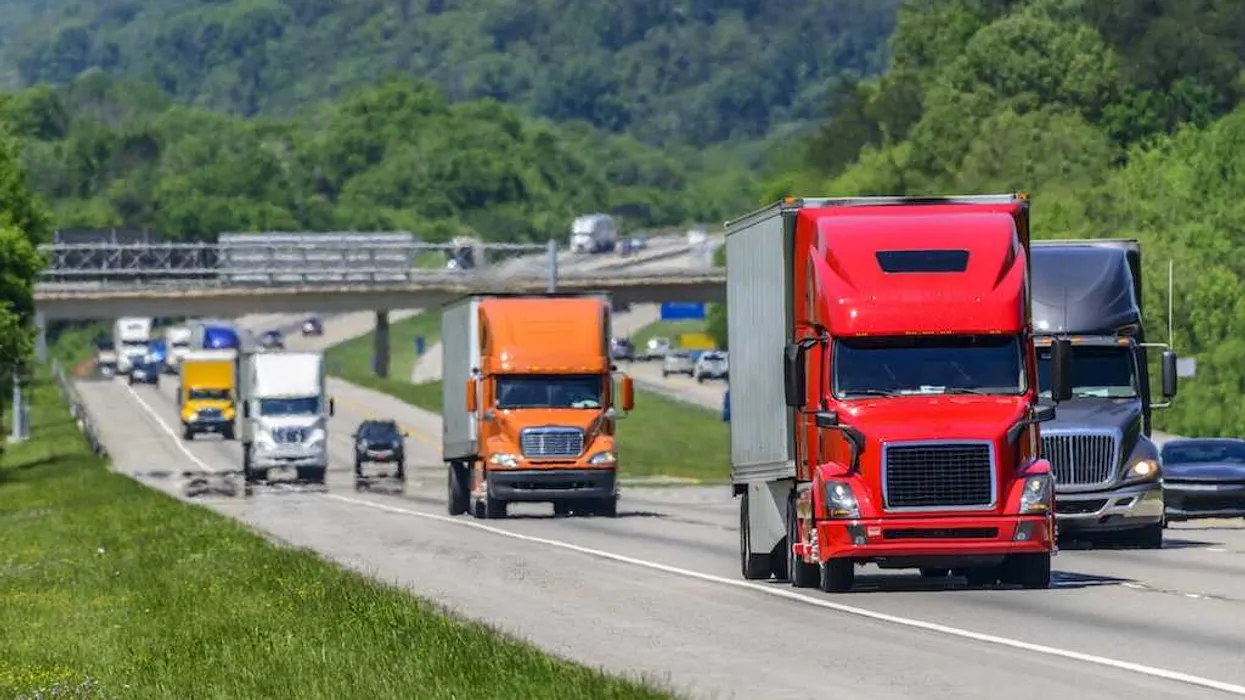
As Americans ring in the new year with family and friends, it’s worth remembering a simple fact: A truck driver delivered nearly everything carrying us into 2026.
From champagne and party hats to the presents under our Christmas trees — and the everyday goods that keep businesses running — truck drivers power the economy year in and year out. They work long hours, spend weeks away from loved ones, and keep freight moving through nights, weekends, and holidays. As the calendar turns, truckers ask for just one thing in 2026: safe roads.
A safe trucking industry depends on qualified drivers, safe equipment, and a system that rewards compliance while swiftly removing bad actors.
For too long, America’s highways have grown more dangerous — not because of professional truck drivers, who rank among the most highly trained and regulated workers in the country, but because of systemic failures that allow illegal, unqualified, and unsafe operators to put lives at risk.
The trucking industry has sounded the alarm, and this White House has listened. By cracking down on fraudulent commercial driver’s license mills, addressing the risks posed by illegal drivers, and taking meaningful steps to combat the surge in cargo theft, the Trump administration has restored accountability to the transportation system and made clear that safety — not shortcuts — is the priority.
Consider CDL mills. These sham operations churn out licenses without proper training, undermining professionalism and putting unqualified drivers behind the wheel of 80,000-pound vehicles. Shutting them down isn’t about limiting opportunity. It’s about ensuring that every driver on the road has earned the right to be there. Transportation Secretary Sean Duffy’s decision to remove thousands of suspect training providers from the federal registry sent a clear message: If you cut corners on safety, you won’t be tolerated.
The same principle applies to basic qualifications. Truck drivers must be able to speak English, read road signs, understand safety rules, and follow the law. Weak state verification standards and lax oversight have allowed illegal operators onto American highways. That is unacceptable.
A commercial driver’s license is not just a credential — it is a promise to the public. When that promise is broken, the consequences can be deadly. Fatal crashes this year in Florida and California show exactly what’s at stake when illegal and unqualified drivers remain behind the wheel.
We are encouraged that the administration has acted quickly to prevent future tragedies by holding states accountable and removing unqualified drivers from the road.
RELATED: Illegal drivers, dead Americans — this is what ‘open borders’ really mean
 Photo by Caroline Brehman/CQ-Roll Call Inc. via Getty Images
At the same time, law-abiding motor carriers and drivers face another growing threat: cargo theft. What was once an occasional crime has become a nationwide epidemic driven by organized criminal networks. Thieves exploit technology, impersonate legitimate carriers, and target supply chains with increasing sophistication. The result is billions in losses — roughly $18 million per day — and heightened risk for drivers, along with disruptions that raise costs for consumers, especially during the holidays.
Truck drivers should not have to worry about being targeted simply for doing their jobs. That’s why the industry welcomes legislation to elevate cargo theft as a federal priority and improve coordination among law enforcement agencies. Protecting freight isn’t just about economics. It’s about protecting the men and women behind the wheel.
These challenges share a common thread: Safety needs to be enforced consistently, comprehensively, and without exception. A safe trucking industry depends on qualified drivers, safe equipment, and a system that rewards compliance while swiftly removing bad actors.
Professional truck drivers take pride in their work. They train hard, follow the rules, and understand that every mile carries responsibility. They don’t want special treatment — just a level playing field and a government that takes safety as seriously as they do. Today, they have a White House that does.
Let’s ensure that America’s highways remain worthy of the 3.5 million professionals who keep them moving — this year and every year.
If parental rights can be bypassed in Alabama, no state is safe

Millions of Americans fled deep-blue states like California and New York because they believed the rules were different elsewhere. They moved to places like Alabama to escape lockdowns, mandates, and ideological capture of public institutions. They believed red states meant red lines.
That belief is proving dangerously naïve.
If red states cannot enforce their own parental rights laws, then the red-state refuge is a myth.
Alabama is one of the most conservative states in the country. It has a Republican supermajority and some of the strongest parental rights laws on the books: bans on gender-transition procedures for minors, curriculum transparency requirements, legal definitions of male and female, protections for girls’ sports, and a rare requirement that parents must opt in before schools provide any mental health services, including discussions of suicide or bullying.
And yet those protections are now being quietly hollowed out — not by legislators, but by bureaucratic subversion.
The footnote loophole
The Alabama State Department of Education is undermining parental consent by inserting exceptions into the fine print of a required opt-in form distributed after a new parental consent law took effect Oct. 1.
The law itself is unambiguous. Parents must provide prior written consent before schools offer mental health services, including discussions related to suicide or bullying. But the department claims in the footnotes that mental health-related conversations may still occur “as appropriate” in other school settings — and that these interactions do not require parental permission.
The ALSDE has stated that “instruction, advisement, and occasional interventions are not subject to opt-in requirements, as these are regular duties of school counselors and other educators.”
That language does more than stretch the statute. It appears designed to bypass it entirely. When schools engage minors in discussions with clear psychological or therapeutic implications — trauma, gender identity, suicidal ideation — without parental consent, they move into legally and constitutionally questionable territory.
Same playbook, new label
Parents have seen this before. During COVID, mandates were imposed first and justified later. Dissent was sidelined. Authority flowed downward, not outward.
Now the same model is being applied to school-based mental health. Whether embedded in social-emotional learning, “student wellness,” or character education, the result is the same: psychological interventions delivered by school employees, not licensed physicians, without parental oversight.
This is not a gray area. The Supreme Court has repeatedly affirmed parents’ fundamental right to direct the upbringing of their children. When school systems create end runs around opt-in requirements — especially on matters involving suicide or gender ideology — they invite serious legal and civil rights challenges.
No state is immune
This is not an Alabama anomaly.
Illinois now mandates mental health screenings for public school students, with no opt-in. Mississippi is rolling out a statewide “youth wellness platform.” Tennessee is placing mental health clinicians in every public school through a $250 million trust fund. Ohio is expanding school-based health centers that embed mental health treatment directly on campus.
These programs erase the line between education and health care. They normalize a system in which children’s emotions are monitored, recorded, and interpreted by the state without parental consent. That is state-sponsored emotional profiling.
Who decides what helps?
This debate is not about whether children need support. It is about who decides what support looks like — and who has the authority to provide it.
Parents possess a fundamental right to make decisions about their children’s mental and physical health. The Supreme Court’s decision in Mahmoud v. Taylor reaffirmed that when schools impose ideologically loaded services or content without notice or opt-out, they burden parental rights and religious liberty.
RELATED: ‘Incredible victory’: Federal judge prohibits trans-related grooming efforts in California schools
 Photo by Luis Soto/SOPA Images/LightRocket via Getty Images
Alabama’s counseling framework includes DEI-driven language encouraging students to “identify individual differences” and “describe and respect differences among individuals.” In practice, that language provides a vehicle for embedding gender ideology and values-based content into guidance lessons.
When that content is paired with school-based interventions, the issue is no longer education. It is ideological formation funded by taxpayers and imposed without consent.
Alabama’s warning
If this can happen in Alabama — arguably the most pro-parental-rights state in the country — then no state is safe.
Agencies should not be allowed to bury statutes in footnotes, reinterpret laws by memo, or use therapeutic language to bypass parental authority. These are not technical disagreements. They are unconstitutional and demand legal pushback.
If red states cannot enforce their own parental rights laws, then the red-state refuge is a myth.
Strong laws matter, but enforcement matters more. Parents must demand both.
Preparedness isn’t paranoia. It’s pattern recognition.

A certain smug comfort belongs to people who have never stood between a riot line and a camera, never smelled accelerant on the wind, never watched their phones lose signal while fire chewed through an entire neighborhood. They talk about “heated rhetoric” and “charged atmospheres” as if danger were theoretical. For women reporters on the ground, it isn’t.
The front line is not a metaphor. It is a place. And it is getting more dangerous by the year.
This is not a gadget story. It is a survival story.
I have covered Antifa riots where the mob knew my name before I reached the sidewalk. I have been screamed at, followed, and threatened by people who publicly denounce violence while privately practicing it. I have watched law enforcement stand down under progressive policies that place the comfort of agitators above the safety of citizens. And I have learned, the hard way, that when cities become unlivable, women pay first.
The left loves to talk about “lived experience.” Here is mine: Democrat governance has made America’s major cities objectively less safe, and being a female independent journalist in them now requires the mindset of a survivalist.
That became brutally clear during the Los Angeles wildfires of 2025.
I was there when the sky turned orange and evacuation orders contradicted one another. Cell towers failed. Emergency lines were overwhelmed. Friends and family lost homes — not hypothetically, not statistically, but completely. In that chaos, the only reason I was able to coordinate help, locate people, and call for assistance was a satellite phone. While 911 systems collapsed, that device worked. No signal dependency. No excuses.
That is not a gadget story. It is a survival story.
The same lesson repeats itself elsewhere. In Washington, D.C., shootings now occur in places that once felt immune — near offices, events, and corridors of power. I was at Butler. I have been steps away from moments that could have gone very differently. Anyone insisting that “these things don’t happen here” is either lying or sheltered by privilege.
When whistleblowers reach out to me, they do not do it over casual cell calls. They use secure satellite communications, because they understand something our leaders prefer not to acknowledge: privacy is safety. Satellite phones are resistant to interception, independent of fragile infrastructure, and immune to spam and shutdowns. When people have something dangerous to say, they choose tools that help keep them alive.
This is not paranoia. It is pattern recognition.
People have died hiking because there was no signal. Boaters have vanished because help could not be reached. Hurricanes do not care about ideology. Fires do not check voter registration. Yet one party consistently opposes disaster preparedness, energy independence, and resilient infrastructure — while demanding blind trust in systems that fail precisely when they are needed most.
Preparedness is not extremism. It is common sense.
Redundancy in communication is not political. Neither are solar-powered backups or hardened devices. Nor is concern about electromagnetic vulnerabilities when our lives run through centralized, fragile networks. Thinking ahead does not make you radical. It makes you female in a country that keeps telling women to be brave while stripping away the tools that make bravery survivable.
And yes, it matters who builds those tools.
If I am calling for help, I want American customer service — American voices, American-owned companies. Safety should not come with a foreign accent and a hold button. Trust is part of security.
This is why satellite phones, solar chargers, emergency kits, and hardened cases are no longer niche products. They are rational responses to an increasingly unstable political and physical environment. They are also meaningful gifts — because nothing says you care like giving someone a way to come home alive.
RELATED: A nation without trust is a nation on borrowed time
 Photo by Jay L Clendenin/Getty Images
Which brings us to 2026.
Around President Trump, TPUSA events, or Republican members of Congress, the threat environment is asymmetric. The left has normalized political violence while denying it exists. Media figures excuse it. Politicians minimize it. Prosecutors decline to prosecute it. And women journalists who refuse to conform are expected to absorb the consequences quietly.
I won’t.
The question voters should ask heading into the midterms is not which party sounds kinder on cable news. It is which party acknowledges reality — and equips Americans, especially women, to survive it.
One side treats chaos as a political tool. The other treats safety as the foundation of freedom.
I know which one kept me connected when the fires closed in. I know which one refuses to pretend riots are “mostly peaceful.” And I know which one understands that strong borders, strong policing, resilient infrastructure, and personal preparedness are not luxuries in dangerous times.
The front line is expanding. It runs through our cities, our forests, our streets, and our inboxes. Women are already on it — whether policymakers realize it or not.
The only question left is whether America will choose leaders who take our safety seriously or continue sacrificing us to ideology.
Because the danger is real. And pretending otherwise is the most reckless policy of all.
DOGE didn’t die — it moved to the states
The media and conservative pundits may have buried the Department of Government Efficiency, but they have yet to carve a date of death on its tombstone. While DOGE in Washington may have appeared to insiders as a vanity project, voters saw it as a mandate — one that Republicans at the federal level have largely set aside in favor of politics as usual.
But activists have not forgotten. In red states across the country, they are still demanding accountability. And in Idaho, that pressure is finally producing results.
If Idaho can succeed and follow Florida’s lead, there is no serious reason other red states cannot do the same — unless they are prepared to admit they never intended to keep their promises.
For what appears to be the first time, state legislators serving on Idaho’s DOGE Task Force concluded their 2025 work with a meeting that departed from months of cautious, procedural discussion. Members asked harder questions, voiced long-simmering frustrations, and issued a recommendation that could reshape the state’s fiscal future: urging the full legislature to consider repealing Medicaid expansion, a costly policy that has drained taxpayers of millions.
Red states can’t stall forever
Idaho may not be Florida, where Republican Gov. Ron DeSantis’ DOGE-style reforms have produced consistent wins for fiscal sanity and limited government. But it is doing more than other red states, such as North Dakota, where a DOGE committee stacked with Democrats predictably ignored the voters’ mandate.
The Idaho meeting exposed growing dissatisfaction with the task force’s approach. Over the summer and fall, the committee — charged with identifying inefficiencies — repeatedly deferred to state agencies for suggestions on cuts. Unsurprisingly those agencies offered little beyond cosmetic changes.
Idaho state Rep. Heather Scott (R-LD2, Blanchard) gave voice to that frustration. “What is the goal of this committee?” she asked, pressing colleagues to offer recommendations that actually matter. “Twenty thousand here, 50,000 there, or removing old code is not meaningful efficiency,” Scott said. Repealing Medicaid expansion, she argued, would be one of the “best decisions” the state could make.
Nibbling at the edges
Scott’s experience on the Idaho task force stands in stark contrast to the early federal DOGE efforts, which moved aggressively to slash U.S. Agency for International Development’s workforce, freeze fraudulent payments, and cancel billions in corrupt contracts. By comparison, Idaho’s task force had mostly nibbled at the edges. This recommendation marked its first serious step toward substantive reform.
Another revealing moment came from co-chairman state Sen. Todd Lakey (R-Nampa), who read a letter from a small-business owner offering health insurance to employees. Workers routinely request schedules capped at 20 to 28 hours per week to preserve Medicaid expansion benefits — even though full-time work would require only a modest contribution toward employer-provided coverage.
The result is a perverse incentive structure: businesses struggle to find full-time workers while taxpayers subsidize underemployment. The government fuels workforce shortages through welfare, then spends more taxpayer dollars trying to fix the shortages it created. This welfare-workforce vortex is the opposite of efficiency, and it is spreading nationwide.
The meeting’s most explosive moment came from state Rep. Josh Tanner (R-Eagle), who described Idaho’s Medicaid reimbursement structure as resembling “money laundering.”
Citing analysis from the Paragon Health Institute, Tanner explained how provider assessment fees allow states to inflate Medicaid spending to draw down larger federal matching funds, cycling the money back through enhanced payments. Paragon has described these arrangements as “legalized money laundering” — schemes that shift costs to federal taxpayers while enriching connected providers or funding unrelated priorities.
Nationally supplemental payments now exceed $110 billion annually, siphoning hundreds of billions from taxpayers over a decade.
RELATED: Turn off the money; they’ll leave: Elon Musk nails the border truth
 Photo by Kevin Dietsch/Getty Images
DOGE’s second life
My sources tell me that hospital lobbyists went into panic mode after the meeting, urgently contacting Capitol officials to contain the fallout from Tanner’s remarks.
For the first time, the task force aired real frustrations, documented real harms, and named real abuses. That alone offers reason for cautious optimism.
Idaho now has committed conservatives in positions of influence. With the task force’s recommendation to revisit Medicaid expansion heading to the legislature, the state has an opportunity to govern as it campaigns — preserving liberty, restoring accountability, and expanding opportunity.
If Idaho can succeed and follow Florida’s lead, there is no serious reason other red states cannot do the same — unless they are prepared to admit they never intended to keep their promises in the first place.
The American dream lives where people still choose to build

“For many, the American dream has become a nightmare,” Sen. Bernie Sanders (I-Vt.) has said, capturing a sentiment that has become common on the political left and across modern culture.
That line now travels far beyond politics. Scroll social media for five minutes, and you’ll see the same message repeated in endless variations: Owning a home is impossible. Raising a family is irresponsible. Work doesn’t pay. The system is rigged. The future is closed.
The American dream was never a promise of ease or comfort by age 25. It was an invitation to build something meaningful over time through responsibility and perseverance.
This message is everywhere, and it is doing real damage.
Harder lives, false conclusions
Life has become harder in tangible ways. Housing costs have surged. College has grown bloated and expensive. Inflation punished families already living close to the margins. Young adults feel delayed, uncertain, and anxious about the future.
Those frustrations are real. The conclusion being pushed alongside them is not.
The lie is not that things are harder. The lie is that effort no longer matters.
That lie spreads quickly online because it feels validating. A 30-second video declaring the system broken beyond repair asks nothing of the viewer except agreement. Building a life requires patience, sacrifice, and time. One goes viral. The other happens quietly.
Much of this shift comes from where young Americans now form their beliefs. For many in Generation Z, ideas about money, marriage, and the future are no longer shaped primarily by parents, churches, employers, or local communities. They are shaped by algorithm-driven platforms like TikTok and X, where extremity is rewarded with attention.
In those spaces, online figures routinely dismiss the American dream as a scam and portray starting a family as a trap rather than a source of meaning or stability. Cynicism is marketed as realism. Detachment is framed as wisdom. A generation looking for guidance is taught to expect failure before it ever tries.
Why despair is profitable
This narrative didn’t arise by accident. It feeds on real pain, but it’s also profitable. Political movements gain leverage by convincing voters that only sweeping control from the top can fix a hopeless system. Media companies thrive on pessimism because fear keeps people watching. Online grievance entrepreneurs build massive followings by telling young people that nothing they do will ever be enough.
If Americans stop believing they can build a future, someone else will gladly build power over them.
History keeps disproving this story.
Tell the generation that survived the Great Depression that the American dream was dead. Tell the men who returned from World War II, many wounded and broke, who used the GI Bill to buy homes and start families, that the climb was too steep. Tell the children of factory workers who grew up without air conditioning, college degrees, or safety nets — but still built middle-class lives through work and sacrifice — that the odds were unfair.
Tell the families of the 1950s and 1960s who lived modestly, saved slowly, and delayed gratification for decades that life was easy. Tell the Americans who endured oil crises, layoffs, and double-digit inflation in the 1970s and early 1980s that the system was designed for their comfort.
The dream was never easy
Life has never been easy. The climb has always been steep. The American dream was never built on convenience. It was built on resilience.
The truth is less dramatic — and far more hopeful. The American dream didn’t disappear. It changed shape.
It was never a promise of ease or comfort by age 25. It was an invitation to build something meaningful over time through responsibility and perseverance. For generations, it rested on a simple foundation: Work hard, form families, contribute locally, and invest in something bigger than yourself.
That path was never easy. What changed is not the dream, but our tolerance for effort and our patience for delayed reward.
The quiet math of real life
Despite the noise, the American dream remains visible in places social media rarely celebrates. It shows up in the quiet math of real life.
Research from the Institute for Family Studies finds that stably married Americans approaching retirement hold, on average, more than $640,000 in household assets, compared with roughly $167,000 for divorced or never-married adults — even after accounting for age, education, and race. That gap reflects decades of shared sacrifice, income pooling, planning, and commitment.
These stories don’t trend online. They play out quietly every day.
Ironically, many of the loudest voices declaring the dream dead are doing quite well selling that message. Entire online brands are built on telling people that life is impossible — while generating substantial revenue and influence in the process. Despair has become an industry.
RELATED: Christmas is worth celebrating, even if your family is fractured
 Chris Ratcliffe/Bloomberg via Getty Images
What truly threatens the American dream is not capitalism, competition, or even inequality. It’s a culture that encourages permanent adolescence. A culture that treats commitment as a burden, delays adulthood indefinitely, and then wonders why people feel anxious and untethered.
The American dream doesn’t die because life is hard. It dies when people are convinced that hard things aren’t worth doing.
Too many young Americans are told that marriage can wait, children are optional, faith is outdated, and roots are restrictive. They’re promised freedom through detachment and fulfillment through endless choice — then wake up years later with more options than ever and less meaning than expected.
Builders still have the advantage
This isn’t a policy argument. It’s a cultural one. No law can manufacture purpose. No program can force optimism. But a nation that teaches its citizens the dream is dead shouldn’t be surprised when fewer people try to live it.
The American dream has always belonged to builders of families, businesses, and communities. It never belonged to those waiting for perfect conditions or guaranteed outcomes.
The American dream isn’t dead. But telling Americans that it is has become fashionable, profitable, and politically useful.
The question is whether we continue to accept that story — or choose, once again, to build.
What Christmas says to tyrants

As we come to the end of 2025, peace feels hard to find. We are surrounded by news of barbaric terrorism once again — most recently in Australia — erupting in violent displays of prideful, ethnic hatred. We watch regional wars grind on, prolonged by an implacable tyrant bent on self-glorification and the expansion of his own wealth and power.
At such a time, it is good to remember that 2,000 years ago, a child was born for whom there was no room at the inn — a child laid instead in a stable because there was nowhere else to go. Jesus spent his childhood in the simplest of households and his adulthood accounting for every penny, for the life of a carpenter brought little money.
Let us set aside the calamities of the world, if only for a moment, and celebrate the birth of the most extraordinary child ever born — the one who offers eternal love and shelter from the storm.
When Jesus left his home to serve the world, his life became unlike that of the foxes, who have dens, or the birds, who have nests. The Son of Man had no place to lay his head. He rejected the paths of wealth, power, and pride, choosing instead humility, love, and suffering.
His ministry began when he read from the prophet Isaiah: “The Spirit of the Lord is upon me, because he has anointed me to preach good news to the poor.” That good news was revolutionary. God was not, as the Greeks imagined, a distant and uncaring master of abstractions. Nor was he, as many expected, a cold and exacting judge.
The good news was that God is filled with love for humanity — and that was cause for celebration.
So Jesus’ first miracle was not an act of conquest or condemnation, but joy: the transformation of water into wine at a wedding in Cana.
When Jesus chose his companions, he chose people like himself — humble, ordinary, and yet extraordinary. He welcomed women into his ministry, from his mother Mary to Mary Magdalene, Joanna, Susanna, and many others, treating their womanhood as sacred. As F.R. Maltby observed, Jesus promised his followers three things: that they would be completely fearless, absurdly happy, and in constant trouble. Wherever they went, they brought hope, kindness, and cheer, and when Jesus spoke, his words carried the breath of heaven.
Jesus welcomed everyone he encountered — Jews and Romans, Greeks and Samaritans. He spoke with rabbis, tax collectors, and sinners alike. But he devoted his deepest attention to those who suffered: the blind, the deaf, the lame, the lepers. He touched those no one else would touch and loved those no one else would love.
When disciples of John the Baptist asked who he was, Jesus answered simply: “Tell John what you have seen and heard: the blind receive their sight, the lame walk, the lepers are cleansed, the deaf hear, the dead are raised, and the poor have good news brought to them” (Luke 7:22).
Even more radical was his teaching. “Love your enemies,” he said. “Bless those who curse you. Do good to those who hate you. Pray for those who mistreat you. As you would have others treat you, so must you treat them.”
And above all: “Love the Lord your God with all your heart, with all your soul, with all your strength, and with all your mind, and your neighbor as yourself” (Luke 10:27).
RELATED: The algorithm sells despair. Christmas tells the truth.
 Photo by Fine Art Images/Heritage Images/Getty Images
Jesus taught through parables, stories anyone could understand. Perhaps the most famous is that of the prodigal son — a young man who squandered his inheritance on gambling, drink, and excess, only to be welcomed home with celebration rather than condemnation. Jesus explained it this way: “If a man has a hundred sheep, and one of them has gone astray, does he not leave the ninety-nine on the mountains and go in search of the one that went astray?” (Matthew 18:12).
God, in his love, was searching for a lost humanity, and Jesus was the shepherd sent to bring it home.
When the Pharisees asked when the kingdom of God would come, Jesus answered, “The kingdom of God is within you” (Luke 17:21). It is entered freely — not by force, not by empire, not by the power of Caesar. There exists a realm where Caesar’s writ does not run, a domain belonging wholly to God.
To bring us into that kingdom of peace, Christ endured the cross — the only place on earth that finally made room for one so profoundly good.
Before he departed, he instructed his apostles to greet every home with a prayer for peace — a peace available only in the kingdom he builds within each of us.
So let us set aside the calamities of the world, if only for a moment, and celebrate the birth of the most extraordinary child ever born — the one who offers eternal love and shelter from the storm.
Merry Christmas.
Your laptop is about to become a casualty of the AI grift

Welcome to the techno-feudal state, where citizens are forced to underwrite unnecessary and harmful technology at the expense of the technology they actually need.
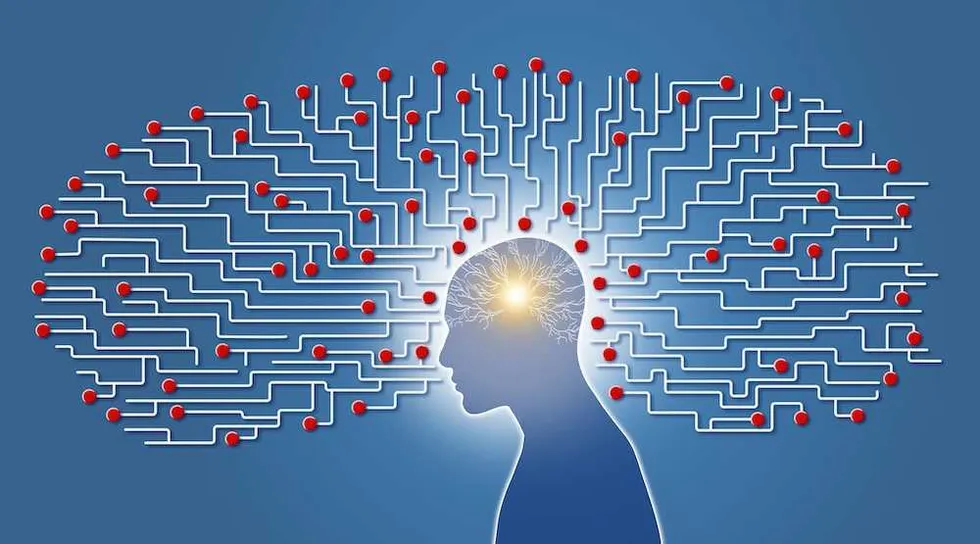
The economic story of 2025 is the government-driven build-out of hyperscale AI data centers — sold as innovation, justified as national strategy, and pursued in service of cloud-based chatbot slop and expanded surveillance. This build-out is consuming land, food, water, and energy at enormous scale. As Energy Secretary Chris Wright bluntly put it, “It takes massive amounts of electricity to generate intelligence. The more energy invested, the more intelligence produced.”
Shortages will hit consumers hard in the coming year.
That framing ignores what is being sacrificed — and distorted — in the process.
Beyond the destruction of rural communities and the strain placed on national energy capacity, government favoritism toward AI infrastructure is warping markets. Capital that once sustained the hardware and software ecosystem of the digital economy is being siphoned into subsidized “AI factories,” chasing artificial general intelligence instead of cheaper, more efficient investments in narrow AI.
Thanks to fiscal, monetary, tax, and regulatory favoritism, the result is free chatbot slop and an increasingly scarce, expensive supply of laptops, phones, and consumer hardware.
Subsidies break the market
For decades, consumer electronics stood as one of the greatest deflationary success stories in modern economics. Unlike health care or education — both heavily monopolized by government — the computer industry operated with relatively little distortion. From December 1997 to August 2015, the CPI for “personal computers and peripheral equipment” fell 96%. Over that same period, medical care, housing, and food costs rose between 80% and 200%.
That era is ending.
AI data centers are now crowding out consumer electronics. Major manufacturers such as Dell and Samsung are scaling back or discontinuing entire product lines because they can no longer secure components diverted to AI chip production.
Prices for phones and laptops are rising sharply. Jobs tied to consumer electronics — especially the remaining U.S.-based assembly operations — are being squeezed out in favor of data center hardware that benefits a narrow set of firms.
This is policy-driven distortion, not organic market evolution.
Through initiatives like Stargate and hundreds of billions in capital pushed toward data center expansion, the government has created incentives for companies to abandon consumer hardware in favor of AI infrastructure. The result is shortages that will hit consumers hard in the coming year.
Samsung, SK Hynix, and Micron are retooling factories to prioritize AI-grade silicon for data centers instead of personal devices. DRAM production is being routed almost entirely toward servers because it is far more profitable to leverage $40,000 AI chips than $500-$800 laptops. In the fourth quarter of 2025, contract prices for certain 16GB DDR5 chips rose nearly 300% as supply was diverted. Dell and Lenovo have already imposed 15%-30% price hikes on PCs, citing insatiable AI-sector demand.
The chip crunch
The situation is deteriorating quickly. DRAM inventory levels are down 80% year over year, with just three weeks of supply on hand — down from 9.5 weeks in July. SK Hynix expects shortages to persist through late 2027. Samsung has announced it is effectively out of inventory and has more than doubled DDR5 contract prices to roughly $19-$20 per unit. DDR5 is now standard across new consumer and commercial desktops and laptops, including Apple MacBooks.
Samsung has also signaled it may exit the SSD market altogether, deeming it insufficiently glamorous compared with subsidized data center investments. Nvidia has warned it may cut RTX 50 series production by up to 40%, a move that would drive up the cost of entry-level gaming systems.
Shrinkflation is next. Before the data center bubble, the market was approaching a baseline of 16GB of RAM and 1TB SSDs for entry-level laptops. As memory is diverted to enterprise customers, manufacturers will revert to 8GB systems with slower storage to keep prices under $999 — ironically rendering those machines incapable of running the very AI applications they’re working on.
Real innovation sidelined
The damage extends beyond prices. Research and development in conventional computing are already suffering. Investment in efficient CPUs, affordable networking equipment, edge computing, and quantum-adjacent technologies has slowed as capital and talent are pulled into AI accelerators.
This is precisely backward. Narrow AI — focused on real-world tasks like logistics, agriculture, port management, and manufacturing — is where genuine productivity gains lie. China understands this and is investing accordingly. The United States is not. Instead, firms like Roomba, which experimented with practical autonomy, are collapsing — only to be acquired by the Chinese!
This is not a free market. Between tax incentives, regulatory favoritism, land-use carve-outs, capital subsidies, and artificially suppressed interest rates, the government has created an arms race for a data center bubble China itself is not pursuing. Each round of monetary easing inflates the same firms’ valuations, enabling further speculative investment divorced from consumer need.
RELATED: China’s AI strategy could turn Americans into data mines
 Grafissimo via iStock/Getty Images
Hype over utility
As Charles Hugh Smith recently noted, expanding credit boosts asset prices, which then serve as collateral for still more leverage — allowing capital-rich firms to outbid everyone else while hollowing out the broader economy.
The pattern is familiar. Consider the Ford plant in Glendale, Kentucky, where 1,600 workers were laid off after the collapse of government-favored electric vehicle investments. That facility is now being retooled to produce batteries for data centers. When one subsidy collapses, another replaces it.
We are trading convention for speculation. Conventional technology — reliable hardware, the internet, mobile computing — delivers proven, measurable utility. The current investment surge into artificial general intelligence is based on hypothetical future returns propped up by state power.
The good old laptop is becoming collateral damage in what may prove to be the largest government-induced tech bubble yet.
Why Democrats fear this midterm more than Republicans do

Midterm elections usually punish the party in power. Political gravity pulls incumbents downward as voters look for balance. But Donald Trump has never operated according to political gravity. This midterm, following the 2024 realignment that delivered the White House and both chambers of Congress to Republicans, looks less like a second-year slump and more like a referendum on a political transformation without modern precedent.
Rather than a routine evaluation of performance, this election is shaping up as a test of will, an economic reckoning, and a public judgment on the unraveling of the administrative state. The failures of the left — not Republican incumbency — are likely to define the terrain.
Trump remains an engine rather than a liability. Party unity has not looked this solid since the Reagan years. Democrats remain trapped in spectacle and grievance.
At the center of it all sits Trump’s methodical effort to dismantle what many Americans now recognize as an unaccountable fourth branch of government.
What was once dismissed as a conspiracy theory is unfolding openly. Trump and congressional Republicans have made no attempt to conceal the project. They are explaining it step by step: how federal agencies accumulated unchecked authority, how oversight collapsed, and why constitutional balance must be restored. These are not marginal reforms. It’s a structural correction.
The result is an electorate unusually aware of how Washington’s permanent class operates. Americans who lived through Russiagate, the 2020 election controversies, years of politicized investigations, and coordinated censorship no longer view federal reform passively. They see themselves as stakeholders in the rollback of bureaucratic power.
A major shift enabling this moment is the collapse of the Russia narrative. Tulsi Gabbard, once embraced by Democrats before being cast out, has played a central role in dismantling the mythology that sustained years of hysteria. Her critique carries weight precisely because it comes from someone who saw the rot from inside her former party.
With that narrative gone, Democrats have lost their most reliable alibi. They can no longer lean on leaks, innuendo, or intelligence-adjacent smears to explain electoral defeats. In its absence, their messaging has devolved into warnings, moral panic, and emotional appeals. That posture signals weakness, not confidence — a poor place to begin a midterm campaign.
The same dynamic surfaces around election integrity. Voters remember 2020 — not the sanitized version offered by media institutions, but the confusion surrounding rule changes, ballot handling, and emergency measures weaponized for political advantage. Those concerns did not fade. If anything, they hardened.
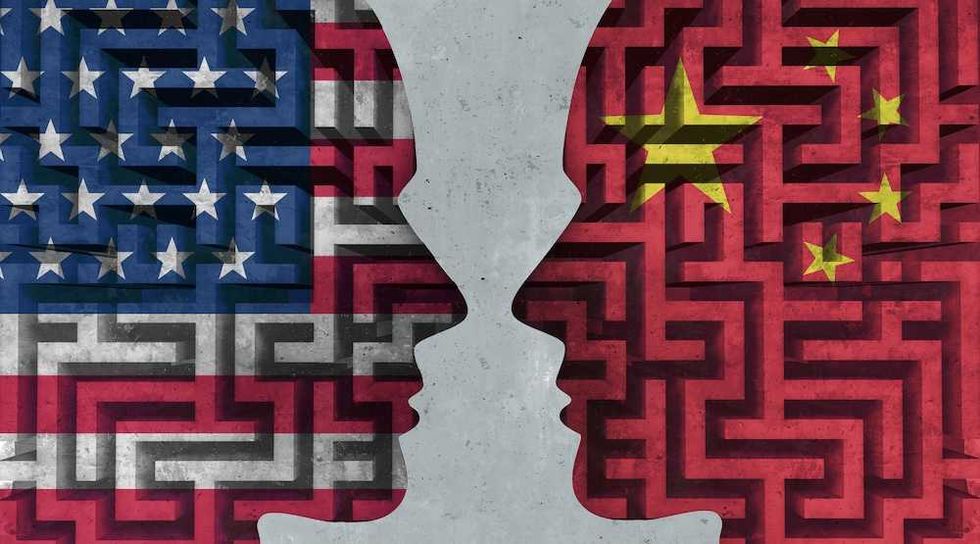
Republicans tapped into that sentiment in 2022 and expanded it in 2024. Now, as attention turns to foreign interference — particularly China’s digital reach and geopolitical incentives — even skeptics acknowledge that election vulnerabilities are real and unresolved. Republicans benefit because they are the only party willing to confront the problem directly.
RELATED: Buckle up: We are headed for an AI collision with China
 wildpixel via iStock/Getty Images
That advantage was built incrementally. While 2022 fell short of a wave, it provided discipline, data, and hard lessons. By 2024, Republicans had unified around priorities that crossed demographic lines: economic recovery, border enforcement, and ending the weaponization of government. The result was not only a presidential victory but unified control of Congress — and margins sturdy enough to govern.
Democrats, by contrast, have lost their taste for prosecutorial theatrics. Years of timed indictments, investigations, and legal spectacle exhausted the public. What once energized the base now appears to be manipulation.
Their federal shutdown was another miscalculation. Instead of appearing principled, Democrats disrupted or financially strained nearly 10 million Americans — federal workers, contractors, and regional industries — in a maneuver widely seen as cynical and purposeless. Voters did not see conviction. They saw political theater staged at their expense.
At the same time, left-wing political violence has become harder to dismiss. From major cities to college campuses, radical unrest is increasingly tolerated by progressive officials. With Republicans governing, the contrast is stark: One party emphasizes order, while the other struggles to contain its most extreme factions. Midterms reward stability. Right now, Republicans own that advantage.
Yes, midterms are usually brutal for incumbents. But this cycle is different. Republicans enter with momentum, cohesion, and a governing agenda aligned with voter concerns. Trump remains an engine rather than a liability. Party unity has not looked this solid since the Reagan years. Democrats remain trapped in spectacle and grievance.
MAGA is no longer an insurgency. It is the governing coalition. This midterm is more likely to ratify that reality than reverse it.
All I want for Christmas is for Vivek Ramaswamy to stop embarrassing the GOP
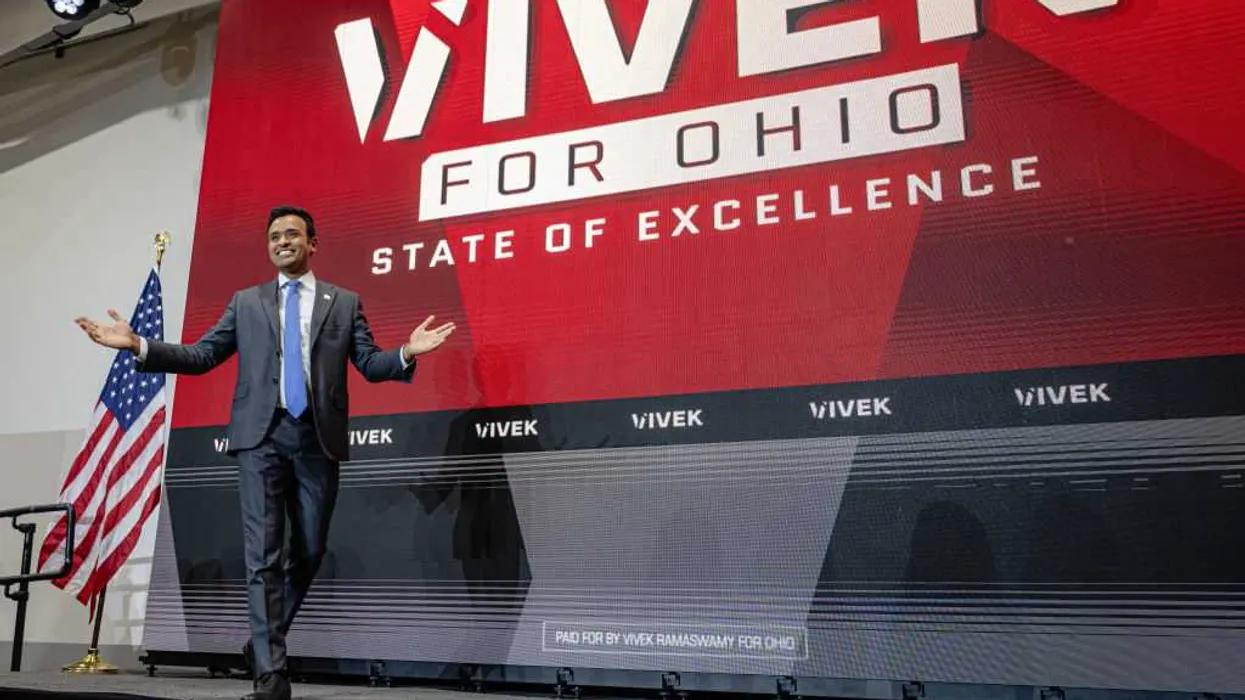
Vivek Ramaswamy is a DEI candidate — and an unqualified one. Republicans do not vote for unqualified DEI candidates. Historically, they never have.
For the good of Ohio, the Republican Party, and MAGA voters nationwide, Vivek Ramaswamy should withdraw from the Ohio gubernatorial race. His candidacy is not merely ill-advised; it is corrosive. At a moment when unity and discipline matter, he threatens to fracture the coalition President Trump assembled and to waste political capital ahead of the 2026 midterms and the 2028 presidential cycle, when Ohio native JD Vance is widely expected to lead the ticket.
All Ramaswamy had to do was remain silent and act like a normal Republican for 18 months. He couldn’t.
Ramaswamy’s problem is not policy disagreement. It is temperament, judgment, and an inability to restrain himself. His habit of attacking critics as racists, trolls, or bad actors poisons the well. Democrats, corporate media, and professional activists already do that job. Republicans do not need a gubernatorial candidate doing it from inside the party.
In 2024, 3,189,116 Ohioans voted for Donald Trump. It strains credulity to claim that Ramaswamy is more qualified to govern Ohio than virtually any one of them.
Yet this charade continues. For decades, GOP leadership has tried to impose an identity-driven strategy on a party whose voters reject it. The results are consistent. From Alan Keyes to Winsome Earle-Sears, the establishment clings to a failed premise: that Republican voters will embrace DEI candidates if scolded long enough. They won’t. Nor do minority voters reliably cross over for such candidates. The strategy fails on both ends.
That makes the present moment especially baffling. At a time when Trump and Vance are openly criticizing decades of discriminatory policies against white Americans, backing a candidate whose appeal rests on the same identity logic is not just tone-deaf — it is hostile to the base.
Ohio is a solid red state. Any competent Republican with discipline wins statewide office comfortably.
Vivek Ramaswamy is neither.
His background underscores why. In 2011, at age 24, Ramaswamy accepted a $90,000 “scholarship” from the brother of George Soros. That alone raises eyebrows. It becomes more troubling when you consider that Ramaswamy had already earned more than $1.2 million in the prior three years and reported $2.25 million in income the year he accepted the award.
This occurred during the Great Recession, when many white Millennial men faced systematic exclusion across elite institutions. Ramaswamy did not.
Later, much of his wealth flowed from Axovant Sciences, which aggressively promoted an Alzheimer’s breakthrough to retail investors after early trials had failed. The result was a textbook pump-and-dump that left ordinary Americans holding the bag. These facts go directly to trust and judgment.
Despite this record, Ramaswamy launched a quixotic presidential campaign, which he parlayed into a brief role in the Trump administration and a partnership with Elon Musk under the DOGE initiative. That arrangement ended almost as quickly as it began.
Then came the Christmas crashout of 2024.
During the holidays — entirely unprovoked — Ramaswamy took to X to berate American workers as lazy and culturally deficient while praising foreign H-1B visa holders. He mocked American childhood culture, disparaged “jocks and prom queens,” and lamented that Americans watched “Boy Meets World” instead of competing in math olympiads. The episode revealed far more about Ramaswamy’s resentments than about American culture.
MAGA voters were celebrating a landslide victory when the lecture arrived. The response was swift and overwhelming. Rather than admit error, Ramaswamy doubled down, dismissing critics as bots, trolls, and racists while casting himself as a victim.
Shortly thereafter, the Trump administration quietly removed him from his DOGE role before he was even formally installed.
Voters noticed. The internet does not forget.
When Ramaswamy announced his run for governor, the reaction was not enthusiasm but disbelief. The Ohio GOP’s apparent decision to anoint him is indefensible. It would take an estimated $100 million to drag this candidacy across the finish line, and even then he would be lucky to crack 48%.
We’ve seen this movie before. At least one-third of Ohio Republicans would rather spoil their ballot, vote third-party, or stay home than support him. Accusing them of racism will not change that reality.
Most recently, Ramaswamy took to the New York Times to reprise his grievances, portraying MAGA voters and heritage Americans as racists, extremists, and “groypers.” He made similar remarks at Turning Point USA’s AmFest over the weekend.
RELATED: The media just told you their 2026 strategy: ‘Lies, but better!’
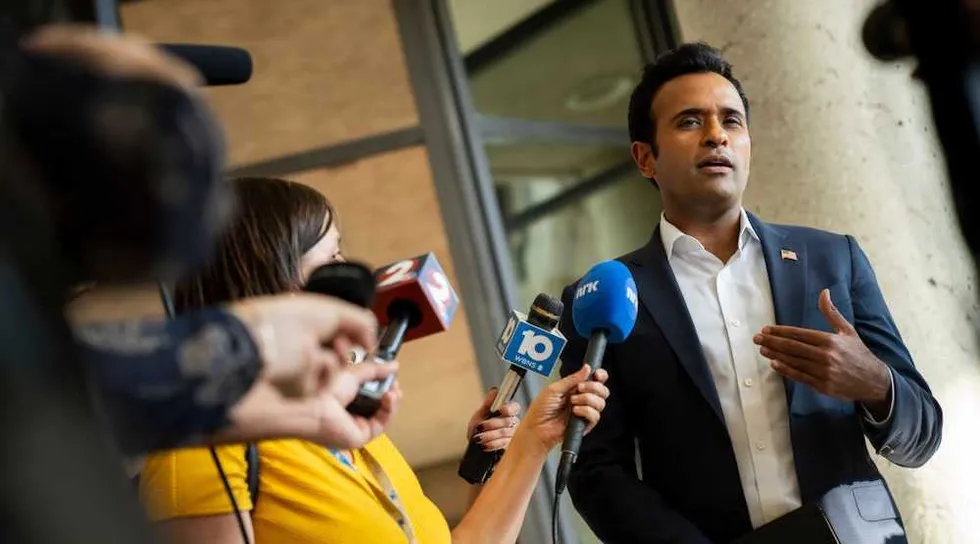 Photo by Michael Swensen/Getty Images
In his Times op-ed, he argued that America is an abstract idea detached from ancestry, history, or continuity — and that descendants of those who built the nation have no greater claim to it than recent arrivals or anchor babies.
That view is not widely held, nor is it reflected in the American tradition. From America’s founders to Alexis de Tocqueville and Theodore Roosevelt, continuity, inheritance, and culture have always mattered.
No one expects Ramaswamy to be a heritage American. But Americans reasonably expect someone seeking to govern them to respect the people whose nation it is. Ramaswamy has shown repeated contempt instead.
He did not have to attack white Americans over Christmas. He did not have to insult the Republican base in the New York Times. He did not have to liken MAGA voters to extremists.
He chose to.
All Ramaswamy had to do was remain silent and act like a normal Republican for 18 months. He couldn’t.
MAGA does not need this distraction. Ohio does not need this fight. The Republican Party cannot afford to spend finite resources defending a candidate who consistently antagonizes his own voters.
That alone makes him unsuitable for office.
Wake up and smell the Islamic invasion of the West

Over the course of a single day this month, a pattern repeated itself across the West. Two Muslims murdered at least 15 people at a Hanukkah celebration in Sydney. Five Muslims were arrested for plotting an attack on a Christmas market in Germany. French authorities canceled a concert in Paris due to credible threats of an Islamist terror attack. Two Iowa National Guardsmen in Syria were murdered by an Islamist while we play footsie with an illegitimate regime.
None of this represents an anomaly. It represents the accumulated failure of a strategy best summarized as “invade the Muslim world, invite the Muslim world.”
This conflict has never been about Jews alone. Jews are the first target, not the last. Islamist ideology ultimately targets all non-Muslims and any society that refuses submission.
That doctrine has produced neither peace abroad nor safety at home.
A contradiction the West refuses to resolve
Western governments spent the better part of a generation importing millions of migrants from unstable regions while simultaneously deploying their own soldiers to those same regions to manage sectarian civil wars.
The contradiction remains unresolved: We accept the risks of mass migration while risking our troops to contain the same ideologies overseas.
Islamist movements do not confine themselves to national borders. Whether Sunni or Shia, whether operating in Syria, Europe, or North America, the targets remain consistent: Jews, Christians, secular institutions, and Western civil society.
Yet our policy treats these threats as isolated incidents rather than the expression of a coherent ideology.
Strategic incoherence in Syria
Nowhere does this incoherence appear more starkly than in Syria.
On one hand, the Trump administration has moved toward normalizing relations with Syria’s new leadership. In June, President Trump signed an executive order terminating U.S. sanctions on Syria, including those on its central bank, in the name of reconstruction and investment. Last month, Syria’s new leader, Abu Mohammad al-Jolani — a former al-Qaeda figure rebranded as a statesman — visited the White House, where Trump publicly praised developments under the new regime and said he was “very satisfied” with Syria’s direction.
At the same time, Trump floated the idea of establishing a permanent U.S. military base in Damascus to solidify America’s indefensible presence and support the new government.
This would be extraordinary. The United States would be embedding troops deeper into one of the most volatile theaters on earth, effectively placing American soldiers at the mercy of a regime whose leadership and allies only recently emerged from jihadist networks — including factions accused of massacring Christians and Druze.
Simultaneously, the White House pressures Israel to limit its defensive operations in southern Syria, including its buffer-zone strategy along the Golan Heights, even as Israeli forces do a far more effective job degrading jihadist threats without sacrificing their own soldiers.
The result is perverse: America risks lives to stabilize an Islamist-adjacent regime while restraining the one ally actually capable of enforcing order.
Wars abroad, chaos at home
The contradiction deepens when immigration policy enters the picture.
Despite Syria remaining one of the world’s most unstable countries, with no reliable vetting infrastructure, the United States continues admitting Syrian migrants while maintaining roughly 800 troops inside Syria with no clear mission, no defined end, and no defensible supply lines.
Worse, U.S. forces increasingly find themselves aligned with terrorist factions tied to al-Jolani’s coalition to manage rival Islamist groups — placing American soldiers in the same position they occupied in Afghanistan, where “allies” repeatedly turned on them.
That dynamic produced deadly ambushes then. It is happening again.
Qatar’s fingerprints all over
The common thread running through Syria, Gaza, immigration policy, and Islamist indulgence is Qatar.
Qatar (along with our NATO “ally,” Turkey) invested heavily in Sunni Islamist factions during Syria’s civil war and backed networks tied to the Muslim Brotherhood for more than a decade. Qatar hosts Islamist leaders, bankrolls ideological infrastructure, and operates Al Jazeera, a media outlet that consistently amplifies anti-Western and anti-Israel narratives.
Yet Qatari preferences increasingly shape Western policy. We remain in Syria. We soften pressure on Islamist factions. We tolerate Muslim Brotherhood networks operating domestically. We allow Al Jazeera to function with broad access and influence inside the United States.
These choices do not occur in isolation. They align consistently with Qatari interests.
Unfettered immigration kills
Which brings us to the attack in Sydney that killed at least 15 people and wounded dozens more, when two Muslim terrorists opened fire on a Hanukkah celebration — using weapons supposedly banned in a country that prides itself on gun control, but not border control.
The alleged attackers, Sajid Akram and Naveed Akram, were a father-and-son pair of Pakistani origin. Sajid Akram entered Australia from Pakistan in 1998 on a student visa, converted it to a partner visa in 2001, and later received permanent residency through resident return visas.
In other words, this was not a transient or marginal figure. Akram was educated, had lived in Australia for more than 25 years, raised an Australian-born son, and still became radicalized enough to murder Jews in his adopted country.
Pakistan is one of the countries the Trump administration continues to treat as an ally, allowing large numbers of its nationals into the United States. Over the past decade, roughly 140,000 Pakistanis have received green cards, with tens of thousands more entering on student and work visas.
RELATED: Political Islam is playing the long game — America isn’t even playing
 Photo by Win McNamee/Getty Images
The same pattern appears elsewhere. In Germany, five terrorists arrested for plotting an attack on a Christmas market came from Morocco, Syria, and Egypt. In the U.S., we have issued green cards to approximately 38,000 Moroccans, more than 100,000 Egyptians, and over 28,000 Syrians.
This problem is not confined to ISIS or a handful of extremists in distant war zones. It is systemic. It explains why thousands took to the streets celebrating the Sydney massacre and why Islamist mobs now routinely surround synagogues in American cities, blocking worshippers and daring authorities to intervene.
The truth is, it doesn’t matter which Islamic country they hail from, how friendly that government may be to the West, or the tribal dynamics on the ground there. All of them, when they cluster in large numbers and form independent communities run by the Musim Brotherhood organizations, are incompatible with the West.
The problem is with Islam itself and the mass migration and Western subversion promoted by the Muslim Brotherhood through Qatari and Turkish gaslighting.
A choice we keep postponing
This conflict has never been about Jews alone. Jews are the first target, not the last. Islamist ideology ultimately targets all non-Muslims and any society that refuses submission.
The West must decide whether it intends to defend its civilization or continue subsidizing its erosion — through mass migration without assimilation, foreign entanglements without strategy, and alliances that demand silence in exchange for access.
Rather than building up Syria, risking the lives of our troops, and continuing to appease our enemies in Qatar, why not pull out, let Israel serve as the regional security force, while we focus on closing our border to the religion of pieces?
Protecting the country requires clarity. That means ending immigration from jihadist incubators, dismantling Islamist networks operating domestically, withdrawing troops from unwinnable sectarian conflicts, and empowering allies who actually fight our enemies.
Anything less is not “compassion” or sound foreign policy. It is criminal negligence.