Category: Opinion & analysis
Trump forced allies to pay up — and it worked

In the fifth century B.C., a group of Greek city-states formed a defensive alliance known as the Delian League to protect them against the Persian Empire.
Athens, the most powerful member, gradually increased its power. Its rulers moved the league’s common treasury from the island of Delos to Athens (to keep it safe, of course), attacked allies that attempted to secede, and started casually referring to the alliance as “our empire.”
If you want good allies, you need to be a good ally.
The most brazen assertion came when the Athenian leader Pericles raided the league treasury to fund building projects in Athens (including the Parthenon).
When the other league members objected, Pericles insisted that the treasury was less like a common military budget and more like protection money: As long as the Persians aren’t breaking down your doors, we can spend league funds however we want.
Obviously, this is no way to treat one’s allies. It is not just exploitative; it is counterproductive. During the ensuing Peloponnesian War, Athens spent as much time fighting its own rebellious allies as it did fighting Sparta.
The United States, however, has spent the last several decades conducting its foreign relations on the opposite principle. We have the same hegemonic role Athens held, but instead of robbing our allies, we let them rob and betray us.
A few months ago, the government of Kuwait — a country hundreds of Americans died to defend just a few decades ago and that continues to rely on us for protection against Iran — launched a “Kuwait-China Friendship Club” to strengthen military ties with Beijing.
And if cozying up to our biggest geopolitical rival weren’t enough, Kuwait is also ripping us off.
The United States played a huge role in building Kuwait’s massive Al Zour oil refinery, and the country’s government still owes us hundreds of millions of dollars.
Closer to home, Mexico — which Bill Clinton bailed out to the tune of $20 billion — takes in more than $60 billion a year in remittance money from the United States, all while its socialist oil company refuses to pay the $1.2 billion it owes to American contractors.
RELATED: Trump makes America dangerous again — to our enemies
 Photo by ANDREW CABALLERO-REYNOLDS/AFP via Getty Images
The NATO countries are even worse. Prior to Russia’s invasion of Ukraine, just six of the alliance’s 32 members spent the required 2% of GDP on defense.
Meanwhile, these countries used the money they weren’t spending on guns to build massive welfare states (their equivalent of Pericles’ Parthenon). They also eviscerated their domestic energy production and became increasingly reliant on oil from Russia, the country the alliance is supposed to keep in check.
Thankfully, a combination of Vladimir Putin’s aggression and Donald Trump’s bullying has increased the number of countries meeting the 2% threshold from six to 23.
If you want good allies, you need to be a good ally.
That means no more meddling in the name of “international development” or “advancing democracy.” Just mutual clarifications of national interest and frank discussions about how to advance those interests.
Athens’ focus on its own self-interest was its undoing. America’s neglect of it might have been ours. Under President Trump, however, it looks like that is starting to change.
The people carrying addiction’s weight rarely get seen
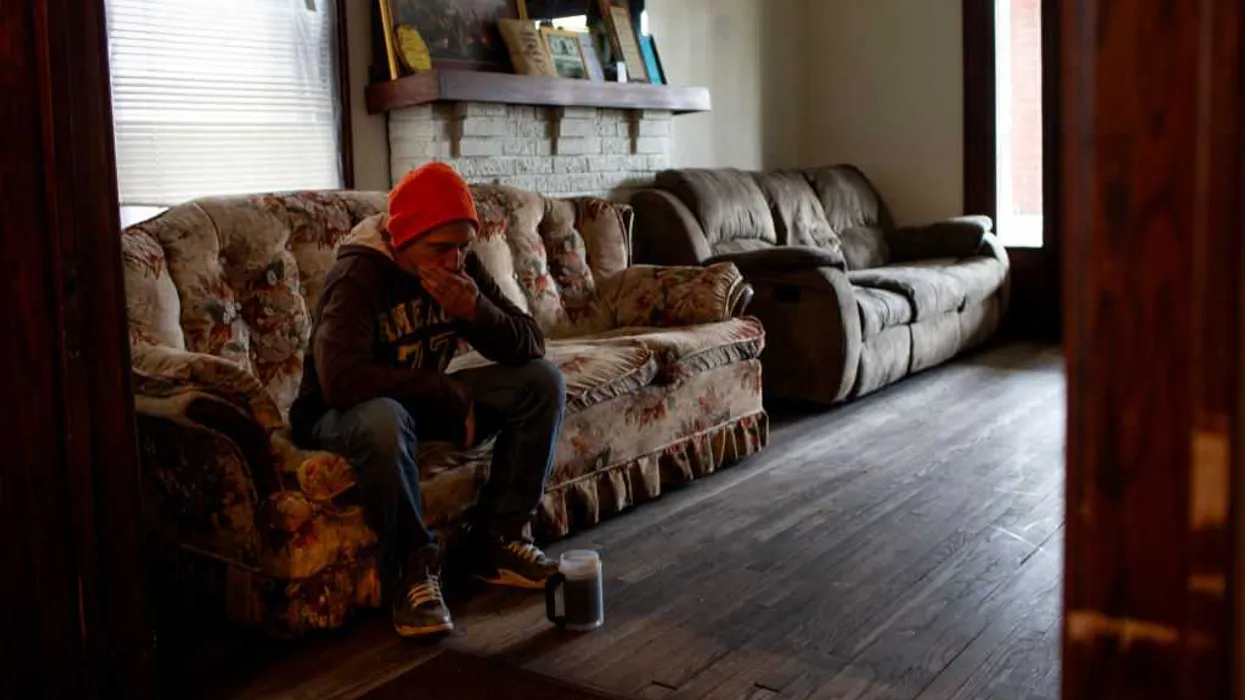
What happened Sunday at the home of Rob and Michele Reiner is a family nightmare. A son battling addiction, likely complicated by mental illness. Parents who loved him. A volatile situation that finally erupted into irreversible tragedy.
I grieve for them.
Shame keeps families quiet. Fear keeps them guarded. Love keeps them hoping longer than wisdom sometimes allows.
I also grieve for the families who read those headlines and felt something tighten in their chest because the story felt painfully familiar.
We often hear the phrase, “If you see something, say something.” The problem is that most people do not know what to say. So they say nothing at all.
What if we started somewhere simpler?
I see you. I see the weight you are carrying. I hurt with you.
Families living with addiction and serious mental illness often find themselves isolated. Not only because of the chaos inside their homes, but because friends, neighbors, and even faith communities hesitate to step closer, unsure of what to say or do. Over time, silence settles in.
Long before police are called, before neighbors hear sirens, before a tragedy becomes a headline, people live inside relentless stress and uncertainty every day.
They are caregivers.
We rarely use that word for parents, spouses, or siblings of addicts, but we should. These families do not simply react to bad choices. They manage instability. They monitor risk. They absorb emotional whiplash. They try to keep everyone safe while holding together a household under extraordinary strain.
In many ways, this disorientation rivals Alzheimer’s. In some cases, it proves even more destabilizing.
Addiction is cruelly unpredictable. It offers moments of clarity that feel like hope. A sober conversation. An apology. A promise that sounds sincere. Those moments can disarm a family member who desperately wants to believe the worst has passed.
Then the pivot comes. Calm turns to chaos. Remorse gives way to rage. Many families learn to live on edge, constantly recalibrating, never certain whether today will be manageable or explosive.
Law enforcement officers understand this reality well. Many domestic calls involve addiction, mental illness, or both. Tension often greets officers at the door, followed by a familiar refrain: “We didn’t know what else to do.”
Calling these family members caregivers matters because it reframes the conversation. It moves us away from judgment and toward reality. From, “Why don’t they just …?” to, “What are they carrying?” It acknowledges that these families manage risk, not just emotions.
The recovery community has long emphasized truths that save lives: You did not cause it. You cannot control it. You cannot cure it. These principles are not cold. They bring clarity. And clarity matters when safety is at stake.
RELATED: The grace our cruel culture can’t understand
 Photo by Gary Hershorn / Getty Images
Another truth too often postponed until tragedy strikes deserves equal emphasis: The caregiver’s safety matters too.
Friends and faith communities often respond with a familiar phrase: “Let me know if there’s anything you need.” It sounds kind, but it places the burden back on someone already exhausted and often afraid.
Caregivers need something different. They need people willing to ask better questions.
Are you safe right now? Is there a plan if things escalate? Who is checking on you? Would it help if I stayed with you or helped you find a safe place tonight?
These questions do not intrude. They protect.
Often, the most meaningful help does not come as a solution, but as a witness. Henri Nouwen once observed that the people who matter most rarely offer advice or cures. They share the pain. They sit at the kitchen table. They walk alongside without looking away.
Caregivers living with someone battling addiction and mental illness often need at least one safe presence who sees clearly, speaks honestly, and stays when things grow uncomfortable.
We have permission to care, but not always the vocabulary.
Shame keeps families quiet. Fear keeps them guarded. Love keeps them hoping longer than wisdom sometimes allows. One of the greatest gifts we can offer is the willingness to penetrate that isolation with clarity, grace, and tangible help.
Grace does not require silence in the face of danger. Love does not demand enduring abuse. Faith does not obligate someone to remain in harm’s way.
Pointing a caregiver toward safety does not abandon the person struggling with addiction. It recognizes that multiple lives stand at risk, and all of them matter.
When tragedies occur, the public asks what could have been done differently. One answer proves both simple and difficult: Stop overlooking the caregivers quietly absorbing the blast.
RELATED: The courage we lost is hiding in the simplest places
 Photo by Wolfgang Kaehler/LightRocket via Getty Images
Welfare checks should not focus solely on the person battling addiction or mental illness. Families living beside that struggle often need support long before a breaking point arrives.
If you know someone whose son, daughter, spouse, or partner struggles, do not look away because you feel unsure what to say. You do not need to solve anything. You do not need to analyze anything.
Start by seeing them. Stay with them.
I see you. I see how heavy this is. You do not have to carry it alone.
Ask better questions. Offer practical help that does not depend on their energy to ask. Check on them again tomorrow.
This season reminds us that Christ did not stand at a safe distance from trauma. He came close to the wounded and brought redemption without demanding tidy explanations.
When we do the same for families living in the shadow of addiction and mental illness, we honor their suffering and the Savior who meets us there.
Trump v. Slaughter exposes who really fears democracy

In the recently argued Trump v. Slaughter case, most of the U.S. Supreme Court seemed to affirm what should be obvious: The president has a constitutional right under Article II to dismiss federal employees in the executive branch when it suits him.
That conclusion strikes many of us as self-evident. Executive-branch employees work under the president, who alone among them is chosen in a nationwide election. Bureaucrats are not. Why, then, should the chief executive’s subordinates be insulated from his control?
When the Roberts Court overturned Roe in 2022 and returned the issue to the states, many voters responded with fury. The electorate did not welcome responsibility. It resented it.
A vocal minority on the court appears to reject that premise. Justices Ketanji Brown Jackson and Sonia Sotomayor warned that allowing a president — implicitly a Republican one — to control executive personnel would unleash political chaos. Jackson suggested Trump “would be free to fire all the scientists, the doctors, the economists, and PhDs” working for the federal government. Sotomayor went further, claiming the administration was “asking to destroy the structure of government.”
David Harsanyi, in a perceptive commentary, identified what animates this view: “fourth-branch blues.” The administrative state now exercises power that rivals or exceeds that of the constitutional branches. As Harsanyi noted, nothing in the founders’ design envisioned “a sprawling autonomous administrative state empowered to create its own rules, investigate citizens, adjudicate guilt, impose fines, and destroy lives.”
Yet defenders of this system frame presidential oversight as a threat to “democracy.” Democrats, who present themselves as democracy’s guardians, warn that allowing agency officials to answer to the elected president places the nation in peril. The argument recalls their reaction to the Dobbs case, when the court returned abortion policy to voters and was accused of “undermining democracy” by doing so.
RELATED: This Supreme Court case could reverse a century of bureaucratic overreach
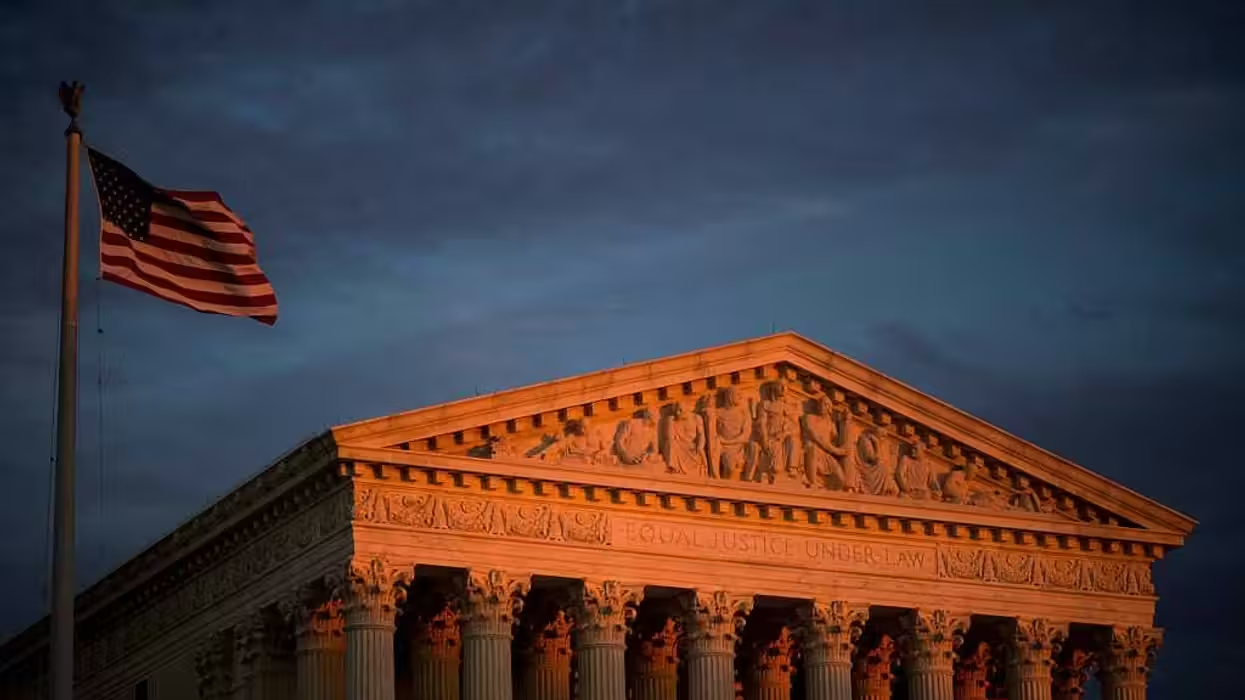 Photo By Bill Clark/CQ Roll Call
On that point, Harsanyi and I agree. Judicial and bureaucratic overreach distort constitutional government. The harder question is whether voters object.
From what I can tell, most do not. Many Americans seem content to trade constitutional self-government for managerial rule, provided the system delivers benefits and protects their expressive preferences. The populist right may bristle at this arrangement, but a leftist administrative state that claims to speak for “the people” may reflect the electorate’s will.
Recent elections reinforce that suspicion. Voters showed little interest in reclaiming authority from courts or bureaucracies. They appeared far more interested in government largesse and symbolic rights than in the burdens of republican self-rule.
Consider abortion. Roe v. Wade rested on shaky legal ground, yet large segments of the public enthusiastically embraced it for nearly 50 years. When the Roberts Court overturned Roe in 2022 and returned the issue to the states, many voters responded with fury. States enacted expansive abortion laws, and Democrats benefited from unusually high turnout. The electorate did not welcome responsibility. It resented it.
This reaction should not surprise anyone familiar with history. In 1811, Spaniards rejected the liberal constitution imposed by French occupiers, crying “abajo el liberalismo” — down with liberalism. They did not want abstract rights. They wanted familiar authority.
At least half of today’s American electorate appears similarly disposed. Many prefer guided democracy administered by judges and managers to the uncertainties of self-government. Their votes signal approval for continued rule by the administrative state. Republicans may slow this process at the margins, but Democrats expand it openly, and voters just empowered them to do so.
RELATED: Stop letting courts and consultants shrink Trump’s signature promise
 Yuri Gripas/Abaca/Bloomberg via Getty Images
I anticipated this outcome decades ago. In “After Liberalism” (1999), I argued that democracy as a universal ideal tends to produce expanded managerial control with popular consent. Nineteenth-century fears that mass suffrage would yield chaos proved unfounded. Instead the extension of the franchise coincided with more centralized, remote, and less accountable government.
As populations lost shared traditions and common authority, governance shifted away from democratic participation and toward expert administration. The state grew less personal, less local, and less answerable, even as it claimed to act in the people’s name.
Equally significant has been the administrative state’s success in presenting itself as the custodian of an invented “science of government.” According to this view, administrators form an enlightened elite, morally and intellectually superior to the unwashed masses. Justice Jackson’s warnings reflect this assumption.
I would like to believe, as Harsanyi suggests, that Americans find such attitudes insulting. I am no longer sure they do. Many seem pleased to be managed. They want judges and bureaucrats to make decisions for them.
That preference should trouble anyone who still cares about constitutional government.
Congress strips merit from the military and shackles the president in one bill

The Trump administration recently released an extremely promising National Security Strategy — but the same cannot be said about the proposed National Defense Authorization Act for the 2026 fiscal year.
The House and Senate’s compromise NDAA appears to be in tension with the goals of the administration’s strategy. While the National Security Strategy prioritizes a hemispheric defense of the American homeland, the NDAA locks decision-makers into maintaining unnecessary overseas troop levels. Despite President Trump’s stated strategic aims, Congress seems intent on safeguarding the national security priorities and infrastructure of previous eras.
The NDAA represents the ‘deep state,’ a combination of entrenched interests, committees, lobbies, and bureaucracies that value continuity over strategy and reform.
Restricting the drawdown of troops stationed overseas, increasingly murky foreign entrenchment through legally binding efforts to sell arms, and dubious clauses requiring congressional approval at every turn, all serve to bind the commander in chief’s hands. All of this reeks of a shadowy order desperately trying to maintain the status quo at the expense of the will of the people who elected Donald Trump in 2024.
This cannot stand.
Section 1249 of the NDAA states that U.S. forces in Europe cannot fall below 76,000 for more than 45 days without presidential certifications to Congress. This is supposed to ensure that troop reductions present no threat to NATO partners or U.S. national security. (Absurdly, the bill requires the U.S. to consult with every NATO ally and even “relevant non-NATO partners.”) But stripping the president of essential discretion through ludicrous legislative roadblocks categorically subverts his authority under the Constitution.
Section 1255 states that troop levels cannot dip below 28,500 in the Korean Peninsula, nor can wartime operational control be transferred without an identical trial by fire of congressional approvals and national-security certifications.
Shifting our military focus to our own backyard was a stated goal of the National Security Strategy. If this vision is to be implemented, Congress cannot serve as a bureaucratic middleman that hinders deployment flexibility through pedantic checklists.
Americans need to understand that the NDAA would obstruct the execution of President Trump’s agenda. As written, it functions as a deliberate statutory barrier to presidential decision-making. This denotes a redistribution of war powers from the elected executive to a sprawling and unaccountable institutional structure.
The NDAA represents what Americans call the “deep state,” a combination of entrenched interests, committees, lobbies, and bureaucracies that value continuity over strategy and reform.
This continuity becomes clear when you look at what the House and Senate didn’t include in the compromise NDAA. The Senate’s original bill contained a provision barring the use of DEI in service-academy admissions — a measure that would have required merit-only standards and prevented racial profiling. Congress stripped that section out. The final bill includes a few weak gestures toward limiting DEI, but none of them meet President Trump’s goal of a military that rejects race and sex as factors altogether.
RELATED: Mexico has cartel armies. Blue America has cartel politics.
 Photo by Chip Somodevilla/Getty Images
As written, the NDAA gives a future Democratic president the opportunity to reintroduce woke indoctrination in the military with the stroke of a pen. And laws favoring DEI at our nation’s most vital institutions could resurface on a whim, using typical “diversity is our strength” platitudes.
Despite its name, the NDAA functions less like a defense bill and more like the legal backbone of America’s global posture. Whatever promises the National Security Strategy makes, they cannot be realized so long as the current NDAA pulls in the opposite direction. Strategy should shape institutions — not the other way around.
In Washington jargon, the NDAA is treated as “must-pass” legislation. That label has no legal or constitutional basis. And even if it must pass, no one claims it must be signed.
The National Security Strategy reflects the will of voters; the NDAA reflects bureaucratic inertia. That is why the Trump administration cannot, in good conscience, approve this bill. Our escape from stagnation, mediocrity, and endless foreign entanglements depends on rejecting it — and time is running out.
Editor’s note: A version of this article was published originally at the American Mind.
The country that mocks America’s ‘culture of death’ has embraced one of its own

Canada loves to lecture America about compassion. Every time a shooting makes the headlines, Canadian commentators cannot wait to discuss how the United States has a “culture of death” because we refuse to regulate guns the way enlightened nations supposedly do.
But north of our border, a very different crisis is unfolding — one that is harder to moralize because it exposes a deeper cultural failure.
A society that no longer recognizes the value of life will not long defend freedom, dignity, or moral order.
The Canadian government is not only permitting death, but it’s also administering, expanding, and redefining it as “medical care.” Medical assistance in dying is no longer a rare, tragic exception. It has become one of the country’s leading causes of death, offered to people whose problems are treatable, whose conditions are survivable, and whose value should never have been in question.
In Canada, MAID is now responsible for nearly 5% of all deaths — 1 out of every 20 citizens. And this is happening in a country that claims the moral high ground over American gun violence. Canada now records more deaths per capita from doctors administering lethal drugs than America records from firearms. Their number is 37.9 deaths per 100,000 people. Ours is 13.7. Yet we are the country supposedly drowning in a “culture of death.”
No lecture from abroad can paper over this fact: Canada has built a system where eliminating suffering increasingly means eliminating the sufferer.
Choosing death over care
One example of what Canada now calls “compassion” is the case of Jolene Bond, a woman suffering from a painful but treatable thyroid condition that causes dangerously high calcium levels, bone deterioration, soft-tissue damage, nausea, and unrelenting pain. Her condition is severe, but it is not terminal. Surgery could help her. And in a functioning medical system, she would have it.
But Jolene lives under socialized medicine. The specialists she needs are either unavailable, overrun with patients, or blocked behind bureaucratic requirements she cannot meet. She cannot get a referral. She cannot get an appointment. She cannot reach the doctor in another province who is qualified to perform the operation. Every pathway to treatment is jammed by paperwork, shortages, and waitlists that stretch into the horizon and beyond.
Yet the Canadian government had something else ready for her — something immediate.
They offered her MAID.
Not help, not relief, not a doctor willing to drive across a provincial line and simply examine her. Instead, Canada offered Jolene a state-approved death. A lethal injection is easier to obtain than a medical referral. Killing her would be easier than treating her. And the system calls that compassion.
Bureaucracy replaces medicine
Jolene’s story is not an outlier. It is the logical outcome of a system that cannot keep its promises. When the machinery of socialized medicine breaks down, the state simply replaces care with a final, irreversible “solution.” A bureaucratic checkbox becomes the last decision of a person’s life.
Canada insists its process is rigorous, humane, and safeguarded. Yet the bureaucracy now reviewing Jolene’s case is not asking how she can receive treatment; it is asking whether she has enough signatures to qualify for a lethal injection. And the debate among Canadian officials is not how to preserve life, but whether she has met the paperwork threshold to end it.
This is the dark inversion that always emerges when the state claims the power to decide when life is no longer worth living. Bureaucracy replaces conscience. Eligibility criteria replace compassion. A panel of physicians replaces the family gathered at a bedside. And eventually, the “right” to die becomes an expectation — especially for those who are poor, elderly, or alone.
 Photo by Graham Hughes/NurPhoto via Getty Images
The logical end of a broken system
We ignore this lesson at our own peril. Canada’s health care system is collapsing under demographic pressure, uncontrolled migration, and the unavoidable math of government-run medicine.
When the system breaks, someone must bear the cost. MAID has become the release valve.
The ideology behind this system is already drifting south. In American medical journals and bioethics conferences, you will hear this same rhetoric. The argument is always dressed in compassion. But underneath, it reduces the value of human life to a calculation: Are you useful? Are you affordable? Are you too much of a burden?
The West was built on a conviction that every human life has inherent value. That truth gave us hospitals before it gave us universities. It gave us charity before it gave us science. It is written into the Declaration of Independence.
Canada’s MAID program reveals what happens when a country lets that foundation erode. Life becomes negotiable, and suffering becomes a justification for elimination.
A society that no longer recognizes the value of life will not long defend freedom, dignity, or moral order. If compassion becomes indistinguishable from convenience, and if medicine becomes indistinguishable from euthanasia, the West will have abandoned the very principles that built it. That is the lesson from our northern neighbor — a warning, not a blueprint.
The courage we lost is hiding in the simplest places

If you’ll indulge one more cabin story, it’s only because remodeling an unlevel structure may be the clearest metaphor for the challenges caregivers face — and, I suspect, for the condition of America itself.
Out here in rural Montana, you learn quickly that when a project needs doing, you can pay a lot for it, wait a long time, use duct tape, or learn to do it yourself. Usually it’s some combination of the four. And while I’ve adapted to that reality, certain home-improvement tasks still give me the willies — mainly anything with a blade spinning fast enough to launch lumber toward Yellowstone National Park.
There is something life-giving about facing the hard thing in front of us instead of avoiding it.
Who knew you needed a helmet to cut boards?
I’ve been a pianist longer than I’ve been a caregiver, and since my hands pay the bills, I prefer to keep all my fingers intact. Let’s just say that when it comes to carpentry, I can really play the piano.
Recently we removed an old door in our cabin and needed to rebuild the wall. Help was delayed, so I decided to tackle it myself. The wall wasn’t the problem. The miter saw was. When I noticed the blade catching the afternoon light, it looked downright smug.
It knew.
Still I’ve met many builders in our county, and only one is missing a finger. Thankfully none answer to “Lefty.” If they can keep their body parts, maybe I can too. My rule is simple: Measure 17 times, cut once — and do it slowly.
So I got to work. In an old cabin nothing is plumb, so my level and I argued for quite a while. Even so, the studs went in, something close to square took shape, and despite a few caregiving interruptions, the wall was framed by sundown.
I was proud of myself. I took pictures. I bragged a little. Some builders may roll their eyes, but I’d do the same if they bragged about playing “Chopsticks.”
But it wasn’t really the blade. It was the fear behind it — the fear of getting something wrong, of creating a problem I couldn’t undo. And that fear isn’t limited to carpentry. When we let fear or anxiety keep us from picking up the tool and learning, whole parts of our lives remain unfinished.
We live in half-built cabins — studs exposed, projects stalled, confidence untested because we never moved toward the thing that intimidates us.
America was built by people who weren’t afraid to try hard things. They carved farms out of wilderness. Built railroads with crude tools. Raised barns without safety manuals. When something broke, they fixed it; when they didn’t know how, they learned anyway. Imperfectly, but persistently.
That spirit carried us for generations. Today we struggle to find it.
We’ve created a culture that treats effort as optional and discomfort as a crisis. We warn people not to push themselves. We offer labels and excuses instead of encouragement. We outsource everything, including our resilience. Hard things are treated as unsafe instead of character-building.
Many believe our greatest dangers are political, economic, or global. Maybe. But something quieter may be worse: We are losing the courage to try.
I say that as someone who has spent 40 years as a caregiver. Disease, trauma, addiction, aging — none of it yields to effort or skill. Day after day, fighting a battle you cannot win wears down confidence. Caregiving rarely gives you the satisfaction of a finished job or something tangible you can hold in your hands.
RELATED: My crooked house made me rethink what really needs fixing
 kudou via iStock/Getty Images
But tackling something you can finish, even if it makes the hair on your neck stand up, pushes back against that erosion of self-reliance. There is courage in doing the thing we’d rather avoid. When we take on something small but intimidating, we rediscover a steadiness we thought we’d lost — not bravado, not swagger, just the quiet certainty that we can still learn, grow, and accomplish something in a world that feels increasingly out of control.
And sometimes the payoff is simple. It’s something you can point to. That framed doorway in my cabin isn’t perfect, but it stands as proof that I stepped toward something unfamiliar and did it anyway. In a culture that avoids discomfort, even one small visible victory becomes fuel for courage. It tells you that you can do the next thing too.
As Emerson put it, a person who is not every day conquering some fear has not learned the secret of life. There is something life-giving about facing the hard thing in front of us instead of avoiding it.
That is the spirit America needs again — not bluster or political chest-thumping, but ordinary people choosing to try the hard thing right in front of them.
I will probably always be nervous around saws, but that doorway reminds me that courage often appears in the quiet places where we decide to try.
And there is absolutely no shame in wearing a helmet.
At Three Mile Island, the lights flip on — and a generation sees its destiny

Just over a year ago, the headlines were everywhere: Three Mile Island Unit 1 was coming back online as the Crane Clean Energy Center. A site that once defined an entire industry’s future has done it again, this time as a symbol of hope, optimism, and unity as we move toward a reliable and clean energy future.
For us, young professionals in the nuclear industry, this moment showed what’s possible when communities come together. From union members and business leaders to viral social media posts and major media outlets, everyone celebrated the announcement of the restart. In a society often defined by polarization, this was a rare moment of shared pride and common purpose.
We know that America’s ability to deliver reliable, emissions-free energy will define the nation that Gen Z will lead tomorrow — politically, economically, and environmentally.
As 2025 draws to a close, nuclear energy sits at the center of a new national conversation — one driven by optimism, innovation, and a shared commitment to a cleaner future. Public support for nuclear energy is at historic highs, with six in 10 Americans in favor of its expansion. Companies that defined Gen Z’s childhood, like Meta, Google, and Amazon, are partnering with nuclear producers to power the data centers that keep our digital lives running. For Gen Z, this isn’t just about keeping the lights on: It’s about building a future where clean energy powers our ambitions, our communities, and our planet.
Growing up, many of us felt politics was a binary choice — two parties, two options, and endless division. But today, nuclear energy stands out as something different: a safe haven for young people across the political spectrum. It’s one of the few issues drawing support from both sides, with the Biden and Trump administrations both advancing policies that strengthen nuclear energy’s role in America’s energy mix.
For Gen Z, that bipartisanship represents progress, not politics. We know that America’s ability to deliver reliable, emissions-free energy will define the nation that Gen Z will lead tomorrow — politically, economically, and environmentally.
Now it’s up to all of us to seize this unique opportunity and recognize nuclear power’s potential to redefine America’s energy conversation. Nuclear energy is more than a technology — it’s a catalyst for unity, resilience, and innovation. It can deliver on our generation’s hopes for a cleaner, fairer, and more sustainable world.
Nuclear power doesn’t just create reliable, emissions-free energy: It offers countless societal benefits. Generating stations do more than generate electricity. They can also support system add-ons that produce clean water through desalination and help yield valuable medical materials for diagnosing heart disease and providing crucial cancer care.
When we think back to history class, we learned about iconic generational causes like the space race and the wonders that could be unlocked in the internet age. Each generation had something tangible to rally around, something that brought people together to move the world forward. For Gen Z, that unifying cause can be nuclear energy: a reliable, emissions-free solution that defines progress for our time.
RELATED: 5 truths the climate cult can’t bury any more
 Photo by Joe Sohm/Visions of America/Universal Images Group via Getty Images
We’ve seen it firsthand. We both took the leap to work in the nuclear industry, and more specifically, on a historic nuclear restart. Three Mile Island Unit 1 in Dauphin County, Pennsylvania, closed for economic reasons in 2019, hurting hundreds of families whose livelihoods depended on it.
Yet as energy demands surged, the world rediscovered nuclear energy’s critical role. This momentum led to the announcement of the unit’s restart exactly five years after being shut down.
We are both at the beginning of our careers and hope the momentum we’re seeing now will carry forward for future generations. Being part of the nuclear renaissance, which is turning into a national movement, has filled our young careers with pride and purpose.
Whether you are Gen Z or not, clean nuclear energy can be a uniting force in a divided world. The bipartisan support, private investment, and widespread public acceptance happening today didn’t happen by coincidence — it happened because people came together to focus on what works. We can’t afford to lose that momentum. Let’s build on it to create the next-generation cause: a nuclear energy-powered future.
Editor’s note: This article was originally published at RealClearWire.
Your lawmakers’ big drug-price stunt could strand millions without meds

State lawmakers, desperate to address America’s sky-high drug prices, have turned their fire on pharmacy benefit managers. Their chosen tools — outright bans in Arkansas and suffocating regulations in Indiana — will not rein in drug costs. They will close pharmacies, however. And disabled Americans will feel the pain first and worst.
For millions of people living with disabilities or chronic illnesses, the neighborhood pharmacy isn’t just a place to pick up a prescription. It is a medical anchor — often the only dependable access point in a fragmented health care system.
Policy leaders must hold three truths at once: Drug prices are too high, access is too fragile, and for disabled Americans, both problems collide.
When states make it harder for pharmacies to operate, they aren’t tightening consumer protections. They are tightening a noose around the patients they claim to protect.
Proximity is key
Healthy, mobile adults can switch pharmacies with mild frustration. Disabled Americans can’t. They rely on stable, nearby pharmacy relationships to manage complex regimens, limited transportation, and conditions that make in-person care indispensable.
A person with epilepsy juggling multiple medications cannot suddenly travel to a pharmacy two towns over. A disabled veteran with hearing loss cannot sit on hold for an hour to fix a refill problem. A parent caring for a child with developmental disabilities needs a pharmacist who knows her family and can explain changes — especially potential interactions — face to face.
For disabled patients, proximity isn’t convenience. It is continuity, safety, and sometimes survival.
Long before I served as commissioner for the Administration on Disability at Health and Human Services, I was a teacher who learned that real service depends on presence. You must know the person in front of you. The same holds true in every field: the banker who helps you fix a missed payment, the pastor who walks beside his congregation. Their influence comes from relationship.
Pharmacists are no different. They cannot be replaced with apps, compliance checklists, or centralized call centers. Their work depends on knowing their patients — and being close enough to serve them.
What happens when pharmacies disappear?
Imagine telling a cancer patient he now needs to drive 20 miles for treatment because a state ban forced his local pharmacy to close.
Imagine telling a parent managing her child’s seizure medications that she must start over with a new pharmacy because the compliance burden became too much to stay open.
Imagine telling a stroke survivor who no longer drives that “it’s only a few minutes farther.” For many disabled Americans, a few minutes farther means losing independence — or tipping into crisis.
Pharmacies provide far more than prescriptions. They monitor complex drug regimens and catch dangerous interactions. They manage refills when cognitive disabilities make self-management difficult. They offer immediate, walk-in guidance when something feels wrong. They coordinate with doctors on sudden changes. And maybe most importantly, they provide calm, in-person clarity that no software platform can match.
Lawmakers say they want to help, but they are ignoring what disabled Americans need most: stable, nearby pharmacies that can remain open.
RELATED: The maligned and misunderstood player that Big Pharma wants gone
 Oleg Elkov via iStock/Getty Images
Access is a crisis
Drug prices in America are too high. Disabled Americans feel that burden more than anyone because they use more medications, more often, and for longer durations. Many rely on mail-order programs and already face delays and shortages.
So yes, policymakers should push for lower prices. They should demand transparency from pharmacy benefit managers so patients know what they are paying. They should pressure pharmaceutical companies to create pricing structures that serve consumers instead of shareholders.
But none of that will matter if the pharmacies disabled Americans depend on are regulated out of business.
Policy leaders must hold three truths at once: Drug prices are too high, access is too fragile, and for disabled Americans, both problems collide.
You cannot help vulnerable people by making their closest health care providers harder to reach. If states want to protect patients, they should create a regulatory environment where pharmacies can survive — and where the communities that depend on them can too.
Nativity hijacked by woke priest — archbishop sends thoughts and prayers
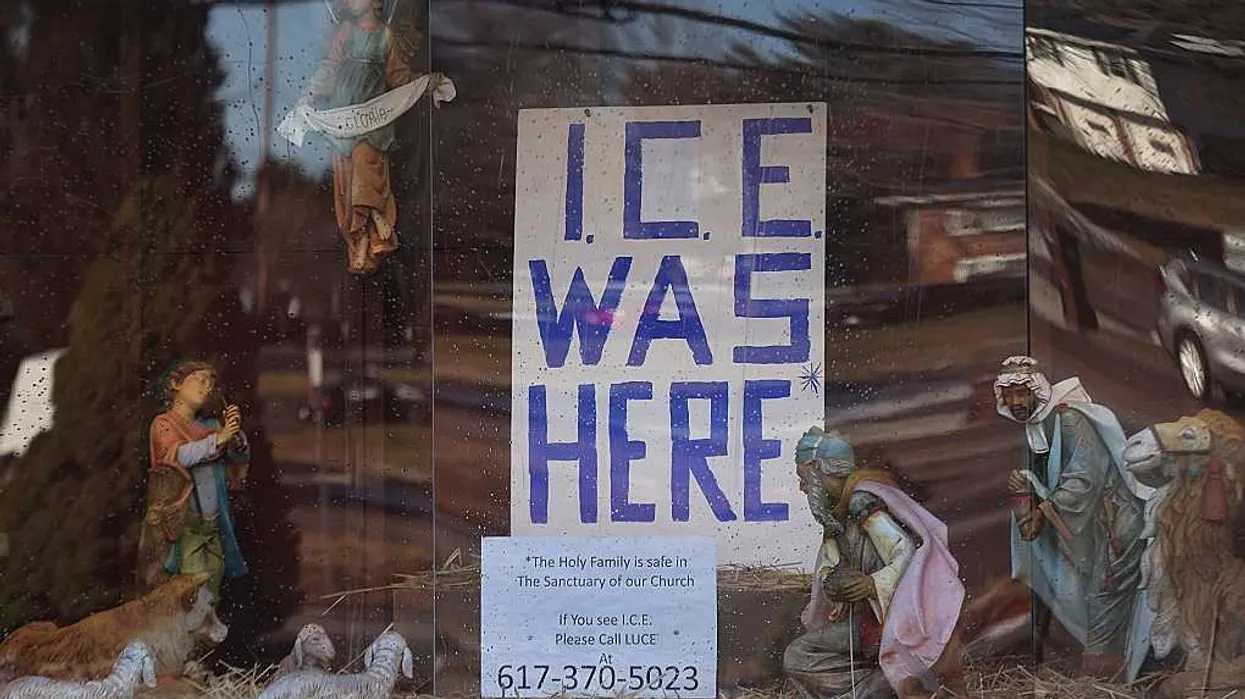
Instead of the usual Nativity scene this time of year, St. Susanna Catholic Church in Dedham, Massachusetts, featured something far less Christmasy: a sign reading “ICE was here.” Rather than celebrate the joy of the Incarnation, the pastor, Fr. Stephen Josoma, wanted to suggest that Jesus and His family had been abducted by federal agents and couldn’t make it to Bethlehem.
To be fair, this year’s stunt was tame compared with the church’s 2018 display, when the infant Jesus appeared — in a cage. Back then, the leftist narrative insisted that Trump’s “goons” were snatching innocent immigrant families and throwing their kids in cages while deporting the parents.
Fr. Josoma is at least forthright. The pro-immigration bishops, by contrast, wrap their open-borders stance in warm, fuzzy language about ‘compassion’ and ‘Christian charity.’
When complaints poured in, a spokesman for the Archdiocese of Boston offered mild disapproval and asked that the display be removed. One wonders what he would do if a priest used the Nativity to condemn transgenderism — perhaps a bubble of Mary saying, “It’s a boy!” and baby Jesus responding, “Of course I am.” Would the archbishop quietly distance himself again, or would he move to defrock the priest by morning?
The bishops’ real position
By now, it’s no secret that many Catholic bishops share Fr. Josoma’s immigration politics. Their public statements this year made that obvious: endless denunciations of border enforcement and deportations and near-total silence on the humanitarian crises created by Biden’s failed border policies — including the disappearance of some 400,000 migrant children, many of whom ended up in forced labor and sex trafficking.
Pope Leo XIV has only magnified this confusion. Though he recently muttered a few words denying he supports open borders, his actions and rhetoric signal the opposite. He consistently encourages mass migration into the West, especially from the poorer regions of the Global South.
Passive-aggressive rhetoric
All this might be tolerable if it weren’t so passive-aggressive. Fr. Josoma is at least forthright. The pro-immigration bishops, by contrast, wrap their open-borders stance in warm, fuzzy language about “compassion” and “Christian charity.” They never explicitly endorse illegal mass migration, but every message they send clearly communicates support for it.
Worse, they frame the debate as a false dilemma: either welcome millions from the Third World with open arms and open wallets, or turn everyone away and treat them like garbage. In their telling, unrestricted immigration is Christian charity; any attempt at regulation is moral failure. Like the Good Samaritan caring for the mugging victim, Americans are told to fund luxury-hotel stays and generous entitlements for ex-convicts from Haiti.
Little is said about the profound cultural and social challenges posed by non-Christian mass migration. Western Europe’s experience with Muslim migration is well-documented: spikes in crime, poverty, and urban decay.
In the United States, Muslim and Hindu migrants increasingly form self-segregated enclaves, complete with their own customs and sometimes their own informal legal norms — communities where Christian Americans are outsiders in their own towns.
Some progressive Christians claim this is an opportunity for evangelization. Yet no one in the church seems interested in actually evangelizing. Instead the faithful are browbeaten to be more “accommodating,” while bishops host endless interfaith dialogues with leaders who preach backward belief systems fundamentally at odds with liberal democracy.
Follow the money trail
Why then have bishops embraced such a self-destructive position? Two reasons stand out.
First, many bishops are simply committed leftists. Under Pope Francis — for most of the woke era — this meant preaching climate dogma and celebrating the LGBTQ agenda. Under Pope Leo, it means promoting open borders and a global welfare regime. The ideology changes, but the political alignment remains.
Second, mass migration pays. State and federal governments funnel enormous sums to Catholic NGOs for immigrant resettlement. “Caring for the stranger” has become a lucrative business. Vice President JD Vance, himself a Catholic, was blunt when he said much of the bishops’ outrage at border enforcement comes down to the billions of dollars at stake.
By shutting the border and deporting illegal migrants, the Trump administration is threatening a revenue stream.
Lingering hypocrisy
For conservative Catholics, the bishops’ partisan protests have become intolerable — especially after their submissiveness during COVID. Having failed as shepherds when it mattered most, they still presume they possess the moral authority to demand open borders forever.
It feels reminiscent of the Catholic Church’s reaction to the Black Death. As Barbara Tuchman recounts in her excellent history of the 14th century, the Catholic Church ramped up the sale of indulgences to replenish its coffers after the plague. Revenue rose. Respect collapsed. The peasant uprisings that followed eventually swelled into a continent-wide revolt that split Christianity.
 Photo by Suzanne Kreiter/The Boston Globe via Getty Images
Today’s immigration racket is unlikely to cause that level of destruction, but it is still a serious problem. Younger Catholics — anyone not a Baby Boomer — now tune out the clergy’s homilies about “harsh treatment” of migrants. They know it isn’t true. The Catholic Church in America is already as diverse and welcoming as a religious institution can be.
I was reminded of this recently at a Mass celebrating the feast of the Immaculate Conception. The only service I could attend was the evening Spanish Mass. Among Filipinos, Vietnamese, Latinos, Tejanos, and a handful of fellow gringos, I listened to our Indian priest celebrate the liturgy in Spanish, accompanied by a choir singing mariachi-styled hymns.
Nothing about this scene matched the bishops’ narrative of a hostile, unwelcoming Catholic Church. Perhaps if more of them bothered to attend or celebrate such a Mass, they would drop the sanctimonious posturing and address real problems.
That alone would be a welcome Christmas gift.
This Supreme Court case could reverse a century of bureaucratic overreach
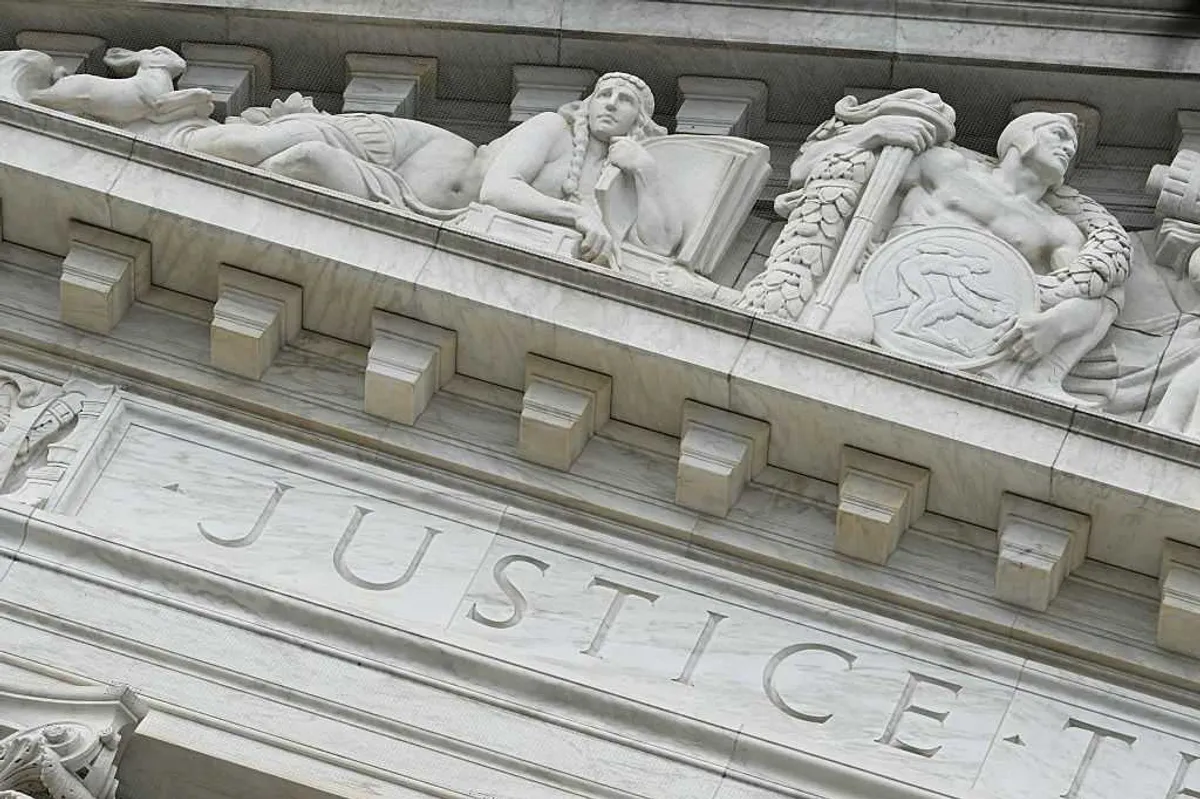
Washington is watching and worrying about a U.S. Supreme Court case that could very well define the future of American self-government. And I don’t say that lightly. At the center of Trump v. Slaughter is a deceptively simple question: Can the president — the one official chosen by the entire nation — remove the administrators and “experts” who wield enormous, unaccountable power inside the executive branch?
This isn’t a technical fight. It’s not a paperwork dispute. It’s a turning point. Because if the answer is no, then the American people no longer control their own government. Elections become ceremonial. The bureaucracy becomes permanent. And the Constitution becomes a suggestion rather than the law of the land.
A government run by experts instead of elected leaders is not a republic. It’s a bureaucracy with a voting booth bolted onto the front to make us feel better.
That simply cannot be. Justice Neil Gorsuch summed it up perfectly during oral arguments on Monday: “There is no such thing in our constitutional order as a fourth branch of government that’s quasi-judicial and quasi-legislative.”
Yet for more than a century, the administrative state has grown like kudzu — quietly, relentlessly, and always in one direction. Today we have a fourth branch of government: unelected, unaccountable, insulated from consequence. Congress hands off lawmaking to agencies. Presidents arrive with agendas, but the bureaucrats remain, and they decide what actually gets done.
If the Supreme Court decides that presidents cannot fire the very people who execute federal power, they are not just rearranging an org chart. The justices are rewriting the structure of the republic. They are confirming what we’ve long feared: Here, the experts rule, not the voters.
A government run by experts instead of elected leaders is not a republic. It’s a bureaucracy with a voting booth bolted onto the front to make us feel better.
The founders warned us
The men who wrote the Constitution saw this temptation coming. Alexander Hamilton and James Madison in the Federalist Papers hammered home the same principle again and again: Power must remain traceable to the people. They understood human nature far too well. They knew that once administrators are protected from accountability, they will accumulate power endlessly. It is what humans do.
That’s why the Constitution vests the executive power in a single president — someone the entire nation elects and can unelect. They did not want a managerial council. They did not want a permanent priesthood of experts. They wanted responsibility and authority to live in one place so the people could reward or replace it.
So this case will answer a simple question: Do the people still govern this country, or does a protected class of bureaucrats now run the show?
Not-so-expert advice
Look around. The experts insisted they could manage the economy — and produced historic debt and inflation.
The experts insisted they could run public health — and left millions of Americans sick, injured, and dead while avoiding accountability.
The experts insisted they could steer foreign policy — and delivered endless conflict with no measurable benefit to our citizens.
And through it all, they stayed. Untouched, unelected, and utterly unapologetic.
If a president cannot fire these people, then you — the voter — have no ability to change the direction of your own government. You can vote for reform, but you will get the same insiders making the same decisions in the same agencies.
That is not self-government. That is inertia disguised as expertise.
A republic no more?
A monarchy can survive a permanent bureaucracy. A dictatorship can survive a permanent bureaucracy. A constitutional republic cannot. Not for long anyway.
We are supposed to live in a system where the people set the course, Congress writes the laws, and the president carries them out. When agencies write their own rules, judges shield them from oversight, and presidents are forbidden from removing them, we no longer live in that system. We live in something else — something the founders warned us about.
And the people become spectators of their own government.
RELATED: Judges break the law to stop Trump from enforcing it
 Photo by Jim WATSON / AFP via Getty Images
The path forward
Restoring the separation of powers does not mean rejecting expertise. It means returning expertise to its proper role: advisory, not sovereign.
No expert should hold power that voters cannot revoke. No agency should drift beyond the reach of the executive. No bureaucracy should be allowed to grow branches the Constitution never gave it.
The Supreme Court now faces a choice that will shape American life for a generation. It can reinforce the Constitution, or it can allow the administrative state to wander even farther from democratic control.
This case isn’t about President Trump. It isn’t about Rebecca Slaughter, the former Federal Trade Commission official suing to get her job back. It’s about whether elections still mean anything — whether the American people still hold the reins of their own government.
That is what is at stake: not procedure, not technicalities, but the survival of a system built on the revolutionary idea that the citizens — not the experts — are the ones who rule.