

Category: Opinion & analysis
Socialism didn’t win New York. Marketing did.
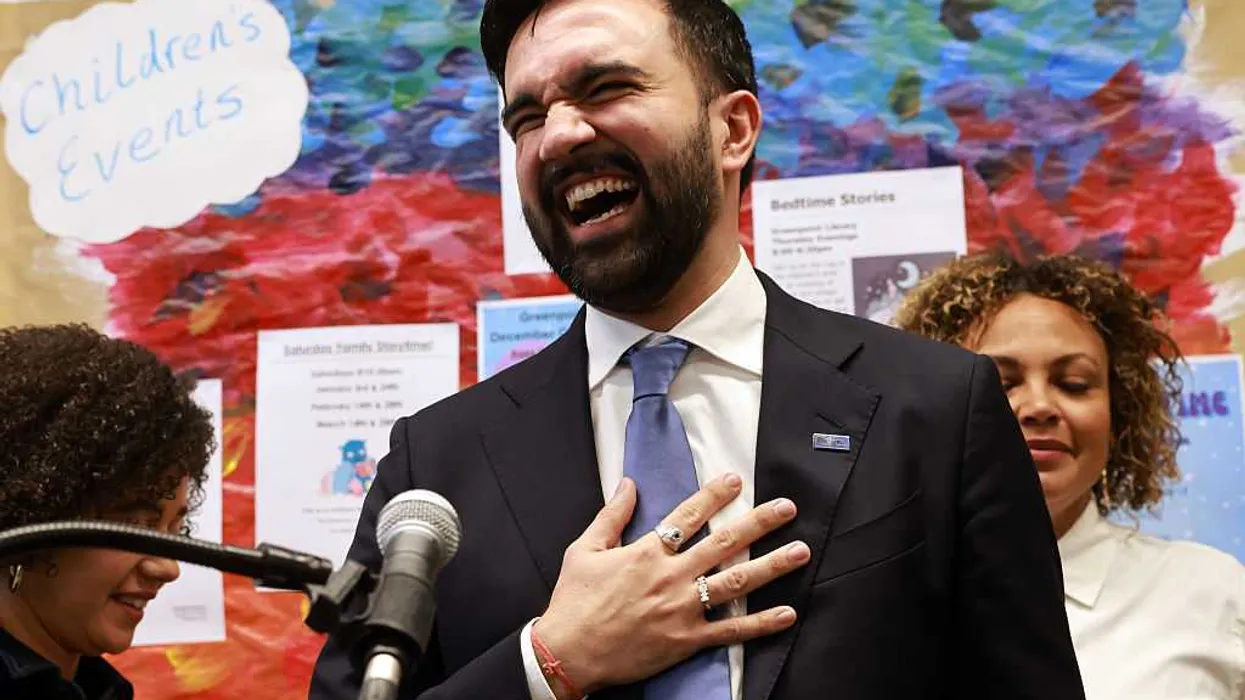
I oppose Zohran Mamdani’s Democratic Socialist agenda. But if Republicans are serious about winning elections next year and in 2028, they need to take a hard, unsentimental look at how he just won one of the most consequential mayoral races in the country.
This was not an ideological earthquake. New York did not suddenly “discover” socialism. What happened was a marketing and mobilization breakthrough. Mamdani’s campaign understood attention, simplicity, participation, and distribution better than anyone else in the race.
Republicans often confuse seriousness with stiffness. Mamdani showed that message discipline does not require lifelessness.
Joe Perello, the city of New York’s first chief marketing officer, noted in PRWeek after Mamdani’s victory that the campaign did more than communicate a message. It built an engine that converted online engagement into real-world turnout.
“For marketers and strategists alike, the implications are clear,” Perello wrote. “Growth hacking, iterative testing, and data-driven amplification can convert digital sentiment into real-world behavior. In Mamdani’s case, that meant converting hearts, clicks, and hashtags into ballots.”
Here is the part many on the right do not want to hear: Mamdani did not spend his time lecturing working-class voters about the virtues of socialism or defending failed economic theory. He focused on immediate, kitchen-table concerns and paired them with simple, slogan-ready answers.
Is halal food expensive? Make it cheaper. Struggling to get to work? Free buses. Grocery bills too high? Government-run grocery stores.
He took Bernie Sanders’ 2016-era talking points and filtered them through a polished, Obama-style optimism that voting-age New Yorkers were willing to engage with.
Most voters do not have the time — or patience — to think through how these promises would actually work. They just want to hear that someone intends to make their lives easier.
As Citizens Alliance CEO Cliff Maloney observed during Mamdani’s surge in the polls, the public’s lack of understanding about how government operates — and how socialism consistently fails — created the political environment Mamdani exploited. He did not create that environment. He mastered it.
Republicans’ digital blind spot
For years, Republican campaigns have treated digital media as messaging rather than infrastructure. Social platforms are used as megaphones for press releases, fundraising tools, or dumping grounds for cable-news clips. The underlying assumption is that persuasion happens elsewhere — on TV, at rallies, through mailers — and that digital simply amplifies those efforts.
Mamdani reversed that logic. Social media was not an accessory to his campaign. It was the campaign.
His approach drew praise even from outlets like the Guardian, where journalist Adam Gabbatt noted that Mamdani “has won social media with clips that are always fun — and resolutely on-message.”
His team treated TikTok and Instagram like serious growth channels. Short videos were not vanity content; they were experiments. Different neighborhoods, different faces, different tones, different pacing. What held attention? What sparked comments? What traveled across boroughs? Each post generated data, and each data point informed the next iteration.
This was politics run as a full-funnel acquisition strategy. Awareness led to engagement. Engagement led to identification. Identification led to turnout. Republicans can mock the aesthetics, but the mechanics work.
Energy is a signal
One of the most underrated elements of Mamdani’s campaign was how it looked. He was constantly in motion — walking Manhattan, running a marathon, bouncing between boroughs. Rarely behind a lectern. Rarely static. Always visible.
That energy communicated youth, optimism, and confidence in the same way John F. Kennedy outperformed Richard Nixon on television in 1960. A similar contrast appeared in 2024, when Donald Trump’s unscripted, high-visibility media strategy stood in sharp contrast to Joe Biden’s and Kamala Harris’ tightly controlled appearances.
The predictable response on the right is dismissal. ‘That’s just TikTok nonsense.’ ‘Our voters aren’t like that.’ Those excuses are comforting — and dangerously wrong.
In an age of low trust and low information, energy reads as competence. Movement suggests effort. Visibility substitutes for familiarity. Mamdani’s omnipresence created the impression — fair or not — that he was accessible and engaged with everyday life.
Republicans often confuse seriousness with stiffness. Mamdani showed that message discipline does not require lifelessness.
RELATED: When Bernie Sanders and I agree on AI, America had better pay attention
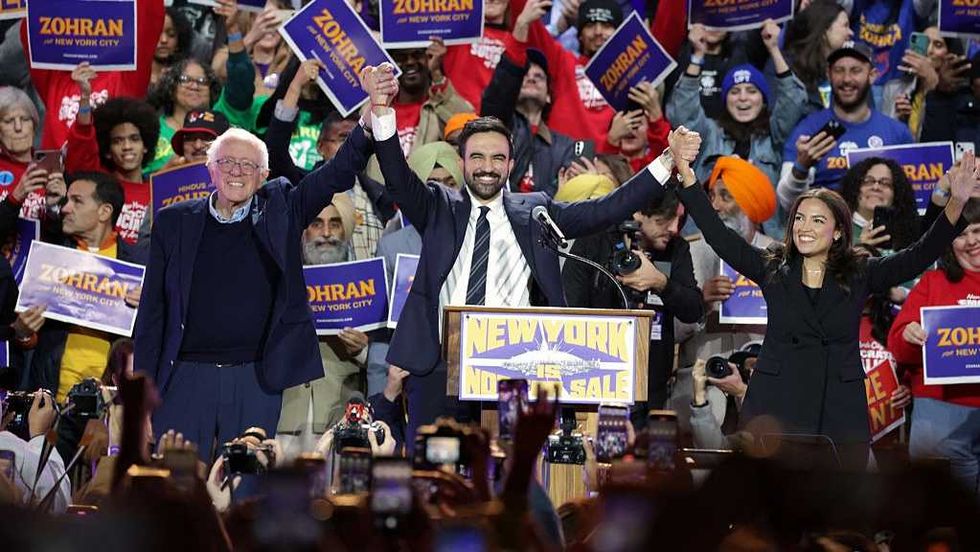 Photo by ANGELA WEISS/AFP via Getty Images
From supporters to fans
The most uncomfortable lesson for traditional campaigns is that Mamdani did not just mobilize voters. He activated fandom.
Much of the campaign content that flooded social media did not come from official accounts. It came from supporters remixing clips, creating fan art, cutting moments to music, and sharing them within their own networks. The campaign made Mamdani easy to clip, easy to celebrate, and then got out of the way.
Wired magazine described it as a rare case of participatory political culture usually reserved for celebrities.
This matters because peer-to-peer persuasion scales faster and carries more credibility than anything a campaign can manufacture. Fan-made content travels further, feels more authentic, and costs nothing. Republicans, by contrast, tend to over-police their messaging, choking off organic enthusiasm in the name of control.
Younger voters understand fandom instinctively. They grew up online. Mamdani did not lecture them about politics; he gave them something to belong to.
The wrong reaction
The predictable response on the right is dismissal. “That only works for Democrats.” “That’s just TikTok nonsense.” “Our voters aren’t like that.”
Those excuses are comforting — and dangerously wrong.
Trump understood this dynamic in 2024 when his campaign was largely shut out of legacy media. Figures like Charlie Kirk reached millions of Gen Z voters by blending serious political content with the humor and energy of youth activism.
Algorithms do not have ideologies. Participation is not a left-wing monopoly. Visibility, simplicity, and community are not progressive inventions. In a low-information, high-attention environment, the side that understands distribution wins.
The real danger is not Mamdani’s policies alone. It is a Republican Party that keeps confusing being correct with being effective.
RELATED: How anti-fascism became the West’s civil religion
 Blaze Media Illustration
What Republicans should learn — now
First, treat digital as organizing, not advertising. Stop thinking in posts and start thinking in systems. How does attention become action?
Second, simplicity wins. Republicans often pride themselves on being right — and then lose because they are incomprehensible. Clarity scales. Long explanations do not.
Third, loosen control. Let supporters remix, clip, and share. Reach matters more than perfect phrasing.
Finally, build communities, not just campaigns. Email lists decay. Ad budgets run out. Communities endure.
The bottom line
I do not agree with Zohran Mamdani’s politics, and I do not want his policies implemented anywhere. But ignoring how he won would be malpractice.
He demonstrated how power is built today — not through party machinery or television dominance, but through attention, participation, and relentless simplicity. Republicans can learn from that reality, or they can keep losing to it.
Disagree with his ideology. But study his marketing. Ignore the lesson at your own risk.
From accommodation to absurdity on campus

Last week, Arizona State University’s provost sent faculty another familiar message ahead of the spring semester: Ensure all digital course materials meet accessibility standards. After 25 years teaching philosophy at ASU, I’m well aware of the institution’s growth and its long-standing commitment to accessibility. That commitment, in itself, is not controversial.
But recent data should give universities serious pause.
A society can medicalize despair, bureaucratize despair, and accommodate despair. None of that answers the question despair is asking.
Two reports — one from the Harvard Crimson and another from the Atlantic — put numbers to what many faculty have observed for years. At Harvard, 21% of undergraduates received disability accommodations in 2024, up from roughly 3% a decade earlier. The Crimson notes that Harvard is now aligned with a national average hovering around 20%.
The Atlantic goes further, describing what it calls an “age of accommodation” at elite schools. At Brown and Harvard, more than 20% of students are registered as disabled. At Amherst, the figure reaches 34%. The most common accommodation, professors report, is extra time on exams.
When disability becomes elastic
To be clear, accommodations for genuine physical disabilities are not in dispute. A wheelchair ramp is not a moral scandal. A student with a real impairment should not be excluded from education. That principle remains sound.
What has changed is the nature of disability itself.
Both articles describe a shift away from visible, physical impairments toward diagnoses that are invisible, elastic, and difficult to distinguish from ordinary hardship in a competitive academic environment. ADHD, anxiety, and depression now dominate accommodation requests, treated as qualifying disabilities under the Americans with Disabilities Act framework. The Crimson ties much of this surge to the COVID era, quoting one professor who described the pandemic as a “mass disabling event.”
That explanation may be partly true. Many students are not gaming the system; they are shaped by it. But even granting that, the trend raises three problems universities can no longer dodge.
The fairness and standards problems
First is fairness. When extra time becomes widespread — especially among high-performing, well-resourced students — faculty are right to wonder whether accommodations are providing access or advantage.
The Crimson acknowledges faculty suspicion that accommodations are used to “eke out advantages.” The Atlantic warns that a system designed to level the playing field can begin to distort the very meaning of fairness.
Second is standards. If a significant share of students receive individualized modifications — extra time, deadline extensions, alternate testing environments — then faculty must ask an uncomfortable question administrators prefer to avoid: Is the course still the same course?
Exams exist to measure knowledge and skill under shared constraints. Remove those constraints for many students, and results no longer mean the same thing. At best, the system becomes two-track. At worst, rigor is quietly redefined as cruelty and education collapses into credentialing.
The deeper crisis
Third — and most important — is meaning.
If vast numbers of young adults now pass through education labeled as anxious and depressed, and if that diagnosis becomes the gateway to academic survival, we should ask what kind of culture we have built. What account of life, purpose, and human flourishing are students receiving in K-12 and college?
For years, students have been immersed in a worldview that frames them primarily as victims — of structures, systems, identities, and histories beyond their control. They are told meaning is socially constructed, morality is relative, and human beings are little more than biological accidents shaped by power. Hardship, in this framework, becomes pathology. Suffering becomes injustice. Endurance becomes oppression.
At that point, anxiety and depression cease to be merely medical categories. They become rational responses to a life stripped of purpose.
Education with meaning
Here the philosopher cannot remain silent. A society can medicalize despair, bureaucratize despair, and accommodate despair. None of that answers the question despair is asking.
Have we taught students how to face difficulty? To endure frustration? To pursue excellence despite pain? Or have we trained them to interpret hardship as harm — and then rewarded that interpretation with institutional permission slips?
The philosopher Westley (disguised as the Dread Pirate Roberts) said, “Life is pain, highness. Anyone who says differently is selling something.” But there is suffering, and there is suffering well to attain what is good. We stopped teaching this, and the young adults are experiencing the consequences.
RELATED: Christian students are pushing back — and universities are cracking
 simpson33 via iStock/Getty Images
Universities love to talk about “student success.” But education is not merely success. It is formation. And formation requires truth: truth about what a human being is, what suffering is for, what excellence demands, and what life ultimately aims at.
When universities exile God, moral realism, and any shared account of human purpose, they should not be surprised when students seek refuge in medicalized identities that turn pain into paperwork.
This crisis is not simply about abuse of accommodations or even about mental health statistics. It is about whether higher education can still tell students the truth: that limits are not always oppression, that hardship is not always injustice, that discipline precedes freedom, and that meaning is discovered, not administered.
If universities cannot say why education aims at the highest good, then they should not be shocked when students conclude it means nothing — and despair follows.
It is time to return education to what it was meant to be: the formation of souls ordered toward wisdom and virtue.
Trump takes a wrecking ball to the woke campus economy

To the far-left loons and anti-American activists who dominate large swaths of the nation’s four-year college campuses, a reminder: Donald Trump is your president. And whether you like it or not, he now functions as your college dean.
The title may be unofficial, and no one expects Trump to hand out diplomas, but the reality is unavoidable. Through executive orders and funding decisions, Trump is now calling the shots in higher education. His administration is dismantling a long list of Obama-Biden-era policies that entrenched DEI bureaucracies, racial discrimination, radical gender ideology, and other woke orthodoxies that turned college campuses into centers of political indoctrination rather than education.
Faculty lounges and administrative offices dominated by liberal orthodoxy have failed students for too long.
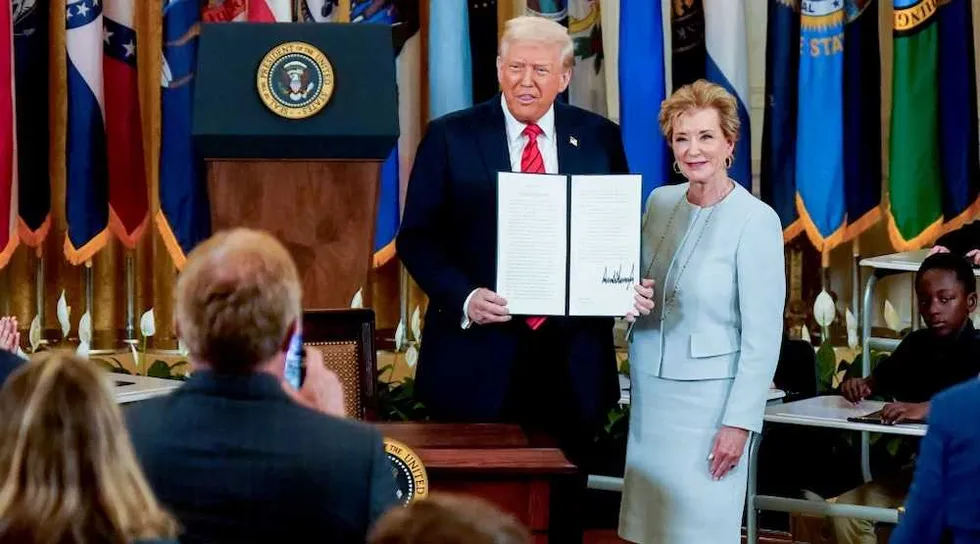
Trump, alongside Education Secretary Linda McMahon, is not only shrinking the Department of Education’s bureaucratic footprint but demanding that universities deliver measurable value to students. For the first time in years, outcomes matter again.
End this discriminatory rule
That shift should become unmistakable this month, when the Department of Education launches the Accountability in Higher Education and Access through Demand-driven Workforce Pell Committee negotiated rulemaking. Trump’s One Big Beautiful Bill Act directs the department to establish new accountability measures tied directly to student outcomes, including a uniform earnings premium standard for all colleges and universities.
This reform creates an opportunity to finally eliminate the Gainful Employment Rule, a discriminatory relic of the Obama and Biden administrations’ radical education agenda. Under Trump’s approach, earnings standards would apply across the board, regardless of an institution’s tax status or curriculum.
The goal is straightforward: Colleges should prepare students for productive careers. Programs will be evaluated by comparing graduates’ median earnings to those of working adults with only a high-school diploma — or, in the case of graduate programs, a bachelor’s degree. Programs whose graduates fail to outperform those benchmarks for two out of three years would lose access to federal student aid.
That standard exposes the true purpose of the GER under Democrat administrations. It was never about protecting students. It was about punishing institutions disfavored by the academic establishment — especially career colleges and faith-based schools — while shielding traditional four-year universities from scrutiny.
Biden’s war on for-profit schools
Obama and Biden applied the GER almost exclusively to proprietary schools, even though public and nonprofit universities enroll the vast majority of students. A Wall Street Journal analysis found that if the Biden administration’s debt-to-earnings metrics were applied evenly, nearly 80% of failing programs would be housed at public and nonprofit institutions.
The left sees no problem saddling students with six-figure debt for degrees in fashionable but economically useless fields. But students training to become construction managers, electricians, or caterers must be “protected” from choice — even though they typically graduate with far less debt and far better job prospects.
Selective enforcement reveals the real agenda. By targeting career colleges while exempting elite institutions, Democrat administrations sought to limit educational choice and justify mass student loan forgiveness. The system was designed to funnel students into four-year degree programs regardless of whether those programs matched their skills, interests, or career goals.
RELATED: Christian students are pushing back — and universities are cracking
 Kent Nishimura/Bloomberg via Getty Images
Reversing the damage
It is no coincidence that public confidence in higher education collapsed during this same period. By 2023, a majority of Americans said a four-year degree was no longer worth the cost. Only about 30% of recent graduates found entry-level jobs in their field of study, and roughly two-thirds of Gen Z graduates say they would reconsider attending college if given the chance.
The AHEAD committee now has an opportunity to reverse that damage. By repealing the Gainful Employment Rule and implementing a single, fair accountability standard, it can restore value to higher education and respect the diversity of educational paths students choose.
Higher education should foster intellectual growth, opportunity, and freedom — not ideological conformity or lifelong debt. Faculty lounges and administrative offices dominated by liberal orthodoxy have failed students for too long. Americans should welcome a president who not only recognizes the problem but is finally doing something about it.
How anti-fascism became the West’s civil religion

At the end of World War II, much of the West stood in ruins. Europe’s great powers were shattered, millions were dead, and political leaders searched for a framework that would prevent another civilizational collapse. What emerged was what R.R. Reno later described as the “postwar consensus”: an elite agreement to reorganize Western society around a single overriding moral imperative — never again allow a figure like Adolf Hitler to rise.
Anti-fascism became the West’s civil religion. This was understandable in the immediate aftermath of the war. Nazi Germany’s atrocities demanded more than mere condemnation. But over time, anti-fascism ceased to function as a historical judgment and instead hardened into a permanent moral framework. In the process, it began to distort politics, hollow out institutions, and undermine the concept of the nation itself.
The longer conservatives wait to make reasonable corrections, the more radical — and likely authoritarian — the eventual correction will be.
Anti-fascism served a second, less acknowledged function. The United States and its allies had partnered with the Soviet Union to defeat Hitler. That alliance was strategically necessary but morally grotesque. Communist regimes starved millions, persecuted Christians, liquidated entire classes, and carried out ethnic cleansing on a scale easily outstripping the Nazis.
To sustain the moral legitimacy of the postwar order, Nazism had to remain the singular, unrivaled evil of modern history. Any serious moral accounting risked an intolerable conclusion: that the West had joined forces with a regime at least as monstrous as the one it defeated.
Because communism retained elite defenders in academia, media, and politics, fascism became the only ideology that could be universally condemned. Conservatives opposed both, but liberals embraced or excused communism. Anti-fascism thus became the sole moral language the entire ruling class could share.
That imbalance persists. Public figures openly describe themselves as socialists or communists without consequence. Communist symbols appear on clothing and merchandise, sometimes celebrated as ironic rebellion. Fascism alone remains socially radioactive.
The power of taboo
This asymmetry transformed the definition of fascism into a weapon.
Anything directly associated with Nazism became forbidden, and soon anything vaguely adjacent followed. Online platforms remove or demonetize historical content for displaying Nazi imagery, even in documentary contexts. History itself must be censored to comply with the taboo.
Meanwhile, symbols of communist regimes that murdered tens of millions provoke little more than mild disapproval. A guy wearing a Che Guevara T-shirt or a hammer and sickle may earn a sneer. Wearing a swastika ends careers — even lives.
Absolute stigma confers absolute power. Control the definition of fascism, and you control the moral boundary of acceptable thought.
Mission creep as strategy
The left quickly grasped this dynamic and began expanding the category. Traditional social institutions were recast as latent fascism. Academic works such as Theodor Adorno’s “The Authoritarian Personality” asserted that family structure, masculinity, Christianity, national identity, capitalism, and law and order were markers of authoritarian psychology.
Over time, the list expanded from Nazi symbols to Confederate flags, Christian imagery, art styles, gestures, numbers, and ordinary behaviors. Organizations like the ADL and Southern Poverty Law Center labeled everything from physical fitness to drinking milk and the “OK” hand sign as potential indicators of extremism.
Conservatives often mock the more absurd examples, but many accepted the earlier ones. Borders became suspect. So did preferring some immigrant groups over others. Explicit national identity became a huge red flag. Christianity as a political foundation became authoritarian.
Anti-fascism succeeded not because it was coherent, but because it was unchallengeable.
A society without tools
The result is a civilization that has locked away the tools required for its own survival.
A functional society requires cohesion: shared language, culture, norms, and traditions. Not everyone must conform fully, but enough must for assimilation to mean something. When every mechanism of cohesion is labeled fascist, cohesion becomes impossible.
RELATED: Do you want Caesar? Because this is how you get Caesar.
 Blaze Media Illustration
Crime, educational collapse, family breakdown, falling birth rates, and social fragmentation are not impossible to fix. The corrective measures are well understood. But they have been rendered politically illegitimate because they’re all somehow hallmarks of fascism. Conservatives often avoid them out of fear — or worse, oppose them in the name of anti-fascism itself.
This does not prevent authoritarianism. It guarantees it.
What remains
If the present trajectory continues, only two outcomes remain.
One is an increasingly authoritarian managerial state that governs a disintegrating society through surveillance, regulation, and bureaucratic coercion. The other is a decisive leader who smashes the glass labeled “fascism” and uses the forbidden tools outright.
The longer conservatives wait to make reasonable corrections, the more radical — and likely authoritarian — the eventual correction will be.
Nazism was evil, and opposing it was obviously right. But elevating anti-fascism into the West’s single, unquestionable religious principle has been catastrophic. It has stripped societies of the means to govern themselves prudently and ensured that when the correction finally comes, it will be far harsher than anything its most ardent anti-fascists claim to fear.
The ‘blue-slip block’ is GOP cowardice masquerading as tradition

President Trump and Vice President Vance have every right — and every reason — to call out Republican senators who hide behind the so-called blue-slip tradition to block nominees for key executive positions, especially U.S. attorneys.
The effect is simple and damaging: Trump is denied the full exercise of his constitutional authority over the executive branch. Without aligned U.S. attorneys across the country’s 94 districts, the administration’s de-weaponization agenda stalls. In some cases, it collapses outright. So far, the Senate has advanced just 18 of the 50 U.S. attorneys nominated by the administration.
That is the real function of the blue slip. It is not institutionalism. It is careerism. It lets senators hide.
The blue slip is a Senate custom requiring the consent of both home-state senators before certain nominees — U.S. attorneys, judges, U.S. marshals — can advance to committee. In practice, it operates as a hack of the Constitution. The Senate’s role is advice and consent by the full body. The blue slip transfers that power to two senators, and often to just one, who can halt the process without explanation or accountability.
Majority Leader John Thune (R-S.D.) has insisted that the Republican Senate will not reconsider the practice despite the abysmal pace of confirmations. “There are many Republican senators — way more Republican senators who are interested in preserving that than those who aren’t,” he said. What he has not explained is why.
The answer is avoidance. The blue slip spares Republican senators from taking difficult votes. The fewer Trump-aligned U.S. attorneys brought to the floor, the fewer public positions senators must take. The blue slip allows them to kill nominations quietly rather than oppose them openly.
Despite years of rhetoric about party realignment, the Senate remains dominated by politicians hostile to Trump’s agenda. Some were forced out. Many more learned to mimic an America First accent without embracing America First policy. They do just enough to deter primary challengers while staying safely aligned with donors, lobbyists, and institutional power.
Forcing senators to vote up or down on Trump-aligned prosecutors like Alina Habba in New Jersey or Julianne Murray in Delaware — both of whom were serving as acting U.S. attorneys until the Senate ran out the clock — would expose those evasions. So the Senate stalled them instead.
I watched this play out firsthand during the failed confirmation of Ed Martin, Trump’s nominee for U.S. attorney in Washington, D.C. Because D.C. is not a state, the blue slip did not apply. Senate leadership attempted a different maneuver: delay until time expired.
When the base demanded a vote, Senator Thom Tillis (RINO-N.C.) stepped in and tanked Martin’s nomination outright. As a judiciary committee member, Tillis effectively wielded a one-man veto by shifting the committee balance back toward Democrats.
That decision carried consequences. Shortly afterward, Tillis opposed advancing the One Big Beautiful Bill Act in its existing form. Trump threatened a primary. Tillis burned through his remaining political capital and soon announced that he would not seek re-election.
Had Tillis been able to blue-slip Martin, he might have avoided that outcome.
RELATED: Accountability or bust: Trump’s second term test
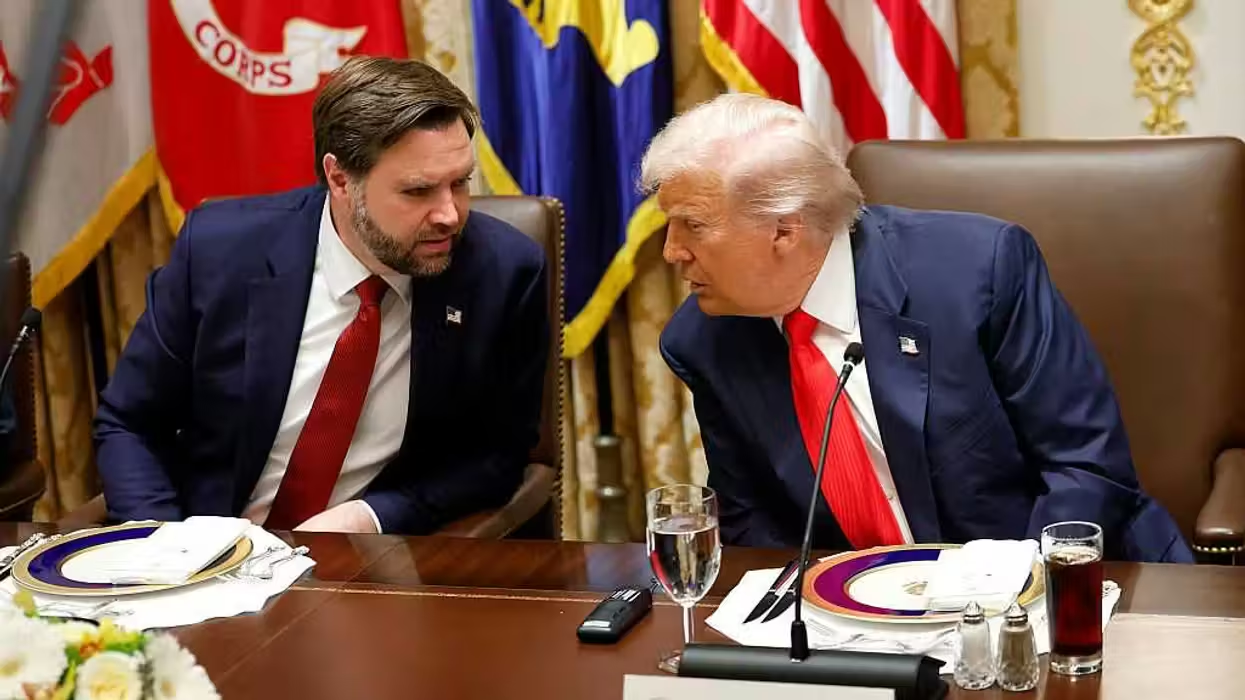 Photo by Kevin Dietsch/Getty Images
That is the real function of the blue slip. It is not institutionalism. It is careerism. Cloaked in collegial language, it operates as a mutual defense pact among Republican senators to shield one another from accountability. It lets senators hide. A six-year Senate term has become a financial asset in a hyper-funded political system. Assets avoid risk. Votes create risk. Fewer votes mean greater protection.
Defenders of the blue slip claim it preserves the Senate’s unique institutional character. That argument belongs to another century. Today’s Senate is neither deliberative nor restrained. It lurches between performative hearings and massive spending bills, punctuated by social media sound bites. Any appeal to Jeffersonian dignity at this point borders on parody.
Notably, the blue slip never restrains Democrats. When Democrats want nominees confirmed, process does not stand in the way. For Republicans, the blue slip amounts to unilateral disarmament dressed up as principle.
Trump and Vance should keep attacking this practice publicly. The only antidote to procedural cowardice is exposure. Voters who support a mandate deserve to see whether their senators will carry it out — or hide behind tradition while returning to business as usual in Washington.
Even if Republican senators ultimately vote against these nominees, at least the votes would happen in the open. Accountability begins there.
Charlie Sheen changed his politics by changing the channel
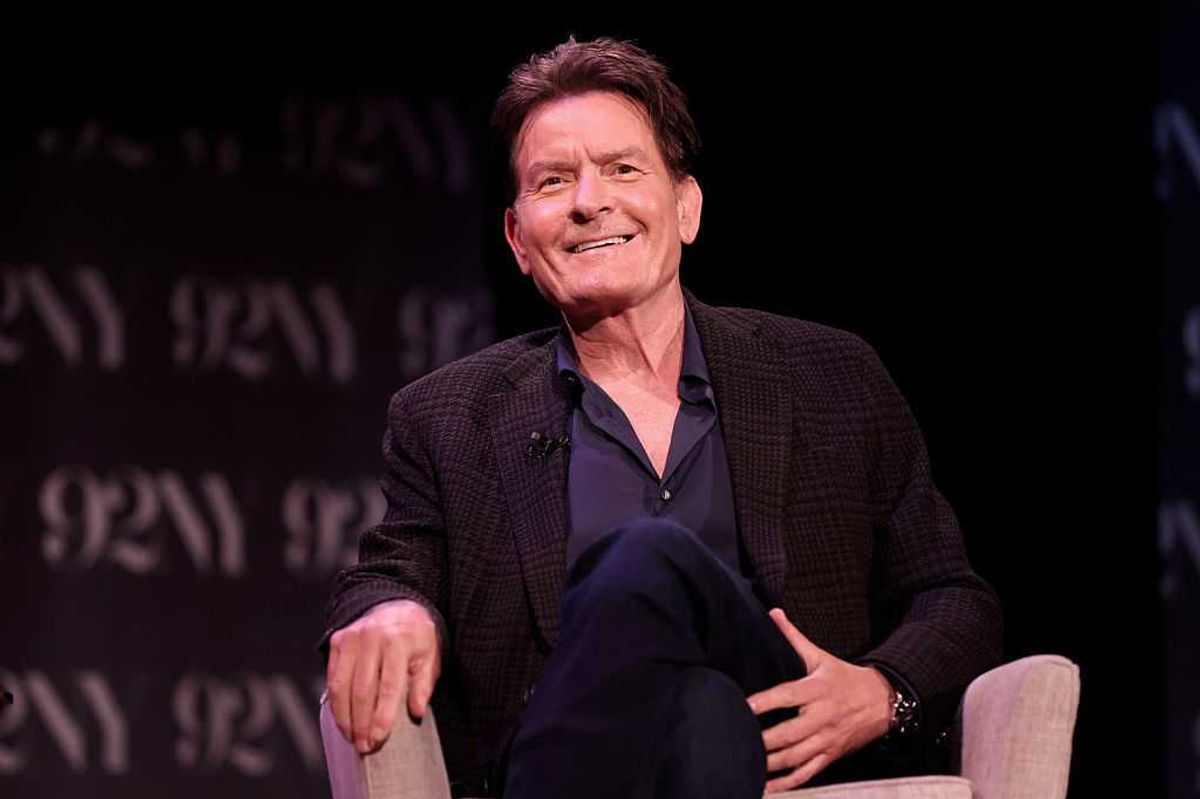
About six years ago, I started a simple experiment. Each evening, instead of relying on a single news source, I watched both sides of the political spectrum — MSNBC and CNN on the left, Fox on the right. The goal was not balance for its own sake. It was triangulation: getting closer to the truth than any one outlet seemed capable of providing.
The pattern emerged quickly. The full story almost never lives on a single channel. It lives in the gaps — in what one side omits, what the other exaggerates, and what only becomes visible when competing narratives collide. Stepping outside a single media ecosystem sharpened my understanding of events and exposed how much emotional steering hides behind what passes for “objective” news.
If a Hollywood actor immersed for decades in elite cultural assumptions can break free simply by pressing ‘channel up,’ that should give the rest of us pause.
I was reminded of this after reading Megyn Kelly’s interview with actor Charlie Sheen.
Pick up the remote
For years, Sheen embodied Hollywood’s loud, theatrical hostility toward Donald Trump. He embodied Trump derangement syndrome. Then he startled people by admitting that he had begun to change his views. Not because of a grand ideological awakening, but because of something mundane.
“I’m going to change the channel,” he told Kelly. “I’m gonna do my own research, like I’ve done with everything my entire life. I’m gonna listen to other voices. I’m gonna explore just hearing both sides of the g**d**n story.”
Sheen described realizing that he had been “hypnotized” — his word — by the media he trusted. What once felt authoritative and neutral began to look curated, repetitive, and manipulative.
“What I was so hypnotized by,” he said, “in some ways can be described as state-run media. … Legacy media is very much like that.”
How narrative replaces reporting
That charge matters, because it is not rooted in party loyalty. It is rooted in recognition. More Americans sense that the information they consume does not simply inform them — it conditions them. It trains emotional responses, assigns villains, and narrows acceptable conclusions.
As Sheen flipped channels, he discovered how incomplete his worldview had been. Then came his most striking admission: “I felt really stupid. I don’t have a fancier way to describe it. … Some of the stuff I’d bought into … some of the people I was hating because I was told I was supposed to hate them.”
That kind of honesty is rare. In today’s culture, changing one’s mind is treated as treason rather than growth. Sheen’s shift is not primarily about moving from left to right. It is about reclaiming agency — refusing to let a single narrative dictate who deserves trust or contempt.
For years, Americans have been sorted into hardened political tribes by outlets that no longer report so much as reinforce. Each network offers a prepackaged worldview with designated heroes, enemies, and emotional cues. The longer someone consumes only one of them, the more certain — and less informed — he becomes.
This is how democracies fracture. Not because citizens lack reason, but because they are denied the full range of facts required to reason well.
Regret isn’t the point
Sheen even expressed regret over his 2024 vote for Kamala Harris, a decision he now believes was made inside an echo chamber he did not recognize at the time. The regret itself is not the point. The awakening is.
RELATED: Netflix wants a monopoly on your mind
 Photo by Jakub Porzycki/NurPhoto via Getty Images
If a Hollywood actor immersed for decades in elite cultural assumptions can break free simply by pressing “channel up,” that should give the rest of us pause.
It suggests intellectual independence remains possible. It suggests curiosity can overpower conditioning. And it suggests Americans are far more capable of balanced judgment than our media landscape assumes.
The most patriotic habit left
The lesson is not complicated. If you want to understand what is really happening in this country, do not limit yourself to the channel you already agree with. Change it. Listen to the other side. Sit with the discomfort.
The clarity that follows may surprise you. It may challenge your assumptions. It may even change your mind.
In today’s America, that may be one of the most constructive — and patriotic — acts left to us.
Charlie Kirk’s assassination demands your courage, not your sympathy
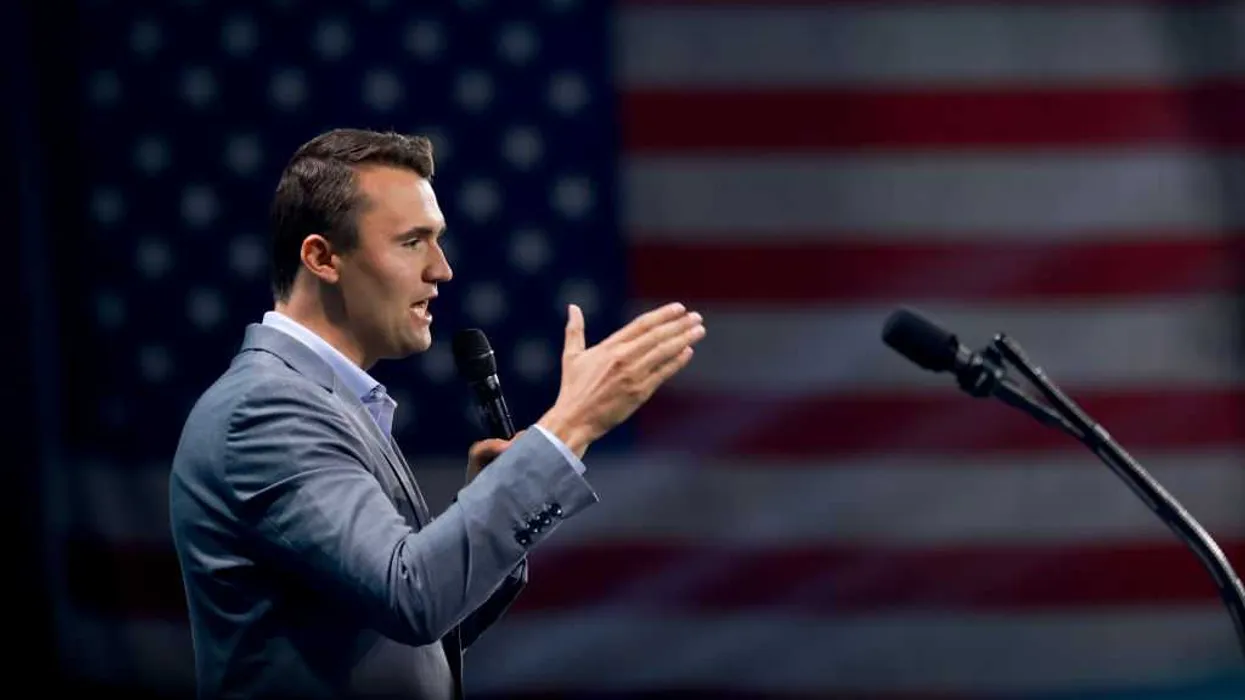
I have lost grandparents, childhood friends, and college friends. As you age, death becomes familiar. Each loss shakes you briefly, reminds you that life is fragile, and then fades. You drift back into the illusion that tomorrow is guaranteed. That you will have time later to become a better Christian, husband, and father.
That illusion shattered on September 10, the day Charlie Kirk was assassinated by a leftist.
Charlie Kirk showed us how a Christian lives and how a Christian dies. His race is finished. Ours must now begin.
I did not know Charlie personally. I worked as his publicist last summer for what became his second-to-last book, “Right Wing Revolution,” but we never spoke directly. Still his death devastated me in a way no other loss had.
I had to understand why. Answering that question became the genesis of this book, “For Christ and Country: The Martyrdom of Charlie Kirk.”
On the day Charlie was killed, I joined my wife to pick up our 2-and-a-half-year-old daughter from preschool. The day before, she had asked again and again, “Dada in car? Dada here?” This time, I wanted to be there when she came running out.
As we pulled into the parking lot, my phone lit up. Charlie Kirk had been shot. My stomach dropped.
I had felt that dread once before. On July 13, 2024, I was rocking my daughter to sleep when an alert flashed that President Trump had been shot in Butler, Pennsylvania. Minutes later, dread gave way to relief. Trump survived.
This time, the dread did not lift.
While my wife walked toward the school entrance, I sat frozen in the car, refreshing news feeds. Then I saw the video. The moment the bullet struck Charlie.
One look told me no one could survive that wound.
Then my daughter appeared.
Her face lit up when she saw me. Pure joy. The same joy Charlie’s daughter would never experience again.
As my little girl ran toward the car shouting, “Dada!” another child had just lost her father forever. His daughter. His son. His wife. They would never again live a moment like the one unfolding before me.
Nothing had changed for my daughter. Everything had changed for me.
That night, I slept on the floor beside my oldest daughter’s crib. I lay awake for hours, listening to her breathing and thinking of Charlie’s children and of Erika, facing the impossible task of explaining why their father would never walk through the door again.
In the days that followed, I cried more than I ever had. I am not a man who cries. But something in me died with Charlie, and something else was born.
I began studying Charlie’s words, speeches, debates, and sermons. Not as content but as testimony. What I saw changed me. Charlie possessed a maturity beyond his years, a steadiness most men twice his age never reach. He knew who he was and whom he served. He knew his mission and the cost of it. He accepted that cost.
In Charlie, I saw the man I wanted to be. Strong yet gentle. Courageous yet humble. Unmoved by hatred because he feared God more than man. That recognition exposed an uncomfortable truth. I shared many of Charlie’s convictions but not his courage.
I had spoken boldly only when it was safe. I avoided conflict when it was convenient. The wounds of losing lifelong friends in 2020 because I voted for Trump still stung, and I carried a residual fear of losing more.
Charlie did not hesitate. He lived Matthew 5 and Mark 8 not as verses but as marching orders. He carried his cross onto hostile campuses and into debates before crowds that despised him, knowing exactly what it cost.
When that hatred finally culminated in a sniper’s bullet, it ended his life but not the mission that made him a target.
His death exposed my compromises. It forced me to confront the gap between the man I was and the man God was calling me to be. It demanded that I stop postponing courage and start living the truth now. Costly truth. Dangerous truth. Biblical truth.
Charlie’s life and death were not political events. They were spiritual ones.
He defended the family because God commanded it. He rejected identity politics because every person bears God’s image. He championed fathers because fatherlessness destroys nations. He defended black Americans by insisting on their dignity as individuals created by God, not as pawns of a political movement. He confronted transgender ideology because lies about human nature are lies about God Himself.
For that, he was vilified, dehumanized, and finally murdered.
The ideology that killed Charlie did not emerge overnight. It grew in the silence of those who knew better but feared the cost of speaking. Evil advances when good men retreat, and too many of us did.
RELATED: America’s new lost generation is looking for home — and finding the wrong ones
 Photo by Matt Cardy/Getty Images
Charlie did not retreat. Now none of us can afford hesitation.
The man I was — cautious and hesitant — died with Charlie. In his place stands a man who understands that truth requires sacrifice, that silence is surrender, and that the only approval that matters comes from God.
My daughter deserves a country where political murder is condemned, not excused. Where truth is spoken even when it is dangerous. Where courage is not outsourced to a handful of men like Charlie Kirk but lived by millions.
That is why I wrote “For Christ and Country: The Martyrdom of Charlie Kirk.” Not simply to remember Charlie but because his death demanded my transformation and now demands yours.
Charlie Kirk showed us how a Christian lives and how a Christian dies.
His race is finished. Ours must now begin.
The torch is ours to carry — for Christ, for country, and for Charlie.
Editor’s note: This article is adapted from the author’s new book, “For Christ and Country: The Martyrdom of Charlie Kirk” (Bombardier Books, Post Hill Press).
Trump forced allies to pay up — and it worked

In the fifth century B.C., a group of Greek city-states formed a defensive alliance known as the Delian League to protect them against the Persian Empire.
Athens, the most powerful member, gradually increased its power. Its rulers moved the league’s common treasury from the island of Delos to Athens (to keep it safe, of course), attacked allies that attempted to secede, and started casually referring to the alliance as “our empire.”
If you want good allies, you need to be a good ally.
The most brazen assertion came when the Athenian leader Pericles raided the league treasury to fund building projects in Athens (including the Parthenon).
When the other league members objected, Pericles insisted that the treasury was less like a common military budget and more like protection money: As long as the Persians aren’t breaking down your doors, we can spend league funds however we want.
Obviously, this is no way to treat one’s allies. It is not just exploitative; it is counterproductive. During the ensuing Peloponnesian War, Athens spent as much time fighting its own rebellious allies as it did fighting Sparta.
The United States, however, has spent the last several decades conducting its foreign relations on the opposite principle. We have the same hegemonic role Athens held, but instead of robbing our allies, we let them rob and betray us.
A few months ago, the government of Kuwait — a country hundreds of Americans died to defend just a few decades ago and that continues to rely on us for protection against Iran — launched a “Kuwait-China Friendship Club” to strengthen military ties with Beijing.
And if cozying up to our biggest geopolitical rival weren’t enough, Kuwait is also ripping us off.
The United States played a huge role in building Kuwait’s massive Al Zour oil refinery, and the country’s government still owes us hundreds of millions of dollars.
Closer to home, Mexico — which Bill Clinton bailed out to the tune of $20 billion — takes in more than $60 billion a year in remittance money from the United States, all while its socialist oil company refuses to pay the $1.2 billion it owes to American contractors.
RELATED: Trump makes America dangerous again — to our enemies
 Photo by ANDREW CABALLERO-REYNOLDS/AFP via Getty Images
The NATO countries are even worse. Prior to Russia’s invasion of Ukraine, just six of the alliance’s 32 members spent the required 2% of GDP on defense.
Meanwhile, these countries used the money they weren’t spending on guns to build massive welfare states (their equivalent of Pericles’ Parthenon). They also eviscerated their domestic energy production and became increasingly reliant on oil from Russia, the country the alliance is supposed to keep in check.
Thankfully, a combination of Vladimir Putin’s aggression and Donald Trump’s bullying has increased the number of countries meeting the 2% threshold from six to 23.
If you want good allies, you need to be a good ally.
That means no more meddling in the name of “international development” or “advancing democracy.” Just mutual clarifications of national interest and frank discussions about how to advance those interests.
Athens’ focus on its own self-interest was its undoing. America’s neglect of it might have been ours. Under President Trump, however, it looks like that is starting to change.
The people carrying addiction’s weight rarely get seen
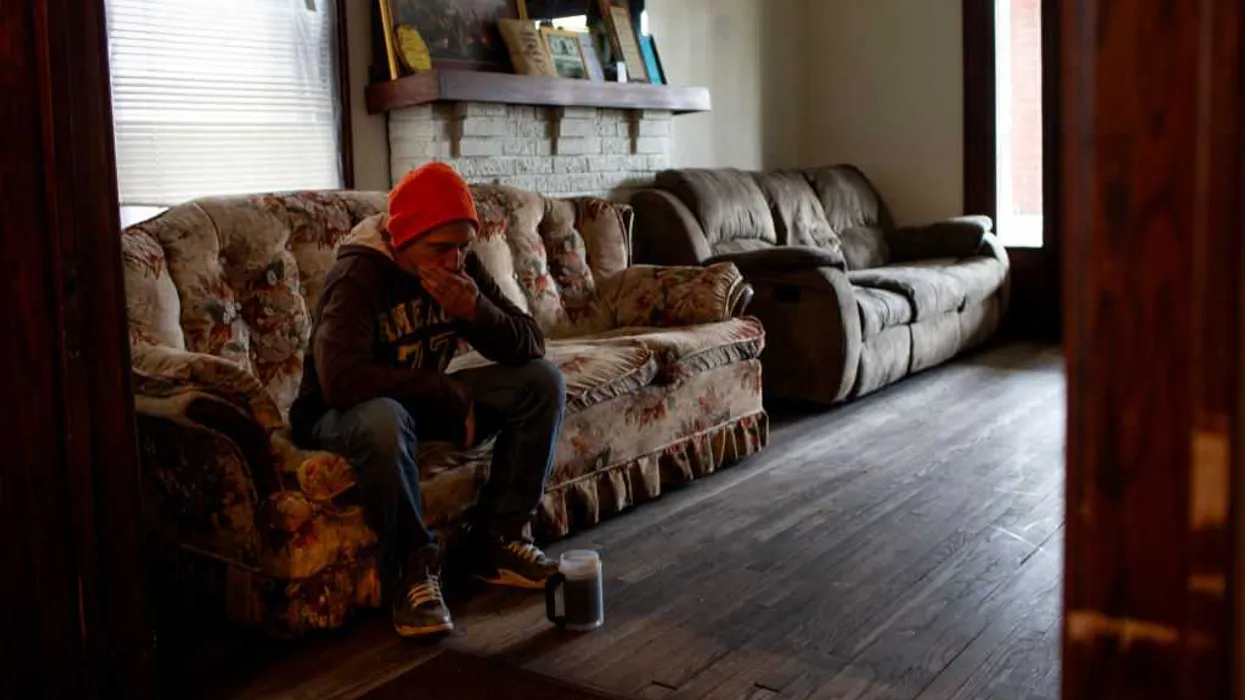
What happened Sunday at the home of Rob and Michele Reiner is a family nightmare. A son battling addiction, likely complicated by mental illness. Parents who loved him. A volatile situation that finally erupted into irreversible tragedy.
I grieve for them.
Shame keeps families quiet. Fear keeps them guarded. Love keeps them hoping longer than wisdom sometimes allows.
I also grieve for the families who read those headlines and felt something tighten in their chest because the story felt painfully familiar.
We often hear the phrase, “If you see something, say something.” The problem is that most people do not know what to say. So they say nothing at all.
What if we started somewhere simpler?
I see you. I see the weight you are carrying. I hurt with you.
Families living with addiction and serious mental illness often find themselves isolated. Not only because of the chaos inside their homes, but because friends, neighbors, and even faith communities hesitate to step closer, unsure of what to say or do. Over time, silence settles in.
Long before police are called, before neighbors hear sirens, before a tragedy becomes a headline, people live inside relentless stress and uncertainty every day.
They are caregivers.
We rarely use that word for parents, spouses, or siblings of addicts, but we should. These families do not simply react to bad choices. They manage instability. They monitor risk. They absorb emotional whiplash. They try to keep everyone safe while holding together a household under extraordinary strain.
In many ways, this disorientation rivals Alzheimer’s. In some cases, it proves even more destabilizing.
Addiction is cruelly unpredictable. It offers moments of clarity that feel like hope. A sober conversation. An apology. A promise that sounds sincere. Those moments can disarm a family member who desperately wants to believe the worst has passed.
Then the pivot comes. Calm turns to chaos. Remorse gives way to rage. Many families learn to live on edge, constantly recalibrating, never certain whether today will be manageable or explosive.
Law enforcement officers understand this reality well. Many domestic calls involve addiction, mental illness, or both. Tension often greets officers at the door, followed by a familiar refrain: “We didn’t know what else to do.”
Calling these family members caregivers matters because it reframes the conversation. It moves us away from judgment and toward reality. From, “Why don’t they just …?” to, “What are they carrying?” It acknowledges that these families manage risk, not just emotions.
The recovery community has long emphasized truths that save lives: You did not cause it. You cannot control it. You cannot cure it. These principles are not cold. They bring clarity. And clarity matters when safety is at stake.
RELATED: The grace our cruel culture can’t understand
 Photo by Gary Hershorn / Getty Images
Another truth too often postponed until tragedy strikes deserves equal emphasis: The caregiver’s safety matters too.
Friends and faith communities often respond with a familiar phrase: “Let me know if there’s anything you need.” It sounds kind, but it places the burden back on someone already exhausted and often afraid.
Caregivers need something different. They need people willing to ask better questions.
Are you safe right now? Is there a plan if things escalate? Who is checking on you? Would it help if I stayed with you or helped you find a safe place tonight?
These questions do not intrude. They protect.
Often, the most meaningful help does not come as a solution, but as a witness. Henri Nouwen once observed that the people who matter most rarely offer advice or cures. They share the pain. They sit at the kitchen table. They walk alongside without looking away.
Caregivers living with someone battling addiction and mental illness often need at least one safe presence who sees clearly, speaks honestly, and stays when things grow uncomfortable.
We have permission to care, but not always the vocabulary.
Shame keeps families quiet. Fear keeps them guarded. Love keeps them hoping longer than wisdom sometimes allows. One of the greatest gifts we can offer is the willingness to penetrate that isolation with clarity, grace, and tangible help.
Grace does not require silence in the face of danger. Love does not demand enduring abuse. Faith does not obligate someone to remain in harm’s way.
Pointing a caregiver toward safety does not abandon the person struggling with addiction. It recognizes that multiple lives stand at risk, and all of them matter.
When tragedies occur, the public asks what could have been done differently. One answer proves both simple and difficult: Stop overlooking the caregivers quietly absorbing the blast.
RELATED: The courage we lost is hiding in the simplest places
 Photo by Wolfgang Kaehler/LightRocket via Getty Images
Welfare checks should not focus solely on the person battling addiction or mental illness. Families living beside that struggle often need support long before a breaking point arrives.
If you know someone whose son, daughter, spouse, or partner struggles, do not look away because you feel unsure what to say. You do not need to solve anything. You do not need to analyze anything.
Start by seeing them. Stay with them.
I see you. I see how heavy this is. You do not have to carry it alone.
Ask better questions. Offer practical help that does not depend on their energy to ask. Check on them again tomorrow.
This season reminds us that Christ did not stand at a safe distance from trauma. He came close to the wounded and brought redemption without demanding tidy explanations.
When we do the same for families living in the shadow of addiction and mental illness, we honor their suffering and the Savior who meets us there.
Trump v. Slaughter exposes who really fears democracy

In the recently argued Trump v. Slaughter case, most of the U.S. Supreme Court seemed to affirm what should be obvious: The president has a constitutional right under Article II to dismiss federal employees in the executive branch when it suits him.
That conclusion strikes many of us as self-evident. Executive-branch employees work under the president, who alone among them is chosen in a nationwide election. Bureaucrats are not. Why, then, should the chief executive’s subordinates be insulated from his control?
When the Roberts Court overturned Roe in 2022 and returned the issue to the states, many voters responded with fury. The electorate did not welcome responsibility. It resented it.
A vocal minority on the court appears to reject that premise. Justices Ketanji Brown Jackson and Sonia Sotomayor warned that allowing a president — implicitly a Republican one — to control executive personnel would unleash political chaos. Jackson suggested Trump “would be free to fire all the scientists, the doctors, the economists, and PhDs” working for the federal government. Sotomayor went further, claiming the administration was “asking to destroy the structure of government.”
David Harsanyi, in a perceptive commentary, identified what animates this view: “fourth-branch blues.” The administrative state now exercises power that rivals or exceeds that of the constitutional branches. As Harsanyi noted, nothing in the founders’ design envisioned “a sprawling autonomous administrative state empowered to create its own rules, investigate citizens, adjudicate guilt, impose fines, and destroy lives.”
Yet defenders of this system frame presidential oversight as a threat to “democracy.” Democrats, who present themselves as democracy’s guardians, warn that allowing agency officials to answer to the elected president places the nation in peril. The argument recalls their reaction to the Dobbs case, when the court returned abortion policy to voters and was accused of “undermining democracy” by doing so.
RELATED: This Supreme Court case could reverse a century of bureaucratic overreach
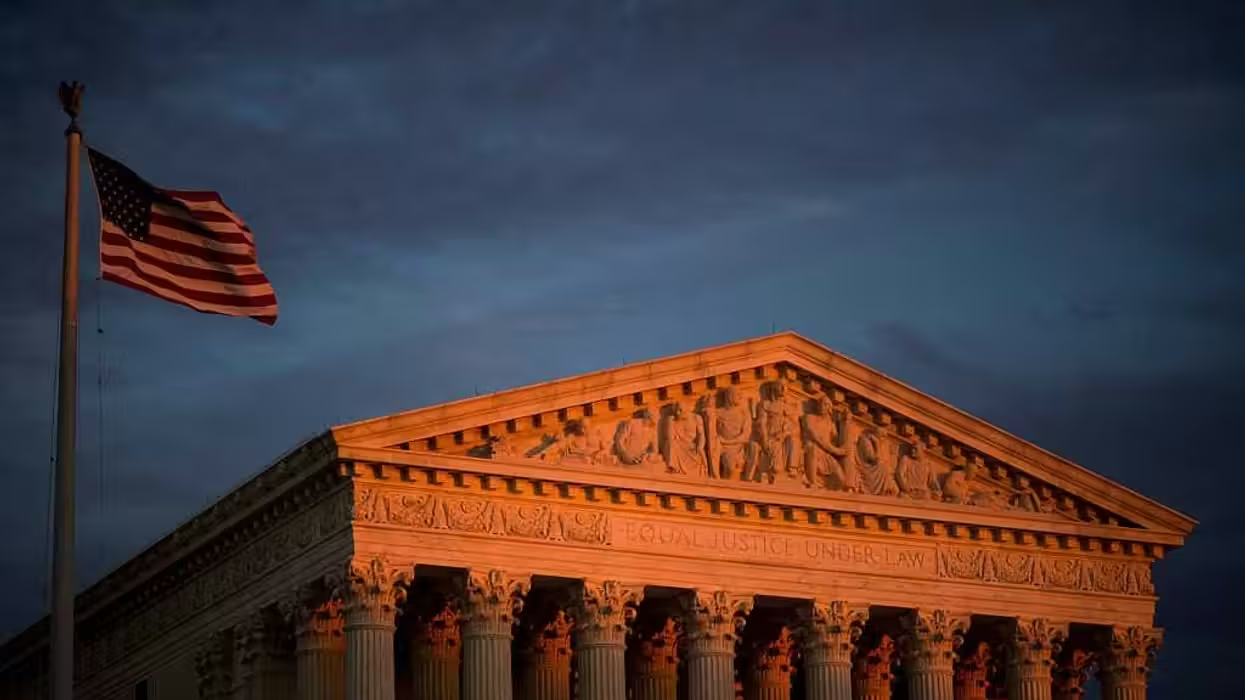 Photo By Bill Clark/CQ Roll Call
On that point, Harsanyi and I agree. Judicial and bureaucratic overreach distort constitutional government. The harder question is whether voters object.
From what I can tell, most do not. Many Americans seem content to trade constitutional self-government for managerial rule, provided the system delivers benefits and protects their expressive preferences. The populist right may bristle at this arrangement, but a leftist administrative state that claims to speak for “the people” may reflect the electorate’s will.
Recent elections reinforce that suspicion. Voters showed little interest in reclaiming authority from courts or bureaucracies. They appeared far more interested in government largesse and symbolic rights than in the burdens of republican self-rule.
Consider abortion. Roe v. Wade rested on shaky legal ground, yet large segments of the public enthusiastically embraced it for nearly 50 years. When the Roberts Court overturned Roe in 2022 and returned the issue to the states, many voters responded with fury. States enacted expansive abortion laws, and Democrats benefited from unusually high turnout. The electorate did not welcome responsibility. It resented it.
This reaction should not surprise anyone familiar with history. In 1811, Spaniards rejected the liberal constitution imposed by French occupiers, crying “abajo el liberalismo” — down with liberalism. They did not want abstract rights. They wanted familiar authority.
At least half of today’s American electorate appears similarly disposed. Many prefer guided democracy administered by judges and managers to the uncertainties of self-government. Their votes signal approval for continued rule by the administrative state. Republicans may slow this process at the margins, but Democrats expand it openly, and voters just empowered them to do so.
RELATED: Stop letting courts and consultants shrink Trump’s signature promise
 Yuri Gripas/Abaca/Bloomberg via Getty Images
I anticipated this outcome decades ago. In “After Liberalism” (1999), I argued that democracy as a universal ideal tends to produce expanded managerial control with popular consent. Nineteenth-century fears that mass suffrage would yield chaos proved unfounded. Instead the extension of the franchise coincided with more centralized, remote, and less accountable government.
As populations lost shared traditions and common authority, governance shifted away from democratic participation and toward expert administration. The state grew less personal, less local, and less answerable, even as it claimed to act in the people’s name.
Equally significant has been the administrative state’s success in presenting itself as the custodian of an invented “science of government.” According to this view, administrators form an enlightened elite, morally and intellectually superior to the unwashed masses. Justice Jackson’s warnings reflect this assumption.
I would like to believe, as Harsanyi suggests, that Americans find such attitudes insulting. I am no longer sure they do. Many seem pleased to be managed. They want judges and bureaucrats to make decisions for them.
That preference should trouble anyone who still cares about constitutional government.





