Category: Culture
In the Mind of McNamara
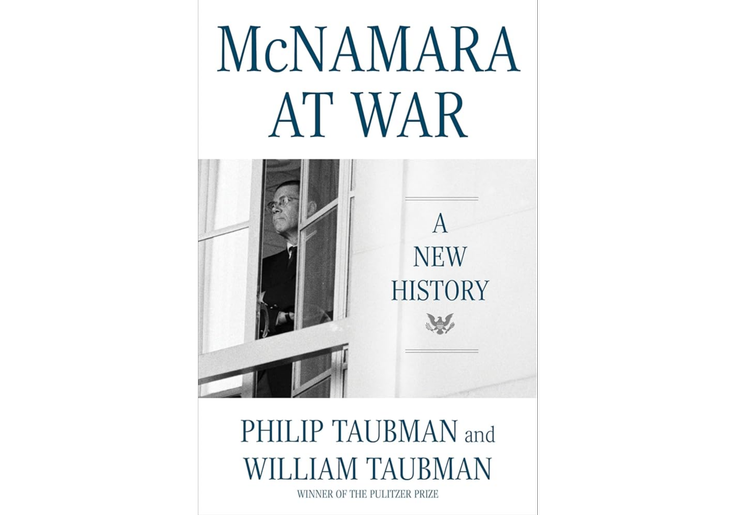
One of the few aspects of the Vietnam war about which most historians agree is that Robert McNamara horribly mismanaged it as secretary of defense. There is no agreement, however, on how McNamara did the nation such a disservice. For those who view American intervention in Vietnam as unnecessary and inherently futile, McNamara is condemned for getting the United States into the war and then for refusing to get it out once he himself became disillusioned. For those who view the intervention as a noble cause that could have ended victoriously, McNamara’s principal failing was his imposition of severe restraints on the military.
The post In the Mind of McNamara appeared first on .
Courage Under Fire
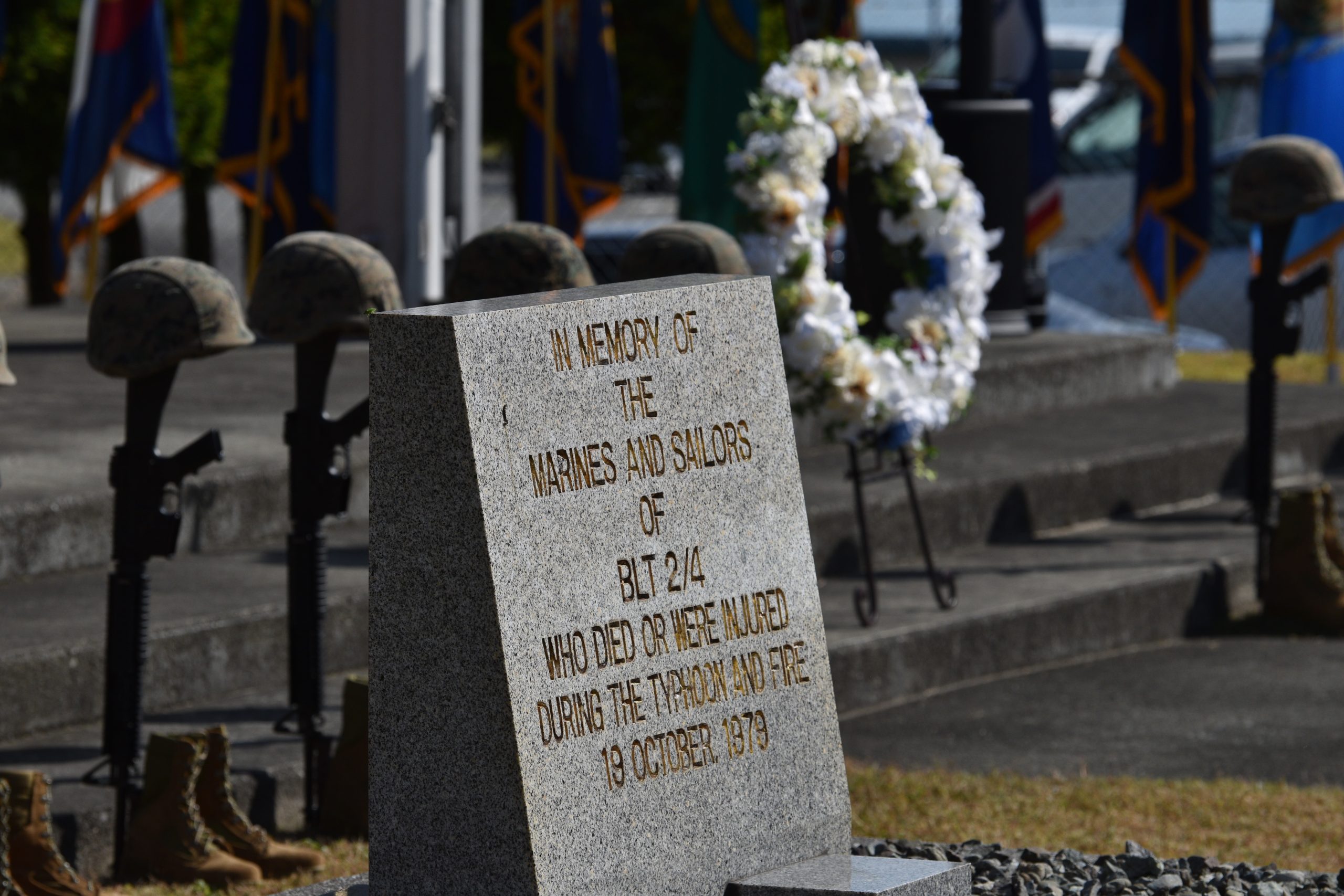
First came the water pouring down the slopes of Japan’s Mount Fuji on October 19, 1979. Then on top of the torrents came the fire that killed 13 U.S. Marines and burned dozens more. Though investigators afterward may not have consulted the Bible, they ended up attributing the unusual mix of elements involved to the same force that, per the Book of Exodus, enveloped ancient Egypt in hail and fire. “It was an act of God,” investigators concluded.
The post Courage Under Fire appeared first on .
‘Nuremberg’: Russell Crowe’s haunting portrayal of Nazi evil

Say what you will about Russell Crowe, but he has never been a run-of-the-mill actor.
At his best, he surrenders to the role. This is an artist capable of channeling the full range of human contradictions. From the haunted integrity of “The Insider” to the brute nobility of “Gladiator,” Crowe once seemed to contain both sinner and saint, pugilist and philosopher.
In a time when truly commanding leading men are all but extinct, Crowe remains — carrying the weight, the wit, and the weathered grace of a bygone breed.
Then, sometime after “A Beautiful Mind,” the light dimmed. The roles got smaller, the scandals bigger.
There were still flashes of brilliance — “American Gangster” with Denzel Washington, “The Nice Guys” with Ryan Gosling — proof that Crowe could still command attention when the script was worth it. But for every film that landed, two missed the mark: clumsy thrillers, lazy comedies, and a string of forgettable parts that left him without anchor or aim. His career drifted between prestige and paycheck, part self-sabotage, part Hollywood forgetting its own.
Exploring the abyss
But now the grizzled sexagenarian returns with “Nuremberg” — not as a comeback cliché, but as a reminder that the finest actors are explorers of the human abyss. And Crowe, to his credit, has never been afraid to go deep.
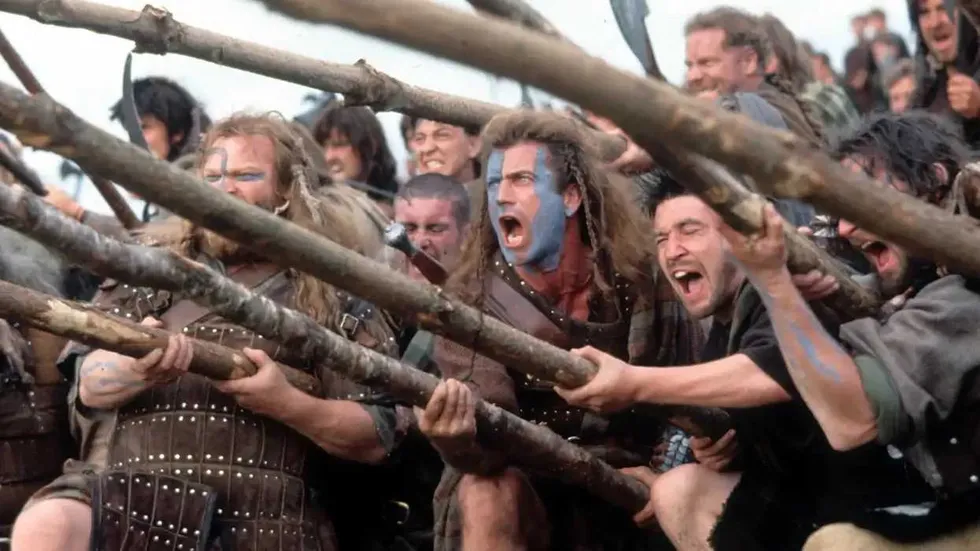
In James Vanderbilt’s new film, the combative Kiwi plays Hermann Goering, the Nazi Reichsmarschall standing trial for his part in history’s darkest chapter. The movie centers on Goering’s psychological chess match with U.S. Army psychiatrist Douglas Kelley, who becomes both fascinated and repulsed by the man before him. Goering, with his vanity, intelligence, and theatrical self-pity, is a criminal rehearsing for immortality.
The film unfolds as a dark study of guilt and self-deception. Kelley, played with that familiar, hollow-eyed tension of Rami Malek, sets out to dissect the anatomy of evil through Goering’s mind. Yet the deeper he digs, the more he feels the ground give way beneath him — the line between witness and accomplice blurring with every exchange.
Disturbingly human
Crowe’s Goering is not the slobbering villain of old war films. He’s disturbingly human, even likeable. He jokes, he reasons, he charms. He’s a man who knows how to disarm his enemy by appearing civil — and therein lies the horror. It’s a performance steeped in Hannah Arendt’s famous concept of the “banality of evil”: the idea that great atrocities are rarely committed by psychopathic monsters but by ordinary people made monstrous — individuals who justify cruelty through bureaucracy, obedience, or ideology.
Arendt wrote those words after watching Adolf Eichmann, another Nazi functionary, defend his role in the Holocaust. She was struck not by his madness but his mildness — his desire to be seen as merely following orders. Crowe’s Goering embodies that same terrifying normalcy. He doesn’t see himself as a villain at all, but as a patriot — wronged, misunderstood, and unfairly judged. It’s his charm, not his cruelty, that unsettles.
The brilliance of Crowe’s performance is that he resists caricature. He reminds us that evil doesn’t always wear jackboots. Sometimes it smiles, smokes, and quotes Shakespeare. It’s the kind of role only a mature actor can pull off — one who has met his own demons and understands that evil seldom announces itself.
It is also, perhaps, the perfect role for a man who has spent decades wrestling with his own legend. Crowe was once Hollywood’s golden boy — rugged, brooding, every inch the leading man — but the climb was steep and the fall steeper. Fame, like empire, demands endless victories, and Crowe, ever restless, grew weary of the war.
RELATED: Father-Son Movie Bucket List
 Getty Images
A bygone breed
With “Nuremberg,” he hasn’t returned to chase stardom but to confront something larger — the unease that hides beneath every civilized surface. Goering, after all, was no brute. He was cultured, eloquent, even magnetic — proof that wisdom offers no wall against wickedness. And in a time when truly commanding leading men are all but extinct, Crowe remains — carrying the weight, the wit, and the weathered grace of a bygone breed.
At one point in the film, Goering throws America’s own hypocrisies back at Kelley: the atomic bomb, the internment of Japanese-Americans, the collective punishment of nations. It’s a rhetorical trick, but it lands. Crowe delivers those lines with the oily confidence of a man who knows that moral purity is a myth and that self-righteousness is often evil’s most convenient disguise.
The film may not be perfect. Its pacing lags at times, and its historical framing flirts with melodrama. But Crowe’s performance cuts through the pretense like a scalpel. There’s even a dark humor in how he toys with his captors — the court jester of genocide, smirking as the world tries to comprehend him.
Crowe’s Goering is, in the end, a mirror. Not just for the psychiatrist across the table, but for us all. The machinery of horror is rarely built by fanatics, but by functionaries convinced they’re simply doing their jobs.
Crowe’s performance reminds us why acting, when done with conviction, can still rattle the soul. His Goering is maddening and mesmeric. He captures the human talent for self-delusion, the ease with which conscience can be out-argued by ambition or fear. “Nuremberg” refuses to let the audience look away. It reminds us that every civilization carries the seed of its own undoing and every human heart holds a shadow it would rather not confront.
Russell Crowe is back, tipped for another Oscar — and in an age when Hollywood produces so few films worthy of our time or our money, I, for one, hope he gets it.
What a Westerner sees in China: What you need to know

The first thing Westerners notice in China’s Pearl River Delta is the friction, the palpable tension of timelines colliding. Walking through a Hong Kong market, one sees this new social phenomenon written in miniature. A street vendor, surrounded by handwritten signs, accepts payment via a printed QR code. This is not a quaint juxtaposition; it is the regional ethos. This cluster of cities — Hong Kong, Shenzhen, Guangzhou — has been ranked the world’s number-one innovation hub, a designation that speaks to patents and R&D, but fails to capture the lived reality: a place where the old and the new are forced into a daily, unceremonious dialogue.
The story of Shenzhen is the region’s core mythology, a narrative of temporal compression. It is difficult to overstate the speed of this transformation. In 1980, Shenzhen was a small settlement, a footnote. Today, it is a metropolis of over 17 million, a forest of glass and steel dominated by the 599-meter Ping An Finance Center. This 45-year metamorphosis from “fishing village to tech powerhouse” is not just development; it is a deliberate act of will, “Shenzhen Speed” fueled by top-down policy and relentless, bottom-up human energy. Millions poured in, bringing with them an entrepreneurial hunger and a lack of attachment to the past. The resulting culture is one where, as a local observer put it, “nobody’s afraid to experiment.”
Of course, this relentless optimization has a human cost.
This experimental ethos is not confined to boardrooms; it is encoded into the infrastructure of daily life. In this, Hong Kong was the progenitor. Long before the “digital wallet” became a Silicon Valley buzzword, Hong Kong had made the seamless transaction a mundane reality. As early as 1997, its citizens were using the Octopus card not just for transit, but for coffee, groceries, and parking. By the 2000s, there were more Octopus cards in circulation than people.
On the nearby mainland, this convenience has achieved a totality. In Shenzhen and Guangzhou, cash is an anachronism. The QR code is the universal medium, scanned at luxury malls and roadside fruit stalls alike. The city’s nervous system has been externalized, compressed into the super-apps that handle chat, bills, ride-hailing, and food orders. The medium is the smartphone, but the message is speed. This expectation of immediate fulfillment has subtly, irrevocably reshaped social interactions.
Yet the operating thesis here is not displacement, but accommodation. Technology does not simply erase tradition but provides a new container for it. One can visit a Buddhist temple in Hong Kong and see patrons burning incense while making donations with a tap of their Octopus cards. In Guangzhou, the old ritual of yum cha, the gathering for tea and dim sum, persists, even as a diner at the next table uses a translation app. The ancient custom of giving red envelopes at Lunar New Year has not vanished; it has been reborn as a digital transfer on WeChat, and in the process, it has become even more popular among the young. The cultural narrative adapts.
RELATED: Without these minerals, US tech production stops. And China has 90% of them.
 CFOTO/Future Publishing via Getty Images
Nowhere is this synthesis of technology and identity more visible than in the region’s public spectacles. The city skyline is not a static sight, but a nightly performance. Every evening at 8 p.m., Hong Kong stages its “Symphony of Lights,” a choreographed ritual involving lasers and LED screens on over 40 skyscrapers. The city itself becomes a canvas, reinforcing its identity as a dynamic, luminous hub.
Shenzhen’s reply is a different kind of sublime, one that looks only forward. The city has become renowned for its record-breaking drone shows, sending thousands of illuminated quadcopters into the night sky to perform airborne ballets. These swarms of light, forming giant running figures or blossoming flowers, are a live illustration of algorithmic choreography. It is a 21st-century incarnation of fireworks, a new form of communal awe that declares, “We are the future.”
In the maker hubs, like Hong Kong’s PMQ or Shenzhen’s OCT Loft, new ideas are built on the skeletons of the old economy. In renovated police quarters and factory warehouses, 3D-printing workshops sit next to traditional calligraphy galleries. This is techne in its most expansive form, fusing high-tech engineering with aesthetic design.
Of course, this relentless optimization has a human cost. The “996” work culture, 9 a.m. to 9 p.m., six days a week, is the dark corollary to “Shenzhen Speed.” The “smart city” that optimizes traffic flow also deploys surveillance and facial recognition. There is a palpable tension between the Confucian ideal of a harmonious, orderly society and the individual agency of 17 million people.
The Pearl River Delta, then, is more than a story of economic success. It is a laboratory for the human condition in the 21st century. It is a place grappling day by day with the paradox of technology: its power to connect and to alienate, to liberate and to control. One future is being prototyped here, in the gesture of a street vendor holding out a QR code, a silent negotiation between what was and what is next.
McCartney Takes Flight
There should be no second acts in the lives of rock bands. The first act invariably ends in deflation and recrimination. The second act is premeditated where the first was spontaneous. It measures success by its receipts, not its music. Most acts get robbed blind the first time round, so we should not begrudge the big payback. Nor are we obliged to attend the overpriced revels or listen to the albums. It is understandable that a man in possession of a mansion by the age of 30 should need a hobby. But it is obvious that George Harrison should have settled for a long and rewarding retirement of meditation and cocaine, rather than inflict the karmic deficit of his solo albums on a vulnerable public.
The post McCartney Takes Flight appeared first on .
The Sacred and Profane Decade
One of the stranger moments in the history of American popular music occurred in the winter of 1986, when the chorus of the hottest song on the pop charts featured Greek lyrics from a Christian prayer. Teenagers speeding with their friends rolled down their windows, let the wind blow their Aqua Netted hair, and yelled, “Kyrie Eleison”—Lord have mercy—“down the road that I must travel!” At keg parties in fraternities and sororities across the land, college students sang, in the native language of their social organizations, “Lord have mercy through the darkness of the night.” And while it’s true that many of the song’s fans probably thought they were singing “carry a laser,” Mr. Mister’s “Kyrie Eleison” topped the Billboard 100 for two consecutive weeks. As Tom Breihan describes it, the hit pop song is “a textbook example of ambiguous worship music.”
The post The Sacred and Profane Decade appeared first on .
McCloskey’s Latest Spy Thriller Turns a New Page
In just five years, David McCloskey has gone from being a complete unknown to his current status as one of our leading writers of spy fiction, a remarkably rapid ascent. While his first three novels—Damascus Station (2021), Moscow X (2023), and The Seventh Floor (2024)—were set in the same fictional universe, centered around the CIA (where McCloskey himself spent seven or eight years as an analyst, mostly in the Middle East), The Persian marks a new departure.
The post McCloskey’s Latest Spy Thriller Turns a New Page appeared first on .
Not Lost in Translation
A new translation of Thucydides is an occasion to be celebrated. An Athenian, Thucydides is the historian of the war that dealt a devastating blow to the city-states of ancient Greece in the fifth century B.C. The Peloponnesian War was a 27-year-long conflict between the two major power blocs of the historian’s world, one led by his own country, Athens, and the other led by its rival, Sparta. Only one side could win but, in the end, both sides paid a price in blood, treasure, and spirit. A disaster but one that in Thucydides’ hands offers one of civilization’s most powerful learning experiences.
The post Not Lost in Translation appeared first on .
‘Mass slaughter’: Trump moves to help Nigerian Christians under attack
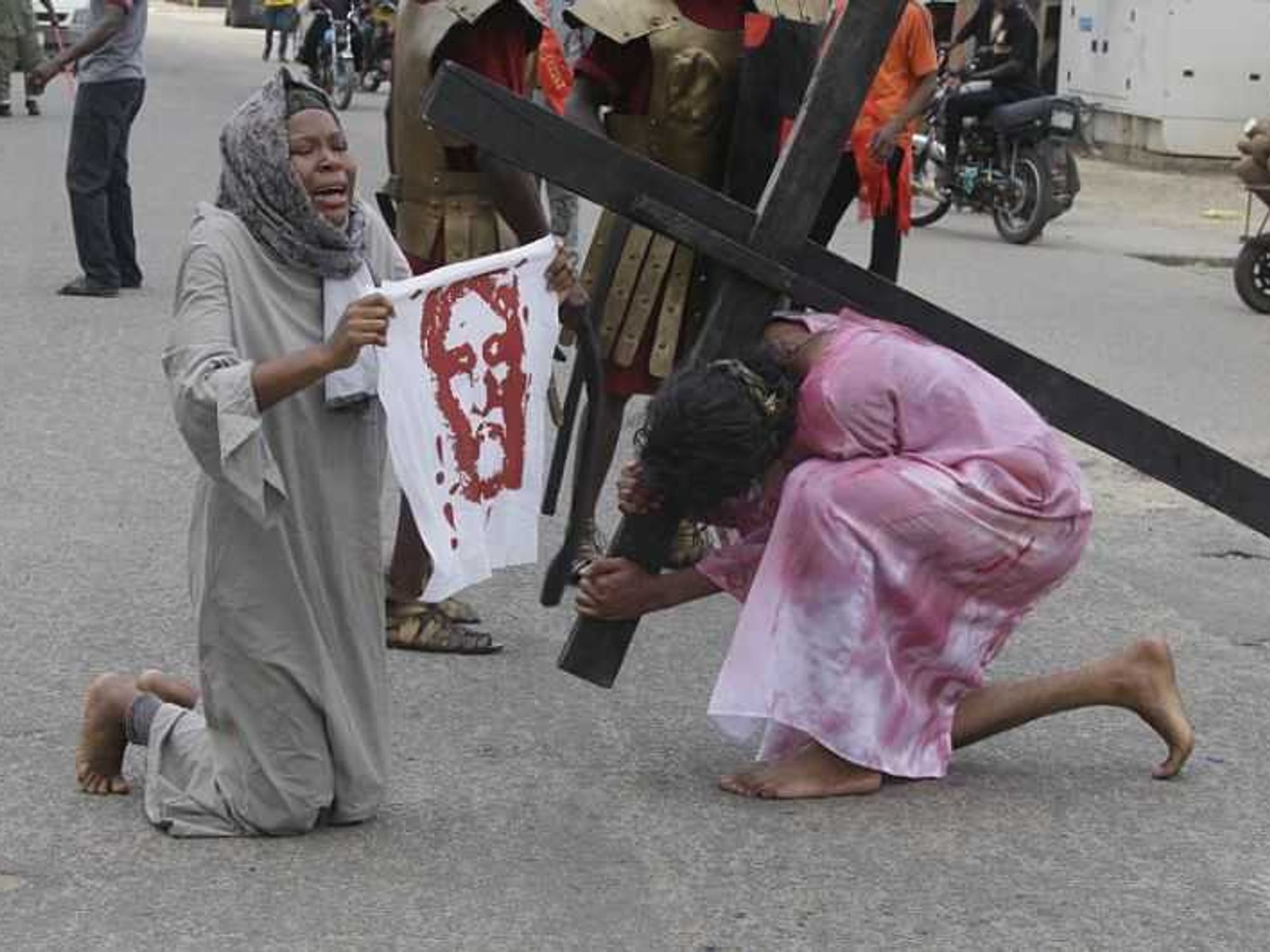
“Christianity is facing an existential threat in Nigeria. Thousands of Christians are being killed. Radical Islamists are responsible for this mass slaughter. I am hereby making Nigeria a ‘COUNTRY OF PARTICULAR CONCERN.'”
President Trump’s recent post to Trump Media-owned Truth Social focused attention on a crisis not known for being a priority of American foreign policy. But as much as the news out of Mexico and Ukraine may overshadow what’s happening in Nigeria, the situation there is no less severe. And it is indeed an “existential threat” that should especially concern Christians.
Just this past weekend, nine Christians — including a pastor — were killed by Fulani assailants in a terrorist attack.
Despite their well-observed decline in North America and Europe, the number of Christians worldwide is increasing, largely thanks to Asia and Africa. And in Africa, nowhere does the faith have a stronger presence than in Nigeria.
Christian stronghold
Africa’s most populous nation (238 million) is also its most Christian, with some 100 million believers — enough to rank Nigeria as the sixth-largest Christian population in the world. Concentrated in the country’s south, this population includes 21 million Catholics, 22 million Anglicans, 14 million Baptists, 6 million evangelicals, and 4.5 million Pentecostals, in the form of the Apostolic Church Nigeria.
Despite these numbers, Nigeria remains predominantly Muslim (53.5%), especially in the north, where Islamic terrorism is on the rise. According to a 2022 State Department report, groups like Boko Haram and ISIS-West Africa — along with religiously unaffiliated criminal gangs — have killed thousands of Muslims and Christians, with both sides accusing the government of failing to intervene.
There continued to be frequent violent incidents, particularly in the northern part of the country, affecting both Muslims and Christians, resulting in numerous deaths. Kidnappings and armed robbery by criminal gangs increased in the South as well as the North West, the South South, and the South East. The international Christian organization Open Doors stated that terrorist groups, militant herdsmen, and criminal gangs were responsible for large numbers of fatalities, and Christians were particularly vulnerable.
In response to such persecution, the State Department listed Nigeria as a “Country of Particular Concern” under the first Trump administration, in 2020; the Biden administration removed that designation in late 2021. This was despite protests from the independent U.S. Commission on International Religious Freedom, which noted widespread “violence by militant Islamists and other non-state armed actors, as well as discrimination, arbitrary detentions, and capital blasphemy sentences by state authorities.”
Since then, USCIRF has continued to call for Nigeria’s Country of Particular Concern designation to be restored, warning as recently as July that “religious communities are facing ongoing, systematic, and egregious violations of their ability to practice their faith freely.”
High-profile attacks
This year alone, Nigeria has seen multiple high-profile attacks against Christians, including massacres in April and June that killed 40 and more than 100, respectively. In August, 50 Muslims were killed in an attack on a mosque. Just this past weekend, nine Christians — including a pastor — were killed by Fulani assailants in a terrorist attack.
On Saturday Trump followed up his initial statement with another post threatening to halt humanitarian aid and assistance to Nigeria until the killings stop. He also hinted at the possibility of military intervention, stating that he was prepared to enter the country “guns-a-blazing” in order to “wipe out the Islamic Terrorists who are committing these horrible atrocities.”
While aboard Air Force One on Sunday, Trump made no effort to walk back his comments, telling reporters that deploying troops to Nigeria was still very much on the table. “I envisage a lot of things. They’re killing record numbers of Christians in Nigeria … and killing them in very large numbers. We’re not going to allow that to happen.”
Nigeria responds
Nigerian spokesman Daniel Bwala subsequently responded to Reuters with a statement following Trump’s comments, stating that U.S. assistance would be welcomed so long as the U.S. respected Nigeria’s “territorial integrity.” “I am sure by the time these two leaders meet and sit, there would be better outcomes in our joint resolve to fight terrorism.” He similarly affirmed to the BBC that any anti-Jihadi efforts ought to be made jointly.
President Bola Ahmed Tinubu also challenged Trump’s statements and defended Nigeria’s record on religious freedom in a post on X.
“Religious freedom and tolerance have been a core tenet of our collective identity and shall always remain so. Nigeria opposes religious persecution and does not encourage it.”
 Photo (left): Rodin Eckenroth/WireImage; Photo (right): SAUL LOEB/AFP via Getty Image
Genocide or not?
While acknowledging the realities of Nigeria’s ongoing security crisis, the mainstream media has disputed characterizations of the violence as a genocide against Christians.
Time magazine dismissed such claims as an idea “circulating in right-wing circles” and amplified by politicians like Senator Ted Cruz (R-Texas) and Rep. Riley Moore (R-W.V.). It also cited statistics from independent watchdog Armed Conflict Location and Event Data suggesting that of the 20,409 estimated civilian deaths in the past five years, just 417 deaths were Muslim and 317 deaths were Christian.
CNN called the genocide narrative an “oversimplication” that blames religion for the violence while ignoring factors such as ethnicity and resource scarcity.
The Guardian cast Trump’s remarks as an attempt to pander to “his right-wing, evangelical base,” reflecting “renewed domestic political pressure to appear tough on the marginalization or persecution of Christians abroad.”
Methodological weakness
While ACLED rejects the claim of a Christian genocide in Nigeria, arguing that most violence stems from ethnic rivalries and competition over land and resources rather than religion, it has previously acknowledged the difficulty of ruling out religious persecution. In a note on its general methodology, the group has acknowledged that “disentangling the ethnic, communal, political, and religious dimensions of specific events … [proves] to be problematic — at times even impossible — and extremely time-consuming. As a result, religious repression and disorder … may be underrepresented in the dataset.”
Proponents of the genocide narrative say this could lead to systematic undercounting of Christian victims. In a letter to Secretary of State Marco Rubio last month, Rep. Moore countered with significantly larger figures: “More than 7,000 Christians have been killed in Nigeria in 2025 alone — an average of 35 per day — with hundreds more kidnapped, tortured, or displaced by extremist groups.”
‘This needs to stop’
Evangelical author, public speaker, and Christian apologist Dr. Alex McFarland agrees with Moore, noting that resistance to covering Christian persecution is the norm. Reached just prior to Trump’s statements over the weekend, he told Align that he believes that claims of a Christian genocide are accurate.
In an age when so many champion human rights and social justice, Nigeria is something that should be talked about. What’s going on there is tragic on an unimaginable scale. This needs to stop, and I pray the United States of America will do what it can to stop the killing of Christians and advocate for their human rights.
American Christians who want to to help should be relentless in speaking up to elected officials, advises McFarland, making it clear that they “ask and expect them to take a stand on this issue, just as we expect our elected officials to take a positive stand for Israel and against anti-Semitism.”
Supporting organizations like Samaritan’s Purse, Open Doors, and Voice of the Martyrs is also an option.
McFarland emphasizes that anti-Christian persecution extends well beyond Nigeria, pointing to similar ongoing persecutions in China, India, and Saudi Arabia. “We need to understand that Christians outside of the United States have a hard go of it.”
Finally, he cautions his fellow Christians not to overlook one of the most powerful ways they can effect change. “What Christians can do is pray,” he tells Align. “That might sound glib and easy to say, but prayer works and is quite significant.”
Welcome to tokenization, where everything under the sun (and the sun) has its digital price
In a recent appearance with Glenn Beck, Whitney Webb lays out her case that the Great Reset did not end with the election of Donald Trump. Elites, ever given to schemes involving central control, reallocation, and number-go-up, are planning to tokenize everything they possibly can, including natural resources.
Webb draws a connective line between BlackRock CEO Larry Fink, the World Economic Forum (not exactly a freedom-oriented outfit), digital ID, and this process of so-called tokenization. This term is new to many people. Essentially, tokenization refers to the process of placing a metric, a mark, an identifying code on an object. The identifying marker is then pumped into an aggregating and analytical machine.
There is, no doubt, some obscurantism in the tech community, intentional or otherwise, as well as some heavy cognitive dissonance playing out for the rest of us as we watch the real, actual economy withering at our feet. How does giving (or selling) rights to natural resources like water help you and your neighbors pay bills, raise families, live in some semblance of accord with God?
The coming system is intended to solve for the management of not just anything but everything.
Neither Larry Fink nor the WEF are working on our behalf by digitizing water. Then what are they up to? Dropping in recently on CNBC, Fink said, “I do believe we’re just at the beginning of the tokenization of all assets, from real estate to equities to bonds, across the board.”
Through the implementation of natural resource assets, the plan is to mark, meter, and digitize water, trees, air, and animals of every sort, then pin their existence, in the digital tokens’ monetized form, to the shared economy. That unlocks foreign investment and, one imagines, perpetuates some modified version of the ever-unstable and unsatisfactory financial enclosure of benefits and retirement that has, so far, kept enough U.S. citizens satiated to keep it rolling.
Any and every AI is designed or able to adapt to the tokenization process. It needs be automatic and fast enough to keep up-to-the-minute record of millions or billions of transactions, sales, shorts, liquidations, and so forth. Rather than a system of streams or channels, the need is for computing to move like water itself. For Bitcoin and other cryptocurrencies hoping to participate in the tokenization bonanza, that means their encryption and storing of information (through so-called hashes and ledgers) needs to flow at the speed of the global digital economy.
Indeed, we’ve seen for years that some lesser-known cryptocurrency companies, like Hashbar as one example, have been building their hash, as it were, to function within an AI-controlled global marketplace. These hash-products, not too dissimilar from Bitcoin in terms of their ledger-keeping properties, are meant, in a stupefying sense, to mark individual drops and tranches of liquid or digitally liquified assets.
RELATED: Can anyone save America from European-style digital ID?
 Photo by Sean Gallup/Getty Images
It’s hard to visualize such unnatural and invisible arrangements, so here’s a real-world example: Say you have 10,000 board feet of Douglas fir trees on a lot in Washington state. If the Fink version of tokenization goes forward, you’ll be able to “digitize” those useful board feet of wood and sell portions, as opposed to the whole lot. Now picture that process for, well, anything you can imagine and much that you can’t.
In simple terms, the likely outcome of all of this BlackRock-WEF-AI machination is immediate dissociation between the human and the trees, the fir needles, the smell of the soil. All of that, given enough backroom dealing, political sloth, and diabolical Wall Street ingenuity, will be erased.
Are we talking about selling public lands? Theoretically, yes. Although major legal, regulatory, and political hurdles remain, the principle of leaving at least some portions of the created world exempt from actionable financial valuation is already eroding away. The accelerating logic of digital terraforming has no conceptual limit. Granting the premise that tokenization is good, not only should private property be tokenized, but all water, all minerals, and every possible other item with unexploited value rooted in human experience. The coming AI, digital ID, hash-rated system is intended to solve for the management of not just anything but everything.
The disturbing undercurrent of plans, outcomes, and inertia around this improbable intersection of technologies gets more disturbing when you accept that it is, in fact, a long-term plan nearly realized.
In her chat with Beck, Webb outlines another piece of the puzzle, termed “natural asset corporations.” This is pitched to the mainstream as a way to invest in conservation, ensure biodiversity, and so forth. But if we recall the century-long technocratic play, the current AI inertia, and the bipartisan support for anything to keep the fiat economy limping along, it’s easy to see how those natural assets under ownership might be subject to changes in any legal stipulation barring sales to other corporate or government entities. Those interlocking directorships have a knack for change.
We haven’t even mentioned energy, but we must, because this scheme ultimately needs to take into account the sun itself! Who owns the sun? Well, BlackRock, of course. Or some quasi-tech giant/WEF version of BlackRock.
Actually, no one owns the sun but God, and we have to remember this fact. By way of the wholly God-given system, we see that the sun feeds the grass, grass feeds the animals, we eat the animals.
The technical details on the capture of energy are intense, involving data centers to run the AI, political control to rubber-stamp the terraforming for the electrical inputs, and, at some near point, the encrypting of energetic inputs into a digital (hashing) ledger to be monitored, metered, and controlled.
You can probably see here how necessary the personal digital ID is to the entire panopticon. But if not, consider it unlikely that your or my interests are going to be taken into consideration by third-country customer service agents employed by the electrical company to manage our dissatisfaction in the event that a neighborhood brown-out is required while grid power is shunted over to the local data center.