

Category: Opinion & analysis
Culture’s great subversion machine has broken down at last
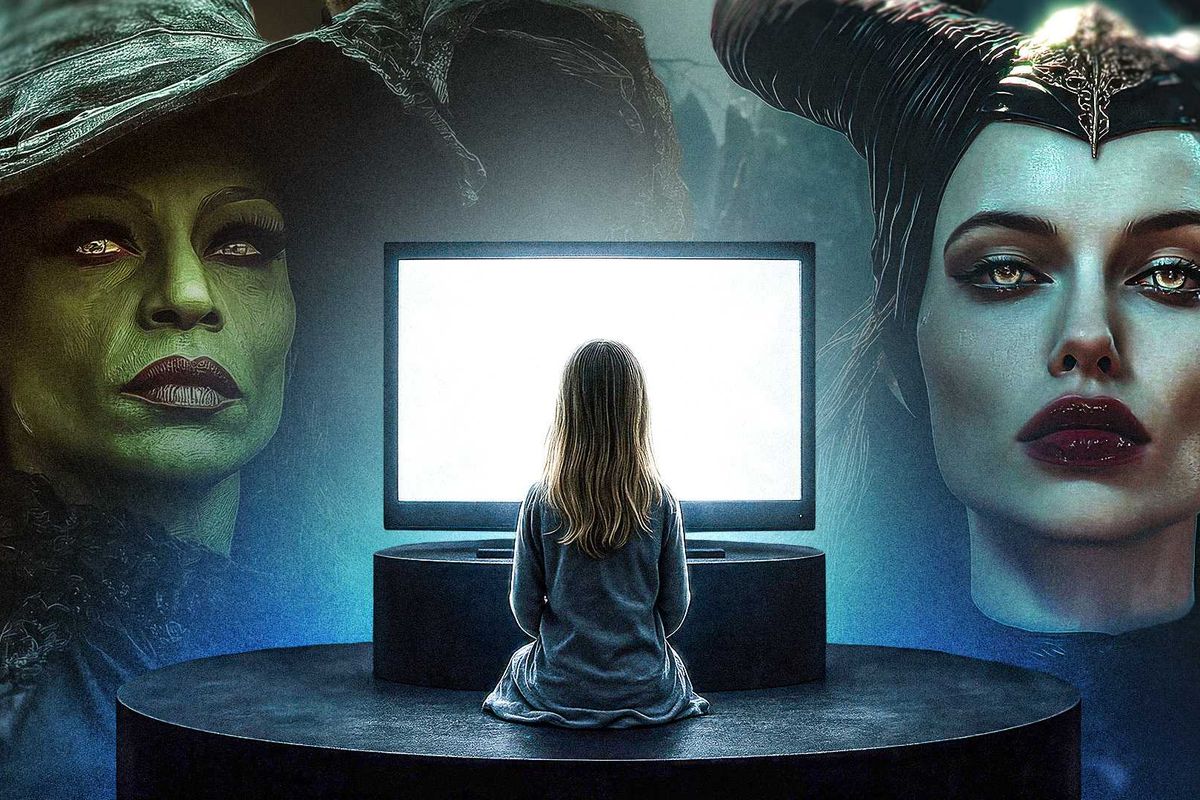
Netflix just announced its next animated children’s film, “Steps,” a Cinderella inversion in which the evil stepsisters are the real heroes. Shocking, I know. The platform is also releasing “Queen of Coal,” a film about a “transgender woman” overcoming the patriarchy in his small Argentinian town.
Reports of the demise of wokeness were premature. Its adherents remain committed to pushing it across every domain of society. What’s notable is how boring it has all become. Deconstruction has been the default mode of modern culture, but it is running out of things to deconstruct. The transgression has lost its power as the taboo fades, and in that exhaustion, something new — perhaps something true — stirs.
The revolution brought destruction, but its exhaustion brings new possibilities.
Some call Friedrich Nietzsche the first postmodernist for announcing that “God is dead.” Whether he was a precursor or ground zero, the genealogy of the movement clearly flows from his work. You can argue about whether he unleashed several horrors into the world or merely acknowledged their arrival, but Nietzsche at least understood the seriousness of his claim. He understood that having the blood of God on your hands was not a clever academic parlor trick — it was monstrous.
With the creator of the universe declared dead, modern man felt free to dismantle the order that once bound him. The sacred bonds of hierarchy were shattered. Postmodernism launched its assault on the good, the beautiful, and the true. And breaking sacred bonds releases immense energy. The leftist revolution that consumed the West drank deeply from it.
The church, the community, the family, marriage, gender roles, gender itself — each time the left destroyed one of these natural structures, it seized the power trapped inside and wielded it against its enemies.
Deconstruction reaches its natural end
But deconstruction has a natural end point. Transgression requires something sacred to violate. As I have written before, you eventually reach the point where there is nothing left to transgress.
When every movie, show, novel, game, and song “subverts” the traditional Christian norm, the subversion becomes the norm. That’s why these Netflix offerings feel so lifeless: They all follow the same trajectory toward the same inversion.
Fifty years ago, critics complained that stories were predictable because the squeaky-clean hero always triumphed. Today they are predictable because the villain is always a misunderstood victim of bigotry who deserves to win. The inversion isn’t clever or subversive. It’s the boring status quo.
The death of who?
So what happens when postmodernism has inverted every hierarchy, mocked every sacred symbol, and squeezed the last drop of power out of attacking Christianity?
The philosopher Alexander Dugin offers a compelling answer. If modernity was the death of God, the end of postmodernism is the exhaustion of subversive secular culture. At that point, new possibilities appear. Instead of proclaiming that “God is dead,” people start asking, “The death of who?” The old order fades so completely that secular man forgets what he was rebelling against.
Meanwhile, the promise of becoming like gods and remaking the world in our own image begins to sour. We see the consequences of rejecting the good, the beautiful, and the true — and find them unbearable.
A postmodern moral wasteland
Postmodern man has lived his entire life in a world re-engineered from the top down by “experts.” When he cast God from His throne, man imagined he would shape the world through his own individual will. But the modern secular man discovers instead a moral wasteland. He finds that he is captive not to his own liberated self, but to darker forces once held at bay by the divine order he dismantled.
He no longer remembers what that order looked like — or why he rebelled against it. And in that moment, the opportunity to rediscover the spiritual returns.
RELATED: We’re not a republic in crisis. We’re an empire in denial.
 Blaze Media Illustration
The revolution brought destruction, but its exhaustion brings new possibilities. People have forgotten the object of their rebellion, and now they look at the miserable world secular man has made. They crave something more.
Order, duty, faith, meaning. These begin to look far more promising than the ugly, pointless chaos modern man created for himself. People once again thirst for a world where the good guy wins and God reigns.
God never died — modernity did
The truth is that God never died. Christ died and rose again. Modern man tried to replace the divine with science and reason, but the Lord is the source of reason itself. He cannot be dethroned by His own creations.
As deconstruction loses its revolutionary energy and becomes stale, the desire to re-embrace sacred order returns. J.R.R. Tolkien captured this when he wrote: “Evil cannot create anything new. It can only spoil and destroy what good forces invented or created.” Eventually evil runs out of things to spoil. A barren, thirsty culture begins searching for the living water only divine truth can provide.
Ready for revival
Modern culture is bankrupt, and everyone feels it. The attempts at transgression now read as hollow conformity to a corrupted system. We are not the masters of our own world or our own truth — and thank God for that.
We do not have to live in the nihilistic abyss we created. The natural order waits just beneath the surface, ready to re-emerge in a cultural revival.
The creative future will not come from a relativistic Hollywood clinging to the corpse of deconstruction. It will come from those willing to embrace the transcendent — from those who understand that the world is held together not by our will to power, but by the truth and beauty of our Creator.
AI’s biggest security risk is hiding in plain sight

The White House, federal regulators, and Congress are scrambling to develop a national approach to artificial intelligence. Yet almost no one is examining AI from an ethical or civil-society perspective. Policymakers frame it as an economic or national security issue. Those angles matter. But the deeper question — what it means to live in an AI-dominated world inside a constitutional republic — remains almost entirely unaddressed.
AI is already reshaping our political life, our civic discourse, and our education system. One of the clearest windows into this shift is the outsized influence of Wikipedia and Reddit. Large language models like ChatGPT and Google’s Gemini consume a training diet heavy on both sites. AI systems don’t “know” anything in a human sense. They mirror patterns. And the patterns they ingest come from platforms run by anonymous editors, ideological moderators, and unaccountable gatekeepers.
No special-interest group today is fighting for Americans who will soon live in a world saturated with AI slop.
The Oversight Project examined the underbelly of this problem, beginning with Wikipedia. After noticing what looked like coordinated ideological editing campaigns, we sought to understand who was shaping the platform. What we found was a small, powerful cadre of editors with the authority to dictate what information is permitted. These editors operate anonymously — or so they believed.
We identified several of them and, more tellingly, where they were editing from. Some connections were foreign. Others showed activity that aligned with a 9-to-5 workday. It was clearly inorganic. That raised obvious questions: who pays these people, who coordinates them, and whether intelligence services are involved.
The most aggressive coordination appeared on politically sensitive topics, especially anything involving Israel or the Arab world. Automated tools tracked and reverted edits across thousands of pages to enforce a narrative. When Wikipedia realized we were mapping these networks, it panicked. To protect anonymity, the platform changed its internal rules to obstruct outside scrutiny. Then it retaliated by downgrading us to “deprecated” status — a ban in all but name. Anything sourced to us became unacceptable on the site.
We are sounding the alarm because foreign actors and domestic ideologues understand the power of controlling Wikipedia’s information flow. Our own intelligence agencies almost certainly understand it as well. In a recent interview, Wikipedia co-founder Larry Sanger told me that intelligence services would be negligent if they were not influencing the platform.
Sanger also expressed regret about founding Wikipedia with Jimmy Wales, noting that like so many other institutions, it has been conquered by the ideological left and turned into a political instrument, a shift made even more consequential in the age of AI.
RELATED: Almost half of Gen Z wants AI to run the government. You should be terrified.
 Man_Half-tube via iStock/Getty Images
This is where the danger becomes unmistakable. Most people treat Wikipedia and Reddit cautiously when browsing the internet, aware of the bias. AI does not. When you ask an AI system a question, it generates polished, authoritative-sounding answers built from those same sources — stripped of context, caveats, or transparency. What appears neutral is often laundered opinion.
This information-laundering must become part of the national conversation about AI. Some policymakers seem to understand the stakes. The Senate Commerce Committee has sent oversight letters and plans a hearing. The House Oversight Committee has signaled similar interest. Even Ed Martin, former U.S. attorney for the District of Columbia, has demanded information from Wikipedia.
But the truth is blunt. No special-interest group today is fighting for Americans who will soon live in a world saturated with AI slop. There is plenty of lobbying in Washington for everything except preserving an honest information ecosystem. Without intervention, public knowledge will be shaped by opaque networks of foreign actors, ideological activists, and machine-driven amplification on a massive scale.
Policymakers must recognize what is at stake and act before the architecture of public knowledge is fully captured. The future of AI — and the future of democratic self-government — depends on it.
Mamdani dares ICE to come get him — and throws the Constitution in the trash
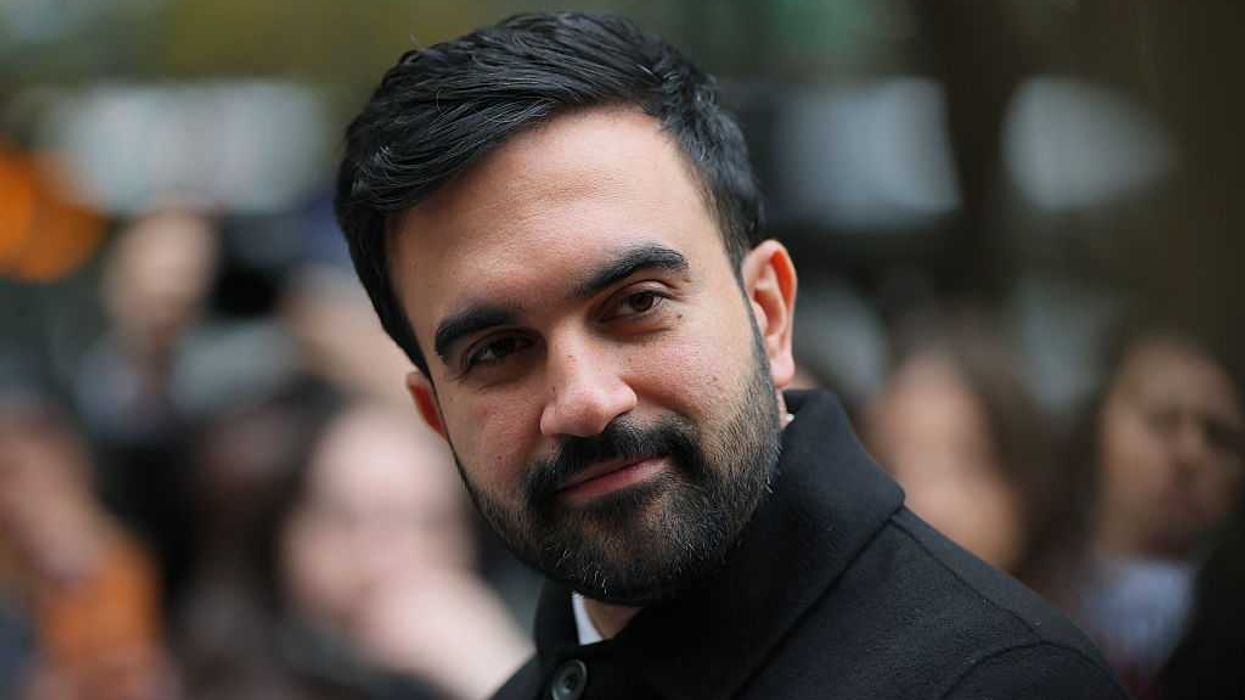
New York City Mayor-elect Zohran Mamdani calls himself a “Democratic Socialist,” but he clearly doesn’t support the cooperative federalism that keeps American democracy functioning.
Just weeks after projecting a diplomatic, moderate tone during an Oval Office visit, Mamdani issued a message that should chill any American who values the rule of law. Responding to a recent Immigration and Customs Enforcement raid in Chinatown, Mamdani in a video urged illegal aliens to “stand up” to federal agents by exploiting every legal loophole to stall enforcement.
Mamdani’s encouragement mirrors the toxic doctrine of states’ rights absolutism that fueled the nation’s march toward civil war.
“We can all stand up to ICE if you know your rights,” he declared, offering a tutorial on how to shut doors in agents’ faces, demand endless clarifications, and film operations to disrupt them.
This is a blueprint for openly defying federal authority, wrapped in the rhetoric of righteous resistance. As a self-avowed Democratic Socialist who promised to “fight back” against ICE and labeled the agency a “reckless entity,” Mamdani reveals a contempt for constitutional order that has moved from fringe to mainstream on the American left.
The peril in this rhetoric is not theoretical. While the circumstances differ, Mamdani’s encouragement mirrors the toxic doctrine of states’ rights absolutism that fueled the nation’s march toward civil war. In the 1850s, leaders of the nascent Confederacy preached nullification — the idea that states could ignore federal laws they deemed unjust, particularly those touching slavery.
South Carolina’s 1832 Ordinance of Nullification, defying federal tariffs, was a dry run for the secessionism that exploded in 1861. Confederate Vice President Alexander Stephens later declared in his “Cornerstone Speech” that the Confederacy rested on the principle of state sovereignty over federal authority.
Fast-forward to Mamdani’s New York, a sanctuary city where local laws are exalted above national ones and illegal aliens are coached to treat ICE as an invading force. This reckless approach can only ratchet up tensions, increasing the likelihood of violent confrontations and accelerating the erosion of our constitutional order.
This isn’t rights protection. It’s the resurrection of a philosophy that once split the nation in two. The Civil War claimed more than 600,000 lives because defiant states elevated their local priorities over the union’s supremacy. Mamdani’s sanctuary-state playbook risks igniting a similar dynamic — one resisted arrest at a time.
The hypocrisy is glaring. For nine years, Democrats and their media allies branded Donald Trump a “threat to democracy,” insisting that “no one is above the law.” Nancy Pelosi tore up his State of the Union address on camera, declaring his actions an assault on the Constitution. Chuck Schumer warned that Trump’s border enforcement would “Balkanize” America.
Yet when Mamdani — a rising progressive star — directly subverts federal immigration statutes, the same chorus falls silent. No calls for indictments. No panic-stricken editorials about authoritarianism.
Democrats declared Trump’s alleged election interference a constitutional crisis. But Mamdani’s defiance goes straight at the Supremacy Clause, which makes federal law the “supreme law of the land.” By elevating New York’s sanctuary policies and restricting cooperation with ICE to only 170 “serious crimes,” Mamdani is not safeguarding democracy. He is undermining it.
America’s founders envisioned a balance: states as laboratories of democracy but always subordinate to the union’s paramount authority. Sanctuary cities flip that design on its head. Once New York shields violators of immigration law, copycats are inevitable. What happens when California nullifies EPA emissions rules? Or Texas ignores ATF gun tracing? Or Florida decides federal taxes are optional?
 Photo by PATRICK T. FALLON/AFP via Getty Images
Localized resistance metastasizes into a patchwork of fiefdoms where the law becomes whatever the local politician decrees.
Mamdani’s vision, if replicated, promises rapid national deterioration: a swelling illegal population operating in the shadows, strained public resources, and cities like New York — home to at least a half-million illegal aliens — functioning as de facto no-go zones for federal agents.
Progressives who cheered Mamdani’s victory must reckon with the monster they helped unleash: a leader who cloaks defiance in compassion while sowing the seeds of anarchy. American federalism depends on shared laws, not selective compliance. If New York wants to lead, it should honor the union that made its success possible — not mimic the Rebels of 1861.
Otherwise we’re not securing the nation. We’re dismantling the house that stands between order and oblivion.
Even in Iowa’s Bible Belt, porn for kids is now the sacred cow

A library board member in the reddest part of one of the reddest states in the union recently learned what “progress through cooperation” really means: Sit down, shut up, and stop objecting to porn for kids.
Teri Hubbard, a Sioux Center, Iowa, library board member, was the only vote to remove the book “Icebreaker” — which contains a six-page, graphic sex scene — from the shelves. Her reward? A gentle nudge from City Manager Scott Wynja suggesting she resign.
If these people can’t be trusted to protect children from graphic sex scenes, they can’t be trusted with anything else.
“As our motto with the city states, ‘progress through cooperation,’ I would ask that you work in a spirit of cooperation for the best interest of all,” Wynja wrote, after the board voted 8-1 to keep the book available to everyone, including minors. “If you feel you are unable to serve in that capacity … we can consider going another direction.”
So let’s take a moment to appreciate what “progress,” “cooperation,” and “best interest of all” apparently sound like in Sioux Center. They sound like a passage that opens with: “Don’t be gentle. F**k me like you hate me.”
Wholesome stuff, truly. Norman Rockwell could never.
In fact, I’m shocked Wynja doesn’t put that line on a welcome sign, right under “Population: Proudly Confused.” And why not? I’m sure the eight board members — Tara Berkenpas, Angeles Bahena, Andrew Geleynse, Logan Kaskie, Brian Van Der Vliet, Lynn Van Beek, Lisa Dykstra, and Ruth Clark — would approve. They voted to keep the book, so the public deserves to know their names.
Clark even made the motion to retain it. And here’s the plot twist: She’s a Christian schoolteacher! Apparently, the gospel is no match for the mystical powers of library director Becky Bilby, who seems to think the First Amendment collapses into dust if 13-year-olds don’t get unlimited access to graphic sex scenes.
When Hubbard asked whether the concerned parents could attend the library board meeting — as they had requested — Bilby shut it down immediately.
“Becky made it clear this was a very bad idea,” Hubbard wrote to Wynja, “and that we do not want the public at board meetings because that would lead to media at board meetings, and that would be disastrous.”
Yes, you read that correctly. Public board meetings should avoid the public. The threat of transparency is far more frightening than distributing smut to minors.
Naturally, the usual cast of local intellectuals showed up to defend the cause. Kim Van Es, former chair of the Sioux County Democrats, solemnly warned that “excluding certain authors or certain views leads to authoritarianism, as it did in Nazi Germany.” She then offered a hypothetical about a majority-Muslim town imposing beliefs on Christians — because when you’re out of arguments, you go straight to Hitler and a thought experiment.
But she’s a Democrat. This is exactly the level of analysis we have come to expect.
RELATED: Australia BANS key social media apps for kids under 16 — and platforms must enforce the rule
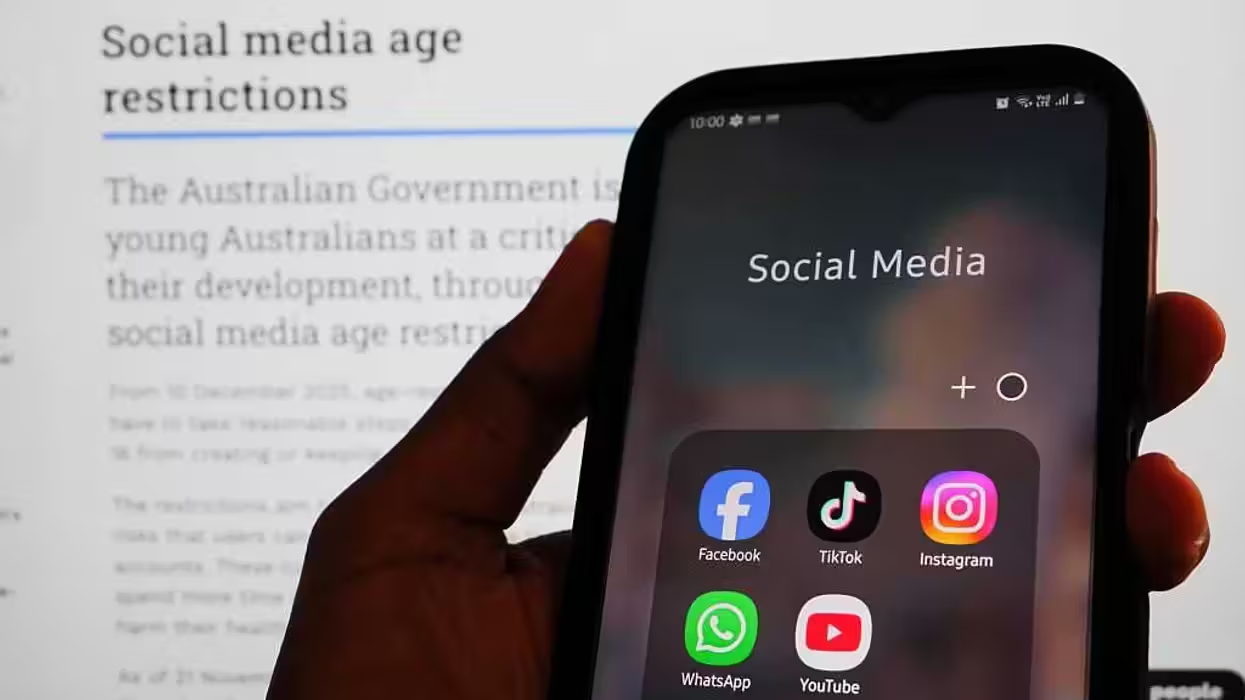 Photo Illustration by Algi Febri Sugita/SOPA Images/LightRocket via Getty Images
Then Northwestern College theology professor Jason Lief stepped up in “hold my beer” fashion.
“I’m afraid the Bible’s going to be pulled off the shelf,” he said. “I mean, if we go by kind of lewd, sexual stuff. I don’t know if you’ve read the Bible. The Judah-Tamar story …”
This is the profound insight he brought “on behalf of the Bible.”
Has Lief ever read Romans 12:9: “Love must be sincere. Hate what is evil; cling to what is good”? Doesn’t seem like it.
For those in Sioux Center and at Northwestern College who have read it, here’s a modest proposal: Demand everyone on the board except Hubbard resign immediately. Then fire Wynja, Bilby, and Lief. They all had the easiest job in America — don’t give kids access to pornography — and failed spectacularly.
If they can’t be trusted to protect children from graphic sex scenes, they can’t be trusted with anything else.
Digital tyrants want your face, your ID … and your freedom

Thomas Sowell’s warning fits the digital age with brutal precision: There are no solutions, only trade-offs. When governments regulate technology, they seize your privacy first. Every “safety” mandate becomes an excuse to collect more personal data, and the result is always the same. Bureaucrats claim to protect you while making you more vulnerable.
Age-verification laws illustrate this perfectly. Discord’s recent breach — more than 70,000 stolen government ID photos taken from a third-party vendor — shows how quickly privacy collapses once platforms are forced to gather sensitive data.
Millions of citizens should not be forced to trade away privacy because policymakers refuse to acknowledge the risks.
To comply with the U.K.’s new Online Safety Act, Discord began collecting users’ documentation. That data became a target, and once breached, attackers reportedly demanded a multimillion-dollar ransom and threatened to publish the stolen IDs. Discord failed to monitor its vendor’s security practices, and thousands paid the price.
Age-verification mandates require digital platforms to confirm a user’s age before granting access to specific content or services. That means uploading government IDs or submitting to facial scans. The stated goal is child safety. The actual effect is compulsory data surrender. These laws normalize the idea that governments can force citizens to hand over sensitive information just to use the internet.
Centralized data collection creates a jackpot for cybercriminals. As the Discord breach proves, one compromise exposes thousands — or millions — of users. Criminals can sell this information, reuse it for identity theft, or weaponize it for blackmail. The problem isn’t a one-off failure. It is structural. Age verification mandates require platforms to create consolidated databases of personally identifying information, which become single points of catastrophic failure.
The libertarian Cato Institute captures the problem: “Requiring age verification creates a trove of attractive data for hackers that could put broader information about users, particularly young users, at risk.”
Governments may insist that the Discord breach was an outlier. It wasn’t. Breaches of sensitive information are predictable in systems designed to aggregate it. Even if the motives behind the U.K.’s age-verification regime were noble, undermining privacy to advance those aims is a trade-off free societies should reject. That is why the Online Safety Act triggered an outcry far beyond the U.K.
And, as usual, legislative mandates fail to achieve their stated goals. Days after the OSA took effect, VPN downloads surged as users — including children — bypassed verification systems. Laura Tyrylyte, Nord Security’s head of public relations, told Wired that “whenever a government announces an increase in surveillance, internet restrictions, or other types of constraints, people turn to privacy tools.” Predictably, age-verification laws encourage evasion instead of compliance.
RELATED: The UK wants to enforce its censorship laws in the US. The First Amendment begs to differ.
 mikkelwilliam via iStock/Getty Images
The pattern is simple: Age-verification laws degrade privacy, heighten the risk of identity theft, and fail to keep minors off restricted platforms. They make the internet less safe for everyone.
Meanwhile, policymakers remain determined to spread these mandates in the name of protecting children. The U.K. pioneered the model. Many other governments followed. Twenty-five U.S. states have adopted similar laws. The list grows each month.
But governments cannot treat data breaches as acceptable collateral damage. Millions of citizens should not be forced to trade away privacy because policymakers refuse to acknowledge the risks. The result of this approach will be more surveillance, more breaches, more stolen personal data, and a steady erosion of civil liberties.
Privacy is the backbone of liberty in a digital world. Thomas Jefferson’s warning deserves repetition: “The natural progress of things is for government to gain ground and for liberty to yield.”
Age-verification mandates accelerate that progress — and citizens pay the price.
Christian students are pushing back — and universities are cracking

As one of the last conservative Christians serving as a tenured philosophy professor at a public university, I’ve had a front-row seat to the intellectual circus that critical theory and intersectionality have unleashed on higher education. I call it out on X and Substack. Professors from ASU’s Barrett Honors College and English Department have attacked me for doing so, calling me a “joke” and a “sloppy thinker.” This is the abuse anyone receives for defending God’s word.
But something new — and encouraging — is happening.
Christian students are speaking up. They are filing complaints. They openly quote Scripture in their assignments. And in this case, the university backed down.
Students are calling it out, too.
Last week at the University of Oklahoma, two instructors were removed for blatant viewpoint discrimination against a Christian student. If even 5% of cases like this see daylight, the DEI structure will start to crack within the academic year. If the polls are right, 97% of faculty identify as left or far left. What we see now — open disdain for Scripture — is not an anomaly. It’s the visible edge of a worldview that has captured entire campuses.
Beneath the surface sits the full intersectional framework, built on one central assumption: Christianity is the axle around which oppression supposedly turns.
The assignment that exposed the bias
The student’s psychology assignment was simple: a 650-word response to a study about gender norms and bullying among middle-schoolers.
She wrote: “Society pushing the lie that there are multiple genders and everyone should be whatever they want to be is demonic and severely harms American youth.”
She grounded her argument in Genesis, explained God’s creation of male and female, and correctly defined ezer kenegdo as “a helper equal to man.”
In short, she used: Scripture, theology, linguistic analysis, and a historical ethical framework. That is a well-reasoned paper in the humanities. Except when the worldview is Christian.
The instructor’s response?
“Your reaction paper contradicts itself, uses personal ideology over empirical evidence, and is at times offensive.”
And then the tell: “Every major psychological, medical, pediatric, and psychiatric association acknowledges that sex and gender is neither binary nor fixed.”
This is false. No serious biology text claims human sex is nonbinary. Disorders of development exist, but disorders do not replace design.
The deeper problem stood out like a vegan at a Texas barbecue: The Bible does not count as evidence. Even if the rubric justified deductions, dismissing Scripture as “personal ideology” exposed the bias.
Quote Judith Butler or Michel Foucault, and the academy nods solemnly. Quote the Bible, and you lose points.
The modern university’s dogma is simple: The Bible is never admissible. Everything else is.
Christians have known this for decades and quietly self-censored to protect their grades and academic futures. Which raises the question: How did we arrive here?
How we got here
Hostility toward Christianity did not appear overnight. It grew slowly through deliberate gatekeeping. Hiring committees screened out conservatives, shaping departments where 90%-97% of faculty became ideological clones. Administrators learned to view biblical faith as bigotry. DEI offices began to enforce viewpoint discrimination while denying it.
Fair hiring does not produce a 97% monoculture. That is ideological capture.
Christians allowed it because they confused niceness with faithfulness. Niceness — a word that never appears in Scripture — is fear disguised as virtue. It keeps people quiet so they can stay liked.
The left used a strategy straight from Marx, who took it straight from the enemy (“devil,” meaning accuser): Accuse Christians of oppression; rewrite history so the West is defined by its sins, never its virtues; demonize Scripture and its adherents; and weaponize shame to silence dissent.
It worked — for a time. The spell is breaking.
No neutrality
Many Christians assumed universities were neutral. They aren’t. They never were.
Every institution aligns with one of two cities: “the City of God” and “the City of Man.”
The City of Man controls the universities. This is not hyperbole. Romans 1 describes it plainly.
Those who reject God do not become neutral observers. They become evangelists for a rival religion. That rival religion has doctrines:
- The Bible is oppressive.
- Christianity is harmful.
- Gender is unlimited.
- Identity is self-created.
- The highest good is “authenticity.”
- The greatest sin is disagreement.
A new orthodoxy rules the campus, and the Oklahoma student violated it — praise God that she did.
Something has changed
Christian students are not taking the abuse quietly any more. They are speaking up. They are filing complaints. They are quoting Scripture openly in their assignments. And in this case, the university backed down. The instructors were removed.
Even on a left-dominated campus, viewpoint discrimination remains illegal — even if DEI treats it as sacred ritual.
If this continues, the monopoly may begin to break — maybe even by spring break.
RELATED: Why the kids are not all right — and Boomers still pretend nothing’s wrong
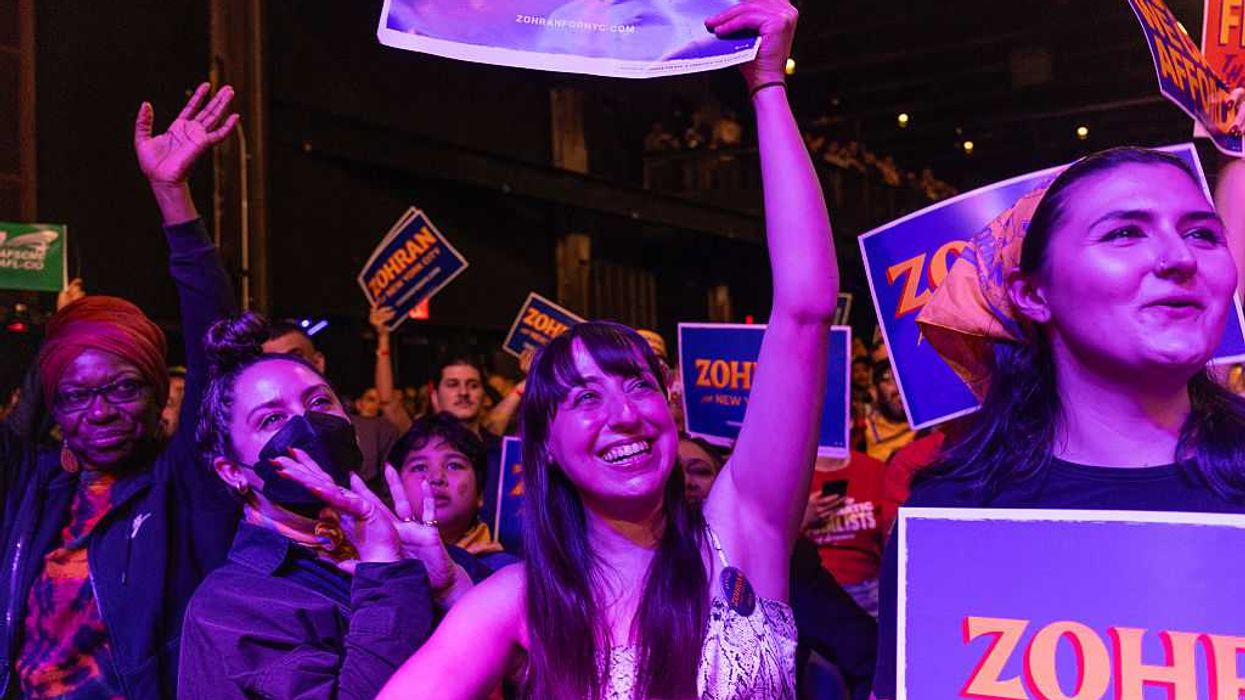 Photo by Andrew Lichtenstein/Corbis via Getty Images
What you can do
As someone inside the system, here is my advice.
Follow those speaking publicly. We are few, but we are here — and we are not silent.
Equip your children. They will face hostility. They will be mocked. They will be graded down unless they can respond intelligently. Ask pointed questions on campus tours. Get administrators on record renouncing DEI discrimination — then hold them to it.
Consider alternatives. Trade schools, Christian colleges, apprenticeships, online programs — all viable. Many offer a serious education without forcing students through gender theory with Judith Butler 101. Seek professors who teach the great works with a biblical foundation.
Speak boldly. The gospel is not a whisper. “For I am not ashamed of the gospel,” the Apostle Paul writes in Romans, “for it is the power of God for salvation to everyone who believes.”
Christian students are rediscovering that courage. It is long past time the rest of us did, too.
Liz Warren hustles Trump with a housing bill from hell
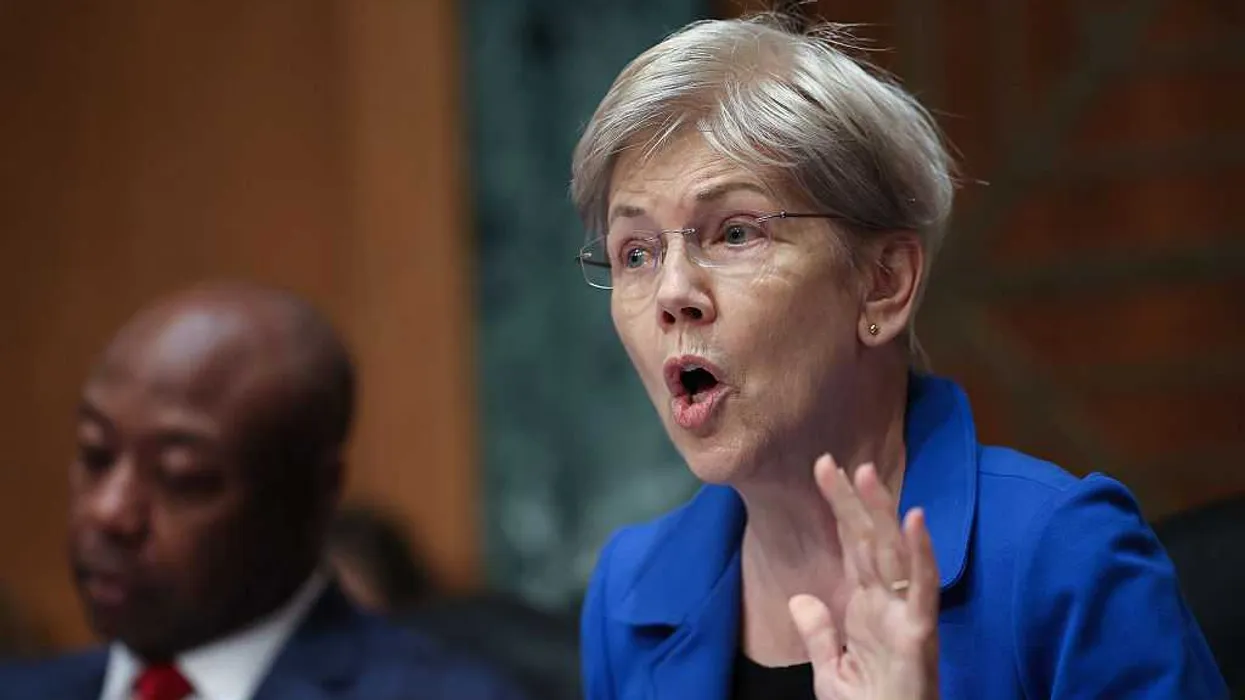
What is it about the National Defense Authorization Act that makes it a dumping ground for every dumb liberal pet project?
First the Trump administration pushed an AI data-center amnesty that would have stripped states of authority over massive, power-hungry facilities. Then lawmakers tried to slip in Sen. Elizabeth Warren’s housing bill, a package built to subsidize Section 8 tenants and builders and to fuel the very forces driving the current housing bubble. After a backlash, both provisions came out of the NDAA. Now congressional leaders plan to pass the Massachusetts Democrat’s housing bill on its own.
The real crisis comes from government debt and the inflation it fuels. This is not a shortage of lumber or land. It is a monetary chokehold created by government policy.
Earlier this year, Senate Banking Committee Chairman Tim Scott (R-S.C.) worked with Warren to move S. 2651, an omnibus housing package that expands every federal program Trump previously vowed to cut. They attached the legislation to the Senate’s NDAA, then lobbied House conservatives to adopt it in their version of the defense bill. At the last minute, House leaders stripped the language. The House Financial Services Committee now plans to mark up the bill next week.
Here’s the trouble: The bill misdiagnoses the housing crisis. It treats high prices as a supply shortage instead of a government-fueled asset bubble and inflationary pricing distortion.
The result is predictable. Its 40 provisions would expand Section 8, loan subsidies, “affordable housing” grants, and even looser mortgage programs for people priced out of the market. Every one of these items pours accelerant on the factors that drove the 2008 bubble and the post-COVID spike.
Government subsidies for overbuilding and for buyers who cannot afford homes created the crisis. Yet like a dog returning to its vomit, Scott, the president, and Senate Democrats are endorsing Warren’s 2020 campaign platform to revive the same model. The bill promises builders and activist groups federal cash in exchange for regulatory concessions. The trade-off is disastrous.
Section 202 creates a new federal grant program to fund local housing projects in designated zones — a warmed-over version of the community-engineering schemes Obama’s Department of Housing and Urban Development pushed a decade ago.
Meantime, Section 209 establishes a $200 million yearly fund at HUD to award “innovative housing reforms” to localities that reshape zoning to favor dense, subsidized units.
Conservatives would call these incentives an invitation to replicate failed urban policies in red suburbs. The bill rewards grifting nonprofits and community organizers who treat federal housing programs as political infrastructure.
At the same time, the administration is pushing rules that limit red-state zoning authority to clear the way for data-center construction while promoting Section 8 expansion with new incentives and zoning guidance. It revives, in effect, Obama’s Affirmatively Furthering Fair Housing regime — the same racial-gerrymandering tool Trump killed in his first term. Supporting the Scott-Warren bill would revive it in practice.
Worse, the bill rests on a false premise. America doesn’t have a housing shortage. According to Redfin, as of October sellers outnumbered buyers by 36.8% — about 529,000 more sellers — the largest gap since 2013. Census data shows about 148 million housing units for roughly 134 million households, a surplus of around 14 million units. When Trump took office, the vacancy count stood near 11 million, yet prices were far more affordable.
The real crisis comes from government debt and the inflation it fuels. Construction costs surged with inflation. Interest rates spiked to service that debt, creating an interest-rate cliff that locked millions of homeowners into sub-3% mortgages. They cannot sell without doubling their monthly costs. High rates froze the existing inventory in place. This is not a shortage of lumber or land. It is a monetary chokehold created by government policy.
RELATED: Why the kids are not all right — and Boomers still pretend nothing’s wrong
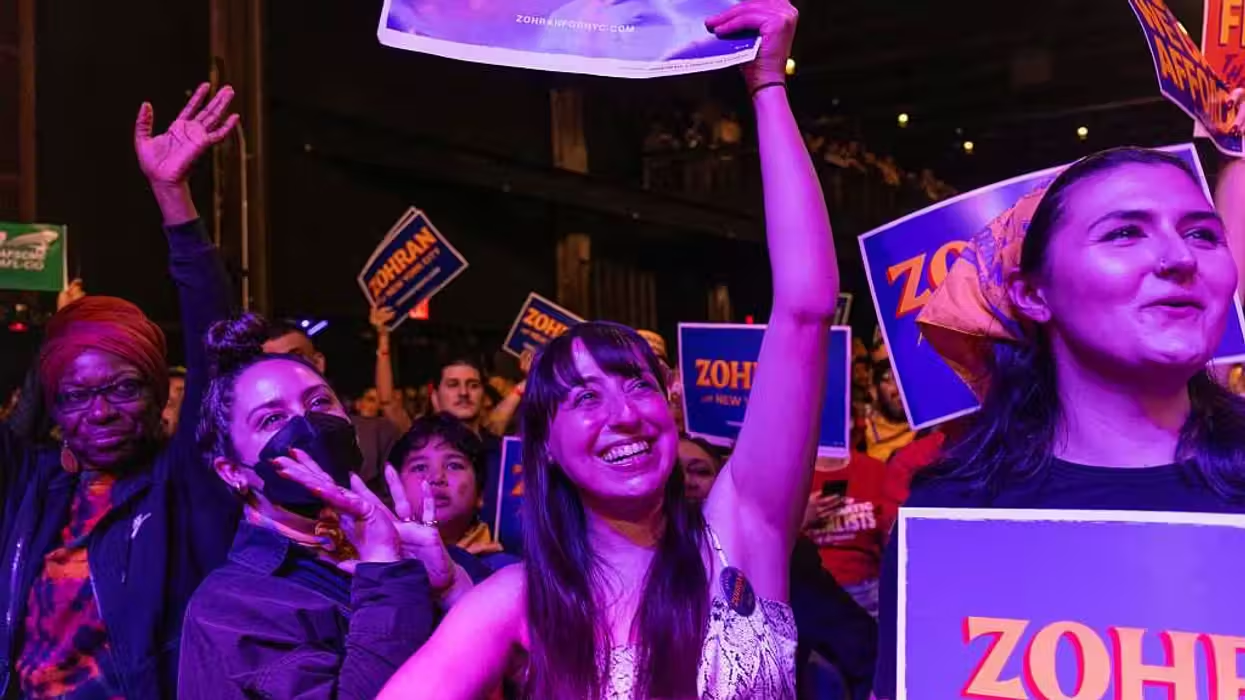 Photo by Andrew Lichtenstein/Corbis via Getty Images
Federal housing policy adds another layer. Fannie Mae and Freddie Mac long prioritized “access to credit” over price stability. By guaranteeing high-risk loans and encouraging low down payments, they allow buyers to bid more than their incomes justify. Subsidized credit lifts prices for sellers, not buyers.
S. 2651 makes the problem worse by expanding the Community Development Block Grant and similar programs, encouraging activist groups and corporate developers to overbuild units no one can afford without subsidies. That process pushes prices upward and strengthens corporate buy-ups of suburban neighborhoods.
The administration previously acknowledged these distortions. In Trump’s FY 2021 budget, the Office of Management and Budget proposed eliminating CDBG and the HOME Investment Partnerships Program, arguing that states and localities were better positioned to address affordability challenges. This new bill reverses that logic entirely.
The Federal Reserve’s rate whiplash — a decade of near-zero borrowing costs followed by sudden hikes — froze supply by trapping owners inside artificially cheap mortgages. Washington’s policies created the gridlock. The inventory exists. Monetary policy quarantined it.
What the administration needs to do is allow prices to fall back toward alignment with median incomes. That adjustment would restore affordability without new federal intervention. Instead, the FHFA is pushing lower credit-score requirements for subsidized mortgages. That mistake will repeat the pattern of enticing families into overpriced homes they cannot sustain.
Housing policy should stop trying to prop up inflated prices. The market must correct. A federal “solution” built around 40 expansionary programs will intensify the crisis, not solve it. Doing nothing would spur more affordability than this bipartisan blunder.
Inside the left’s push to reshape 2028 with ranked-choice voting
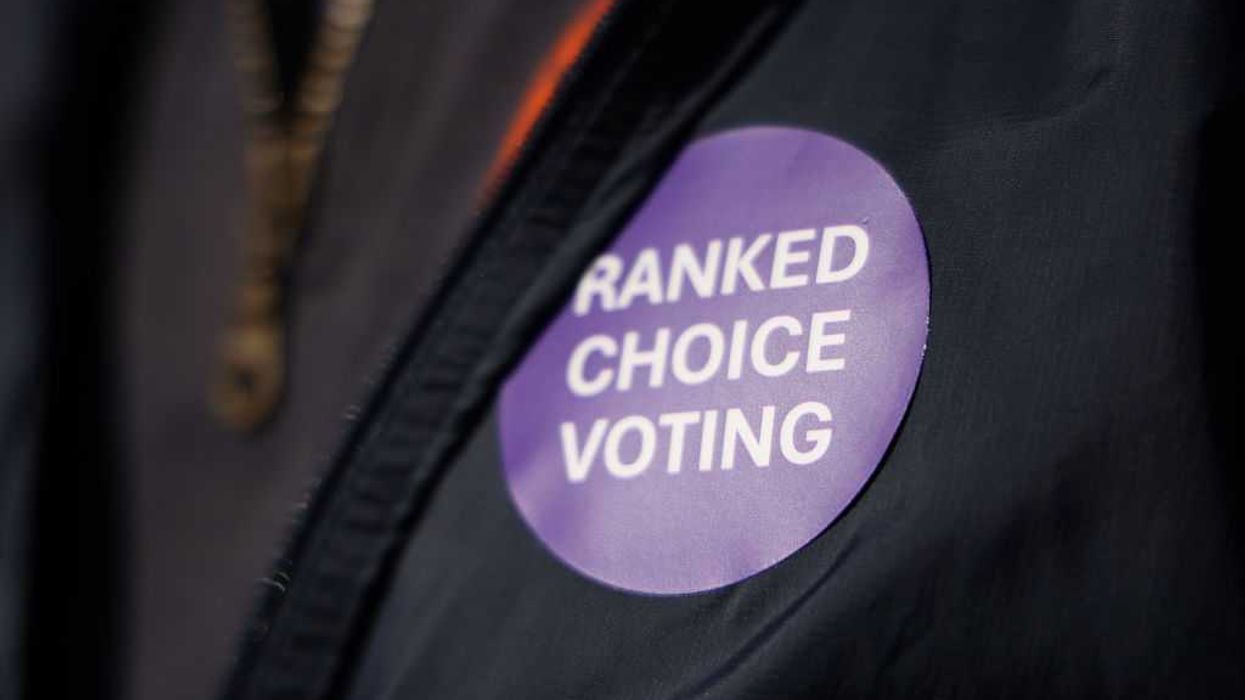
If Democrats seem extreme now, wait until they adopt ranked-choice voting. Some activists inside the party want exactly that — a reform that would push presidential nominations even further left and force establishment figures to navigate an ideological gauntlet to win.
Multiple reports indicate that Democratic Party activists and elected officials are pressuring the party to adopt ranked-choice voting for its 2028 presidential primaries. Axios notes that the push has grown serious enough that top party officials met in late October with advocates including Rep. Jamie Raskin (D-Md.), pollster Celinda Lake, and representatives from FairVote Action.
Ranked-choice voting would pour accelerant on a process already pulling Democrats further left.
Such an effort fits a long pattern: For decades, Democrats have shifted presidential nominations away from party leadership. On ranked-choice voting specifically, several states already use it — Maine and Alaska among them — along with deep-blue cities such as New York, Minneapolis, San Francisco, and Seattle.
Ranked-choice voting takes multiple forms, but New York City’s model illustrates the dynamic. Voters rank up to five candidates. If no candidate wins an initial majority, the last-place candidate drops out, and those voters’ second-choice votes are redistributed. This “loser leaves” process continues until a candidate secures a majority.
Assuming rational behavior, Democratic voters would likely rank candidates from more extreme to less extreme. That pattern would advantage the leftmost candidates again and again as lower-preference votes transfer upward.
This structural boost would encourage both supply and demand for extreme candidacies. Candidates on the ideological edge would have more incentive to run. Voters who prefer them would have more influence. Ranked-choice voting’s supporters tout this expanded participation as a virtue.
Offering voters multiple choices would foster coalition-building. Knowing the race may go to multiple rounds, candidates would angle for second- and third-choice votes. The horse-trading once done in old convention “smoke-filled rooms” would unfold publicly through a series of ranked ballots.
But the key question is simple: Why would ranked-choice voting necessarily supercharge extremism inside the Democratic Party? Because the system rewards voters for casting marginal votes — and among today’s Democrats, “marginal” means “further left.”
The party’s ideological shift is measurable. In Gallup’s 2023 polling, 54% of Democrats identified as liberal — an all-time high. Support for democratic socialists in major-city mayoral primaries shows how rapidly the party’s activist base has moved left. In 1995, the liberal share of the party was 25%, roughly equal to conservatives. Three decades later, conservatives make up just 10% of Democrats.
Exit polling confirms the trend: In 2024, 91% of self-identified liberals voted for Kamala Harris; only 9% of conservatives did.
Extrapolate from this trajectory, and the danger becomes even clearer. Extreme candidates increasingly win Democratic primaries in major cities. Those cities dominate statewide Democratic politics. And in closed primaries, only Democrats vote — meaning the hyper-engaged activist left already sets the terms of competition. Ranked-choice voting would amplify that influence. The same voters who nominated democratic socialists in New York and Seattle would wield disproportionate power in a presidential contest.
RELATED: Democrats are just noticing a long, deep-running problem
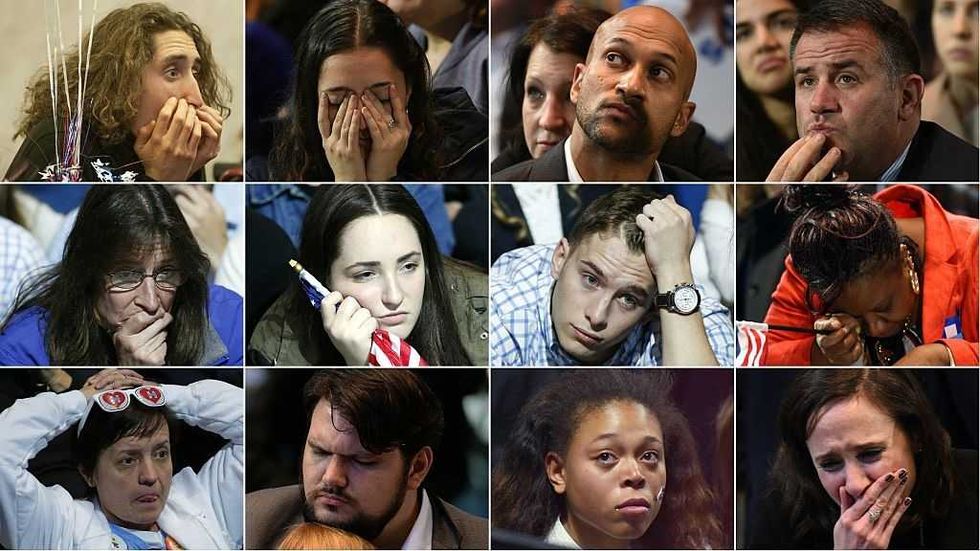 Photo by RYAN MCBRIDEDON EMMERTDON EMMERTKENA BETANCURROBYN BECKANGELA WEISSROBYN BECKROBYN BECKROBYN BECK/AFP via Getty Images
Consider how the 2020 Democratic primary might have played out under ranked-choice voting. Joe Biden — an establishment candidate favored by moderates — would have faced a field dominated by Bernie Sanders, Elizabeth Warren, Pete Buttigieg, Tom Steyer, and others to his left. Ranked-choice voting would have forced him through a gauntlet designed by the party’s most ideological voters.
This trend is not new. In 1972, George McGovern reshaped Democratic nominating rules and then benefited from the changes. Since then, the party has repeatedly weakened its establishment’s role (with key exceptions). Ranked-choice voting would accelerate that shift dramatically.
With moderates now only 36% of the party, according to Gallup, how could they resist a move toward ranked-choice voting? More importantly, which remaining moderate or establishment Democrat could survive a ranked-choice system dominated by the party’s left wing?
Ranked-choice voting would pour accelerant on a process already pulling Democrats further left. The only question is how long it takes for the party to adopt it — and how long the party can remain viable nationally if it does.
Trump cracks the Caracas cartel code
Democrats deny what mountains of evidence have long shown: Terrorist groups traffic in illegal drugs.
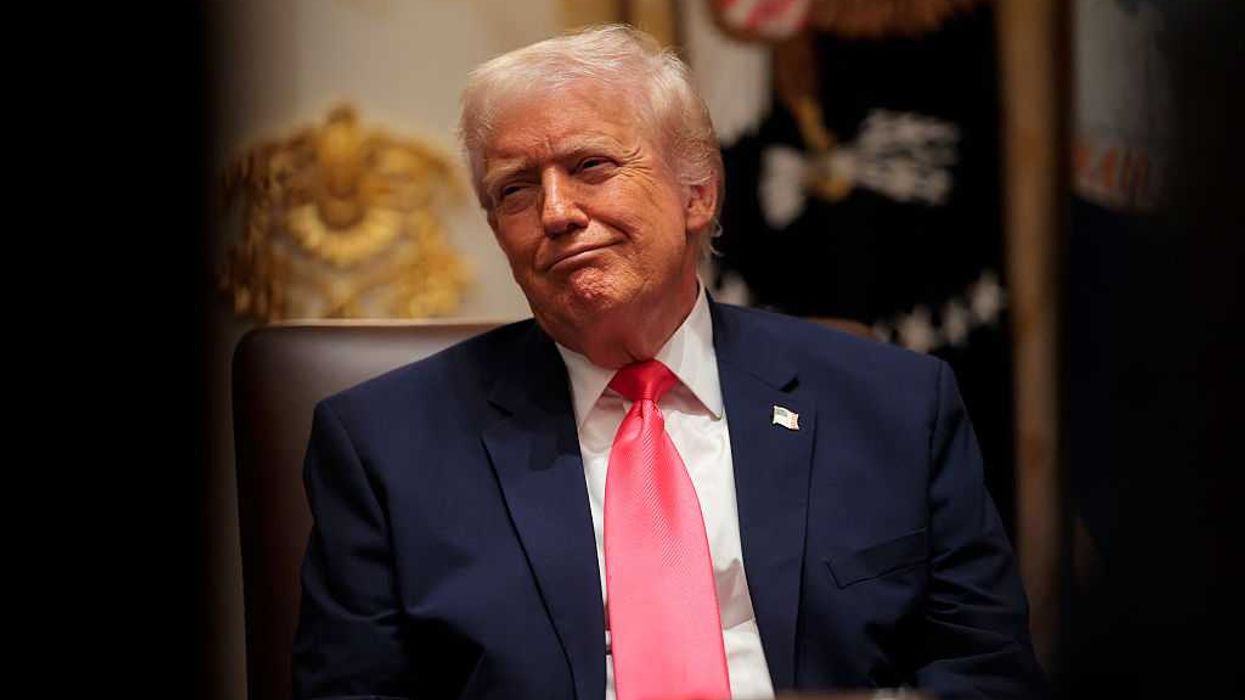
Rep. Jim Himes (D-Conn.) recently insisted, “There is no such thing as a narco-terrorist,” as he defended his opposition to the Trump administration’s war on narco-terrorism in the Caribbean. He accused the administration of trying “to make this look like it’s ISIS or Al-Qaeda,” ignoring that ISIS, Al-Qaeda, Hezbollah, and similar groups have long run profitable drug operations with local and transnational cartels. These alliances increased revenue, financed attacks, fueled violence, and deepened existing conflicts.
Maduro’s narco-terrorist regime threatens regional stability and US national security. Trump’s war on narco-terrorism meets that threat head-on.
Narco-terrorism did not originate with the Trump administration. It was the subject of my 1990 book, which documented how governments around the world used the drug trade to fund and advance terrorist activity. For more than three decades, Washington looked away. That era has ended.
On November 16, the U.S. Treasury designated Venezuela’s Cártel de los Soles — run by Venezuela President Nicolás Maduro and key figures in his illegitimate regime — along with Tren de Aragua and the Sinaloa Cartel, as foreign terrorist organizations. Treasury should have added Colombia’s National Liberation Army (Ejército de Liberación Nacional, or ELN), a Marxist paramilitary and major drug-trafficking force that controls both sides of the border and works closely with Maduro.
When I began researching narco-terrorism in 1986, I assumed political groups across the spectrum could use terror and drug trafficking to advance their aims. The evidence showed otherwise. Marxist-Leninist and Islamist regimes, movements, and militias initiated, expanded, and ultimately dominated this trade.
Venezuela’s slide into narco-terrorism dates to 2005, when Hugo Chávez expelled the U.S. Drug Enforcement Administration. After Chávez died in 2013, Maduro took control of both the government and the drug enterprise, tightening his partnership with Iran and its Lebanese proxy, Hezbollah, under the so-called Axis of Resistance. The goal is to counter U.S. influence in Latin America and the Middle East while enriching the regime.
Maduro’s alliance with Iran and Hezbollah runs deep. He offers sanctuary and support for their narcotics networks, money laundering, weapons pipelines, and terrorist smuggling throughout the region.
RELATED: Turns out that Hegseth’s ‘kill them all’ line was another media invention
 Photo by Anna Moneymaker/Getty Images
Hugo “El Pollo” Carvajal — a former three-star Venezuelan general under Chávez and Maduro and a former member of Cártel de los Soles — described the strategy bluntly in a letter to President Trump. “The purpose of this organization is to weaponize drugs against the United States,” he wrote. “The drugs that reached your cities through new routes were not accidents of corruption nor just the work of independent traffickers; they were deliberate policies coordinated by the Venezuelan regime against the United States.”
This collaboration, built over decades, helped millions of Americans fall into addiction and contributed to hundreds of thousands of deaths.
Maduro’s narco-terrorist regime threatens regional stability and U.S. national security. Trump’s war on narco-terrorism meets that threat head-on and is perfectly just.
Shock poll: America’s youth want socialism on autopilot — literally
Growing up during the fall of the Berlin Wall and the collapse of the Soviet Union, I remember when socialism was a universal punch line. It stood for failure, repression, and economic ruin.
Not any more. Today, socialism is the ideological spearpoint of the left. Many young Americans now insist that socialism is the cure for the affordability crisis squeezing them. They believe it with a fervor that would have stunned earlier generations.
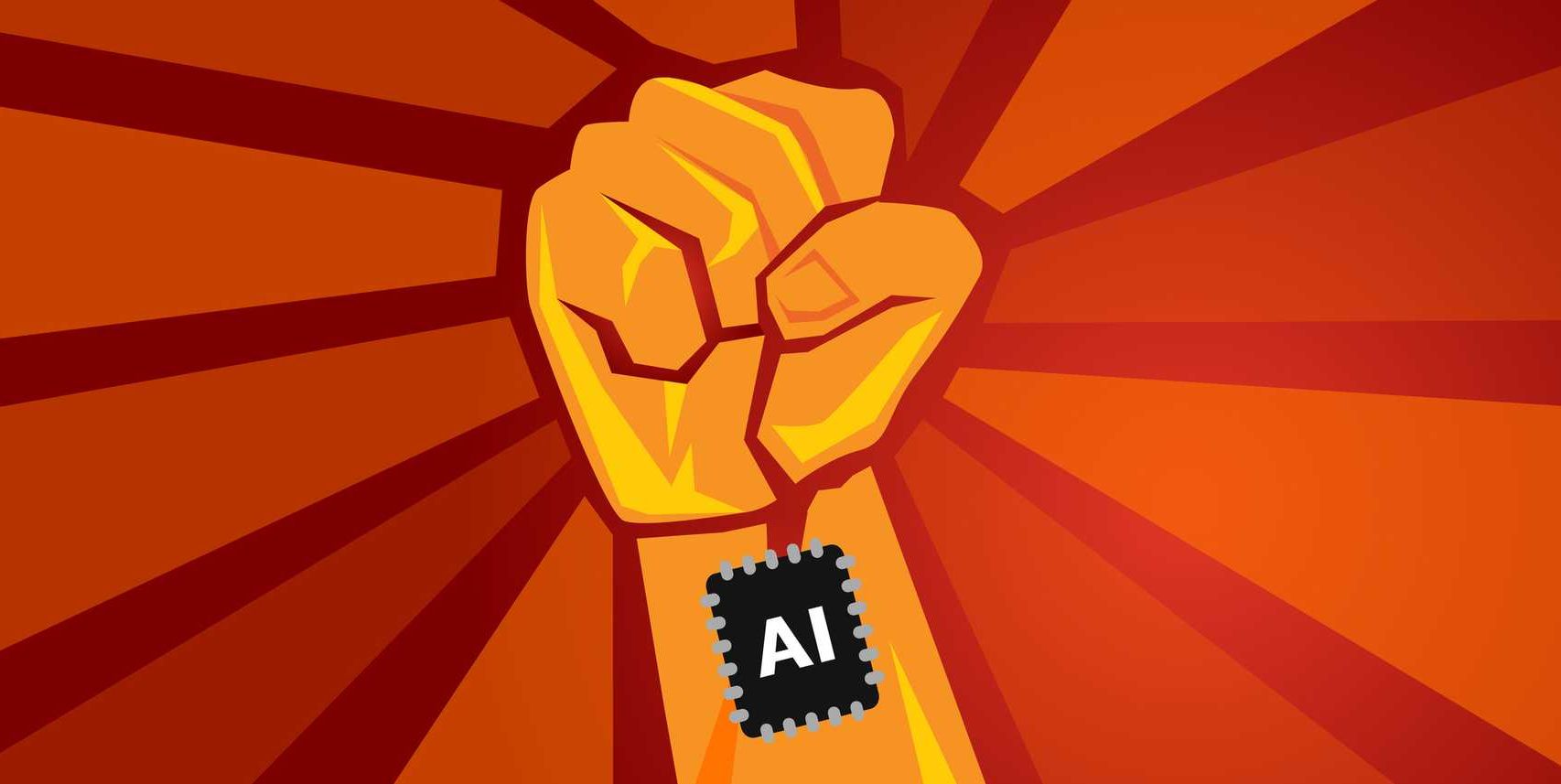
The evidence is overwhelming, and the verdict is final: Socialism fails everywhere it is tried. Now imagine that system fused with an all-seeing AI.
New polling from Rasmussen Reports and the Heartland Institute’s Emerging Issues Center shows that a majority of likely voters ages 18 to 39 want a Democratic Socialist to win the White House in 2028.
Nearly 60% of young Americans say they support more government housing, a nationwide rent freeze, and government-run grocery stores in every town.
These numbers aren’t anomalies. They reflect a deeper reality: Many young Americans know little about socialism’s actual history, consequences, or track record — and they have been conditioned to believe it can fix the challenges in front of them.
One reason for that ignorance is uncomfortable but obvious. It’s not only the schools — it’s the parents. According to the polls, parents were the most influential voices shaping their children’s support for Democratic Socialism. More than half of respondents said their parents held a favorable view of it.
That alone explains a great deal. And unsurprisingly, more than half also said teachers and professors viewed Democratic Socialism favorably. After decades of ideological drift, even parents who grew up after the USSR’s collapse now believe socialism “might work.”
Based on my own experience teaching in public schools, that rings true. Most of my colleagues openly sympathized with the socialist cause and were hostile to free-market capitalism.
This didn’t happen by accident. It reflects a long march beginning in the Progressive Era. My own postgraduate experience at a prestigious teaching college felt less like preparation for the classroom and more like a Cultural Revolution struggle session — conformity required, dissent punished.
As the public education system drifted leftward, it taught generation after generation that socialism is benevolent and capitalism is predatory. The result is predictable. Many young people now see the free market as the enemy, not the mechanism that lifted billions out of poverty. Cronyism and the explosion of government power only blur the picture further.
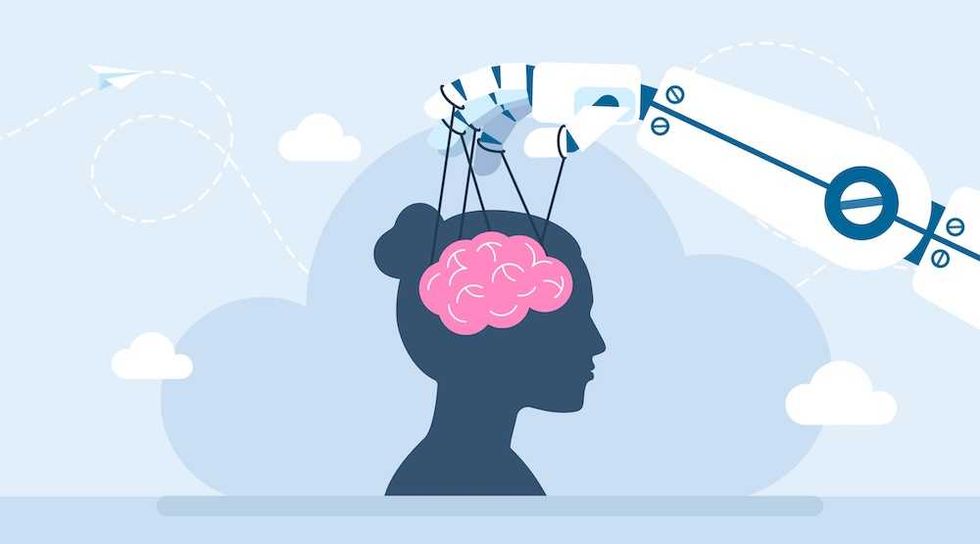
Layer onto this the collapse of basic literacy and numeracy. When students can’t read well, struggle with math, and can’t write a coherent paragraph, they are more vulnerable to ideological manipulation — and more likely to lean on machines to think for them.
So it shouldn’t shock anyone that almost half of young Americans surveyed want an advanced AI system to create society’s laws, rules, and regulations. Nearly 40% want that AI system to determine human rights and control the world’s most powerful militaries.
RELATED: Almost half of Gen Z wants AI to run the government. You should be terrified.
 Yurii Karvatskyi via iStock/Getty Images
How did this happen? Watch how many parents are glued to screens, outsourcing daily life to devices. Is it any wonder their children grow up thinking technology is omnipotent?
Parents should start with something simple: a family movie night featuring the “Terminator” franchise. Let the kids see where blind faith in machines tends to lead.
Better yet, teach them the truth about socialism. Teach them what it does to human beings. Share the books, documentaries, and testimonies exposing socialism’s century of famine, repression, forced labor, and mass murder — horrors still unfolding in Cuba and North Korea.
The evidence is overwhelming, and the verdict is final: socialism fails everywhere it is tried. Now imagine that system fused with an all-seeing AI — a surveillance state that Stalin could only dream of. The thought of an AI-run socialist regime is not dystopian fiction. It is what many young Americans say they want.
They should be careful what they wish for.





